

How Long Should You Spend in Israel?
Updated: August 2026
Israel presents an unusual duration problem. The country is geographically compact compared with many long-haul destinations, major places of interest are relatively close together, and Jerusalem and Tel Aviv can be connected without sacrificing an entire day to transportation. On paper, this makes a short trip look capable of absorbing almost everything.
In practice, distance is not what makes an Israel itinerary demanding.
Jerusalem alone layers thousands of years of history, archaeology and religious significance into a remarkably concentrated area. Tel Aviv creates an entirely different urban experience, while the Dead Sea and Masada introduce another landscape and travel rhythm. Head north and Galilee, Nazareth, Acre and Haifa open a further set of possibilities.
For most first-time visitors interested in more than one region, 7–10 days provides the strongest planning range. Five days can work for Jerusalem and Tel Aviv with disciplined priorities, while 10–12 days allows northern Israel or the Dead Sea region to become a meaningful part of the journey rather than another rushed excursion.
The real question is therefore not how quickly you can move around Israel. It is how much time the places themselves deserve once you reach them.
Israel's Small Map Can Produce an Overcrowded Trip
Large countries naturally force travelers to make choices. When destinations are separated by a flight or an eight-hour road journey, the limitation is obvious.
Israel can create the opposite problem because so much appears reachable.
A traveler may begin with Jerusalem and Tel Aviv, then notice that Bethlehem is close to Jerusalem, Masada and the Dead Sea can be combined geographically, Caesarea and Haifa lie farther north, Acre is beyond them, and Nazareth and Galilee appear perfectly reasonable additions.
Individually, many of these ideas make sense. Collectively, they can turn seven days into continuous sightseeing.
This is why Israel should be planned according to experience density, not merely kilometers.
| Available time | Realistic scope | Main compromise |
|---|---|---|
| 3–4 days | One principal base, usually Jerusalem or Tel Aviv | Very limited regional context |
| 5–6 days | Jerusalem + Tel Aviv or one strongly focused extension | Little room for deeper regional travel |
| 7–8 days | Strong Jerusalem/Tel Aviv balance + selected excursion | Northern and southern additions compete |
| 9–10 days | Core cities + one meaningful regional layer | Still requires priorities |
| 11–12 days | Jerusalem, Tel Aviv + north or Dead Sea at greater depth | Broad coverage without needing every stop |
| 14+ days | Multi-region journey with slower sightseeing | Risk of adding destinations simply because time exists |
These are planning thresholds, not fixed itineraries. The purpose is to determine the scale of trip that suits your available time before deciding what happens on individual days.
Jerusalem Should Determine the Minimum, Not Fill the Leftover Time
For many first-time visitors, Jerusalem is the place that deserves the most careful duration decision.
The Old City alone contains the Western Wall, Church of the Holy Sepulchre, Via Dolorosa and major sites connected with Jewish, Christian and Islamic history. Beyond its walls are the Israel Museum, Yad Vashem and numerous archaeological and historical locations.
The challenge is not simply the number of attractions. Jerusalem is a city where context matters.
Walking through a place with several thousand years of layered history is very different from visiting a viewpoint, taking a photograph and moving to the next stop. Travelers with a strong historical, archaeological or religious interest can easily find that two days disappear faster than expected.
For that reason, I would normally allow at least two full usable days for Jerusalem, with three becoming valuable for travelers whose interests are strongly connected to the city's history.
Arrival evening plus one sightseeing day is not the same thing.
Tel Aviv Adds Contrast Rather Than More of the Same
Tel Aviv should not be calculated simply as “another Israeli city.”
Its value in a first journey comes partly from contrast. After Jerusalem's historical intensity, Tel Aviv introduces Mediterranean urban life, contemporary culture, restaurants, beaches, Bauhaus architecture and nearby historic Jaffa.
That change in atmosphere is one reason spending time there can improve the entire journey rather than merely increasing the destination count.
Travelers on Israel cultural heritage tours can examine how organized programs balance historical and contemporary experiences, but this duration guide deliberately avoids prescribing a day-by-day sequence.
The duration decision is simpler: if Tel Aviv matters to you as an experience rather than only as an international airport gateway, protect enough time for it to feel like a destination.
Five Days Forces a Choice About What Israel Means to You
A five-day trip can be extremely rewarding because Israel's compact geography allows meaningful experiences within a relatively short period.
It does not support every version of Israel equally well.
A history-focused traveler may devote most of the time to Jerusalem and use the remaining portion selectively. Someone more interested in contemporary Israel may create a stronger Jerusalem–Tel Aviv balance. Another visitor may consider Masada and the Dead Sea non-negotiable and willingly reduce urban time.
The mistake is treating all three priorities as equally expandable.
With five days, each additional full-day excursion effectively consumes around 20% of the trip. That makes selection much more important than transportation efficiency.
A good five-day journey therefore feels intentionally incomplete rather than accidentally rushed.
Excursion Days Have an Opportunity Cost
Israel has several places that fit naturally into full-day excursions, which can disguise their impact on a short itinerary.
Suppose you have six full days.
You allocate a day to Masada and the Dead Sea, another to northern sites, perhaps another to a religious or archaeological excursion. Suddenly half of the usable trip has been committed outside your principal cities.
Nothing about those choices is inherently wrong. The problem appears when the traveler still expects to experience Jerusalem and Tel Aviv as though those excursion days did not exist.
This is where a simple planning calculation helps.
The Base-Day Test
Instead of asking how many excursions fit, calculate:
Total usable days – regional excursion days = genuine base-city days
If you have seven usable days and schedule three full excursions, you have effectively created a four-day Jerusalem/Tel Aviv trip.
Seeing the arithmetic this way often makes the correct decision much clearer.
Masada and the Dead Sea Work Geographically, but Still Consume a Day
Masada and the Dead Sea are often paired because their geography makes the combination logical. That efficiency is useful, but it does not make the excursion free in duration terms.
Leaving Jerusalem, traveling through the Judean Desert, visiting Masada and spending time around the Dead Sea creates a substantial day away from the city.
If these experiences are important, they deserve the time.
What should be avoided is describing them as though they can simply be “added” to Jerusalem without reducing anything else.
For travelers whose first visit includes both cultural history and the desert landscape, Israel discovery tour packages can provide a useful commercial reference for how established programs distribute these experiences across a longer journey.
Seven Days Is Often Enough—If You Stop Adding
A week is where Israel begins to feel particularly manageable for a first visit.
Jerusalem and Tel Aviv can both receive meaningful attention, while one selected regional experience can be added without automatically dismantling the core trip.
The danger is psychological rather than logistical.
Once travelers realize that Israel is compact, they begin adding places. Haifa seems close enough. Acre looks possible. Nazareth should surely fit. The Sea of Galilee is important. Then Masada and the Dead Sea return to the list.
A seven-day trip that originally looked balanced becomes a national highlights race.
The best use of seven days is therefore not proving how much Israel can contain. It is deciding which third dimension should complement Jerusalem and Tel Aviv.
For one traveler, that may be the Dead Sea region. For another, Galilee. Someone with strong religious interests may make an entirely different choice.
Northern Israel Changes the Character of the Journey
Travel north and the trip begins to expand conceptually as well as geographically.
Haifa, Acre, Nazareth and the Sea of Galilee are not interchangeable stops. Each introduces a different historical, cultural or religious context, and attempting all of them as brief photo stops can undermine the reason for going north in the first place.
If northern Israel is a genuine priority, additional days become valuable because they allow the region to function as part of the journey rather than a long day spent moving between landmarks.
This is where 9–10 days starts to distinguish itself from a one-week trip.
The extra time does not merely accommodate another hotel. It reduces competition between Jerusalem, Tel Aviv and the north.
Nine or Ten Days Gives You Something More Valuable Than Two Attractions
When a traveler moves from seven days to approximately ten, the most useful gain is choice without immediate sacrifice.
At seven days, adding northern Israel may require dropping the Dead Sea. At ten, both may become realistic depending on pace and interests.
More importantly, Jerusalem no longer needs to lose a day every time another region enters the plan.
This is the duration at which many first-time journeys begin feeling comprehensive without automatically becoming exhaustive.
There is still no reason to include every famous place. Instead, the trip can contain several genuinely different Israeli environments: historic Jerusalem, Mediterranean Tel Aviv, desert landscapes and perhaps northern cultural or religious sites.
The diversity becomes part of the experience rather than a logistical challenge.
Religious Interest Can Change the Required Duration Dramatically
Two travelers can visit exactly the same country and reasonably need different amounts of time.
Someone with a strong Christian pilgrimage interest may consider Bethlehem, Nazareth, the Sea of Galilee and multiple Jerusalem sites essential. A traveler focused on Jewish history may allocate time differently between Jerusalem, museums, archaeological sites and other locations. Someone interested primarily in contemporary culture and food may make entirely different choices.
This is why generic advice such as “Israel takes seven days” is inadequate.
Duration should respond to interest density.
The more sites that carry genuine personal, historical or spiritual significance for you, the less appropriate it becomes to treat them as short stops simply because the distances between them are manageable.
Twelve Days Is Where Regional Israel Can Breathe
At approximately 11–12 days, the journey no longer has to choose so aggressively between north and south.
Jerusalem can retain sufficient time. Tel Aviv can remain a genuine stay rather than a final night near the airport. Masada and the Dead Sea can occupy their own logical space, while northern Israel can receive more than a hurried excursion.
Travelers considering a wider organized journey can compare Israel extended touring programs when evaluating how a longer duration translates into regional coverage.
The value of twelve days is not simply that it allows more.
It allows different types of days: an intensive archaeological morning, a slower urban afternoon, a regional journey, a museum day or time to experience a place beyond its headline monument.
That variation is easy to underestimate when planning from a list.
Border Combinations Belong to a Different Duration Decision
Israel is frequently combined with Jordan, and sometimes with Egypt. Those journeys require their own planning architecture.
If you have ten days total and want both Israel and Jordan, you do not have a ten-day Israel trip with Jordan added.
You have a multi-country journey in which Israel receives only part of the available duration.
This article deliberately does not recommend how to divide those days because that belongs to the combined-country planning cluster. Border logistics, Petra, Wadi Rum and Jordanian route design should not be absorbed into an Israel duration URL merely because the countries are often traveled together.
That boundary is important for both travelers and search architecture.
Do Not Let the Final Airport Night Distort the Trip
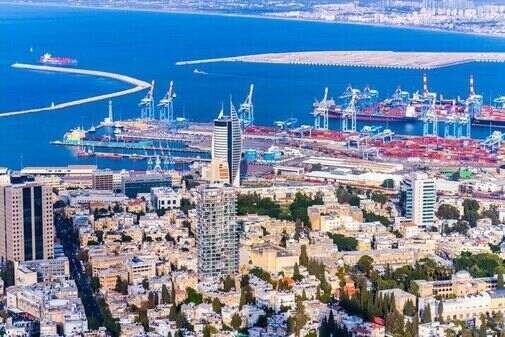
Ben Gurion Airport's location between Jerusalem and Tel Aviv can influence the final stage of a journey, but travelers sometimes sacrifice too much destination time simply to position themselves for departure.
Look at the actual flight time before automatically adding an airport-oriented night or moving cities earlier than necessary.
Likewise, an international arrival late in the evening should not be counted as though it provides a full first day.
The practical calculation is:
calendar duration – arrival/departure loss – excursions = usable destination time.
That number is far more informative than the dates printed on the airline ticket.
So, How Long Is Enough for Israel?
For a focused visit to Jerusalem or a Jerusalem–Tel Aviv introduction, 4–5 days can be meaningful when expectations remain selective.
For most first-time visitors who want both cities plus another major experience, 7–8 days is a strong minimum range.
If northern Israel, Masada and the Dead Sea all matter, approximately 9–12 days provides much better balance because regional additions no longer require constantly removing time from Jerusalem or Tel Aviv.
Two weeks can support an even deeper journey, but the extra days should create depth rather than encourage another round of destination accumulation.
Israel's compact size makes movement easier.
It does not make its history, culture or landscapes smaller.
The right duration is therefore the point at which you stop asking how many places you can reach and start protecting enough time to understand why you wanted to reach them.
Frequently Asked Questions About How Long to Spend in Israel
1. Is three days enough if Jerusalem is my only priority?
Three days can provide a meaningful Jerusalem-focused visit, particularly when arrival and departure occur outside the usable sightseeing period. Travelers with strong archaeological, religious or museum interests may still find three days restrictive because the city's historical layers reward slower exploration.
2. How should I divide a short trip between Jerusalem and Tel Aviv?
Rather than dividing the nights equally automatically, consider which city matters more to your interests. Jerusalem usually requires greater sightseeing concentration, while Tel Aviv offers a different urban rhythm. A short trip works better when the allocation reflects priorities rather than symmetry.
3. Can Masada and the Dead Sea fit into a six-day Israel visit?
Yes, but treat the excursion as a genuine day commitment. Once that day is removed from six usable days, the remaining time for Jerusalem and Tel Aviv becomes more limited, so decide whether the desert experience outranks additional time in either city.
4. Is seven days enough if I want to visit northern Israel?
It can be, provided the north replaces another optional component rather than simply being added to an already full Jerusalem–Tel Aviv–Dead Sea plan. A week rewards prioritization, particularly when several northern locations are important rather than a single targeted visit.
5. Why can Israel feel rushed even though distances are relatively short?
The challenge is sightseeing density rather than transportation alone. Jerusalem, Galilee and other regions contain numerous historically or religiously significant places, so reaching them quickly does not reduce the amount of meaningful time required once you actually arrive.
6. Should I allow more time if religious history is my main interest?
Usually, yes. Travelers for whom multiple biblical, Jewish, Christian or Islamic sites carry particular significance may need longer than visitors seeking a general overview. Personal importance changes the value of time at a site even when the geographical distances remain identical.
7. Is ten days enough for Jerusalem, Tel Aviv, Galilee and the Dead Sea?
Ten days can provide a strong framework for those regions when the route remains selective. The main advantage over seven days is that regional experiences no longer consume such a large percentage of the time available for Jerusalem and Tel Aviv.
8. Do I need to stay overnight near the Dead Sea?
Not necessarily. The answer depends on whether the Dead Sea region itself is an important part of your journey or primarily an excursion. An overnight stay changes the pace and experience, but should not be added automatically simply to increase destination count.
9. How much time should a history-focused traveler allow for Jerusalem?
Three meaningful days can be highly valuable for travelers with strong archaeological, religious or museum interests, although there is no universal requirement. The important point is not to count a late arrival or early departure as though it were a complete Jerusalem sightseeing day.
10. Should I add Jordan if I have ten days in total?
That is a different duration decision rather than a simple Israel extension. Adding Jordan means dividing the ten days between two countries and accounting for border movement and Jordanian geography, so the appropriate allocation belongs to a dedicated combined-country planning strategy.
11. Is twelve days too much if this is my first visit?
No. Twelve days can support Jerusalem, Tel Aviv and selected northern and southern experiences without requiring continuous sightseeing. The extra time is most valuable when used for depth, slower transitions and different types of travel days rather than simply adding more stops.
12. What is the biggest mistake when deciding how long to stay in Israel?
Assuming short geographical distances mean every major destination can be combined comfortably. Transportation may be manageable, but each excursion still removes time from somewhere else. Count usable destination days after regional trips rather than judging the itinerary solely by distances on a map.

A travel professional specializing in tailor-made travel planning, guest experience management, and multi-destination tourism operations.
With over 23 years of experience in the travel industry, he designs and manages private and cultural tours for international travelers across Türkiye, Greece, Egypt, Jordan, Morocco, and other destinations.
He has strong expertise in both online and face-to-face guest communication, sales processes, and end-to-end travel operations.
Working closely with hotels, travel agencies, and local partners, he ensures smooth coordination and high-quality travel experiences at every stage of the journey.
His focus is on delivering personalized, reliable, and seamless travel experiences for international guests worldwide.