Israel Weather in October: Autumn Sunshine & Comfortable Days
Last Updated: August 9, 2026
October changes the question travellers ask about Israel.
In August, you ask whether an exposed activity belongs in the morning.
In September, you wonder when summer will finally loosen its grip.
By October, the question becomes more interesting:
What can we put back into the day?
Not everything returns at once. The Dead Sea and desert regions can remain considerably warmer than Jerusalem, Mediterranean swimming does not suddenly disappear, and occasional hot periods can still rewrite an ambitious outdoor programme.
Yet October usually represents an important shift in how the country can be travelled.
Hours that felt expensive during summer begin becoming useful again.
Long walks are easier to contemplate. Archaeological visits need less defensive scheduling. Nature becomes a stronger reason to travel rather than something fitted carefully around heat.
October is therefore best understood not as “cooler September,” but as a month when doors begin reopening.
Door One Reopens: The Continuous Walking Day
Summer does not prevent travellers from exploring Jerusalem on foot.
It changes how they do it.
Earlier starts, indoor intervals and later returns become valuable because continuous exposure can make an otherwise excellent cultural day unnecessarily tiring.
October begins relaxing that structure.
A traveller can increasingly imagine breakfast followed by a substantial historical walking programme that continues naturally towards lunch and into the afternoon, without every outdoor hour needing to justify its position on the clock.
That matters enormously in Jerusalem.
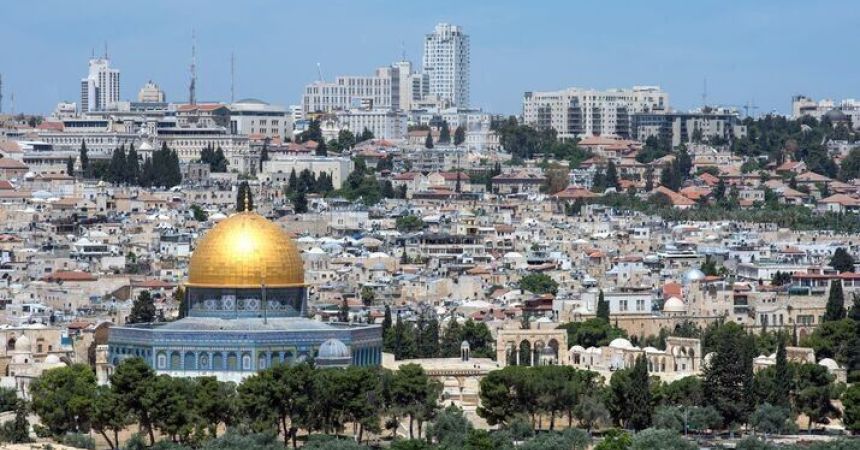
The city rewards continuity. Streets lead naturally into archaeological sites, markets into neighbourhoods, and viewpoints into places you had not planned to visit. When weather becomes less dominant, spontaneous walking returns to the itinerary.
Travellers interested in building their journey around this depth can consider Israel cultural discovery tours, where October's greater outdoor flexibility allows historical experiences to connect rather than being broken into heat-management blocks.
Door Two Reopens: Archaeology Without Watching the Clock Constantly
There is a particular frustration in visiting a major archaeological site while thinking more about shade than history.
October gradually reduces that problem.
This does not mean timing becomes irrelevant, especially in hotter southern regions. Nor does it mean every October afternoon is automatically cool.
The difference is that outdoor archaeology increasingly becomes an experience to schedule according to route logic rather than purely according to heat avoidance.
| Experience | Summer Logic | October Shift |
|---|---|---|
| Jerusalem walking | Split the day | Longer continuous touring |
| Outdoor archaeology | Protect early hours | Broader usable window |
| City neighbourhoods | Morning/evening priority | Afternoon returns |
| Dead Sea | Strong heat management | Increasing flexibility |
| Desert sightseeing | Early timing dominates | More options emerge |
| Mediterranean coast | Heat relief + swimming | Leisure becomes the main purpose |
October does not erase summer's lessons.
It simply stops making all of them compulsory.
Door Three Stays Half Open: The Mediterranean
This is where October refuses to behave like a neat autumn month.
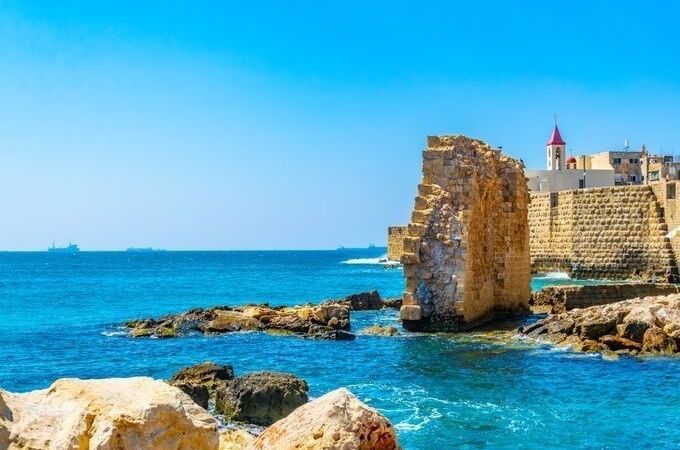
The sea has spent an entire summer accumulating warmth, so coastal conditions can remain attractive well after air temperatures begin moderating. Tel Aviv may still provide beach days and swimming opportunities, particularly earlier in October, although actual sea, wind and weather conditions naturally vary.
That creates a valuable overlap.
Travellers can enjoy increasingly comfortable urban exploration without automatically sacrificing the Mediterranean component of the trip.
During peak summer, the beach helps solve the afternoon.
In October, it can become something simpler.
A beach.
That distinction matters because travellers no longer need coastal time primarily as recovery from heat. They can choose it because they actually want a few hours beside the Mediterranean.
Door Four Reopens Slowly: The Dead Sea
Jerusalem may convince you that autumn has arrived.
The Dead Sea can correct that assumption quickly.
Its low elevation and desert environment mean conditions can remain substantially warmer, particularly earlier in October. Masada still benefits from sensible timing, and hydration and sun protection remain relevant.
What changes is the margin.
The day begins offering more flexibility than it did during midsummer, allowing cultural and landscape experiences to coexist without quite the same dependence on extremely early starts.
This makes October particularly useful for travellers who want the Dead Sea to feel like part of the journey rather than a carefully engineered escape from afternoon heat.
Door Five: The Desert Comes Back Into the Conversation
This is one of October's most important distinctions from September.
During the hottest months, desert travel may focus on scenic experiences, selected activities and strict timing, while strenuous hiking requires considerable caution.
October begins shifting the balance.
Suitable outdoor routes can become more realistic as conditions moderate, although no monthly guide can declare a particular desert hike appropriate for a specific future day. Actual temperature, route, exposure, recent weather and reliable local advice still determine that decision.
The difference is that active travellers can start placing the Negev closer to the centre of the itinerary again.
Those wanting landscapes to play a larger role can explore Israel nature and desert tours, while keeping weather-sensitive activities flexible until current conditions are known.
October gives the desert back possibilities.
It does not remove judgement.
A Sixth Door Appears: The Road Trip Without Recovery Days
Summer multi-region itineraries can accumulate fatigue.
A demanding Jerusalem day followed by an early Dead Sea departure and another exposed southern programme may leave travellers needing a slower day simply because the climate has added physical cost to each experience.
October can reduce that accumulated burden.
This makes road-based itineraries particularly attractive because destinations no longer need to be separated by as many strategic recovery periods. A cultural day can lead into another substantial sightseeing day more naturally, provided the programme remains realistic.
For travellers covering several regions, this is one of the month's less obvious advantages.
Better weather does not only improve individual attractions.
It improves the connections between days.
The Door That Has Not Opened Yet: Rainy-Season Planning
October sits close enough to the seasonal transition that travellers naturally begin asking about rain.
The correct response is not to pretend the month belongs completely to the dry season or to write it as though winter weather has already arrived.
Conditions can change, and the possibility of rainfall begins returning as the country moves farther from summer. Year-to-year variation matters, which makes short-range forecasts increasingly useful.
However, October should not steal November's cluster.
November is where the return of unsettled weather becomes a much more important itinerary conversation.
October's defining story remains different.
It is about outdoor freedom returning faster than winter uncertainty arrives.
October's Hidden Luxury Is Not Needing a Perfect Schedule
Summer rewards precision.
October increasingly rewards curiosity.
If a Jerusalem walk takes forty minutes longer because you found an interesting street, the afternoon may still survive. If lunch runs late, the next outdoor attraction does not automatically become a poor idea. If you decide to spend more time at an archaeological site, you may not be sacrificing the only tolerable hours available.
That freedom is easy to underestimate when comparing months using weather tables.
Travellers feel it immediately.
A holiday becomes less about protecting the itinerary from climate and more about allowing the itinerary to change on the ground.
For many people, that is October's greatest advantage.
October Is Not the End of Summer Everywhere
There is one final warning.
Do not interpret “reopening month” as “cool everywhere.”
Tel Aviv can retain distinctly warm Mediterranean conditions. The Dead Sea and southern areas can still become hot. Early October may feel much closer to late summer than travellers expecting conventional autumn weather anticipate.
The transition is regional and gradual.
That is precisely what makes October interesting.
Jerusalem can offer easier cultural touring while the Mediterranean remains attractive. The desert begins returning to active itineraries while southern warmth still makes the Dead Sea feel dramatically different from the highlands.
Instead of forcing the country into one season, October allows several seasonal experiences to coexist.
What October Gives Back
The easiest way to understand the month is to look at what travellers no longer need to organise so aggressively.
You may not need every major walk before lunch.
You may not need the entire afternoon reserved for recovery.
You may not need to choose between cultural touring and the coast.
You may not need as much empty space between demanding days.
And increasingly, you may not need to treat outdoor activity as something that has to negotiate with summer first.
That is why October deserves its own place in the Israel weather cluster.
September is the overlap between persistent summer and emerging change.
November will introduce a different question as rain and late-autumn variability become more relevant.
October sits between them with a remarkably useful identity:
The October Permission Slip: What Can Return to the Itinerary?
Summer forces travellers to negotiate.
October begins granting permissions again.
Not because weather suddenly becomes perfect, but because several experiences that required careful timing in July or August become easier to fit naturally into the journey.
Six activities deserve another look.
Long Jerusalem Walking Day — APPROVED
October gives substantial walking much more room.
An early start remains useful, particularly during warmer periods, but the day no longer needs to be divided automatically into morning sightseeing, afternoon retreat and evening return.
This matters because Jerusalem is better experienced when travellers have time to wander beyond the essential landmarks.
A market visit can become lunch. A planned twenty-minute walk can become an hour. A neighbourhood can remain interesting long enough to delay the next stop.
October increasingly allows those decisions without punishing the itinerary.
Mediterranean Afternoon — APPROVED, WITH EXPECTATIONS
Tel Aviv does not close its beach season simply because the calendar reaches October.
The Mediterranean can retain substantial warmth, particularly earlier in the month, and suitable days may still support swimming and extended coastal time.
However, beach conditions should no longer be treated with the same midsummer certainty.
Wind, sea conditions and changing weather become increasingly relevant, so travellers should regard the coast as a strong October possibility rather than a guaranteed daily programme.
The advantage is flexibility: if the beach does not win the afternoon, Tel Aviv has plenty of alternatives.
Masada After a Relaxed Breakfast — CONDITIONAL
October makes the idea more realistic.
It does not automatically make it smart.
The Dead Sea region can remain hot, particularly early in the month, so Masada still deserves respect as an exposed archaeological environment. Travellers should continue checking actual conditions rather than assuming autumn in Jerusalem means autumn has arrived everywhere.
The difference from summer is that the timing conversation becomes less rigid.
Later starts may become more practical when conditions cooperate, but earlier remains the safer planning default.
Dead Sea Day Without a Midday Retreat — INCREASINGLY POSSIBLE
October can make a Dead Sea programme feel considerably less engineered around heat.
Visitors may find it easier to combine archaeology, landscapes and time beside the water without building a large recovery block into the middle of the itinerary.
Still, the region retains its own climate.
Sun protection and hydration remain important, and travellers should resist comparing it directly with Jerusalem.
October increases flexibility.
It does not equalise geography.
Serious Desert Hiking — WEATHER-DEPENDENT
This permission slip cannot be signed months in advance.
October can offer far more promising conditions for active desert travel than peak summer, which makes the month attractive to hikers. Yet a specific route must still be evaluated according to current temperature, exposure, duration, recent weather and reliable local guidance.
Another factor also begins returning to the conversation as the wetter season approaches: flash-flood risk in desert environments when rainfall occurs elsewhere in drainage areas.
A pleasant city forecast is not enough information for a desert route.
Two Demanding Days Back-to-Back — APPROVED WITH RESTRAINT
October often makes consecutive cultural touring days considerably easier.
That does not mean a good itinerary should become a sightseeing competition.
A full Jerusalem day followed by another substantial cultural programme can work naturally, but stacking intensive walking, a long transfer, desert activity and another major tour simply because temperatures are lower recreates the same fatigue through scheduling.
Better weather should create freedom.
Not permission to overload the trip.
October Approval Board
| Experience | October Status | Main Condition |
|---|---|---|
| Long Jerusalem walks | Approved | Adjust during unusually warm days |
| Tel Aviv beach time | Approved | Check daily sea/weather conditions |
| Later Masada start | Conditional | Earlier remains preferable when hot |
| Full Dead Sea day | Strong candidate | Respect regional warmth |
| Negev hiking | Weather-dependent | Route + current conditions matter |
| Consecutive touring days | Approved | Keep itinerary intensity realistic |
The Most Valuable Permission Is Spontaneity
The real October upgrade is not adding another attraction.
It is being able to decide at 2:00 PM that you want to stay somewhere longer.
During peak summer, that decision may affect the carefully protected late-afternoon schedule. In October, the consequences are often smaller because a broader portion of the day is useful for outdoor travel.
That gives the itinerary elasticity.
And elasticity is one of the qualities weather statistics rarely measure.
A destination becomes more enjoyable when travellers can occasionally ignore the schedule without the climate immediately reminding them why it existed.
The October Route Builder: Which Combinations Work Best?
October's value becomes clearer when you stop looking at destinations individually and begin connecting them.
A pleasant Jerusalem day is useful.
A pleasant Jerusalem day followed by a manageable Dead Sea programme, then several Mediterranean hours without needing a recovery day between them, is considerably more useful.
This is why October can be particularly effective for travellers trying to experience several sides of Israel within one relatively short journey.
Jerusalem + Tel Aviv: The Easy Pairing
This combination asks very little compromise from October.
Jerusalem provides substantial cultural walking and historical depth, while Tel Aviv adds a lighter coastal rhythm. Depending on actual conditions and travel dates, the Mediterranean may still contribute swimming or beach time rather than functioning purely as scenery.
More importantly, the cities do not need identical weather to complement each other.
A cooler Jerusalem evening and warmer Tel Aviv afternoon can both improve the trip.
Best for:
First-time visitors, culture-focused travellers and anyone wanting a city-and-coast itinerary without dedicating several days to a separate resort stay.
Jerusalem + Dead Sea: October's Strong Practical Match
This pairing becomes easier as summer intensity moderates.
Travellers can spend serious time exploring Jerusalem and then descend into a dramatically different landscape without requiring the same level of heat management associated with midsummer.
The temperature contrast does not disappear.
That is important.
A comfortable Jerusalem forecast should never be copied mentally onto Masada or the Dead Sea. The advantage is simply that October increasingly gives both regions broader usable periods within the day.
Jerusalem + Tel Aviv + Dead Sea: The First-Timer Triangle
For travellers with roughly a week, this combination captures three very different environments without forcing the itinerary to become a cross-country endurance test.
| Stop | October Role |
|---|---|
| Jerusalem | History, archaeology, substantial walking |
| Tel Aviv | Mediterranean contrast, food, urban life |
| Dead Sea | Landscape, Masada, slower regional experience |
The route also benefits from changing pace.
Jerusalem can carry the greatest cultural intensity, the Dead Sea introduces landscape and archaeology, while Tel Aviv can provide a softer final section if arranged towards the end.
October weather makes those transitions feel increasingly natural.
Add the Negev? Ask What You Want to Do There
The answer should not depend simply on whether October is “good for the desert.”
If the objective is scenic travel, landscapes and selected outdoor experiences, the Negev can fit strongly into an October itinerary.
If the trip revolves around serious hiking, the question becomes more specific.
Which route?
How exposed is it?
What are the actual conditions?
Has recent or forecast rainfall created any flash-flood concerns?
October improves the seasonal case for active desert travel, but it also approaches the part of the year when travellers need to think about weather differently from summer.
Heat may decrease.
Weather awareness does not.
Where Should the Coast Go?
There is no universal rule, but October creates a good argument for placing Tel Aviv towards the end of an intensive cultural itinerary.
After several days of historical sites, archaeology and road travel, the Mediterranean offers a natural reduction in pace without requiring a dedicated “rest day.”
If conditions support swimming, excellent.
If they do not, the city still provides neighbourhoods, markets, Jaffa, restaurants and nightlife.
That makes Tel Aviv unusually resilient as an October itinerary component.
The Route Becomes More Important Than the Forecast
Travellers sometimes spend too much time trying to identify the city with the “best weather.”
For a multi-stop October journey, variation can actually improve the experience.
Jerusalem does not need to feel like Tel Aviv.
The Dead Sea should not feel like either.
The desert should introduce another landscape again.
A strong October route uses those differences rather than trying to eliminate them.
The month works because several regions become increasingly compatible for touring at the same time, even though they never become climatically identical.
That is the route-building advantage October quietly offers.
12 Practical Questions About Israel Weather in October
1. Is October a good time to visit Israel?
October can be an excellent choice for travellers who want substantial cultural sightseeing without completely giving up warm-weather experiences. Jerusalem generally becomes easier to explore on foot, the Dead Sea remains warm, and Mediterranean beach time may still be possible. Conditions vary, however, particularly between early and late October.
2. How warm is Israel during October?
There is no single useful national temperature because elevation and geography create substantial differences. Jerusalem generally feels milder than the Dead Sea, while Tel Aviv retains Mediterranean warmth. Early October can still feel distinctly summery, whereas later dates increasingly reflect the transition towards cooler autumn conditions.
3. Is early October very different from late October?
The difference can matter, although there is no guaranteed dividing date. Early October is more likely to retain strong summer characteristics, while later October generally brings increasing seasonal variability and more comfortable daytime touring. Travellers should therefore consider their exact dates rather than relying entirely on monthly averages.
4. Can you swim in Tel Aviv in October?
Swimming can remain possible because the Mediterranean retains heat accumulated through summer, particularly during the earlier part of October. However, daily sea conditions, wind and changing weather become increasingly relevant. Travellers should view swimming as a realistic seasonal possibility rather than assume every October day will provide beach conditions.
5. Is October good for walking around Jerusalem?
Yes. Greater walking flexibility is one of October's strongest advantages for cultural travellers. Long sightseeing days can become easier to manage than during midsummer, although warm spells remain possible. Comfortable footwear, sun protection and some flexibility are still useful, especially for itineraries involving extensive archaeological areas and exposed viewpoints.
6. Is the Dead Sea still hot in October?
The Dead Sea can remain considerably warmer than Jerusalem because of its low elevation and desert environment. October generally provides increasing flexibility compared with peak summer, but visitors should continue taking hydration and sun exposure seriously rather than assuming that autumn conditions elsewhere apply equally to the region.
7. Is October a good month for visiting Masada?
October can be very suitable for Masada because moderating seasonal conditions may provide a broader sightseeing window than during midsummer. Nevertheless, the site remains exposed and the Dead Sea region can still become hot, particularly early in the month, making earlier visits a sensible default when planning ahead.
8. Can I hike in the Negev in October?
October can bring increasingly favourable opportunities for desert hiking, but no specific route should be considered automatically suitable because of the month alone. Actual temperature, exposure, route difficulty and local advice matter, while rainfall can also create flash-flood risks in desert drainage areas as the wetter season approaches.
9. Does it rain in Israel during October?
Rain becomes more relevant as Israel moves away from its long dry summer, although October should not be treated as a consistently rainy month. Conditions vary between years and regions, making short-range forecasts increasingly useful. Travellers should allow modest flexibility without designing the entire trip around expected rainfall.
10. What should I pack for Israel in October?
Versatility matters more than a heavy autumn wardrobe. Lightweight clothing remains useful during warm days, while a light jacket or additional layer becomes increasingly valuable for evenings and later travel dates. Comfortable walking shoes, sun protection and swimwear can all justify their place on a multi-region October itinerary.
11. Is October suitable for families and older travellers?
October can work particularly well because reduced heat may make long cultural days easier than during midsummer. Families and older travellers should still avoid unnecessarily overloaded itineraries, especially around the Dead Sea, but the broader outdoor sightseeing window can reduce the need for very early starts and prolonged midday recovery periods.
12. Should I choose September, October or November?
Choose according to the experience rather than simply searching for the mildest month. September retains stronger summer and swimming character, October generally offers the broadest balance between warm conditions and outdoor touring, while November moves further into late autumn with greater weather variability and increasing rainfall considerations.
What October Changes Is Bigger Than Temperature
October's real advantage is easy to miss if the month is reduced to average highs, lows and rainfall totals.
The important change is permission.
Permission to spend longer walking through Jerusalem without constantly calculating the next indoor stop.
Permission to give an archaeological site another half hour because the afternoon is no longer something that always needs protection.
Permission to combine several substantial touring days without automatically building recovery time between them.
Increasingly, permission to consider the Negev for more active travel again, while still checking actual conditions carefully.
At the same time, October refuses to become a conventional cool-weather month.
The Mediterranean may still be warm enough for swimming. Tel Aviv can retain a distinctly summery character. The Dead Sea remains considerably warmer than Jerusalem, reminding travellers that seasonal change never reaches every part of the country simultaneously.
That overlap gives October its identity.
September still carries the logic of summer and gradually begins releasing it. November introduces a stronger conversation about late-autumn variability and the return of rain.
October occupies the unusually useful space between them.
For first-time visitors trying to combine Jerusalem, Tel Aviv, Masada, the Dead Sea and perhaps the Negev, that can make the month especially practical. The itinerary needs fewer compromises between cultural depth, outdoor activity and warm-weather experiences.
You should still check forecasts.
You should still respect regional differences.
And you should never assume that a comfortable Jerusalem afternoon guarantees suitable desert conditions.
But October increasingly allows weather to become background information rather than the main architect of every day.
For many travellers, that is exactly what makes it such a rewarding time to explore Israel.

A travel professional specializing in tailor-made travel planning, guest experience management, and multi-destination tourism operations.
With over 23 years of experience in the travel industry, he designs and manages private and cultural tours for international travelers across Türkiye, Greece, Egypt, Jordan, Morocco, and other destinations.
He has strong expertise in both online and face-to-face guest communication, sales processes, and end-to-end travel operations.
Working closely with hotels, travel agencies, and local partners, he ensures smooth coordination and high-quality travel experiences at every stage of the journey.
His focus is on delivering personalized, reliable, and seamless travel experiences for international guests worldwide.