Madaba Does Not Need a Long Stay to Justify Being on Your Route
Updated: August 2026
Madaba presents travelers with a planning problem that is almost the reverse of Petra.
Nobody seriously wonders whether there will be enough to justify entering Petra. The debate concerns how many days to protect for it. With Madaba, travelers often know about the famous mosaic map at St. George's Church and perhaps Mount Nebo nearby, yet they are less certain whether the city should become an overnight destination or simply occupy several worthwhile hours on the way somewhere else.
For most first-time Jordan journeys, Madaba works exceptionally well as a purposeful stop, while an overnight becomes valuable when its location solves another logistical problem or when the traveler genuinely wants a slower encounter with the city's mosaic and Christian heritage.
That distinction is important because Madaba does not need to be artificially enlarged into a two-day attraction catalogue to deserve a place in the itinerary.
Sometimes a destination earns its value through position.
Madaba is very good at that.
It can introduce a historical layer that differs from Roman Jerash and Nabataean Petra, break up a road journey, connect naturally with nearby religious and cultural sites, and offer travelers an alternative place to begin or end part of their Jordan journey without requiring an enormous commitment of time.
The challenge is knowing when convenience becomes a reason to stay.
The Madaba Map Is Small Enough to Create the Wrong Expectation
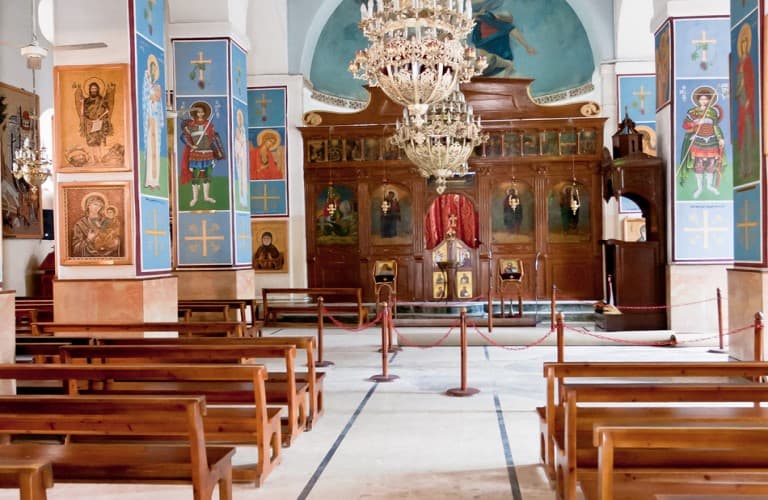
The famous mosaic associated with St. George's Church is the reason many international visitors first hear the name Madaba.
Its importance, however, should not be confused with physical scale.
Travelers accustomed to famous attractions occupying enormous museums or archaeological complexes can arrive expecting the Madaba Map to require hours simply because it carries considerable historical significance. The experience is more concentrated than that, which is precisely why the city fits so naturally into a travel day.
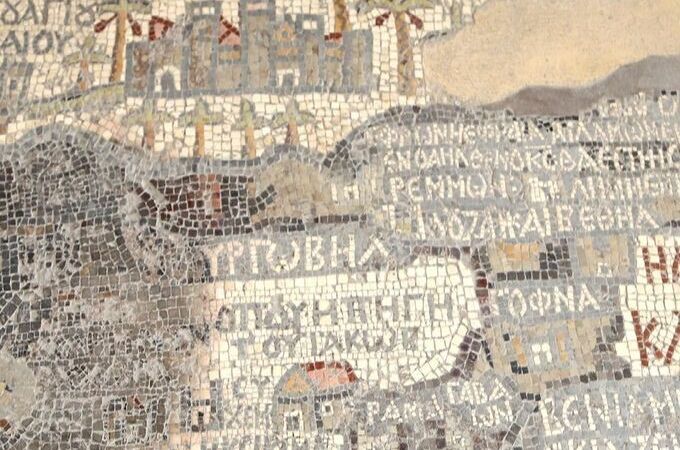
The mosaic is a Byzantine-era representation of the Holy Land and surrounding region, with Jerusalem receiving particularly important visual treatment. Although parts of the original mosaic have been lost, what survives provides an extraordinary connection between geography, religious history and Byzantine cartography.
A guide can make the visit substantially more meaningful by helping travelers read what they are seeing rather than merely identifying the most famous section.
The important planning lesson is that historical importance and visit duration are not proportional.
Something can deserve your attention without demanding your entire day.
Madaba Becomes More Interesting When You Stop Treating It as One Mosaic
The opposite mistake is equally common.
Because the map receives so much attention, visitors can reduce Madaba to a single church visit and assume the city's cultural identity has been completed once they have seen it.
Madaba's mosaic tradition is broader than one floor.
Other archaeological and religious sites within the city contribute to understanding why mosaics became so closely associated with the destination, while the urban environment gives the experience a scale that feels considerably more intimate than Jordan's major archaeological landscapes.
This does not mean every traveler needs to visit every mosaic site.
In fact, attempting to do so can create exactly the kind of checklist tourism we are trying to avoid throughout this Jordan cluster.
A better approach is to choose enough context that the Madaba Map stops feeling like an isolated famous object.
For a traveler with moderate historical interest, that can happen within a few well-used hours.
Someone particularly interested in Byzantine art, early Christianity or mosaic craftsmanship may reasonably want longer.
The Overnight Decision Begins With Tomorrow Morning
When deciding whether to sleep in Madaba, travelers tend to examine what they could do there that evening.
A more useful question is what happens the following morning.
If staying in Madaba places you conveniently for the next stage of the route, removes an unnecessary return to central Amman or allows nearby sightseeing to begin without retracing distance, the hotel night is doing practical work even before breakfast.
This is where Madaba differs from a destination such as Wadi Rum.
You stay in Wadi Rum because the overnight itself changes the experience of the desert.
You may stay in Madaba because waking there changes the efficiency and rhythm of the following travel day.
That is a completely legitimate reason for allocating a hotel night.
Not every overnight needs an attraction outside the bedroom window.
Sometimes the value is discovering that tomorrow's first transfer is shorter and nobody has to repack after breakfast merely to drive back along a road they already used yesterday.
Staying in Madaba After Arrival Can Work Better Than It Looks on a Map
Travelers arriving at Queen Alia International Airport naturally assume that the first hotel night should be in Amman.
For many itineraries, it should.
However, Madaba can be an alternative worth considering when the wider route is moving away from the capital and there is no immediate reason to enter central Amman first.
The benefit is not that Madaba somehow replaces Amman. The two destinations serve completely different purposes, and our Amman page already owns the question of how much time the capital deserves.
The advantage is operational.
An arrival night should reduce friction wherever possible. If the following day's plan fits Madaba's geography more naturally, sleeping there can avoid moving into Amman only to reverse direction again.
This option becomes less attractive when the traveler actually wants to experience the capital, has meetings or activities there, or arrives early enough that an Amman evening has genuine value.
Airport proximity alone should never determine the entire decision.
The next day's geography matters more.
A Late Flight Can Make Madaba a Bed, Not a Destination
There is an important difference between staying in Madaba and experiencing Madaba.
Suppose an international flight arrives late in the evening, followed by airport formalities and a transfer to the hotel. Breakfast the next morning is followed immediately by departure toward southern Jordan.
Technically, the traveler stayed overnight in Madaba.
Practically, Madaba supplied a hotel room.
There is nothing wrong with using it that way if the route benefits, although the itinerary should describe the experience honestly rather than implying that one overnight automatically includes meaningful city exploration.
The same principle applies across Jordan.
Hotel-night counts are poor substitutes for usable destination time.
If the Madaba Map matters, protect enough opening-hour time to see it properly. If you want to walk through part of the city, that time also needs to exist somewhere between transfers.
Sleeping within the municipal boundary does not cause cultural experiences to enter the room automatically.
Mount Nebo Strengthens Madaba Without Belonging to Madaba
Mount Nebo is frequently paired with Madaba because the geography makes the combination natural and the religious-historical connections are meaningful.
Yet this is another place where cluster discipline matters.
Mount Nebo should not be treated as though it were simply another attraction inside Madaba, nor should this article expand into a complete biblical-sites guide.
For Madaba planning, its relevance is operational.
A traveler already interested in Mount Nebo has a stronger reason to allocate a larger block of time to this area rather than treating Madaba as a quick mosaic stop. The two experiences can complement each other particularly well for visitors whose interests include biblical history, early Christianity or historical geography.
This is also where Biblical Jordan Tours can provide a natural commercial internal connection without converting the destination blog into a tour-sales page.
The cultural relationship is real.
The search intent remains Madaba's overnight decision.
Madaba and the Dead Sea Are Close Enough to Combine but Too Different to Merge
Madaba and the Dead Sea often appear within the same broader travel sequence, which creates a useful combination but also an SEO risk if every article begins explaining both destinations in equal depth.
They should remain separate.
Madaba provides historical and cultural interpretation.
The Dead Sea provides an experiential and often restorative stop whose value depends heavily on whether travelers want a few hours or a resort night.
If you plan to visit both on the same day, the critical issue is not whether the route is theoretically possible. It is whether enough usable time remains for the Dead Sea after Madaba and any additional stops have been completed.
A mosaic visit that runs twenty minutes longer is rarely a problem by itself.
A series of twenty-minute delays can eventually deliver you to the Dead Sea at a time when the relaxed swimming experience you planned has become compressed.
Combination planning needs to respect cumulative time.
The King's Highway Changes the Meaning of a Madaba Morning
Madaba can also appear near the beginning of a southbound journey toward Petra, particularly when travelers are considering a route involving the King's Highway and intermediate sightseeing.
This relationship should be acknowledged without allowing Madaba to steal the separate search intent reserved for the King's Highway article.
That future page will answer whether the scenic and historically interesting route south is worth choosing instead of a faster alternative.
Madaba has a narrower question.
If you are already beginning the day here, does that make the southbound journey easier to structure?
Often, yes.
Starting in Madaba can allow the morning to begin with local sightseeing before continuing naturally onward, rather than first leaving central Amman and treating Madaba as an additional diversion.
This is one reason an overnight can have logistical value even when the city itself does not require a full day.
Location becomes part of itinerary design.
Madaba Should Not Be Used to Make an Overloaded Transfer Day Look Cultural
There is a common itinerary-writing trick in which a long transfer day is made to appear more attractive by adding several named places along the road.
Madaba.
Mount Nebo.
A viewpoint.
Another historic site.
Lunch.
A castle.
Petra.
On paper, the day suddenly looks rich with culture.
In practice, every stop introduces parking, walking, ticketing, guiding, toilets, photographs and the ordinary unpredictability of moving several travelers through real places.
Madaba deserves better than becoming one line in that sequence.
If the city is included, give it enough time for the mosaic heritage to make sense. If the route is already overloaded, removing one stop can improve every remaining experience.
This is especially relevant when travelers choose Jordan Multi Tours that connect several major regions within limited time. Efficient routing should reduce wasted travel rather than convert every road journey into an endurance test.
The objective is not to arrive in Petra having successfully touched six destinations.
Madaba Can Be Better in the Evening Precisely Because the Famous Sites Are Not the Point
A traveler who stays overnight gains something a transit visitor usually does not: time in the city after formal sightseeing has finished.
This does not mean Madaba suddenly develops a large evening attraction list.
That is the wrong way to value the experience.
An evening can simply mean dinner without a long onward drive, a walk around the central area, time to absorb the city's atmosphere and a night that feels less operational than staying somewhere solely because the vehicle needs to leave again at dawn.
For travelers who enjoy smaller cities, this can be surprisingly appealing.
Others will find that once the principal historical interests have been satisfied, they would rather continue to a destination offering more to them personally.
Both reactions are reasonable.
The overnight is worthwhile when the slower rhythm itself has value.
Mosaic Interest Is the Clearest Reason to Give Madaba More Than a Transit Stop
Travelers vary enormously in how they respond to mosaics.
For some, the Madaba Map is a historically important object they are pleased to have seen, after which they are ready to continue.
For others, it opens an entire area of interest involving Byzantine visual culture, religious geography, craftsmanship and the preservation of ancient floors.
The second traveler should not follow the same timetable as the first.
If mosaics genuinely interest you, additional sites within Madaba can build context rather than feeling repetitive. A slower visit also allows interpretation to move beyond identifying scenes and toward understanding how these works functioned in their original settings.
This is a good example of why destination duration should follow curiosity.
Travel websites often pretend that everyone needs exactly 90 minutes because a tour schedule once allocated 90 minutes.
Your interest has not read that schedule.
Madaba's Scale Makes Independent Time Particularly Useful
Large archaeological landscapes often benefit from a guide remaining with travelers for much of the visit because route and historical interpretation are closely connected.
Madaba can work differently.
A guide may be extremely useful for the mosaic heritage and historical context, after which independent time becomes easier because the city environment is more contained and the traveler is no longer navigating a vast archaeological landscape.
This makes Madaba suitable for a mixed sightseeing style.
Receive expert interpretation where it adds something meaningful, then allow time for walking, coffee, shopping or simply continuing through the city without somebody narrating every movement.
That balance is particularly useful within Customized Jordan Trips, where private arrangements should respond to how travelers actually like to spend time rather than assuming that every included destination requires continuous guiding from arrival until departure.
Customization is most valuable when it removes unnecessary structure.
An Overnight Makes More Sense for Slow Travelers Than for Attraction Collectors
Travelers who measure destination value according to the number of major attractions may struggle to justify sleeping in Madaba.
There simply are larger and more spectacular destinations elsewhere in Jordan.
Slow travelers use another measure.
They may value having dinner in a smaller city, waking without a long transfer from Amman, spending more time with the mosaic heritage and beginning the next road journey from a geographically useful position.
Neither approach is more sophisticated.
They are different travel styles.
The mistake is booking the overnight under one set of expectations and evaluating it under the other.
If you expect Madaba to provide Petra-level visual drama, the night may feel unnecessary.
If you expect it to provide historical detail, human scale and an intelligent transition between larger destinations, it can fit extremely well.
Families Often Need Less Madaba History and More Madaba Flexibility
Families can benefit from Madaba because the sightseeing does not necessarily require an enormous walking commitment, while individual visits can be adjusted according to children's attention spans.
The danger is attempting to compensate for shorter distances by increasing the number of historical stops.
Children who have understood one or two mosaic experiences are not necessarily enriched by being shown five more in rapid succession.
The city's value for families may instead come from flexibility.
A visit can be shortened when energy falls, lunch can arrive earlier, and an overnight can prevent a cultural sightseeing day from being followed immediately by several more hours in a vehicle.
Parents often evaluate itineraries according to what children can technically manage.
A better question is what they can still enjoy.
Madaba gives planners room to make that distinction.
Religious Interest Changes the City's Weight in the Itinerary
For travelers with a strong interest in Christian history and biblical geography, Madaba can carry considerably more significance than it does for a visitor primarily focused on classical archaeology or desert landscapes.
The Madaba Map, nearby Mount Nebo and the wider historical context can create thematic continuity that justifies more time in the region.
This is where a standardized Jordan itinerary becomes less useful.
A traveler motivated by Petra and Wadi Rum may reasonably treat Madaba as a short cultural stop.
Another traveler may consider it one of the places that gives the entire journey meaning.
Both can visit the same church and leave with different assessments of how much time was appropriate.
Search intent should recognize that difference instead of pretending that one universal duration applies to everyone.
Staying in Madaba Can Reduce Hotel Changes—or Create Another One
An overnight sounds convenient until the entire itinerary is examined.
If sleeping in Madaba replaces a night that would otherwise require entering Amman and then leaving again, it may simplify the journey.
If it creates an additional one-night hotel between two existing stays, the opposite can happen.
Every hotel change contains invisible time.
Packing.
Checking out.
Loading luggage.
Driving.
Unloading.
Checking in.
Reorganizing the room.
None of these activities appears in a destination description, but they accumulate across a multi-stop trip.
When evaluating a Madaba overnight, count hotel movements rather than nights alone.
The best route is often the one that eliminates an unnecessary transition while preserving the experiences that matter.
Transit Stop or Overnight? Madaba Needs a Different Test
Rather than comparing attraction counts, Madaba is better evaluated through the role it performs in the route.
| Planning Situation | Transit Visit | Overnight |
|---|---|---|
| Main interest is the Madaba Map | Usually sufficient | Not necessary for this alone |
| Strong interest in mosaics | Possible but selective | More comfortable |
| Late airport arrival | Limited sightseeing value | Can be operationally useful |
| Early southbound departure | Requires starting elsewhere | Can simplify the morning |
| Combining nearby heritage sites | Possible with careful timing | Allows a slower structure |
| Very short Jordan trip | Usually more efficient | Night may be more valuable elsewhere |
| Prefer smaller-city evenings | Misses this aspect | Meaningful advantage |
| Avoiding unnecessary hotel changes | Depends on route | Valuable only if it actually simplifies the route |
This is not a “which option wins?” table because there is no universal winner.
Madaba's value is unusually dependent on what happened before arrival and what needs to happen after breakfast.
Who Should Stay Overnight?
An overnight makes the strongest case when Madaba is not merely the destination but also the right geographical base for the next stage of the trip.
It also suits travelers who have a serious interest in mosaics or religious history, prefer smaller cities to capitals, want to slow the route after an international arrival or dislike squeezing several cultural visits into a single transfer day.
In those situations, the hotel night has two jobs.
It creates more time for Madaba and improves the route.
When both happen simultaneously, the decision becomes easy.
Who Should Keep Madaba as a Stop?
Travelers with limited time who mainly want to see the Madaba Map can usually incorporate the city effectively without sleeping there, particularly when the wider route already passes naturally through the area.
The same applies to visitors whose principal Jordan interests lie in Petra, Wadi Rum, Jerash or other destinations that need the hotel nights more.
A well-paced two- or three-hour cultural visit can provide considerably more value than an unnecessary overnight.
Madaba does not need you to sleep there in order to count.
It needs enough time for its history to become more than a photograph of a mosaic.
The Best Madaba Decision May Be the One That Makes Tomorrow Better
This is what separates Madaba from several other Jordan destination pages in our cluster.
Petra's duration is primarily about what you want to experience inside Petra.
Wadi Rum's overnight is about what happens when daylight disappears.
The Dead Sea overnight is strongly connected to relaxation.
Madaba's accommodation decision is often about route efficiency combined with cultural interest.
That makes it less glamorous and, operationally, extremely useful.
If staying overnight allows you to experience the city properly, removes unnecessary backtracking and creates a better departure the following morning, keep the night.
If it merely adds another hotel check-in after you have already seen what matters to you, continue.
The correct decision is not the one that gives Madaba the most time.
It is the one that gives the overall Jordan journey the least wasted time.
12 Madaba Questions That Usually Change the Route
1. Is the Madaba Map enough reason to visit the city if I have limited time?
Yes, particularly for travelers interested in Byzantine history, biblical geography or mosaics, although the visit becomes more meaningful when enough time is allowed for interpretation rather than simply entering the church, locating Jerusalem on the mosaic and immediately returning to the vehicle.
2. Could Madaba be my first stop in Jordan instead of Amman?
It can work particularly well when your route does not require immediate sightseeing in the capital and the following day moves toward nearby heritage sites, the Dead Sea or southern Jordan. The decision should follow the itinerary rather than assuming every international arrival must begin in central Amman.
3. Is Madaba a good final night before flying out of Jordan?
Potentially, depending on flight time and the preceding destination. Its relative position can make it operationally convenient for some itineraries, although an early international departure still requires appropriate transfer planning. Choose it because the route works, not simply because it appears closer on a map.
4. Will several mosaic sites begin to feel repetitive?
They can for travelers with only casual interest, which is why visiting every available mosaic is not necessary. Someone interested in Byzantine art may notice meaningful differences between sites, while another traveler will gain more from one carefully interpreted visit followed by time elsewhere.
5. Can I see Madaba properly without a guide?
Yes, particularly if you research beforehand, although a knowledgeable guide can make the mosaic imagery and historical geography much easier to understand. A useful compromise is guided interpretation at the principal historical sites followed by independent time in the city.
6. Does Madaba work for travelers who are not religious?
Absolutely. The city's significance includes art, archaeology, cartography and Byzantine history in addition to religious heritage. However, travelers with little interest in any of those subjects may reasonably prefer a shorter visit because the cultural importance will matter more than the scale of the attractions.
7. Should I sleep in Madaba just to visit Mount Nebo early?
Not necessarily. An overnight becomes more compelling when it improves several parts of the following day's route rather than saving time for only one nearby stop. Examine the complete morning and onward journey before adding another hotel change solely for an earlier start.
8. Is Madaba a better base than Amman for exploring all of northern Jordan?
Generally, that is not the role this page recommends. Madaba's strength lies in particular central and southbound route combinations, while Amman functions differently as a capital and northern sightseeing base. Choosing between them should depend on the actual destinations planned rather than hotel prices alone.
9. How much time should a mosaic enthusiast give Madaba?
A traveler with a serious interest in mosaics can comfortably justify a longer visit than someone focused only on the famous map, potentially making an overnight worthwhile when combined with other regional interests. The extra time should deepen the theme rather than simply increase the number of sites visited.
10. Is Madaba worth visiting if I have already seen Byzantine mosaics elsewhere?
It can be, particularly because the Madaba Map's historical geography gives it a significance beyond decorative craftsmanship. Whether the broader mosaic heritage warrants additional time depends on your specialist interest and how much Byzantine material you have already encountered during the journey.
11. Can Madaba be combined with the Dead Sea without making the day too busy?
Yes, when the number of additional stops remains controlled and the Dead Sea portion has enough practical time for changing, water access and showering. Problems usually arise not from combining these two places but from adding several more destinations between them.
12. What is the clearest sign that I do not need to stay overnight in Madaba?
If you mainly want to see the Madaba Map, your route already passes through the city at a sensible time, and sleeping there would introduce an additional hotel change without improving the following day's geography, a well-planned transit visit will probably serve you better.

A travel professional specializing in tailor-made travel planning, guest experience management, and multi-destination tourism operations.
With over 23 years of experience in the travel industry, he designs and manages private and cultural tours for international travelers across Türkiye, Greece, Egypt, Jordan, Morocco, and other destinations.
He has strong expertise in both online and face-to-face guest communication, sales processes, and end-to-end travel operations.
Working closely with hotels, travel agencies, and local partners, he ensures smooth coordination and high-quality travel experiences at every stage of the journey.
His focus is on delivering personalized, reliable, and seamless travel experiences for international guests worldwide.