Wadi Rum Changes After the Day Visitors Leave
Updated: August 2026
There is a perfectly reasonable way to visit Wadi Rum in several hours.
You arrive, transfer into an appropriate desert vehicle, travel through enormous sandstone landscapes, stop at selected natural and cultural sites, drink tea somewhere that makes the outside world feel unexpectedly distant, take far too many photographs and leave knowing exactly why this part of southern Jordan became famous.
Then there is the other Wadi Rum.
The light begins to soften. The vehicles become less noticeable. Sunset alters the sandstone by the minute, dinner replaces sightseeing, and eventually the desert loses the visual drama that dominated the afternoon. After dark, Wadi Rum becomes quieter, colder or warmer depending on the season, and far less interested in posing for photographs.
That is the real difference between visiting Wadi Rum for the day and staying overnight.
A day visit shows you the landscape. An overnight stay allows you to experience its changing rhythm.
Neither is automatically the correct choice. Travelers with limited time can have an excellent Wadi Rum experience without sleeping in the desert, while others would find a rushed visit strangely incomplete.
The decision depends less on how many attractions you want to see than on what you expect Wadi Rum to contribute to the wider Jordan journey.
Start With the Experience You Want, Not the Number of Hours You Have
People often ask whether four hours, six hours or a full day is “enough” for Wadi Rum.
That is not quite the right calculation.
Unlike Petra, where additional time allows you to penetrate farther into a vast archaeological site, Wadi Rum changes according to how you experience the landscape.
A shorter desert excursion can introduce its scale and major formations effectively. Extending that excursion by another two hours may allow additional stops, but it does not necessarily transform the experience.
Staying through sunset and into the night does.
The important dividing line is therefore not always four hours versus eight.
It is often:
leave before evening versus remain after the sightseeing portion of the day is over.
This distinction is what makes Wadi Rum unusual within a Jordan itinerary. At most destinations, your hotel is simply where you return after sightseeing.
Here, where you sleep can become part of the reason you came.
A Day Visit Works Better Than Some Travelers Expect
Overnight stays receive so much attention that travelers can begin feeling that anything less is a compromised version of Wadi Rum.
It does not need to be.
A well-organized daytime visit can provide several hours inside the protected desert landscape, using a 4x4 vehicle to reach selected areas while allowing time to get out, walk, photograph and experience the surroundings rather than simply driving through them.
This option is particularly useful when Wadi Rum forms one part of a shorter Jordan trip and another night would require sacrificing somewhere you value more.
It can also suit travelers who are interested primarily in the landscape rather than the camp experience.
What matters is avoiding a visit so compressed that Wadi Rum becomes little more than a transfer with photographs.
Arrive, drive for an hour, photograph a dune, leave.
Technically, you were there.
But geography deserves a little more respect than proof of attendance.
Overnight Is Not Better Because You Get More Sightseeing
This distinction is important.
If you stay overnight, the extra value does not necessarily come from adding more rock formations to your list.
It comes from the periods between conventional sightseeing.
The late-afternoon light.
Sunset.
Dinner in the desert.
The sky after dark when conditions cooperate.
The temperature changing.
The quiet before breakfast.
Morning light across a landscape that looked completely different the previous evening.
None of these needs a monument number.
That makes Wadi Rum one of the rare places where the most memorable part of an overnight stay may happen after you have stopped actively touring.
For travelers who enjoy landscape, photography or simply a slower travel rhythm, this can justify the overnight by itself.
For travelers who primarily want to see Wadi Rum's major scenery before continuing elsewhere, it may not.
Both choices are legitimate.
Desert Camps Are Not All the Same Experience
“Stay in a Wadi Rum camp” sounds like a single accommodation category.
It is not.
The experience can range from relatively simple camps to properties offering considerably more comfort and private facilities. Some emphasize a traditional desert atmosphere, while others provide accommodation that resembles a small resort placed inside a dramatic landscape.
This creates an important planning question:
What exactly are you hoping to gain by sleeping in Wadi Rum?
If the attraction is simplicity, stars and a stronger feeling of being in the desert, selecting accommodation primarily because it has the most hotel-like facilities may work against that expectation.
If you value a private bathroom, climate control or higher comfort after several active touring days, romantic ideas about “authentic simplicity” become less important at 02:00.
Neither preference is more authentic.
Comfort is personal.
The useful approach is to understand what you are booking rather than assuming every desert camp provides the same balance of atmosphere and facilities.
The Famous Bubble Room Is a Room Type, Not a Reason to Visit Wadi Rum
Transparent or panoramic “bubble” accommodation has become closely associated with Wadi Rum on social media.
It photographs extremely well.
That should not make it the organizing principle of the visit.
A bubble room can be enjoyable for travelers who like the design and appreciate the additional comfort offered by a particular property, but the landscape remains the destination. The quality of your Wadi Rum experience depends far more on where you go in the desert, how the day is paced and whether the overnight atmosphere matters to you.
There is also a practical point.
A photograph showing stars through a transparent roof represents a combination of weather, visibility, lighting and photography. Nature has not signed a contract guaranteeing the same sky during your stay.
Book the room because you like the accommodation.
Do not book the desert because you like the room.
Wadi Rum deserves the hierarchy to remain that way around.
Your 4x4 Tour Should Have Enough Stops to Stop Feeling Like Transportation
Much of Wadi Rum is explored using locally operated 4x4 vehicles appropriate to the desert environment.
The vehicle matters, but the quality of the experience depends on what happens when it stops.
If an excursion becomes a continuous drive from one named location to another, the desert can begin feeling strangely small despite its enormous scale.
Getting out changes that.
Walking across sand, approaching a rock formation, climbing a manageable viewpoint where appropriate or simply remaining somewhere long enough for the silence to register gives scale to what you are seeing.
The best duration therefore depends partly on the rhythm of the excursion.
A shorter outing with sensible stops can be more rewarding than a longer one designed primarily to maximize the number of named locations.
Wadi Rum is not an outdoor museum where success is measured by galleries completed.
The empty spaces are part of the collection.
Sunset Is Worth Planning, but It Should Not Control Everything Before It
Sunset is one of the strongest arguments for remaining in Wadi Rum into the evening.
The sandstone responds beautifully to changing light, and watching the day finish from inside the desert rather than through a vehicle window can be memorable.
The danger is turning sunset into a deadline that damages everything before it.
If you arrive too late because another sightseeing day has been overloaded, the desert excursion becomes rushed. Stops shorten. The driver is now trying to place you somewhere appropriate while the sun continues doing exactly what it was always going to do.
This is particularly relevant when arriving from Petra.
Leaving Petra later than planned because you wanted one more trail may seem harmless until it removes the relaxed Wadi Rum afternoon you were expecting.
The two destinations connect naturally.
Their clocks do not negotiate with each other.
If sunset matters, protect it earlier in the itinerary.
Sunrise Is More Personal Than Sunset
Sunrise receives almost the same promotional attention as sunset, but travelers experience it differently.
Some people love waking early, stepping outside before breakfast and watching the desert gradually become visible.
Others discover that the greatest luxury of a desert camp is sleeping until a civilized hour after several days of early departures elsewhere in Jordan.
You do not need to turn sunrise into an obligation.
If photography is important, early light may be worth the effort. If the previous evening already provided the atmosphere you wanted, remaining in bed does not invalidate the overnight experience.
This matters because Jordan itineraries can contain many early starts.
Petra encourages them. Long transfer days encourage them. Flights certainly do.
An overnight in Wadi Rum can be another scheduled performance beginning before dawn, or it can provide a rare slower morning.
Choose deliberately.
The desert will survive either decision.
Day Visit or Overnight? Decide by What You Would Lose
Instead of counting attractions, compare the part of Wadi Rum that disappears when you choose one format over another.
| What Matters to You | Day Visit | Overnight Stay |
|---|---|---|
| Seeing the major desert landscape | Strong fit | Strong fit |
| Limited Jordan itinerary | Easier to accommodate | Requires another night |
| Sunset inside Wadi Rum | Timing dependent | Natural fit |
| Desert after dark | Not included | Part of the experience |
| Sunrise opportunity | Not included | Available if desired |
| Camp dinner/atmosphere | Not included | Usually part of the stay arrangement |
| Photography across changing light | More limited | Much stronger |
| Hotel-style comfort | Easier elsewhere | Depends heavily on camp |
| Slower travel experience | Limited | One of the main advantages |
Notice what is absent from the table:
“Number of attractions.”
That is intentional.
The overnight decision is about atmosphere more than inventory.
Petra and Wadi Rum Should Not Compete for the Same Afternoon
Petra and Wadi Rum form one of Jordan's most natural destination combinations, which makes it tempting to plan them aggressively.
A traveler sees Petra in the morning, leaves after lunch, reaches Wadi Rum, begins a desert tour and catches sunset.
Sometimes that can work.
The problem is that Petra is exceptionally good at making visitors stay longer than expected.
The Monastery takes effort. Photographs take time. Lunch takes time. Walking back takes time. Suddenly the carefully protected Wadi Rum afternoon has become a race south.
If you want both destinations to perform at their best, decide beforehand where the priority lies.
Our Petra Tours planning treats Petra's duration separately because it should not be shortened casually simply to satisfy the next destination.
Likewise, Wadi Rum should not receive whatever hours remain after Petra has finished with you.
A good Jordan itinerary allows each place enough room to behave like itself.
Wadi Rum to Aqaba Creates a Completely Different Departure Morning
Continuing from Wadi Rum to Aqaba is geographically logical for many south Jordan journeys.
It also changes the psychology of the overnight.
If the next destination is a Red Sea stay with no urgent sightseeing schedule, there may be little reason to leave the desert at the earliest possible hour. Breakfast can be slower, and the transition from desert to coast becomes part of the changing landscape of the trip.
If the onward journey involves a flight, border arrangement or another fixed commitment, the morning becomes more structured.
This is why the Wadi Rum overnight should never be evaluated in isolation.
The value of sunrise, breakfast and a relaxed departure depends partly on what is waiting afterward.
Our later Aqaba page will own the question of how many nights the Red Sea deserves.
Here, the only issue is whether your next commitment allows Wadi Rum to end naturally.
Do Not Bring Your Entire Suitcase Into the Desert Just Because You Own It
An overnight stay creates a practical luggage question.
Travelers moving through Jordan may have large suitcases containing everything needed for the entire trip. That does not mean every item needs to accompany them into their sleeping space for one desert night.
Depending on the specific arrangements, it can be more convenient to organize a smaller overnight bag containing clothing, toiletries, medication, charging equipment and anything genuinely required before the following morning.
This should be confirmed with the operator or camp because luggage handling arrangements vary.
The broader principle is simple:
Pack for the night you are having.
A desert overnight does not require ceremonial access to every shirt you brought from home.
Reducing unnecessary luggage movement also makes transfers easier, particularly when several people are traveling together.
Small operational decisions can have surprisingly large effects on how effortless a trip feels.
Temperature Is Part of the Experience, Not a Footnote
“Desert” encourages people to think almost exclusively about heat.
Wadi Rum is more complicated.
Daytime conditions and nighttime temperatures can differ substantially, while the season changes what feels comfortable. Travelers should therefore prepare for the actual month of travel rather than assuming that desert accommodation means permanently warm weather.
Layers can become important, particularly outside the hottest period.
The type of camp also matters because accommodation facilities vary, and what feels comfortable in a fully equipped room may differ considerably from a simpler desert stay.
This is another reason not to write a universal packing list inside a Wadi Rum destination article.
Check expected conditions shortly before travel and confirm what your accommodation provides.
The operational lesson is more durable:
Plan separately for the afternoon excursion, the evening outside and the night in your accommodation.
They may not feel like the same climate.
The Desert Does Not Guarantee a Perfect Night Sky
Wadi Rum is associated with stargazing for good reason.
Under favorable conditions, the dark desert environment can provide a beautiful night sky.
“Favorable conditions” deserves to remain in the sentence.
Cloud, haze, moonlight, local lighting and seasonal atmospheric conditions all affect what is visible. The appearance of the sky also changes according to where you are staying and when you step outside.
This matters because online imagery can create expectations that no accommodation provider can reasonably guarantee.
A night in Wadi Rum should still make sense if the Milky Way does not appear on command.
If stars are the only reason you booked the overnight, weather has too much power over your satisfaction.
If the overnight is about sunset, desert atmosphere, dinner, darkness, morning light and the landscape as a whole, the sky becomes a bonus rather than an exam result.
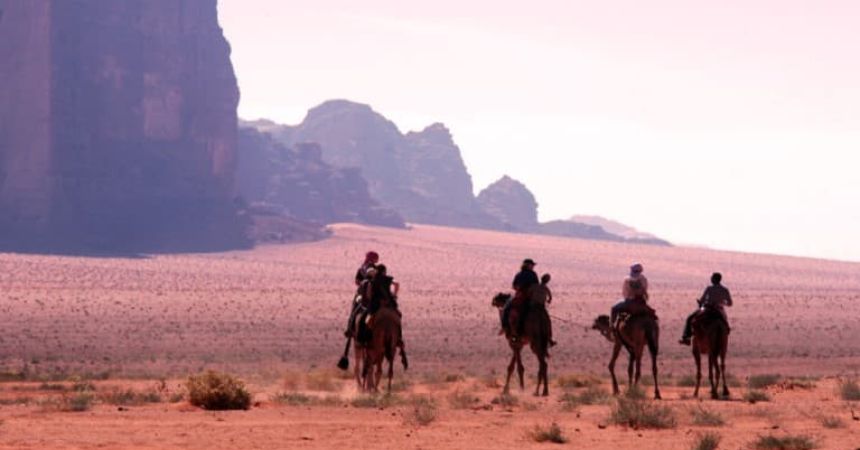
Camel Riding and 4x4 Touring Do Different Jobs
Camel experiences and 4x4 excursions are sometimes presented as interchangeable ways to explore Wadi Rum.
They are not.
A 4x4 allows travelers to cover significantly more ground and connect different areas of the desert efficiently. A camel ride provides a slower, more sensory experience but should not automatically replace the principal exploration if your objective is to see a broader portion of Wadi Rum within limited time.
For many visitors, the two work best when treated differently.
The 4x4 is the practical sightseeing framework.
A camel experience, where appropriate and responsibly arranged, can be an optional addition rather than the transportation system for the entire visit.
The correct balance depends on interests and available time.
Do not select an activity merely because photographs suggest it is compulsory.
Wadi Rum existed before social media developed a checklist for deserts.
Overnight Does Not Automatically Mean “Authentic Bedouin Experience”
This phrase deserves caution.
Bedouin culture has deep roots in the region, and local hosts can provide meaningful cultural context through hospitality, food, conversation and knowledge of the landscape.
But travelers should resist assuming that every commercial camp represents an untouched traditional lifestyle preserved exclusively for visitors.
Tourism is part of modern Wadi Rum.
Comfortable accommodation, organized excursions and purpose-built visitor facilities exist because contemporary travelers use them.
That does not make the experience fake.
It makes it contemporary.
Respectful cultural engagement begins by allowing local people to exist in the present rather than expecting them to perform an imagined historical version of desert life.
Ask questions.
Listen.
Enjoy the hospitality.
Just do not demand authenticity as though it were a room amenity included beside breakfast.
One Night Is Usually Enough to Understand What Makes the Overnight Different
Travelers who decide to sleep in Wadi Rum then face another question: one night or two?
For a conventional first Jordan journey, one well-planned night is usually enough to capture the essential difference between a daytime visit and a desert stay.
You can arrive with enough time for an afternoon experience, remain for sunset, spend the night and experience the following morning before continuing.
A second night becomes more relevant when Wadi Rum itself is a major focus: extended desert exploration, hiking, photography, climbing or simply a deliberate desire to slow the itinerary substantially.
Adding nights because the camp looks beautiful online is not necessarily wrong.
It simply needs to compete fairly with the rest of Jordan.
A second Wadi Rum night might mean one less night in Amman, Petra, Dana, Aqaba or elsewhere.
Every additional night has an opportunity cost.
Families Often Like Wadi Rum for Exactly the Reason Adults Overcomplicate It
Children do not usually arrive asking whether a sandstone formation belongs to the Umm Ishrin or Disi geological sequence.
They see sand, enormous rocks, open vehicles and somewhere dramatically different from a hotel.
That can make Wadi Rum one of the easier landscape experiences to share as a family.
The practical concerns are more ordinary: appropriate sun protection, safe activity choices, meal expectations, sleeping arrangements, temperature and whether younger children will tolerate a long desert excursion.
A shorter 4x4 program followed by an overnight may work better than trying to maximize sightseeing hours.
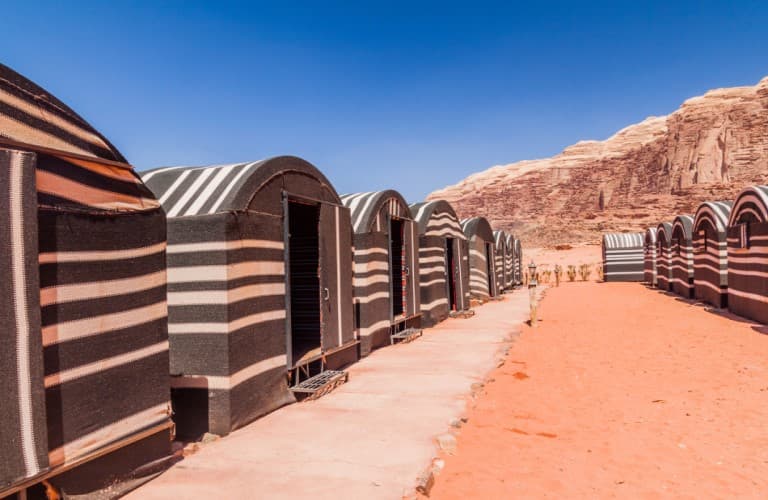
Families should also verify camp room configurations and facilities rather than assuming that “tent” or “bubble” means the same thing everywhere.
The desert can feel wonderfully simple.
Family logistics rarely are.
Planning them properly allows the landscape to recover that simplicity.
Wadi Rum Works Because It Interrupts Jordan
A classic Jordan journey can become intellectually dense.
Amman introduces layers of history and contemporary life. Jerash requires attention. Madaba adds mosaics and religious history. Petra can absorb an entire day of archaeology before lunch has even been considered.
Then Wadi Rum removes most of the explanatory architecture.
There is space.
This contrast is one of the reasons Jordan Tours frequently feel more balanced when Wadi Rum is not treated merely as another attraction.
The desert changes the visual language of the journey.
For a few hours, you do not need to identify a Roman emperor, Nabataean façade or Byzantine mosaic.
You can look at sandstone.
That may sound like less content.
During a history-heavy trip, it can feel like exactly the right amount.
Who Should Skip the Overnight?
The overnight is not compulsory.
Skip it when desert accommodation genuinely does not appeal to you, when your itinerary is too short to justify another hotel change, when you strongly prefer conventional hotel facilities or when remaining overnight would force you to remove an experience elsewhere that matters considerably more.
A good daytime visit is preferable to an overnight booked because somebody on the internet said you “must” sleep in Wadi Rum.
Travel advice becomes unhelpful when every destination is mandatory.
The opposite is also true.
Do not skip the night merely because you are worried that desert accommodation will necessarily be basic. Camp standards vary considerably, and travelers who require more comfort may have appropriate options depending on availability and budget.
Choose according to the experience you want.
Not according to the experience travel culture tells you a serious Jordan visitor is supposed to want.
So, Should You Stay Overnight in Wadi Rum?
For most first-time travelers with enough time in Jordan, yes, one night is usually worth considering.
Not because Wadi Rum cannot be visited during the day.
It can.
The overnight earns its place because the desert changes when sightseeing finishes. Sunset, darkness, dinner, quieter hours and morning create an experience that cannot be reproduced by extending a daytime 4x4 excursion for another hour.
If your Jordan itinerary is short, however, a substantial day visit remains a perfectly sensible choice.
The decision becomes easier once you stop asking whether the overnight is “worth it” in isolation.
Ask what the night replaces.
If it replaces an unnecessary extra hotel night elsewhere, keep it.
If it forces Petra into an exhausting half-visit, reconsider it.
If it provides the transition between archaeology and the Red Sea that your trip needs, it may become one of the best nights in the itinerary.
Wadi Rum does not require everyone to sleep there.
It simply rewards travelers who have a reason to stay after the desert has stopped being a sightseeing destination for the day.
Questions That Matter Once You Decide to Enter the Desert
1. What time should I reach Wadi Rum if I want to stay overnight?
Arriving by early or mid-afternoon generally gives the overnight more purpose because there is time for desert exploration before sunset rather than simply reaching camp for dinner. Exact timing should follow the season, planned excursion, camp arrangements and where you are traveling from that day.
2. What happens if bad weather affects my Wadi Rum plans?
Desert conditions can influence visibility, activities and transportation, so plans occasionally need adjustment. Confirm arrangements locally when weather is uncertain rather than assuming the original program will operate unchanged. Building some margin into arrival and departure timing also makes adaptations easier.
3. Are Wadi Rum camps inside the same area where the 4x4 tours operate?
Camp locations vary, as do transfer and excursion arrangements. Do not assume that every accommodation has identical access or views simply because its address says Wadi Rum. The specific camp and its transportation procedures should be checked when the reservation is confirmed.
4. Will I have a private bathroom in a Wadi Rum camp?
That depends entirely on the accommodation category and room type. Some camps offer private ensuite facilities while simpler options may differ. If a private bathroom matters to you, confirm it specifically rather than relying on general descriptions such as “luxury camp.”
5. Is Wi-Fi reliable enough to work from Wadi Rum?
Connectivity varies and should not be treated like a city-hotel guarantee. Travelers who must work, join calls or transfer important files should confirm current connectivity with their accommodation and maintain an alternative plan rather than assuming uninterrupted desert internet access.
6. Can I stay in Wadi Rum without taking a 4x4 excursion?
You can arrange an overnight whose structure differs, but for first-time visitors a suitable desert excursion is one of the most practical ways to experience more than the immediate camp surroundings. Sleeping in Wadi Rum and actually exploring Wadi Rum are related but separate decisions.
7. Is alcohol available at desert camps?
Policies and availability differ between properties, so travelers for whom this matters should ask the specific accommodation beforehand. It is better to verify current camp rules directly than assume that a desert property follows the same food-and-beverage arrangements as an international hotel.
8. What should I keep in a small overnight bag?
Medication, essential toiletries, suitable clothing layers, sleepwear, charging equipment, sun protection and anything needed before the next luggage access are sensible priorities. Exact luggage arrangements should be confirmed with your operator or camp because vehicle and storage procedures can vary.
9. Will my phone have a signal throughout Wadi Rum?
Mobile coverage can vary by location and provider, particularly once you move deeper into the desert environment. Do not make a critical call or online obligation dependent on guaranteed coverage during the excursion, and tell relevant people beforehand if you expect to be less reachable.
10. Are meals normally included when staying in a desert camp?
Many overnight arrangements include dinner and breakfast, although inclusions depend on the booked property and rate. Check your confirmation rather than assuming a universal policy, particularly if you have dietary requirements that the camp should know about before arrival.
11. What happens to my main luggage during a Wadi Rum overnight?
This depends on the transport and camp arrangement. In some itineraries the main luggage can remain appropriately handled while travelers take only what they need for the night; other arrangements differ. Confirm the procedure before arrival, especially when traveling with several large cases.
12. Should Wadi Rum come before or after Aqaba?
Both sequences can work, but Wadi Rum followed by Aqaba creates a particularly natural transition from active desert touring to Red Sea relaxation. The better order ultimately depends on your flights, wider route and whether Aqaba is a genuine stay rather than simply another destination being added.

A travel professional specializing in tailor-made travel planning, guest experience management, and multi-destination tourism operations.
With over 23 years of experience in the travel industry, he designs and manages private and cultural tours for international travelers across Türkiye, Greece, Egypt, Jordan, Morocco, and other destinations.
He has strong expertise in both online and face-to-face guest communication, sales processes, and end-to-end travel operations.
Working closely with hotels, travel agencies, and local partners, he ensures smooth coordination and high-quality travel experiences at every stage of the journey.
His focus is on delivering personalized, reliable, and seamless travel experiences for international guests worldwide.