The Dead Sea Is Easy to Visit and Surprisingly Easy to Misplan
Updated: August 2026
The Dead Sea looks wonderfully simple on an itinerary.
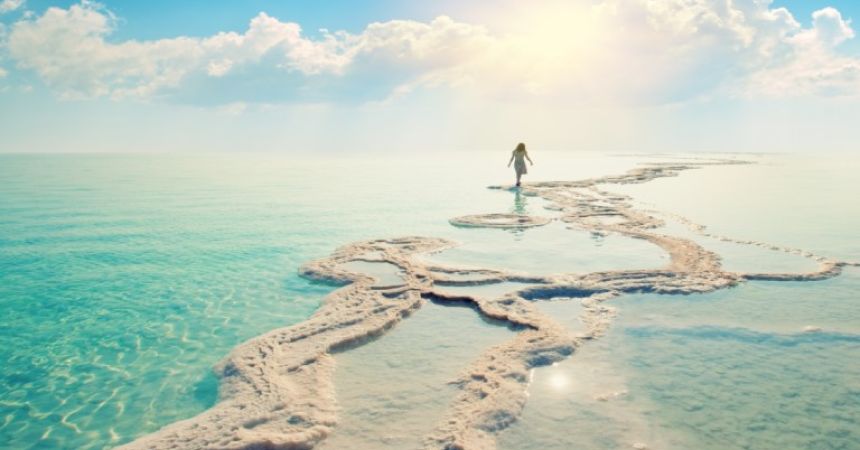
Arrive. Float. Take the photograph everybody takes while apparently reading something in the water. Shower. Continue.
For some travelers, that is exactly the right amount of Dead Sea.
For others, reducing the experience to ninety minutes between two road journeys misses why the destination works so well in Jordan. The Dead Sea can function less as a sightseeing stop and more as a deliberate pause between days filled with archaeology, road travel, hiking or desert activity.
That distinction matters because the Dead Sea does not need several days of traditional sightseeing. There is no long attraction list waiting to justify your hotel booking.
An overnight stay earns its place differently.
It gives you time to arrive without watching the clock, use resort facilities properly, experience the water without treating it as an appointment and, perhaps most importantly, let the wider Jordan itinerary slow down for a night.
So the useful question is not:
“Is the Dead Sea worth visiting?”
For many Jordan travelers, yes.
The better question is:
“Do I need to stay there, or do I simply need enough time to experience it properly?”
The Dead Sea Is Not Really a Sightseeing Destination
This is where planning often becomes confused.
Travelers naturally evaluate destinations according to how many things there are to do.
Petra has an enormous archaeological landscape. Jerash can occupy hours of walking and interpretation. Wadi Rum involves desert touring, while Amman can support several different types of sightseeing.
The Dead Sea operates on another logic.
Its main value is experiential rather than accumulative.
You go into the water. You notice immediately that ordinary swimming rules no longer apply. The buoyancy feels strange even if you knew exactly what to expect. You take your time, rinse off, perhaps use the pool or spa facilities, have lunch, watch the landscape and do remarkably little that would look impressive in a timetable.
That is precisely why it can work so well.
Trying to “maximize” the Dead Sea misunderstands it.
The experience gets better when the schedule gives it less to prove.
A Day Stop Works Best When You Know Exactly What You Want From It
A short Dead Sea visit can be completely satisfying.
If your main objective is to experience floating in the water, see the landscape and continue along a broader Jordan route, you may not need to dedicate a hotel night.
This works particularly well when a resort or beach facility provides appropriate day access and the timing allows enough room for changing, entering the water, showering and perhaps eating without making the next transfer stressful.
The important word is enough.
A Dead Sea stop becomes weaker when the itinerary assumes that forty-five minutes between arrival and departure somehow contains the complete experience.
You need practical time.
Swimming is not the only task. You have to change, reach the water, rinse thoroughly afterward and reorganize yourself before getting back into a vehicle.
Nobody wants to continue to Petra with salt drying comfortably inside places clothing was not designed to negotiate with.
An Overnight Stay Buys You Less Urgency, Not More Attractions
The strongest argument for staying overnight has very little to do with adding things to do.
It removes time pressure.
You can arrive in the afternoon, settle into the hotel, use the water and facilities without calculating how long the next road journey will take, watch sunset if conditions cooperate and have a slower evening.
The following morning can also remain relaxed before onward travel.
This is why an overnight can be particularly valuable after several demanding Jordan days.
Suppose you have already covered Amman, Jerash and perhaps a long King's Highway journey. Or perhaps the Dead Sea comes after Petra and Wadi Rum, when everybody has walked, climbed, driven and woken earlier than their holiday self had originally intended.
A night where the primary activity is floating can be a very intelligent piece of itinerary design.
Not everything worthwhile has to leave you more tired than before.
The Dead Sea Is Often More Valuable Because of What Comes Before It
A destination should not always be judged in isolation.
Its position in the route changes its value.
Imagine placing the Dead Sea immediately after an international arrival. That can create a gentle introduction to Jordan, particularly for travelers who want to recover before beginning intensive sightseeing.
Now place exactly the same hotel stay after Petra.
The room has not changed.
The traveler has.
After long archaeological walking days, a destination that requires very little physical effort can suddenly feel far more valuable.
This is why Jordan Private Tours should not treat accommodation nights as interchangeable boxes.
One relaxed night inserted in the right place can improve the days on either side of it.
The Dead Sea's most useful contribution may therefore be the recovery it provides to the rest of the itinerary.
Resort Access Changes the Practical Meaning of a “Quick Stop”
The Dead Sea shoreline is not simply a public swimming beach where travelers necessarily arrive, leave their bag on the sand and walk into the water.
For most international visitors, access is commonly organized through hotels, resorts or designated facilities that provide changing areas, showers and other practical services.
That matters.
If your itinerary contains a day stop, confirm exactly where the experience takes place and what facilities are included.
A line saying:
Dead Sea visit — 2 hours
does not tell you whether there is easy access to showers, towels, changing facilities or food.
Those details can make the difference between an effortless break and an awkward one.
This is also why comparing an overnight hotel stay with a “free stop at the Dead Sea” is not always a fair comparison.
The quality of access matters almost as much as the amount of time.
Floating Is the Famous Part, but Showering Is the Useful Part
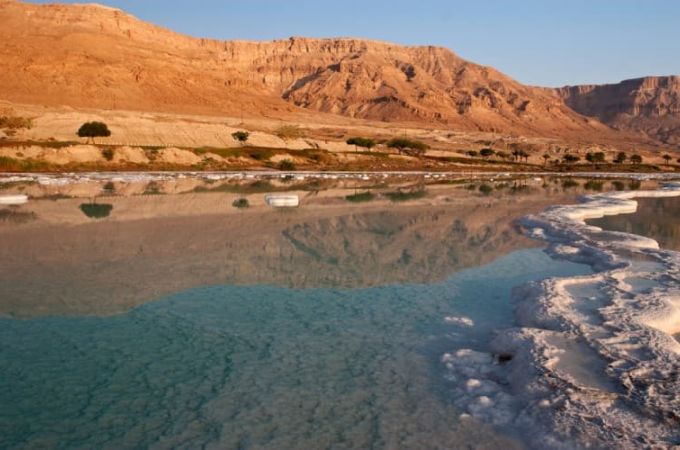
The salinity creates the characteristic buoyancy that makes floating in the Dead Sea so unusual.
It also means the water should be treated differently from an ordinary swimming pool.
Avoid getting the water into your eyes or mouth, and be cautious around recent cuts or irritated skin because the sensation can be unpleasant. Enter carefully rather than diving or splashing, and follow the guidance provided at the property or beach facility you are using.
Then rinse thoroughly afterward.
This is not glamorous travel advice, but it is excellent travel advice.
The Dead Sea is one of those places where the photograph occupies ten seconds and the shower determines how comfortable the next hour becomes.
If you are making a short stop before continuing by road, allow time for both.
The vehicle will appreciate it too.
Do Not Shave Right Before the Dead Sea Unless You Enjoy Regret
This is exactly the kind of practical detail people learn five minutes too late.
Freshly shaved or recently irritated skin can react very strongly to highly saline water. The same is true for small cuts you may not have been aware of until the Dead Sea identifies them with impressive efficiency.
This does not make the experience dangerous for ordinary travelers.
It simply means common sense helps.
Avoid entering the water with significant open wounds or skin irritation, and if you have a medical or skin condition, seek appropriate medical guidance rather than relying on a travel blog.
For everyone else, a small amount of preparation prevents the floating experience from becoming an unexpectedly educational lesson in where you scratched your ankle yesterday.
Travel is full of historical discoveries.
Not all of them need to involve your skin.
One Night Is Usually Enough for a Classic Jordan Itinerary
Travelers occasionally assume that if an overnight is worthwhile, two or three nights must be even better.
Not necessarily.
For a classic first Jordan journey centered on Amman, Petra, Wadi Rum and other cultural destinations, one Dead Sea night is often enough to create the pause the itinerary needs.
You arrive, enjoy the water and resort environment, stay overnight and continue the following day.
A second night becomes more appropriate when relaxation is itself a major trip priority, when the resort facilities matter strongly to you, or when the traveler deliberately wants a slower Jordan holiday.
This is similar to Wadi Rum in one important respect.
The first night changes the experience category.
The second needs a separate reason.
If another Dead Sea night means reducing Petra, Aqaba, Dana or another destination you care about more, the opportunity cost may exceed the benefit.
A Day Stop and Overnight Stay Solve Different Itinerary Problems
The simplest way to choose is to ask what problem you are trying to solve.
| Your Real Need | Day Stop | Overnight Stay |
|---|---|---|
| Experience floating once | Excellent fit | More time than necessary if this is the only goal |
| Break up a transfer day | Useful | Depends on wider route |
| Recover after several active days | Limited | Strong fit |
| Enjoy resort facilities | Time constrained | Much better |
| Watch sunset without rushing | Timing dependent | Natural fit |
| Continue to Petra the same day | Possible with planning | Not relevant |
| Add relaxation without adding a beach destination | Moderate | Very strong |
| Very short Jordan itinerary | Usually easier | Requires sacrificing another night |
The table is intentionally not asking which option is “better.”
The correct option depends on what you want the Dead Sea to do.
Madaba Can Make the Dead Sea Feel Geographically Convenient
Madaba and the Dead Sea often appear in the same broader route because their geography allows them to connect naturally, particularly when travelers are moving south from the Amman area.
That does not mean they belong to the same sightseeing decision.
Our dedicated Madaba page will own the question of whether Madaba deserves an overnight stay or works better as a transit visit.
The Dead Sea question remains separate.
However, route logic matters.
If Madaba, Mount Nebo or another nearby stop is already part of the travel day, the Dead Sea may fit comfortably into the same broader movement.
What you should avoid is building a day containing so many en-route stops that the Dead Sea becomes the item everyone reaches after sunset when the swimming plan has already stopped making sense.
Geography makes combinations possible.
Timing decides whether they are good.
The Dead Sea and Wadi Mujib Should Not Be Mentally Combined
Wadi Mujib sits close enough geographically that travelers sometimes treat it as an extension of the Dead Sea experience.
That is misleading.
The Dead Sea is largely about low physical demand.
Wadi Mujib can involve active canyon travel and, depending on trail and seasonal operating conditions, a much more physically demanding experience.
These two destinations solve almost opposite itinerary needs.
One slows the trip down.
The other can increase the adventure level.
Our future Wadi Mujib page will own the question of who should include that experience and what physical/operational considerations apply.
This page only needs to protect the distinction:
Staying at the Dead Sea does not mean you have “done Wadi Mujib,” and visiting Wadi Mujib does not replace the experience of slowing down at the Dead Sea.
Nearby does not mean interchangeable.
Do Not Put the Dead Sea on the Busiest Day of the Trip
Because the Dead Sea appears simple, planners sometimes use it to fill whatever time remains.
Jerash in the morning.
Madaba.
Mount Nebo.
A long drive.
Dead Sea.
Then continue to Petra.
Everything technically fits.
The question is whether the Dead Sea still functions as the experience you wanted.
Arriving late, rushing into the water, showering quickly and immediately returning to the road turns a relaxation stop into another obligation.
This may still be acceptable when the trip is short and the floating experience itself is the goal.
It becomes disappointing when you booked the Dead Sea specifically to slow down.
A relaxed destination cannot repair an overloaded day if the schedule refuses to relax when you reach it.
The Dead Sea Is One of the Few Places Where Doing Nothing Can Be the Plan
Jordan's great destinations create curiosity.
Petra encourages you farther down the trail.
Jerash has another structure beyond the one you just saw.
Wadi Rum invites another desert stop.
Amman keeps changing neighborhood character.
The Dead Sea asks less.
That is useful.
You can spend an hour at the pool after the water experience. Have lunch without calculating archaeological opening times. Read. Sleep. Watch the light across the water.
Travelers occasionally feel guilty when this happens.
They have flown a long way to Jordan and are now doing something they could theoretically do at a hotel elsewhere.
The context is what makes it different.
You are not wasting a day beside the Dead Sea.
You may be allowing yourself to enjoy the next two.
Do You Need a Luxury Resort to Experience the Dead Sea?
No.
The core experience does not depend on having the most expensive hotel on the shoreline.
What matters is reliable access to the water, appropriate facilities and a level of comfort that suits how long you plan to stay.
A traveler stopping for several hours needs practical day facilities more than a large resort room.
Someone staying overnight may place greater value on pools, dining, spa services or overall hotel quality.
This is where hotel selection should reflect the role of the destination.
If you are using the Dead Sea as the relaxation portion of Jordan Tours, investing more in accommodation can make sense because the property becomes a larger part of the experience.
If you only intend to arrive, float and continue, the equation changes.
A room is valuable only if you intend to use it.
Spa Time Can Easily Turn One Night Into Two—Whether You Want It To or Not
Dead Sea resorts often attract travelers interested in spa and wellness treatments.
That can justify a longer stay, but it needs to be a deliberate choice.
Once spa appointments, pool time, meals and a slower morning enter the plan, a single-night visit can begin feeling compressed.
This is not because the destination requires two nights.
Your chosen activities do.
That distinction matters.
Travelers who want a classic float-and-relax experience can use one night effectively. Those who specifically want wellness treatments should work backward from appointment times before deciding how many nights are required.
Do not book the additional night simply because “Dead Sea should be relaxing.”
Define what relaxation means to you first.
For one traveler, it is ninety minutes in the water and a quiet dinner.
For another, it is an entire day with no vehicle waiting outside.
Sunset Can Be Beautiful, but Do Not Build the Trip Around a Guarantee
The Dead Sea's western horizon can provide beautiful evening light and sunset conditions.
But weather, haze and seasonal factors naturally affect visibility.
This means sunset is a good reason to appreciate an overnight stay, not a promise that every evening will produce the exact photograph you saw online.
The same principle applied to the night sky in Wadi Rum and should remain consistent throughout our Jordan content.
Natural conditions are experiences, not scheduled performances.
If sunset is spectacular, enjoy it.
If conditions are less dramatic, the overnight still has value because you are not climbing immediately into a vehicle after the water experience.
The destination needs more than one reason to justify the room.
That is healthier itinerary design.
Families Often Benefit More From the Overnight Than Couples Expect
Families encounter a practical issue that couples can underestimate.
Changing several people, organizing swimwear, showering children, dealing with wet clothing and returning everyone to travel mode takes time.
A short Dead Sea stop that looks generous for two adults can become hurried for a family.
An overnight removes much of that pressure.
The children can use the pool, the parents do not need to watch the transfer clock constantly, and wet swimwear does not have to become an immediate luggage-management challenge before a long road journey.
The same principle applies to multigenerational groups.
Slower transitions often improve the whole day.
This does not mean every family needs to stay.
It means the practical time required by the group should influence the decision rather than assuming every traveler can enter and exit the experience at the same speed.
One of the Best Places for the Dead Sea Is Between Intense Parts of the Trip
The Dead Sea works particularly well as punctuation.
Cultural sightseeing before.
Relaxation.
Then continue.
That might mean placing it after northern Jordan before traveling toward Petra, or positioning it elsewhere according to the actual route and priorities.
The sequence should not be chosen from a generic map.
It should be tested against travel time and what comes immediately before and afterward.
This is also where our future King's Highway article will remain separate. That page will decide whether the scenic route south is worth the additional time compared with a faster journey.
The Dead Sea page has a different concern:
When the route reaches the lowest point, do you need two hours there or a night?
Keeping these decisions separate is exactly how we prevent Jordan content from becoming twelve versions of the same itinerary article.
Who Should Definitely Consider the Overnight?
The strongest candidates are travelers who want the Dead Sea to function as rest, not merely as a photograph.
Consider an overnight if:
you have already completed several active days;
you value resort time;
you dislike rushing through swimming experiences;
you want a slower start the following morning;
or the route naturally creates an evening arrival that would otherwise make a day stop impractical.
An overnight can also be particularly welcome on longer Jordan journeys because those itineraries have enough time for contrast to become valuable.
A twelve-day trip does not need twelve intensive sightseeing days.
That is not ambition.
It is poor recovery management.

A travel professional specializing in tailor-made travel planning, guest experience management, and multi-destination tourism operations.
With over 23 years of experience in the travel industry, he designs and manages private and cultural tours for international travelers across Türkiye, Greece, Egypt, Jordan, Morocco, and other destinations.
He has strong expertise in both online and face-to-face guest communication, sales processes, and end-to-end travel operations.
Working closely with hotels, travel agencies, and local partners, he ensures smooth coordination and high-quality travel experiences at every stage of the journey.
His focus is on delivering personalized, reliable, and seamless travel experiences for international guests worldwide.