A Taste of Morocco: How to Experience Moroccan Food
Updated: August 2026
A first encounter with Moroccan food often begins with familiar names: tagine, couscous, pastilla, harira and mint tea. Trying these dishes is certainly worthwhile, but ticking them off a list does not necessarily tell you much about how Moroccans actually eat.
Food becomes more revealing when you pay attention to context.
The bread arriving before lunch may tell you more about everyday eating habits than an elaborate restaurant presentation. A riad breakfast introduces ingredients and textures that rarely receive the attention given to dinner, while a market shows what goes into Moroccan cooking before anything reaches the plate. A simple roadside meal can connect food to geography, and a contemporary restaurant can demonstrate that Moroccan cuisine continues to evolve rather than existing only as a collection of inherited recipes.
For travelers, the best taste of Morocco therefore comes from eating in different settings rather than simply ordering different dishes.
That small shift changes the entire culinary experience.
Your First Tagine Should Probably Not Be Your Last
Many visitors order tagine on their first evening, enjoy it and mentally mark one of Morocco's essential foods as completed.
Tagine deserves more patience.
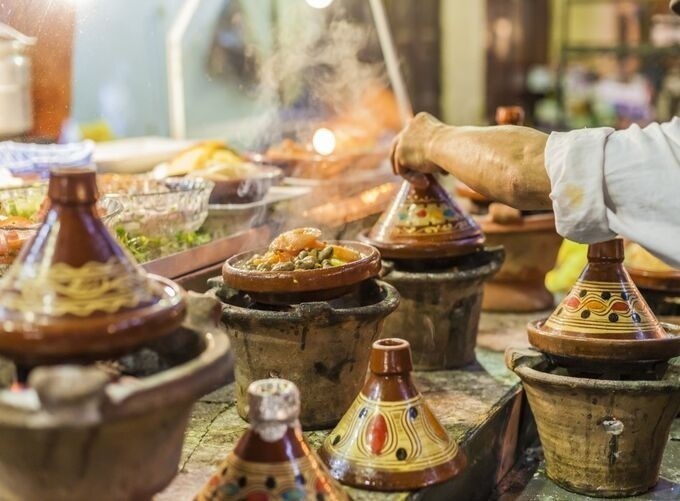
The word refers both to the distinctive cooking vessel and to a broad family of preparations rather than one standardized dish. Chicken with preserved lemon and olives can produce an entirely different experience from lamb with dried fruit, a vegetable preparation or another regional and household interpretation.
The cooking method also matters because slow preparation allows ingredients, spices and sauces to develop together rather than functioning as separate components on a plate.
This variety means comparing tagines can be more interesting than simply trying one.
Instead of asking whether you have eaten tagine yet, notice what changes between meals: sweetness, acidity, texture, meat, vegetables, seasoning and how the dish is served.
Moroccan cuisine becomes much richer once famous dish names stop being treated as single experiences.
Couscous Is About More Than What Is in the Bowl
Couscous illustrates why cultural context matters as much as ingredients.
Travelers encounter versions topped with vegetables, meat or both, yet focusing only on what appears on the plate misses the social importance attached to the dish. Couscous has a strong association with Friday and family meals, although contemporary life and tourism naturally mean it can be encountered in other circumstances as well.
For a visitor, this provides a useful reminder that traditional food has a calendar and social setting.
A restaurant can reproduce flavors and presentation, but it cannot automatically reproduce the meaning of a family meal.
That does not make restaurant couscous inauthentic or unworthy. It simply means travelers should distinguish between eating a traditional dish and participating in the social tradition surrounding it.
The distinction applies throughout Moroccan food culture.
Bread Is the Food Travelers Often Notice Too Late
Visitors photograph elaborate tagines and decorated pastries while bread quietly appears at meal after meal.
That repetition is precisely why it deserves attention.
Moroccan breads come in different forms and can accompany meals, help scoop food and occupy an everyday place that makes them culturally more revealing than many dishes marketed specifically to tourists.
Bread also leads travelers away from formal restaurants and toward neighborhood life. Bakeries and communal baking traditions connect food with the daily organization of homes and neighborhoods, while different breakfast breads and pancakes introduce another side of the country's grain-based food culture.
You do not need to become an expert on every bread variety.
Simply stop treating the bread basket as background.
One of the most useful habits during a food-focused Morocco journey is noticing what local people eat repeatedly rather than concentrating exclusively on what travel articles tell visitors to try once.
Riad Breakfast Is More Informative Than It First Appears
Breakfast in a riad can seem like the quiet interval before the day's “real” experiences begin.
Look more closely.
Depending on the property, breakfast may introduce Moroccan breads and pancakes, honey, jams, olives, eggs, fruit, tea, coffee and other items in combinations that differ from the breakfast travelers normally eat at home.
The setting contributes as well.
Eating beside a courtyard or on a terrace connects food with traditional domestic architecture, turning breakfast into an experience of place without requiring a formal culinary activity.
There is an important caveat: hotel and riad breakfasts are designed for guests, so they should not automatically be interpreted as a precise representation of what every Moroccan household eats each morning.
That does not reduce their value.
It simply means good culinary travel requires curiosity without pretending every tourism experience represents an entire country's daily routine.
Markets Explain Moroccan Food Before It Becomes a Meal
A food market can sometimes teach more than another restaurant.
Olives, spices, vegetables, fruit, dried ingredients, breads and other products reveal the building blocks of meals, while the way ingredients are displayed and purchased provides context that disappears once everything arrives prepared on a plate.
Markets also help correct one of the most common misconceptions about Moroccan cooking: that it is primarily about spices.
Spices matter, but so do ingredient combinations, preservation, slow cooking, freshness, texture and the balance between savory and sweet elements.
Travelers do not need to purchase anything to benefit from a market visit.
Observation is enough.
Look at what occupies the most space, what appears in several stalls and what local customers are actually buying. Those details can reveal more about everyday food culture than the products positioned most prominently for international visitors.
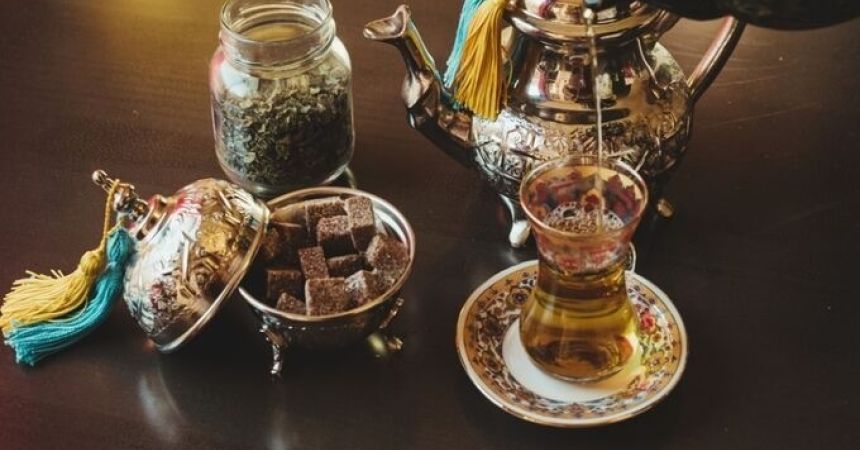
Mint Tea Is a Social Experience Before It Is a Beverage
Moroccan mint tea is easy to reduce to another culinary icon.
Order it, photograph the glass, taste the sweetness and move on.
The more interesting aspect is how tea functions socially.
It can accompany hospitality, conversation, business and pauses throughout the day. Preparation and pouring can carry their own sense of ritual, while sweetness levels and individual preferences vary.
Travelers should therefore pay attention to when tea appears, who serves it and what is happening around it.
The same glass can mean something different when served during a hotel breakfast, after a meal, during a shopping interaction or while sitting with people for an extended conversation.
Understanding food culture often requires looking beyond the food itself.
Tea makes that lesson particularly clear.
Where You Eat Changes What You Learn
Travelers sometimes spend an entire Morocco journey moving between restaurants selected specifically for international visitors.
The food may be good.
The perspective remains narrow.
Different eating environments reveal different parts of Moroccan culinary life. A traditional restaurant can introduce classic dishes in comfortable surroundings, while a market exposes ingredients and everyday commerce. A roadside lunch connects food with movement between regions, and contemporary restaurants show what Moroccan chefs do when they are not expected to reproduce an imagined timeless tradition.
This is why Morocco Culinary Discovery Tours should not simply arrange increasingly elaborate dinners.
The objective should be variety of context.
A humble lunch can occasionally add more to a journey than another expensive restaurant because it explains something the traveler has not yet seen.
Fes and Marrakech Do Not Need to Taste Identical
Morocco's major visitor cities are sometimes presented through the same restaurant vocabulary, creating the impression that national cuisine is completely uniform.
Regional identity is more interesting than that.
Fes has a particularly strong reputation for culinary tradition and refined preparations, while Marrakech provides its own food culture shaped by the city, surrounding region and enormous visitor economy. Coastal destinations introduce seafood more naturally, while travel through other regions can reveal ingredients and preparations connected to local geography.
The point is not to assign one compulsory dish to every city.
That quickly becomes another checklist.
Instead, allow location to influence what you order.
Ask what the restaurant considers local or particularly appropriate to the region rather than ordering the same familiar tagine at every stop because you already know you like it.
Travel becomes more interesting when food changes with the map.
The Atlantic Adds a Different Dimension to the Table
A journey reaching Morocco's Atlantic coast creates opportunities that naturally differ from inland dining.
Essaouira is a clear example, where seafood can become part of the destination experience rather than an occasional menu alternative. The harbor, fishing activity and coastal environment give the meal geographical context.
That context matters.
Eating fish beside the Atlantic feels different from ordering seafood deep inside an imperial-city itinerary, even when both meals are technically excellent.
Culinary travel works best when food and place reinforce one another.
This is also why trying to create one definitive list of Morocco's “best dishes” is not especially useful. The memorable meal may depend as much on where you ate it and what happened that day as on the recipe itself.
Roadside Lunches Can Become Unexpected Highlights
Long Morocco itineraries often contain substantial road journeys, particularly when traveling between cities, mountains and southern regions.
Lunch on these days is sometimes treated as a logistical necessity.
It can be more than that.
A well-chosen stop introduces a different type of restaurant from those encountered in historic tourist centers, while regional ingredients and simpler preparation can provide a useful contrast with formal evening meals.
Expectations should remain realistic.
A roadside restaurant does not become culturally important merely because tourists rarely photograph it, and “local” should never be used automatically as a synonym for superior.
The value comes from context.
You are eating where the journey naturally pauses rather than constructing every meal as a destination in itself.
That ordinary quality can make the experience memorable.
Traditional Does Not Automatically Mean Better
Travelers understandably seek traditional Moroccan cuisine, yet the word “traditional” can become a quality label rather than a description.
A poorly prepared traditional dish remains poorly prepared.
Likewise, a contemporary chef who changes presentation, ingredients or technique has not necessarily made the food less Moroccan.
Morocco is a living country, and its cuisine evolves alongside restaurants, cities and the people cooking it.
A balanced culinary journey should therefore leave room for both established recipes and modern interpretation.
This is particularly relevant in larger cities where contemporary dining can show another side of Moroccan identity.
If every meal is chosen because the restaurant looks sufficiently old-fashioned, travelers risk creating an artificial version of the country in which modern Morocco disappears from its own food story.
A Cooking Experience Is Worthwhile When It Explains Process
Cooking classes and culinary experiences can be excellent additions, but their value depends on what the traveler wants to learn.
A strong experience provides access to the process behind dishes that previously appeared complete at the restaurant table. Ingredient selection, preparation, spice balance, timing and cooking technique become visible, while conversation can explain why certain foods appear in particular contexts.
The weaker version is simply another tourist activity where participants follow instructions without gaining much understanding.
Travelers considering Private Morocco Food and Culture Tours should therefore look for culinary experiences that add interpretation rather than merely filling an afternoon.
The goal is not returning home as a Moroccan chef.
It is understanding the food better the next time it arrives at your table.
Street Food Should Add Texture, Not Become a Challenge
Street snacks and casual foods can contribute greatly to a Morocco trip, but there is no prize for eating everything available from every stall.
Choose selectively.
Observe turnover, cleanliness and how popular a vendor appears with customers, while using the same sensible judgment you would apply to informal food anywhere unfamiliar.
More importantly, avoid turning street food into a performance of adventurousness.
Trying something because it interests you is very different from eating it because a social-media checklist claims that “real travelers” must.
Street food should broaden the culinary experience.
It does not need to prove anything about the traveler.
Vegetarians Can Experience More Than Vegetable Tagine
Vegetarian travelers may initially worry that Morocco's best-known cuisine revolves heavily around meat.
Vegetable tagines are widely recognizable, but relying on the same dish repeatedly would provide a very narrow culinary experience.
Bread, salads, vegetable preparations, couscous options, soups, breakfast foods, olives, legumes and other dishes can add variety depending on restaurant and region.
The important operational step is communication.
Dietary requirements should be explained clearly rather than assuming that every kitchen interprets “vegetarian” identically. Organized itineraries should communicate dietary needs in advance where meals are included or prearranged.
The objective is not simply finding something without meat.
It is making sure dietary requirements do not reduce an entire Morocco journey to one repetitive safe option.
Tourist Restaurants Are Not the Enemy—Repetition Is
Restaurants accustomed to international travelers provide real advantages.
Menus may be easier to understand, service expectations familiar and classic dishes readily available. There is nothing inherently wrong with eating in them.
The problem appears when every meal follows the same pattern.
If lunch and dinner repeatedly consist of similar menus in similar environments, travelers can finish the trip believing Moroccan cuisine is much narrower than it actually is.
Variation solves this more effectively than avoiding tourism infrastructure altogether.
Combine traditional restaurants with contemporary dining, markets, simpler lunches, regional specialties and whatever food experiences genuinely fit the itinerary.
Culinary authenticity does not require discomfort.
It requires perspective.
Different Eating Settings Reveal Different Parts of Morocco
Rather than ranking dishes, this table looks at what travelers can learn from where they eat:
| Eating setting | What it reveals | What travelers may overlook |
|---|---|---|
| Riad breakfast | Breads, pancakes, tea and morning flavors | Everyday foods can be more revealing than signature dishes |
| Traditional restaurant | Classic preparations and established recipes | Familiar tourist favorites may dominate the menu |
| Medina market | Ingredients and food commerce | Cuisine begins long before cooking |
| Bakery | Bread and neighborhood routine | Bread's everyday cultural importance |
| Home-style meal | Sharing and hospitality | Meal structure can matter as much as individual dishes |
| Contemporary restaurant | Modern Moroccan interpretation | Moroccan cuisine continues to evolve |
| Roadside lunch | Food within the geography of travel | Simple meals can provide valuable regional context |
| Atlantic meal | Relationship between coast and cuisine | Location changes the meaning of ingredients |
| Café or tea setting | Social rhythm and hospitality | Drinking can be as culturally revealing as eating |
No single row provides the “real Morocco.”
Together, they produce a much more convincing picture than eating ten famous dishes in ten similar restaurants.
How I Would Build Food Into a Morocco Journey
I would not schedule a formal culinary activity every day.
Instead, I would create contrast.
One morning might begin with an unhurried riad breakfast before sightseeing. A market visit could provide ingredient context without needing to become a shopping tour, while lunch during a road journey could remain simple. Another evening might justify a traditional restaurant, and a contemporary dining experience could appear later to challenge the idea that Moroccan cooking belongs exclusively to the past.
If cooking genuinely interests the traveler, I would include one well-chosen hands-on experience rather than several repetitive ones.
Most importantly, I would leave room for meals nobody predicted.
Travelers on Customized Morocco Culinary Journeys still need enough flexibility to discover a bakery, café or restaurant because somebody locally recommended it rather than because every plate was selected months before arrival.
Food becomes less interesting when it is over-programmed.
What Does a Real Taste of Morocco Actually Mean?
It does not mean eating every famous dish.
A meaningful taste of Morocco comes from noticing how food fits into the country around you: bread appearing repeatedly at the table, tea creating pauses in conversation, markets revealing ingredients before cooking, regional landscapes changing what feels appropriate to eat and traditional recipes existing beside contemporary interpretation.
Tagine and couscous matter, but they are entry points rather than the entire story.
The strongest culinary journey combines what you eat, where you eat it, who prepares it and what the meal teaches you about the place.
Once those elements begin connecting, Moroccan food stops being another list of vacation experiences.
It becomes part of understanding Morocco.
Frequently Asked Questions About Experiencing Moroccan Food
Should I eat tagine more than once during a Morocco trip?
Yes, if you enjoy it. Tagine describes a broad style rather than one standardized meal, so ingredients and flavor profiles can vary considerably. Trying different preparations is more informative than treating the first tagine as a completed culinary requirement.
Why might couscous feel different from an ordinary restaurant dish?
Couscous has cultural and social associations extending beyond its ingredients, particularly its traditional connection with Friday and family meals. Restaurant versions remain worthwhile, but travelers should recognize that tasting the dish and experiencing its social context are not identical.
Is a riad breakfast genuinely Moroccan?
It can introduce many Moroccan foods and flavors, although it is still a hospitality experience designed for guests. Rather than treating it as a precise picture of every household breakfast, use it as an opportunity to notice breads, pancakes, tea and accompaniments.
Should I choose traditional or contemporary Moroccan restaurants?
Ideally, experience both. Traditional restaurants introduce established dishes and preparations, while contemporary restaurants demonstrate how Moroccan chefs interpret their culinary heritage today. Seeing both prevents the misleading impression that Moroccan cuisine stopped evolving generations ago.
Do I need a cooking class to understand Moroccan food?
No, although a good cooking experience can reveal preparation methods and ingredient relationships that restaurant dining hides. It is most worthwhile for travelers genuinely curious about process rather than those simply looking for another scheduled activity.
Is Moroccan food difficult for vegetarians?
It does not have to be, although variety requires more attention than repeatedly ordering vegetable tagine. Clearly communicate dietary requirements and explore breads, salads, vegetable dishes, legumes, couscous options, soups and other preparations available according to the restaurant and region.
Is visiting a Moroccan food market worthwhile if I do not cook?
Yes. Markets reveal ingredients, purchasing habits and the commercial side of food culture before anything reaches a restaurant table. Even without buying or cooking, observing produce, olives, spices, breads and local customers adds useful context.
Why is bread served so frequently in Morocco?
Bread occupies an important everyday place in Moroccan meals and can accompany or help eat shared dishes. Travelers often overlook it because it lacks the visual drama of tagine, yet its repeated presence makes it particularly useful for understanding daily food habits.
Is Moroccan cuisine very spicy?
Moroccan food commonly uses spices, but “spiced” does not automatically mean intensely hot. Flavor can come from layered seasoning, herbs, preserved ingredients and sweet-savory combinations, so travelers expecting every dish to deliver strong chili heat may be surprised.
Are roadside restaurants worth including in a Morocco trip?
They can be, especially when they fit naturally into an overland journey. Their value is not that simple restaurants are automatically more authentic, but that they introduce another eating environment and connect meals with the regions travelers are passing through.
Does Moroccan food change noticeably between regions?
Yes, although travelers should avoid expecting every city to have an entirely separate cuisine. Coastal geography, regional traditions, available ingredients and local preferences create differences that become easier to notice when you stop ordering the same familiar dish everywhere.
What is the biggest culinary mistake first-time visitors make?
Treating Moroccan cuisine as a checklist of famous dishes. Travelers learn considerably more when they vary the setting as well as the menu, paying attention to breakfasts, markets, bread, tea, regional context and contemporary cooking alongside celebrated traditional meals.

A travel professional specializing in tailor-made travel planning, guest experience management, and multi-destination tourism operations.
With over 23 years of experience in the travel industry, he designs and manages private and cultural tours for international travelers across Türkiye, Greece, Egypt, Jordan, Morocco, and other destinations.
He has strong expertise in both online and face-to-face guest communication, sales processes, and end-to-end travel operations.
Working closely with hotels, travel agencies, and local partners, he ensures smooth coordination and high-quality travel experiences at every stage of the journey.
His focus is on delivering personalized, reliable, and seamless travel experiences for international guests worldwide.