Essaouira, Morocco: Where the Medina Ends at the Atlantic
Updated: August 2026
The first thing many travelers notice about Essaouira is not a monument.
It is the air.
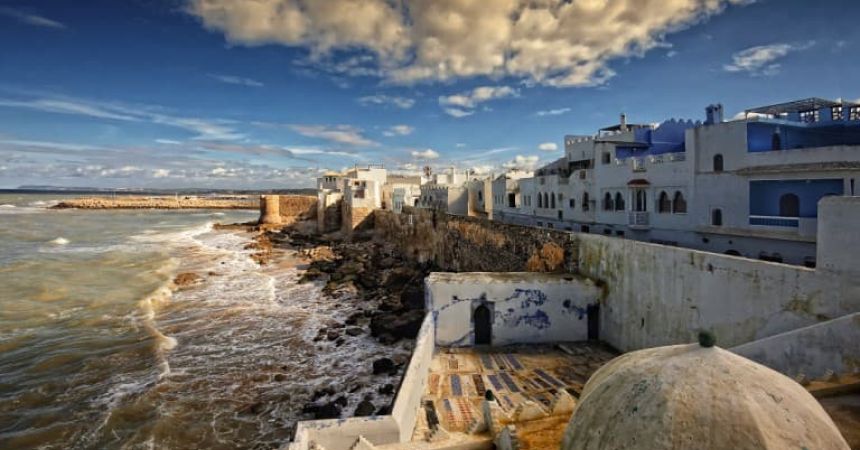
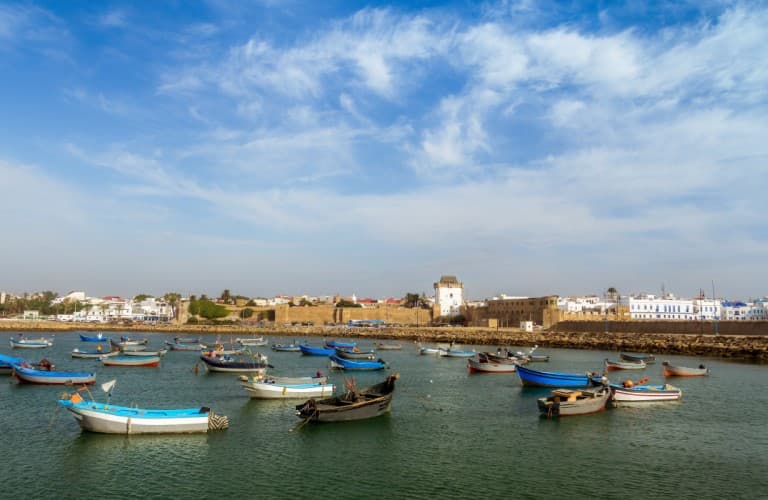
After the enclosed streets and warm colors associated with much of inland Morocco, the Atlantic announces itself immediately through wind, salt, gulls and the sudden appearance of open water beyond the city's walls. Fishing boats occupy the port, seafood moves from boat to market with very little ceremony, and the ramparts stand between an old medina and an ocean that has influenced the city's architecture, economy and everyday rhythm for generations.
Essaouira is often described as relaxed, which is true but incomplete. Plenty is happening here; it simply does not insist that visitors participate in all of it at once.
The medina is compact enough to explore without turning navigation into a project, the port remains visibly connected to working life, and the beach creates open space immediately beside the historical city. You can spend a morning looking at architecture and workshops, eat fish near the harbor, walk beside the Atlantic later and still feel that the day has followed one coherent thread rather than four unrelated activities.
That relationship between historic town and ocean is the real reason to visit Essaouira.
Take away the Atlantic and it would not merely look different.
It would be a different place.
The Wind Is Not Background Weather Here
Essaouira's wind has acquired almost as much reputation as the city itself, and travelers sometimes discuss it as though it were a minor inconvenience that should have been fixed by tourism authorities.
It is better understood as part of the destination.
The Atlantic wind influences how the beach feels, what people wear, which outdoor activities thrive and how comfortable a seemingly warm day can become after the sun drops. It contributes to Essaouira's appeal for windsurfing and kitesurfing, while simultaneously surprising travelers who packed according to the temperature forecast alone.
This produces one of the simplest operational lessons for visiting the city: bring a layer even when Morocco feels warm elsewhere.
A light jacket, overshirt or something that blocks wind can transform an evening from unexpectedly chilly to extremely pleasant, particularly after sunset or while spending extended time near the water.
The thermometer does not always describe Essaouira accurately.
The wind gets a vote.
Enter the Medina Without a Sightseeing Emergency
Essaouira's medina does not demand the same navigational concentration as some of Morocco's larger historic cities, and that changes how it should be explored.
There is less reason to enter with a defensive plan built around landmarks, navigation apps and predetermined turns. The scale allows visitors to wander, correct course naturally and return to familiar streets without the feeling that one wrong turn has rewritten the afternoon.
That makes the spaces between named attractions unusually valuable.
Small workshops, galleries, cafés, shops, residential doors and ordinary street life can receive attention without every pause competing with a major monument waiting somewhere else.
Travelers using Essaouira Cultural Morocco Tours can still benefit from historical interpretation, particularly when they want to understand the city's fortifications, trading history and architectural development, but Essaouira rarely needs every hour to be guided.
Understanding and wandering coexist comfortably here.
The Ramparts Explain Why Essaouira Looks Outward
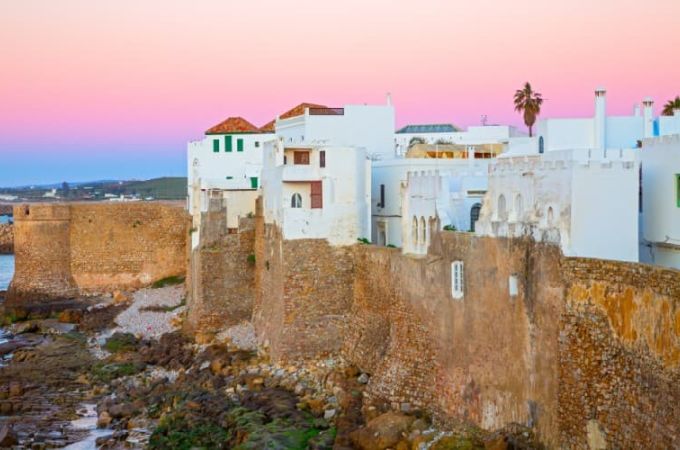
The fortifications are among Essaouira's defining visual features, but reducing them to a famous photography location misses their relationship with the city's history.
This was a port connected to international trade, and the fortified relationship between town and sea mattered strategically as well as visually. Walking near the ramparts today allows visitors to understand that relationship in physical terms: stone, cannons, ocean, port and medina occupy the same frame.
The experience changes with weather and light.
On a calm bright day, the Atlantic can appear almost decorative. When wind and waves become stronger, the defensive character of the walls feels considerably easier to understand.
This is one reason Essaouira does not need to be experienced only in ideal sunshine.
Weather gives the architecture context.
A dramatic Atlantic afternoon may not produce the beach conditions you imagined, but it can make the fortified city considerably more expressive.
The Fishing Port Is Not Performing for Visitors
Walk toward Essaouira's port and the atmosphere changes quickly.
Boats, nets, fish, gulls, workers and the unmistakable smell of a functioning harbor replace the more visitor-oriented rhythm of the medina. It is visually compelling, which naturally attracts cameras, but it remains a workplace.
That distinction should guide how you behave.
Do not block people carrying equipment because the blue boats align nicely behind them. Give workers room, be thoughtful when photographing people at close range and accept that fish markets smell like fish markets rather than sanitized attractions.
The port is valuable precisely because its primary purpose is not entertaining tourists.
It provides a direct connection between Essaouira's geography and economy, while also explaining why seafood feels so integral to eating here.
This is the Atlantic doing more than creating a view.
Lunch Makes More Sense After You Have Seen the Harbor
There is something satisfying about seeing fishing activity before sitting down to seafood.
It closes the distance between destination and plate.
Essaouira has plenty of restaurant choices, from simple fish preparations to more polished dining, but travelers can overcomplicate the decision by searching for the one establishment the internet has declared mandatory.
Freshness, preparation and what you actually enjoy eating matter more.
Ask what is available, look at how fish is being prepared and decide whether you want an informal harbor-side experience or a longer restaurant lunch away from the activity.
Neither is automatically more authentic.
The best meal is the one whose setting and style match your mood that day.
If you have already spent the morning walking in the wind, sitting down for longer than planned may turn out to be a very good decision.
Essaouira Is a Good Place to Stop Scheduling Lunch to the Minute
This sounds trivial until you compare it with a heavily structured touring day.
In a city with numerous timed attractions and long transfers, lunch often becomes a logistical necessity squeezed between two important places. Essaouira's compactness gives meals more freedom.
You can become hungry rather than merely reach 12:30.
That small difference changes the day.
Perhaps you stop after visiting the port because the seafood suddenly looks more interesting than whatever restaurant was saved on your phone. Perhaps a café that seemed intended for ten minutes becomes an hour because the wind has strengthened outside.
None of this feels like lost sightseeing time.
The city has enough density to remain interesting without requiring constant movement.
Craft Shopping Here Has a Different Rhythm
Essaouira has long been associated with artisans, woodwork and creative communities, and its shops often feel less frantic than travelers expect after visiting larger Moroccan commercial centers.
That does not mean bargaining or tourist-oriented retail disappears.
It means the scale can make browsing feel more manageable.
Instead of attempting to purchase “Moroccan souvenirs” as a category, look for objects that seem connected to what you have actually seen in the city. Ask about materials and workmanship, compare several places and give yourself permission to walk away before deciding.
Returning later is easy in a compact medina.
This reduces one of the psychological pressures of shopping while traveling: the fear that if you do not buy something immediately, you will never find the shop again.
In Essaouira, you often will.
The Beach Is Better Understood as Part of the City Than an Escape From It
Essaouira has a broad beach, yet describing the city simply as a beach destination creates expectations it does not always want to satisfy.
The beach is valuable because it changes the spatial experience of the town.
After several hours among medina streets, the transition into a vast open shoreline feels dramatic. You can walk, watch watersports, sit for a while or simply use the beach as a visual break from enclosed architecture.
Swimming depends on current sea and wind conditions, and travelers should follow local safety guidance rather than assuming every attractive coastal day is automatically a swimming day.
This is where Essaouira differs fundamentally from a resort-led destination.
The beach does not need to occupy the whole day.
It can improve the day simply by being there.
Surfing and Kitesurfing Should Not Hijack the Destination
Essaouira's wind and coastline naturally attract watersports travelers, and for some visitors that is the principal reason for coming.
For everyone else, there is no obligation to turn the stay into an activity holiday.
You can watch kites in the distance while eating lunch and never touch a board.
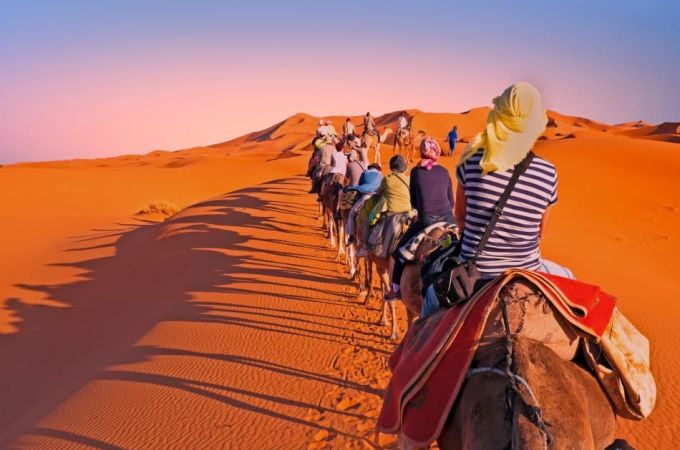
Travel content sometimes treats destinations as collections of opportunities that should all be exploited: if surfing exists, surf; if camel rides exist, ride; if a cooking class exists, cook.
That mindset becomes exhausting.
Essaouira works particularly well when travelers select very little and allow the rest to remain possibilities.
You are allowed to appreciate an activity without booking it.
The City Becomes Especially Pleasant Once You Recognize a Few Corners
Because the medina is manageable, familiarity develops quickly.
A café becomes “the place near that arch.” The street with a shop you liked turns into a useful route toward lunch. A square crossed accidentally on the first afternoon becomes somewhere you deliberately return the next morning.
This modest familiarity changes the emotional character of a stay.
You stop exploring a destination entirely from the outside and begin developing tiny routines within it.
Travelers considering Private Essaouira Morocco Holidays may find that an additional night provides more value than another rushed attraction precisely because the city becomes more enjoyable once there is no longer pressure to discover something new every hour.
Essaouira is unusually good at rewarding repetition.
Sunset Is Better When It Is Not an Appointment
Coastal destinations produce predictable travel behavior around sunset.
Everyone identifies the perfect viewpoint, arrives at roughly the same time and begins photographing the same horizon.
There is nothing wrong with that, but Essaouira gives you enough coastal access that sunset does not need to become a formal event.
You might be walking near the ramparts when the light changes, finishing a late coffee, returning from the beach or heading toward dinner. Allowing the evening to happen around you can be more satisfying than organizing the entire afternoon backward from a specific photograph.
Clouds may appear.
The wind may strengthen.
The sun may disappear less dramatically than hoped.
You will still be in Essaouira beside the Atlantic.
That is generally a good outcome.
A Marrakech Day Trip Is Possible, but the Return Clock Changes Everything
Essaouira is frequently visited from Marrakech, and geographically the combination makes sense.
Experientially, however, a day trip and overnight stay are not interchangeable.
A day visitor necessarily sees Essaouira through arrival and departure times. Lunch needs to fit, wandering has a boundary, and late afternoon gradually becomes about returning to the vehicle.
An overnight visitor gains the hours when those constraints disappear.
The difference can be summarized more usefully by looking at what becomes possible, rather than declaring one format superior:
| Experience | Short day visit | One overnight | Two or more nights |
|---|---|---|---|
| Medina | Main streets and key areas | Wandering becomes easier | Familiarity starts developing |
| Port | Fits naturally | Can revisit at another time | No pressure to combine with everything else |
| Seafood | Planned lunch | Lunch or relaxed dinner | Choice follows appetite rather than schedule |
| Beach | Usually a walk | More flexible | Weather can determine timing |
| Ramparts | Included as a highlight | Can return for changing light | Stops being a one-time attraction |
| Evening | Usually sacrificed to return journey | Becomes part of the visit | City rhythm becomes clearer |
| Overall pace | Efficient | Balanced | Intentionally slow |
For travelers already spending several nights in Marrakech, a day trip can be completely reasonable.
Just understand what the return journey removes.
Essaouira Is Particularly Good After Marrakech Because the Contrast Is Immediate
The transition from Marrakech to Essaouira is one of those route changes where the atmosphere shifts more dramatically than the distance suggests.
Marrakech can be visually and socially intense, with traffic, major visitor attractions, busy souks and a city rhythm that repeatedly pulls your attention outward.
Essaouira reduces the pressure.
The Atlantic opens the landscape, the medina is smaller, walking becomes simpler and there is less temptation to build an ambitious sightseeing schedule.
This does not make Essaouira inherently more relaxing for every traveler, nor should the two cities be ranked according to which one feels more “authentic.”
Their value lies partly in contrast.
A Morocco journey becomes richer when destinations change the travel rhythm rather than reproducing the same experience in different architecture.
Windy Weather Should Change the Order of Your Day, Not Ruin It
Operationally, this is where flexible planning pays off.
If the morning is calm and you want beach time, use it. If the afternoon becomes windier, move toward the medina, shops, galleries, cafés or a longer meal rather than insisting that the beach must happen because it was written into the itinerary.
Conversely, a bright breezy day may be exactly when you want to spend time near the ramparts and watch the Atlantic behaving like the Atlantic.
Weather-dependent destinations reward travelers who stop assigning every activity to a fixed hour several months in advance.
The objective is not executing the original schedule.
It is having the best day available under the conditions you actually receive.
Essaouira Does Not Require a Long Attraction List to Justify Two Nights
This is an important point because travelers often calculate destination duration by counting named sights.
Essaouira can appear weak under that method.
If five attractions can be visited in one day, why stay two?
Because the city's appeal is not proportional to the number of tickets you can buy.
The extra time allows the port, medina, food, beach, ramparts and cafés to stop competing with one another. It permits repetition, weather flexibility and an evening that does not exist solely because dinner has to happen somewhere.
Travelers interested in Slow-Paced Morocco Coastal Tours should think in terms of experience density rather than attraction density.
Two days containing fewer scheduled activities can produce a stronger memory of the city than one perfectly optimized checklist.
Essaouira Works Best for Travelers Comfortable With an Unfinished Day
There is a particular traveler who reaches 4:00 PM, realizes there is nothing scheduled and immediately opens a phone to search “things to do near me.”
Essaouira may teach that traveler something useful.
An unfinished afternoon can remain unfinished.
Walk toward the water. Find tea. Return to a shop. Sit somewhere. Decide at six what dinner might look like.
This is not laziness disguised as cultural immersion.
It is simply another way of traveling.
A destination famous for its atmosphere needs enough unclaimed time for atmosphere to become noticeable.
If every hour already belongs to an activity, there is nowhere for the city itself to enter.
Who Usually Connects With Essaouira?
Essaouira tends to work particularly well for travelers who enjoy historic environments but do not need monumental sightseeing all day, who value walking over vehicle-based touring, and who appreciate food, photography, coastal scenery and the ability to change plans according to weather or mood.
It also suits couples and independent-minded travelers who enjoy deciding what happens next while already outside rather than following a complete morning-to-evening schedule.
Families may appreciate the combination of medina and open beach, although wind and sea conditions need to be considered realistically.
Travelers looking primarily for a conventional resort holiday may prefer another coastal base, while visitors who measure destination value by the number of major monuments may wonder why other people become so attached to Essaouira.
The answer is difficult to put into a sightseeing list.
Essaouira is coherent.
The walls, port, medina, seafood, wind and beach all seem to belong to the same day.
That coherence is what makes the city memorable.
The Best Essaouira Plan Leaves Something Out
If you have one full day, resist trying to complete every available experience.
If you have two, resist filling the second because the first looked too empty on paper.
Choose enough structure that the city makes sense, then allow some of the day to remain undecided.
Visit the port when activity interests you, walk the ramparts when the weather makes the Atlantic worth watching, eat seafood when you are hungry rather than when a timetable says lunch, and enter the beach when open space feels more appealing than another medina street.
This approach would be poor advice for every destination.
It suits Essaouira because the city's strongest attraction is the relationship among its parts rather than any single sight.
You do not need to conquer it.
You need enough time for the place to develop a rhythm, and enough flexibility not to interrupt that rhythm every time your itinerary tells you to move.
12 Questions That Become Important Once You Choose Essaouira
1. Will Essaouira feel too quiet after Marrakech?
Possibly at first, particularly if you enjoy Marrakech's constant activity, although that contrast is precisely why many travelers combine them. Essaouira still has markets, restaurants and street life; it simply allows those experiences to unfold within a smaller and more coastal environment.
2. Does Essaouira's wind make the city uncomfortable?
Not necessarily, although the wind can be persistent and may make temperatures feel cooler than expected. Packing an additional layer and adjusting beach plans according to daily conditions usually works better than treating wind as something that must disappear before the city can be enjoyed.
3. Can I explore the medina without hiring a guide?
Many visitors can, because Essaouira's medina is relatively compact and manageable. A guide adds historical and architectural interpretation rather than merely preventing you from getting lost, so the decision should depend on how much context you want rather than anxiety about navigation alone.
4. Should seafood be planned at the port or in a restaurant?
Both can provide enjoyable but different experiences. An informal port-area meal emphasizes proximity to the fishing activity, while restaurants may offer greater comfort and different preparation styles. Look at freshness, atmosphere and what you actually want rather than pursuing one supposedly compulsory experience.
5. Is Essaouira a good swimming destination?
It has an extensive beach, but Atlantic wind, waves and sea conditions vary, so swimming suitability should be judged on the day. Travelers primarily seeking predictable resort-style swimming should distinguish that objective from wanting a historic coastal town with a beach.
6. Will I need taxis frequently while staying in Essaouira?
Visitors staying conveniently near the medina can complete much of the central experience on foot because the historic area, port and beachfront are relatively close. Transportation becomes more relevant for accommodation farther away or excursions beyond the main urban area.
7. Is Essaouira enjoyable when the weather is cloudy?
Yes, and atmospheric Atlantic conditions can suit the ramparts and port particularly well. Cloudy weather may alter beach plans, but Essaouira does not depend on sunbathing alone, which gives visitors several worthwhile alternatives when the weather refuses to cooperate with photographs.
8. Does the port smell unpleasant?
It can smell strongly of fish and working-harbor activity, which should not be surprising given its purpose. Travelers sensitive to smells may prefer a shorter visit, although sanitizing the port would also remove much of what makes it an authentic part of Essaouira's economy.
9. Is Essaouira suitable for people who dislike bargaining?
Yes. Shopping exists throughout the medina, but it does not need to dominate the visit, and travelers can browse without purchasing. If you do want something, compare shops, ask questions and negotiate only when genuinely interested rather than treating every conversation as a compulsory bargaining performance.
10. Should I sleep in Essaouira if I can visit from Marrakech?
Stay overnight when evening atmosphere, slower exploration and freedom from a fixed return time matter to you. Choose a day visit when schedule efficiency matters more and you are comfortable experiencing the medina, port and coast within a clearly defined time window.
11. Why do photographers tend to enjoy Essaouira?
The city provides unusually varied visual environments within a compact area: pale walls, blue boats, working port scenes, fortified stone, narrow medina streets and changing Atlantic light. Wind and weather also alter conditions quickly, which can create more interesting images than perfectly predictable sunshine.
12. What usually makes travelers wish they had stayed longer?
Not an attraction they failed to tick off, but the realization that Essaouira becomes more enjoyable once there is no need to hurry. Additional time allows meals, weather, shopping, photography and wandering to determine the day naturally rather than competing with a return transfer.

A travel professional specializing in tailor-made travel planning, guest experience management, and multi-destination tourism operations.
With over 23 years of experience in the travel industry, he designs and manages private and cultural tours for international travelers across Türkiye, Greece, Egypt, Jordan, Morocco, and other destinations.
He has strong expertise in both online and face-to-face guest communication, sales processes, and end-to-end travel operations.
Working closely with hotels, travel agencies, and local partners, he ensures smooth coordination and high-quality travel experiences at every stage of the journey.
His focus is on delivering personalized, reliable, and seamless travel experiences for international guests worldwide.