Tangier, Morocco: A City Between Two Worlds
Updated: August 2026
Some cities make more sense when you know what happened there. Tangier makes more sense when you first understand where it is.
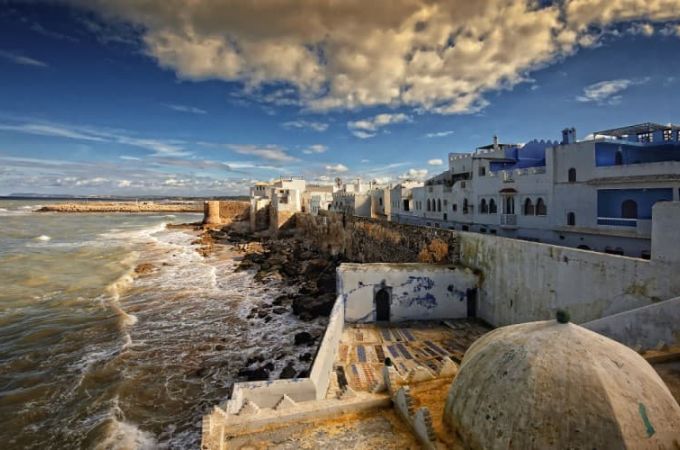
Stand in the right place on a clear day and Europe is not an abstract continent somewhere across the Mediterranean; Spain is visible beyond the water. Behind you lies Morocco, while the Strait of Gibraltar connects the Mediterranean with the Atlantic immediately beside the city. Ferries arrive from Europe, roads continue south into Morocco, and Tangier has spent centuries receiving people who were arriving, leaving, trading, hiding, working, writing or simply wondering what existed on the opposite shore.
That geography has shaped its personality.
Tangier is Moroccan, unmistakably so, yet it does not offer quite the same introduction to the country as Fes or Marrakech. Its old medina matters, but the city is not defined by the medina alone. Its modern boulevards, port, cafés, Kasbah, European architectural traces and coastal setting belong to the same story.
For travelers arriving by ferry, Tangier can easily become somewhere they pass through on the way to another Morocco they have already imagined.
That is often the first mistake.
Arriving by Sea Changes the Way Tangier Feels
Airports have made international arrival strangely uniform. You land, walk through a terminal, collect a suitcase and emerge beside taxis and parking areas that could belong to almost anywhere.
Approaching northern Morocco by sea creates a different sense of geography.
The crossing makes the relationship between Europe and Africa physically understandable, and Tangier's history as a meeting point begins to feel considerably less theoretical once you have watched one coastline disappear while another approaches.
However, travelers need to distinguish romantic geography from practical ferry logistics. Different services can use different ports, and Tangier Ville and Tanger Med should never be treated as interchangeable simply because both contain the word Tangier. Tanger Med lies well outside central Tangier, whereas arrival at Tangier Ville places visitors much closer to the city itself.
That difference affects transfers, timing and hotel arrival arrangements.
Before planning lunch in the medina thirty minutes after your ferry docks, confirm exactly where the ferry docks.
Tangier Does Not Need to Pretend It Is Marrakech
First-time Morocco visitors occasionally reach Tangier and begin measuring it against photographs they have seen elsewhere.
Where is the enormous square? Where are the intensely colored souks? Why does part of the city look unexpectedly European? Is this the “real” Morocco yet?
Those questions say more about expectations than Tangier.
The city developed under circumstances different from Morocco's imperial capitals, particularly during the twentieth century, when Tangier's international status attracted European governments, businesses, writers, artists and expatriate communities. Those layers remain visible without making the city somehow less Moroccan.
This is precisely why Tangier works well in a broader Morocco journey.
It introduces another version of the country rather than repeating one you have already experienced.
Trying to make Tangier behave like Marrakech would remove much of the reason to visit it.
Begin Where the City Can Explain Its Geography
Tangier becomes easier to understand when the first hours include a viewpoint rather than immediately disappearing into narrow streets.
From elevated areas around the Kasbah and other viewpoints, the relationship among city, port and sea becomes clearer. What appeared on the map as a simple coastal location begins to explain centuries of strategic importance.
This is also useful orientation.
The medina feels more coherent when you understand that it occupies only one part of a much larger modern city. Tangier spreads beyond the historic core, and limiting the experience to a few old streets produces a distorted impression.
Travelers using Northern Morocco Private Tours can benefit from beginning with this wider geographical context before moving into individual monuments or neighborhoods, particularly when Tangier is their first Moroccan destination.
You understand the city better once you have seen the water that shaped it.
The Kasbah Should Feel Like a Neighborhood, Not a Photo Stop
Tangier's Kasbah occupies the upper part of the old city, and its elevated position gives it a different atmosphere from the busier commercial passages below.
This is where slowing down becomes worthwhile.
Rather than entering with a checklist of architectural details, notice how residential streets, historic buildings, small squares and views toward the Strait relate to one another. The Kasbah Museum, housed in the former sultan's palace, adds historical context for travelers who want more than visual impressions, while the surrounding streets allow that history to remain connected to the living city outside.
The important distinction from Fes is intentional.
Fes can overwhelm through the scale and density of its historic medina. Tangier's old city is more manageable, and the experience is less about surrendering to an enormous urban labyrinth than moving between the Kasbah, medina, viewpoints and modern city beyond.
That makes Tangier particularly approachable for travelers nervous about their first Moroccan medina.
The Grand Socco Is More Useful as a Threshold Than an Attraction
Grand Socco is one of those places whose value becomes clearer when you stop asking what you are supposed to “see” there.
It functions as a transition.
On one side, the medina draws you toward narrower streets and older urban fabric. On the other, Tangier opens toward broader avenues and the modern city. Nearby green space and cultural landmarks reinforce the sense that this is not merely a square to photograph but a point where different versions of Tangier meet.
Spend enough time in the city and you may pass through it repeatedly.
That repetition is useful.
A place that initially appears to be another sightseeing stop gradually becomes orientation: this direction leads toward the medina, that way returns you toward the modern city, and suddenly Tangier requires less conscious navigation.
Not every important place needs to be spectacular.
Some places earn their importance by helping everything around them make sense.
Café Culture Tells You Something Sightseeing Cannot
Tangier has a long relationship with cafés, and rushing through them because another attraction is waiting misses one of the city's most natural pleasures.
A café here can be observation point, meeting place, refuge from weather and an excuse to remain somewhere without needing to accomplish anything.
Certain historic cafés have accumulated literary and artistic associations over decades, but you do not need to turn coffee into a pilgrimage through famous names. The more interesting experience is often watching the city continue around you while your own schedule temporarily stops.
This suits Tangier unusually well because movement is central to its identity.
Ships move through the Strait. People arrive from Europe. Residents move between old and new districts. Visitors begin or finish longer journeys through Morocco.
Sitting still for half an hour makes all that movement more visible.
Tangier's Literary Reputation Is Interesting, but It Can Become a Trap
Tangier has attracted generations of international writers and artists, and names associated with twentieth-century literature frequently appear in accounts of the city.
That history deserves attention, although it should not become a costume Tangier is required to continue wearing for visitors.
Travelers sometimes arrive looking for the mysterious, bohemian international city described in old books, then evaluate contemporary Tangier according to how closely it resembles somebody else's memory from decades ago.
Cities are allowed to change.
Modern Tangier is not an abandoned literary set, and its value does not depend on reproducing the expatriate world that once fascinated foreign writers.
Use literary history as another layer.
Do not use it as a demand that the present imitate the past.
The Medina Is Small Enough to Wander Without Making Getting Lost the Objective
Tangier's medina invites wandering, but the experience differs noticeably from Fes.
You can explore markets, residential passages, small squares and local shops without turning navigation into the central drama of the day. There are still confusing corners, naturally, yet the old city generally feels more approachable in scale.
This gives independent travelers room to be spontaneous.
A street can be followed because the light looks interesting rather than because it leads to a named monument. A café can become a forty-minute stop without damaging an ambitious schedule, while returning to a familiar square later in the day often happens naturally.
The goal should not be getting lost because travel writing has convinced everyone that getting lost is culturally meaningful.
The goal is feeling sufficiently unhurried that taking an unnecessary turn does not matter.
Tangier's Coastline Is Not One Single Experience
Saying Tangier is “on the coast” conceals something important.
The city's geographical interest comes partly from its relationship with both the Mediterranean and Atlantic worlds, and traveling outside the urban center reveals a landscape that feels different from simply walking along a city beach.
Cape Spartel is particularly useful for understanding Tangier's wider setting, while the coastal road and nearby natural attractions can turn a half-day outside the center into something very different from medina sightseeing.
This is where itinerary design matters.
Trying to combine a detailed old-city visit, museums, a leisurely lunch, Cape Spartel and every nearby coastal stop into a few hours produces a day that looks efficient and feels rushed.
Tangier's outskirts deserve actual travel time.
A map can make coastal distances look deceptively small when you are trying to fit them between breakfast and a ferry.
Hercules Caves Are Better When Expectations Are Sensible
The Caves of Hercules are among the best-known excursions associated with Tangier, helped considerably by the mythology surrounding them and the famous sea-facing opening.
They are also a good example of why expectation management improves travel.
If you arrive expecting one of the world's great cave systems, the visit may feel smaller than imagined. If you treat the caves as one component of a coastal outing that includes scenery, Cape Spartel and time outside central Tangier, they fit much more naturally into the day.
This distinction matters throughout Morocco.
Not every named attraction needs to carry the emotional weight of a half-day journey by itself.
Sometimes several modest experiences combine into an excellent afternoon.
Tangier Works Surprisingly Well for Travelers Who Need Morocco to Breathe
A long Morocco itinerary can become intensely visual.
Medinas, palaces, markets, historical monuments, mountain roads, desert landscapes and repeated hotel changes create a great trip, but they also produce a great deal of stimulation.
Tangier offers a different rhythm.
There is sightseeing, certainly, but the city also allows time for the seafront, cafés, viewpoints and ordinary urban wandering without creating the feeling that every hour not spent inside a monument has been wasted.
That quality can be particularly valuable toward the middle or end of a longer journey.
A destination does not always need to add more intensity.
Sometimes it earns its place by changing the pace.
A Day Trip and an Overnight Stay Produce Different Tangiers
Tangier is compact enough that a determined visitor can see several important areas within one day, which makes day trips tempting, particularly for travelers arriving from southern Spain.
The question is what kind of experience you want.
A day visit naturally prioritizes movement: arrival, old city, lunch, perhaps a coastal excursion, then attention gradually returns to departure time.
Staying overnight removes that countdown.
The late afternoon can continue without a ferry hanging over it, dinner becomes part of the city rather than something eaten after returning elsewhere, and the following morning allows Tangier to feel less like an international excursion and more like a Moroccan destination.
Neither format is inherently correct.
The difference is best understood through what each allows:
| Travel decision | Same-day Tangier | Overnight Tangier | What actually changes |
|---|---|---|---|
| Medina exploration | Focused and selective | More room for wandering | Less dependence on a checklist |
| Coastal outing | Requires careful timing | Easier to separate from old city | Fewer competing priorities |
| Café time | Often shortened | Can become part of the experience | City rhythm becomes more visible |
| Ferry logistics | Controls the afternoon | Mostly an arrival/departure issue | Less clock-watching |
| Evening atmosphere | Usually missed | Included naturally | Tangier feels less transitional |
| Wider Morocco journey | Functions as an introduction | Becomes a destination itself | Stronger sense of place |
This table is not arguing that everyone needs a night in Tangier.
It shows what the night actually buys.
The Ferry Question Should Be Solved Before the Hotel Question
Travelers combining Spain and Morocco occasionally book an attractive Tangier hotel before checking the exact ferry route.
That sequence can create unnecessary complications.
First establish the port of arrival, realistic arrival time and onward transport. Then decide where accommodation makes the most sense.
This becomes particularly important with late arrivals or early departures because the romantic idea of staying deep inside the old city may conflict with luggage, transfer and timing requirements.
Travelers considering Morocco Multi city Tours should treat the sea crossing as a genuine international transfer rather than a sightseeing ferry ride inserted casually between two hotel nights.
Immigration, port procedures and onward transfers deserve margin.
A beautiful itinerary should still survive an ordinary delay.
Tangier Can Be an Excellent First Encounter With Morocco
There is an argument that first-time visitors should begin Morocco somewhere more immediately dramatic.
Tangier makes a good case for the opposite.
Its medina is approachable, its coastal geography provides visual breathing space, and the coexistence of Moroccan and international architectural influences introduces the country's historical complexity without immediately overwhelming the traveler.
For people arriving from Spain, the transition is especially compelling because the physical distance traveled is relatively small while the cultural shift is unmistakable.
You cross water and many everyday details change.
Language changes. Street life changes. Food changes. Architecture changes. The rhythm of interaction changes.
Tangier gives you time to notice that transition rather than immediately burying it beneath an enormous sightseeing program.
It Also Works Differently as the Last Stop
Ending a Morocco journey in Tangier creates almost the reverse experience.
By then, things that appeared unfamiliar at the beginning of the trip may have become ordinary: mint tea, medina streets, calls to prayer, Moroccan breakfasts, Arabic and French signage, bargaining, riads and the daily choreography of local cafés.
Tangier no longer needs to introduce Morocco.
Instead, its international history and proximity to Europe become a natural place from which to look back at the country you have just traveled through.
For travelers continuing to Spain, that can create an unusually satisfying geographical ending.
You do not simply leave Morocco.
You watch the next part of the journey sitting across the Strait.
When Tangier Deserves Two Nights
Two nights make sense when the city itself interests you rather than merely functioning as an entry point.
That additional time allows the historic center and coastal surroundings to stop competing for the same afternoon, while café time, museums and slower wandering can happen without constantly calculating what needs to be removed.
Two nights can also work well after a demanding itinerary elsewhere in Morocco because Tangier does not require relentless sightseeing to justify the stay.
Travelers using Custom Northern Morocco Journeys may also combine the city with other northern destinations, but Tangier should retain its own identity rather than becoming merely the hotel from which every nearby excursion departs.
Staying longer should deepen Tangier.
It should not automatically empty Tangier out of its own itinerary.
Tangier Is Not Chefchaouen With an Airport and a Port
The two northern destinations are frequently connected, which can cause their content to blur online.
They should remain completely separate.
Chefchaouen's appeal belongs to its Rif Mountain setting, distinctive blue-painted urban landscape and smaller-town atmosphere. Tangier is a port city whose identity comes from the Strait, international history, Kasbah, modern expansion and relationship with Europe.
Travelers may visit both.
They should not expect one to replace the other.
This distinction is particularly important when planning limited time in northern Morocco because choosing between them is not simply choosing which collection of attractions looks stronger.
It is choosing between different kinds of place.
The dedicated Chefchaouen guide should answer that city's questions rather than borrowing Tangier's.
Give Tangier Enough Time to Stop Feeling Like an Arrival Hall
This is ultimately the challenge Tangier faces with travelers.
Its transport connections are so useful that usefulness can overshadow identity.
You arrive there to enter Morocco.
You leave there to reach Spain.
You sleep there before going somewhere else.
Yet Tangier has spent centuries being shaped precisely by this movement between places, which means treating it merely as a gateway overlooks the quality that made the gateway important in the first place.
Walk through the Kasbah without rushing toward the next stop. Sit long enough over coffee that the table becomes yours for a while. Look across the Strait and understand how little water separates two continents. Leave the medina and see the modern city rather than assuming history ends at its walls. Give the Atlantic side enough time that it feels like landscape rather than a photograph taken beside a waiting vehicle.
Tangier does not demand the same kind of attention as Fes.
That is exactly the point.
Its reward lies in understanding how Morocco meets the sea, how different eras remain visible in one city and how a place famous for arrivals and departures can become somewhere worth staying.
12 Tangier Questions That Matter Once You Start Planning
1. Is Tangier worth visiting if I am already seeing other Moroccan cities?
Yes, particularly if you value variety. Tangier's port-city identity, Strait of Gibraltar setting, international historical influences and Atlantic surroundings create a noticeably different experience from Morocco's imperial cities, so including it need not feel like repeating another medina destination.
2. Are Tangier Ville and Tanger Med the same port?
No, and confusing them can significantly affect transfer planning. Tangier Ville is associated with central Tangier, while Tanger Med is located outside the city. Always confirm the exact arrival and departure port before arranging hotels, transfers or tightly timed sightseeing.
3. Can I realistically visit Tangier from Spain for one day?
A day visit is possible with suitable ferry schedules, although international port procedures and return timing reduce the hours actually available. Prioritize the city rather than attempting to combine every coastal attraction, museum and medina sight within a single compressed visit.
4. What do I gain by sleeping in Tangier instead of returning to Spain?
An overnight stay removes the return-ferry countdown from much of the day, allowing slower medina exploration, dinner, café time and an evening in the city. It also makes a separate coastal outing easier without forcing several distinct experiences into limited daylight.
5. Is Tangier's medina difficult to navigate independently?
It contains the irregular lanes expected of a historic medina, but many travelers find its scale more manageable than larger old cities such as Fes. An initial orientation can help, although independent wandering is realistic for visitors comfortable using landmarks and navigation when necessary.
6. Is Cape Spartel part of central Tangier sightseeing?
No. Cape Spartel belongs to the wider coastal experience and requires travel outside the historic center, so sufficient transportation time should be allowed. Combining it with nearby coastal stops usually makes more sense than treating it as a quick extension of a medina walk.
7. Are the Caves of Hercules worth making a special trip for?
They work best as part of a broader coastal outing rather than carrying an entire excursion by themselves. Travelers interested in mythology and the famous sea opening may enjoy them, while the surrounding coastline and Cape Spartel help give the journey greater context.
8. Does Tangier still feel like the literary city described by twentieth-century writers?
Elements of that history remain visible, but modern Tangier should not be expected to reproduce the expatriate world described in older literature. Exploring those associations can enrich a visit, provided they are treated as historical layers rather than the city's present-day identity.
9. Is Tangier a beach destination?
Tangier has coastal access, but travelers seeking a dedicated Moroccan resort holiday may want a destination designed more strongly around beach leisure. Tangier's coastline is most compelling when combined with its urban history, Strait views, cafés and nearby Atlantic scenery.
10. Should Tangier be my first or last stop in Morocco?
Either can work particularly well. As a first stop, Tangier provides a relatively approachable introduction to Morocco; as a final stop, its relationship with Europe and ferry connections can create a natural conclusion, especially for travelers continuing into Spain.
11. Do I need two nights if I want to see both Tangier and its coastline?
Not necessarily, although two nights make the pacing considerably easier because the Kasbah, medina and modern city no longer need to compete with Cape Spartel and coastal sightseeing. One night can still work when priorities and arrival times are carefully chosen.
12. What is the biggest planning mistake travelers make with Tangier?
Treating it entirely as a transport connection. Ferry schedules and ports certainly require attention, but allowing logistics to consume the whole visit can reduce a historically distinctive coastal city to an arrival point before somewhere considered more important.

A travel professional specializing in tailor-made travel planning, guest experience management, and multi-destination tourism operations.
With over 23 years of experience in the travel industry, he designs and manages private and cultural tours for international travelers across Türkiye, Greece, Egypt, Jordan, Morocco, and other destinations.
He has strong expertise in both online and face-to-face guest communication, sales processes, and end-to-end travel operations.
Working closely with hotels, travel agencies, and local partners, he ensures smooth coordination and high-quality travel experiences at every stage of the journey.
His focus is on delivering personalized, reliable, and seamless travel experiences for international guests worldwide.