Casablanca or Marrakech: Which City Is Better for Your Trip?
Updated: August 2026
If you are choosing between Casablanca and Marrakech for a first trip to Morocco, Marrakech is usually the stronger choice for travelers who want historic architecture, traditional markets, atmospheric riads and a concentrated sightseeing experience. Casablanca makes more sense for visitors interested in contemporary Moroccan city life, the Hassan II Mosque, Atlantic surroundings, modern restaurants and an important transport gateway.
That simple answer, however, does not mean Marrakech is automatically the better city.
Casablanca and Marrakech perform almost opposite roles within a Morocco journey, which is why comparing them purely by the number of attractions creates a misleading result. Marrakech has been shaped into one of the country’s major international visitor destinations, where monuments, souks, gardens, restaurants and accommodation form a highly developed tourism ecosystem. Casablanca, by contrast, is Morocco’s largest city and economic center, where tourism exists within a much broader commercial and residential metropolis.
The question is therefore less about which city wins and more about what you expect Morocco to feel like during the time you have available.
If you have only one city to choose and want the strongest concentration of experiences traditionally associated with a Morocco holiday, Marrakech will generally make better use of limited time. If your trip already contains Fes, Chefchaouen, Meknes or other historic destinations and you want to see a more contemporary side of the country, Casablanca can provide exactly the contrast the itinerary needs.
Marrakech Gives First-Time Visitors a Faster Sense of Arrival
Marrakech has an immediate ability to make travelers feel that their holiday has begun.
The medina places souks, historic architecture, food, street activity, riads and major monuments within a relatively concentrated area, while Jemaa el-Fnaa creates a recognizable center around which much of the first visit naturally develops. Even travelers who arrive knowing very little about the city quickly encounter visual and cultural elements they associate with Morocco.
Casablanca does not introduce itself in the same way.
Its scale is larger, its important sights are more dispersed and much of the city exists for residents rather than visitors. The experience can consequently feel more urban and less theatrical, which may be exactly what experienced travelers want but can leave first-time visitors wondering where the Morocco they imagined has gone.
This difference explains why Marrakech generally wins when the decision is based on immediate visitor impact, although that advantage says more about tourism concentration than about the cultural importance of either city.
Casablanca Shows a Morocco That Continues After the Sightseeing Ends
Casablanca becomes more interesting when travelers stop expecting it to behave like Marrakech.
This is a working metropolis shaped by commerce, business, residential life, transport and contemporary culture, where visitors encounter Morocco without tourism dominating every surrounding street. Modern cafés, restaurants, offices and shopping districts belong to the city just as naturally as its historical architecture and Atlantic coastline.
That environment can provide useful perspective after several days in medinas.
A Morocco itinerary made entirely from historic quarters, kasbahs and heritage hotels can unintentionally create the impression that the country exists mainly through its past. Casablanca disrupts that picture because it places contemporary Moroccan life directly in front of the visitor.
The experience is not necessarily more “authentic,” a word travel writing often uses too casually, but it is representative of another important part of Morocco that a medina-focused itinerary can easily overlook.
Hassan II Mosque Changes the Argument in Casablanca’s Favor
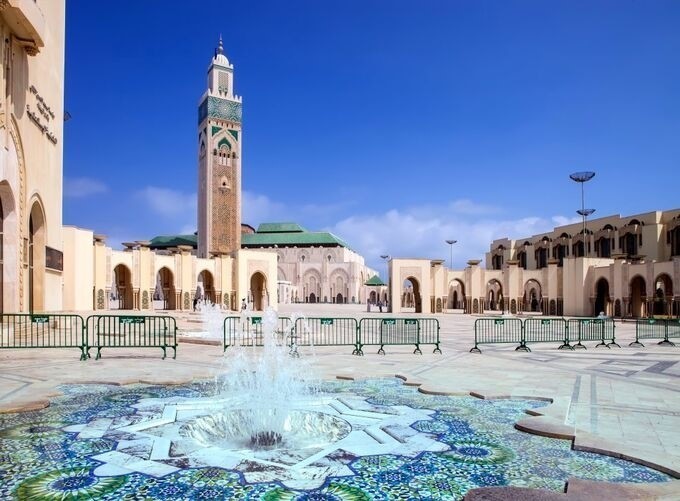
Any fair Casablanca comparison needs to account for the Hassan II Mosque because it is not simply the city’s most famous attraction; for many visitors, it is one of the architectural highlights of their entire Morocco journey.
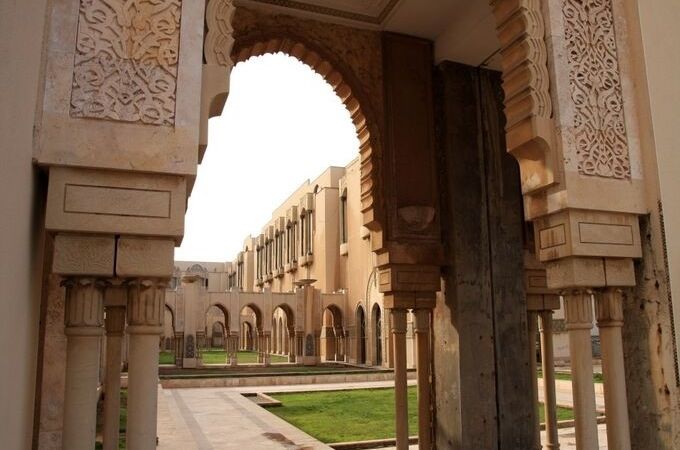
Its position beside the Atlantic gives the building an extraordinary setting, while its monumental scale, craftsmanship and religious importance provide a very different experience from the palaces, madrasas and historic mosques encountered elsewhere.
Non-Muslim visitor access to mosque interiors in Morocco is generally restricted, which makes the organized visitor experience associated with Hassan II Mosque particularly significant. Current tour schedules, entry arrangements and visitor requirements should nevertheless be confirmed for the actual travel date rather than assumed from an old online timetable.
Casablanca may have fewer headline attractions than Marrakech, but destination value is not calculated by dividing admission tickets by hotel nights. One exceptional monument can justify several hours more convincingly than six minor stops included merely to make an itinerary look busy.
Marrakech Wins for Historic Sightseeing Density
Marrakech offers a much stronger concentration of heritage attractions for travelers who enjoy spending most of the day sightseeing.
The Koutoubia area, Bahia Palace, Saadian Tombs, Ben Youssef Madrasa, historic medina and surrounding souks create enough variety that two or three days can remain culturally active without requiring long transfers outside the city. Gardens and newer districts add another dimension when travelers want a break from medina intensity.
This density makes Marrakech efficient.
You can leave a riad in the morning, spend hours moving through different historical and commercial environments, stop for lunch and continue exploring without turning the day into a sequence of vehicle transfers.
Casablanca requires a different rhythm because the urban scale is larger and attractions are less concentrated. For a traveler whose primary question is “How much sightseeing can I experience in two days?”, Marrakech has the clearer advantage.
The Medina Question Has an Easy Winner, but Not Everyone Wants the Winner
Travelers specifically looking for a major Moroccan medina should choose Marrakech between these two cities.
Its historic core is fundamental to the destination experience, and staying within or close to it allows visitors to move repeatedly between souks, restaurants, monuments and Jemaa el-Fnaa throughout the day.
Casablanca’s old medina exists, but it should not be sold as a substitute for Marrakech.
The more interesting question is whether you actually want a medina-centered stay.
After several nights in Fes or other historic towns, another dense old-city experience may add less variety than Casablanca’s boulevards, modern districts and coastal urban character. Conversely, a traveler visiting Morocco for four days who skips Marrakech because Casablanca sounds less touristy may sacrifice many of the cultural experiences they expected from the trip.
Good itinerary planning is not about avoiding famous places.
It is about understanding why they became famous and deciding whether that reason matches your interests.
Marrakech Is More Immersive, but It Can Also Be More Demanding
The same intensity that makes Marrakech exciting can make it tiring.
Crowded lanes, motorcycles, shopkeepers, navigation, bargaining, traffic and the constant availability of something to see or buy create a destination that rarely fades into the background. Some travelers thrive on this energy and consider it one of the highlights of Morocco, while others need regular breaks from it.
Casablanca generally places less tourism pressure on the visitor because the city is not continuously trying to function as a visitor experience.
That does not automatically make Casablanca relaxing; it is a large, busy metropolis with its own traffic and urban intensity. The difference is psychological. In Marrakech, visitors can feel surrounded by tourism activity, whereas in Casablanca they are more often moving through a city whose daily life would continue almost unchanged if they were not there.
Food Travelers Face a More Interesting Decision
Marrakech has an enormous tourism-oriented restaurant scene ranging from simple local meals and rooftop dining to polished contemporary restaurants, which makes it easy to build food experiences into a short stay. The medina also allows meals to become part of the sightseeing day without substantial logistical planning.
Casablanca offers something different because its restaurant culture serves a large local metropolitan population alongside visitors. Travelers interested in contemporary Moroccan dining, seafood, cafés and a less tourism-centered restaurant environment may find the city surprisingly rewarding.
The distinction is not traditional food versus modern food, because both cities provide both.
It is about context.
Marrakech frequently turns dining into part of the travel experience, whereas Casablanca more often lets you participate in the restaurant life of a major city.
Riads Give Marrakech an Accommodation Advantage
Accommodation can influence the destination experience more dramatically in Marrakech because staying in a traditional riad inside or near the medina becomes part of the visit itself.
The transition from a busy lane into a quiet courtyard can be memorable, particularly for first-time travelers. Architecture, breakfast, rooftop spaces and personalized hospitality allow the hotel to reinforce the historical atmosphere outside.
Casablanca’s accommodation strengths tend to lie elsewhere, including modern hotels, international standards, business-oriented properties and locations suited to airport or urban access.
Neither category is inherently superior, but travelers imagining an atmospheric Moroccan property with an internal courtyard and immediate access to old-city streets are describing a Marrakech preference.
Casablanca Is Usually the More Important Transport City
Casablanca’s role changes considerably when international flights enter the decision.
Mohammed V International Airport is one of Morocco’s principal aviation gateways, and many itineraries begin or end through Casablanca even when travelers have little intention of sightseeing there. Rail connections also make the city an important part of the national transport network.
This creates an operational question that destination comparisons often ignore: if you already need to pass through Casablanca, how much extra time does visiting it actually cost?
Sometimes the answer is very little.
A strategically timed first or final night may allow travelers to see the Hassan II Mosque and part of the city without sacrificing a separate destination day. In that situation, Casablanca does not need to defeat Marrakech in a sightseeing contest because its logistical position has already reduced the cost of including it.
Marrakech Usually Deserves More Nights
If both cities are included in the same first-time Morocco itinerary, they should not automatically receive equal time.
For most sightseeing-focused travelers, Marrakech can comfortably justify two or three nights, while Casablanca may require only one night or a well-planned partial day unless there are specific interests, business commitments or a preference for contemporary city exploration.
This is an important operational distinction because itinerary designers sometimes create artificial symmetry.
Two cities do not need two nights each simply because that looks balanced on paper.
Time should follow experience density, arrival and departure logistics, personal interests and the role each city performs within the wider journey.
The Better City Changes According to What You Want to Feel
Instead of another generic attraction comparison, the most useful way to decide is to identify the experience you would regret missing:
| If you would regret missing... | Better fit | Why |
|---|---|---|
| A major Moroccan medina experience | Marrakech | The old city shapes most of the visit |
| Hassan II Mosque | Casablanca | It is a distinctive architectural and religious landmark |
| Traditional riad accommodation | Marrakech | Accommodation can become part of the historic experience |
| Contemporary big-city Morocco | Casablanca | Daily metropolitan life is central rather than peripheral |
| Dense sightseeing over two days | Marrakech | Major visitor experiences are more concentrated |
| Atlantic urban atmosphere | Casablanca | The coastline forms part of the city’s character |
| Extensive souk exploration | Marrakech | Markets are integrated deeply into the medina experience |
| Modern dining and city life | Casablanca | Large local demand supports a broad urban restaurant scene |
| A strong first impression on a short trip | Marrakech | The visitor experience begins almost immediately |
| Efficient use of an international arrival/departure | Casablanca | Existing flight logistics may make inclusion easier |
The point of this table is not to award points until one city wins. It identifies which omission would matter more to the individual traveler, which is a much better decision tool than counting attractions.
First-Time Visitors Usually Have a Clearer Answer
For someone making a first trip to Morocco with limited time and choosing only one of these cities, Marrakech is generally the better recommendation.
That conclusion comes from experience density rather than fame alone.
The medina, monuments, souks, gardens, riads and evening atmosphere collectively provide a broader introduction to several aspects of Moroccan travel within a relatively compact area. A two- or three-night stay can therefore produce substantial cultural variety without needing complicated logistics.
Casablanca becomes more competitive when the traveler already has traditional destinations elsewhere in the itinerary.
Someone spending several nights in Fes, visiting Meknes and exploring other historic towns does not necessarily need Marrakech to prove that Morocco has medinas. Casablanca may contribute greater overall variety by showing a modern metropolitan side of the country.
Couples May Prefer Marrakech, Unless Urban Sophistication Matters More
Marrakech naturally suits couples looking for atmospheric accommodation, rooftop dinners, gardens, hammam experiences and evenings inside or around the medina. The city has developed an extensive hospitality industry around exactly this kind of leisure travel.
Casablanca can appeal more to couples who enjoy contemporary restaurants, architecture, coastal walks and city breaks without wanting every experience packaged around romantic tourism.
The difference is subtle but useful.
Marrakech can create romance for you.
Casablanca generally expects you to find it within the city.
Families Should Compare Energy Levels, Not Attraction Counts
Marrakech offers more obvious family sightseeing, but the medina can become tiring for younger children when long days combine crowds, heat, walking and repeated shopping stops.
A successful family stay therefore needs deliberate pacing, particularly during warmer months.
Casablanca may offer fewer classic visitor attractions, yet families using it as an arrival or departure point can enjoy a lighter sightseeing day without feeling obligated to cover an extensive checklist.
For most first-time family holidays, Marrakech still provides more overall destination value, although parents should resist scheduling adult sightseeing ambitions from breakfast until dinner.
Children rarely care that the itinerary achieved excellent attraction density.
Older Travelers Need to Look Beyond the Word “Walkable”
Central Marrakech allows many attractions to be combined geographically, but medina surfaces, crowds, heat and vehicle restrictions can create practical challenges. A centrally located riad may also involve walking from the nearest accessible drop-off point, and some traditional properties contain stairs without the facilities expected from modern hotels.
Casablanca’s broader roads and conventional hotels can simplify certain logistics, although distances between sights may require more vehicle use.
For travelers with mobility concerns, the better city therefore depends less on headline walkability and more on hotel access, vehicle arrangements and the exact monuments being visited.
Operational detail beats destination reputation.
Solo Travelers Can Enjoy Both Cities for Completely Different Reasons
Marrakech gives solo travelers constant stimulation and makes it easy to spend an entire day moving between attractions, cafés, shops and public spaces without needing companionship to create activity.
Casablanca can feel more independent in another sense because the traveler becomes part of ordinary metropolitan movement rather than a visitor circuit.
Someone taking a first solo trip to Morocco may appreciate the more obvious visitor infrastructure of Marrakech, while an experienced independent traveler who enjoys large cities may prefer Casablanca’s less curated environment.
Neither experience is inherently more genuine.
They simply demand different forms of confidence.
Shopping Is Much More Central to Marrakech
For travelers who enjoy browsing crafts, textiles, leather goods, decorative objects, spices and other traditional products, Marrakech provides a much more immersive shopping environment.
The souks are not a separate mall-like activity; they form part of the medina itself, meaning shopping, sightseeing and navigation continually overlap.
Casablanca offers extensive retail options, including modern shopping and local commercial districts, but shopping is less likely to define the visitor’s overall experience.
If shopping fatigue is already a concern, this distinction may unexpectedly favor Casablanca.
Not everyone wants to spend another afternoon discussing whether a carpet will fit inside hand luggage.
Which City Is Better for One Night?
Casablanca can be the smarter choice when that single night is connected to an international arrival or departure and the timing allows meaningful sightseeing.
Marrakech is stronger when the one night is a deliberate destination stay, although reducing the city to an evening and one morning leaves much of its value unused.
This distinction matters because “one night” does not represent the same amount of usable travel time.
Arriving at 14:00 and leaving at 11:00 the next morning is fundamentally different from reaching a hotel at 22:30 before a 07:00 airport transfer.
Count usable hours rather than hotel nights when comparing itineraries.
Which City Is Better for Two or Three Nights?
Marrakech wins much more clearly at this duration for most first-time visitors.
Two or three nights allow enough time to explore the medina, visit major monuments, enjoy restaurants and gardens, experience different periods of the day and still avoid turning the trip into continuous sightseeing.
Casablanca can support a longer stay for travelers genuinely interested in modern Moroccan urban life, architecture, dining and a slower metropolitan experience, but most conventional leisure itineraries do not need to allocate the same duration.
This is not a judgment of importance.
Casablanca is enormously important to Morocco.
Tourist importance and national importance are different measurements.
Should You Visit Both Casablanca and Marrakech?
Yes, when the wider route makes the combination logical.
They are different enough that cannibalization at the destination level is minimal. Marrakech supplies historic intensity and a highly developed visitor environment, while Casablanca provides contemporary metropolitan contrast and one exceptional landmark in the Hassan II Mosque.
The question is whether both deserve overnight stays.
If your flight already uses Casablanca and the schedule provides enough daylight, the city can often be incorporated efficiently. Marrakech should then receive the larger share of sightseeing time unless your personal interests clearly favor Casablanca.
Travelers using Private Morocco City Tours should therefore avoid distributing nights according to city fame or administrative importance and instead build the route around usable time and experience diversity.
When Casablanca Is the Better Choice
Casablanca should move ahead of Marrakech when you are especially interested in the Hassan II Mosque, contemporary Moroccan urban life, Art Deco and twentieth-century architecture, Atlantic city atmosphere or when international flight logistics make the city substantially easier to include.
It can also be the stronger addition to an itinerary already rich in medinas.
A traveler who has spent several days in Fes and will continue through other historic towns may learn more about contemporary Morocco from Casablanca than from adding another heavily tourism-oriented old-city stay.
This is where Casablanca Cultural City Experiences can make sense without trying to turn the city into Marrakech with taller buildings.
Casablanca deserves to be interpreted according to its own identity.
When Marrakech Is the Better Choice
Marrakech should take priority when this is your first Morocco visit, your trip is short, traditional architecture matters strongly, you want souks and medina life, a riad stay appeals to you or you prefer having many major visitor experiences concentrated within a few days.
It is also the easier choice for travelers who want their destination to provide a clear sense of occasion from the moment they arrive.
Marrakech has spent decades developing the infrastructure, accommodation and experiences required to serve international leisure tourism, and pretending that popularity somehow reduces its value would be misguided.
Famous destinations can be crowded, commercial and still genuinely worth visiting.
All three can be true at once.
When Neither City Should Receive Extra Time
There are itineraries where the correct answer is neither.
If Casablanca already functions only as a late-night arrival point and your priorities are Fes, Chefchaouen, the Sahara or another region, forcing sightseeing into the schedule may add fatigue without much value.
Similarly, travelers who have visited Marrakech previously and want to explore entirely different parts of Morocco do not need to return merely because every standard itinerary begins there.
Customized travel should permit omission.
The purpose of comparison is not to decide which city must be included.
It is to identify which one contributes enough to justify the time it takes from somewhere else.
Casablanca or Marrakech: The Final Decision
For most first-time visitors choosing only one city, Marrakech is the stronger overall travel destination because it combines historic architecture, medina life, souks, distinctive accommodation, restaurants and major sights within a relatively concentrated area.
Casablanca becomes the better choice for a narrower but entirely legitimate set of priorities: contemporary Morocco, Hassan II Mosque, modern urban culture, Atlantic character and efficient use of international flight logistics.
If the itinerary allows both, there is little reason to make them compete because their strongest experiences barely overlap.
The most effective allocation is usually to give Marrakech more destination time while allowing Casablanca enough usable hours to reveal what makes it different.
Travel planning improves when “better” stops meaning universally superior and starts meaning better for this traveler, on this route, with this amount of time.
That is the comparison that actually matters.
12 Different Questions Travelers Ask About Casablanca and Marrakech
1. If I have never visited Morocco, should I choose Casablanca or Marrakech?
Marrakech is generally the stronger first choice because its medina, historic monuments, souks, riads and restaurants provide a more concentrated introduction to experiences many first-time travelers associate with Morocco, particularly when only two or three days are available.
2. Is Casablanca worth visiting if my international flight already arrives there?
Often yes, particularly when the schedule leaves enough usable daylight to visit the Hassan II Mosque and experience part of the city. An existing arrival or departure can make Casablanca inexpensive in itinerary terms because a separate journey is unnecessary.
3. Which city has better historical sightseeing?
Marrakech offers a greater concentration of historical attractions for most leisure travelers. Casablanca has important architecture and the exceptional Hassan II Mosque, but visitors primarily seeking palaces, medina streets, traditional markets and multiple heritage sites will usually find Marrakech more rewarding.
4. Which city feels more like modern Morocco?
Casablanca generally provides the stronger contemporary metropolitan experience because commerce, business, residential life and modern dining shape much of the city. Marrakech is also modern beyond its medina, but tourism and historic-city experiences play a much larger role in most visits.
5. Is Casablanca less touristy than Marrakech?
Yes, in the sense that tourism occupies a smaller part of the city’s overall economic and daily life. That does not automatically make Casablanca better or more authentic; it simply means visitors encounter a large metropolis that is not primarily organized around them.
6. Which city is better for traditional shopping?
Marrakech is the clearer choice because its extensive souks form an integral part of the medina experience. Casablanca has plenty of shopping, including modern retail and local commercial districts, but traditional market exploration is less central to a typical visitor itinerary.
7. Where should couples spend more time?
Most leisure-focused couples will find Marrakech better suited to a longer stay because of riads, gardens, rooftop restaurants and atmospheric evenings. Couples who prefer contemporary dining, architecture and a less tourism-centered urban break may find Casablanca more appealing than expected.
8. Which city is easier with children?
The answer depends on family travel style. Marrakech provides more obvious sightseeing but can become intense during long medina days, while Casablanca may offer an easier short urban stop. Families should compare heat, walking, hotel access and daily pace rather than attraction numbers alone.
9. Can I see Casablanca properly in one day?
A focused day can cover the city’s principal visitor priorities, particularly when expectations are realistic and transport is organized efficiently. Travelers interested in contemporary neighborhoods, architecture and food will naturally need longer than those primarily visiting the Hassan II Mosque.
10. Is three nights too long for Marrakech?
Not for most first-time visitors. Three nights allow sightseeing to be distributed across several days while leaving room for meals, gardens, shopping and rest, which usually creates a better experience than compressing the medina and major monuments into one exhausting schedule.
11. Should I stay in Casablanca just because I fly home from there?
Not necessarily. The decision depends on departure time and transfer practicality. An early flight can justify a final Casablanca night, whereas a later departure may allow travel from another city depending on the route and current transport arrangements.
12. What is the biggest mistake when choosing between Casablanca and Marrakech?
The most common mistake is assuming they provide competing versions of the same Morocco experience. Marrakech is primarily stronger for concentrated historical leisure travel, while Casablanca contributes modern metropolitan life, Atlantic character and transport convenience, so the better choice depends on itinerary purpose.

A travel professional specializing in tailor-made travel planning, guest experience management, and multi-destination tourism operations.
With over 23 years of experience in the travel industry, he designs and manages private and cultural tours for international travelers across Türkiye, Greece, Egypt, Jordan, Morocco, and other destinations.
He has strong expertise in both online and face-to-face guest communication, sales processes, and end-to-end travel operations.
Working closely with hotels, travel agencies, and local partners, he ensures smooth coordination and high-quality travel experiences at every stage of the journey.
His focus is on delivering personalized, reliable, and seamless travel experiences for international guests worldwide.