Marrakech, Morocco: A City That Improves Once You Stop Trying to Complete It
Updated: August 2026
Marrakech has a reputation for sensory overload, although the problem is often less about the city itself than the way first-time visitors try to experience it.
A typical plan begins innocently enough. Bahia Palace in the morning, Saadian Tombs afterward, perhaps Ben Youssef Madrasa before lunch, several hours in the souks, a garden in the afternoon and Jemaa el-Fnaa at sunset, followed by dinner somewhere with a rooftop view. On paper, everything appears reasonably close together, yet by the end of the day the traveler has walked much farther than expected, negotiated dozens of narrow streets and arrived at dinner feeling that Marrakech has been happening to them rather than around them.
The city becomes far more rewarding when you stop treating proximity as proof that everything belongs in the same day.
Marrakech is compact in some of the areas visitors use most, but it is psychologically dense. Historic architecture, street life, markets, motorcycles, food, courtyards, gardens, craftsmanship and constant changes of direction compete for attention, particularly inside the medina.
The best first visit therefore requires surprisingly little ambition.
Choose what deserves concentration, leave room between major sights and accept that some of Marrakech’s strongest moments will happen when nothing important was scheduled.
Understanding the Medina Before Trying to Navigate It
The medina is not simply Marrakech’s historic sightseeing district. It remains a working urban environment containing homes, riads, mosques, workshops, restaurants, shops, markets and streets serving purposes that have little to do with tourism.
That distinction helps explain why navigation can initially feel confusing.
Visitors naturally look for a clean hierarchy of main streets and side streets, whereas the old city often reveals itself through changing lanes, covered passages, commercial sections and residential areas whose logic becomes clearer through repetition.
Getting temporarily disoriented is therefore normal, although romantic travel advice sometimes takes this idea too far. Being lost is enjoyable only while you remain comfortable. When you have a dinner reservation, tired children or luggage to reach a riad, reliable directions suddenly become considerably more attractive than spontaneous discovery.
During your first hours, learn a few useful reference points rather than trying to memorize the entire medina. Jemaa el-Fnaa, major gates and recognizable streets can gradually form a mental framework around which smaller areas begin making sense.
Jemaa el-Fnaa Should Be Experienced More Than Once
Seeing Jemaa el-Fnaa at midday and concluding that you understand it is similar to visiting a theater during rehearsal and reviewing the performance.
The square changes substantially as the day progresses.
Morning can feel comparatively functional, with people crossing the space and businesses preparing for the day. Later, activity increases, food stalls emerge and the surrounding terraces fill as visitors look down over a scene that becomes more animated toward evening.
This changing rhythm makes Jemaa el-Fnaa one of the few major Marrakech sights worth encountering repeatedly rather than “doing” once.
There is no need to spend hours there every time. Walking across it in the morning, passing through again later and returning around evening allows the square to reveal its different functions without turning the entire day into observation from one rooftop.
Travelers should also remember that performers and people offering photographic interactions may expect payment, so asking before taking close photographs is considerably better than creating an argument afterward.
Koutoubia Works Best as an Orientation Point
The Koutoubia Mosque and its minaret form one of Marrakech’s most recognizable landmarks, but for non-Muslim visitors the experience is primarily external because access to mosque interiors is restricted.
That does not reduce the site's value.
Its location close to Jemaa el-Fnaa makes the minaret a useful visual anchor, while the surrounding area provides breathing room after the density of the medina. The architecture also offers an opportunity to understand the religious and historical importance of the mosque without pretending that every significant building must be entered to justify visiting it.
This is particularly useful on a first morning, when Marrakech still feels geographically uncertain. Recognizable landmarks gradually turn a confusing old city into a place whose relationships begin to make sense.
Bahia Palace Rewards Attention More Than Speed
Bahia Palace is often one of the first major interiors travelers encounter in Marrakech, and its courtyards, decorative surfaces and architectural details make it easy to understand why it appears on so many itineraries.
The problem comes when popularity creates urgency.
Visitors move rapidly from room to room, photograph ceilings and tilework, then leave having accumulated dozens of images but little sense of how the spaces relate to one another.
A slower visit works better because Moroccan architecture frequently reveals itself through transitions: enclosed passages opening into courtyards, decorated rooms contrasting with quieter spaces, and light changing the character of surfaces throughout the day.
Crowd levels can influence the experience, so timing may matter, although no hour should be treated as a magical guarantee of an empty palace. Current opening arrangements should also be checked locally because restoration, special events or operational changes can affect access.
The Saadian Tombs Need Historical Context to Avoid Becoming Decorative
The Saadian Tombs are visually impressive, particularly in their more ornate chambers, but visitors gain considerably more when the site is connected to the Saadian dynasty and the historical development of Marrakech.
Without that context, the visit can become another exercise in admiring tilework.
This is where a knowledgeable local guide adds genuine value, not because the site is impossible to visit independently but because Marrakech contains enough decorative architecture that individual monuments can begin blending together unless their historical roles remain distinct.
Good interpretation should therefore explain why a site matters before explaining what every decorative element is called.
The aim is not to turn a holiday into an architectural exam; it is to leave knowing why the monument belonged in the day.
Ben Youssef Madrasa Reveals Another Side of Historic Marrakech
Ben Youssef Madrasa introduces travelers to the educational and religious history of the city through an architectural environment very different from a palace.
Its courtyard, student rooms and intricate decorative work help illustrate how scholarship and religious education occupied physical space within historic Marrakech.
This distinction is important because first-time itineraries can become overly focused on royal architecture.
Palaces explain wealth and political authority, while a madrasa opens a different conversation about learning, religious institutions and urban society. When several historical monuments are visited on the same day, deliberately recognizing these different functions prevents them from becoming a sequence of beautifully decorated old buildings.
That is the kind of context that turns sightseeing into understanding.
The Souks Are Not One Market
First-time visitors often talk about “the souk” as though Marrakech contains a single market where every shop competes for the same customers.
The reality is more layered.
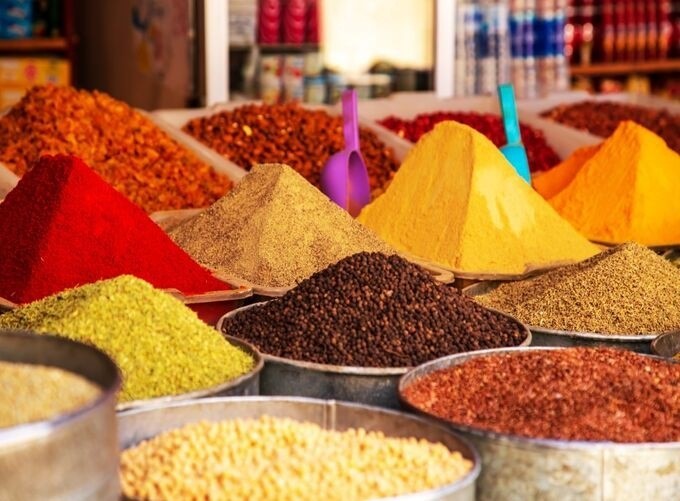
Different areas historically developed around particular trades and products, although contemporary commerce and tourism have blurred some of those boundaries. Textiles, leather goods, metalwork, lamps, spices, decorative objects and everyday products appear across a commercial environment that can change character from one lane to another.
You do not need to understand every traditional market specialization before shopping.
It is more useful to avoid making the first attractive object you see into an urgent purchase.
Walk for a while, compare workmanship and prices, and allow yourself to return later when practical. Once the fear of “never finding this shop again” disappears, shopping usually becomes more enjoyable and bargaining less emotional.
Bargaining Works Better as a Conversation Than a Battle
Visitors sometimes arrive prepared for souk bargaining as though they are entering a competitive sport.
That attitude can make an ordinary transaction unnecessarily unpleasant.
Prices in traditional markets may be negotiable, and asking politely whether there is flexibility is normal. The useful discipline is deciding what an item is worth to you rather than becoming obsessed with proving that you achieved the lowest possible price.
If you genuinely do not want something, decline and continue walking. If you like it and the final price feels reasonable to both sides, the fact that another traveler might theoretically have paid less does not invalidate the purchase.
A holiday souvenir does not need a victory ceremony.
Staying in a Riad Changes the Marrakech Experience
A riad is not simply a more attractive alternative to a conventional hotel.
Its position within the medina can fundamentally change how the city feels.
You may leave a busy commercial lane, turn into a quieter passage and enter a property built around an internal courtyard where outside noise drops dramatically. Breakfast on a terrace or returning during the afternoon can become part of the Marrakech experience rather than merely accommodation between sightseeing periods.
There are operational trade-offs, however.
Some riads cannot be reached directly by vehicle, meaning guests may need to walk from a nearby drop-off point. Stairs can be common, elevators may not exist and room sizes or facilities vary considerably between properties.
Travelers considering Marrakech Riad and Medina Experiences should therefore choose a riad according to access and comfort as well as photographs.
Not Every Traveler Should Sleep Deep Inside the Medina
For many first-time visitors, staying within the medina is wonderfully atmospheric.
For others, it creates unnecessary stress.
Travelers with limited mobility, substantial luggage, young children or a strong preference for conventional hotel facilities may be happier near the edge of the medina or in areas such as Hivernage or Gueliz, where vehicle access and modern hotel infrastructure can be easier.
This does not create a less legitimate Marrakech experience.
Accommodation should support the trip rather than satisfy an imagined authenticity requirement.
You can spend most of the day exploring the old city and still appreciate returning to a modern hotel with an elevator, larger room and straightforward taxi access.
Gueliz Is Important Because Marrakech Did Not Stop Developing
Visitors who remain entirely inside the medina see only part of the city.
Gueliz presents a more contemporary Marrakech of cafés, restaurants, shops, galleries and broad streets that contrast strongly with the historic core. The neighborhood can be especially refreshing after several days of narrow medina lanes because it shows how modern urban life developed beyond the old walls.
This contrast should not be framed as old Marrakech versus “real local Marrakech.”
Both belong to the city.
Historic environments are not automatically more authentic than contemporary ones, and modern neighborhoods do not somehow become culturally empty because their streets accommodate cars.
Seeing both creates a more complete picture.
Majorelle Garden Requires More Planning Than Wandering
The Jardin Majorelle experience differs from medina sightseeing because entry and visitor demand can make advance planning particularly important.
Travelers should check current ticketing arrangements and available time slots rather than assuming they can arrive whenever convenient. Combining the garden with nearby attractions should also be planned according to actual reservation times instead of trying to force it into whichever afternoon appears least busy on paper.
The garden provides a welcome visual contrast to Marrakech’s earthen architecture, with planting, design and distinctive colors creating a more controlled environment than the medina.
For some visitors it becomes a highlight, while others prefer allocating limited time to historical monuments.
Neither response is wrong.
Popularity does not create universal obligation.
Marrakech Heat Should Change the Schedule, Not Just the Packing List
During hotter periods, travelers often respond to Marrakech temperatures by carrying more water while leaving the itinerary unchanged.
A better response is to change the day.
Historical sightseeing and medina walking are generally more comfortable earlier, while the strongest heat can be used for a long lunch, hotel break, hammam, shaded interior or another less exposed activity. Later afternoon and evening can then return to outdoor exploration when conditions become more pleasant.
This matters particularly for families and older travelers, although anyone can become exhausted after several hours of walking through crowded streets in high temperatures.
Scheduling according to climate is not lost sightseeing time.
It is often what allows the second half of the day to remain enjoyable.
A Hammam Needs to Match Your Comfort Level
“Hammam” can describe very different visitor experiences, ranging from traditional public bathing environments to highly polished private spa treatments designed for international travelers.
Choosing between them is a personal decision rather than a test of cultural courage.
Some visitors genuinely want a more traditional experience, while others prefer privacy, clearer service structure and the comfort of a spa setting. Research what is actually included before booking, particularly if expectations around privacy, treatment style or facilities matter.
The mistake is assuming every hammam experience is interchangeable because the same word appears in the description.
Marrakech Food Is Better When Every Meal Is Not a Rooftop Event
Rooftop restaurants are popular for understandable reasons: they provide views, air and a visual escape from narrow streets.
After several meals, however, travelers can accidentally spend the entire visit eating variations of the same tourism-oriented experience.
Mix the settings.
A carefully chosen restaurant, casual lunch, café stop and one atmospheric rooftop dinner will usually create more variety than insisting that every meal needs sunset views and decorative lanterns.
Food should also be given enough time. Moroccan meals can become part of the daily rhythm rather than fuel consumed quickly before the next monument, especially when the schedule already contains substantial walking.
A Guide Is Most Valuable at the Beginning, Not Necessarily Every Day
First-time visitors often face an all-or-nothing decision between fully guided sightseeing and complete independence.
Marrakech suits a hybrid approach extremely well.
A knowledgeable guide on the first day can provide historical context, help visitors understand the medina’s structure and explain cultural details that would otherwise remain decorative. Once that foundation exists, later exploration becomes easier independently because the city already has some mental structure.
This is why Private Marrakech Cultural Tours can add the most value when positioned early rather than filling every available hour with guided activity.
Good guiding should increase your independence.
It should not make you feel incapable of walking without a guide afterward.
How Many Days Marrakech Needs Depends on How You Use Them
The useful question is not simply whether Marrakech needs two, three or four days, because two carefully paced days can feel richer than four days overloaded with excursions.
The better comparison is how much pressure each trip length places on the city itself:
| Time in Marrakech | What it allows comfortably | Main compromise | Best suited to |
|---|---|---|---|
| 1 full day | Core medina orientation and selected major sights | Little room for repetition or rest | Very tight Morocco itineraries |
| 2 full days | Major monuments, souks, Jemaa el-Fnaa and one contrasting area | Choices still required | First visits with limited time |
| 3 full days | Historic sights plus gardens, Gueliz and slower meals | Few major compromises | Most first-time visitors |
| 4 full days | Flexible sightseeing with substantial unscheduled time | Risk of unnecessary attraction filling | Slow travelers and repeat wanderers |
| 5+ days | Marrakech can function as a temporary base | City-only sightseeing may become repetitive | Travelers combining work, leisure or nearby excursions |
For most first-time visitors interested primarily in Marrakech itself, three full days provides an excellent balance between cultural depth and breathing room.
Excursions Should Not Consume the Marrakech Blog
Marrakech is frequently used as a starting point for the Atlas Mountains, desert-bound routes and other regional experiences.
Those journeys are important, but they belong to separate search intents.
A traveler spending five nights in a Marrakech hotel but leaving the city on three full-day excursions has not necessarily spent five days experiencing Marrakech. This distinction matters both operationally and editorially because accommodation nights and destination time are not interchangeable.
When calculating how long to stay, count the days actually available inside the city.
That prevents an itinerary from appearing more generous than it really is.
Families Need Fewer Objectives Per Day
Marrakech can work extremely well for families when adults stop measuring success through the number of monuments completed.
A palace, an interesting lunch, some souk exploration and hotel pool time may produce a much better family day than moving continuously between six attractions.
Children also experience the medina differently from adults. Animals, workshops, food preparation, colorful shops and unexpected street scenes may hold more interest than another twenty-minute historical explanation.
A good family guide recognizes this and changes rhythm accordingly.
The city already provides stimulation; parents rarely need to manufacture more.
Travelers With Limited Mobility Should Choose the Hotel Before the Itinerary
Historic Marrakech presents genuine accessibility challenges because of uneven surfaces, crowded lanes, steps and restrictions on where vehicles can reach.
The location of the accommodation can therefore influence the trip more than the distance between major attractions.
Before booking a riad, ask where the nearest vehicle drop-off point is, whether staff assist with luggage, how many stairs are involved and whether the room itself requires climbing. Similar questions should be asked about specific attractions rather than assuming “central location” means easy access.
A beautiful riad that requires a difficult walk every time you return can become less charming by the third day.
Marrakech Is Safer to Enjoy When Ordinary Travel Awareness Remains Switched On
Marrakech receives large numbers of international visitors and has extensive tourism infrastructure, but travelers should still use the normal awareness appropriate to any busy destination.
Crowded markets require attention to belongings, unofficial assistance can lead to requests for payment, and accepting directions from strangers without understanding the situation can create unnecessary confusion. Traffic and motorcycles inside or around pedestrian-looking spaces also deserve attention.
The aim is not to approach the medina suspiciously.
It is to remain aware enough that small problems do not become the story of the day.
The Best First Marrakech Day Is Not the Most Efficient One
Efficiency is seductive when everything has been researched in advance.
You know opening hours, walking distances and which restaurant sits closest to the next monument, so the itinerary begins resembling a logistics exercise.
Marrakech resists this approach because the city constantly produces reasons to stop: a workshop, doorway, café, courtyard, shop or street that was not included in the research.
Leave room for those interruptions.
A first day with three meaningful sights and two unexpected hours can produce a stronger understanding of Marrakech than a perfectly executed eight-stop schedule.
This is where Customized Marrakech Travel Experiences should differ from standardized sightseeing programs: customization is not merely changing the hotel category or adding another attraction, but adjusting the pace to the people actually traveling.
Marrakech Is Not Supposed to Feel the Same in Every Neighborhood
The medina, Kasbah area, Hivernage and Gueliz should not be compressed into one generic description of Marrakech.
The old city carries much of the historic and commercial intensity visitors expect, while newer districts introduce wider streets, contemporary restaurants, hotels and another form of urban life. Moving between them prevents the destination from becoming visually one-dimensional.
This is especially useful on longer stays.
After two days inside the medina, spending several hours elsewhere can restore curiosity rather than reduce cultural immersion.
Contrast is part of understanding a city.
When Marrakech Deserves Three Nights Rather Than Two
An additional night is worthwhile when it protects the pace rather than merely creates room for more attractions.
If two nights require the medina, major monuments, gardens, shopping and restaurants to be compressed into a narrow window, adding a third can transform the experience. The same applies when international arrival times reduce the first day to dinner and sleep.
Travelers should count usable hours, not printed itinerary days.
A four-day itinerary arriving at 20:00 on Day 1 and leaving at 07:00 on Day 4 contains roughly two practical sightseeing days, regardless of how generous the heading looks.
This simple calculation prevents a surprising amount of poor planning.
What Marrakech Is Really Good At
Marrakech succeeds because it offers multiple versions of the city within relatively little geographical space.
It can provide significant historical sightseeing without functioning as an open-air museum, intensive shopping without requiring a dedicated shopping day, distinctive accommodation that becomes part of the experience, contemporary neighborhoods that prevent the city from being trapped in its past, and restaurants capable of changing the pace whenever sightseeing becomes tiring.
The difficulty is that all these possibilities encourage visitors to over-plan.
Marrakech does not become better when every available hour is occupied.
For most first-time travelers, the city is at its strongest when one part of each day remains deliberately loose enough for the medina to interfere with the schedule.
That is not inefficient travel.
In Marrakech, it is often the point.
12 Marrakech Questions First-Time Visitors Rarely Ask Soon Enough
1. Should I stay inside the Marrakech medina on my first visit?
A medina riad can provide an exceptionally atmospheric experience, but it suits travelers comfortable with walking, narrow streets and potentially limited vehicle access. Those prioritizing elevators, larger rooms or straightforward transfers may prefer the medina edge, Hivernage or Gueliz.
2. How much time should I leave between Marrakech attractions?
More than the map suggests, because walking, navigation, photography, crowds and spontaneous stops all consume time. Rather than scheduling monuments back-to-back, leave enough flexibility that a delayed visit does not force the rest of the day into constant rushing.
3. Do I need a guide inside the souks?
Not necessarily, although a guide can be valuable early in the trip for orientation and cultural context. Independent wandering becomes easier once you understand the medina’s main reference points and are comfortable declining unwanted assistance or sales approaches politely.
4. Is Jemaa el-Fnaa better during the day or evening?
The atmosphere changes throughout the day, which makes seeing it more than once preferable to choosing a single “best” hour. Evening is generally livelier, while earlier visits make it easier to understand the square before activity becomes more concentrated.
5. Can non-Muslims enter the Koutoubia Mosque?
Non-Muslim visitors should generally expect to appreciate the Koutoubia from outside rather than entering the prayer space. Its architecture, minaret, gardens and position close to Jemaa el-Fnaa still make it an important historical and geographical reference point.
6. Is three days too much for Marrakech if I do not like shopping?
No, because the city offers palaces, religious and educational heritage, gardens, food, contemporary neighborhoods and architecture beyond the souks. Travelers uninterested in shopping can simply use market areas as cultural environments rather than treating them as purchasing missions.
7. Should I book Jardin Majorelle before arriving in Marrakech?
Advance planning is advisable because visitor demand and ticketing arrangements can affect availability. Check current official procedures for your travel dates rather than relying on older advice, particularly if the garden must fit around other timed activities.
8. Are riads difficult to reach with luggage?
Some are, because vehicles cannot access every medina lane. The exact situation varies enormously, so ask the property where guests are dropped off, how far they must walk and whether luggage assistance is provided before choosing accommodation.
9. Is summer sightseeing in Marrakech realistic?
Yes, but the schedule should reflect high temperatures rather than simply adding more water to a normal itinerary. Earlier sightseeing, a slower midday period and renewed activity later in the afternoon can make the city substantially more comfortable during hotter months.
10. Is bargaining expected everywhere in Marrakech?
No. Negotiation is common in many traditional market situations, but fixed-price shops, restaurants and other businesses operate differently. When bargaining is appropriate, remain polite and decide what the item is worth to you rather than treating every purchase as a contest.
11. Should families choose a riad or modern hotel?
Both can work, depending on children’s ages and family priorities. Riads provide atmosphere and central access, while modern hotels may offer pools, elevators, larger rooms and easier vehicle access, all of which can matter considerably after a long sightseeing day.
12. What planning mistake most often makes Marrakech exhausting?
Trying to maximize every hour because major attractions appear geographically close together. The medina requires mental as well as physical energy, so fewer planned sights, longer meals and deliberately unstructured periods usually produce a richer first visit than an aggressively efficient schedule.

A travel professional specializing in tailor-made travel planning, guest experience management, and multi-destination tourism operations.
With over 23 years of experience in the travel industry, he designs and manages private and cultural tours for international travelers across Türkiye, Greece, Egypt, Jordan, Morocco, and other destinations.
He has strong expertise in both online and face-to-face guest communication, sales processes, and end-to-end travel operations.
Working closely with hotels, travel agencies, and local partners, he ensures smooth coordination and high-quality travel experiences at every stage of the journey.
His focus is on delivering personalized, reliable, and seamless travel experiences for international guests worldwide.