Morocco Weather in April: Warm Spring Days & Regional Differences
Last Updated: August 9, 2026
There are months when travelling through Morocco requires compromise. You might choose the Sahara because the desert weather is appealing but accept cooler conditions elsewhere, or concentrate on the coast because the interior has become too hot for the kind of journey you enjoy.
April is different.
For many travellers, this is the point in the calendar when Morocco's major regions can sit comfortably inside the same itinerary without one of them demanding that the entire journey be designed around the weather.
Marrakech is warm enough for long evenings without yet carrying the full weight of summer. Fes and the north have moved beyond their stronger winter character, lower Atlas valleys are firmly in spring, and the Sahara remains realistic for a multi-day journey even as daytime warmth begins becoming more noticeable.
The Atlantic coast adds another option rather than an escape from difficult conditions elsewhere.
That balance is April's real advantage.
April Opens More of the Map at Once
Good weather does not mean identical weather, and Morocco would be far less interesting if it did.
What April offers is a wider geographical comfort zone, allowing travellers to combine regions that require more compromise during hotter or colder periods.
| Region | April Travel Character | Why It Works |
|---|---|---|
| Fes & Meknes | Established spring | Comfortable cultural touring |
| Marrakech | Warm, increasingly lively | Long outdoor days and evenings |
| Atlas valleys | Strong spring conditions | Walking and village landscapes |
| Ouarzazate region | Warm and generally manageable | Road journeys and kasbah country |
| Sahara | Increasingly warm | Desert still practical before summer |
| Essaouira | Mild Atlantic contrast | Coastal break without needing to escape heat |
This makes April particularly useful for first-time visitors who do not yet know which version of Morocco they will enjoy most.
You can try several.
Marrakech No Longer Needs a Winter Strategy
By April, Marrakech has moved beyond the winter rhythm that shapes January and February visits.
Mornings generally invite an earlier start without requiring the same attention to cold, while evenings become increasingly pleasant for dining outside, walking around the medina or spending longer on a rooftop terrace. The city begins feeling more naturally connected from morning into evening because changing temperature no longer divides the day as sharply.
That does not mean midday conditions should be ignored, especially during warmer periods later in the month. Long outdoor sightseeing still benefits from sensible pacing, water and occasional shade rather than treating comfortable spring weather as permission to walk continuously for eight hours.
April's gift is flexibility, not invincibility.
Travellers who want Marrakech to anchor a broader holiday can explore Morocco tailor-made tours, combining the city with regions chosen according to interests rather than forcing the entire route into a standard circuit.
Fes Has One of Its Most Walkable Personalities
Fes is a city where weather matters because walking is not an optional part of the experience.
The medina rewards curiosity, but its density means that a full sightseeing day can involve far more time on foot than expected. April's established spring conditions can therefore make the city particularly rewarding, allowing travellers to concentrate on architecture, craftsmanship and the complicated geography of the old city rather than on staying warm or avoiding intense summer heat.
There is also more reason to connect Fes with its surroundings.
Meknes and Volubilis can fit naturally into a northern cultural route, while countryside shaped by the previous winter can retain an attractive spring appearance depending on rainfall.
April does not merely improve Fes.
It expands what makes sense around it.
The Atlas Moves Into a Different Season
March can show spring below and winter above with dramatic clarity.
April moves that boundary farther uphill.
Lower valleys and many village areas develop a stronger spring identity, which can make walking, cultural excursions and overnight stays especially appealing. Higher elevations remain a separate matter, however, and snow or winter-like conditions can persist depending on altitude and the particular year.
This distinction prevents a common mistake.
“The Atlas Mountains” are not one weather destination.
A relaxed valley walk near a village and a demanding high-altitude trek belong to different planning categories, even if both appear under the same mountain label in an itinerary.
Travellers interested in exploring the range beyond a quick day trip can consider Atlas Mountain experiences, selecting routes appropriate to elevation, fitness and current conditions rather than assuming every trail enters spring simultaneously.
April Is When the Desert Clock Starts Ticking
The Sahara remains highly attractive in April, but the seasonal direction has changed.
January and February are largely about managing cold desert nights.
April increasingly asks you to think about daytime heat.
This shift may be gradual, particularly earlier in the month, and actual conditions vary from year to year. Nevertheless, travellers should begin paying more attention to when desert activities take place rather than simply whether they are possible.
Morning becomes valuable.
Late afternoon becomes valuable.
Long periods of exposed activity around the warmest part of the day become less attractive as temperatures rise.
This does not diminish the Sahara experience; it simply changes its rhythm.
Don't Reduce the Sahara to a Weather Decision
April's generally favourable touring conditions can create another planning mistake: adding the Sahara because the month is considered “good for the desert,” even when the traveller has little interest in spending several days reaching it.
A proper Sahara journey takes time.
The route across the Atlas and through southern Morocco is part of the experience, which means the desert should earn its place in the itinerary through genuine interest rather than seasonal obligation.
If dunes, kasbah landscapes, long road journeys and desert nights appeal to you, April can be excellent.
If your priorities are food, cities, gardens and the Atlantic coast, Morocco has no rule requiring you to ride a camel before going home.
Good weather creates options.
It should not create homework.
Essaouira Becomes a Complement, Not a Rescue Plan
During the hottest periods of the year, the Atlantic coast can become attractive partly because travellers want relief from inland heat.
April gives Essaouira a different role.
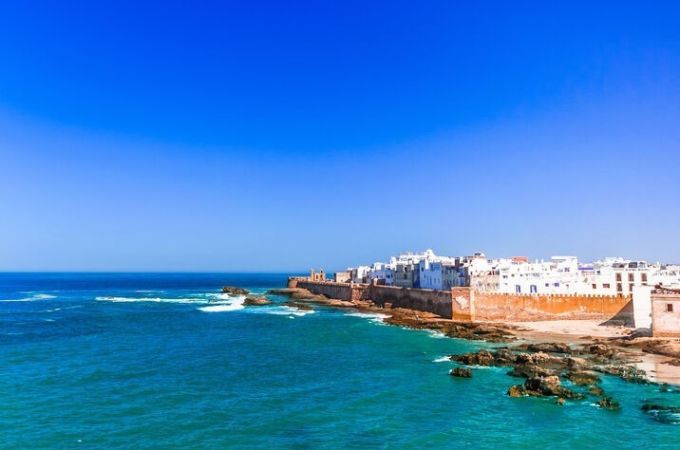
The city can be chosen because you actually want its harbour, medina, seafood and slower coastal atmosphere rather than because Marrakech has become physically exhausting.
That distinction changes the itinerary.
Two or three nights can provide a natural ending after cities or the Sahara, while the Atlantic air gives the journey another geographical contrast without feeling like an emergency escape from the interior.
Wind remains part of Essaouira's personality, so temperature alone should not determine what you wear or how warm the day feels.
The Atlantic always gets a vote.
April Is a Strong Month for the Classic Morocco Circuit
Travellers with around ten to fourteen days can use April's regional balance particularly well.
A broad circuit might combine northern cities, Marrakech, the Atlas crossing, southern valleys and the Sahara without requiring one climate to dominate the entire itinerary.
| Trip Priority | Strong April Combination |
| First Morocco journey | Fes + Marrakech + Sahara |
| Culture focused | Rabat + Meknes + Fes + Marrakech |
| Landscape focused | Marrakech + Atlas + Southern Valleys |
| Desert priority | Marrakech + Ouarzazate + Sahara |
| Slower journey | Marrakech + Atlas + Essaouira |
| Broad circuit | Imperial cities + South + Sahara |
The value of this table is not in selecting the itinerary with the most destinations.
It is recognising that April allows several different versions of Morocco to work equally well.
Spring Demand Changes the Planning Equation
Weather is not the only reason April differs from March.
Spring travel demand can increase, particularly around holiday periods, which means desirable riads, desert camps, guides and transport arrangements may become more competitive.
This is especially relevant if accommodation itself matters to you.
Someone satisfied with any comfortable hotel has more flexibility than a traveller determined to stay in a small eight-room riad or a particular desert camp.
Book according to how difficult the experience would be to replace, rather than reserving everything simply because a calendar tells you April is popular.
A specific property may deserve an early commitment.
Tuesday's lunch probably does not.
April's Strength Is That You Don't Have to Choose Morocco by Weather
During more extreme months, climate can become the itinerary designer.
April gives some of that control back to the traveller.
You can choose Fes because you care about history, the Atlas because walking matters to you, the Sahara because you genuinely want the desert, or Essaouira because ending beside the Atlantic sounds better than adding another city.
Weather still influences the details, particularly at high elevation and in the increasingly warm southeast, but it does not need to dictate the entire route.
Travellers wanting a journey that combines several of these environments can consider Morocco multi-region journeys, using April's broad touring conditions to connect places that reveal genuinely different sides of the country.
That is why April's reputation as a good month to visit Morocco deserves a little more explanation.
The advantage is not simply pleasant temperature.
It is choice.
How Active Do You Want Your April Morocco Trip to Be?
April has an advantage that rarely appears clearly in monthly weather guides: you can change the physical intensity of the holiday several times without necessarily changing the season.
A morning in Fes may involve hours of medina walking, while several days later the Atlas can turn the journey into a more active mountain experience. Continue south and desert exploration introduces another type of movement altogether, before Essaouira gives you permission to slow down beside the Atlantic.
The weather does not guarantee that every activity will be perfect every day, particularly at altitude, but April generally gives travellers a broader range of realistic choices than months dominated by stronger heat or winter conditions.
The question therefore becomes less about what you can do and more about how active you actually want to be.
April Activities Do Not Demand the Same Conditions
A common planning mistake is treating “outdoor activities” as one category, even though walking through a medina, trekking at elevation and spending several hours in the desert have completely different weather requirements.
| Activity | April Suitability | Main Consideration |
|---|---|---|
| Medina walking | Excellent | Warmer afternoons in Marrakech |
| Lower Atlas walking | Often excellent | Elevation and local conditions |
| High-altitude trekking | Variable | Snow may remain on higher routes |
| Desert exploration | Very good | Increasing daytime warmth |
| Road-based touring | Excellent | Allow time for scenic stops |
| Atlantic coast walking | Very good | Wind can affect comfort |
This is why April works so well for travellers who dislike holidays built around one activity from beginning to end.
City Walking Is More Physical Than It Sounds
A full day in Fes can easily become one of the more active days of the itinerary even though nobody calls it hiking.
The medina contains slopes, uneven surfaces and an enormous network of streets that encourage hours of walking, while Marrakech can produce similarly substantial distances once gardens, palaces, souks and newer neighbourhoods are combined.
April generally makes those days easier to enjoy because sightseeing does not yet need to be organised entirely around avoiding intense summer heat.
Still, comfortable conditions can encourage travellers to overdo it.
If the morning has already involved several hours on foot, an unhurried lunch or slower afternoon may improve the day more than adding another monument simply because there is enough daylight left.
Good weather does not require maximum productivity.
The Atlas Lets You Choose Your Difficulty
April mountain experiences can range from gentle valley walks to serious trekking, and these should never be presented as though they require the same preparation.
Lower elevations may offer attractive spring conditions, with village landscapes and vegetation making relatively accessible walking particularly rewarding. Higher routes are another matter because snow and winter conditions can remain depending on altitude, recent weather and the year.
This creates useful flexibility for mixed groups.
Not everyone needs to be an experienced trekker to spend meaningful time in the Atlas. A traveller interested in landscapes, village life and moderate walking can enjoy the mountains without committing to a demanding high-altitude route.
Those who do want serious trekking should plan according to current conditions rather than assuming April automatically means clear summer trails.
The mountain decides what season it is.
Desert Activity Should Follow the Sun
By April, the Sahara is moving away from its winter rhythm, which means activity timing deserves greater attention.
Camel rides, walks and other exposed experiences generally make more sense when they work with the day's temperature rather than against it. As conditions become warmer, mornings and later afternoons gain importance, particularly during warmer spells or towards the end of the month.
This can actually improve the desert day.
Instead of trying to fill every hour with organised activity, the warmest part of the afternoon can become a slower period at camp or accommodation, while exploration returns as the light softens.
The Sahara does not need a full sightseeing schedule.
Its emptiness is part of what you travelled there to experience.
Road Trips Count as Active Travel Too
A road-based itinerary sounds physically easy because much of the movement happens in a vehicle.
The reality is more complicated.
A good journey through southern Morocco includes stops, short walks, viewpoints, villages and archaeological or architectural sites, which means a long driving day can become tiring even when none of the individual activities appears demanding.
April's pleasant conditions can tempt itinerary designers to add more stops because everything seems possible.
This is where restraint matters.
Four meaningful stops usually create a better travel day than eight places where nobody stays long enough to understand why the vehicle stopped.
Essaouira Gives the Journey Somewhere to Slow Down
After several days of medinas, mountain walks and desert travel, the Atlantic coast can change the physical rhythm of the holiday without becoming an empty “rest day.”
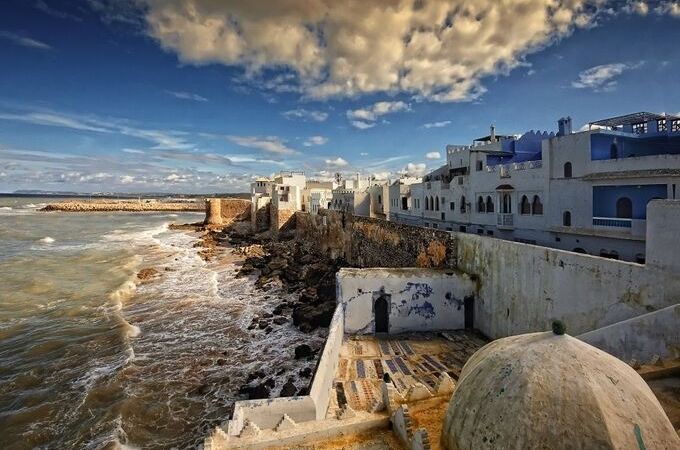
Essaouira works because there is still plenty to experience, but very little of it needs to happen urgently. Walking the ramparts, spending time around the harbour, exploring the medina and having a long seafood lunch can fill the day naturally without creating the sense that you are falling behind an itinerary.
Wind can influence comfort, particularly around exposed coastal areas, but April does not require the city to provide conventional beach conditions in order to justify the journey.
Its value lies in contrast.
A Good April Itinerary Changes Pace Deliberately
Travellers often think balance means alternating sightseeing days with days doing nothing.
Morocco offers a more interesting version.
A demanding medina day can be followed by a scenic transfer with several short stops. An Atlas stay can increase the physical intensity again before the Sahara slows the middle of the day naturally. Essaouira can then reduce the pace without bringing exploration to a complete stop.
This creates a holiday that feels varied rather than exhausting.
April supports that pattern particularly well because the weather allows several different types of outdoor experience to coexist within the same route.
The best itinerary does not use that flexibility to do everything.
It uses it to change pace before you become tired of doing the same thing.
April Weather Is Only Half the Planning Story
Two travellers visiting Morocco in April can encounter similar temperatures but surprisingly different travel experiences.
One may arrive during a relatively quiet week, while another travels when European school holidays, Easter dates or another high-demand period increases visitor numbers in Marrakech and other major destinations. Religious calendars can also influence daily rhythms in years when Ramadan overlaps partly or fully with spring travel dates, although Ramadan moves through the Gregorian calendar and should never be described as a permanent April event.
This distinction matters because April's attractive weather naturally encourages demand.
The question is therefore not only whether conditions are suitable for travelling, but what else is happening during your particular dates.
Check the Calendar After You Check the Forecast
Weather forecasts become increasingly useful as departure approaches, while travel calendars can often be checked much earlier.
Before finalising an April itinerary, look at the actual dates rather than assuming every week behaves similarly.
| Factor | Can Affect April? | What to Check |
|---|---|---|
| Easter period | Yes, depending on year | Accommodation demand and flights |
| European school holidays | Often | Popular city and resort availability |
| Ramadan | Only when dates overlap | Local opening patterns and daily rhythm |
| Moroccan public holidays | Date dependent | Transport and opening arrangements |
| Spring travel demand | Yes | Riads, camps and guides |
| Weather changes | Always possible | Forecast close to departure |
The useful planning habit is simple: separate seasonal patterns from events that move around the calendar.
Easter Can Change Availability More Than the Weather
Easter does not occur on the same dates every year, but when it falls within the April travel period it can increase demand from European markets, particularly for Marrakech and other well-known destinations.
This does not mean the city suddenly becomes impossible to visit.
It means travellers with strong accommodation preferences should pay more attention to booking timing.
A small riad with the location, room category and atmosphere you want is more difficult to replace than a generic hotel room somewhere else in the city. The same applies to particular guides, private transport arrangements and desert camps when a broader Morocco circuit coincides with a busy period.
Availability should influence when you book.
It should not persuade you to rush once you arrive.
Ramadan Should Be Explained by Year, Not by Month
Because the Islamic calendar is lunar, Ramadan moves earlier through the Gregorian calendar over time. It may overlap with April in some years and not in others, which makes statements such as “April is Ramadan season in Morocco” inaccurate as permanent travel advice.
When travel dates do overlap, visitors may notice changes in daily rhythm, particularly around fasting hours and the period leading towards sunset. Some businesses may adjust opening times, while tourist-oriented hotels, restaurants and services can continue operating according to their own arrangements.
Rather than viewing this automatically as an inconvenience, understand the context before travelling and check current information for the specific year.
The atmosphere around the evening meal can provide a meaningful glimpse into a different daily rhythm, provided visitors approach it respectfully rather than expecting the destination to operate exactly as it does outside Ramadan.
Popular Does Not Mean Everywhere Feels Crowded
April's reputation as a strong Morocco travel month can create the impression that the entire country becomes busy.
Travel rarely works that evenly.
The most famous parts of Marrakech may feel active while a quieter neighbourhood nearby has a completely different atmosphere. A well-known Sahara camp can fill while another region of southern Morocco remains comparatively calm. Essaouira may become busier over a holiday weekend without losing the slower character that makes it appealing.
This is another reason to look beyond national labels such as “peak season.”
Demand concentrates.
Good itinerary design can move around it.
Timing Matters More Than Avoiding Popular Places
There is no need to skip a major sight simply because April is attractive to other travellers too.
Instead, use the day intelligently.
A popular Marrakech attraction may feel very different early in the morning from the middle of the day, while medina exploration becomes more rewarding once you stop following exactly the same route as every first-time visitor.
The same principle applies to scenic stops during road journeys.
If several tour vehicles arrive simultaneously, spending slightly longer somewhere else can sometimes produce a better experience than insisting that the original timetable is sacred.
This is where private or flexible travel has an advantage.
The itinerary can respond to what is actually happening rather than to what was predicted months earlier.
April Requires Selective Advance Booking
The temptation during a popular spring period is to reserve everything.
That is rarely necessary.
Book early when losing the specific option would matter: a small preferred riad, a particular desert camp, a specialist mountain guide or essential transportation on a complex route.
Leave ordinary sightseeing with some breathing room unless reservations are genuinely required.
The goal is to protect the difficult-to-replace parts of the holiday without turning every meal and afternoon into a timed appointment.
April gives travellers enough daylight and generally favourable conditions to enjoy spontaneity.
Do not schedule it out of the trip.
A Busy Travel Month Can Still Feel Slow
This may be April's most useful planning lesson.
Good weather and stronger demand do not require a faster itinerary.
In fact, the opposite often works better.
Stay an additional night instead of adding another city. Begin earlier when a popular attraction matters to you, then allow the afternoon to develop naturally. Use the Atlas or Atlantic coast to change the pace after Marrakech rather than attempting to escape other travellers by continually moving somewhere new.
April works because so much of Morocco is available to you at once.
The best response is not to consume as much of it as possible.
It is to choose carefully enough that the journey still has room to breathe.
March vs April vs May: Why April Sits in the Middle
April's appeal becomes clearer when it is compared with the months immediately around it. March still carries visible seasonal transition, particularly between lower landscapes and the mountains, while May begins moving more decisively towards warmer pre-summer conditions, especially in Marrakech and the south.
April occupies the balance point between them.
| March | April | May | |
|---|---|---|---|
| Seasonal Identity | Spring transition | Balanced spring | Pre-summer |
| Marrakech | Increasingly warm | Warm, flexible touring | Heat becomes more influential |
| Fes & North | Spring emerging | Established spring | Warmer cultural touring |
| Atlas | Strong elevation contrast | Broad spring access at lower levels | Expanding activity options |
| Sahara | Warming desert | Good, but increasingly warm | Heat planning becomes important |
| Atlantic Coast | Mild spring | Strong complementary destination | Increasingly attractive |
| Best For | Landscape transitions | Mixed-region itineraries | Travellers moving toward summer |
April therefore works particularly well for travellers who want several different versions of Morocco without allowing one weather extreme to determine the whole route.
Frequently Asked Questions About Morocco in April
Is April a good time to visit Morocco?
Yes. April is one of the most versatile months for broad Morocco itineraries because cities, lower mountain regions, the Atlantic coast and the Sahara can all work well within the same journey. Conditions vary geographically, while higher elevations and increasingly warm desert areas still require appropriate planning.
Is Marrakech hot in April?
Marrakech is generally warm during April, with hotter periods becoming increasingly possible as the month progresses. Conditions can be excellent for sightseeing, particularly when long outdoor days are paced sensibly. Travellers should carry sun protection, stay hydrated and avoid assuming that comfortable mornings guarantee equally mild afternoons.
Is April good for Fes?
April can be particularly rewarding in Fes because established spring conditions generally support substantial medina walking without the stronger summer heat. The surrounding region, including Meknes and Volubilis, can also fit naturally into the itinerary, giving travellers a broader cultural experience beyond the old city itself.
Can I visit the Sahara in April?
Yes. April remains a strong month for Sahara travel, although daytime warmth becomes increasingly relevant compared with winter. Desert activities may be more comfortable during mornings and later afternoons, particularly towards the end of the month, while actual conditions should always be checked closer to travel.
Are Sahara nights cold in April?
Evenings can still feel cool compared with daytime conditions, but the stronger winter-night character of January and February generally begins fading. Travellers staying in desert camps should nevertheless bring an additional layer because temperature differences remain noticeable and personal sensitivity to cold varies considerably.
Is there still snow in the Atlas Mountains in April?
Snow can remain at higher elevations depending on altitude, snowfall and the particular year, even while lower valleys experience established spring conditions. High-altitude trekking should therefore be planned according to current trail conditions and professional local guidance rather than assuming all mountain routes are snow-free.
Is April suitable for hiking in Morocco?
Yes, especially for lower and moderate-elevation walking where spring conditions can be excellent. Higher-altitude Atlas routes require more careful assessment because winter conditions may persist. The appropriate route depends on elevation, recent weather, fitness level and the type of hiking experience planned.
Does Morocco get rain in April?
Rain remains possible in April, particularly in northern, mountain and Atlantic regions, although conditions vary substantially between destinations and years. Travellers should check regional forecasts rather than relying on a national average and carry a lightweight weather-resistant layer when travelling across several parts of the country.
Is Essaouira worth visiting in April?
Yes. Essaouira works particularly well as a contrast to inland Morocco, offering an Atlantic atmosphere, seafood, medina exploration and a slower pace. Wind remains part of the city's character, but April does not require conventional beach weather for the destination to provide a worthwhile coastal experience.
Is April or May better for Morocco?
April generally offers a more balanced spring climate across a broad multi-region itinerary, whereas May moves closer to pre-summer conditions and increasing inland heat. Travellers prioritising extensive sightseeing and desert circuits may prefer April, while those valuing warmer weather and the coast may find May appealing.

A travel professional specializing in tailor-made travel planning, guest experience management, and multi-destination tourism operations.
With over 23 years of experience in the travel industry, he designs and manages private and cultural tours for international travelers across Türkiye, Greece, Egypt, Jordan, Morocco, and other destinations.
He has strong expertise in both online and face-to-face guest communication, sales processes, and end-to-end travel operations.
Working closely with hotels, travel agencies, and local partners, he ensures smooth coordination and high-quality travel experiences at every stage of the journey.
His focus is on delivering personalized, reliable, and seamless travel experiences for international guests worldwide.