Morocco Weather in March: Spring Temperatures & Desert Conditions
Last Updated: August 9, 2026
March is when Morocco begins looking less like a winter destination and more like a country preparing to travel outdoors again, although the change is neither simultaneous nor particularly tidy.
Marrakech may produce a warm afternoon that feels confidently springlike, while the Atlas Mountains visible beyond the city can still carry snow at elevation. Northern landscapes may become noticeably greener, the valleys of the south begin changing character, and desert days grow warmer even though evenings can remain cool enough to justify the layers you nearly decided not to pack.
This unevenness is precisely what gives March its appeal.
Rather than offering one perfect national climate, the month creates a wider range of comfortable travel possibilities, which makes it particularly suitable for travellers who want to connect cities, landscapes and the Sahara within the same journey.
March Is When the Map Starts Turning Green
Morocco is often imagined through ochre walls, dry valleys, dunes and rocky mountains.
March complicates that picture.
Rainfall from the cooler season can leave parts of northern and central Morocco greener than first-time visitors expect, while agricultural landscapes and valleys may begin showing a stronger spring character. The exact appearance varies according to annual rainfall and local conditions, so no traveller should expect the country to transform according to a fixed calendar date.
Still, the visual shift can be substantial.
| Region | March Character | What Changes for Travellers |
|---|---|---|
| Rabat & North | Greener spring landscapes | Road journeys become more scenic |
| Fes & Meknes | Cool-to-mild spring touring | Longer cultural days |
| Marrakech | Warmer spring rhythm | More outdoor flexibility |
| Atlas Mountains | Spring below, winter possible above | Elevation becomes crucial |
| Southern Valleys | Landscape transition | Excellent road-trip potential |
| Sahara | Increasing daytime warmth | Earlier starts become useful |
March is therefore one of the months when looking out of the vehicle can become as rewarding as arriving at the next attraction.
Northern Morocco Deserves More Attention in Spring
Travellers planning their first Morocco journey frequently concentrate on Marrakech and the Sahara, sometimes adding Fes because it appears on the standard list of imperial cities.
March creates a strong argument for looking north more carefully.
The landscapes around Rabat, Meknes and Fes can feel fresh after winter rainfall, while cooler-to-mild conditions suit archaeological and cultural sightseeing particularly well. Volubilis, for example, is an open archaeological landscape where spring conditions can make a longer visit far more appealing than the compressed experience travellers sometimes have during hotter months.
This is where March begins separating itself from February.
The question is no longer simply whether winter has loosened its grip.
It is what you can do with the landscape once it has.
Travellers interested in giving northern Morocco proper weight can consider Morocco imperial city tours, linking the historic cities without treating the north merely as a prelude to Marrakech.
Marrakech Moves Outdoors
Marrakech in March becomes easier to plan around entire days rather than weather windows.
A morning can begin inside the medina, continue through gardens or architectural sites, stretch into an outdoor lunch and still leave enough energy for another part of the city later in the afternoon. There is generally less need to organise sightseeing around avoiding strong summer heat, although warmer days become increasingly possible as the month progresses.
The result is not necessarily that travellers should see more.
March is particularly good for seeing the city more slowly.
A longer afternoon in a garden, an unplanned detour through the souks or a rooftop lunch that takes ninety minutes instead of forty-five becomes easier to accommodate when the day itself feels generous.
Spring gives Marrakech time.
Try not to immediately fill all of it.
The Atlas Can Show You Two Seasons at Once
March makes elevation impossible to ignore.
Lower valleys and foothills may begin developing a clear spring character, while higher elevations can retain snow and winter conditions. Travellers looking towards the mountains from Marrakech can therefore see a landscape that belongs to another season from the one they are experiencing in the city.
This is visually spectacular.
It also matters operationally.
A low-level village excursion cannot be treated as equivalent to high-altitude trekking, and current trail or road conditions should determine mountain plans rather than the warmest temperature shown on a Marrakech weather app.
For serious trekking, appropriate equipment and qualified local guidance remain important.
Spring begins from the bottom of the mountain.
It takes longer to reach the top.
March Makes the Road South Part of the Holiday
The journey from Marrakech across the Atlas towards Ouarzazate and the valleys leading farther southeast is rewarding throughout much of the year, but March gives the route a particularly interesting balance.
You may begin among spring conditions, cross landscapes where winter remains visible at elevation, then descend into increasingly dry southern terrain before eventually reaching the desert.
Few flights could explain Morocco as well as that road does.
The landscape changes gradually enough that the Sahara feels like the conclusion of a geographical story rather than an attraction suddenly appearing at the end of a long transfer.
Travellers interested in making the road itself part of the experience can consider southern Morocco adventures, allowing the Atlas, kasbah country and desert-facing valleys enough time to stand independently.
The Sahara Begins Changing Its Daily Rhythm
March remains an attractive desert month, but the balance is beginning to shift.
Daytime temperatures generally move upward as spring develops, which can make mornings and later afternoons increasingly valuable for activities. Nights may still feel cool, especially compared with the warmth of the day, although the sharper winter character begins to soften.
This is the point when desert planning should become more date-specific.
An early-March journey may feel different from one near the end of the month, and conditions vary from year to year.
Instead of relying entirely on monthly averages, check the forecast as travel approaches and let the actual day determine how much activity belongs around midday.
The Sahara is beginning its journey towards summer.
There is no need to hurry it there.
March Is Excellent for a North-to-South Journey
One of the strongest March itineraries is a route that deliberately follows Morocco's changing landscapes rather than attempting to maintain the same type of holiday throughout.
For example:
| Stage | Experience | Why March Adds Value |
| Rabat / Meknes | History and greener landscapes | Spring becomes visible |
| Fes | Medina and culture | Comfortable walking conditions |
| Middle / High Atlas | Mountain transition | Seasonal contrast |
| Marrakech | Outdoor city exploration | Longer usable days |
| Southern Valleys | Scenic road travel | Changing landscapes |
| Sahara | Desert finale | Warm days before summer intensity |
This route works because every section contributes something different.
The cities provide history and living culture, the mountains create geographical context, and the south gradually strips the landscape back until the desert becomes the natural final chapter.
March Weather Rewards Longer Circuits
A five-day Morocco trip can be excellent, but March becomes particularly interesting once the itinerary has enough time to cross several regions.
With ten days or more, travellers can begin seeing the seasonal differences rather than reading about them. The green landscapes of the north, springlike Marrakech, snow remaining at mountain elevation and increasingly warm desert terrain can all exist within one journey.
Those wanting that broader progression can explore grand Morocco journeys, particularly when the aim is to understand the country rather than concentrate on one city.
The important word is progression.
A longer itinerary should not simply contain more pins on a map.
Spring Does Not Mean Predictable
There is a tendency to imagine spring as the easy season between winter rain and summer heat.
March deserves more nuance.
Rain remains possible. Mountain conditions can still require winter awareness. Warmer spells may appear in southern areas, while mornings and evenings can remain cool elsewhere. Wind can also influence comfort, particularly in exposed regions.
None of this makes March unreliable in a negative sense.
It means the month should be approached with adaptable clothing and an itinerary that does not assume every day will behave identically.
A light weather-resistant layer still deserves space in the suitcase, even if several afternoons make you wonder why you brought it.
March Is for Travellers Who Want to Watch Morocco Change
April will develop a more settled spring identity.
March is more interestingly unfinished.
Winter remains visible above you in the mountains while lower landscapes move ahead. Northern Morocco can become greener, Marrakech stretches comfortably into longer outdoor days, and the road towards the Sahara passes through increasingly dry country until spring begins feeling less obvious altogether.
That movement gives March its cluster identity.
You are not simply visiting Morocco during spring.
You are travelling through the places where spring arrives at different speeds.
For a traveller who enjoys cities, road journeys and landscapes equally, few things make a Morocco itinerary feel more connected than watching the season change through the window.
Green Morocco or Desert Morocco? March Lets You Choose Both
Many first-time visitors arrive with a surprisingly narrow visual idea of Morocco.
They imagine Marrakech's terracotta walls, kasbahs rising from dry valleys and camels crossing enormous dunes. These images are real, but March can reveal a version of the country that receives far less attention in travel advertising.
Parts of Morocco can be remarkably green.
Winter rainfall can transform agricultural landscapes and hillsides, while spring vegetation begins appearing in areas that look completely different later in the year. Travel south and that green gradually recedes until rocky plateaus, valleys and desert landscapes take over.
For photographers and road-trip travellers, this transition can become one of the strongest reasons to choose March.
If You Want Green Landscapes, Look North First
Northern Morocco is often treated as a separate trip because travellers assume the classic first-time route must revolve around Marrakech and the Sahara.
March makes that assumption worth reconsidering.
The areas around Rabat, Meknes, Volubilis and farther north can show a much fresher landscape than the stereotypical image of Morocco suggests, depending on winter rainfall. Roads pass through agricultural areas and rolling country where spring colour can become part of the journey rather than something encountered only inside gardens.
This works particularly well for travellers interested in history because some of Morocco's major cultural sites sit naturally within these landscapes.
You are not choosing nature instead of culture.
The road between cultural destinations becomes more interesting.
Volubilis Is Better When You Give It a Landscape
Volubilis is often approached as a collection of Roman ruins.
March encourages a broader view.
The archaeological site sits within an open landscape, which means weather and season affect the experience considerably. On a pleasant spring day, the surrounding countryside becomes part of the setting rather than an empty background behind columns and mosaics.
This is one reason rushing through Volubilis between other stops can feel unsatisfying.
Allow enough time to walk.
Look beyond the structures.
The archaeological remains explain one part of the site's history, while the landscape explains why being there feels different from visiting a museum.
Marrakech Offers a Different Kind of Green
Marrakech does not need to become rural to feel springlike.
Its gardens and planted spaces provide a more designed version of the season, creating contrast with the density of the medina and the dry mountain landscapes visible farther away.
March is particularly suited to combining these two versions of the city.
Spend part of the morning inside the old city, where streets and souks provide intensity, then move into a garden or quieter neighbourhood later rather than building the entire day around monuments.
The benefit is not simply botanical.
Green spaces change the pace.
Marrakech can be stimulating enough that a quieter hour becomes part of good itinerary design rather than time taken away from sightseeing.
The Atlas Is Where Green Meets White
Few March landscapes explain Morocco's geography as clearly as the Atlas.
At lower elevation, valleys may begin showing spring growth, while snow can remain visible higher in the mountains. The exact balance varies according to altitude, rainfall, snowfall and the year, which is precisely why fixed seasonal descriptions become unreliable.
This creates one of March's strongest visual contrasts.
Green lower landscapes.
Bare rock.
Snow above.
Then, after crossing towards the south, increasingly dry country.
A traveller can move through these environments in a single road journey, which makes the Atlas more than a mountain destination.
It becomes the dividing line between different Moroccos.
South of the Mountains, the Colours Change
Continue towards Ouarzazate and the palette begins shifting.
The green landscapes associated with parts of northern and central Morocco gradually give way to earth tones, rocky terrain, palm-filled valleys and fortified architecture that seems to grow directly from the landscape.
This is where a March road trip becomes particularly satisfying.
The change does not happen at one border.
You notice it gradually.
A valley looks drier than the previous one. Vegetation concentrates around water. Villages seem increasingly connected to the colour of the ground, and the horizon begins opening.
By the time the desert becomes the dominant landscape, the journey has already explained how you arrived there.
Which March Morocco Fits Your Trip?
Travellers do not need to choose the same landscapes simply because they are visiting in the same month.
| Your Priority | Strong March Choice | What You Gain |
|---|---|---|
| Green scenery | Rabat–Meknes–Fes region | Spring countryside + culture |
| Cities and gardens | Marrakech | Urban spring atmosphere |
| Seasonal contrasts | Atlas region | Green valleys + winter elevation |
| Photography | North-to-south circuit | Rapid landscape changes |
| Kasbah landscapes | Ouarzazate and southern valleys | Dry-country transition |
| Desert experience | Sahara region | Increasingly warm desert days |
The most ambitious itinerary can combine several of these, but travellers with less time should choose according to what genuinely interests them rather than attempting to reproduce a map of Morocco.
Photographers Should Think About Direction
March offers an interesting route-design question for photographers.
Do you begin in the greener north and allow the landscape to become progressively drier as you travel south, or begin in Marrakech and build towards the desert?
Both can work.
The first creates a particularly strong visual progression because the country appears to change around you. Northern agricultural landscapes lead towards cities, mountains and eventually the arid southeast.
The second gives the journey a more familiar narrative, beginning with Marrakech before the Atlas crossing gradually introduces the desert.
Neither direction is objectively better.
What matters is recognising that the landscape transition itself deserves daylight.
A long scenic transfer completed mostly after sunset wastes one of March's advantages.
Don't Chase Greenery Like a Fixed Attraction
Seasonal landscapes are not monuments with opening hours.
Rainfall varies from year to year, temperatures change, and vegetation responds accordingly. A photograph taken in a particular valley during the second week of March one year does not guarantee identical conditions on the same date the following year.
Plan around regions that are rewarding regardless.
If the countryside is particularly green, consider it a bonus rather than the only reason for travelling there.
The same principle applies to blossom.
Natural seasonal events are most enjoyable when they enrich an already worthwhile route instead of becoming promises the landscape is expected to keep.
March Can Give You Two Trips Without Changing Countries
A northern Morocco journey in March may feel dominated by old cities, cultivated landscapes and spring countryside.
A southern journey can revolve around Marrakech, mountain crossings, kasbah valleys and the Sahara.
Combine them and the contrast becomes much stronger than either experience alone.
This is why March works particularly well for travellers with enough time to move through Morocco rather than base themselves in one destination.
The weather is not perfectly uniform.
The landscape is not uniform either.
That is the advantage.
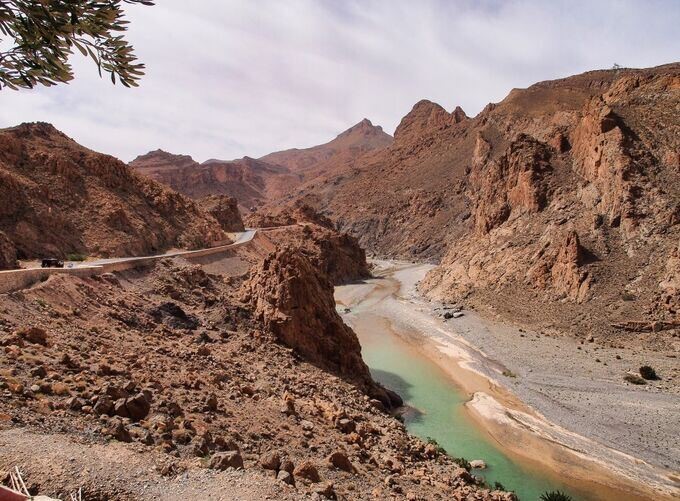
March gives you the possibility of seeing Morocco becoming greener in one direction while becoming increasingly desert-like in the other, often with snow-covered mountains standing between the two.
Few temperature charts can explain why that is worth travelling for.
March Is When Advance Planning Starts to Matter More
March sits in an interesting position in Morocco's travel calendar because conditions become increasingly attractive for broad touring just as more travellers begin thinking about spring holidays.
That does not mean every hotel, transfer and activity needs to be booked months ahead. Overplanning can be almost as limiting as leaving everything until arrival, particularly when mountain conditions or changing weather make some flexibility useful.
The practical approach is to separate the parts of the trip where availability matters from those where keeping options open has greater value.
| Travel Element | March Priority | Why |
|---|---|---|
| Preferred Marrakech riad | High | Popular properties have limited rooms |
| Fes medina accommodation | High | Location strongly affects the stay |
| Sahara camp | High | Camp standards and room types vary |
| Private long-distance transport | Medium–High | Important on complex circuits |
| Atlas trekking | High | Guide and route planning required |
| Restaurant reservations | Selective | Mainly for specific popular venues |
| General city sightseeing | Lower | Often easier to organise locally |
Booking intelligently is less about securing everything and more about protecting the experiences where the alternative would genuinely change the trip.
Book the Riad You Actually Want
Marrakech and Fes contain an enormous range of accommodation, so it is tempting to assume that waiting cannot cause a problem because another riad will always be available.
Technically, that may be true.
The issue is whether the alternative is comparable.
A riad is not simply a room with a bed; location, architecture, atmosphere, service and ease of access can substantially affect the experience. A property deep inside the medina creates a different stay from one near an easily accessible entrance, while a small riad with only a handful of rooms can fill much faster than a conventional hotel.
If you have found a property that genuinely suits the trip, March is not the month to leave it undecided simply to preserve flexibility you probably will not use.
Keep flexibility where it helps.
Do not create it where it merely risks losing your first choice.
Desert Camps Deserve Earlier Attention Than Camel Rides
Travellers sometimes concentrate on reserving the desert activity while treating the camp as an interchangeable place to sleep.
The opposite deserves consideration.
Camel rides and 4x4 excursions can often be incorporated into the desert stay, whereas the quality, location and facilities of the accommodation vary considerably. If you want a particular style of camp, private bathroom, specific comfort level or certain facilities, secure those requirements first.
March's increasingly comfortable desert conditions can make the Sahara attractive to a broader range of travellers, so the most suitable camps may have less availability than expected.
Choose the overnight experience carefully.
The desert will provide the dunes.
Atlas Activities Need Planning for a Different Reason
Mountain arrangements should be made early enough to secure appropriate expertise, but the final route may still need to respond to conditions.
This distinction is important.
Booking a qualified guide in advance does not mean deciding months beforehand that one exact high-altitude route must happen regardless of weather or snow conditions. Good mountain planning combines preparation with professional flexibility.
Tell the operator what type of walking you enjoy, your experience level and how much time you have, then allow current conditions to influence the final route.
March can present spring at lower elevation while higher terrain remains wintry, making local judgement considerably more useful than a fixed itinerary copied from another traveller.
Long Road Journeys Need More Than a Driver
If the itinerary connects Fes, Marrakech, the Atlas, southern valleys and the Sahara, transport becomes part of the architecture of the trip.
This is especially true when several sightseeing stops are planned during transfer days.
A vehicle arriving at the correct time is only the beginning. The route should also make geographical sense, allow enough daylight for worthwhile stops and avoid turning every day into an unnecessarily long drive.
March encourages ambitious circuits because conditions are suitable across many regions, but that does not make distances shorter.
Before confirming a complex road itinerary, look at how much of each day is spent travelling rather than simply counting destinations.
A route can be possible and still be poorly designed.
Leave Some City Time Unscheduled
Not everything improves when reserved.
Marrakech and Fes both benefit from periods when the itinerary has nowhere urgent to be. A café discovered during the morning may deserve another hour, a workshop may become more interesting than expected, or pleasant March weather may make walking preferable to the attraction originally considered for the afternoon.
Leaving half a day relatively open does not mean arriving without ideas.
It means having choices.
Spring conditions make spontaneous outdoor time more valuable, so there is little benefit in filling every hour before you know how the city feels.
The Best March Booking Strategy Has Two Speeds
Secure the parts that are difficult to replace: the riad you genuinely want, an appropriate Sahara camp, specialist mountain arrangements and essential transportation on a complex circuit.
Keep ordinary city time lighter.
This balance is particularly useful in March because the month encourages broader travel without eliminating weather variation. The trip needs enough structure to move smoothly between regions, but enough space to respond when a sunny afternoon makes you want to stay somewhere longer.
Good advance planning should make the journey feel freer once you arrive.
If it makes every day feel like an appointment calendar, you probably booked too much.
February vs March vs April: Where Does March Fit?
March is best understood as Morocco's active spring transition. February still carries a stronger late-winter identity, particularly in the north and mountains, whereas April generally offers a more established spring pattern across many popular touring regions.
March sits between them, but it has its own advantage: regional contrasts remain unusually visible.
| February | March | April | |
|---|---|---|---|
| Seasonal Identity | Late winter | Active spring transition | Established spring |
| Northern Morocco | Cooler, winter influence | Greener spring landscapes | Broader spring conditions |
| Marrakech | Mild days | Outdoor days expand | Warmer spring touring |
| Atlas | Winter at elevation | Winter above, spring below | Increasingly springlike at lower levels |
| Sahara | Comfortable days, cold nights | Days becoming warmer | Heat becomes more relevant |
| Landscape Appeal | Early seasonal signs | Strong green-to-desert contrast | Mature spring scenery |
| Best For | Between-season travel | Multi-region road trips | Broad spring touring |
Travellers choosing March are therefore not simply booking “good weather.” They are choosing a point in the year when moving through Morocco can reveal the season changing almost as clearly as the landscape.
Frequently Asked Questions About Morocco in March
Is March a good time to visit Morocco?
Yes. March is particularly suitable for travellers combining cities, countryside, mountains and the Sahara because daytime conditions are often comfortable across many popular regions. Weather remains variable, however, and higher parts of the Atlas can still experience winter conditions while lower landscapes move into spring.
Is Marrakech hot in March?
Marrakech generally becomes warmer during March, although conditions vary throughout the month and from year to year. Many days can be very comfortable for walking and outdoor sightseeing, while mornings and evenings may still justify an additional layer. Stronger warmth becomes increasingly possible later in spring.
Is Morocco green in March?
Parts of Morocco can be noticeably green following winter rainfall, particularly in northern and agricultural regions. Conditions depend heavily on rainfall and location, so greenery should not be treated as guaranteed. March nevertheless offers one of the year's most interesting contrasts between greener landscapes and the dry southeast.
Can you see snow in Morocco in March?
Yes, snow can remain at higher elevations in the Atlas Mountains even while lower valleys experience spring conditions. This creates striking scenery but also means high-altitude activities require current information, appropriate equipment and qualified local guidance rather than assumptions based on warmer conditions in Marrakech.
Is March good for visiting the Sahara?
March can be an excellent month for Sahara travel because daytime conditions are generally more manageable than during the intense summer period. Temperatures begin rising as spring develops, however, so desert activities may increasingly benefit from mornings and later afternoons, particularly towards the end of the month.
Are Sahara nights cold in March?
They can still feel cool, especially when compared with daytime temperatures. The difference becomes less strongly winter-like as the season progresses, but travellers staying overnight should continue carrying warm layers and checking camp facilities rather than assuming that a warm afternoon guarantees an equally warm night.
Does it rain in Morocco in March?
Rain remains possible, particularly in northern, central and Atlantic areas. March should not be interpreted as guaranteed dry weather throughout the country. A light weather-resistant layer remains useful, while mountain and outdoor plans should always be adjusted according to current local conditions when necessary.
Is March suitable for Atlas Mountains hiking?
It depends on elevation and route. Lower-level walking may provide attractive spring conditions, whereas higher-altitude trails can retain snow and winter hazards. Serious trekking should be planned with appropriate equipment and experienced local guides who can adapt the route according to current conditions.
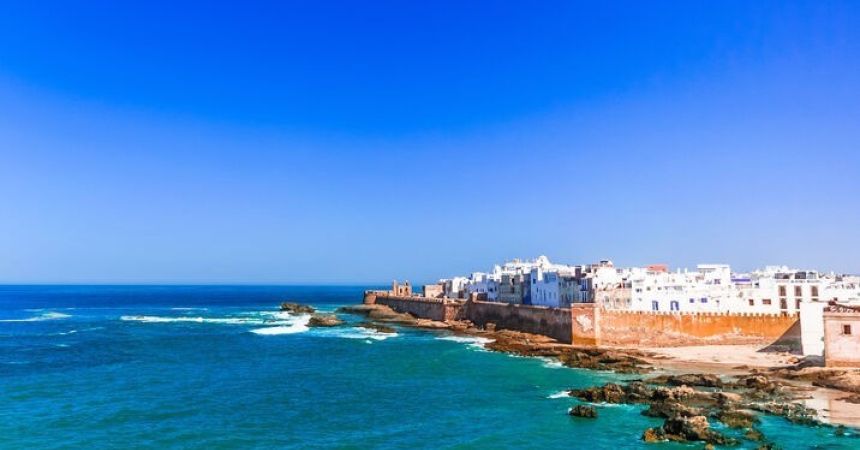
Is Essaouira worth visiting in March?
Yes. Essaouira provides a strong Atlantic contrast to Marrakech and the inland south, particularly for travellers who enjoy coastal atmosphere, seafood and a slower pace. Wind remains part of the destination's character, so actual comfort can differ from what the temperature figure alone suggests.
Is March or April better for Morocco?
March suits travellers interested in stronger seasonal contrasts, greener northern landscapes and the transition from winter mountains towards an increasingly warm Sahara. April generally offers a more established spring experience. The better choice depends on whether you prefer visible seasonal change or somewhat more settled spring conditions.

A travel professional specializing in tailor-made travel planning, guest experience management, and multi-destination tourism operations.
With over 23 years of experience in the travel industry, he designs and manages private and cultural tours for international travelers across Türkiye, Greece, Egypt, Jordan, Morocco, and other destinations.
He has strong expertise in both online and face-to-face guest communication, sales processes, and end-to-end travel operations.
Working closely with hotels, travel agencies, and local partners, he ensures smooth coordination and high-quality travel experiences at every stage of the journey.
His focus is on delivering personalized, reliable, and seamless travel experiences for international guests worldwide.