Antalya Weather in July: When Heat Changes the Clock
Last Updated: August 10, 2026
July does not merely make Antalya hotter.
It changes what time things make sense.
That distinction is easy to miss if you look only at monthly averages. A weather app may tell you the day's maximum temperature, but it cannot explain why the same archaeological site that felt easy in April becomes a very different proposition at 1:30 PM in July, or why a coastal dinner suddenly becomes more appealing than another afternoon attraction.
In July, the clock becomes part of the weather.
The city is still fully accessible, the Mediterranean is warm and inviting, resorts are in full summer mode, and long evenings remain one of Antalya's greatest seasonal advantages. Yet the traveller who ignores the daily heat curve will experience the month very differently from the one who works with it.
This is July's real travel lesson.
Not “avoid the heat.”
Use the right hours for the right things.
The Day Starts Earlier Than the Holiday Mood
There is a contradiction at the heart of July.
The relaxed Mediterranean instinct says sleep late, have a long breakfast and decide what to do around 11:00.
The climate says something else.
If archaeology, Kaleiçi or substantial walking matters, the most comfortable part of the day often arrives before the leisurely summer rhythm really gets going.
That does not mean setting an alarm at dawn.
It means understanding that a 9:00 AM archaeological visit and a 1:00 PM archaeological visit are not equivalent experiences.
The attraction has not changed.
The physical cost has.
The July Clock Shift
| Time Window | What Usually Works Best | Why |
|---|---|---|
| Early morning | Archaeology, long walks, old-town exploration | Lowest heat load of the active day |
| Late morning | Shorter cultural visits, coast transition | Sun becoming stronger |
| Midday / early afternoon | Pool, beach, lunch, shaded resort time | Highest exposure period |
| Late afternoon | Swimming, lighter exploration | Heat begins easing gradually |
| Early evening | Kaleiçi, harbour, waterfront | More comfortable urban movement |
| Night | Outdoor dining, social areas | Peak-summer Antalya comes alive |
This is not a rigid timetable.
Cloud, wind and individual tolerance change the experience, but the pattern is strong enough to influence July planning in a way it did not in May or June.
Perge at 9:00 AM and Perge at 1:00 PM Are Different Places
Not historically.
Physically.
Large archaeological sites around Antalya contain exposed stone, open avenues and long walking distances with limited shade. Under July sun, those conditions accumulate quickly.
A visitor arriving early can spend more time noticing the structure of the ancient city.
A visitor arriving after midday may begin thinking primarily about water, shade and how far the vehicle is.
That shift in attention matters.
Travellers who want to keep archaeology central during peak summer can consider Antalya July tours, particularly when departure times are designed around the season rather than around hotel convenience alone.
July does not make ancient sites less valuable.
It makes timing part of interpretation.
July Rewards Selective Exposure
Not every outdoor minute is equal.
A shaded café terrace, a narrow street in Kaleiçi and an exposed Roman avenue can all belong to the same afternoon while feeling dramatically different.
This is why July itinerary planning benefits from understanding exposure rather than simply categorising activities as indoor or outdoor.
The July Exposure Scale
| Experience | Sun Exposure | Physical Demand | July Strategy |
| Perge / exposed ruins | Very High | High | Prioritise early |
| Aspendos theatre | High | Medium | Avoid the strongest heat when possible |
| Kaleiçi lanes | Mixed | Medium | Better morning or evening |
| Antalya Museum | Low | Low | Excellent midday option |
| Hotel pool | High but cooling available | Low | Strong midday fit with sun protection |
| Beach | High | Low–Medium | Shade and hydration matter |
| Boat day | High | Medium | Sea breeze helps, sun still strong |
| Waterfront dinner | Low after sunset | Low | Excellent late-day experience |
This is more useful than simply saying “July is hot.”
The point is where that heat meets the activity.
The Beach Stops Being a Reward and Becomes Infrastructure
In May, the beach can feel like the satisfying second half of a cultural day.
By July, it performs a more important function.
It absorbs the hottest part of the day.
The sea offers a natural cooling mechanism, resort pools do the same, and beach facilities create the shade-and-water combination that makes peak summer manageable.
This changes the relationship between culture and coast.
The beach is no longer a bonus.
It becomes part of the day's thermal architecture.
That is why July cannot be written as warmer June.
June still allows considerable freedom.
July begins demanding design.
Midday Is Not Wasted Time
This is one of the most useful mindset changes.
Travellers sometimes feel guilty if the middle of the day contains only lunch, pool time or a long break.
In July, that can be exactly the right structure.
The important thing is what the pause protects.
A slower midday period can preserve enough energy for a beautiful evening in Kaleiçi, a later walk around the harbour or a cultural visit once the strongest heat has eased.
Trying to “use” every hour can make the evening disappear through exhaustion.
July rewards travellers who understand that recovery is part of sightseeing.
The July Day Is Better When It Has Two Starts
Think of the first start as morning.
The second begins later.
The morning handles the activities that need movement and attention. Midday interrupts the rhythm. Then the evening begins almost like a separate day, with different light, different temperatures and a much stronger social atmosphere.
This second-start concept is one of July's most distinctive advantages.
You are not shortening the trip by slowing down at midday.
You are preserving the second half.
Antalya After 6:00 PM Is Not Leftover Time
Summer evenings are too valuable to treat as something that happens after the “real” day.
Kaleiçi becomes easier to walk. Restaurants fill. The old harbour gains atmosphere, and the city shifts away from the physical intensity of the afternoon.
For couples, this can be one of July's strongest features.
A late dinner, harbour walk or relaxed evening in the old town can feel far more memorable than one additional daytime attraction squeezed into the hottest part of the afternoon.
This is where Antalya private summer tours can make sense for travellers who want cultural sightseeing scheduled around the most comfortable windows rather than around a conventional 9-to-5 tour structure.
Boat Days Need More Sun Awareness Than People Expect
The sea breeze can be deceptive.
A moving boat often feels cooler than land, which can make travellers underestimate sun exposure. Open decks, reflected light and long hours outdoors mean July boat days still require serious sun protection even when the experience feels physically comfortable.
The sea reduces perceived heat.
It does not reduce UV exposure in the same way.
This distinction is important because a comfortable boat day can still end with an unpleasant sunburn if travellers interpret breeze as protection.
July Has a Different Relationship With Water
Hydration advice is obvious enough to become meaningless unless it is placed inside behaviour.
Do not wait until an archaeological visit is almost finished to think about water.
Do not assume one small bottle is enough for a long exposed excursion.
Do not rely entirely on finding the next kiosk at exactly the moment you need it.
July planning works better when water is treated as part of the departure checklist for outdoor activities rather than something purchased reactively.
This is especially relevant at historical sites and nature areas where services may be limited or uneven.
The Resort Becomes More Valuable in July
This is another cluster distinction.
In May, the resort is one accommodation model among several.
In June, resort facilities become fully seasonal.
In July, the resort itself starts solving climatic problems.
Pools, shade, air-conditioned interiors, beach access and the ability to slow down without travelling anywhere can dramatically improve the day.
For families, that matters even more.
A midday return to a distant city hotel can feel inefficient. A resort where the pool, room, restaurant and beach are all close together makes peak-summer pacing much easier.
July Is Still a Cultural Month — Just Not at Noon
There is a risk in heat-focused travel writing of making Antalya sound as though culture disappears in summer.
It does not.
The correct adjustment is timing, not abandonment.
Kaleiçi remains rewarding.
Perge remains extraordinary.
Aspendos remains one of the region's defining historical sites.
The museum remains valuable regardless of season.
The difference is that cultural ambition should follow the clock.
A well-designed July itinerary can still contain plenty of history without requiring anyone to prove their endurance under the midday sun.
Families Need to Protect the Evening Too
Parents often organise July around children’s daytime comfort and then discover everyone is too tired by dinner.
The solution is not necessarily fewer activities.
It is better spacing.
A morning excursion, substantial midday break and late-afternoon swim can leave enough energy for the family to enjoy an evening walk or dinner outside.
Without that break, the same children who spent all day “doing things” may be finished precisely when Antalya becomes most pleasant.
Peak summer is not only about surviving the afternoon.
It is about preserving the evening.
July Packing Is About Exposure Management
The suitcase becomes very simple in one sense and more strategic in another.
Lightweight, breathable clothes are obvious.
The more important items are those that reduce accumulated exposure: hat, sunglasses, strong sun protection, comfortable sandals or walking shoes appropriate to the activity, and enough swimwear for a genuinely water-focused trip.
A small day bag is useful because water, sunscreen and a light cover should move with you rather than remain at the hotel.
The month does not require complexity.
It requires consistency.
July vs August: The Boundary Matters
August will not repeat this blog.
July owns the clock.
It is about understanding how peak-summer heat changes the timing of archaeology, walking, beach time and evening life.
August will move one level further into living around the Mediterranean heat, where the holiday becomes more resort-adapted and sea-centred because the climate is fully established as the baseline rather than something the traveller is still learning to schedule around.
That distinction is essential.
July teaches timing.
August will teach adaptation.
July Makes a Good Coastal Chapter in a Larger Turkey Trip
Travellers combining Antalya with Istanbul, Cappadocia, Ephesus or other regions need to understand that July will not feel identical across the country.
Antalya's coastal humidity, strong Mediterranean sun and beach-resort infrastructure create a very specific summer environment.
Those building broader Turkey hot-weather itineraries should therefore plan each region independently instead of applying Antalya's day structure everywhere.
The coastal chapter may be the place where the trip slows down.
That contrast can be extremely useful.
The Clock Is the Most Important July Weather Tool
Not the average temperature.
Not the monthly rainfall figure.
The clock.
If you understand when Antalya is easiest to walk, when the sun becomes strongest, when the sea is most useful and when the city returns to life in the evening, July becomes much more manageable.
The month is not asking you to do less.
It is asking you to stop doing the right thing at the wrong time.
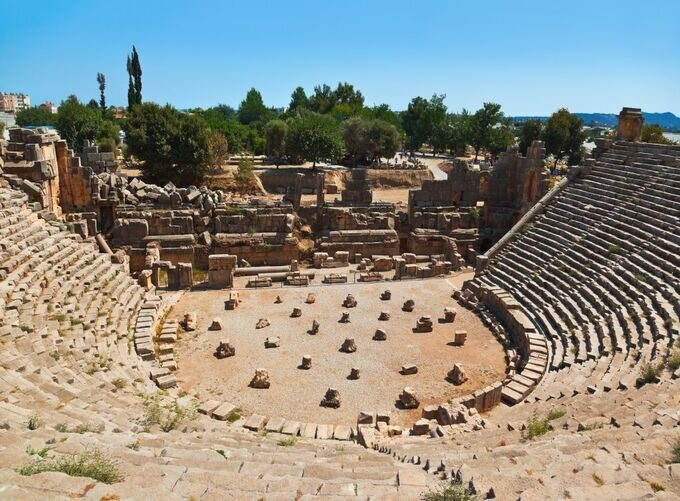
July Is a Base-Choice Month
In spring, choosing where to stay in Antalya is largely about atmosphere, convenience and personal style.
July adds climate to the decision.
A city-centre stay can be excellent for Kaleiçi, restaurants, museums and easier access to urban culture. A resort base, however, can make peak-summer pacing dramatically simpler because swimming, shade, food and rest all sit close together.
The best option depends on what you want to protect from the heat: access to culture or access to cooling.
City Base vs Resort Base in July
| Travel Priority | City Base | Resort Base |
|---|---|---|
| Kaleiçi access | Excellent | Requires transfer |
| Museum access | Excellent | Less immediate |
| Pool and beach access | Variable | Excellent |
| Midday recovery | Requires planning | Very easy |
| Evening dining variety | Strong | More hotel-led |
| Family convenience | Good | Often excellent |
| Archaeological excursions | Easy to arrange | Easy with transfer |
| Best for | Culture-led trips | Heat-adapted summer stays |
Neither base is inherently better.
July simply makes the operational difference between them more important.
July Rewards Split-Day Planning
A single continuous sightseeing block can become unnecessarily tiring in peak summer.
A split day usually works better.
Use the morning for movement and attention. Let the central hours become slower. Then allow the day to restart later.
This structure can feel strange to travellers accustomed to northern European city breaks, where stopping for several hours seems inefficient.
In Antalya, July makes it efficient.
You are not wasting the middle of the day.
You are protecting the parts of the day that work better.
The July Two-Block Itinerary
| First Block | Recovery Block | Second Block |
| Archaeological site | Lunch + pool | Kaleiçi evening |
| Old-town walk | Hotel rest | Waterfront dinner |
| Waterfall visit | Beach shade | Harbour stroll |
| Museum + short walk | Long lunch | Coastal sunset |
| Early excursion | Resort time | Outdoor dining |
This is not a rigid formula, but it captures July's most useful rhythm.
The day becomes more enjoyable once it stops pretending to be one continuous session.
July Is Not the Month to Prove Endurance
Some travellers become oddly competitive with heat.
They insist they are “used to hot weather,” then build a schedule that ignores shade, walking distance and hydration because adjusting would feel like admitting weakness.
That mindset usually produces a worse trip.
The goal is not to demonstrate that you can remain outside at 2:00 PM.
The goal is to enjoy Antalya.
A traveller who reaches the evening with energy left has usually made better decisions than one who completed more attractions but remembers only the heat.
Who July Suits Best
| Traveller Type | July Fit | Why |
| Beach-first traveller | Excellent | Sea and resort conditions are fully established |
| Family resort traveller | Excellent | Pools and shade simplify the day |
| Couple seeking summer evenings | Excellent | Late hours are especially rewarding |
| Boat-focused traveller | Excellent | Water-based days fit the season naturally |
| Culture + coast traveller | Very good | Requires timing discipline |
| Heat-sensitive sightseer | Moderate | Better with early starts and breaks |
| Archaeology-first traveller | Moderate | Strong if visits begin early |
| Long-distance urban walker | Weak | Spring or autumn is easier |
July does not exclude culture-focused travellers.
It simply asks them to be more deliberate.
July Makes Hotels More Than Somewhere to Sleep
This is another way peak summer changes travel value.
A hotel with a pool, shaded areas, strong air conditioning and easy food access can become part of the daily itinerary rather than a place used only at night.
That matters because midday recovery works much better when it does not require complex logistics.
A twenty-minute transfer back to the hotel may be worthwhile if the property itself solves several summer problems at once.
In milder months, that feature is less important.
In July, it can shape the entire trip.
July Is a Strong Month for Families for Practical Reasons
Families often benefit from July not because the weather is mild, but because summer infrastructure is fully working.
Pools, beaches, water-based activities and long evenings create plenty of non-cultural options. That helps parents avoid forcing children through consecutive historical attractions in heat simply because the family travelled all the way to Antalya.
A balanced family day can be simple: one meaningful cultural experience, substantial water time and a relaxed evening.
That is enough.
June vs July vs August
This is where the cluster boundary needs to remain extremely strict.
| Month | Exclusive Identity | Main Planning Question |
| June | Summer Without the Peak | How much summer can I enjoy before heat dominates? |
| July | Heat Changes the Clock | What should happen at which time of day? |
| August | Living Around the Mediterranean Heat | How should the whole holiday adapt once peak heat is the baseline? |
June still gives broad freedom.
July introduces clock discipline.
August will go beyond timing and reshape the overall holiday rhythm itself.
That is the semantic boundary.
July Is Better When You Remove One Thing
A useful practical rule is to look at the daily plan and remove the least important item.
Not because July requires a minimalist holiday.
Because peak heat makes low-value movement expensive.
The extra viewpoint, the second museum, the unnecessary cross-town restaurant and the filler attraction all consume energy that could have gone towards a much better evening.
One deletion often improves the entire day.
The July Decision Table
| If You Are Deciding Between... | July Usually Favors |
| Another afternoon attraction vs pool time | Pool time |
| Late archaeological visit vs early next morning | Early next morning |
| Long exposed walk vs short transfer | Short transfer |
| Heavy lunch vs lighter meal before walking | Lighter meal |
| Sunset indoors vs outside | Outside |
| Extra daytime stop vs evening energy | Evening energy |
| Rigid itinerary vs movable blocks | Movable blocks |
The pattern is obvious.
July values preserved energy.
July Can Still Be a Very Good Cultural Month
Peak summer does not erase history.
It simply removes the luxury of poor timing.
A thoughtful cultural traveller can still have excellent days in Antalya by placing demanding activities earlier, using museums or long lunches during hotter periods, and allowing Kaleiçi to return later in the evening.
This can actually make the trip feel more varied because different parts of the day acquire distinct identities.
Morning is for attention.
Midday is for cooling.
Evening is for atmosphere.
12 FAQs About Antalya Weather in July
1. Is July a good time to visit Antalya?
July is excellent for travellers seeking a full Mediterranean summer experience with warm sea temperatures, active resorts, long evenings and strong beach conditions. It is less forgiving for visitors who want long uninterrupted sightseeing days, so cultural activities should be timed carefully around the hottest parts of the day.
2. How hot is Antalya in July?
July is one of Antalya's hottest months, with strong sunshine and warm to very hot daytime conditions. Coastal humidity can make the heat feel more intense, especially during prolonged outdoor activity. Early mornings and evenings are generally more comfortable for walking and archaeological sightseeing.
3. Is July too hot for sightseeing in Antalya?
Not necessarily, but timing becomes essential. Archaeological sites, Kaleiçi and long walks are much easier earlier in the day or later towards evening. Midday and early afternoon are better suited to swimming, lunch, shaded resort time or indoor attractions rather than long exposed cultural routes.
4. Can you swim in Antalya in July?
Yes. July offers very warm and comfortable Mediterranean swimming conditions for most visitors. Beaches, resort pools and boat excursions are central to the season, making water-based activities one of the easiest and most enjoyable ways to use the hotter part of the day.
5. Is July good for a beach holiday in Antalya?
Very much so. July is firmly within peak beach season, with warm water, strong sunshine and full resort activity. Travellers should take sun protection seriously and plan shade or breaks during prolonged outdoor periods, particularly around midday when exposure is strongest.
6. Is July good for Perge and Aspendos?
Yes, provided visits begin early. Both sites contain exposed areas with limited shade, which can make midday exploration tiring. Starting in the morning allows more time to appreciate the archaeology before the strongest heat develops and helps preserve energy for the rest of the day.
7. Are boat trips good in July?
July is an excellent month for boat excursions because the sea is warm and summer conditions are fully established. However, open decks can involve substantial sun exposure even when sea breezes make the air feel cooler. Sunscreen, shade and hydration remain important throughout the day.
8. What should I wear in Antalya in July?
Lightweight, breathable summer clothing is the most practical choice, along with comfortable footwear, sunglasses and a hat. Sun protection should be routine rather than occasional. Travellers planning archaeological visits should choose clothing that works for extended outdoor exposure rather than dressing only for resort or beach settings.
9. Is July good for families visiting Antalya?
Yes, particularly for families staying in resorts with easy access to pools, shade and food. The strongest family itineraries usually include one cultural activity earlier in the day, substantial water time during the hottest hours and a relaxed evening rather than attempting continuous sightseeing.
10. Is early July better than late July?
Both periods offer peak-summer conditions, although later July can feel increasingly hot and intense. Heat-sensitive travellers may prefer earlier dates, while visitors primarily interested in beaches, swimming and resort life may be comfortable throughout the month. Individual weather patterns still vary from year to year.
11. Is Antalya humid in July?
Yes, coastal humidity can contribute to how hot July feels, particularly during still conditions or prolonged walking. The effect varies by day and personal tolerance. Sea breezes can improve comfort near the coast, but travellers should not assume that a pleasant breeze removes the need for sun protection or hydration.
12. Is July or August better for Antalya?
July is better for travellers who want peak summer but still intend to organise cultural activities around specific time windows. August will require a more complete heat-adapted holiday rhythm, with greater emphasis on resort life, sea time and energy management rather than timing alone.
July Is a Scheduling Problem, Not a Destination Problem
When travellers say Antalya is “too hot” in July, they are often describing a badly timed itinerary rather than the destination itself.
The same day can feel exhausting or perfectly manageable depending on what happened at 9:00 AM, 1:00 PM and 7:00 PM.
That is why July belongs to the clock.
Use the morning for effort.
Let midday slow down.
Return outside later.
Protect the evening.
The city does not become smaller because the temperature rises.
It simply stops rewarding travellers who insist on doing everything at the wrong hour.

A travel professional specializing in tailor-made travel planning, guest experience management, and multi-destination tourism operations.
With over 23 years of experience in the travel industry, he designs and manages private and cultural tours for international travelers across Türkiye, Greece, Egypt, Jordan, Morocco, and other destinations.
He has strong expertise in both online and face-to-face guest communication, sales processes, and end-to-end travel operations.
Working closely with hotels, travel agencies, and local partners, he ensures smooth coordination and high-quality travel experiences at every stage of the journey.
His focus is on delivering personalized, reliable, and seamless travel experiences for international guests worldwide.