Turkey in July: How to Travel Well When the Heat Arrives
Last Updated: August 8, 2026
By July, Turkey has stopped negotiating with summer.
The sun is up early. Stone streets warm quickly. The Aegean and Mediterranean look almost offensively inviting when you're standing beside an archaeological site with another kilometre still to walk.
You learn.
Tomorrow, Ephesus starts earlier.
Lunch gets longer.
That museum you nearly skipped suddenly looks like an excellent two o'clock decision.
And by seven in the evening, after a shower and perhaps a short rest, you're outside again wondering why the afternoon felt so difficult.
July isn't a bad month for cultural travel in Turkey.
It simply punishes stubborn itineraries.
Try to sightsee exactly as you would in April and the heat becomes the story. Change the rhythm of the day and something else happens: you still get the history, but now you also get Turkey at the height of its outdoor summer life.
July Is a Month of Strategic Geography
Not every destination experiences summer in quite the same way.
| Destination | July Reality | Smart Approach | July Strength |
|---|---|---|---|
| Istanbul | Hot, sometimes humid | Earlier sightseeing, Bosphorus breaks | Long evenings and city life |
| Cappadocia | Hot, dry days; cooler mornings | Sunrise starts and morning walks | Landscapes and outdoor adventure |
| Ephesus | Hot and exposed | Visit as early as practical | Extraordinary archaeology |
| Pamukkale | Hot, bright conditions | Morning or later visit | Thermal landscape and Hierapolis |
| Antalya | Hot Mediterranean summer | Culture early, water later | Beach and ancient sites |
| Aegean Coast | Hot, sunny, coastal | Mix land and sea | Swimming, towns and boat days |
The table makes July look like a scheduling exercise.
It isn't.
The real skill is learning when not to do something.
Ephesus at Noon Teaches Lessons Quickly
Ephesus is magnificent.
It is also largely exposed.
Those two facts coexist.
Arrive early and July can still give you a memorable visit. The marble streets catch the morning light, the Library of Celsus has space to reveal its details, and you can explore the ancient city before the strongest heat settles over the site.
Arrive much later and your priorities may change.
History.
Shade.
Water.
Mostly water.
There is no prize for enduring an archaeological site at the least comfortable time of day.
Go earlier.
Stay interested longer.
Travellers building western Turkey around its classical heritage can explore our Ephesus cultural tours, allowing the site to sit naturally within a route rather than becoming a midday endurance test.
Cappadocia Belongs to the Morning
At sunrise, Cappadocia can make you forget it's July.
The air is cooler.
The landscape is soft rather than glaring.
Long shadows stretch between rock formations.
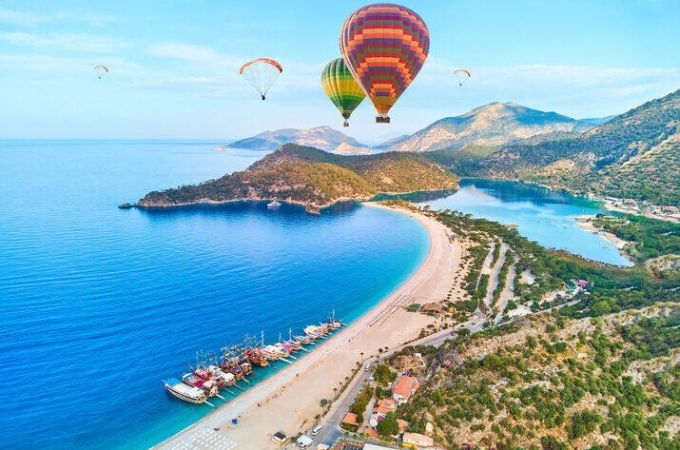
If balloons are flying, they appear gradually above the valleys as the light strengthens.
A few hours later, the same landscape feels different.
By then, you'll understand why locals and experienced travellers value the morning.
Valley walks are better started early. Underground cities become particularly appealing later because their subterranean spaces offer a completely different environment from the sun above.
And sunset brings the landscape back to life again.
July doesn't reduce Cappadocia.
It edits your timetable.
Istanbul Has a Secret Weapon: Water
Not swimming.
The Bosphorus.
When central Istanbul feels hot and busy, get on a ferry.
The difference can be immediate.
Air moves across the deck. The skyline opens. The dense streets you were walking ten minutes earlier become something you can look at from a distance.
This is one reason July visitors shouldn't treat ferries purely as transportation.
They are part of the summer strategy.
Cross to Kadıköy.
Continue farther along the Bosphorus.
Or simply choose the slower route because sitting on the water sounds better than another taxi ride through traffic.
Our Istanbul city tours can cover the essential historical landmarks, but July deserves enough free time to experience the parts of Istanbul that don't require standing in a queue beneath the midday sun.
On the Coast, July Finally Makes Perfect Sense
The heat that complicates an afternoon at Ephesus becomes much easier to understand when you're standing beside the Aegean.
Now the sun has somewhere to send you.
Into the water.
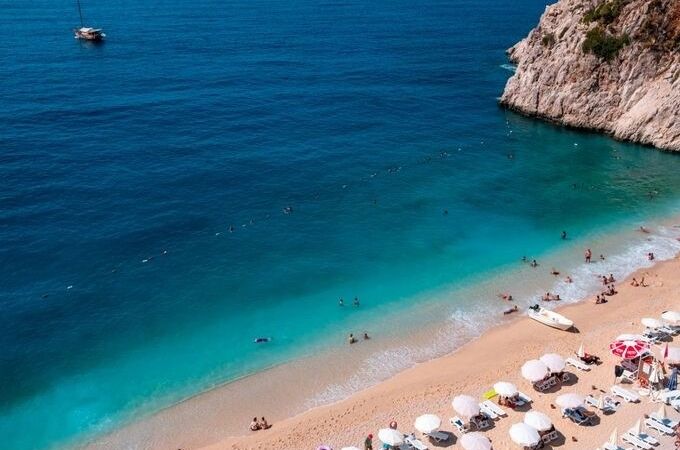
July is firmly beach season along Turkey's western and southern coasts. Sea temperatures are inviting, boat trips are well established, and coastal towns live according to a rhythm built around hot days and late evenings.
This is where cultural and coastal itineraries need to cooperate.
Do the ruins early.
Swim later.
Don't ask one part of the day to do everything.
Build a Better July Day
| Time | Better Use |
| 07:00–10:00 | Archaeological sites, Cappadocia walks, outdoor sightseeing |
| 10:00–12:30 | City exploration, shorter visits |
| 12:30–16:00 | Lunch, museums, shade, pool or sea |
| 16:00–19:00 | Coastal time, Bosphorus, relaxed exploration |
| After 19:00 | Dinner, promenades, viewpoints, neighbourhood life |
This isn't a rulebook.
Nobody needs to set an alarm for lunch.
The point is simply to stop pretending that every hour of July offers the same conditions.
July Packing Is Mostly About What You Carry During the Day
Your suitcase is easy.
Lightweight clothing.
Swimwear.
Comfortable shoes.
A light layer for certain early mornings or strongly air-conditioned spaces.
The day bag matters more.
Water.
Sun protection.
Sunglasses.
A hat.
And enough empty space that you aren't carrying half your hotel room around Ephesus.
Summer comfort often comes down to very ordinary decisions.
Travellers looking to combine inland highlights with the coast can consider our Turkey July tours, but even the best route works better when you respect what the month is telling you.
Start early.
Slow down.
Go near the water.
Come back outside later.
Turkey hasn't become harder to travel.
July has simply changed the rules.
In July, the Coast Solves the Heat Problem
There is a simple reason Turkey's coastal towns make sense in July.
When the afternoon gets hot, the sea is right there.
That changes everything.
Instead of treating the warmest hours as lost sightseeing time, they become the part of the day you were waiting for. Swim. Find shade beside the water. Have lunch somewhere that doesn't expect you to leave immediately.
Then start again later.
This isn't avoiding summer.
It's travelling the way summer asks you to.
The Aegean and Mediterranean Feel Different
Both coasts deliver a proper Turkish summer by July, but they don't create identical trips.
| If You Want... | Aegean | Mediterranean |
|---|---|---|
| Culture + beach | Excellent around western Turkey | Strong around Antalya and nearby ancient cities |
| Boat days | Bays, coves and coastal towns | Warm-water routes and dramatic coastline |
| Archaeology | Ephesus and classical western sites | Perge, Aspendos and southern ruins |
| Road travel | Excellent between towns and historic areas | Scenic but hotter along southern routes |
| Evenings | Harbour towns and waterfront dining | Long, warm Mediterranean nights |
| Overall feel | Coastal life mixed closely with culture | Full summer with mountains behind the sea |
If Ephesus is already central to your itinerary, the Aegean fits naturally.
If you want Antalya and the ancient cities of the south, choose the Mediterranean.
Don't cross half the country simply because somebody told you one beach is marginally better than another.
A Boat Day Is More Than a Day Off
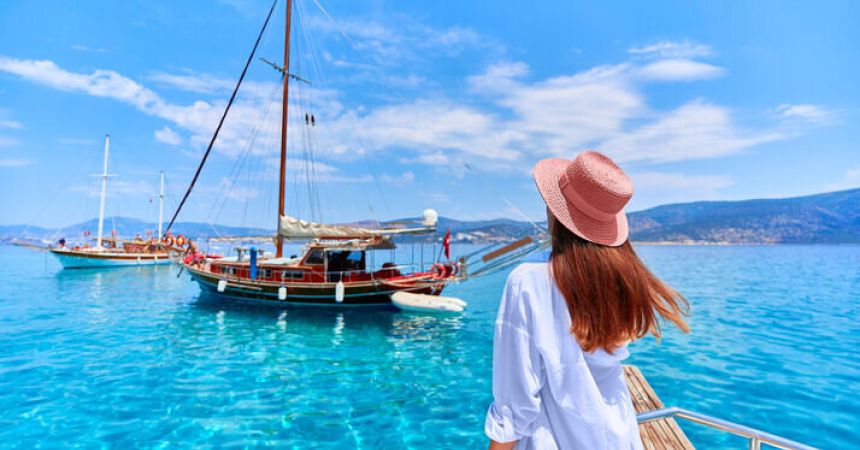
After several mornings of archaeological sites and city streets, stepping onto a boat can feel like somebody has removed all the decisions from your holiday.
There is nowhere urgent to go.
The boat is already going there.
You swim when it stops.
Eat when lunch appears.
Look at the coastline from an angle roads never provide.
And, for once, nobody needs to check whether you've arrived at the next monument before closing time.
Travellers who want this slower coastal rhythm incorporated into the journey can explore our Turkey boat tours, combining time on the water with the country's cultural regions.
July Works Surprisingly Well for Families
Not because children suddenly become fascinated by every archaeological ruin.
They probably won't.
July works when the itinerary admits that.
A morning historical visit followed by a pool or beach afternoon creates a much easier family rhythm than scheduling major sightseeing from breakfast until dinner.
Boat trips also give everyone a change of pace.
The key is variety.
One day shouldn't feel like a copy of the previous one.
And children aren't the only travellers who appreciate that.
Coastal Towns Wake Up Twice
The first time is in the morning.
Boats leave harbours. Shops open. People head towards beaches.
Then the afternoon slows things down.
The second awakening comes after sunset.
Showers are taken. Clothes change. Promenades fill. Restaurants that looked half-asleep at four o'clock suddenly have waiting lists.
This is when July begins making cultural sense rather than merely climatic sense.
People have adapted their lives to the season.
Visitors should do the same.
Don't Judge a July Destination at Three O'Clock
This is especially true along the coast.
At three in the afternoon, a town can feel almost too quiet.
Shutters down.
Tables empty.
Streets baking in the sun.
Return several hours later and you may wonder whether you've come back to the same place.
That's why relentless all-day sightseeing misses something important.
Sometimes taking a break isn't wasting the destination.
It's waiting for it to return.
Leave Space for Water
A July itinerary without enough unstructured time can become surprisingly tiring.
You don't need a formal excursion every afternoon.
Sometimes the hotel pool is enough.
Sometimes a beach you passed that morning deserves another look.
Sometimes the correct decision is cancelling the extra stop and swimming instead.
Our Turquoise Coast trips can provide a framework for exploring southern Turkey, but July becomes more enjoyable when every encounter with the sea isn't pre-booked.
The coast is not another attraction to complete.
In July, it's part of how the day works.
July Makes More Sense After Sunset
At midday, July can make a Turkish town look sleepy.
After dark, you understand where everybody went.
They're outside now.
Families appear along promenades. Restaurant tables fill. Children are still awake at an hour that might surprise visitors from countries where dinner begins at six.
Nobody seems particularly interested in ending the evening early.
Why would they?
The temperature has finally softened.
July teaches you that a travel day doesn't have to contain one continuous stretch of activity.
Sometimes it works better when you disappear for a few hours and return with everyone else.
Dinner at Seven Can Feel Suspiciously Early
You can certainly eat at seven.
There will be food.
There will be tables.
But in many coastal destinations, the evening hasn't really found its rhythm yet.
Wait a little.
Walk first.
Have a drink.
Watch the harbour change as the daylight fades.
Then sit down.
Turkish summer meals aren't designed to be rushed. Meze arrives. Somebody orders another plate. Fish follows. Conversation drifts.
Dessert becomes a separate decision.
Coffee may appear after everyone said they were finished.
By the time you leave, the streets are busier than when you arrived.
That's July.
Istanbul Keeps Going Long After the Monuments Close
The gates of a museum closing doesn't mean Istanbul is finished with you.
Head towards Galata.
Walk through Karaköy.
Cross the Bosphorus and see what Kadıköy looks like when dinner crowds arrive.
Or find somewhere with a rooftop and let the city provide the entertainment.
From above, Istanbul in July seems almost endless.
Mosques and minarets break the skyline. Ferries continue crossing between continents. Lights appear gradually along both shores.
After spending the day concentrating on individual monuments, it can be refreshing to see the city as one enormous landscape.
The Most Important Summer Dessert Might Melt
July is a perfectly good excuse for ice cream.
Turkish dondurma is famous for its unusually dense, stretchy texture, traditionally associated with ingredients such as salep and mastic in certain styles.
But don't turn every food experience into research.
Sometimes you're simply hot.
Buy the ice cream.
Eat it before it becomes a logistical problem.
Along the coast, fresh fruit also becomes difficult to ignore. Watermelon, melons, peaches and other summer produce appear everywhere from hotel breakfasts to roadside stalls.
The season starts feeding the itinerary without anybody needing to organise a “food experience.”
Summer Towns Have a Second Main Street
During the day, the beach gets the attention.
At night, it's often the promenade.
This is where people stroll without needing a destination.
They buy ice cream.
Stop when they meet someone.
Look at menus even though they've already eaten.
Children negotiate for something they absolutely don't need.
Visitors do much the same.
Travellers interested in combining these everyday moments with major highlights can explore our Turkey local tours, but some experiences only happen when the itinerary stops telling you where to stand.
Photograph the People Who Aren't Photographing Anything
July produces obvious images.
Blue sea.
Balloon-filled Cappadocia skies.
Istanbul sunsets.
Take those photographs.
Then turn the camera towards ordinary life.
Fishermen beside the Bosphorus.
A waiter arranging tables before dinner.
Families walking along the waterfront.
Someone sleeping beneath the shade while everyone else rushes past.
These scenes place the famous landscape in context.
They show what summer actually looks like when you're not visiting it.
July Rewards Travellers Who Change Their Clock
Wake earlier than usual.
Accept a slower afternoon.
Eat later.
Walk after dark.
It sounds like practical heat advice.
It is.
But something more interesting happens once you follow it.
Your schedule begins overlapping with the way people around you are living.
You aren't hiding from July anymore.
You're participating in it.
That's when the month starts feeling less like weather you have to manage and more like a season worth experiencing.
Is July Actually Right for You?
July is easy to recommend to someone dreaming about blue water, boat trips and late Mediterranean dinners.
It requires more thought for someone whose perfect holiday involves walking through archaeological sites from morning until late afternoon.
Both trips are possible.
They simply shouldn't be planned the same way.
| Traveller Type | July Fit | What to Consider |
|---|---|---|
| Beach traveller | Excellent | The coast is firmly in summer mode |
| Culture + coast traveller | Excellent | Sightsee early, swim later |
| Family traveller | Very good | Pools, beaches and boat days balance cultural visits |
| Night-life / evening traveller | Excellent | Summer towns remain active late |
| Photographer | Very good | Early and late light are particularly useful |
| Archaeology enthusiast | Good | Early starts become important |
| Heat-sensitive traveller | Limited | Consider a cooler month for intensive touring |
That final row matters.
There is no benefit in pretending every month suits every traveller.
Frequently Asked Questions About Turkey in July
1. Is July a good month to visit Turkey?
Yes, particularly for travellers combining cultural sightseeing with beaches, swimming or boat trips. July is hot in many regions, however, so early sightseeing and slower afternoons generally create a more comfortable itinerary than continuous all-day touring.
2. How hot is Turkey in July?
It depends on the region. Istanbul is generally hot and can feel humid, while western and southern Turkey experience strong summer conditions. Cappadocia typically has hot, drier days, although mornings can feel considerably more comfortable.
3. Is Turkey too hot for sightseeing in July?
Not necessarily, but timing matters. Large exposed sites such as Ephesus and Hierapolis are usually more comfortable earlier in the day. Museums, lunch breaks and coastal time can occupy hotter afternoon periods.
4. Is Istanbul too hot in July?
Some days can feel hot and humid, particularly during the afternoon. Earlier monument visits, shaded neighbourhoods, indoor attractions and Bosphorus ferries can make the city much easier to explore during summer.
5. Is Cappadocia too hot in July?
Afternoons can become hot, but early mornings are generally more suitable for outdoor activities. Valley walks should be planned sensibly, with water and sun protection, while underground cities provide a useful alternative later in the day.
6. Do Cappadocia balloons fly in July?
Balloon flights can operate during July when weather conditions are suitable and aviation approval is granted. Summer doesn't guarantee operations; wind and other factors can still cause cancellations on individual mornings.
7. Can you swim in Turkey in July?
Absolutely. July is firmly within the swimming season along the Aegean and Mediterranean coasts. Beaches, boat excursions and time in the water can naturally become a substantial part of the itinerary.
8. Is Ephesus worth visiting in July?
Yes. Ephesus remains one of Turkey's most significant archaeological destinations regardless of season. The difference in July is strategy: arrive early, carry water, use sun protection and avoid unnecessarily rushing through the site.
9. What should I pack for Turkey in July?
Choose lightweight, breathable clothing, comfortable walking shoes, swimwear, sunglasses, a hat and strong sun protection. A reusable water bottle is particularly useful. Respectful clothing should also be available when visiting mosques and religious sites.
10. Is Turkey crowded in July?
July is part of the busy summer travel period, particularly in coastal destinations and at famous attractions. Early starts can help with both heat and crowds, while less-visited neighbourhoods and regional stops provide contrast.
11. Is July suitable for travelling with children?
It can be, particularly when sightseeing is balanced with pools, beaches and boat days. Avoid filling every afternoon with exposed historical sites. Children—and usually adults—tend to enjoy the itinerary more when the pace changes throughout the day.
12. Should I visit Turkey in July or August?
Both deliver full summer conditions. July offers long days and established coastal activity, while August generally continues the peak-summer pattern and can bring intense heat. Heat-sensitive cultural travellers may prefer an earlier or later month.
Don't Fight July
That's really the entire strategy.
You won't make Ephesus cooler by refusing to wake up earlier.
You won't enjoy Cappadocia more because you scheduled the longest valley walk at two in the afternoon.
And you aren't wasting valuable holiday time by spending a few hours beside the sea.
July has its own clock.
Follow it.
See the ruins when the morning still belongs to you.
Have a proper lunch.
Swim.
Rest if you want to.
Then shower, change and discover that the town outside your hotel has somehow become busier than it was all day.
For travellers who enjoy that combination, our Turkey holiday tours can connect cultural highlights with coastal time while allowing the daily schedule to respect summer conditions.
But if you dislike heat and your dream trip consists almost entirely of archaeology and long daytime walks, choose another month.
Turkey will still be here.
July doesn't need to suit everyone.
For the travellers it does suit, the formula is surprisingly simple:

A travel professional specializing in tailor-made travel planning, guest experience management, and multi-destination tourism operations.
With over 23 years of experience in the travel industry, he designs and manages private and cultural tours for international travelers across Türkiye, Greece, Egypt, Jordan, Morocco, and other destinations.
He has strong expertise in both online and face-to-face guest communication, sales processes, and end-to-end travel operations.
Working closely with hotels, travel agencies, and local partners, he ensures smooth coordination and high-quality travel experiences at every stage of the journey.
His focus is on delivering personalized, reliable, and seamless travel experiences for international guests worldwide.