Cappadocia Weather in March: Snowmelt, Wind & Early Spring
Last Updated: August 2026
March is the month when Cappadocia stops behaving like a season and starts behaving like a negotiation between two of them.
A cold morning can leave frost around Göreme, yet by lunchtime you may be sitting outside in the sun. Snow can still return, particularly during colder spells, but there are also days when the valleys begin to feel unmistakably springlike. Then the wind picks up, clouds move across the plateau, and the jacket you left at the hotel suddenly seems like a bad decision.
That inconsistency is not a footnote to March weather. It is the defining feature.
Travelers who arrive expecting winter to be over may find Cappadocia colder and messier than anticipated. Those who pack as though they are visiting in January can be equally surprised by mild afternoons. March works best when you stop trying to decide whether it is a winter or spring month and prepare for both.
March in Cappadocia Is About Change, Not Averages
Monthly averages can make March look straightforward. On the ground, it rarely feels that simple.
| March Factor | What It Means for Travelers |
|---|---|
| Typical daytime range | Roughly 8–13°C |
| Typical nights | Often around 0–4°C |
| Snow | Still possible during colder periods |
| Rain | More relevant as spring approaches |
| Frost | Possible, especially early in the month |
| Daylight | Noticeably longer than midwinter |
| Valley surfaces | Dry, muddy or occasionally icy |
| Daily variation | Often more important than the monthly average |
The afternoon temperature is only one part of the story. Sunshine, wind, cloud cover and elevation can alter how the same temperature feels, while conditions around sunrise may bear little resemblance to those at 2 p.m.
March therefore rewards travelers who check the forecast each morning rather than packing the day according to what happened yesterday.
One Day Can Feel Like Two Seasons
Imagine leaving your cave hotel shortly after sunrise.
The air is sharp enough for gloves, frost remains in shaded corners, and distant higher ground may still carry snow. By noon, direct sunshine reaches the valley and you remove a layer. A few hours later, clouds gather and a cool breeze runs through the exposed landscape.
This is a fairly good illustration of why March packing advice cannot be reduced to “bring a spring jacket.”
The advantage is variety. You are beginning to gain longer sightseeing days without necessarily encountering warm-season crowds, and the landscape is slowly waking from winter.
The disadvantage is that fixed outdoor plans can become inconvenient.
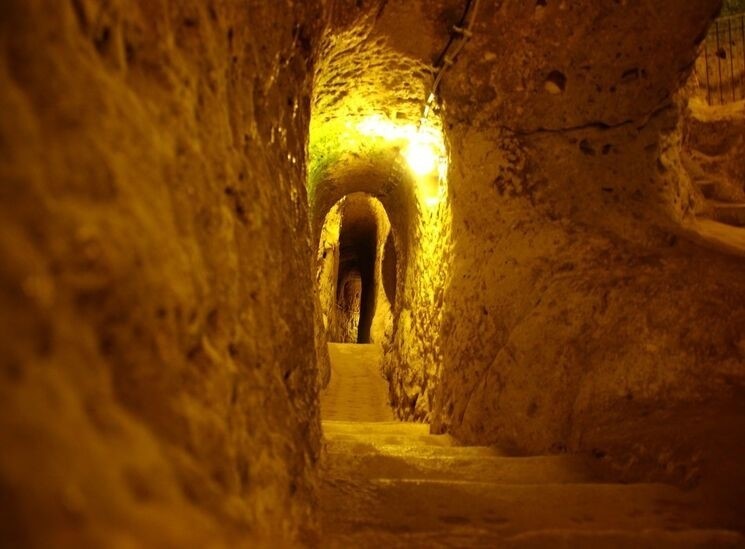
A Cappadocia discovery tour works particularly well at this time when it combines valleys and viewpoints with places such as underground cities and rock-cut churches. The goal is not to avoid the weather but to have enough variety that a sudden change does not dismantle the day.
The Real March Question: What Is Happening Underfoot?
Travel guides naturally focus on temperature and rainfall. In Cappadocia during March, trail surfaces may matter more.
Winter moisture has to go somewhere.
Snowmelt, rain and repeated freezing and thawing can leave parts of the valleys surprisingly muddy. A trail may begin on firm dry ground, turn damp in a shaded section and become slippery farther down.
This is why March should not automatically be marketed as the beginning of hiking season.
Some days are excellent for walking. Others are not.
A Practical March Trail Check
| Recent Weather | Likely Valley Experience | Sensible Approach |
| Several dry, sunny days | Firmer trails | Longer walks may work |
| Recent rain | Mud and slippery sections | Choose shorter routes |
| Snow followed by warmth | Wet thawing ground | Avoid committing to long hikes |
| Cold spell | Frost or shaded ice | Start later in the day |
| Dry but windy | Firm ground, exposed conditions | Carry an extra layer |
This kind of decision is more useful than choosing a valley weeks before arrival and assuming conditions will cooperate.
March Changes the Way You Use the Day
Unlike deep winter, March gives you increasingly useful daylight.
That extra time changes the rhythm of sightseeing. You do not have to compress everything into a narrow middle-of-the-day window, yet early mornings can still be cold enough that there is little benefit in rushing.
A sensible March day often develops gradually.
Start with an indoor or mixed indoor-outdoor attraction if the morning is particularly cold. Use the warmer middle hours for a valley, viewpoint or village. Keep something flexible for late afternoon because wind and cloud can change the feel of the day quickly.
On mild evenings, sunset becomes easier to enjoy than in winter. On colder ones, an exposed ridge will remind you very quickly that spring has not fully arrived.
The trick is not scheduling every hour. It is leaving enough room to move activities around.
What About the Hot Air Balloons in March?
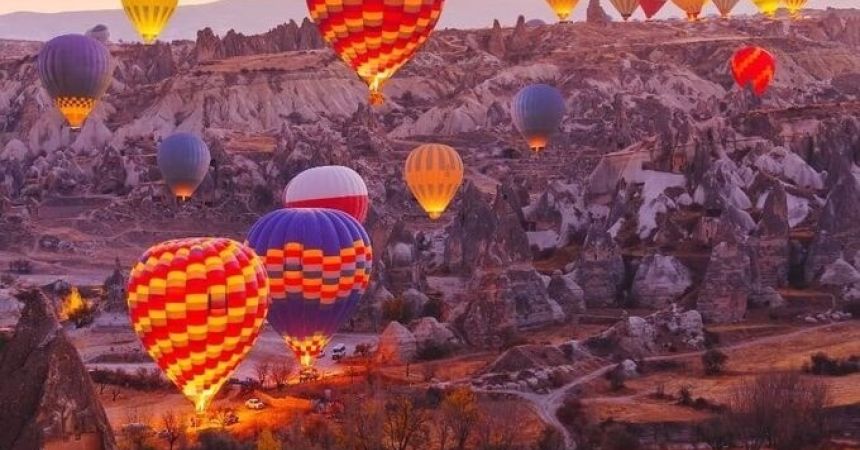
March brings a different balloon question from the colder winter months.
The issue is no longer simply how cold the pre-dawn departure feels. Transitional weather becomes part of the picture, and conditions can vary significantly from one morning to another.
Flights operate when aviation conditions are suitable, with wind and visibility among the factors considered by operators and authorities. A sunny-looking forecast on a phone is therefore not a guarantee that balloons will fly.
For travelers, the best approach remains simple: regard the balloon as a major experience, but not as the only reason Cappadocia is worth visiting.
Booking a Cappadocia balloon adventure within a stay of several nights provides more flexibility than arriving with only one available morning. Even then, weather can never be guaranteed.
March mornings also require layers. A pleasant forecast for later in the day says little about how it will feel while waiting outside around sunrise.
What Should Go in a March Suitcase?
March is the month when packing light requires a little more thought.
A full heavy winter wardrobe may be unnecessary, particularly later in the month, but relying on lightweight spring clothing is risky. The practical solution is a modular wardrobe: clothes you can add and remove without returning to the hotel.
A medium-weight jacket, fleece or sweater, breathable base layers and a light waterproof shell provide more flexibility than one bulky coat. A scarf, compact gloves and a warm hat are still useful for early starts.
Footwear is the item worth taking seriously.
Water-resistant walking shoes with decent grip are more valuable in March than perfectly clean trainers. Even if the streets around Göreme are dry, a valley path can tell a very different story.
An umbrella is less useful on exposed trails when wind is involved; a light waterproof outer layer is generally easier.
Early March and Late March Are Not Quite the Same Trip
March has enough seasonal movement that the date of your visit matters.
Early March can retain a distinctly wintry character. Frost is more relevant, snow remains possible, and mornings can feel severe.
Mid-March is often harder to characterize. Winter conditions may return, but milder periods become increasingly plausible.
Late March generally brings stronger signs of spring and longer days, although Cappadocia's elevation means cold weather should never be dismissed simply because the calendar is approaching April.
This does not mean travelers should try to identify the “perfect week.” Weather varies too much from year to year for that.
It does mean someone traveling on March 3 should not read an account from March 29 and assume the experience will be identical.
Is March Good for Photography?
March is visually interesting for precisely the reason it is difficult to predict.
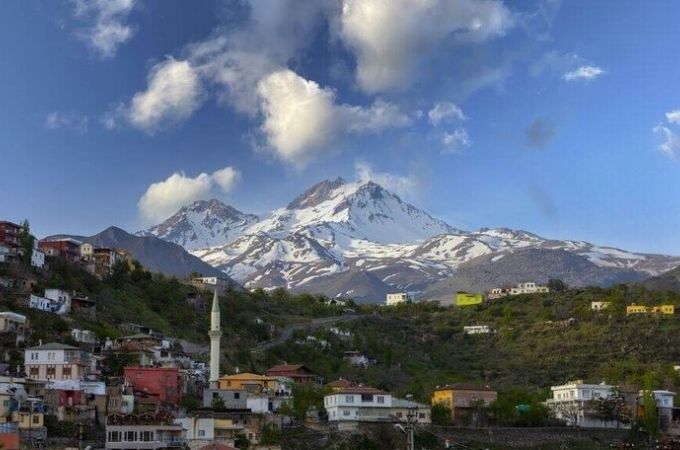
The landscape may still have traces of winter, while softer ground and changing vegetation begin to hint at spring. Snow can remain on distant elevations even when the valleys themselves are clear.
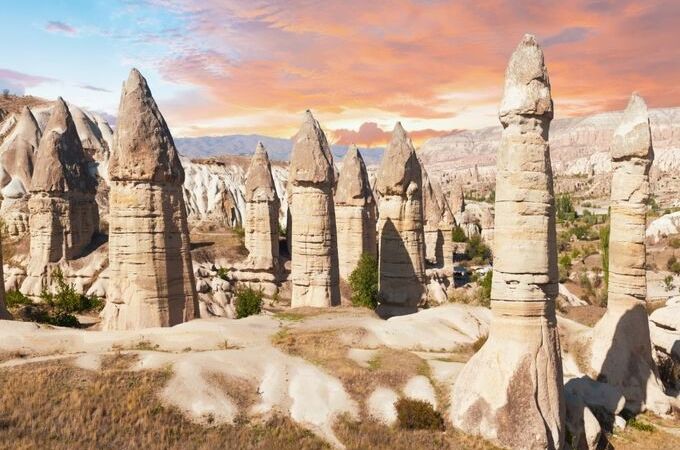
Cloud movement can also produce dramatic light across Cappadocia's rock formations. Photographers who prefer changing skies to uninterrupted blue may find plenty to work with.
March photography is less about capturing one iconic seasonal look and more about responding to what the landscape offers that day.
That makes sunrise and sunset worth considering, but it also means good photographs are not confined to those two windows. Passing clouds and shifting light can transform the valleys in the middle of the day.
Is March a Smart Month for a First Cappadocia Trip?
It depends on what you expect from your first visit.
If Cappadocia means hiking every major valley under dependable sunshine, March is a gamble. If you want a mixture of cultural sites, landscapes, underground cities, villages and perhaps a balloon flight, the month becomes much more attractive.
A flexible Cappadocia cultural journey can absorb March's unpredictability because so many of the region's essential experiences are not dependent on perfect trail conditions.
The travelers who tend to enjoy March most are those who like transitional seasons. They do not need everything to look polished or behave predictably.
They are comfortable seeing Cappadocia somewhere between its winter and spring identities.
The March Rule: Don't Plan Around a Perfect Forecast
Weather forecasts become more useful as your travel date approaches, but March is a poor month for building expectations several weeks in advance.
Instead, plan the pieces that do not depend on weather: accommodation, transfers, the broad sightseeing framework and the experiences you consider essential.
Leave the smaller decisions until you are there.
Which valley should you walk? Decide after seeing the ground.
Which afternoon should be mostly outdoors? Look at the short-range forecast.
Should you carry gloves today? Step outside before breakfast.
That sounds less organized than a rigid itinerary, but in March it is often the more intelligent form of planning.
tdoors than during summer.
Who Gets the Most Out of Cappadocia in March?
March tends to reward a particular kind of traveler: someone who wants more daylight than winter provides but does not require spring to have fully settled in.
Couples can enjoy the quieter atmosphere without being limited to very short winter days. Photographers get shifting skies and a landscape caught between seasons. Cultural travelers have underground cities, rock-cut churches and villages available even when the trails are less inviting.
Dedicated hikers have a harder decision. A dry spell can produce excellent walking, but March is too variable to promise a hiking-centered trip months in advance.
| Travel Priority | March Suitability | Why |
|---|---|---|
| Cultural sightseeing | Very good | Less dependent on trail conditions |
| Landscape photography | Very good | Changing light and seasonal contrasts |
| Hot air balloon | Possible | Requires weather flexibility |
| Casual valley walking | Good on suitable days | Ground conditions vary |
| Serious hiking | Unpredictable | Mud, rain or late snow can interfere |
| Quiet travel | Good | Generally before the busiest periods |
| Warm-weather holiday | Poor | Cold spells remain possible |
The important point is that March is not an inferior version of April. Its appeal comes from being transitional.
Two Nights or Three?
For March, three nights is the more forgiving choice.
Two nights can certainly cover Cappadocia's principal sights, especially with efficient transfers and a well-organized itinerary. The weakness is that you have very little room to respond if the best outdoor conditions occur on the wrong day.
A third night changes that equation.
If one afternoon is wet, you can concentrate on underground cities or museums and leave a valley for another day. If balloon conditions are unsuitable on the first morning, you may have another opportunity. If the weather is unexpectedly beautiful, you have enough time to slow down and enjoy it.
March does not necessarily demand a longer sightseeing list. It benefits from schedule elasticity.
The Best March Plans Have a Plan B
This sounds obvious, but there is a difference between having an alternative and filling an itinerary with backup attractions you do not actually want to see.
A good March plan contains several experiences you would genuinely enjoy under different conditions.
If the valleys are dry, walk.
If rain arrives, explore an underground city.
If the afternoon clears, head to a viewpoint.
If the wind becomes uncomfortable, spend longer in Avanos or return to one of Cappadocia's rock-cut historic sites.
That approach feels less like losing an activity and more like choosing the right version of Cappadocia for the day you actually have.
Frequently Asked Questions About Cappadocia in March
1. Is Cappadocia still cold in March?
Yes, particularly around sunrise, after sunset and during colder weather systems. Afternoon temperatures can become noticeably milder than in winter, but March does not provide consistent spring warmth. Travelers should expect temperature swings and bring layers rather than relying on a single jacket for the entire day.
2. Can it snow in Cappadocia during March?
It can. Late snowfall remains possible because Cappadocia's elevation keeps the region cooler than many travelers expect from Turkey in early spring. Snow is less central to March travel than during deeper winter, but it should not be ruled out, especially during the earlier part of the month.
3. Is early March very different from late March?
Potentially, yes. Early March has a greater chance of retaining a winter feel, while later weeks generally move further toward spring with longer daylight and milder afternoons. Weather varies by year, however, so late March should never be treated as guaranteed warm or dry weather.
4. Why can Cappadocia's valleys be muddy in March?
March sits within the thawing and spring-transition period. Melting snow, rain and moisture held in shaded ground can soften valley trails even when streets and open areas appear dry. Conditions can vary considerably between routes, making recent local weather more useful than a generic monthly hiking recommendation.
5. Is March a good month for hiking in Cappadocia?
It can produce excellent walking days, but it is not among the most dependable months for a hiking-focused holiday. Travelers should select routes after checking recent rain, snow and ground conditions. Shorter walks offer more flexibility if a trail becomes wet or slippery farther along.
6. What is the biggest packing mistake in March?
Packing for only one season. Visitors sometimes see double-digit daytime temperatures and assume winter accessories are unnecessary, while others bring heavy clothing that becomes uncomfortable in sunshine. Layers, water-resistant footwear and a light weatherproof outer shell handle Cappadocia's March variability far more effectively.
7. Do I need waterproof shoes in March?
They are strongly recommended if you intend to explore valleys or unpaved areas. Cappadocia's streets may be perfectly dry while trails remain damp or muddy after snowmelt or rain. Good grip is equally important because shaded surfaces can occasionally stay slippery during colder periods.
8. Are March days long enough for sightseeing?
Yes. Daylight increases noticeably during March, giving travelers more flexibility than during midwinter. There is generally sufficient time for a full sightseeing program without rushing between every stop. Longer afternoons are especially useful because outdoor conditions often become more comfortable after a cold start.
9. Is March good for seeing Cappadocia without large crowds?
March can provide a relatively relaxed atmosphere compared with the busiest travel periods, although visitor levels vary around holidays and particular dates. The advantage is not an empty destination but generally more breathing room at viewpoints, museums and other popular locations before the stronger spring season develops.
10. Should I plan outdoor activities for the afternoon?
Often, but not automatically. Temperatures usually improve after the morning, making midday and early afternoon attractive for outdoor sightseeing. However, March wind, cloud or rain can alter conditions quickly. Check the day's forecast rather than applying the same timetable throughout your stay.
11. Is March suitable for traveling with children?
Yes, provided the itinerary remains flexible. Underground cities, rock-cut churches and shorter sightseeing stops provide alternatives when the weather is uncomfortable. Families planning extensive valley walks should pay closer attention to mud and slippery surfaces, as these can be more troublesome for children than the temperature itself.
12. Is March or April better for Cappadocia?
March suits travelers comfortable with uncertainty who enjoy seeing a destination during a genuine seasonal transition. April moves further into spring and has a different emphasis on returning valley life and outdoor exploration. Choose between them according to travel style rather than assuming April is simply a warmer March.
Should You Choose Cappadocia in March?
March makes the most sense when predictability is not your highest priority.
You may encounter a cold morning that feels borrowed from February and, a day later, find yourself taking off your jacket in the afternoon sun. A valley you hoped to walk might be muddy, while another route is perfectly manageable. Snow is possible without defining the entire trip; spring is visible without having completely taken control.
That in-between quality gives March its identity.
Come with layers, shoes that can handle imperfect ground and an itinerary with room to move. Do not expect winter scenery on demand, and do not arrive assuming spring has already won.
For the right traveler, that uncertainty is exactly what makes March in Cappadocia interesting.

A travel professional specializing in tailor-made travel planning, guest experience management, and multi-destination tourism operations.
With over 23 years of experience in the travel industry, he designs and manages private and cultural tours for international travelers across Türkiye, Greece, Egypt, Jordan, Morocco, and other destinations.
He has strong expertise in both online and face-to-face guest communication, sales processes, and end-to-end travel operations.
Working closely with hotels, travel agencies, and local partners, he ensures smooth coordination and high-quality travel experiences at every stage of the journey.
His focus is on delivering personalized, reliable, and seamless travel experiences for international guests worldwide.