Cappadocia Weather in April: Spring Valleys & Changeable Skies
Last Updated: August 2026
There is a point each spring when Cappadocia begins to feel like an outdoor destination again. April is usually where that change becomes obvious.
The valleys are no longer simply something to admire from a viewpoint. Walking becomes a realistic part of the day again. Café terraces start making sense when the sun is out, daylight stretches well into the afternoon, and the landscape gradually picks up the softer colors that winter had stripped away.
Yet April has a habit of punishing overconfidence.
A blue morning does not guarantee a dry afternoon. Spring showers can arrive quickly, and temperatures fall noticeably once the sun disappears. Travelers who pack for warm Turkey rather than high-altitude Central Anatolia often discover that Cappadocia in April is milder than winter, certainly, but not reliably warm.
The better way to think about the month is not “spring has arrived.” It is Cappadocia is becoming an outdoor destination again, but the weather still gets a vote.
What Kind of April Day Should You Expect?
There is no single standard April day, but the balance has shifted considerably from March.
Afternoons are increasingly comfortable, prolonged freezing conditions become less central to planning, and daylight gives you enough room to spend time outdoors without turning the itinerary into a race.
A useful planning picture looks like this:
| Part of the Day | Likely April Feel | What Works Well |
|---|---|---|
| Around sunrise | Chilly, sometimes very cold | Balloon flights, photography |
| Morning | Cool and fresh | Museums, viewpoints, sightseeing |
| Midday | Often mild | Valley walks, outdoor sites |
| Afternoon | Usually most comfortable | Hiking, villages, terraces |
| After sunset | Quickly cooler | Dinner, cave-hotel time |
Typical daytime temperatures often move into roughly the 12–18°C range, while nights can still fall to around 3–7°C. These are planning averages rather than promises. A warm spell can push afternoons higher; unsettled weather can make the same week feel considerably cooler.
April is also a month when rain deserves attention—not because it necessarily ruins a trip, but because it changes what happens next.
After the Rain, Cappadocia Becomes a Different Place
Rain in a city mostly changes whether you carry an umbrella.
Rain in Cappadocia can change the ground beneath your feet.
The region's soft volcanic terrain does not dry uniformly. Open sections receiving direct sun may recover quickly, while shaded paths can remain damp or slippery. Some valley sections become sticky with mud after a shower even though the weather above has already turned beautiful.
That is why the best April hiking decisions are often made locally.
Rather than deciding three weeks in advance that Tuesday will be your Red Valley hiking day, decide after seeing what happened on Monday.
This flexibility is easier when a Cappadocia sightseeing tour mixes outdoor landscapes with underground cities, rock-cut churches and villages. A wet morning does not need to become a lost morning.
It simply changes the order.
April Is When the Valleys Matter Again
This is the central difference between April and the months immediately before it.
Walking no longer needs to be treated as a bonus activity that happens only if winter conditions cooperate. Valley exploration can become part of the actual reason for visiting.
Rose Valley, Red Valley and Pigeon Valley each offer a different experience, but April is not about collecting valley names. It is about spending enough time outside to notice how unusual Cappadocia's terrain really is.
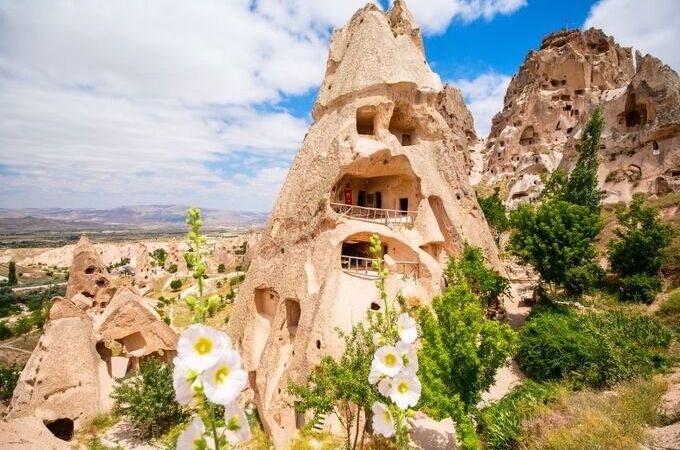
From a vehicle, the fairy chimneys appear as individual formations.
On foot, the landscape becomes layered: narrow paths, cave openings, cultivated plots, rock-cut rooms, orchards and sudden viewpoints appear around bends that are invisible from the road.
Spring makes this slower form of exploration attractive again.
Which April Conditions Suit Which Activity?
| Conditions | Better Choice |
| Dry and sunny | Longer valley walk |
| Mild but cloudy | Open-air museum and villages |
| Morning showers | Underground city first, outdoors later |
| Windy afternoon | Sheltered cultural sites |
| Clear evening | Sunset viewpoint |
| Rain after several dry days | Short walk once surfaces are checked |
The table is intentionally not a fixed itinerary. April rewards responding to the day rather than forcing the day to follow your itinerary.
The Landscape Is Waking Up, but Don't Expect Instant Green
There is a temptation to describe every spring destination as lush.
Cappadocia is more complicated.
April brings new growth, budding trees and changing vegetation, but this remains an arid-looking volcanic landscape. Its appeal comes from the contrast between cultivated pockets of green and enormous expanses of pale, pink and rust-colored rock.
The timing of spring growth also changes from year to year.
A colder start can delay vegetation. A warmer spell can accelerate it. Orchards and valley floors do not all transform simultaneously.
For photographers, that irregularity is useful. April images can contain winter-bare rock, fresh vegetation and dramatic spring skies in the same frame.
It is a less polished landscape than later spring, and arguably a more interesting one.
How April Changes a Three-Day Cappadocia Visit
Instead of dividing a trip into “indoor day” and “outdoor day,” April allows the two to overlap.
Consider the difference.
A clear morning could begin at Göreme Open-Air Museum, continue into a valley before lunch, move to an underground city during a cloudier afternoon and finish at a viewpoint if the sky clears toward sunset.
The following day might reverse the pattern completely.
This makes April particularly suitable for travelers who dislike rigid touring but still want to cover Cappadocia's important sites. There are enough outdoor opportunities to make the landscape central to the trip and enough sheltered attractions to absorb a change in weather.
A Cappadocia highlights journey can therefore cover considerably more than viewpoints without becoming dependent on perfect spring sunshine.
Sunrise Is Still Colder Than Most Visitors Expect
April afternoons can create a packing trap.
Spend a sunny afternoon walking around Göreme at 16°C and it is easy to forget that the next morning may begin close to 5°C—or occasionally lower.
That difference matters most for hot air balloon passengers.
Pickups take place before or around sunrise, so the temperature shown as the day's maximum is almost irrelevant when deciding what to wear. Standing still during preparation also feels colder than walking.
A warm layer that can later be removed is far more useful than dressing lightly because the afternoon forecast looks pleasant.
Does April Offer Good Balloon Conditions?
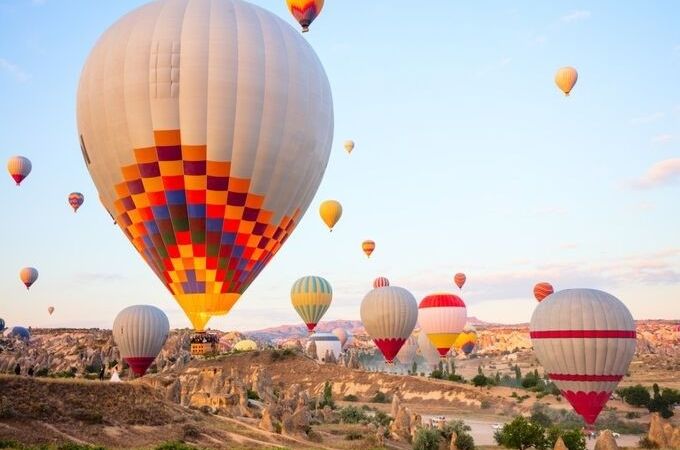
Hot air balloons operate throughout the year when aviation conditions are suitable, and April is a popular period for combining ballooning with more comfortable daytime sightseeing.
Spring, however, does not remove weather dependency.
Wind remains particularly important, and rain or poor visibility can also affect operations. Travelers sometimes make the mistake of equating a warmer month with guaranteed balloon flights. The two things are not the same.
A Cappadocia balloon and stay arrangement makes more sense when the trip includes several mornings rather than treating one specific date as guaranteed.
April adds one nice advantage when flights do operate: after landing, you still have a long spring day ahead of you.
That makes the balloon easier to integrate into a full sightseeing itinerary than during the short days of winter.
What to Wear Without Overpacking
April calls for layers, but not the same wardrobe required in deep winter.
A light-to-medium jacket usually earns its place, particularly for mornings and evenings. Underneath, shirts, a sweater or fleece and comfortable walking clothes allow you to adjust as temperatures rise.
A light waterproof shell is especially useful because it handles both spring showers and wind without taking much luggage space.
For footwear, think about the ground rather than the temperature.
If your plans include valleys, choose shoes with reliable grip that you do not mind getting dusty or muddy. Cappadocia is not a destination where pristine white footwear remains pristine for long, particularly after April rain.
Sunglasses and sunscreen are also worth carrying. Cool air can disguise how much time you are spending under direct sun.
April Works Particularly Well for Travelers Who Like to Walk
There is a difference between being a serious hiker and simply enjoying a destination on foot.
April is especially good for the second group.
You do not need to complete a multi-hour trail to benefit from the improving weather. A one-hour valley section, a walk around Uçhisar, time outside at Göreme Open-Air Museum and a sunset viewpoint can collectively put you outdoors for much of the day.
This flexibility makes April approachable for travelers who want more than vehicle-based sightseeing but do not want their entire holiday organized around trekking.
The best days are often the ones where the walking happens naturally between other experiences.
April's Main Trade-Off
April gives Cappadocia back much of its outdoor life before the consistently warmer part of the year arrives.
In exchange, you accept spring uncertainty.
Rain may move a walk to another afternoon. A chilly sunrise may require the jacket you thought you would not need. A muddy section may send you toward a different valley.
None of those changes need to damage the trip.
In fact, April works particularly well when you stop asking whether every day will have perfect weather and start asking whether the month provides enough good outdoor windows to experience Cappadocia properly.
For most flexible travelers, it does.


A travel professional specializing in tailor-made travel planning, guest experience management, and multi-destination tourism operations.
With over 23 years of experience in the travel industry, he designs and manages private and cultural tours for international travelers across Türkiye, Greece, Egypt, Jordan, Morocco, and other destinations.
He has strong expertise in both online and face-to-face guest communication, sales processes, and end-to-end travel operations.
Working closely with hotels, travel agencies, and local partners, he ensures smooth coordination and high-quality travel experiences at every stage of the journey.
His focus is on delivering personalized, reliable, and seamless travel experiences for international guests worldwide.