Ormana Village Turkey: Inside the Taurus Mountain Heritage
Updated: August 2026
Most travelers meet Antalya at sea level.
They see beaches, resort hotels, palm-lined roads, archaeological cities and a Mediterranean landscape that has shaped the international image of southern Turkey for decades. Drive inland toward the Taurus Mountains, however, and the region begins to change in ways that are easy to underestimate from the coast.
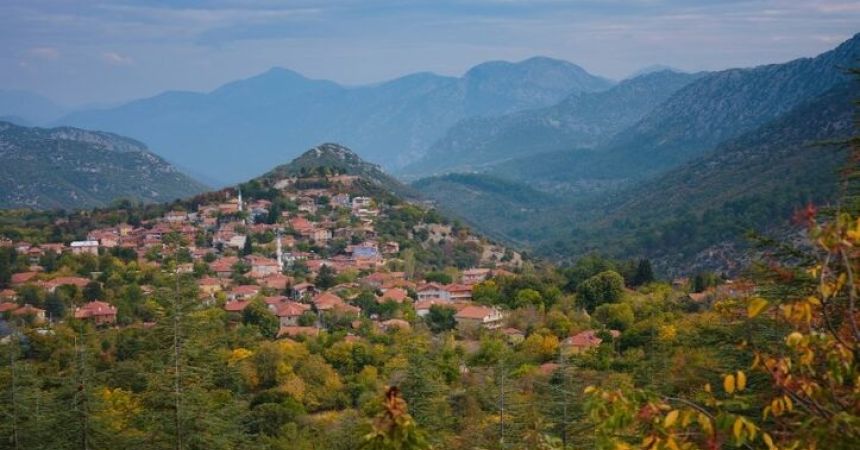
Ormana belongs to that other Antalya.
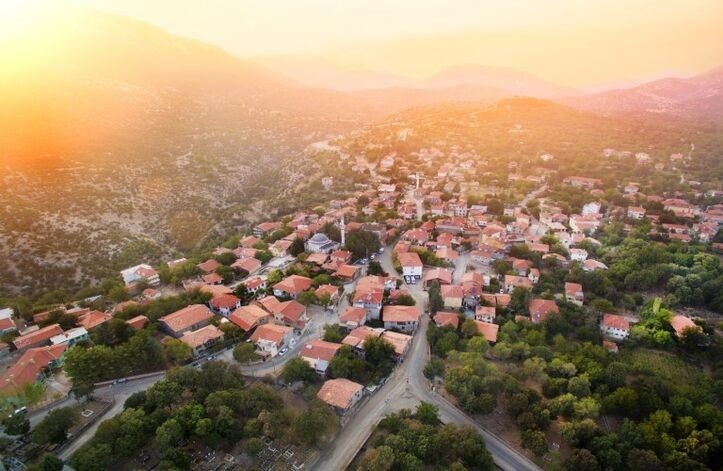
The village lies in the İbradı district in the Taurus Mountains and is especially known for its traditional düğmeli evler, or “button houses,” built using a distinctive system of stone walls reinforced with timber rather than conventional mortar construction. The official Turkish tourism description also connects Ormana with vineyards, the Eynif Plain, traditional rural food and the broader historic route between Konya and Antalya.
Yet Ormana should not be visited merely because the houses look unusual.
The real value lies in seeing how architecture, local materials, agriculture and mountain geography once worked together to produce a settlement that feels completely removed from coastal Antalya, even though both belong to the same province.
For most travelers, the useful question is therefore not whether Ormana is “authentic.”
That word has been stretched almost beyond usefulness in travel writing.
The better question is:
Do you want to spend part of your Antalya journey understanding how people actually lived in the Taurus Mountains rather than seeing another conventional attraction?
If that sounds interesting, Ormana can become one of the most distinctive days of the trip.
The Button Houses Are Buildings Before They Are Photo Subjects
The unusual architecture is what first draws attention.
Traditional düğmeli houses use stone construction strengthened with horizontal and projecting wooden elements. The Turkish Ministry of Culture and Tourism describes the technique as a characteristic building system of the Akseki and İbradı region, based on mortarless dry-stone walls reinforced with timber components known locally through terms such as hatıl and piştuvan.
The wooden ends visible on the exterior give the houses their “button” nickname.
That visual detail is interesting, but understanding the construction logic makes the houses far more meaningful.
This was vernacular architecture developed from materials available locally. Builders worked with stone and wood because that was what the mountain environment provided, while the timber framework helped bind and stabilize thick masonry walls.
The result was not created to develop a recognizable tourism aesthetic.
It emerged because communities had to build practical homes in this particular landscape.
That is the first reason Ormana feels different from a recreated heritage village.
The architecture belongs here.
Look at How the Houses Were Used, Not Only How They Were Built
Many traditional houses were designed around rural life rather than the modern division between home and workplace.
GoTürkiye notes that two-story examples commonly used lower levels for functions such as livestock, storage or hay, while upper floors served as living areas. Wooden decorative craftsmanship could also appear alongside the essentially practical construction system.
That information changes what you notice while walking.
A ground floor should no longer be interpreted simply as a dark architectural feature. It belonged to an economy based on agriculture and livestock.
Storage mattered.
Animals mattered.
Seasonal production mattered.
The house was therefore part residence, part agricultural infrastructure.
Once you begin reading the buildings that way, Ormana becomes less about “beautiful old houses” and more about the relationship between family life and the local economy.
Ormana Is Better Explored Slowly Than Efficiently
There is no advantage in trying to complete the village in forty minutes.
The houses are distributed through a living settlement rather than arranged inside a controlled museum complex. Some are restored, some continue to form part of the village environment, and the streets themselves create much of the experience.
Walk.
Notice different wall patterns.
Look at projecting timber.
Pay attention to courtyards, roofs, doors and the way newer buildings sit beside older architecture.
Then stop somewhere.
A village visit becomes surprisingly artificial when every minute is spent taking photographs through a moving itinerary.
Ormana works because relatively little is demanding your attention at once.
Allow that to remain true.
This Is a Living Village, So Treat It Like One
Rural heritage tourism becomes uncomfortable when travelers behave as though every doorway belongs to an open-air museum.
People live here.
That means private houses remain private unless access is clearly offered or permission is given. Photographing architecture from public streets is one thing; pointing cameras directly into windows, courtyards or at residents without consideration is another.
The difference sounds obvious, yet small villages can receive disproportionate attention because visitors arrive specifically to photograph a way of life.
A respectful rule is simple:
architecture can be interesting without turning residents into scenery.
Buying something locally, eating in the village and speaking with people where conversation develops naturally usually contributes more to the experience than aggressively searching for the most “traditional” photograph.
Ormana Is Not Altinbesik Cave — and That Distinction Matters
Altınbeşik Cave frequently appears in Ormana itineraries, which can create the impression that the cave sits inside the village.
It does not.
The cave is associated with Altınbeşik National Park near Ürünlü, another settlement in the İbradı district. Turkish tourism authorities describe the park and cave as one of the major natural attractions of the surrounding region.
The two experiences combine well because they offer strong contrast.
Ormana is about human adaptation to the Taurus landscape.
Altınbeşik is about the landscape itself.
That distinction improves the day enormously.
You are not visiting two versions of the same attraction; you are moving from cultural heritage into geology and mountain nature.
Build the Day Around Contrast Rather Than Attraction Count
A useful Ormana-area day might contain three different types of experience rather than six short stops.
| Part of the day | Main value | What not to do |
|---|---|---|
| Ormana village | Architecture and local life | Rush through only for photographs |
| Eynif Plain | Open Taurus landscape | Expect wildlife to perform on schedule |
| Altınbeşik area | Cave and mountain nature | Treat access conditions as permanently fixed |
| Local lunch | Regional food culture | Order generic tourist food automatically |
| Historic route context | Seljuk trade geography | Turn every ruin into a separate excursion |
This is deliberately a rhythm table, not another “top five things to see” list.
Ormana benefits from fewer experiences given more attention.
Eynif Plain Shows Another Side of the Taurus
The Eynif Plain, or Eynif Polje, adds scale to the village experience.
GoTürkiye describes the area as part of the historic Seljuk route through the Taurus Mountains and associates the landscape with free-roaming yılkı horses as well as the remains of the thirteenth-century Tol Han caravan stop.
Wild horses are naturally one of the most attractive ideas for visitors.
They are also wildlife, not a scheduled show.
You may encounter them under favorable circumstances, but the experience should not be sold as though a herd will always appear beside the road at the exact moment your vehicle arrives.
The plain is worthwhile even without that photograph.
Its openness provides a dramatic contrast with the enclosed village streets and helps explain why historic movement across the Taurus required recognizable routes and stopping places.
Tol Han Makes the Road Itself Historically Interesting
The remains of Tol Han are connected with the Seljuk-era Konya–Antalya route across the Taurus.
This gives the wider Ormana journey a historical dimension that is easy to miss.
The mountains were not merely remote barriers.
People crossed them.
Goods moved through them.
Travelers required routes and places to stop.
For modern visitors arriving comfortably by vehicle, that older geography can feel abstract until the road begins moving through the Taurus landscape.
Tol Han does not need to become the most spectacular archaeological monument of the day.
Its importance is contextual.
It reminds you that Ormana's mountain position once belonged to a wider network rather than existing in isolation.
Local Food Makes More Sense After You Understand the Landscape
Ormana's food traditions are closely connected with rural production.
Official tourism material highlights local grapes and grape molasses, goat products, mountain herbs and foods associated with livestock and the surrounding landscape.
This is exactly where travelers should avoid eating automatically.
If lunch consists of the same generic dishes you ordered the previous evening on the Antalya coast, an opportunity has been lost.
Ask what is local.
Ask what is seasonal.
A village meal does not need to be elaborate to become one of the more memorable meals of a Turkey trip.
What makes it interesting is the connection between what is on the table and where you are sitting.
Staying Overnight Changes the Purpose of the Trip
Most international visitors will encounter Ormana as part of a day excursion from the wider Antalya region.
That is practical.
An overnight stay creates a different experience.
Some traditional houses in Ormana have been adapted for accommodation, allowing visitors to experience the vernacular architecture beyond a short daytime walk.
Whether this is worthwhile depends on what you want.
An overnight makes sense when rural atmosphere, architecture and slower travel are genuinely interesting to you.
It makes less sense if you simply want to photograph the button houses, visit the cave area and return to your Mediterranean hotel.
Do not stay because overnighting sounds more “authentic.”
Stay because you actually want the evening and morning in a mountain village.
Ormana Is Particularly Valuable After Several Coastal Days
There is a strong itinerary reason to place Ormana after time around Antalya, Side or the Mediterranean resorts.
The contrast becomes immediate.
Sea level gives way to mountain terrain.
Resort architecture gives way to local stone and timber.
Beach routines disappear.
Lunch changes.
Even the scale of the settlement changes.
This is one of the strongest arguments for Antalya countryside heritage tours: the excursion does not merely add another attraction to Antalya but deliberately shows a region that feels unlike the coast where most visitors stay.
That creates genuine information gain inside the trip itself.
Side Travelers Should Not Underestimate the Inland Change
Side is another logical starting area for travelers interested in Ormana because road routes move inland from the coastal tourism zone toward the Taurus environment.
The interesting part is not simply the destination at the end.
It is the transition.
Side's Roman archaeological landscape and beaches belong to one historical and geographical world; Ormana belongs to another.
Travelers considering Side and Taurus village journeys should therefore avoid treating the day as transportation followed by sightseeing.
Watch the landscape change as the road climbs inland.
That change is part of why the journey is worthwhile.
Ormana or Another Ancient Site? Decide What Your Trip Is Missing
Turkey makes it very easy to keep adding archaeology.
Aspendos.
Perge.
Side.
Termessos.
Another ancient city can always be found.
Ormana becomes particularly valuable when your itinerary already contains substantial archaeological sightseeing and needs something different.
You are still learning about history, but through housing rather than theatres.
Through rural construction rather than temples.
Through food, trade routes and village life rather than imperial monuments.
That difference can restore attention.
Travel fatigue often comes not from seeing too much but from seeing too much of the same kind of thing.
Families May Find Ormana More Engaging Than Another Museum
The village can work particularly well for families when presented through questions rather than lectures.
Why are pieces of wood sticking out of the walls?
Why were animals kept downstairs?
Why did people build with stone instead of modern materials?
Where would food have been stored?
Suddenly vernacular architecture becomes practical rather than academic.
Combining the village with nature afterward can also create a much better family rhythm than a long sequence of historical monuments.
The day still has educational value, but the learning happens through observation rather than formal exhibits.
Photography Requires More Patience Here Than Equipment
Ormana's architecture rewards detail.
Wood against stone.
A weathered doorway.
Irregular masonry.
A narrow street opening toward the mountains.
The famous “button” projections themselves.
Wide-angle photographs have value, but photographing only complete façades can make the entire village begin to look repetitive.
Try recording construction details and relationships between buildings instead.
More importantly, give yourself time to notice them before reaching for the camera.
The best village photography usually begins when the traveler stops searching for an iconic shot.
Who Should Skip Ormana?
Not every worthwhile destination belongs in every itinerary.
Skip it if your Antalya stay is extremely short and your principal interest is beaches or major archaeological sites.
Skip it if long road excursions frustrate you.
Skip it if rural architecture has almost no appeal and the only reason you are considering the trip is because someone called the village a “hidden gem.”
Ormana should earn its day.
For travelers genuinely interested in traditional architecture, rural Turkey and the Taurus landscape, it can do that very easily.
The Real Value of Ormana Is That It Complicates the Idea of Antalya
After visiting, Antalya becomes harder to reduce to Mediterranean resorts.
That is valuable.
The province also contains mountain communities where local construction techniques evolved from stone and timber, where vineyards and livestock shaped household life, and where historical roads crossed the Taurus long before modern tourism turned the coast into an international destination. Official tourism sources specifically present Ormana as a mountain village where natural and cultural heritage remain closely connected.
Travelers building a broader regional journey can use Taurus Mountains Turkey tours to place Ormana within that inland landscape rather than treating it as an isolated curiosity.
The button houses may be what first brings you here.
They should not be the only thing you remember.
The more interesting memory is usually realizing that a relatively short journey away from Antalya's coast can lead to an entirely different way of understanding southern Turkey.
Frequently Asked Questions About Ormana Village
1. Where is Ormana Village in Turkey?
Ormana lies in Antalya Province's İbradı district in the Taurus Mountains, inland from the Mediterranean tourism corridor. Its mountainous setting and traditional architecture create a considerably different experience from Antalya's better-known coastal resorts and archaeological destinations.
2. Why is Ormana famous for button houses?
Ormana is known for traditional düğmeli evler, whose dry-stone walls are reinforced with wooden structural elements. Projecting timber ends create the “button” appearance that gives the building technique its popular name.
3. Are the button houses built without mortar?
Traditional examples use a distinctive dry-stone construction technique strengthened with timber elements rather than conventional mortar binding. The method is characteristic of the broader Akseki–İbradı region and requires considerable knowledge of stone and wood construction.
4. Is Altinbesik Cave located inside Ormana?
No. Altınbeşik Cave is in the wider İbradı area, associated with Altınbeşik National Park near Ürünlü. It is frequently combined with Ormana because the two experiences fit naturally into the same regional excursion.
5. Can I stay overnight in a traditional house in Ormana?
Yes, some traditional button houses have been adapted for accommodation. An overnight is most worthwhile for travelers genuinely interested in village atmosphere and slower rural travel rather than those who mainly want a short architectural stop.
6. Are wild horses guaranteed on the Eynif Plain?
No. Yılkı horses are associated with the Eynif landscape, but they roam freely rather than appearing as a scheduled tourism attraction. Visitors should treat an encounter as a wildlife experience rather than expecting a guaranteed herd beside a particular viewpoint.
7. Is Ormana suitable for families?
Yes, particularly when children enjoy nature and practical history. The unusual construction of the houses can turn architecture into an accessible conversation about materials, farming and mountain life, while nearby natural experiences provide variety beyond conventional cultural sightseeing.
8. How long should I spend in Ormana?
A few unhurried hours allow travelers to appreciate the village itself, while a fuller regional day can combine Ormana with selected Taurus experiences such as Eynif or the Altınbeşik area. Trying to include too many additional stops usually weakens the visit.
9. Is Ormana worth visiting from Antalya?
It can be highly worthwhile for travelers wanting a strong contrast with Antalya's Mediterranean city and resort environments. The journey makes most sense when traditional architecture, village culture and mountain landscapes genuinely interest you rather than simply adding another attraction.
10. What should I eat in Ormana?
Look for foods connected with local production, which official tourism material associates with grapes, molasses, goat products and regional herbs. Exact availability can change, so asking what is local and seasonal is more useful than arriving with a rigid meal checklist.
11. Is Ormana an archaeological destination?
Not primarily. Although the surrounding region has historical layers and old trade-route connections, Ormana's strongest visitor identity is its vernacular architecture and living village environment. Travelers should come expecting cultural landscape rather than a conventional excavated ancient city.
12. What is the biggest mistake when visiting Ormana?
The biggest mistake is treating the village as an architectural photo set. The button houses become far more meaningful when visitors understand how construction, agriculture, local materials and Taurus geography shaped everyday life while respecting that Ormana remains a living community.

A travel professional specializing in tailor-made travel planning, guest experience management, and multi-destination tourism operations.
With over 23 years of experience in the travel industry, he designs and manages private and cultural tours for international travelers across Türkiye, Greece, Egypt, Jordan, Morocco, and other destinations.
He has strong expertise in both online and face-to-face guest communication, sales processes, and end-to-end travel operations.
Working closely with hotels, travel agencies, and local partners, he ensures smooth coordination and high-quality travel experiences at every stage of the journey.
His focus is on delivering personalized, reliable, and seamless travel experiences for international guests worldwide.