Istanbul Weather in January: Rain, Snow Chances & Winter Days
Last Updated: August 9, 2026
January asks you to enter Istanbul differently.
In warmer months, the city tends to pull travellers forward. You leave the hotel after breakfast, walk through Sultanahmet, continue towards Eminönü, cross the Galata Bridge, perhaps climb towards Beyoğlu, and only much later realise that most of the day has been spent outside.
January interrupts that momentum.
A cold wind coming off the Bosphorus can make twenty minutes beside the water feel longer than an hour inside the Grand Bazaar. Rain may persuade you to enter a museum earlier than planned, only for clearer skies to appear when you emerge. Occasionally, winter weather can become more dramatic, while another January afternoon may be calm enough for an unexpectedly enjoyable walk.
The mistake is interpreting this variability as bad sightseeing weather.
January simply asks you to experience Istanbul as though the city were an enormous house.
You move between rooms.
Some have roofs.
Some have minarets.
One of them floats between two continents.
The Front Hall: Sultanahmet in the Morning
Begin outside.
Not because January mornings are necessarily the warmest part of the day, but because Istanbul's major historical area deserves whatever clear weather the day provides.
Sultanahmet concentrates an extraordinary amount of history within walking distance. Hagia Sophia, the Blue Mosque, the Hippodrome and surrounding streets allow travellers to move repeatedly between exterior spaces and monumental interiors.
That pattern suits January remarkably well.
You are rarely committed to several uninterrupted hours outdoors.
A cold period can be broken by an interior visit. Rain may arrive while you are inside and disappear before you leave. When the weather remains clear, the relatively quieter winter streets can make the historic centre feel considerably less pressured than during busier seasons.
Travellers who want the city's major historical layers explained rather than simply photographed can explore Istanbul cultural tours, particularly when a winter itinerary combines guided interiors with shorter outdoor sections.
The Living Room: Museums and Palaces
Every good winter city needs somewhere you genuinely want to spend time indoors.
Istanbul has many.
January therefore differs from destinations where poor weather effectively suspends sightseeing. Topkapı Palace, archaeological collections, historic interiors and other cultural attractions are not emergency replacements for a rainy day.
They are part of the reason to visit.
This changes how travellers should think about the forecast.
If several wet hours appear in the middle of the day, you have not necessarily lost those hours. You have simply been given a good reason to move one of the city's indoor experiences forward.
The important thing is not stacking every museum onto a single “rain day.”
Spread them across the itinerary.
They become natural weather buffers.
Open the Window: The Bosphorus
Then there is the room Istanbul could not exist without.
The Bosphorus.
January changes it dramatically.
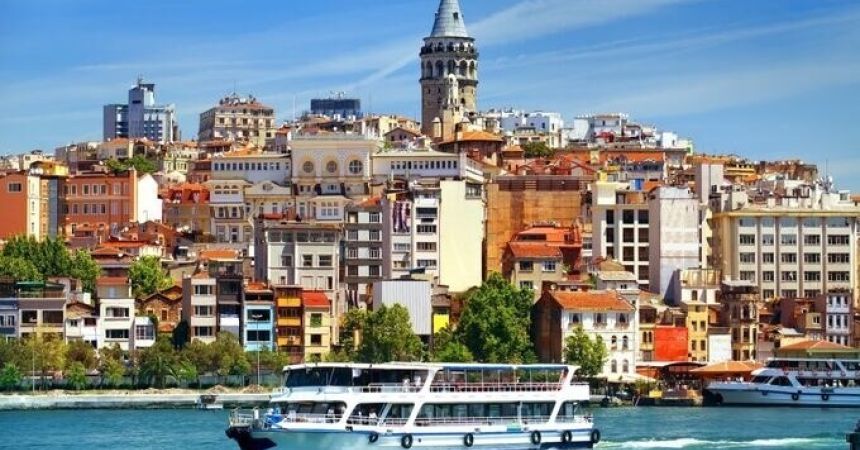
The water can appear steel-grey beneath winter skies, waterfront neighbourhoods become quieter, and the city feels less Mediterranean than it did only months earlier. On clearer days, visibility across the strait can make the journey itself one of the most memorable parts of winter sightseeing.
Wind is the variable travellers underestimate.
A temperature that feels perfectly manageable in a sheltered street may feel quite different on an exposed ferry deck.
That does not mean skipping the Bosphorus.
It means bringing the right layer.
January Comfort Is About Exposure, Not Temperature Alone
This is the first principle worth remembering.
| January Setting | How It Can Feel | Best Response |
|---|---|---|
| Sheltered Old City street | Cool but manageable | Keep walking |
| Open Bosphorus waterfront | Colder because of wind | Add outer layer |
| Ferry deck | Exposed and brisk | Enjoy briefly, move inside |
| Museum / palace | Warm indoor interval | Use as natural break |
| Covered market | Protected from weather | Excellent wet-period option |
| Hill around Galata/Beyoğlu | More tiring when wet | Good footwear matters |
A weather app cannot fully communicate these differences.
The city itself creates micro-experiences.
The Corridor: Walk Between Indoor Experiences
January should not become an itinerary consisting of vehicle → museum → restaurant → hotel.
You would miss Istanbul.
The streets connecting major attractions are part of the destination, and winter can make them particularly atmospheric when visitor numbers are lower.
Instead, use indoor attractions as punctuation.
Walk for forty minutes.
Enter somewhere meaningful.
Walk again.
Stop for lunch.
Cross the Bosphorus.
Find another neighbourhood.
This rhythm keeps travellers connected to the city without requiring them to spend six consecutive hours exposed to winter conditions.
The Kitchen: Let Lunch Take Longer
January is one of the few months when a long lunch can improve rather than interrupt an Istanbul sightseeing day.
When rain or stronger wind arrives around midday, there is little value in rushing through a meal merely to return outside at the least comfortable moment.
Allow the city to slow down.
A restaurant becomes part of the weather strategy, particularly when the forecast suggests conditions may improve later.
The difference between wasting an afternoon and using it intelligently can sometimes be forty additional minutes over lunch.
The Staircase: Istanbul's Hills Matter More in Winter
Temperature receives most of the attention in weather guides.
Wet paving receives much less.
Istanbul is not flat, and January walking can involve hills, steps and uneven historical surfaces. Comfortable footwear with useful grip may improve the trip more than packing an excessively heavy coat.
This becomes particularly noticeable around Galata, Beyoğlu and neighbourhoods where exploring naturally involves climbing.
Winter does not make these areas inaccessible.
It simply makes footwear part of itinerary planning.
The Balcony: Cross to Asia
One of the easiest ways to prevent a January itinerary from becoming too monument-heavy is to use the city's geography.
Crossing to Kadıköy or another Bosphorus neighbourhood changes the mood without requiring a long excursion. The ferry itself becomes part of the experience, while markets, restaurants, streets and cafés give travellers plenty of opportunities to move between indoor and outdoor environments.
Those wanting greater freedom to adjust sightseeing around actual conditions can consider private Istanbul experiences, particularly when winter flexibility matters more than following a rigid hour-by-hour programme.
January rewards travellers who can occasionally change the order.
The Unexpected Room: Snow
Visitors often ask whether it snows in Istanbul in January.
It can.
What cannot responsibly be promised is whether snow will occur during a particular trip, how much will fall or whether it will meaningfully affect the city.
Istanbul's winter weather varies from year to year.
This is exactly why a long-term January guide should not be built around dramatic snowfall photographs.
Treat snow as a possibility rather than the definition of the month.
If significant winter weather occurs, transportation and sightseeing arrangements may require adjustment. Check current forecasts and local information rather than relying on historical averages to predict a specific travel week.
The Coat Rack: What Actually Belongs There?
January rewards layers.
A useful outer layer capable of handling wind and rain is generally more practical than relying only on a very heavy coat. Add comfortable walking shoes, warmer intermediate layers, an umbrella or suitable rain protection, and accessories that make exposed Bosphorus periods more comfortable.
The key is adjustability.
A traveller may move from a cold waterfront into a heated interior several times within two hours.
Clothing should make that easy.
The Guest Room: January Works Especially Well for Certain Travellers
Not everyone wants Istanbul in winter.
Travellers whose priority is outdoor dining, long warm evenings and consistently comfortable waterfront weather have stronger months available.
January suits a different visitor.
Someone who values history.
Someone who enjoys museums and architecture.
Someone who would rather spend meaningful time inside Hagia Sophia or a palace than rush through it because another six attractions are waiting.
Someone who sees a Bosphorus ferry beneath dramatic winter skies and does not wish it were July.
For travellers combining Istanbul with other seasonal experiences around the country, Turkey winter journeys can also turn the city into the opening chapter of a broader cold-season itinerary rather than treating January as an off-season compromise.
Don't Try to Keep the Whole House Outdoors
This is the central January lesson.
Istanbul does not require continuous sunshine because so much of the city's identity exists behind doors as well as between them.
A mosque interior.
A palace corridor.
A covered market.
A ferry cabin.
A restaurant.
Then the rain stops.
You step outside again.
The Bosphorus is still there.
January works when travellers stop measuring the success of the day by the number of uninterrupted hours spent outside.
Instead, allow Istanbul to move you naturally between its interior and exterior worlds.
That rhythm does more than protect you from winter.
It reveals a version of the city that summer visitors rarely experience.
The January Weather-to-Neighbourhood Matchmaker
Imagine waking up in Istanbul without deciding where to go.
You open the curtains first.
That sounds like poor advance planning, but January is one of the months when it can produce a better day.
Istanbul's neighbourhoods do not respond equally to winter weather. A clear morning gives value to places where views and waterfront walking matter. Persistent rain increases the appeal of areas where meaningful indoor stops sit close together. Wind can make one side of an itinerary far less pleasant while leaving sheltered streets perfectly enjoyable.
So let the weather make one decision for you.
Not whether you go sightseeing.
Only where you begin.
Match One: Clear and Crisp → Eminönü to Galata
A bright January morning is valuable.
Use it somewhere that rewards visibility.
Begin around Eminönü, where the Bosphorus, Golden Horn, mosques, ferries and Galata skyline compete for attention within a relatively compact area. Continue across the Galata Bridge if conditions remain comfortable, then climb towards Karaköy and Galata.
Winter light can give this part of Istanbul a sharper character than summer haze sometimes allows.
The important point is not completing a prescribed route.
It is staying outdoors while the weather deserves it.
If conditions deteriorate later, indoor attractions can wait for you.
Match Two: Persistent Rain → Sultanahmet
Rain does not make Sultanahmet irrelevant.
It can actually reveal how unusually weather-resistant the historic centre is.
Major attractions are close enough that travellers can move between significant interiors without committing to lengthy exposed journeys. Mosques, historic monuments, museums and restaurants create natural shelter points throughout the day.
The trick is avoiding unnecessary backtracking.
Group nearby experiences together and let the rain determine when the shorter outdoor transitions happen.
On a wet January day, geographical efficiency becomes part of sightseeing quality.
Match Three: Grey but Dry → Balat and Fener
Not every Istanbul photograph needs blue sky.
Balat and Fener can work beautifully beneath softer winter light, when colourful façades, steep streets and neighbourhood details become more visually important than panoramic views.
A grey but dry forecast can therefore be an opportunity rather than something to tolerate.
Walk slowly.
Stop more often.
Use cafés as part of the route rather than treating them as interruptions.
January gives neighbourhood exploration permission to become the day's main experience rather than something squeezed between monuments.
Match Four: Mild Afternoon → Kadıköy
An unexpectedly comfortable January afternoon deserves a little spontaneity.
Take the ferry.
Kadıköy works particularly well when travellers want to escape the feeling that every hour in Istanbul must contain a major historical attraction. Markets, food, cafés and active streets create a looser style of exploration, while the Bosphorus crossing provides the transition.
If the weather remains pleasant, continue walking.
If it changes, you are never far from somewhere worth entering.
That flexibility is exactly what January needs.
Match Five: Strong Bosphorus Wind → Go Inland
Wind is often more disruptive to January comfort than travellers expect.
When the waterfront feels unnecessarily exposed, do not spend the day proving you can tolerate it.
Move inland.
Markets, shopping streets, historical interiors and sheltered neighbourhood routes can preserve the day without requiring a complete itinerary rewrite.
Save the long waterfront walk or exposed ferry-deck experience for another period when conditions improve.
January sightseeing becomes easier when travellers stop treating every planned activity as an obligation.
Match Six: Light Showers → Karaköy
Intermittent weather suits areas where indoor and outdoor experiences sit close together.
Karaköy does this particularly well.
A traveller can walk, stop for coffee, visit an interior, continue towards Galata, eat, then return outside when a shower passes.
The weather never needs to decide whether the day succeeds.
It merely controls the length of each outdoor chapter.
January Match Board
| Morning Weather | Strong Match | Why |
|---|---|---|
| Clear + crisp | Eminönü / Galata | Views and waterfront gain value |
| Persistent rain | Sultanahmet | Major interiors close together |
| Cloudy + dry | Fener / Balat | Neighbourhood detail over panoramas |
| Unexpectedly mild | Kadıköy | Ferry + relaxed street exploration |
| Strong wind | Inland routes | Reduce unnecessary exposure |
| Passing showers | Karaköy | Easy indoor/outdoor switching |
This is not a list of where you must go under each condition.
It is a way of recognising that weather changes the relative value of places.
Don't Waste the Best Weather Underground
Suppose the forecast predicts a clear morning followed by afternoon rain.
This is not the day to begin with several hours inside a museum simply because the original itinerary says so.
Use the morning for the Bosphorus, viewpoints or neighbourhood walking.
Let the museum inherit the rain.
Reverse the order if the forecast reverses.
This tiny adjustment can transform January because the city contains enough indoor depth to make weather-based switching genuinely useful.
A Four-Day Trip Should Not Have a “Rain Day”
Travellers sometimes design winter city breaks with three normal sightseeing days and one collection of indoor attractions labelled as the rainy-day programme.
That sounds sensible.
It is actually restrictive.
What happens if rain arrives for two hours on Tuesday rather than all day Thursday?
Instead, distribute weather-resistant experiences throughout the trip.
Place one or two substantial indoor attractions near outdoor areas you genuinely want to explore.
Now every day contains its own shelter.
That is much closer to how January in Istanbul actually works.
Let the Forecast Choose the Neighbourhood, Not the Holiday
January weather may change the route.
It may change when you cross the Bosphorus.
It may persuade you to spend another hour in Sultanahmet before heading towards Galata.
What it rarely needs to do is cancel Istanbul.
The city is too layered for that.
A clear day has its version of Istanbul.
A rainy day has another.
A grey afternoon has another again.
Once travellers understand this, checking the January forecast becomes less about asking whether tomorrow will be a “good day.”
The more interesting question becomes:
Which Istanbul will tomorrow's weather be best at showing me?

The January Comfort Audit
Before leaving the hotel, perform a small experiment.
Look at the temperature.
Then ignore it for a moment.
January comfort in Istanbul depends on several things that a single number cannot explain. Wind beside the Bosphorus, damp streets, the amount of climbing in your route and how often you move between heated interiors and outdoor spaces can influence the day as much as the official temperature.
A better winter plan begins with a comfort audit.
Audit One: How Much of Today Touches the Water?
If the answer includes a Bosphorus cruise, ferry crossing, Galata Bridge and a long waterfront walk, expect the day to feel more exposed than one spent primarily among the sheltered streets of the historic centre.
Wind matters.
The solution is not cancelling the water.
The Bosphorus is too important to January Istanbul for that.
Instead, bring an outer layer that handles wind effectively and use indoor ferry areas when necessary. Step outside when the view deserves it, then return inside before discomfort becomes the main memory of the crossing.
A winter ferry should feel invigorating.
Not like a test of endurance.
Audit Two: What Is Under Your Feet?
January packing advice tends to focus on coats.
Shoes may matter more.
Rain can leave historical paving, slopes and steps wet, while a typical Istanbul sightseeing day involves considerably more walking than many first-time visitors expect.
This becomes particularly noticeable around Galata and Beyoğlu, where climbing is naturally part of exploring.
Comfortable shoes with sensible grip are therefore not merely a packing recommendation.
They affect which neighbourhoods you will still want to explore at four in the afternoon.
Audit Three: How Many Temperature Changes Are Built Into the Day?
A January itinerary can repeatedly move through:
cold street → heated interior → exposed waterfront → restaurant → ferry deck → warm ferry cabin → street again.
This is why one extremely heavy outfit is often less practical than several adjustable layers.
You need clothing that can lose a layer without requiring a complete wardrobe change every time you enter somewhere warm.
The goal is not maximum warmth.
It is easy temperature control.
Audit Four: Are You Carrying Too Much?
Winter encourages travellers to overfill the day bag.
Large umbrella.
Extra sweater.
Water bottle.
Camera.
Scarf.
Gloves.
Guidebook.
Portable charger.
Another jacket “just in case.”
By midday, the bag itself has become part of the physical effort.
Carry enough to adapt, but remember that Istanbul is a major city, not a wilderness expedition. Cafés, restaurants, shops and sheltered interiors are never far away on standard sightseeing routes.
A compact winter day bag is often more useful than preparing for every imaginable scenario.
January Comfort Scorecard
| Factor | Low Impact Day | Higher Impact Day |
|---|---|---|
| Wind exposure | Inland museums | Bosphorus waterfront |
| Wet surfaces | Mostly interiors | Galata/Beyoğlu walking |
| Hill climbing | Sultanahmet core | Galata and surrounding streets |
| Temperature changes | Outdoor-heavy route | Frequent indoor/outdoor switching |
| Standing outside | Museums/markets | Viewpoints and ferry waits |
| Day-bag weight | Short local route | Full cross-city day |
The table reveals something useful.
Two January days showing exactly the same forecast temperature can demand very different clothing and energy.
Audit Five: How Long Will You Stand Still?
Walking generates warmth.
Standing does not.
This difference becomes obvious while waiting for transportation, listening to an outdoor explanation or spending time at a viewpoint.
A thirty-minute walk through Sultanahmet may feel comfortable, while fifteen stationary minutes beside the Bosphorus can feel considerably colder.
Guided travellers should take this into account because historical explanations occasionally mean remaining in one place longer than independent visitors would.
The weather has not changed.
Your activity has.
Audit Six: Does the Itinerary Climb After Lunch?
Istanbul's hills feel different after several hours of sightseeing.
Add damp surfaces, winter clothing and a heavier day bag, and an innocent-looking afternoon route can become surprisingly tiring.
When possible, use geography intelligently.
Walk downhill where the route allows.
Use public transportation to remove unnecessary climbs.
Do not treat taking a tram, metro or funicular as failing to experience the city properly.
Save your walking energy for streets worth walking.
Audit Seven: Have You Left Room for Tea?
This sounds less serious than waterproof shoes.
It may be equally important to the rhythm of a January day.
Winter Istanbul becomes much more enjoyable when travellers allow short indoor pauses without considering them lost sightseeing time.
Tea, coffee or lunch can bridge a passing shower, warm you after a Bosphorus crossing and give tired feet enough recovery for another neighbourhood later.
The break does not sit outside the travel experience.
It belongs to it.
The January Comfort Rule
At the end of the audit, the objective is simple.
Do not dress for the temperature.
Dress for the route.
A day containing museums and the Grand Bazaar needs one strategy. A day crossing the Bosphorus twice and walking the waterfront needs another. A Galata afternoon adds hills and potentially wet surfaces to the equation.
January Istanbul becomes considerably easier once travellers stop asking only:
“How cold will it be?”
The more useful question is:
“Where will I actually be spending that cold day?”
12 Questions Travellers Ask About Istanbul Weather in January
1. Is January a good time to visit Istanbul?
January can be an excellent month for travellers primarily interested in Istanbul's history, architecture, museums, mosques and food rather than warm outdoor living. Winter weather requires flexible daily planning, but the city's unusually strong mixture of indoor and outdoor attractions means sightseeing rarely depends entirely on clear skies.
2. How cold does Istanbul feel in January?
The temperature alone does not fully describe January comfort. Wind from the Bosphorus, humidity, rain and time spent standing outdoors can make conditions feel colder, while sheltered streets may feel noticeably easier. Travellers should therefore pack adjustable winter layers rather than planning clothing around average temperature figures alone.
3. Does it snow in Istanbul in January?
Snow is possible during January, but it should never be presented as a guaranteed part of an Istanbul winter trip. Some years and periods experience notable snowfall while others do not. Travellers hoping to see snow should therefore treat it as a possibility and check reliable forecasts close to departure.
4. Does it rain every day in Istanbul in January?
No. January can bring rainy and unsettled periods, but that does not mean continuous rainfall throughout an entire visit. Conditions can change within the same day, which makes a flexible sightseeing order useful. Indoor attractions can absorb wetter periods while clearer intervals are reserved for neighbourhood walks and viewpoints.
5. What should I wear in Istanbul in January?
Layers generally work best because sightseeing repeatedly moves between cold streets, heated interiors and exposed waterfront areas. A wind- and rain-resistant outer layer, warmer mid-layers, comfortable walking shoes with useful grip and winter accessories provide greater flexibility than relying entirely on one extremely heavy coat.
6. Are Bosphorus cruises and ferries available in January?
Regular ferry services continue to form part of Istanbul's transportation network throughout winter, while sightseeing cruise schedules depend on the individual operator and conditions. Strong wind or severe weather can occasionally affect maritime services, so travellers should confirm current schedules rather than assuming every departure operates regardless of weather.
7. Is January too cold for walking around Istanbul?
For many travellers, no. Walking remains an essential part of experiencing Istanbul, although January works better when long outdoor sections are broken by meaningful indoor stops. Wind exposure, rain and wet paving can influence comfort more than temperature alone, making footwear and route design particularly important.
8. Is Sultanahmet suitable for a rainy January day?
Yes. Sultanahmet is particularly resilient during unsettled weather because many major historical and religious attractions are concentrated within a relatively compact area. Travellers can move between significant interiors while keeping outdoor transitions comparatively short, then extend walking when rain eases or conditions become more comfortable.
9. Is the Bosphorus worth seeing during winter?
Absolutely. The Bosphorus has a different visual character in winter, with changing skies, quieter waterfronts and dramatic city views. Travellers should simply prepare for stronger wind and cooler conditions on exposed decks, using indoor ferry areas when necessary rather than removing the water entirely from a January itinerary.
10. How much daylight does Istanbul have in January?
January days are considerably shorter than during spring and summer, so travellers should give the most useful daylight to outdoor experiences, neighbourhood exploration and panoramic views. Museums, covered markets, dining and other indoor activities can occupy later or less favourable periods without reducing the quality of the sightseeing day.
11. Is January suitable for a first trip to Istanbul?
Yes, particularly for first-time visitors who prioritise cultural sightseeing and are comfortable with winter conditions. Major landmarks remain compelling throughout the year, while fewer warm-weather distractions can encourage greater historical depth. Travellers wanting guaranteed mild temperatures and long outdoor evenings may prefer another season.
12. How many days should I allow for Istanbul in January?
Three full sightseeing days can cover major highlights, but four or five days provide valuable flexibility when winter weather is changeable. Additional time allows travellers to rearrange outdoor experiences around rain or wind without rushing museums, neighbourhoods and Bosphorus activities into an unnecessarily compressed itinerary.
January Is Not Istanbul With Something Missing
Winter city breaks are often described by subtraction.
Fewer daylight hours.
Less outdoor dining.
No dependable warm weather.
Possibly rain.
Possibly snow.
That approach makes January sound like an incomplete version of Istanbul, waiting for spring to restore everything that matters.
The city feels different when you actually travel through it.
A January morning may begin beneath grey skies in Sultanahmet, where moving between a mosque, palace and museum feels completely natural rather than like a weather compromise. By lunchtime the rain may have passed. Later, a ferry can carry you across a steel-coloured Bosphorus towards Kadıköy, where the afternoon becomes less about monuments and more about streets, food and everyday city life.
None of that is a substitute for summer.
It is January.
The month rewards travellers who stop demanding uninterrupted outdoor sightseeing. Istanbul is unusually well suited to this because so many meaningful experiences naturally alternate between interior and exterior spaces.
Walk until the weather suggests otherwise.
Enter somewhere worth entering.
Stay long enough to appreciate it.
Then go back outside.
The same principle applies to clothing. Do not prepare only for the average temperature. Prepare for wind beside the Bosphorus, heated museum interiors, wet hills around Galata and the possibility that tomorrow may feel quite different from today.
Most importantly, resist the temptation to organise the entire trip around fear of poor weather.
January forecasts should help determine the order of Istanbul, not whether Istanbul is worth exploring.
Clear periods belong to viewpoints, ferries and neighbourhood walks. Wet periods can belong to museums, markets and long lunches. A mild afternoon deserves spontaneity, while an unusually cold or snowy day may require more substantial changes.
This gives January its own place within the 12-month Istanbul weather cluster.
February will not simply be “January but slightly warmer.” Its story belongs to late winter, increasing daylight and the traveller's decision about whether to wait for spring or take advantage of a city that has not yet entered its busier outdoor season.
January owns something different:
the art of moving between Istanbul's indoor and outdoor worlds without treating either one as the backup plan.

A travel professional specializing in tailor-made travel planning, guest experience management, and multi-destination tourism operations.
With over 23 years of experience in the travel industry, he designs and manages private and cultural tours for international travelers across Türkiye, Greece, Egypt, Jordan, Morocco, and other destinations.
He has strong expertise in both online and face-to-face guest communication, sales processes, and end-to-end travel operations.
Working closely with hotels, travel agencies, and local partners, he ensures smooth coordination and high-quality travel experiences at every stage of the journey.
His focus is on delivering personalized, reliable, and seamless travel experiences for international guests worldwide.