Antalya Weather in January: A Different Side of the Coast
Last Updated: August 10, 2026
Antalya in January can be wonderfully misleading.
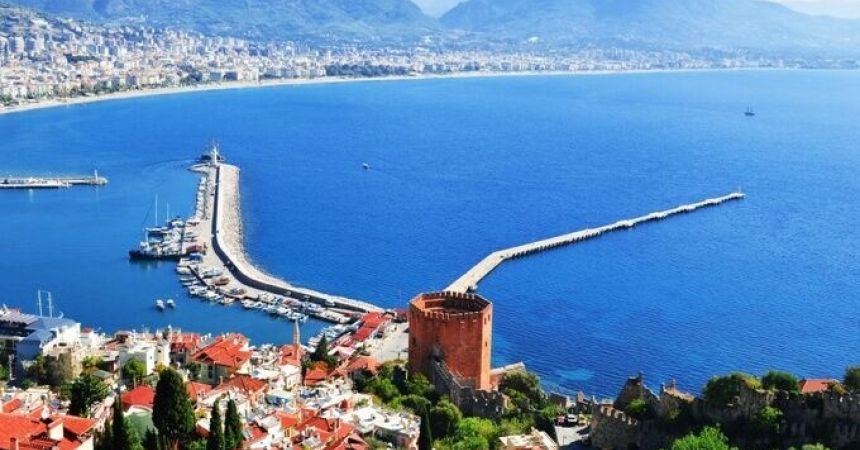
Stand beside the Mediterranean on a bright afternoon and the palm trees, blue water and sunlight reflecting from the old harbour can make winter seem like a technicality. Walk into the shade, wait for the sun to disappear or wake up to a wet morning, however, and the season quickly reminds you that southern Turkey has not somehow escaped January altogether.
That contrast is the key to understanding the month.
January is not Antalya's secret beach season, nor should it be sold as guaranteed winter sunshine. It is something more interesting: a Mediterranean city temporarily released from the expectations that dominate it during summer.
The beaches remain, but swimming no longer controls the itinerary. The old streets of Kaleiçi invite wandering without midsummer heat. Archaeological sites that can feel exposed in July become realistic full-day excursions, while waterfalls, cafés, museums and coastal viewpoints begin competing for attention in a way they rarely need to during resort season.
For the right traveller, this is not Antalya with something missing.
It is Antalya with the volume turned down.
What Does January Actually Feel Like in Antalya?
Monthly averages tell only part of the story because January can contain very different versions of the Mediterranean winter.
Typical daytime temperatures are often around 14–16°C (57–61°F), while nights can fall towards approximately 5–8°C (41–46°F). Warmer spells occur, as do colder periods, and conditions can feel noticeably different depending on sunshine, wind, cloud cover and whether you are beside the sea.
Rain is an important part of the January picture.
Antalya has a Mediterranean climate, meaning much of its annual rainfall is concentrated in the cooler part of the year. A January trip should therefore be planned with wet days in mind rather than around the assumption that every afternoon will be clear.
At the same time, “winter” does not mean uninterrupted grey weather.
Sunny intervals can be strikingly bright.
That variability is what visitors need to pack and plan for.
Antalya in January at a Glance
| January Factor | Typical Experience | What It Means for Travellers |
|---|---|---|
| Daytime temperature | Often around 14–16°C | Comfortable for sightseeing with layers |
| Night temperature | Commonly around 5–8°C | Evenings require warmer clothing |
| Rain | One of the wetter periods | Build flexibility into the itinerary |
| Sunshine | Mixed with cloud and wet spells | Good outdoor windows can feel excellent |
| Sea temperature | Around the upper teens °C | Too cool for most leisure swimmers |
| Daylight | Shorter than spring and summer | Start major excursions earlier |
| Crowds | Generally lower than peak season | Historic areas can feel calmer |
| Beach holiday suitability | Low | Visit for the coast, not a classic beach break |
| Sightseeing suitability | Often good | Cooler temperatures favour exploration |
These are planning ranges rather than promises. Weather varies between years, and checking the short-range forecast shortly before travelling remains far more useful than treating a historical monthly average as a guarantee.
January Removes the Beach from the Centre of the Trip
This is where Antalya becomes surprisingly interesting.
During summer, the Mediterranean naturally dominates the day. Travellers think about swimming, beach clubs, resort facilities, boat trips and escaping the afternoon heat.
January breaks that hierarchy.
You can walk along Konyaaltı Beach without feeling that you ought to be lying on it. The shoreline becomes scenery rather than an obligation. Kaleiçi receives more attention because there is no beach afternoon competing for the same hours, and the archaeological landscape beyond Antalya suddenly becomes central rather than optional.
That shift makes January particularly suitable for travellers who were always more interested in the region than in the resort.
A Sunny January Day and a Wet January Day Are Two Different Trips
Instead of asking whether January weather is “good,” it is more useful to understand how the itinerary changes according to the day you actually receive.
| If January Is Bright and Calm | If January Turns Wet |
| Walk extensively through Kaleiçi | Spend more time in Antalya Museum |
| Explore the old harbour and waterfront | Build the day around longer meals and indoor stops |
| Visit Düden waterfalls | Keep outdoor visits shorter and flexible |
| Plan a major archaeological excursion | Move exposed ruins to a better forecast window |
| Spend time around Konyaaltı coastline | Use cafés and cultural interiors between showers |
| Photograph the mountains and coast | Treat atmospheric weather as part of the city |
This is a better winter strategy than constructing one rigid itinerary before arrival.
The best January trips are not necessarily the ones that receive perfect weather. They are the ones that can change shape without feeling ruined.
Why Kaleiçi Feels Different in Midwinter
Kaleiçi in summer is beautiful, busy and sometimes intensely hot.
January removes the heat from the equation.
Its lanes become easier to explore slowly, and architectural details that can disappear behind summer crowds begin to command more attention. Ottoman-era houses, small courtyards, stone walls and the route towards the old harbour fit naturally into a winter day because there is no need to hurry towards air conditioning or the next swimming stop.
Rain changes the experience, of course, and wet stone surfaces deserve care. Yet even then, Kaleiçi can work in shorter chapters: walk, stop for coffee, continue when conditions improve.
Travellers interested in building the day around the old city, waterfalls and historical landmarks rather than resort facilities may find Antalya winter tours more aligned with January's natural rhythm than summer-oriented coastal itineraries.
January Is One of the Months When Ancient Cities Make More Sense
Anyone who has crossed a large archaeological site under the July sun understands the problem.
Ancient cities rarely come with much shade.
January changes the physical experience dramatically.
Perge, Aspendos and other historical sites around Antalya can be far more comfortable to explore during cool, dry winter weather because visitors can spend time examining theatres, streets, gates and archaeological details without constantly calculating how far they are from shade.
There is a trade-off.
Winter rain can make exposed archaeological days less attractive, and shorter daylight means excursions should begin sensibly rather than drifting into the afternoon.
The reward is concentration.
When conditions cooperate, history becomes the main event rather than something completed before returning to the pool.
The Taurus Mountains Change the Winter Picture
Antalya's winter climate becomes easier to understand once you look inland.
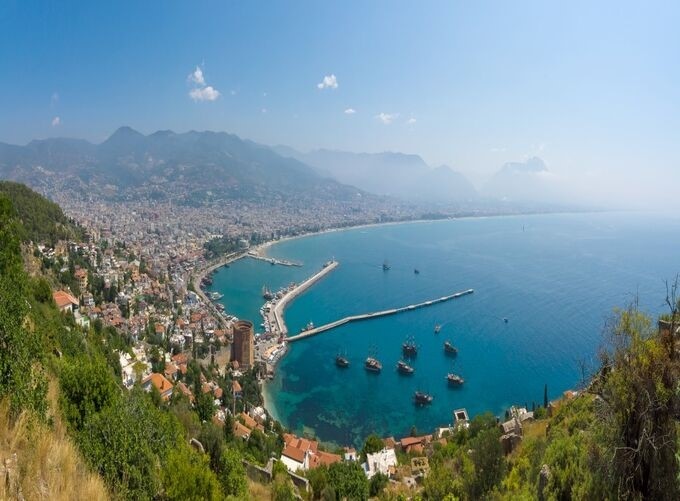
The Mediterranean sits on one side of the city; the Taurus Mountains rise dramatically on the other.
In January, this contrast can be visually spectacular. Snow may cover higher mountain areas while the coast remains comparatively mild, creating one of southern Turkey's most distinctive winter landscapes.
It also explains why “Antalya weather” should not be treated as a single regional forecast.
Conditions at sea level do not necessarily describe what you will encounter at elevation or during inland excursions. Anyone planning mountain activities should check destination-specific conditions rather than assuming the coastal temperature applies everywhere.
This coastal-mountain contrast belongs particularly well to January because winter is not something Antalya completely avoids.
You can often see it.
It is simply happening at different intensities around you.
Can You Swim in Antalya in January?
Technically, people do.
For most holidaymakers, that is not the useful answer.
The Mediterranean is generally around the upper teens Celsius during January, which is considerably cooler than typical recreational beach-holiday conditions. Cold-water swimmers may still enter the sea, but most visitors should not plan a January Antalya holiday around regular swimming.
Hotels complicate the question because some properties offer indoor or heated pools.
If swimming matters to the trip, check the hotel's exact winter facilities rather than assuming a resort pool shown in summer photographs operates in the same way during January.
This is another reason January should not compete with May, June, September or October in our Antalya weather cluster.
Those months can legitimately discuss the relationship between sightseeing and sea time.
January owns a different question:
What happens when the Mediterranean is beautiful to look at, but no longer needs to be entered?
January Weather Changes According to Where You Spend the Day
The thermometer alone cannot explain how cold or comfortable you will feel.
| Setting | How January Can Feel |
| Sunny sheltered street | Surprisingly mild |
| Open waterfront | Cooler, particularly with wind |
| Kaleiçi lanes | Comfortable during dry daylight hours |
| After sunset | Noticeably colder |
| Exposed archaeological site | Pleasant in sun, chilly in wind |
| Higher elevation | Significantly more wintry |
| Indoor museum or restaurant | Warm layers may quickly feel excessive |
This constant movement between micro-environments is why layering works better than dressing for one fixed temperature.
What Should You Pack for Antalya in January?
Packing for Antalya in January is less about owning an enormous winter coat and more about being able to adjust.
A waterproof or genuinely water-resistant outer layer earns its place because rain is not an unusual interruption during the month. Underneath, a sweater or fleece combined with lighter layers gives more flexibility when a bright afternoon feels milder than expected.
Comfortable shoes with reasonable grip are particularly useful. Antalya's historic areas and archaeological sites reward walking, while rain can make stone and uneven surfaces more challenging.
An umbrella can help in lighter conditions, although a hooded outer layer may be more practical when rain arrives with wind.
Sunglasses still belong in the bag.
That may sound optimistic for a winter packing list, but Mediterranean winter sun can be remarkably bright when cloud clears.
January Rewards Travellers Who Want to Explore, Not Escape
There is a difference between escaping winter and pretending winter does not exist.
Antalya offers the first.
Visitors arriving from northern Europe or colder continental climates may find a sunny 15°C afternoon wonderfully mild, especially when they can sit near the Mediterranean or walk for hours without snow and freezing temperatures.
Someone expecting tropical warmth will interpret exactly the same day very differently.
This is why January satisfaction depends heavily on expectations.
The month suits travellers who want history, city life, coastal scenery and the possibility of mild outdoor conditions. It suits people who would happily spend a morning at an archaeological site, an afternoon wandering Kaleiçi and an evening over a long Turkish dinner.
For travellers who prefer structured exploration when winter weather is changeable, private Antalya sightseeing tours can also make sense because archaeological sites, waterfalls and city highlights can be prioritised according to the day's conditions rather than forcing every attraction into an identical schedule.
January Is Not Antalya's Empty Version
Calling January “off-season Antalya” is accurate in an industry sense but incomplete as a description of the experience.
Some seasonal tourism businesses may reduce operations, certain resort services can be limited, and the coast does not perform exactly as it does in summer.
But Antalya itself does not disappear.
People still live here.
Kaleiçi still has its history. Roman and Hellenistic sites remain scattered across the region. The Taurus Mountains still frame the horizon. Waterfalls continue towards the Mediterranean, cafés fill with conversations and the old harbour remains one of the city's defining views.
The difference is that January asks you to notice those things without the beach constantly interrupting.
For some travellers, that will never be enough.
They should come in another month.
For others, it is precisely the reason to choose January.
January Works Best When You Stop Planning by the Beach
A useful January itinerary starts with a different map of Antalya.
In summer, travellers often think horizontally: hotel, beach, marina, restaurant, another stretch of coastline. January encourages movement in another direction, connecting the old city with archaeological sites, waterfalls and the landscapes stretching inland towards the Taurus Mountains.
This wider geography is one of the month's greatest advantages.
You have not travelled to a Mediterranean resort that happens to be experiencing winter. You have arrived in a historically rich region at a time when cooler conditions can make exploring it considerably easier.
Which January Experiences Deserve the Best Weather?
Not every activity requires the same conditions, so a promising forecast should be spent where it makes the greatest difference.
| Experience | Weather Dependence | January Strategy |
|---|---|---|
| Perge | High | Choose a dry period for extended exploration |
| Aspendos | Medium–High | Better without persistent rain |
| Kaleiçi | Medium | Works in shorter sections if weather changes |
| Düden Waterfalls | Medium | Particularly attractive after wetter periods |
| Antalya Museum | Low | Keep available for weaker weather |
| Old Harbour | Medium | Prioritise clear or calmer light |
| Coastal walking | High | Use sunny, less windy periods |
| Long Turkish lunch | Very low | Excellent rainy-day flexibility |
The point is not to reorganise the entire holiday every morning.
Keep one or two weather-sensitive experiences movable, particularly archaeological excursions where several hours outdoors are central to the visit.
Ancient Antalya Deserves More Than a Quick Stop
January provides an opportunity summer visitors sometimes miss.
Archaeology can become the reason for the day rather than an attraction fitted between breakfast and the beach.
Perge deserves time to understand its monumental gates, colonnaded streets and Roman urban scale. Aspendos is famous for its theatre, yet reducing the site to one photograph misses much of the pleasure of seeing an ancient structure in its wider landscape.
Other excursions can take visitors farther along the Mediterranean coast, depending on interests, weather and available time.
Travellers combining Antalya with other historic regions can consider broader Turkey Mediterranean tours, particularly when the purpose of the journey is to connect archaeological landscapes and coastal culture rather than remain within one resort area.
Early January and Late January Are Not Different Seasons
It is tempting to divide every weather month into neat weekly phases.
Nature is rarely that cooperative.
Early January does not automatically guarantee colder or wetter weather, while the final week cannot reliably promise an approaching spring. Individual weather systems create far greater short-term variation than the date printed on the calendar.
There are, however, differences in the travel environment.
The beginning of January may still reflect the New Year holiday period, whereas later weeks generally settle more firmly into Antalya's winter rhythm.
For weather planning, the short-range forecast remains more useful than choosing January 27 instead of January 7 because somebody online described late January as “warmer.”
Is January Antalya's Quietest Month?
It can certainly feel much calmer than peak summer, particularly in areas strongly shaped by seasonal tourism.
That does not mean every attraction is empty.
Antalya is a major city as well as a holiday destination, while archaeological sites, museums and Kaleiçi continue attracting visitors throughout winter. Weekends, events and holiday periods can also change the atmosphere.
The more useful distinction is not “crowded versus empty.”
January reduces beach-season pressure.
You are less likely to experience the intense tourism rhythm associated with the height of summer, which can make historical exploration feel less hurried.
Who Actually Enjoys Antalya in January?
January is unusually selective.
It can be an excellent choice for one traveller and completely wrong for another, even when both receive exactly the same weather.
| Traveller | January Fit | Why |
| History enthusiast | Excellent | Cooler weather suits archaeological exploration |
| Cultural traveller | Excellent | Kaleiçi, museums and regional history take priority |
| Active sightseer | Very good | Long walks are easier without summer heat |
| Photographer | Very good | Winter light and mountain contrast can be dramatic |
| Couple seeking a quiet break | Good | Slower coastal rhythm suits relaxed city stays |
| Family wanting sightseeing | Good | Works with flexible indoor/outdoor planning |
| Dedicated beach traveller | Poor | Sea conditions are not classic beach-holiday weather |
| Heat seeker | Poor | Mild Mediterranean winter is still winter |
| Regular recreational swimmer | Limited | Sea is cool for most visitors |
This is why describing January simply as a “good time to visit Antalya” is not particularly helpful.
The traveller matters as much as the temperature.
January Is Strongest for People Who Hate Sightseeing in Heat
Antalya's ancient sites can become physically demanding in midsummer.
There is little pleasure in pretending otherwise.
January removes that problem on suitable days. You can walk farther, remain outdoors longer and pay more attention to what you are seeing rather than measuring every route according to the nearest shade.
Cool conditions also change Kaleiçi.
A street that might be crossed quickly on a scorching afternoon becomes somewhere worth following simply because you are curious where it goes.
The compromise is weather reliability.
Summer gives heat with considerable consistency. January gives comfort conditionally.
For travellers willing to exchange predictable sunshine for easier exploration, that can be a worthwhile trade.
December, January and February Should Not Tell the Same Story
The three winter blogs need separate jobs within the Antalya weather cluster.
| Month | Exclusive Cluster Identity | Primary Travel Question |
| December | Winter by the Sea | What happens when Antalya enters its Mediterranean winter? |
| January | Mediterranean Winter Escape | Is Antalya worthwhile when you deliberately choose it in winter? |
| February | Winter Begins to Loosen | How much outdoor travel becomes possible as winter starts easing? |
January sits at the centre.
December is about transition into winter. February will begin looking towards seasonal change.
January does neither.
It asks travellers to accept winter exactly where it is and decide whether Antalya's version of it is enough reason to come.
Don't Measure January Against July
This comparison produces almost nothing useful.
July is organised around heat, swimming, resort life and summer schedules. January shifts the centre of gravity towards culture, archaeology, walking and flexible weather planning.
The two months barely offer the same holiday.
A better question is whether the January version of Antalya matches what you want from the destination.
If your imagined morning begins with a swim followed by several hours on the beach, it probably does not.
If it begins with breakfast before driving to an ancient city while the air is cool enough to explore comfortably, January suddenly becomes much more convincing.
12 FAQs About Antalya Weather in January
1. Is January a good time to visit Antalya?
January can be an excellent time for travellers interested in archaeology, culture, coastal scenery and sightseeing without summer heat. It is much less suitable for anyone primarily seeking a traditional beach holiday. Rain is possible, so the strongest January itineraries combine outdoor exploration with enough flexibility to adapt when conditions change.
2. How warm is Antalya in January?
Daytime temperatures are commonly around the mid-teens Celsius, although individual days can be warmer or colder. Nights are considerably cooler, and wind or cloud can change how the temperature feels. Historical averages are useful for packing, but a short-range forecast is more valuable for deciding the day's activities.
3. Does it rain a lot in Antalya in January?
January falls within Antalya's wetter part of the year, so rain should be considered a normal possibility rather than an exceptional event. That does not mean every day will be wet. Visitors can experience bright Mediterranean sunshine between unsettled periods, making itinerary flexibility more useful than assuming continuous rainfall.
4. Can you swim in Antalya in January?
Cold-water swimmers may enter the Mediterranean, but January is too cool for the kind of recreational swimming most visitors associate with an Antalya beach holiday. Travellers who consider swimming essential should investigate hotels with suitable heated or indoor pools and confirm exactly which facilities operate during the winter period.
5. Is Antalya sunny in January?
Antalya can produce beautifully bright January days, but sunshine should not be interpreted as a daily guarantee. Winter weather may alternate between clear skies, cloud, rain and wind. When sunshine does appear, the Mediterranean setting can feel surprisingly mild, particularly in sheltered locations during the middle of the day.
6. What should I wear in Antalya in January?
Layering is generally the most practical approach because conditions can change between cool mornings, sunny afternoons, exposed coastal areas and colder evenings. A water-resistant outer layer, sweater or fleece and comfortable walking shoes are useful. Visitors planning higher-elevation excursions should prepare for significantly colder conditions than those experienced beside the coast.
7. Is Antalya warmer than Istanbul in January?
Antalya generally has a milder Mediterranean winter than Istanbul, particularly in terms of typical daytime conditions, but comparing averages cannot predict the weather during a particular trip. Istanbul and Antalya also experience winter differently, so travellers should compare the type of holiday they want rather than temperature figures alone.
8. Can I visit Perge and Aspendos in January?
Yes, and suitable January weather can make large archaeological sites particularly enjoyable because visitors avoid the intense summer heat. Rain remains the main planning consideration, especially for exposed ruins. If the itinerary has several days available, keeping the major archaeological excursion flexible can allow you to choose a better forecast window.
9. Are hotels and restaurants open in Antalya in January?
Antalya remains a functioning major city throughout winter, so accommodation, restaurants and everyday services continue operating. However, businesses or facilities heavily dependent on seasonal beach tourism may reduce hours or close temporarily. Visitors choosing resort-style accommodation should confirm specific winter facilities directly rather than assuming everything shown in summer operates year-round.
10. Does it snow in Antalya in January?
Snow at Antalya's coastal city level is unusual and should not be expected as a normal January experience. The nearby Taurus Mountains are a completely different story, with winter conditions and snow at higher elevations creating a striking visual contrast between the relatively mild Mediterranean coast and the mountains behind it.
11. Is January good for families visiting Antalya?
It can be, particularly for families interested in history, museums, short walks and archaeological excursions rather than beach-focused activities. The key is maintaining flexibility because rain may interrupt outdoor plans. Choosing accommodation and activities with realistic winter expectations is more important than trying to recreate a summer family holiday.
12. Is January or February better for Antalya?
January suits travellers deliberately seeking Antalya as a Mediterranean winter destination, while February begins the gradual transition towards early spring conditions. Neither month guarantees dry or warm weather. Rather than choosing solely by average temperature, consider whether you prefer the heart of winter or a month beginning to look towards spring.
January Shows What Is Left When Summer Steps Aside
Quite a lot, as it turns out.
The Mediterranean is still there, although most visitors will admire it rather than swim in it. Kaleiçi has not lost its winding streets because beach season ended. Perge and Aspendos become easier to explore when the sun is no longer turning every exposed stone into a source of heat.
Behind the city, the Taurus Mountains remind you that winter has not disappeared; Antalya simply experiences it differently.
This is why January should never be advertised as guaranteed sunshine or a hidden summer.
Doing so actually makes the month less interesting.
The appeal lies in contrast: snow-covered mountain heights behind palm-lined coastal streets, bright Mediterranean afternoons interrupted by genuine winter rain, archaeological sites explored in a jacket rather than under a sunhat, and a famous resort region temporarily behaving like somewhere designed for history rather than holidays.
Some travellers will miss the swimming, late sunsets and summer energy.
They should.
Those experiences belong to other months, and our Antalya weather cluster will give them their own space.
January belongs to travellers who look at an empty beach and do not immediately wonder what has gone wrong.
They notice the mountains instead.

A travel professional specializing in tailor-made travel planning, guest experience management, and multi-destination tourism operations.
With over 23 years of experience in the travel industry, he designs and manages private and cultural tours for international travelers across Türkiye, Greece, Egypt, Jordan, Morocco, and other destinations.
He has strong expertise in both online and face-to-face guest communication, sales processes, and end-to-end travel operations.
Working closely with hotels, travel agencies, and local partners, he ensures smooth coordination and high-quality travel experiences at every stage of the journey.
His focus is on delivering personalized, reliable, and seamless travel experiences for international guests worldwide.