Izmir Turkey: How to Experience the Aegean as a City
Updated: August 2026
Izmir is easy to underestimate because it does not announce itself to travelers in the same way as Istanbul, Cappadocia or Ephesus.
There is no single monument that explains the city. No skyline instantly tells you what your visit should be about. Even the Aegean coast, which gives Izmir much of its personality, appears here less as a resort backdrop and more as part of everyday urban life.
That is precisely why the city appeals to a particular kind of traveler.
Izmir is not somewhere you come only to complete a sightseeing checklist. It is somewhere you begin to notice the rhythm of western Turkey: ferries crossing the bay, people walking the Kordon after work, breakfast lingering into the late morning, seafood and meze appearing naturally at the table, and historical layers sitting inside neighborhoods that are still busy with ordinary life.
For some visitors, that makes Izmir less immediately spectacular than Turkey’s headline destinations.
For others, it makes the city considerably more rewarding.
The important question is not whether Izmir has enough attractions.
It is:
Do you want one part of your Turkey trip to feel like a real Aegean city rather than another tourism-focused destination?
If the answer is yes, Izmir begins to make much more sense.
Izmir Is a City First and a Tourism Base Second
This is the distinction worth making before anything else.
Izmir functions because people live here.
Its streets, waterfront, ferry network, markets, restaurants and neighborhoods are not primarily constructed around the visitor economy. Tourism fits into the city rather than defining it.
That creates a different atmosphere from Kuşadası, Bodrum or Çeşme.
You can spend a morning sightseeing and then simply stop behaving like a tourist for several hours. Walk the waterfront. Take a ferry because crossing the bay feels pleasant. Sit somewhere for coffee. Eat without feeling that every restaurant is part of an attraction district.
For travelers coming from highly touristic parts of Turkey, this can be refreshing.
Izmir does not insist that you admire it every minute.
Where You Stay Determines Whether Izmir Feels Easy
The city is large enough that location matters, but the decision is more about daily rhythm than luxury level.
Alsancak suits travelers who want restaurants, nightlife, easy waterfront access and a more energetic urban atmosphere.
Konak works well for visitors prioritizing central historical areas such as Kemeralti and the Clock Tower.
Karşıyaka, on the opposite side of the bay, creates a more residential feeling and makes ferry travel part of daily life.
Some travelers will immediately prefer one over the others.
| Base | Best for | Daily advantage | Main compromise |
|---|---|---|---|
| Alsancak | Food, nightlife, waterfront life | Easy evenings, restaurants, Kordon | Less historical-core atmosphere |
| Konak | First visit, markets, central sights | Kemeralti and historic center nearby | Busier daytime environment |
| Karşıyaka | Local feel, longer stays | Ferry-based city experience | Crossing required for some sights |
| Bayraklı / business areas | Work, specific logistics | Modern infrastructure | Less useful for classic sightseeing |
The goal is not to identify Izmir’s universally “best” district.
It is to avoid staying somewhere convenient on a booking map but disconnected from the way you actually want to experience the city.
Kordon Is More Important Than Its Attractions
The waterfront promenade known broadly as the Kordon is one of Izmir’s defining urban spaces, but its importance is difficult to communicate through a list of things to see.
There is no single reason to go there.
That is the reason to go there.
People walk, sit, talk, eat, drink and watch the light change across the bay. Ferries and city movement remain visible, but the experience is less about formal sightseeing and more about inhabiting public space.
This is one of those places where a traveler who constantly asks “what am I supposed to photograph here?” may miss the point.
Izmir’s character often appears in ordinary moments.
Kordon makes those moments easy to notice.
Kemeralti Shows a More Complicated Izmir
If Kordon represents open Aegean city life, Kemeralti Bazaar pulls you in the opposite direction.
The area is dense, active and historically layered, with shops, religious buildings, passages, food and everyday commerce overlapping in a way that does not behave like a curated tourist market.
That makes Kemeralti more interesting when you stop trying to compare it with Istanbul’s Grand Bazaar.
They are not the same experience.
Kemeralti feels more embedded in the daily commercial life of Izmir.
You can browse, eat, buy practical goods, encounter historic structures and move between streets where local routines continue around visitors.
This is a market district to wander through rather than “complete.”
The more tightly you schedule it, the less satisfying it becomes.
Konak Square Is Useful Because It Connects Things
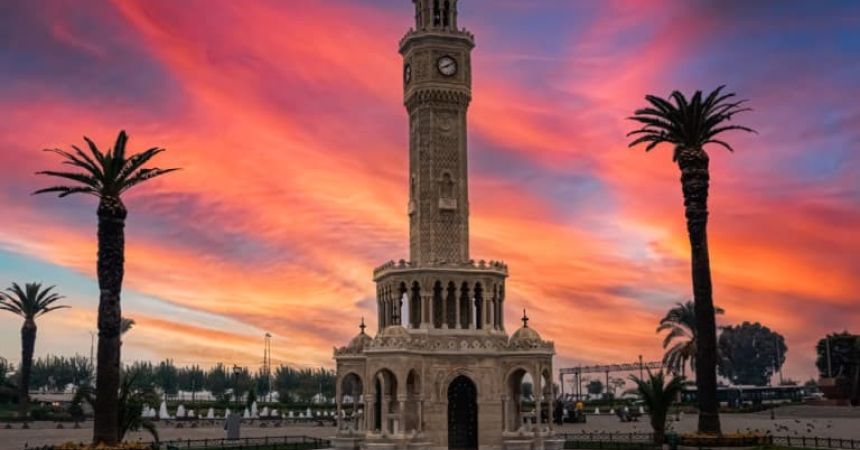
The famous Izmir Clock Tower in Konak Square is one of the city’s recognizable symbols, but the square’s travel value comes from location as much as monumentality.
The waterfront, transport connections, Kemeralti and several central areas meet nearby.
That makes Konak a useful orientation point.
Treating the Clock Tower as something requiring a dedicated sightseeing block would exaggerate its role.
Instead, allow it to become part of the route.
This is a recurring theme in Izmir.
Many of the city’s strongest experiences work because they connect other parts of the day rather than demanding the entire day for themselves.
The Ancient Agora Reminds You That Modern Izmir Sits on Smyrna
Izmir’s ancient identity is easy to forget because the modern city is so large.
The Agora of Smyrna provides one of the clearest reminders that this urban landscape has a much longer history.
Ancient Smyrna developed through Greek, Hellenistic and Roman periods, and the agora preserves part of that history within the modern city.
This is where Izmir differs from visiting a standalone archaeological site.
Traffic, buildings and contemporary neighborhoods do not disappear when you enter the ancient remains.
Instead, the archaeology exists inside the modern city.
That can actually make the historical continuity more tangible.
You are not traveling away from Izmir to see its ancient predecessor.
You are standing inside the geography that later became Izmir.
Izmir’s Archaeology Should Not Try to Compete With Ephesus
This cluster boundary is important.
If you want a full day inside one of the ancient Mediterranean world’s most significant cities, Ephesus provides a fundamentally different experience.
Izmir’s archaeological value lies in urban continuity and regional context.
Ephesus deserves to own the major archaeology intent.
That does not make Izmir historically weaker; it means the city plays a different role.
A traveler can understand Smyrna in the morning and then spend the evening in a thoroughly modern Aegean environment.
That transition is precisely what makes the city interesting.
Travelers whose wider route centers on ancient western Turkey can use Izmir and Ephesus journeys to connect the city with stronger archaeological destinations while allowing Izmir to retain its own urban identity.
Take a Ferry Even When You Do Not Strictly Need To
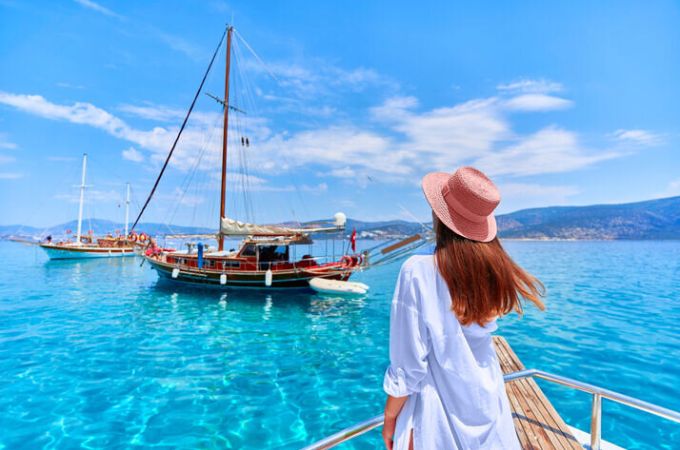
Few transportation decisions tell you as much about a city as taking a ferry across Izmir Bay.
You could choose another route.
That is not the point.
Ferries help reveal Izmir’s geography while providing one of the simplest ways to understand how different sides of the city relate to one another.
A trip toward Karşıyaka gives you perspective on the waterfront and reinforces the sense that Izmir’s relationship with the sea is urban rather than purely recreational.
For visitors spending more than one night, this is exactly the kind of small experience that produces more value than adding another minor attraction.
You are not leaving the city.
You are learning how the city moves.
Food Is Where Izmir Becomes Most Personal
Izmir is a strong destination for travelers who enjoy cities through food rather than monuments.
The Aegean culinary environment leans naturally toward vegetables, olive oil, herbs, seafood and lighter dishes alongside street food and everyday local specialties.
Breakfast also matters.
So do bakeries.
So does the very Izmir habit of eating something simple in a place that may have no international reputation at all.
This is where overly researched travel can become counterproductive.
There is little need to schedule every meal around a restaurant that became famous online.
Walk through Alsancak or Kemeralti.
Look at what people are eating.
Ask.
Return somewhere you liked.
A city food culture becomes meaningful through repetition, not merely through completing a list of “must-try dishes.”
Boyoz and Gevrek Are Small Things That Tell You You’re in Izmir
Certain foods become closely associated with local identity, and Izmir has several.
Boyoz, a pastry strongly identified with the city, is one of the easiest examples.
Even the word gevrek, commonly used locally for the sesame-coated bread ring known elsewhere as simit, carries a small signal of regional identity.
These are not luxury culinary experiences.
That is precisely why they matter.
The strongest food memories of a destination often come from ordinary breakfast habits rather than elaborate tasting menus.
Trying something because local people genuinely eat it creates a different connection from ordering a dish purely because a travel article instructed you to.
Izmir lends itself particularly well to that form of travel.
The City Is Not a Beach Resort, and That Is Important
Izmir sits on the Aegean, but travelers should not assume that central Izmir provides the kind of beach holiday associated with Çeşme or resort areas farther along the coast.
The bay is part of the city’s identity.
It is not the same product as a sandy resort beach.
This distinction prevents a lot of poor accommodation choices.
Stay in Izmir because you want an urban Aegean experience.
If daily swimming is essential, consider whether a coastal town should become the actual base, perhaps with Izmir visited separately.
Trying to make central Izmir function as a conventional beach resort uses the city against its strengths.
Çeşme and Alaçatı Should Be Chosen for a Different Reason
Western Izmir Province opens toward the Çeşme Peninsula, where the holiday environment changes substantially.
Çeşme introduces beaches, resort facilities and coastal leisure.
Alaçatı is strongly associated with its stone architecture, restaurants, social atmosphere and distinct seasonal tourism identity.
These destinations are frequently grouped under Izmir because the city provides regional access.
They should not be presented as city neighborhoods.
That distinction is crucial for cluster separation.
If you want several days of beach life and coastal atmosphere, stay there.
If you want city food, markets, ferries and a working urban environment, stay in Izmir.
The airport can serve both.
The experience cannot.
Izmir Makes a Better Gateway Than Many Travelers Realize
This is where the city becomes extremely useful in a western Turkey itinerary.
Izmir Adnan Menderes Airport provides access to a wide regional network, while road and rail connections can make the city a sensible transition point toward Ephesus, Kuşadası, Çeşme and other parts of western Turkey.
That does not mean every route should overnight in Izmir.
Sometimes landing and continuing directly elsewhere is more efficient.
But if your itinerary benefits from one or two city nights, Izmir can convert a transport stop into a genuine travel experience without requiring a major detour.
This is the opposite of forcing an airport city into an itinerary merely because you landed there.
Izmir is strong enough to justify the stay when the urban experience interests you.
Izmir or Kusadasi? Decide Whether You Want a City or a Coastal Base
For an Ephesus-focused journey, this is one of the most useful comparisons.
Choose Kuşadası if you want a coastal holiday atmosphere, resort options and easier evenings by the waterfront after archaeological sightseeing.
Choose Izmir if you want a larger living city, broader dining, urban neighborhoods and the option to continue toward Ephesus as part of a regional route.
The distance and transfer logistics should also be respected.
Kuşadası places you closer to Ephesus.
Izmir gives you a much stronger city experience.
Neither is simply a better hotel location for the same trip.
They create fundamentally different evenings.
Izmir or Bodrum? The Aegean Means Different Things in Each
Bodrum sells the Aegean as lifestyle and escape.
Izmir lives it as daily urban geography.
In Bodrum, marinas, hotels, beaches and social coastal life dominate the holiday.
In Izmir, ferries, markets, neighborhoods, business life and restaurants sit beside the same sea.
That difference is valuable.
Travelers who want the city to function around them rather than the tourism industry to entertain them may prefer Izmir.
Those looking for a polished coastal escape will likely choose Bodrum.
Trying to rank the two ignores what each destination is for.
Two Nights Can Be More Valuable Than Five
Izmir does not require a long stay to make an impression.
With two nights, you can experience the waterfront, central neighborhoods, Kemeralti, food culture and perhaps the ancient Agora without rushing excessively.
Three nights provide more space for ferries and different districts.
Longer stays become rewarding when you enjoy urban life for its own sake or use Izmir as a base for selected regional excursions.
The mistake is staying five nights simply because the hotel price is attractive while spending every day driving somewhere else.
At that point, the city is no longer your destination.
It is your parking place.
Izmir Works Particularly Well Between More Famous Places
This may be the city’s best role in a first Turkey journey.
After a monument-heavy itinerary, Izmir gives travelers permission to experience Turkey without another major sightseeing obligation.
You can arrive from an archaeological region, eat well, walk along the water and continue onward the next day.
Or spend two nights and let the urban rhythm act as a transition between inland history and coastal relaxation.
For travelers moving through the Aegean, western Turkey city and coast tours can use Izmir as that connecting chapter instead of making every stop compete for “must-see” status.
The Best Izmir Day Is Usually Not Fully Planned
Start somewhere central.
Have breakfast.
Walk through Kemeralti or toward the waterfront.
Stop because something looks interesting rather than because a schedule said you should.
Take a ferry later.
Eat wherever the evening naturally leads.
This sounds less ambitious than most travel itineraries, but it fits Izmir.
The city’s value does not arrive only through historical spectacle.
It accumulates through ordinary urban experiences that become distinctive precisely because they are happening here.
That is also why Izmir is a useful counterweight to Turkey’s more famous tourism centers.
Istanbul overwhelms.
Cappadocia surprises.
Ephesus instructs.
Bodrum relaxes.
Izmir simply lets you spend time in a major Turkish city whose relationship with the Aegean has shaped the way people live rather than the way visitors are entertained.
For the right traveler, that is reason enough to stay.
Frequently Asked Questions About Izmir
1. Is Izmir worth visiting if I am already going to Istanbul?
Yes, if you want to experience a different type of Turkish city. Istanbul is historically denser and more monumental, while Izmir offers a more relaxed Aegean urban rhythm centered on waterfront life, food, markets, ferries and regional western Turkey culture.
2. Is Izmir a good base for visiting Ephesus?
It can be, particularly for travelers who value a city stay and wider transport options. However, Kuşadası and Selçuk place visitors closer to Ephesus, so the best base depends on whether urban life or archaeological convenience matters more.
3. Which area is best for first-time visitors to Izmir?
Alsancak and Konak are useful starting points for many first-time travelers. Alsancak offers restaurants and waterfront atmosphere, while Konak places visitors closer to Kemeralti and several central historical areas. The better choice depends largely on preferred evening rhythm.
4. Is Izmir a beach destination?
Central Izmir is better understood as an Aegean city than a conventional beach resort. Travelers whose main objective is daily beach access should look toward coastal destinations such as Çeşme rather than assuming the urban waterfront provides the same holiday experience.
5. Is Kemeralti Bazaar worth visiting if I have already seen Istanbul's bazaars?
Yes, because Kemeralti functions differently. It remains deeply integrated into Izmir's everyday commercial life and feels less like an isolated visitor attraction. Travelers can experience food, shopping, historic buildings and ordinary city activity within the same dense district.
6. How many nights should I spend in Izmir?
Two or three nights are enough for many first-time visitors who want the central city experience. Longer stays make sense for travelers who enjoy urban exploration or plan selective regional excursions rather than spending every day commuting to distant destinations.
7. Should I stay in Izmir or Kusadasi for Ephesus?
Choose Kuşadası for closer Ephesus access and a stronger coastal-holiday atmosphere. Choose Izmir when a major Aegean city, wider dining options, neighborhoods and urban culture are important enough to justify the additional travel involved in reaching Ephesus.
8. Is Izmir good for food-focused travelers?
Very much so. Izmir's food culture reflects the Aegean through seafood, olive-oil dishes, vegetables, herbs, breakfast traditions and local everyday foods such as boyoz. The city rewards travelers who explore ordinary eateries rather than limiting themselves to famous restaurants.
9. Should I take a ferry while staying in Izmir?
It is worth doing even when another transportation option exists. Ferry travel helps visitors understand the geography of Izmir Bay and experience movement through the city in a way that feels both practical and distinctly connected to local daily life.
10. Can Izmir and Cesme be combined in one trip?
Yes. They provide complementary experiences: Izmir offers city life, markets and urban waterfront culture, while Çeşme provides a much more beach- and resort-oriented stay. Travelers with enough time can experience both without expecting one base to replicate the other.
11. Is Izmir suitable for families?
Yes, particularly for families comfortable with urban travel. Waterfront areas, ferries, food and manageable cultural visits can provide variety without requiring intensive sightseeing every day. Families seeking a resort-heavy beach holiday may prefer a coastal base outside the city.
12. What is the biggest mistake when planning Izmir?
The biggest mistake is treating Izmir only as the airport for Ephesus, Kuşadası or Çeşme, or making the opposite error of expecting it to function as a beach resort. Its strongest identity is that of a living Aegean city.

A travel professional specializing in tailor-made travel planning, guest experience management, and multi-destination tourism operations.
With over 23 years of experience in the travel industry, he designs and manages private and cultural tours for international travelers across Türkiye, Greece, Egypt, Jordan, Morocco, and other destinations.
He has strong expertise in both online and face-to-face guest communication, sales processes, and end-to-end travel operations.
Working closely with hotels, travel agencies, and local partners, he ensures smooth coordination and high-quality travel experiences at every stage of the journey.
His focus is on delivering personalized, reliable, and seamless travel experiences for international guests worldwide.