Hidden Gems of Turkey: Places Worth Leaving the Classic Route For
Updated: August 2026
The phrase “hidden gem” has become almost useless in travel writing.
A restaurant with three thousand online reviews becomes a hidden gem. A beach surrounded by resort hotels is described as secret. Entire cities with international airports somehow appear in lists of “places nobody knows.”
Turkey deserves a more useful approach.
There are genuinely less-visited places across the country that can transform a trip, but not simply because fewer tourists photograph them. A worthwhile detour should contribute something the classic route does not already provide. It should introduce another landscape, historical period, architectural tradition or regional rhythm rather than becoming another pin added to an overloaded map.
That distinction matters in Turkey because the standard first journey is already exceptionally strong.
Istanbul gives you imperial history and one of the world’s great cities. Cappadocia delivers a landscape unlike almost anywhere else. Ephesus provides major Greco-Roman archaeology, while Pamukkale combines geology and ancient history. Add the Mediterranean or Aegean coast and a first trip can already feel complete.
So the case for going somewhere less famous needs to be stronger than:
“There will be fewer people there.”
The better question is:
“What will this place show me about Turkey that my current itinerary does not?”
That is how hidden gems become worth the detour rather than merely more travel.
Start With the Detour Test
Before adding any lesser-known destination, run it through four questions.
Does it add a genuinely different experience?
Can it fit naturally into the route I already have?
Does it deserve an overnight, or can it work as a stop between two places?
What am I removing to make room for it?
The last question is the one travelers avoid.
Adding Amasya sounds wonderful until it creates twelve hours of extra transportation inside an eight-day itinerary. Gökçeada may be perfect for a slow Aegean holiday but completely illogical inside a Cappadocia–Pamukkale–Antalya journey.
A hidden gem is not automatically valuable because it is hidden.
It still has to earn its place.
Amasya Is for Travelers Who Want History to Feel Lived In
Amasya sits in a narrow river valley where Ottoman houses, rock-cut royal tombs and steep surrounding slopes create a cityscape completely different from Istanbul’s monumental scale.
The Yeşilırmak River helps organize the old city, while traditional houses line sections of the waterfront beneath ancient rock tombs cut into the cliffs above.
This combination makes Amasya particularly interesting because several historical periods remain visible in one compact landscape without the city feeling primarily built around tourism.
It rewards walking rather than attraction collecting.
The strongest experience may simply be moving along the river in the evening, looking across toward old houses and the illuminated slopes above.
Choose Amasya if you want a historic Turkish city whose value lies in urban atmosphere and historical layering rather than one blockbuster monument.
It deserves more than a rushed lunch stop.
Birgi Is Better Than Another Famous Village When Architecture Is the Point
Near Ödemiş in western Turkey, Birgi offers a very different kind of historical experience.
Traditional houses, narrow streets, religious architecture and the village’s relationship with the surrounding agricultural landscape make it particularly rewarding for travelers interested in vernacular and Ottoman-era architecture.
Its scale is an advantage.
You do not need a checklist of fifteen attractions.
A few hours of walking, looking carefully at house façades and understanding the settlement’s historical character can provide more value than adding another major archaeological site when your itinerary already contains Ephesus and Pergamon.
Birgi works especially well for travelers passing through western Turkey who want human-scale architecture after monumental ruins.
That contrast is exactly what a worthwhile hidden gem should provide.
Sagalassos Is the Archaeological Detour for People Who Think They Have Seen Enough Ruins
Turkey contains so much archaeology that another ancient city can initially sound unnecessary.
Then you reach Sagalassos.
Its setting in the Taurus Mountains creates a completely different relationship between archaeology and landscape from Ephesus or Pergamon. Monumental remains sit high above the surrounding countryside, and the location itself becomes part of the historical experience.
This is precisely why Sagalassos should not be added casually to every Antalya itinerary.
It deserves travelers who genuinely enjoy archaeology and understand that the value comes partly from leaving the conventional coastal route.
If Ephesus is your only desired ancient city, stay with Ephesus.
If archaeology is one of the main reasons you travel, Sagalassos may be the detour that prevents Turkey’s ancient sites from beginning to feel repetitive.
Gokceada Is for Travelers Who Want an Island Without the Greek-Island Script
Gökçeada, Turkey’s largest island, creates another kind of detour altogether.
It lies in the northern Aegean and works best when the traveler has enough time to accept ferry logistics and a slower pace. Villages, coastline, local food and the island’s Greek and Turkish cultural layers give it a personality far removed from the resort environments of Bodrum or Antalya.
This is not a destination to add because you have an empty afternoon near Istanbul.
It needs commitment.
That commitment is precisely why the experience can feel different.
The island suits travelers who prefer longer stays, village exploration and landscapes that are not organized around major attractions.
If your Turkey trip already moves every two nights, Gökçeada will probably make it worse.
If you have time to slow down, it can make the entire journey more memorable.
Kemaliye Is the Kind of Place You Choose Because the Road Is Part of the Story
In eastern Turkey, Kemaliye offers a very different proposition.
The settlement, its traditional architecture and the dramatic geography of the surrounding Euphrates landscape make the journey itself part of the experience.
This is not a destination for first-time travelers trying to cover Turkey’s classic highlights quickly.
It belongs more naturally to a second journey or a deeper regional itinerary where long road distances are accepted rather than treated as inefficient.
That is important because hidden-gem travel can become strangely competitive.
People begin trying to reach increasingly remote places simply because remoteness sounds authentic.
Kemaliye deserves better than that.
Choose it because mountain geography, smaller historic towns and regional Turkey genuinely interest you.
Then give it enough time to justify getting there.
Ani Is Not Secret — but It Still Feels Remote From the Classic Turkey Route
The ruins of Ani, near Kars in eastern Turkey, are internationally important enough that describing them as undiscovered would be absurd.
Yet for most first-time visitors following Istanbul–Cappadocia–Ephesus routes, Ani remains geographically distant from the tourism mainstream.
That is why it belongs here.
The medieval city occupies an extraordinary landscape near Turkey’s eastern frontier, with churches, walls and other surviving structures spread across a broad archaeological setting.
Ani works best for travelers who want Turkey’s history to extend far beyond Ottoman, Roman and classical narratives.
Its Armenian, medieval and frontier histories introduce another cultural geography entirely.
The journey is significant enough that Ani should usually be part of a Kars-focused regional stay, not a heroic day trip inserted into a central Turkey itinerary.
Egirdir Is a Reminder That Turkey’s Water Landscapes Are Not All Coastal
Lake Eğirdir in the Lakes Region changes the visual vocabulary again.
After repeated Aegean and Mediterranean coastline imagery, a large inland lake surrounded by mountains can feel surprisingly fresh.
Eğirdir works particularly well for slower travelers moving between inland and Mediterranean Turkey, especially when the trip benefits from nature, walking or a peaceful overnight rather than another cultural headline.
The strongest reason to stay is not a list of landmarks.
It is waking somewhere whose rhythm differs completely from the archaeological or resort destinations surrounding it.
This makes Eğirdir a good example of a hidden gem that succeeds through itinerary breathing space.
Sometimes the best addition to a route is somewhere that asks less of you.
Adatepe Is Small Enough That You Should Not Over-Sell It
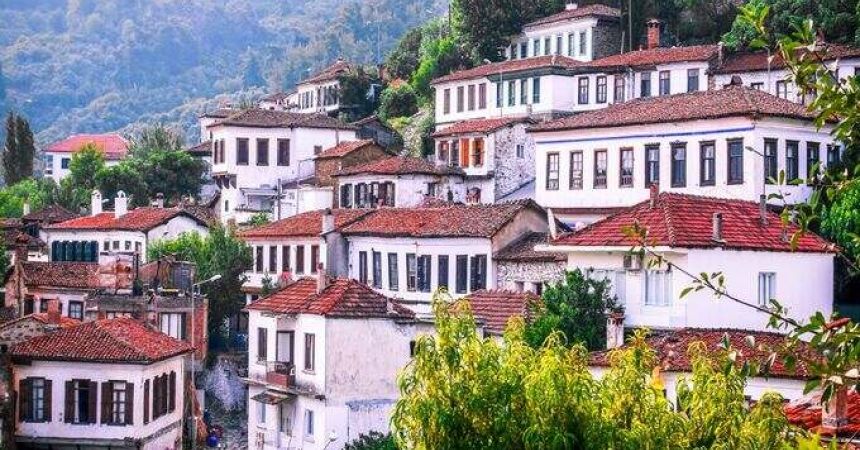
Near the northern Aegean, Adatepe offers stone architecture and village atmosphere within the wider landscape around Mount Ida.
It is exactly the kind of destination that travel writers are tempted to inflate into “Turkey’s best-kept secret.”
There is no need.
Its appeal is smaller and more credible.
Adatepe can work beautifully as part of a northern Aegean journey when the traveler already has a reason to be nearby. It offers quiet streets, traditional architecture and a relationship with the surrounding olive-growing landscape that can provide a pleasant contrast to archaeological stops.
Would I travel across Turkey only for Adatepe?
No.
Would I include it intelligently inside the right Aegean route?
Absolutely.
That distinction is what responsible hidden-gem writing should preserve.
Halfeti Is Most Interesting When You Understand What Changed There
In southeastern Turkey, Halfeti is associated strongly with the Euphrates and the partially submerged remains created after changes to the river landscape.
Boat journeys have made the partly submerged minaret of Savaşan one of the region’s recognizable images.
Yet Halfeti becomes more interesting when the trip is not reduced to that photograph.
The wider Euphrates landscape, regional settlements and connection with southeastern Turkey can make it a valuable addition to a Gaziantep or Şanlıurfa-oriented journey.
The route logic matters.
Halfeti is not a better destination because it has fewer international tourists than Cappadocia.
It is worthwhile because it introduces river geography and southeastern cultural context that the classic western Turkey itinerary does not contain.
Which Hidden Gem Fits Which Turkey Trip?
This is where selection becomes more useful than accumulation.
| Lesser-known destination | Adds this to the trip | Best route fit | Worth an overnight? |
|---|---|---|---|
| Amasya | Ottoman townscape + river valley | Central/Black Sea route | Yes |
| Birgi | Vernacular architecture | Izmir/Ephesus region | Optional |
| Sagalassos | Mountain archaeology | Antalya/Lakes Region | Usually |
| Gökçeada | Slow Aegean island life | Gallipoli/northern Aegean | Yes, preferably several |
| Kemaliye | Eastern mountain town | Deep eastern Turkey | Definitely |
| Ani | Medieval frontier archaeology | Kars/eastern Turkey | Kars base |
| Eğirdir | Inland lake landscape | Konya–Antalya/Lakes route | Yes |
| Adatepe | Stone village + olive landscape | Northern Aegean | Optional |
| Halfeti | Euphrates landscape | Gaziantep/Şanlıurfa | Depends on route |
The right choice depends less on fame than on what your existing itinerary lacks.
Archaeology Lovers Should Choose One Deep Detour, Not Five
Turkey can easily overwhelm anyone interested in ancient history.
Once Ephesus, Pergamon, Hierapolis and Troy appear on the itinerary, adding Sagalassos, Aphrodisias and Ani can begin sounding irresistible.
Eventually every day contains stone.
A better strategy is to choose the additional site that provides the greatest historical contrast.
If you already have Roman urban archaeology, perhaps Ani’s medieval world adds more than another Roman city.
If mountainous setting matters, Sagalassos may win.
The objective is not completing Turkey’s archaeology.
Nobody does.
It is allowing different sites to remain distinct enough that you remember why each mattered.
Hidden-Gem Coastal Travel Requires More Time Than People Expect
Less-developed beaches and islands often sound ideal precisely because they are less developed.
Then travelers discover that lower tourism density also means fewer transportation options, fewer frequent connections and more planning around ferries or road access.
Gökçeada is a good example.
Its relative separation is part of the appeal, but you cannot simultaneously demand that it function with the convenience of central Bodrum.
The same principle applies to quieter coastal villages.
Remoteness creates atmosphere partly because infrastructure has not erased the distance.
Do not choose hidden places and then become angry that they behave like hidden places.
Second-Time Visitors Get More Value From These Destinations
There is no prestige in skipping Istanbul on your first Turkey trip just to prove you found somewhere less famous.
The classic destinations are famous for good reasons.
A first-time visitor with nine days may gain considerably more from Istanbul, Cappadocia and Ephesus than from building a complicated expedition toward Kemaliye.
Hidden gems become especially powerful on a second journey.
You already understand the country’s basic geography.
You are less anxious about missing famous sites.
Regional food, smaller cities and long journeys begin to feel worthwhile rather than distracting.
This is why alternative Turkey tour routes can become much more rewarding for repeat travelers who no longer need every night to deliver an internationally recognizable landmark.
Families Need a Different Definition of Hidden Gem
For families, a destination is not valuable merely because other tourists have not arrived yet.
Road time matters.
Food availability matters.
Hotel practicality matters.
Children’s interest matters.
Eğirdir can work beautifully because the lake provides space and a slower day.
Birgi can fit naturally into a western route without requiring a massive logistical commitment.
Kemaliye may be fascinating but too demanding inside a short family trip.
The best family detour is one that changes the experience without breaking the itinerary.
That is a much stronger metric than visitor numbers.
Photographers Should Be Particularly Suspicious of “Hidden” Places
Photography can drive travelers toward locations based almost entirely on one image.
A submerged minaret.
A stone house.
A mountain lake.
An empty medieval church.
The photograph may be excellent.
The destination may still be wrong for the trip.
Before adding anywhere for photography, ask what happens during the other six hours of the day.
Is the surrounding landscape interesting?
Can you walk?
Is there enough cultural context?
Would you stay if the sky were grey?
A destination that works only under one perfect photography condition is not necessarily a strong travel choice.
Route Design Is What Turns a Hidden Gem Into Good Travel
Imagine you are already traveling from Izmir toward inland western Turkey.
Birgi may require a manageable detour and add an architectural experience absent from the rest of the trip.
Now imagine you are in Istanbul for four nights before flying directly to Cappadocia.
Adding Birgi would be irrational.
The destination did not change.
The route did.
This is the central principle of hidden-gem planning.
The value of a lesser-known place depends partly on where you are coming from and where you are going next.
Travelers building slower regional itineraries can consider Turkey off-the-beaten-path journeys, where these places are connected according to geography rather than collected as disconnected “secret” destinations.
Leave Room for Places You Did Not Research
There is a contradiction at the heart of hidden-gem travel.
The more aggressively you research every hidden place, the less possibility remains for discovery.
Turkey still rewards leaving some room.
A village recommended by a guide.
A roadside restaurant.
A market you did not know existed.
A viewpoint reached because the driver suggested stopping.
A small local museum that was never part of the plan.
These experiences rarely appear on “top secret Turkey” lists because they are specific to the route and moment.
They may become the strongest memories anyway.
A good itinerary therefore needs enough structure to work and enough space to surprise you.
Who Should Build a Hidden-Gems Turkey Trip?
Travelers on their second or third visit are obvious candidates.
So are people who prefer slower travel, regional culture and smaller towns over famous attraction density.
Photographers, walkers, architecture enthusiasts and travelers interested in specific historical periods can also gain enormously from leaving the classic route.
First-time visitors can still include one lesser-known place.
One is often enough.
The ideal addition should make the larger itinerary richer, not merely longer.
For travelers who want a journey designed around that principle, Turkey lesser-known heritage tours can connect smaller destinations with the major gateways needed to reach them efficiently.
The Real Hidden Gem Is Often the Extra Night
Travelers constantly search for new places when what their itinerary sometimes needs is another night in a place already chosen.
A second night in Amasya may reveal more than driving four hours to another village.
Staying overnight near Sagalassos can feel more rewarding than rushing back to Antalya.
Giving Gökçeada three nights instead of one changes it from an excursion into an island experience.
This is the part of hidden-gem travel that list articles rarely admit.
Discovering more does not always mean going somewhere else.
Sometimes it means staying long enough for the place you already found to stop behaving like an attraction.
That is the standard I would use for hidden Turkey.
Not how secret the place is.
Not how few photographs appear online.
Not whether you can tell friends they have probably never heard of it.
The only useful question is whether leaving the famous route gives you something meaningful enough to justify the journey.
When it does, Turkey becomes much larger than its headline destinations.
Frequently Asked Questions About Turkey’s Hidden Gems
1. What is the best hidden gem in Turkey for a first-time visitor?
There is no single best choice because route fit matters more than obscurity. Birgi can work naturally with an Izmir or Ephesus itinerary, while Sagalassos fits better around Antalya. First-time visitors should usually add one logical detour rather than rebuilding the entire trip.
2. Is Amasya worth visiting if I have already seen Istanbul?
Yes. Amasya provides a far smaller-scale historical experience built around a river valley, Ottoman houses and rock tombs. Its value comes precisely from feeling unlike Istanbul rather than trying to offer another version of imperial-city sightseeing.
3. Is Sagalassos better than Ephesus?
They should not be ranked as substitutes. Ephesus offers an extraordinary large-scale Greco-Roman urban experience, while Sagalassos combines significant archaeology with a dramatic Taurus Mountain setting. Travelers with strong archaeological interests can appreciate both for completely different reasons.
4. Is Gokceada worth the ferry journey?
Yes when island atmosphere, villages and slower travel are central to your trip. It becomes less sensible inside a tightly scheduled itinerary because ferry logistics and travel time need to be respected rather than treated as insignificant.
5. Is Ani suitable for a first Turkey itinerary?
Usually only when eastern Turkey already forms part of the route. Ani is historically exceptional, but traveling toward Kars simply to add one archaeological stop can consume too much time in a short classic itinerary focused on western and central Turkey.
6. Which hidden destination works best near Antalya?
Sagalassos can be particularly rewarding for archaeology-focused travelers, while inland villages and the Lakes Region offer completely different alternatives. The right addition depends on whether the existing Antalya stay already contains substantial archaeology or needs rural and natural contrast instead.
7. Are Turkey’s hidden gems cheaper than famous destinations?
Not automatically. Lower tourism volume does not always mean lower total trip cost because additional transportation, private transfers or limited accommodation can increase expenses. Hidden destinations should be selected for experience and route logic rather than assumed savings.
8. Which lesser-known Turkish destination is best for architecture?
Birgi is especially interesting for traditional residential architecture, while Amasya, Safranbolu and smaller regional settlements offer other architectural traditions. The best choice depends on the route and whether Ottoman urban form or rural vernacular architecture interests you more.
9. Is Halfeti worth visiting only for the submerged minaret?
No. The recognizable submerged structure is only one part of the experience. Halfeti becomes more meaningful within the wider Euphrates landscape and a southeastern Turkey journey, particularly when combined logically with Gaziantep or Şanlıurfa rather than visited for one photograph.
10. Should families include hidden gems in Turkey?
Yes, when the destination adds variety without excessive transport. Families should prioritize places with manageable road times, practical accommodation and activities children can understand rather than selecting destinations purely because they receive fewer international visitors.
11. How many lesser-known destinations should I add to a Turkey trip?
Usually fewer than you initially want. One strong addition can transform a ten-day itinerary, while several remote detours can make transportation dominate the trip. Longer or repeat visits naturally provide more room for regional exploration.
12. What is the biggest mistake when searching for hidden gems in Turkey?
The biggest mistake is treating obscurity as a quality measure. A lesser-known place is worthwhile only when it adds something distinct and fits the route logically; otherwise, replacing a major destination merely to avoid tourists can reduce the overall trip.

A travel professional specializing in tailor-made travel planning, guest experience management, and multi-destination tourism operations.
With over 23 years of experience in the travel industry, he designs and manages private and cultural tours for international travelers across Türkiye, Greece, Egypt, Jordan, Morocco, and other destinations.
He has strong expertise in both online and face-to-face guest communication, sales processes, and end-to-end travel operations.
Working closely with hotels, travel agencies, and local partners, he ensures smooth coordination and high-quality travel experiences at every stage of the journey.
His focus is on delivering personalized, reliable, and seamless travel experiences for international guests worldwide.