Hattusa Turkey: How to Explore the Hittite Capital
Updated: August 2026
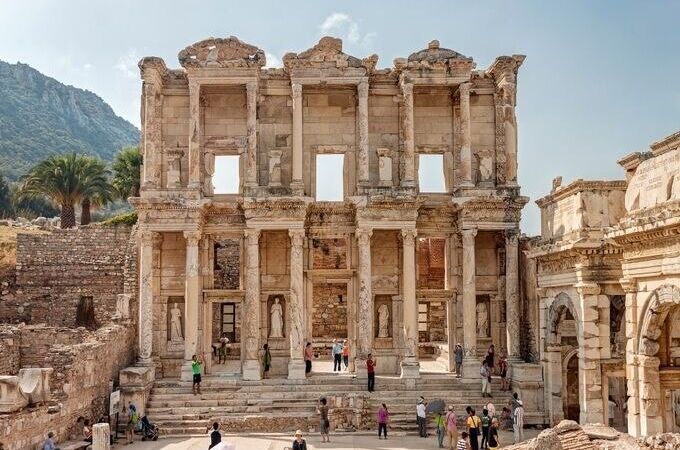
Hattusa does not reveal itself as quickly as Ephesus.
There is no long marble avenue immediately announcing the scale of an ancient city, no monumental theatre dominating the first impression, and relatively little of the intact architectural detail that helps an inexperienced visitor imagine daily life without much explanation. Instead, Hattusa spreads across an undulating Central Anatolian landscape where walls climb hillsides, gateways interrupt ancient fortifications and foundations mark buildings whose political importance once extended far beyond what their surviving stones suggest today.
That makes Hattusa a more demanding archaeological visit, but also an unusually rewarding one.
This was the capital of the Hittite Empire, one of the great powers of the Late Bronze Age. From here, Hittite kings governed territories across Anatolia and northern Syria, negotiated with other major states of the ancient Near East and left behind an extraordinary written archive on clay tablets.
The key to enjoying Hattusa is therefore not trying to find the most spectacular ruin.
It is learning to read an entire imperial landscape.
Hattusa Rewards Context Before Photography
Arriving without knowing anything about the Hittites can make the first hour confusing.
The empire flourished during the second millennium BC, with Hattusa developing into its political and religious center. At its height, the city contained monumental defensive systems, temples, administrative buildings, royal areas and extensive urban districts.
The Hittites interacted with Egypt, Assyria, Babylon and other powers of their era. One of the most famous outcomes of that international world followed the Battle of Kadesh between Hittite and Egyptian forces in the thirteenth century BC, after which a peace agreement between Hattite king Hattusili III and Egyptian pharaoh Ramesses II became one of antiquity's best-known diplomatic documents.
That wider context matters enormously at Hattusa.
You are not looking at the remains of an isolated Anatolian settlement.
You are standing in what was once a capital participating in the political system of the ancient Near East.
The Landscape Is Part of the Archaeology
Hattusa's terrain is one of the first clues to understanding the city.
Rather than occupying a simple flat grid, the settlement developed across natural elevations, valleys and rocky terrain. Defensive walls followed and manipulated this landscape, while monumental gates controlled movement through the fortifications.
This means the site should be read at two scales.
At close range, you examine stones, foundations, gateways and inscriptions.
Then you step back.
From higher points, the relationship between the city and its surrounding terrain becomes clearer, and individual ruins begin to belong to a larger defensive and ceremonial system.
This is why Hattusa can be disappointing for travelers who expect every stop to deliver an immediately recognizable building, yet exceptional for those interested in how ancient cities functioned spatially.
Start With the Great Temple to Understand Hittite Hattusa
The Great Temple, generally associated with the Hittite storm god and sun goddess, helps establish Hattusa as more than a political capital.
Religion was fundamental to Hittite state life.
The surviving complex allows visitors to recognize the scale of an important sacred precinct even though its upper structures have disappeared. Storerooms and foundations surrounding the central area help reveal that a major temple was also an administrative and economic institution.
This is an important interpretive shift.
Ancient temples were not simply places where people entered, prayed and left. They could control goods, personnel and substantial resources while participating directly in the political order.
At Hattusa, religion and government were intertwined.
Understanding that makes the city's other monumental spaces considerably easier to interpret.
What the Major Monuments Actually Tell You
Instead of ranking Hattusa's attractions from “best” to “least important,” it is more useful to ask what each contributes to the story of the capital.
| Hattusa feature | What it helps you understand | What to notice |
|---|---|---|
| Great Temple | Religion and imperial administration | Scale, storerooms, sacred precinct |
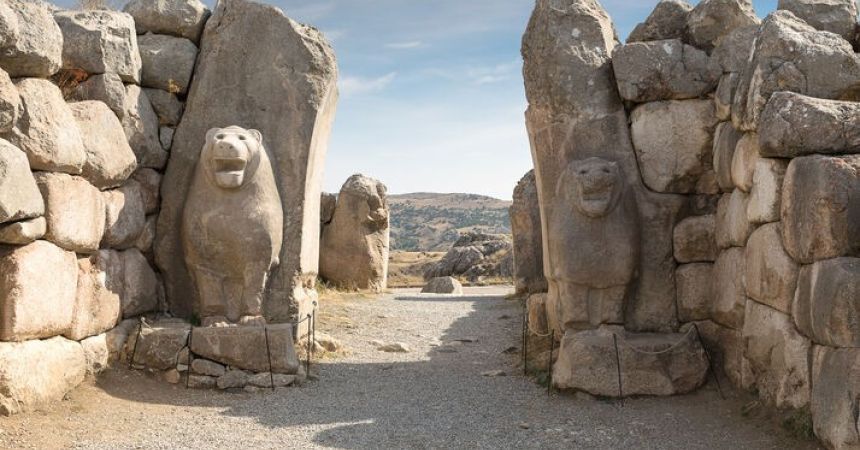
| Lion Gate | Monumental defense and symbolism | Sculpted lions, gateway construction |
| Sphinx Gate | Ceremonial architecture | Elevated position and monumental approach |
| King's Gate | Elite imagery and fortified entrances | Warrior relief and wall system |
| Yerkapı | Engineering and defensive landscape | Artificial embankment and tunnel |
| Upper City | Expansion of the capital | Temples, terrain and urban scale |
| Nişantepe inscription | Royal communication | Hieroglyphic monumental inscription |
| Büyükkale | Political center | Strategic position and palace area |
This table is not a checklist.
It is a reading key.
Once you understand what each area represents, Hattusa stops looking like disconnected stones spread across several hills.
The Lion Gate Is About More Than Two Lions
The Lion Gate is one of Hattusa's most recognizable monuments because its sculpted guardians provide the kind of immediate visual connection that many other parts of the archaeological site no longer possess.
Yet the gate should be understood within the fortification system.
Ancient city gates were vulnerable points requiring protection, but they were also controlled transitions between outside and inside. Monumental sculpture could communicate authority as effectively as walls communicated physical strength.
The lions therefore belong to a broader architectural statement.
Look at the masonry surrounding them. Consider the thickness of the defenses. Imagine the walls extending away from the gateway rather than concentrating exclusively on the sculptures.
The photograph becomes more meaningful when you understand the system it belonged to.
Yerkapı Changes the Scale of the Visit
Yerkapı is one of the places where Hattusa's engineering becomes much easier to grasp physically.
The enormous artificial embankment forms part of the city's southern defensive landscape. A stone-lined tunnel passes through it, while the Sphinx Gate occupies the elevated fortification above.
Walking through this area gives visitors something archaeological plans cannot communicate particularly well: scale.
You experience elevation, gradient and the physical relationship between defensive construction and terrain.
For travelers accustomed to archaeological sites where the main attraction is decorative architecture, this may initially feel understated.
In reality, Yerkapı represents precisely the kind of infrastructure that helps explain why Hattusa deserves several hours rather than a rapid sequence of photographs.
The King's Gate Is a Reminder That Names Can Mislead
The King's Gate is another monumental entrance in the upper city's fortifications.
Its name can encourage visitors to imagine a gateway reserved specifically for the king, yet modern archaeological names do not always describe ancient function with that level of certainty.
The famous relief associated with the gate depicts an armed figure, often interpreted within a divine or warrior context.
This is another reason Hattusa benefits from careful interpretation.
Ancient archaeology contains uncertainties. Responsible travel writing should preserve them rather than convert every debated figure into an absolute statement because certainty sounds more impressive.
Knowing the limits of our knowledge is part of understanding the site properly.
Büyükkale Was the Political Heart of the Capital
Büyükkale occupies a prominent rocky elevation and contained the royal citadel.
Today, foundations and archaeological remains require imagination, but the location itself communicates political logic. A royal complex positioned within a fortified capital and commanding its surroundings was not simply another residential neighborhood.
Stand there and consider movement rather than decoration.
Who could enter?
How would the royal administration relate to the temples and lower city?
What could be seen from this position?
Hattusa becomes far more intelligible when you think about control, access and hierarchy instead of searching only for preserved rooms.
Travelers interested in this broader archaeological approach can connect Hattusa with Turkey ancient civilizations tours, where the site belongs within Anatolia's much longer history without losing its specific Hittite identity.
Clay Tablets Made Hattusa Speak Again
Architecture tells only part of Hattusa's story.
Thousands of clay tablets and fragments discovered at the site transformed modern understanding of the Hittites. Written in cuneiform and representing several languages, these archives contain diplomatic correspondence, treaties, religious texts, laws, rituals and administrative records.
This is where Hattusa becomes especially powerful.
At many ancient sites, archaeology reconstructs political life largely from buildings, inscriptions and material remains. Hattusa also gives historians an extensive documentary world.
The tablets reveal people governing, negotiating, worshipping and recording obligations.
They turn an impressive archaeological landscape into the capital of a literate state.
For visitors, knowing this before arrival changes the ruins. Rooms and storage areas no longer represent anonymous ancient architecture; they belong to a bureaucracy whose written voice has survived for more than three millennia.
Yazılıkaya Should Not Be Treated as an Optional Extra
A visit to Hattusa is incomplete conceptually without understanding Yazılıkaya, the nearby rock sanctuary.
Although it is a separate archaeological location, its religious relationship with the Hittite capital makes the two sites natural companions.
Yazılıkaya uses natural rock chambers as sacred space. Reliefs carved into the rock depict processions of Hittite deities, creating a very different experience from the architectural remains inside Hattusa.
The contrast is valuable.
At Hattusa, religion appears through temples, urban organization and written evidence.
At Yazılıkaya, the Hittite religious world becomes visual.
Divine figures emerge directly from the rock walls, allowing visitors to encounter Hittite belief in a way that foundations alone cannot provide.
If time forces you to choose between another minor stop and Yazılıkaya, the sanctuary usually adds more interpretive value to the Hattusa day.
Hattusa Is Not an Easy Day Trip From Everywhere
This is where realistic planning becomes important.
Hattusa lies near Boğazkale in Çorum Province, away from Turkey's most heavily traveled international tourism corridor. That relative isolation is part of its atmosphere, but it also means the site should not be casually inserted into every Turkey itinerary.
A traveler based only in Istanbul would be making a substantial journey specifically for Hattusa.
From Ankara, the logic becomes considerably stronger, particularly for travelers interested in archaeology and ancient Anatolia.
From Cappadocia, Hattusa can also be incorporated into a broader Central Anatolian route, but distances still need to be respected rather than treated as though every destination in central Turkey were adjacent.
The right question is not:
“Can I get there?”
Of course you can.
Ask:
“Does reaching Hattusa strengthen my itinerary enough to justify the time?”
For history-focused travelers, the answer can emphatically be yes.
Hattusa Deserves More Time Than Its Photographs Suggest
Online images can create the impression that Hattusa consists of three famous gates and several scattered walls.
That is exactly how visitors end up underestimating it.
The archaeological area is extensive, and moving through it requires more time than walking around a compact museum complex. Stops involve getting out, examining remains, understanding their relationship to the landscape and moving onward through the site.
Add Yazılıkaya and the visit becomes a substantial archaeological day.
Trying to “do Hattusa” quickly because another destination is scheduled several hours away undermines the reason for making the journey in the first place.
If you are not prepared to allocate meaningful time, it may be better saved for another trip.
Hattusa or Ephesus? The Question Misses the Point
Travelers sometimes compare archaeological sites according to which has the most impressive surviving structures.
By that measurement, Hattusa can appear less immediately spectacular than Ephesus.
Historically, however, they answer entirely different questions.
Ephesus provides an exceptional window into a Greco-Roman city shaped strongly by its later classical and Roman development.
Hattusa takes you much deeper into Bronze Age Anatolia and the political world of the Hittites.
One offers streets, monumental civic architecture and an urban environment that many visitors can visualize quickly.
The other demands reconstruction in the imagination but introduces a civilization that existed long before Roman imperial Turkey.
For archaeology enthusiasts, visiting both does not create repetition.
It creates chronology.
A Museum Before Hattusa Can Be More Valuable Than a Museum After It
If your route includes Ankara, the Museum of Anatolian Civilizations can dramatically improve the Hattusa experience.
Seeing Hittite and earlier Anatolian material before encountering the archaeological landscape gives the ruins faces, objects, symbols and historical context.
This reverses the way many people travel.
We often visit a site first and museum second.
For Hattusa, contextual preparation can be particularly useful because so much of the ancient city survives at foundation level.
Travelers planning a deeper Central Anatolian journey can consider Ankara and Cappadocia itineraries that allow the museum, Hattusa and later regional experiences to form a historical progression rather than three unrelated stops.
Bring Archaeological Curiosity, but Also Bring Water
Hattusa's intellectual importance does not remove ordinary travel realities.
You will spend significant time outdoors, moving through a large archaeological landscape. Comfortable walking shoes are more useful than fashionable footwear, and sun protection, drinking water and appropriate clothing deserve consideration.
Do not assume that facilities will appear exactly when you need them simply because the site is internationally significant.
The terrain also matters.
This is not a perfectly flat archaeological promenade. Visitors who have mobility limitations should consider the nature of the site and current access arrangements when planning how extensively they want to explore.
A little preparation makes a substantial difference.
Why Hattusa Belongs in a Different Turkey Itinerary
Hattusa is not a universal first-trip requirement.
That is not a criticism.
Someone with seven days who has never visited Turkey may reasonably prioritize Istanbul and Cappadocia rather than adding long overland travel to reach a Bronze Age capital.
But the traveler fascinated by ancient civilizations should make a different decision.
Hattusa offers something Istanbul, Ephesus and the Mediterranean archaeological sites cannot: sustained contact with the political and religious center of the Hittite world.
That makes it particularly powerful for repeat visitors and history-led itineraries.
A longer journey incorporating Central Anatolia cultural tours can give Hattusa enough space to matter instead of forcing it into an itinerary designed around completely different priorities.
The Best Moment at Hattusa May Be When Nothing Looks Monumental
After several hours, something interesting often happens.
You stop requiring every stone to impress you.
A stretch of wall becomes meaningful because you understand the defensive system. Foundations matter because you can place them within the city's religious organization. A distant ridge matters because you now recognize how the capital occupied its terrain.
That is the point at which Hattusa begins to work.
The site does not hand its story to you in one perfectly preserved façade.
It asks you to assemble it.
For travelers willing to make that effort, Hattusa becomes far more than another archaeological stop. It becomes one of the clearest places in Turkey to understand that Anatolia's great civilizations did not begin with Greece or Rome.
Thousands of years before either dominated this landscape, Hittite kings were already governing an empire from these hills.
Frequently Asked Questions About Visiting Hattusa
1. Why is Hattusa historically important?
Hattusa was the capital of the Hittite Empire, a major Bronze Age power that interacted with Egypt, Assyria, Babylon and neighboring Anatolian states. Its fortifications, temples, royal areas and written archives provide exceptional evidence for understanding Hittite political and religious life.
2. Where exactly is Hattusa in Turkey?
Hattusa lies beside modern Boğazkale in Çorum Province in Central Anatolia. Its location places it outside Turkey's busiest international sightseeing corridor, so visitors should consider travel time carefully rather than assuming it functions as a convenient excursion from every major tourism destination.
3. Is Hattusa worth visiting if the buildings are mostly ruins?
Yes, particularly for travelers interested in archaeology and ancient civilizations. Hattusa's value comes from understanding the scale and organization of a Bronze Age imperial capital, where fortifications, gateways, temples, royal areas and landscape together reveal far more than individual preserved façades.
4. What should I see first at Hattusa?
Rather than concentrating on one famous gate, begin by understanding the city's overall layout and the role of its major areas. The Great Temple provides useful religious context, while the fortifications, Yerkapı, monumental gates and Büyükkale gradually reveal different aspects of the capital.
5. Why are the Lion Gate and Sphinx Gate important?
Both demonstrate how Hittite fortifications combined practical defense with monumental visual language. Their sculptural elements make them immediately memorable, but visitors gain more by examining how each gateway belongs to the larger wall system and controlled movement into the ancient city.
6. What is Yerkapı at Hattusa?
Yerkapı is a monumental artificial embankment incorporated into Hattusa's southern fortifications, with a stone-lined tunnel running through it and the Sphinx Gate positioned above. Experiencing the elevation physically helps visitors understand the extraordinary scale of Hittite defensive engineering.
7. Should I visit Yazılıkaya together with Hattusa?
Yes, particularly if you want to understand Hittite religion rather than simply see the capital's architecture. Yazılıkaya's rock-cut reliefs depict processions of deities and provide visual religious context that complements the temples, inscriptions and archaeological remains encountered at Hattusa.
8. How much time should I allow for Hattusa?
Allow enough time to explore a large archaeological landscape without reducing the visit to its famous gates. Travelers combining Hattusa with nearby Yazılıkaya should think in terms of a substantial archaeological experience rather than trying to fit both into a hurried roadside stop.
9. Is Hattusa suitable for people who are not archaeology experts?
Absolutely, although a small amount of historical context greatly improves the experience. Knowing who the Hittites were and recognizing the functions of the main areas helps transform apparently scattered ruins into an intelligible imperial capital without requiring specialist archaeological knowledge.
10. Can Hattusa be combined with Cappadocia?
Yes, Hattusa and Cappadocia can form part of a wider Central Anatolian itinerary, although they should not be treated as neighboring attractions. Realistic road travel and adequate sightseeing time are essential if the combination is to add value rather than create an unnecessarily rushed schedule.
11. Is Hattusa more important than Ephesus?
Ranking them is not particularly useful because they represent different civilizations and historical periods. Ephesus offers an exceptionally accessible Greco-Roman urban experience, while Hattusa provides rare insight into Bronze Age Anatolia and the political center of the Hittite Empire.
12. What is the biggest mistake visitors make at Hattusa?
The biggest mistake is arriving expecting several spectacular standalone monuments and rushing between the famous gates. Hattusa becomes considerably more rewarding when visitors read the fortifications, temples, royal areas, inscriptions and terrain together as components of one enormous imperial capital.

A travel professional specializing in tailor-made travel planning, guest experience management, and multi-destination tourism operations.
With over 23 years of experience in the travel industry, he designs and manages private and cultural tours for international travelers across Türkiye, Greece, Egypt, Jordan, Morocco, and other destinations.
He has strong expertise in both online and face-to-face guest communication, sales processes, and end-to-end travel operations.
Working closely with hotels, travel agencies, and local partners, he ensures smooth coordination and high-quality travel experiences at every stage of the journey.
His focus is on delivering personalized, reliable, and seamless travel experiences for international guests worldwide.