Hiking in Turkey: Choosing the Right Trail and Region
Updated: August 2026
Turkey makes an unusually good hiking country because the walking experience changes so dramatically from one region to another.
A morning on the Lycian coast can begin above turquoise bays and continue past archaeological remains. In Cappadocia, the route may descend through volcanic valleys, cave churches and old village paths. Farther northeast, the Kaçkar Mountains offer an entirely different scale, with highland landscapes and terrain that feel removed from the Mediterranean image many international travelers associate with Turkey.
These are not interchangeable versions of the same hiking holiday.
Some routes are easy to combine with comfortable hotels and cultural sightseeing. Others demand stronger mountain experience, more careful logistics and greater tolerance for weather, elevation or remote terrain. A traveler who enjoys three-hour walks followed by a good dinner should not automatically choose the same region as someone looking for consecutive full trekking days.
The important question is therefore not:
“What is the best hike in Turkey?”
It is:
“What kind of walking holiday do I actually want Turkey to give me?”
Once that is clear, the shortlist becomes much easier.
Start by Deciding Whether Hiking Is the Trip or Part of the Trip
This is the most useful distinction you can make.
For some travelers, walking is the primary purpose. They want several consecutive days on trail, accept early starts and regard accommodation mainly as recovery between stages.
Others want Turkey first and hiking second.
They may spend three nights in Cappadocia, walk through two valleys, visit an underground city, stay in a comfortable cave hotel and continue to Istanbul or Ephesus.
Both are hiking trips, but they require completely different planning.
If hiking is the main trip, long-distance routes and mountain regions become more attractive.
If hiking is one part of a cultural itinerary, regions with easy hotel access and shorter day walks usually provide better value.
Trying to turn a conventional Turkey tour into a serious trek often creates unnecessary logistical tension.
Turkey’s Hiking Regions Sit on a Commitment Ladder
Rather than ranking trails, think of them according to how much commitment they ask from the traveler.
| Hiking environment | Typical commitment | Accommodation style | Best suited to |
|---|---|---|---|
| Cappadocia valleys | Low to moderate | Cave/stone hotels | Cultural travelers who enjoy walking |
| Lycian Way sectors | Moderate | Pensions, small hotels, village stays | Coastal hikers and multi-day walkers |
| St Paul Trail sections | Moderate to high | Simpler regional stays | History-led trekkers |
| Kaçkar Mountains | High | Mountain villages, simpler lodgings, trekking support | Experienced mountain walkers |
| Aladağlar | High | Mountain bases/camps depending on route | Strong hikers seeking alpine terrain |
| Phrygian routes | Moderate | Rural accommodation and transfers | Travelers interested in quieter heritage landscapes |
This table is more useful than a list of “Turkey’s top ten hikes” because it begins with the traveler rather than the destination.
Cappadocia Is the Easiest Place to Combine Walking With a Full Turkey Journey
Cappadocia is ideal for travelers who like walking but do not want the entire holiday to become trekking.
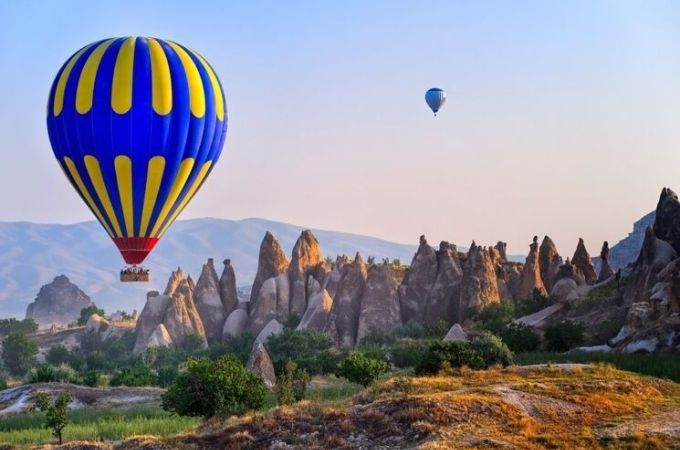
The region’s valleys allow you to spend meaningful time on foot while still returning to a comfortable hotel each evening. Rock formations, cave dwellings, old agricultural landscapes and carved religious spaces keep the scenery changing without requiring alpine experience.
The walking also feels culturally connected.
You are not simply exercising through a landscape.
Village paths and valleys link places where people lived, farmed, worshipped and moved long before the region became an international tourism destination.
For many first-time visitors, that combination is extremely satisfying because a day can contain both a substantial valley walk and conventional sightseeing.
Travelers who want that balance can explore Cappadocia hiking tour options without turning their entire Turkey itinerary into an expedition.
The Lycian Way Is for Travelers Who Want the Coast to Become a Journey
The Lycian Way is one of Turkey’s best-known long-distance walking routes and runs through parts of the Mediterranean landscape of southwestern Turkey.
What makes it compelling is not simply distance.
It is the combination.
Coastal views, forest, mountain terrain, villages and ancient Lycian or Greco-Roman remains can appear within the same broader walking journey. This creates a route where history and landscape repeatedly interrupt each other.
The biggest mistake is assuming that mentioning the Lycian Way means committing to the entire trail.
You do not need to walk it end to end for it to be worthwhile.
Many travelers are better served by selecting a section that matches their available days, preferred terrain and accommodation expectations.
A four-day coastal walking experience can make more sense than forcing a much longer trek into a two-week Turkey vacation.
Choose a Lycian Section According to Rhythm, Not Fame
Different sections of a long-distance trail can feel remarkably different.
Some travelers want days dominated by sea views.
Others care more about villages and archaeological remains.
Some are comfortable with continuous elevation change, while others want shorter walking days and easier access to accommodation.
This is why asking “Which is the most beautiful Lycian Way section?” is incomplete.
Beauty does not tell you how tired you will feel after six hours, whether your luggage is being transferred or whether the accommodation standard matches the kind of holiday you want.
A better set of questions is:
How many consecutive days do I want to walk?
How much ascent am I comfortable with?
Am I carrying everything myself?
Do I want to sleep in simple village accommodation or return to more established hotels?
Those answers should select the section.
The Kaçkar Mountains Are Not a Green Version of Cappadocia
The Kaçkar Mountains in northeastern Turkey demand a different mindset.
This is mountain country.
The landscape can include high valleys, alpine terrain, highland settlements and rapidly changing mountain conditions. Walking here is much less about fitting a pleasant half-day hike between restaurants and sightseeing stops.
Terrain awareness matters more.
Fitness matters more.
Logistics matter more.
Travelers should also understand that northeastern Turkey has a very different relationship with weather and moisture from the Mediterranean coast.
That does not mean every Kaçkar trip requires extreme mountaineering ability, but anyone approaching the region should distinguish between a highland excursion and serious mountain trekking.
A strong coastal hiker can still be surprised by how different sustained elevation and mountain conditions feel.
Kaçkar Appeals Most to People Who Want the Landscape to Dominate
On the Lycian coast, archaeology may compete with the sea for attention.
In Cappadocia, geology and cultural heritage are inseparable.
In the Kaçkar Mountains, the landscape usually takes the lead.
That changes the purpose of the day.
A mountain valley does not need a famous ruin at the end to justify six hours of walking. The journey through changing elevation, pasture, forest and highland scenery is the destination.
Travelers who need a major attraction at the end of every hike may prefer another region.
Those who enjoy walking because the process itself is rewarding often respond very strongly to the northeast.
Aladağlar Is for Hikers Who Want Turkey to Feel Alpine
The Aladağlar Mountains, associated with the Central Taurus range, introduce another level of mountain terrain.
This is not the part of Turkey usually seen in beach brochures or first-trip itineraries.
For experienced walkers, that is the attraction.
Mountain landscapes, rocky terrain, elevation and a more expedition-like atmosphere make the region appealing to travelers who want a physically serious hiking component.
The operational requirements naturally increase with the ambition of the route.
Navigation, equipment, water planning, weather awareness and route knowledge matter far more in high mountain environments than on a short valley walk in Cappadocia.
This is where guided support can move from luxury to sensible risk management depending on the chosen route.
The St Paul Trail Is Best for Travelers Who Want History Under Their Boots
The St Paul Trail offers a different kind of long-distance walking concept.
Its appeal lies partly in historical geography, connecting landscapes associated with routes through ancient Anatolia and areas linked with the journeys traditionally associated with St Paul.
Travelers interested in history may find this especially rewarding because walking becomes a way of understanding distance.
A map can tell you that two ancient settlements were connected.
Walking through part of the terrain between them makes the relationship more physical.
This type of hiking suits people who enjoy a story developing across several days rather than relying exclusively on dramatic mountain scenery.
Independent or Guided? Turkey Gives You Both Options
Some regions are relatively easy for competent travelers to explore independently.
Others benefit considerably from local guidance.
The decision should not be driven by ego.
Independent walking provides freedom, but it also means responsibility for route finding, transfers, accommodation timing, weather decisions and unexpected changes.
Guided hiking costs more, yet it can remove a substantial amount of logistical work and provide local context that trail markers alone cannot offer.
A simple rule is useful:
the more remote, high, technically demanding or logistically fragmented the route becomes, the more valuable local support becomes.
For easy cultural walks near established tourism centers, independence can be part of the pleasure.
Luggage Strategy Can Decide Whether You Enjoy a Multi-Day Walk
Travelers often obsess over hiking shoes and barely think about luggage.
That is backwards.
Walking for several days while carrying everything you brought to Turkey can completely change the physical experience.
If a route uses village accommodation, ask whether luggage transfer is available between overnight stops.
If you are combining hiking with Istanbul or other cities, consider storing larger luggage and carrying only what the trek requires.
A lighter daypack can turn a demanding but enjoyable walk into a very different experience from hauling fifteen kilograms unnecessarily.
This is one of the clearest places where paying for logistics can improve the trip more than paying for luxury accommodation.
Shoes Should Match the Terrain You Are Actually Walking
There is no single correct hiking shoe for all of Turkey.
Cappadocia valley walking may not require the heavy boots you would choose for rugged mountain terrain.
Longer Lycian sections may benefit from stronger support, dependable grip and footwear already tested over several hours.
High mountain environments naturally require more serious attention to terrain and conditions.
Whatever you choose, do not make the trip the first time the shoes meet your feet.
Blisters care very little about brand reputation.
Walk in the footwear beforehand.
Make sure downhill sections feel stable.
Carry appropriate socks.
A simple, well-tested shoe is more valuable than expensive equipment bought the night before departure.
Water Planning Is Not a Minor Detail
Turkey’s walking environments can be exposed, particularly on warmer coastal or inland routes.
A village visible on a map does not automatically mean drinking water will be available exactly when you need it.
Carry enough for the route and conditions.
Know where reliable replenishment points are expected.
Do not rely entirely on encountering a café.
This becomes even more important when routes move away from major tourism infrastructure.
Hydration sounds like generic hiking advice until a trail takes longer than expected and the next reliable water source is still several kilometers away.
Then it becomes the most important planning decision of the day.
Summer Hiking Needs a Different Clock
Some travelers assume they can use the same daily schedule in every month.
On exposed routes during hot periods, that can make the experience unnecessarily difficult.
Earlier departures allow hikers to use cooler hours for demanding sections.
Midday can become a longer rest.
Later walking may be appropriate when the route and logistics support it.
This article deliberately does not turn into another weather guide; individual seasonal conditions belong elsewhere in the cluster.
The practical principle is enough:
adapt the walking day to the environment rather than demanding that the environment adapt to your itinerary.
Archaeology Is Better on Foot When You Allow Time to Notice It
One of Turkey’s greatest hiking advantages is the frequency with which cultural remains appear inside the landscape rather than behind museum doors.
Old routes, tombs, village architecture, churches, ruins and agricultural terraces can all become part of a walking day.
The danger is treating these as checkpoints.
Walk faster to reach the ruin, photograph it and keep moving.
That misses the relationship between the place and the route.
The more interesting question is often:
Why was this settlement here?
Water, elevation, trade routes, defensive position and agricultural land can explain more than an isolated historical date.
Walking gives you enough time to notice those relationships.
A Hiking Holiday Does Not Need Eight Consecutive Hiking Days
One of the most common planning mistakes among enthusiastic walkers is overestimating how much repetitive physical effort they want on holiday.
You can love hiking and still enjoy a rest day.
In fact, alternating demanding walking days with lighter cultural or coastal days can improve the entire journey.
A seven-day coastal program might contain four serious walks rather than seven.
A Cappadocia stay might use two valleys across three days.
Mountain trips naturally follow their own route structure, but recovery should still be respected.
More hiking is not automatically better hiking.
Coastal Walking and Mountain Trekking Should Be Budgeted Differently
A coastal route using guesthouses can be relatively simple.
High mountain trekking may require additional transfers, guides, specialized accommodation or equipment.
The cost structure therefore changes according to remoteness rather than just trip length.
Travelers comparing Turkey walking holiday routes should look at what is included:
luggage transfers,
meals,
guiding,
vehicle support,
accommodation,
entrance fees where relevant,
and emergency or route support.
The cheapest walking package can become expensive if half the logistics are excluded.
Hiking Works Particularly Well Inside a Longer Turkey Trip
Turkey’s variety makes it unnecessary to choose between cultural touring and active travel.
A journey can begin in Istanbul, move to Cappadocia for several walking days, continue toward the Aegean and finish with a Lycian-coast section.
That is a substantial trip, but the contrast prevents hiking from becoming repetitive.
Travelers with enough time can also build Mediterranean Turkey trekking journeys around a coastal walking segment while keeping the rest of the itinerary more conventional.
The key is giving the hiking portion a clear job.
Do not scatter one random walk into every destination simply to label the trip active.
Create a walking chapter.
Then let the travel style change again.
Who Should Choose Which Region?
Choose Cappadocia if culture, hotels and walking need to coexist easily.
Choose the Lycian Way if Mediterranean scenery and multi-day coastal hiking are the main attraction.
Choose the Kaçkar Mountains if you want highland landscapes and stronger mountain commitment.
Choose Aladağlar when rugged alpine-style trekking is closer to your ambition.
Choose historical long-distance routes such as St Paul sections when walking through old cultural geography interests you as much as dramatic scenery.
The right trail is not the one with the most impressive photograph.
It is the one whose difficulty, logistics and daily rhythm still sound enjoyable after the photograph has disappeared.
The Best Hiking Trip in Turkey Leaves Enough Energy to Look Around
A strange thing happens when travelers choose a route that is slightly too difficult.
They stop seeing it.
The next climb becomes the only thing that matters. The view becomes somewhere to recover. Archaeological remains become obstacles between rest stops, and the final kilometers dominate the memory.
A good hiking challenge should demand something from you without consuming the entire experience.
Turkey provides enough variety that there is little reason to prove yourself on the wrong trail.
Walk through volcanic valleys if that is your pace.
Spend several days above the Mediterranean if the coast motivates you.
Go higher when the mountains themselves are what you came for.
The best route is not the hardest one you can finish.
It is the one that leaves you enough attention to understand where you have been walking.
Frequently Asked Questions About Hiking in Turkey
1. Is Turkey a good country for hiking and trekking?
Yes. Turkey offers everything from accessible Cappadocia valley walks to long-distance Mediterranean routes and demanding mountain trekking. The strength lies in variety, allowing travelers to match walking difficulty with cultural interests, accommodation preferences and the amount of their holiday devoted to hiking.
2. Which hiking region is best for first-time visitors to Turkey?
Cappadocia is often the easiest fit because day walks can be combined with established hotels, sightseeing and transfers. Travelers wanting several consecutive hiking days may prefer a selected Lycian Way section rather than building the entire first trip around mountain trekking.
3. Do I need to hike the entire Lycian Way?
No. Many travelers choose individual sections that fit their available time and preferred terrain. A shorter multi-day walk can provide an excellent Lycian experience without requiring a complete long-distance journey or restructuring an entire Turkey holiday around one trail.
4. Is hiking in Cappadocia difficult?
Difficulty varies significantly by valley and chosen route. Many walks are accessible to reasonably active travelers, although uneven terrain, slopes and exposed sections still require sensible footwear. Longer combinations can become more demanding than casual sightseeing photographs suggest.
5. Are the Kackar Mountains suitable for beginners?
Some lower-level or guided experiences can suit less experienced walkers, but serious Kaçkar trekking involves mountain terrain and requires greater preparation than Cappadocia or many coastal walks. Beginners should choose routes carefully rather than treating the entire region as one difficulty level.
6. Is guided hiking necessary in Turkey?
Not for every route. Established day walks and some long-distance sections can be suitable for experienced independent hikers, while remote mountain terrain, complex logistics or unfamiliar route conditions can make professional local guidance considerably more valuable.
7. What type of shoes should I bring for hiking in Turkey?
Choose footwear according to terrain rather than destination reputation. Lightweight hiking shoes may suit many valley walks, while long-distance or mountain routes require stronger support and grip. Most importantly, use footwear that has already been tested during substantial walks.
8. Can I combine hiking with a normal Turkey sightseeing trip?
Very easily. Cappadocia is particularly suitable for combining walking with cultural sightseeing, while selected Lycian sections can form a dedicated active chapter within a longer itinerary. The experience usually works better when hiking is grouped logically rather than scattered randomly.
9. Is it possible to arrange luggage transfers on multi-day walks?
On some established routes and organized programs, luggage transfers can be arranged between accommodations. Availability depends on the chosen itinerary, so travelers should confirm this in advance rather than assuming every village-to-village trek offers automatic baggage support.
10. How many consecutive hiking days should I plan?
That depends on fitness and the physical intensity of the route, but travelers should not assume every holiday day needs to be a full hiking day. Rest periods or lighter cultural days can improve recovery and make longer active itineraries considerably more enjoyable.
11. Is hiking in Turkey suitable for families?
Yes when routes are selected according to children's ages, endurance and walking experience. Shorter Cappadocia valley walks can work especially well, while demanding long-distance or high-mountain routes require more careful assessment of the entire family's fitness and comfort.
12. What is the biggest mistake when planning a hiking trip in Turkey?
The biggest mistake is choosing a trail from scenery alone. Daily ascent, walking hours, water availability, luggage, accommodation, transportation and terrain matter just as much as photographs, and a route slightly below your maximum ability often produces a better holiday.

A travel professional specializing in tailor-made travel planning, guest experience management, and multi-destination tourism operations.
With over 23 years of experience in the travel industry, he designs and manages private and cultural tours for international travelers across Türkiye, Greece, Egypt, Jordan, Morocco, and other destinations.
He has strong expertise in both online and face-to-face guest communication, sales processes, and end-to-end travel operations.
Working closely with hotels, travel agencies, and local partners, he ensures smooth coordination and high-quality travel experiences at every stage of the journey.
His focus is on delivering personalized, reliable, and seamless travel experiences for international guests worldwide.