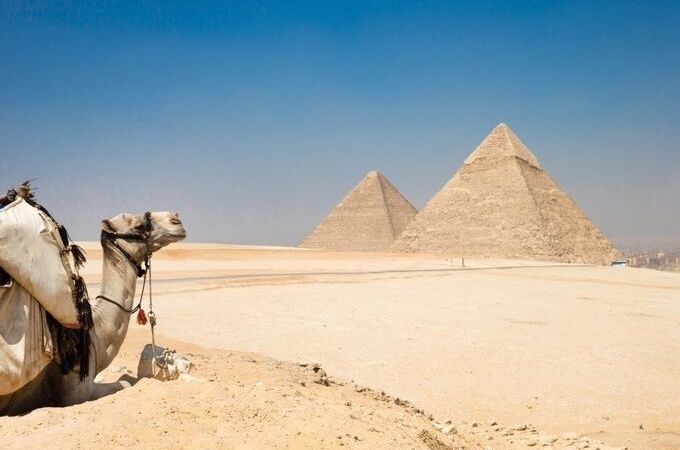
Best Places to Stay in Cairo: Choosing the Right Area
Updated: August 2026
Choosing where to stay in Cairo looks straightforward until you put the places you want to visit on a map.
The Pyramids are in Giza. Islamic Cairo pulls you toward another part of the city. Central Cairo and the Nile create a different geographical focus, while the airport sits well away from most of the sightseeing that brings first-time visitors to Cairo in the first place. Add the scale of the metropolitan area and traffic that can change the character of a transfer considerably, and the apparently simple question of “Which area is best?” stops having a universal answer.
This is why choosing a Cairo hotel solely because it has excellent reviews can be a mistake.
The hotel may be excellent.
Its location may simply be excellent for somebody else's trip.
A better way to choose is to think about your accommodation as part of the transportation plan. Where will you leave from most mornings? Where will you return after long sightseeing days? Which journey are you likely to repeat, and which inconvenience would you rather experience once instead of every day?
In Cairo, the best place to stay is rarely the area closest to everything, because there is no area close to everything.
The better choice is the location that makes the journeys most important to your particular trip easier.
Your Cairo Hotel Is Also a Transport Decision
Travelers often separate accommodation and sightseeing while planning.
First they choose a hotel, then they work out how to visit everything from there.
Cairo rewards doing those two jobs together.
If your hotel is in Giza and several days concentrate on central and historic Cairo, crossing the city becomes part of your daily routine. If you stay centrally but the Pyramids and nearby archaeological experiences dominate your plans, the opposite happens. Neither arrangement is inherently wrong, but they produce different days.
This is especially important on a short visit because an inefficient location has less time to average itself out.
During a longer stay, one inconvenient sightseeing day may barely matter. During two or three nights in Cairo, repeatedly spending unnecessary time moving across the city can affect how much energy remains for the places you came to experience.
Instead of beginning with “Where are Cairo's best hotels?”, begin with your sightseeing map.
Your hotel should come second.
There Is No Cairo Equivalent of Staying Beside Every Major Attraction
In compact historical cities, choosing the old center can simplify almost everything. You leave the hotel, walk between attractions, stop for lunch and return without thinking much about transportation.
Cairo does not work that way.
Even if you choose an excellent central base, the Pyramids are still elsewhere. Stay near the Pyramids and Islamic Cairo remains elsewhere. The Grand Egyptian Museum changes the attraction of the Giza side for many visitors, but it does not move the Nile or Cairo's historic districts westward.
This makes the idea of a universally “central” Cairo hotel less useful than it first appears.
Central to what?
That question should accompany every accommodation recommendation you read.
A hotel can be centrally positioned for one type of Cairo visit while creating repeated journeys for another, which is why location should be measured against your planned days rather than the geometric center of the city.
Start With the Journey You Most Want to Make Easier
A useful way to choose your Cairo base is to identify the day whose logistics matter most.
For some travelers, that is the Pyramids.
They have imagined seeing Giza for years, want an early start and perhaps value waking with the plateau nearby more than being centrally positioned for the remainder of Cairo.
For others, the Pyramids represent one important day within a wider Cairo experience. Their remaining time involves museums, historic districts, the Nile and city life, so choosing a base primarily around Giza would allow one day to dictate several others.
Neither traveler is making the wrong decision.
They simply have different priorities.
This is why our approach when planning Cairo Private Tours is to examine the sequence of sightseeing and transfers together rather than treating the hotel as an isolated reservation.
A good location removes friction from the part of the journey that matters most to you.
Staying in Giza Changes the Shape of Your Cairo Experience
Giza has one advantage no central Cairo neighborhood can reproduce: proximity to the archaeological landscape that many visitors have crossed continents to see.
For travelers whose Cairo experience is heavily centered on the Pyramids and the Grand Egyptian Museum area, that can be compelling. Depending on the property, the atmosphere can also feel removed from the dense urban experience associated with central Cairo.
The compromise appears when the rest of your sightseeing pulls eastward.
A Giza base does not make Islamic Cairo, central Cairo or every Nile-side experience conveniently nearby simply because they all appear under the destination name “Cairo” on an itinerary.
This is why Giza works best when its location solves a genuine priority rather than when it is selected automatically because the Pyramids are Cairo's most famous attraction.
A Pyramid view can be memorable, but the view from your room and the route from your hotel are two separate considerations.
Both deserve a vote.
Zamalek Solves a Different Problem: Balance
Zamalek, on Gezira Island in the Nile, appeals to travelers for reasons that have relatively little to do with being beside one headline ancient monument.
Its strength is balance.
The area can provide a comfortable base for travelers who want access to different parts of Cairo while returning to an environment that can feel more manageable than some of the city's most intense streets. Restaurants, cafés and the broader character of the neighborhood also matter when evenings are not completely organized through a tour.
That makes Zamalek particularly attractive when Cairo is being experienced as a city rather than simply used as a gateway to the Pyramids.
The trade-off is obvious once you stop searching for a mythical perfect location.
You are not sleeping beside Giza's archaeological sites, nor are you inside Islamic Cairo.
You are accepting travel to those places in exchange for a base that may work more evenly across several different Cairo days.
For many travelers, that is a very reasonable bargain.
Downtown Is a Better Choice When You Actually Want Cairo Around You
Some visitors want their hotel to provide separation from the city.
Others want to step outside and immediately feel that they are in it.
Downtown Cairo speaks more naturally to the second group.
Its streets, architecture, traffic, shops and daily movement create an unmistakably urban experience, which can be fascinating for travelers who enjoy energetic cities rather than simply tolerating them between monuments.
That same quality explains why Downtown is not automatically the correct recommendation for everybody.
After a long sightseeing day, one traveler may enjoy walking into the city's evening activity, while another would prefer returning somewhere that provides a greater sense of retreat.
Accommodation advice often treats this as a matter of hotel quality when it is actually a matter of temperament.
If you find large, active cities stimulating, Downtown can add something to your stay beyond its practical location. If urban intensity exhausts you quickly, choosing it because somebody called it “central” may solve the wrong problem.
Garden City Makes the Return to Your Hotel Part of the Decision
Garden City offers another way of thinking about location.
Rather than asking only how quickly you can leave your hotel for sightseeing, consider how you want to feel when you return.
This becomes increasingly relevant during culturally intensive Egypt journeys. Cairo days can contain substantial amounts of history, traffic, walking and visual stimulation, and the quality of the evening sometimes depends on whether the hotel feels like another extension of the city's energy or a place where the pace noticeably changes.
For travelers who value a more composed base and Nile-side positioning, Garden City can make sense even if another neighborhood appears marginally better for a particular attraction.
This is an important planning distinction.
The hotel is not only your morning departure point.
It is where every sightseeing day ends.
The Airport Should Not Decide Where You Spend Several Nights
An early flight can make airport proximity seem disproportionately important.
This is how travelers sometimes end up choosing accommodation around one transfer rather than several days of sightseeing.
Heliopolis and airport-side locations have genuine uses, particularly when a stay is connected to a late arrival, early departure or short transit. Their usefulness changes when the traveler has several full Cairo sightseeing days between those flights.
Saving time once while increasing daily movement repeatedly is rarely an efficient exchange.
The better calculation is not “How far is my hotel from the airport?”
It is:
How many times will this location save me time, and how many times will it cost me time?
Airport convenience deserves significant weight when the airport dominates the stay.
Otherwise, it should remain one factor rather than becoming the organizing principle.
The Right Cairo Area Depends on Which Compromise Bothers You Least
Instead of ranking Cairo neighborhoods from best to worst, it is more useful to identify what each choice protects and what it asks you to accept.
| What You Want to Protect | Area That Can Fit | Compromise You Accept |
|---|---|---|
| Easier Giza-focused mornings | Giza | More travel for central and historic Cairo |
| Balance across different city days | Zamalek | No major ancient site immediately outside |
| Direct urban atmosphere | Downtown | Greater city intensity around your base |
| A calmer return after sightseeing | Garden City | Location may not minimize every transfer |
| Airport-focused convenience | Heliopolis | Longer positioning for much sightseeing |
Notice that none wins every row.
That is intentional.
The objective is not to discover Cairo's universally best neighborhood but to identify which compromise interferes least with your trip.
A Pyramid View Is an Experience, Not Automatically a Location Strategy
There is something undeniably appealing about looking toward the Pyramids from your accommodation.
For some travelers, it is one of the experiences they most want from Cairo, and there is nothing wrong with allowing that emotional value to influence the hotel decision.
The mistake is pretending the decision has no operational cost.
If a Pyramid-view stay matters greatly, treat it as an experience you are deliberately choosing rather than proof that Giza is automatically the most practical base for the entire Cairo visit.
This distinction can even change how you value the room.
A traveler who expects to leave early every morning and return late may discover that an expensive view receives surprisingly little attention. Another who deliberately keeps an evening free may treasure exactly the same feature.
A room only has value when your itinerary gives you time to enjoy what you paid for.
Splitting Your Stay Can Work, but Moving Hotels Is Not Free
The obvious solution to Cairo's geography is to stay in two areas.
Sometimes that works extremely well.
A traveler might deliberately spend part of the stay near Giza before moving to a more central base, particularly when the itinerary naturally divides into western and central/historic sightseeing.
However, hotel changes carry their own friction.
Packing, checking out, moving luggage, waiting for rooms and learning a second property's routines consume attention even when the physical distance is not enormous. For a short Cairo stay, the cure can become more disruptive than the original problem.
The rule we use is straightforward:
Change hotels only when the location change removes more inconvenience than the move creates.
Three nights should not automatically become two hotels simply because Cairo is large.
With five or more nights and clearly separated sightseeing priorities, the calculation can become different.
Families Should Design Around the End of the Day
Families often begin accommodation selection by comparing pools, connecting rooms, breakfast and other hotel facilities.
Those features matter, but Cairo introduces another variable: what happens immediately before the family reaches the hotel.
After a full day of sightseeing, an unnecessarily complicated return journey can matter more than a facility that looked impressive during booking.
Parents should therefore examine their likely daily pattern. If several sightseeing days finish in similar parts of Cairo, that pattern may deserve more weight than being close to one famous attraction visited only once.
This is particularly relevant on Egypt Family Tours, where maintaining a manageable rhythm can improve the experience for both children and adults.
The family-friendly hotel is not always the property with the longest facilities list.
Sometimes it is the hotel that makes 5:30 p.m. easier.
Your First Cairo Visit and Your Second May Need Different Bases
First-time visitors often build their Cairo stay around major landmarks.
That is natural.
Returning travelers may behave very differently because they no longer need every day to revolve around essential sightseeing. They may want neighborhoods, museums missed previously, restaurants, contemporary city life or simply more unstructured time.
Accommodation priorities change accordingly.
This explains why recommendations from experienced Cairo visitors can sometimes sound contradictory. Someone who loved staying in Zamalek on a third visit may have had completely different priorities from a first-time traveler focused intensely on Giza and major historic sites.
“Where did you stay?” is therefore less useful than:
“What were you doing while you stayed there?”
Context turns a personal recommendation into useful advice.
Four Nights in Cairo Does Not Mean Four Equal Days
Hotel decisions should also account for arrival and departure days.
A four-night reservation might contain only three full sightseeing days. Perhaps the first evening follows a long international flight, while the final morning requires an airport transfer.
Suddenly the location question changes.
This is why counting hotel nights without examining usable time can produce misleading conclusions. The best base for four genuinely open days may not be the best base for a stay containing two partial travel days.
When arranging Egypt Custom Tours, we look at flight timing, sightseeing order and onward transportation alongside accommodation because the practical value of a neighborhood depends on when the traveler can actually use it.
The hotel map does not know that your flight lands at 8:00 p.m.
Your itinerary does.
Do Not Optimize Every Day Separately
There is a final trap in accommodation planning: trying to eliminate every inconvenient transfer.
Cairo is too large and your sightseeing interests are likely too dispersed for that to happen.
If you attempt to stay beside every cluster of attractions, you will spend the trip changing hotels.
The objective should be to reduce repeated unnecessary movement, not eliminate all movement.
One longer transfer to Giza from a well-chosen central base may be entirely reasonable. Repeating an inefficient journey three mornings in a row deserves more attention.
This difference between occasional inconvenience and structural inconvenience is one of the most useful ways to evaluate Cairo accommodation.
Accept the occasional journey.
Fix the repeated one.
So, Where Is the Best Place to Stay in Cairo?
There is no single best area, and that is not an evasive answer.
Giza makes sense when proximity to the Pyramids and western-side sightseeing carries exceptional importance. Zamalek can provide a balanced base for travelers whose days move across different parts of Cairo. Downtown suits visitors who actively want the energy of the city around them, while Garden City can appeal when returning to a calmer environment matters. Heliopolis becomes particularly relevant when airport logistics genuinely dominate the stay.
The final choice should come from your itinerary rather than a generic neighborhood ranking.
Mark the places you expect to visit. Count how many days pull you toward each part of Cairo. Consider how you want your evenings to feel, then look at arrival and departure logistics.
Only after doing that should you start comparing hotels.
In Cairo, choosing accommodation this way may not eliminate traffic or make every attraction nearby.
It does something more useful.
It makes your hotel belong to your trip.
Frequently Asked Questions About Where to Stay in Cairo
1. Should I stay in Giza if seeing the Pyramids is my main reason for visiting Cairo?
Giza becomes particularly attractive when the Pyramids and nearby sightseeing dominate your priorities. If they occupy only one day of a broader Cairo stay, however, choosing your entire accommodation location around that single day may create unnecessary travel during the remainder of your visit.
2. Is Zamalek actually central enough for first-time visitors?
Zamalek can work well as a balanced base because first-time Cairo sightseeing usually involves several different parts of the metropolitan area anyway. Its value comes less from being beside individual monuments and more from functioning reasonably across a varied city stay.
3. Will staying Downtown make Cairo feel overwhelming?
That depends greatly on how you respond to large, active cities. Travelers who enjoy street activity may appreciate having Cairo immediately around them, while visitors who need a quieter environment after sightseeing may prefer a base offering greater separation from the city's intensity.
4. Is Garden City worth considering if I will be sightseeing most of the day?
Yes, because accommodation location affects more than morning sightseeing access. Travelers who value returning to a more composed environment may find that the character of their evenings justifies choosing Garden City even when another area appears slightly closer to a particular attraction.
5. Should I change hotels after visiting the Pyramids?
Not automatically. A hotel change is worthwhile only when it meaningfully improves several subsequent days. Packing and transferring for the sake of saving one journey can create more inconvenience than remaining in a well-chosen base throughout a short Cairo stay.
6. Is a Pyramid-view room worth paying more for?
It can be when the view itself is an important part of your Cairo experience and your schedule gives you time to enjoy it. If you leave before breakfast and return late each day, the practical value of an expensive view may be considerably lower.
7. Should families stay closer to attractions even if another hotel has better facilities?
Not necessarily. Families should consider the complete day, including return journeys after sightseeing, meal convenience and how often facilities will actually be used. A slightly simpler hotel in a better operational location can sometimes produce a more comfortable family experience overall.
8. Does staying near Cairo Airport make sense after a late international arrival?
It can make sense when the airport connection genuinely defines that night, particularly with a very late arrival or early onward departure. For several subsequent sightseeing days, however, airport proximity should not automatically outweigh the location of the places you plan to visit.
9. How should I choose my area if I have only two nights in Cairo?
With a short stay, examine your actual usable sightseeing time rather than the number of nights. Choose the base that supports the most important day and avoids unnecessary repeated transfers, especially when arrival or departure consumes a substantial part of the visit.
10. Is it better to stay beside the Nile even if my sightseeing is elsewhere?
A Nile-side location can add considerable atmosphere to a Cairo stay, but it should be treated as one priority among several. Its value increases when you expect to spend meaningful time at the hotel or nearby rather than leaving early and returning only to sleep.
11. Can my sightseeing order compensate for choosing the wrong Cairo area?
Good sequencing can reduce unnecessary movement by grouping sights geographically, but it cannot completely overcome an inconvenient base. Accommodation and sightseeing should ideally be planned together so that efficient daily routing supports the location rather than continually compensating for it.
12. What should I decide before I start comparing Cairo hotels?
Decide which parts of Cairo will occupy most of your sightseeing time, whether city intensity energizes or tires you, how important evenings around the hotel are, and whether a Pyramid or Nile setting has genuine personal value. Hotel comparisons become much easier afterward.

A travel professional specializing in tailor-made travel planning, guest experience management, and multi-destination tourism operations.
With over 23 years of experience in the travel industry, he designs and manages private and cultural tours for international travelers across Türkiye, Greece, Egypt, Jordan, Morocco, and other destinations.
He has strong expertise in both online and face-to-face guest communication, sales processes, and end-to-end travel operations.
Working closely with hotels, travel agencies, and local partners, he ensures smooth coordination and high-quality travel experiences at every stage of the journey.
His focus is on delivering personalized, reliable, and seamless travel experiences for international guests worldwide.