Cairo in May: The Month When Shade Starts to Matter
Updated: August 12, 2026
There is a point in Cairo's year when sunshine stops feeling like a pleasant addition to the sightseeing day and becomes part of its architecture. In May, you begin noticing which side of a street has shade, how far the next covered area is from an archaeological site, whether a lunch stop has indoor seating, and how long you have been walking without a genuine break.
That is what distinguishes May from April.
Cairo is usually hot and overwhelmingly dry by this stage of the year, with daytime temperatures commonly around the low 30s°C and much cooler conditions after sunset. Individual days can move above or below those averages, but persistent rainfall is rarely what determines a May itinerary.
The more useful distinction is between air temperature and accumulated warmth.
A morning can begin comfortably enough, yet several hours of direct sunshine change how an exposed archaeological site feels. Stone, pavement and surrounding surfaces absorb energy as the day develops, while shaded urban spaces can provide a surprisingly different experience only a short distance away.
May therefore deserves to be understood through where you spend your time, rather than through temperature numbers alone.
Follow the Shade Through Cairo
Shade is not distributed evenly across the city, which makes May weather surprisingly geographical.
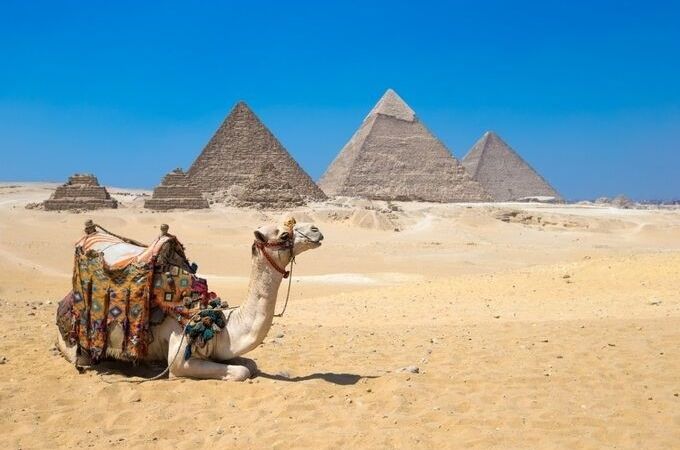
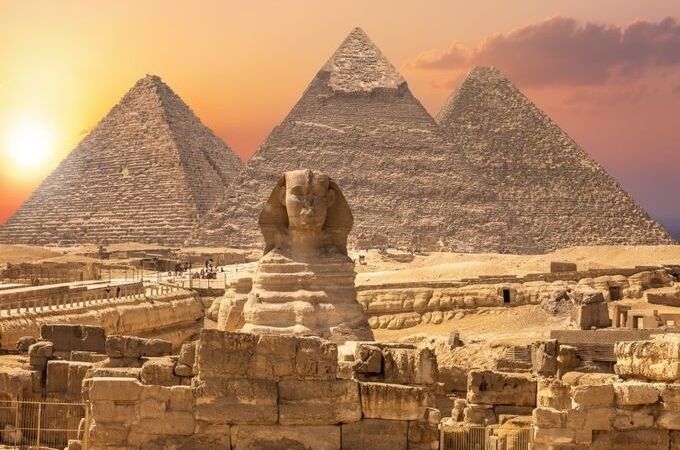
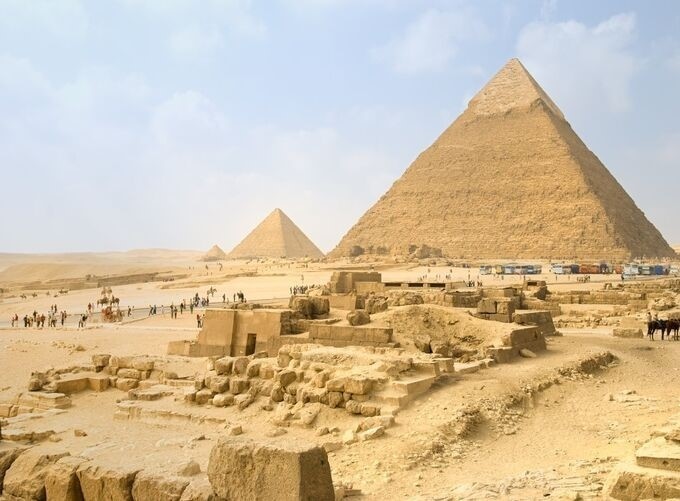
The Giza Plateau is fundamentally open. Although transportation may connect different parts of a guided visit, many important viewpoints and monument areas provide limited natural shelter.
Saqqara and Dahshur take that exposure further. Their appeal comes partly from their desert-edge setting, but that also means you should not expect the environment to provide convenient shade whenever you decide you need it.
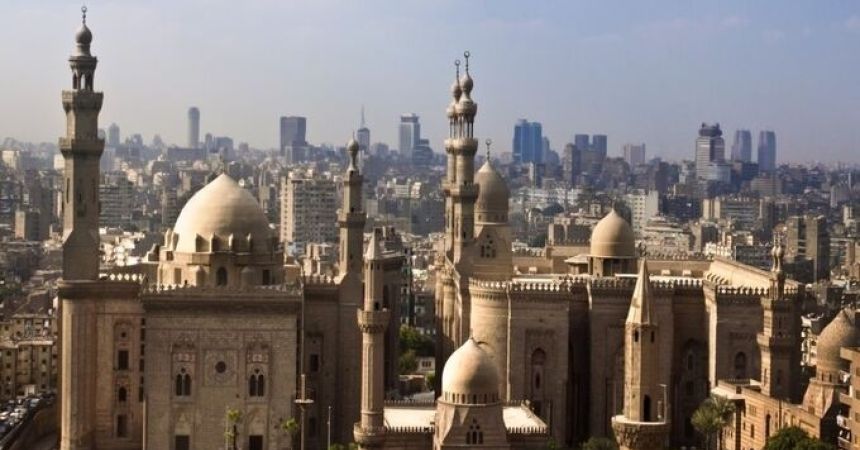
Historic Cairo works differently. Narrow streets, walls, mosques, courtyards, covered spaces and building interiors constantly alter the amount of direct sun reaching you. The temperature recorded for the city may be identical, yet an afternoon here can feel very different from the same hours spent on an archaeological plateau.
That difference is May's central planning tool.
Not Every Outdoor Hour Costs the Same
Instead of dividing the day mechanically into “cool morning” and “hot afternoon,” May is better understood through the cost of exposure.
Twenty minutes outside while moving between two historic buildings is not equivalent to twenty minutes standing on an open plateau. An hour beside the Nile is not necessarily comparable with an hour crossing a desert-edge archaeological zone.
The forecast gives you the air temperature. Your itinerary determines what that temperature means.
| Environment | Shade Access | May Exposure Character |
|---|---|---|
| Giza Plateau | Limited | Continuous open sunshine |
| Saqqara | Limited between monuments | Extended archaeological exposure |
| Dahshur | Very limited | Open desert setting |
| Islamic Cairo | Frequent but irregular | Alternating sun and shade |
| Coptic Cairo | Mixed | Shorter outdoor transitions |
| Major museums | Controlled | Natural recovery environment |
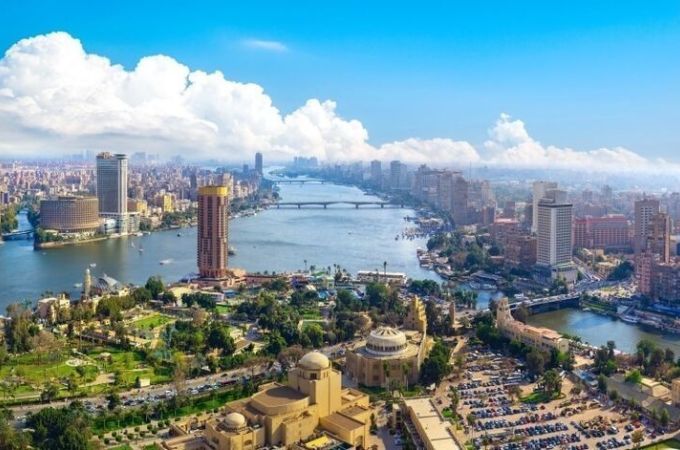
| Nile-side areas | Location-dependent | More open, sometimes breezier |
This is why a May itinerary cannot be judged simply by counting how many attractions are outdoors.
The character of those outdoor spaces matters.
The Ground Becomes Part of How May Feels
Travelers naturally think about sunshine coming from above, but by May Cairo's built environment begins contributing to the experience.
Paved areas and exposed stone absorb heat during the day. Dense urban districts can retain warmth even after the sun becomes less direct, while open archaeological sites offer little protection from solar exposure.
This does not mean Cairo becomes intolerable as soon as May arrives. It means the physical environment increasingly influences comfort.
You may notice the effect most clearly after several hours outside. The temperature displayed by your phone has barely changed, but the surroundings feel warmer than they did earlier.
For travelers following an Egypt pyramids and Nile journey, recognizing accumulated exposure in Cairo is useful preparation for a longer trip without assuming that every Egyptian destination has identical May conditions.
May Is When “I'll Buy Water Later” Stops Working Well
Water deserves a different discussion in May than it did earlier in spring.
The issue is not simply remembering to drink. It is access.
At a museum or central hotel, obtaining another bottle is straightforward. In a large archaeological zone, the moment when you want water may not coincide conveniently with the moment when it is available.
That makes preparation simple: start the excursion with enough water rather than planning to solve the problem after thirst appears.
Dry conditions can also make fluid loss less obvious than in a humid environment. You may not feel drenched in sweat, yet several hours of walking and sunshine still take their toll.
This is especially easy to underestimate on guided sightseeing days, when attention is focused on monuments, history and photography rather than how much time has passed since the last drink.
The May Break Should Actually Be a Break
A ten-minute stop beside a vehicle is not necessarily recovery.
By May, a useful break should remove you from continuous exposure long enough to make the next part of the day feel separate from the first.
Lunch works particularly well because it already belongs naturally in the itinerary. There is no need to invent an artificial weather stop. Instead, choose a comfortable environment, sit down properly, drink something and allow the body to settle before continuing.
This creates a rhythm very different from an itinerary that moves continuously from site to site.
Three May Days With the Same Temperature
| Day Design | Likely Experience |
|---|---|
| Giza → Saqqara → quick lunch → outdoor city walk | Exposure accumulates continuously |
| Giza → proper lunch → museum → evening walk | Heat load is naturally interrupted |
| Museum → lunch → long exposed archaeological afternoon | Most demanding outdoor period comes later |
The temperature never changed between these examples.
The sequence did.
Clothing Should Create Shade Without Creating Weight
May presents an interesting clothing problem.
Wearing less fabric is not always the most comfortable response to stronger sunshine. Lightweight, breathable clothing that provides some coverage can reduce direct exposure while remaining appropriate for Cairo's religious and cultural sites.
The key is fabric and weight rather than simply how much skin is covered.
Loose trousers, breathable shirts and comfortable walking shoes often make more sense than clothing designed primarily for a beach holiday. A hat can be useful at exposed archaeological sites, while sunglasses move from optional accessory to something many travelers will use repeatedly.
The day bag should remain light. Carrying water is important; carrying unnecessary clothing is not.
A bulky “just in case” wardrobe becomes increasingly irritating when you are walking through open sites.
May Begins to Separate Archaeology Days From City Days
Earlier months allow outdoor and indoor experiences to blend together with relatively little thought. By May, the distinction between a predominantly archaeological day and a predominantly urban day becomes more meaningful.
A Giza–Saqqara combination can involve hours of sustained exposure.
A historic Cairo day may still involve plenty of walking, but mosques, houses, shaded lanes and indoor spaces repeatedly interrupt the sun. A museum-centered day provides an even more obvious change of environment.
Rather than treating all three as equivalent sightseeing days, it becomes useful to consider how they sit next to each other within a multi-day itinerary.
If you have three days in Cairo, scheduling the two most exposed days consecutively may create unnecessary fatigue. Placing a mixed or predominantly indoor day between them can make the overall visit feel more balanced without removing a single attraction.
This becomes especially useful on a Cairo, Aswan and Nile experience, where conserving energy matters because Cairo is not the end of the sightseeing journey.
May Evenings Feel Like a Separate Chapter
After a full May sightseeing day, returning to the hotel can create the illusion that the day's travel experience is finished.
It does not have to be.
Once direct sunshine is gone, the city becomes easier to experience in a different way. Dinner, a Nile-side setting or an unhurried evening outing asks less physically than another major archaeological attraction, yet still adds something meaningful to the trip.
This is not about shifting formal sightseeing into the night. Opening hours and individual attraction schedules determine what is possible.
It is about recognizing that May has two different travel energies: the structured daytime sightseeing period and the more relaxed hours after the strongest solar exposure has passed.
Trying to connect them without a pause can make the evening feel like an extension of an already long tour. Separating them with hotel downtime can make it feel like a second, lighter part of the day.
Don't Turn May Into August
One of the biggest risks in writing a May weather guide is borrowing advice that belongs to midsummer.
May is warmer than April and can produce genuinely hot days. It deserves sensible planning around water, shade and accumulated exposure.
But recommending that every traveler begin sightseeing at dawn, abandon outdoor activities for much of the day, or structure the entire trip around extreme heat would erase the semantic distinction between May and the hotter months that follow.
May occupies a more useful middle ground.
You are no longer casually ignoring the sun, but neither are you organizing the entire vacation around escaping it.
This is the month to become deliberate rather than defensive.
The May Question Is “Where Will I Recover?”
Before finalizing a sightseeing day, look at the itinerary and identify the recovery point.
Perhaps it is a museum after Giza. Perhaps it is a long lunch between Saqqara and the city. Maybe the afternoon returns to the hotel before an evening experience.
If you cannot find that point anywhere in a long May schedule, the itinerary may be too continuous.
Travelers taking a Cairo and ancient Egypt tour should apply the same logic to the journey as a whole. A good itinerary is not simply a chain of important monuments; it has enough variation that one demanding day does not reduce your enjoyment of the next.
That is May's exclusive weather lesson.
April introduced the importance of organizing outdoor hours around stronger midday sunshine. May goes one step further: sustained warmth means the spaces between attractions—the shade, lunch, indoor interval and genuine pause—start influencing the quality of the sightseeing itself.
Cairo's Heat Does Not Disappear Between Stops
One of May's less obvious effects appears during transfers. You may leave an air-conditioned museum or vehicle feeling refreshed, then notice the warmth almost immediately when stepping back onto pavement that has been exposed to the sun for hours.
This repeated movement between cooled interiors and warm outdoor spaces can make a sightseeing day feel more fragmented than the temperature forecast suggests. It is particularly noticeable when an itinerary contains several short stops, because each transfer involves leaving one environment and readjusting to another.
For that reason, fewer meaningful stops can sometimes work better than constantly getting in and out of the vehicle. May rewards an itinerary that gives important places enough time rather than treating Cairo as a checklist.
Consecutive Outdoor Days Need Different Rhythms
A single demanding archaeological day is rarely the whole story. Many visitors follow Giza and Saqqara with another full day exploring the Citadel, historic neighborhoods, museums or additional sites.
The second morning is when the previous day's exposure may become noticeable.
This does not mean travelers need a rest day after every excursion. A more practical solution is to alternate the character of sightseeing. After an archaeology-heavy day, choose a schedule with more interiors, natural shade or shorter outdoor intervals.
On a longer Egypt heritage and river journey, this becomes even more valuable because conserving energy in Cairo helps prevent the opening days from affecting the rest of the itinerary.
Lunch Timing Becomes More Than a Food Decision
In May, lunch can quietly become one of the most useful structural elements of the day.
An early meal may interrupt sightseeing before you actually need a pause, while pushing lunch too late can leave several exposed hours running together. The ideal timing depends on the morning program rather than a fixed clock.
After an extensive archaeological visit, sitting somewhere comfortable and properly rehydrating creates a clear break before the afternoon begins. Travelers who rush through lunch simply to reach another attraction often lose exactly the recovery period May makes valuable.
This is not about spending hours at the table. It is about allowing one part of the day to finish before starting another.
What Should Change on a Hotter-Than-Expected May Day?
An unusually warm forecast does not require abandoning the itinerary. It calls for editing the day around its most important experience.
If Giza is the priority, protect that visit rather than shortening it merely to preserve several minor afternoon stops. If Saqqara is central to your interests, give it the strongest part of your energy and allow the remainder of the schedule to become lighter.
That principle produces a useful May hierarchy:
| If Conditions Feel... | Adjust This First |
|---|---|
| Warmer than expected | Remove unnecessary outdoor waiting |
| Very sunny | Increase shade breaks and water access |
| Comfortable but dry | Keep drinking before thirst becomes obvious |
| Tiring after lunch | Reduce low-priority additional stops |
| Pleasant toward evening | Save casual outdoor time for later |
The aim is not to defeat the weather. It is to protect the experiences you traveled to Cairo to have.
Don't Measure a Successful May Day by Closing Time
There is always another monument, market, museum or viewpoint that could theoretically fit into the remaining hours.
May makes that temptation particularly deceptive because a traveler may feel perfectly capable of continuing while gradually becoming less engaged with what they are seeing. By the final attraction, the problem may not be physical exhaustion so much as declining attention.
Stopping before that point can produce a better trip.
A well-paced Cairo monuments and Nile cruise itinerary should leave enough energy for tomorrow rather than extracting every possible sightseeing minute from today.
That matters especially in Egypt, where many journeys involve several consecutive days of historically dense experiences. Karnak, the Valley of the Kings or Philae deserves the same attention you gave the Pyramids at the beginning of the trip.
May's Most Useful Strategy Is Simple
You do not need to redesign Cairo around the weather.
Start with enough water, recognize which parts of the itinerary offer little shade, create one genuine recovery period, and avoid stacking every highly exposed experience into consecutive days when your schedule gives you another option.
May remains entirely workable for substantial sightseeing. Its lesson is simply different from April's.
April asks you to think about when you use the most exposed hours.
May asks you to notice where and when you recover from them.
That distinction keeps the two monthly pages separate while giving travelers advice that actually changes with the season.
Cairo in May FAQs
1. What does Cairo weather usually feel like in May?
May generally feels hot, sunny and dry during the day, with temperatures commonly reaching the low 30s°C. The experience varies considerably according to exposure, however; several hours around open archaeological sites can feel more demanding than the same afternoon spent between shaded streets and interiors.
2. Is there much shade at the Giza Pyramids in May?
Shade is limited across substantial parts of the Giza Plateau, so visitors should not rely on finding shelter whenever they want it. Carry water and sun protection, and use vehicle transfers or planned stops as opportunities to interrupt long periods of continuous exposure.
3. Is Saqqara difficult to explore during May?
Saqqara remains accessible, but travelers interested in a detailed visit should remember that its archaeological areas involve considerable outdoor exposure. Allow sufficient water and time rather than rushing between monuments, and consider placing a proper indoor or shaded break after the visit.
4. Does Cairo feel humid in May?
Cairo generally has a dry climate, so May warmth is typically associated more with strong sunshine and dry air than persistent high humidity. That dryness can make dehydration less obvious, which is why drinking regularly remains important even when you do not feel excessively sweaty.
5. How much water should I carry while sightseeing?
Individual needs vary with body size, activity and conditions, so a universal quantity is not appropriate. The practical May rule is to begin exposed excursions with water already available and replenish it whenever convenient rather than assuming you can purchase it precisely when needed.
6. Are museums useful for breaking up a May sightseeing day?
Yes. Museums can provide a natural environmental change between outdoor experiences without becoming artificial “weather avoidance.” Combining archaeology with an indoor attraction can interrupt accumulated sun exposure while preserving a full and culturally varied sightseeing day.
7. What fabrics are comfortable in Cairo during May?
Lightweight, breathable fabrics are generally the most practical choice. Loose clothing that provides some sun coverage can be more comfortable than very exposed skin during extended outdoor sightseeing and also makes visits to mosques and other religious sites easier without requiring additional clothing.
8. Should I schedule Giza and Saqqara on consecutive days?
You can, but travelers with scheduling flexibility may prefer separating highly exposed archaeological days with a more mixed program. Alternating environments can reduce accumulated fatigue while allowing enough time at each site rather than shortening visits simply because several demanding days have been placed together.
9. Is it still useful to carry a light layer in May?
Daytime use becomes less important, although individual evenings, heavily air-conditioned interiors or personal temperature preferences may make a very light layer useful. Avoid carrying bulky clothing throughout sightseeing days, because unnecessary weight becomes increasingly inconvenient during prolonged outdoor walking.
10. Can I walk around Cairo in the evening during May?
Evening conditions can feel considerably easier once direct solar exposure has ended, making casual walks, dinner outings and Nile-side time attractive additions to the day. Check the specific area and practical arrangements, but weather itself generally places fewer demands on evening activities than afternoon sightseeing.
11. What should I do if my May travel day is unusually hot?
Keep the highest-priority outdoor attraction, move it earlier where practical, increase water and shaded breaks, and reconsider minor exposed stops later in the schedule. One hotter day rarely requires abandoning Cairo sightseeing entirely; intelligent editing is usually more useful than cancellation.
12. What is the biggest weather-planning mistake for Cairo in May?
The most common mistake is treating every outdoor hour as equivalent. Spending hours on an exposed archaeological plateau creates a different physical load from walking between shaded streets and interiors. Build the itinerary around exposure and recovery, not simply the number of attractions you can fit into one day.

A travel professional specializing in tailor-made travel planning, guest experience management, and multi-destination tourism operations.
With over 23 years of experience in the travel industry, he designs and manages private and cultural tours for international travelers across Türkiye, Greece, Egypt, Jordan, Morocco, and other destinations.
He has strong expertise in both online and face-to-face guest communication, sales processes, and end-to-end travel operations.
Working closely with hotels, travel agencies, and local partners, he ensures smooth coordination and high-quality travel experiences at every stage of the journey.
His focus is on delivering personalized, reliable, and seamless travel experiences for international guests worldwide.