Cairo in July: Spend Your Energy Where Egypt Is Worth It
Updated: August 12, 2026
July changes the value of an hour in Cairo.
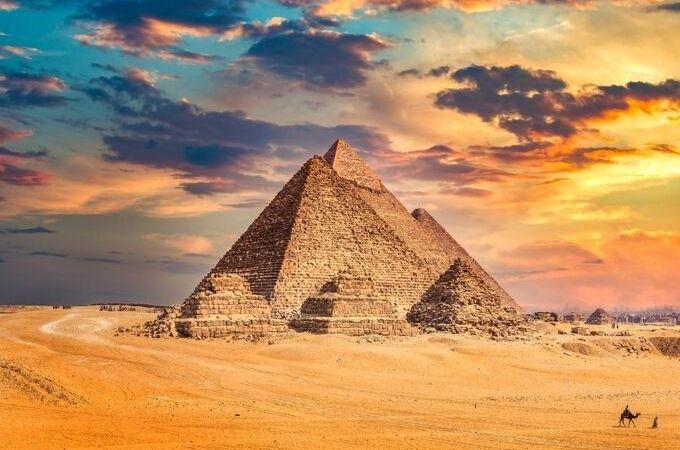
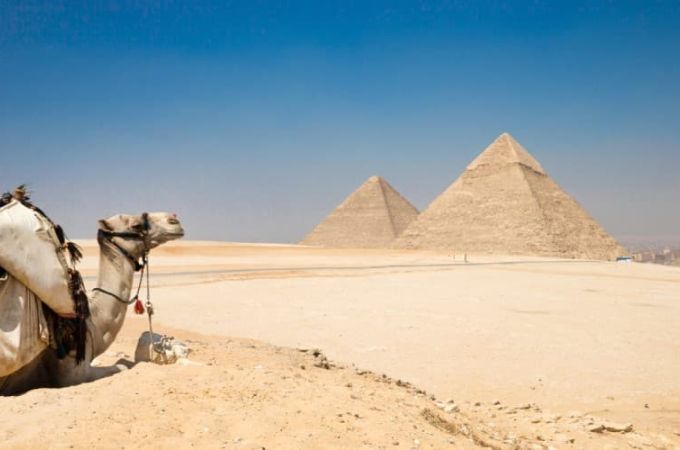
An hour standing in an exposed area waiting for transport is not the same as an hour walking beside the Great Pyramid. Forty minutes crossing open ground to reach a minor stop is not equal to forty minutes exploring a tomb or listening to an Egyptologist explain why Saqqara changed the history of monumental architecture.
In cooler months, those differences may barely matter. During July, they do.
Cairo is firmly inside its hot, dry summer pattern, with daytime highs commonly in the mid-30s°C and occasionally higher. Rain is exceptionally rare, sunshine is persistent, and exposed archaeological landscapes can feel considerably more demanding than shaded or air-conditioned environments.
Yet reducing July to “Cairo is hot” provides almost no useful travel information.
The real question is where you want to spend your physical energy.
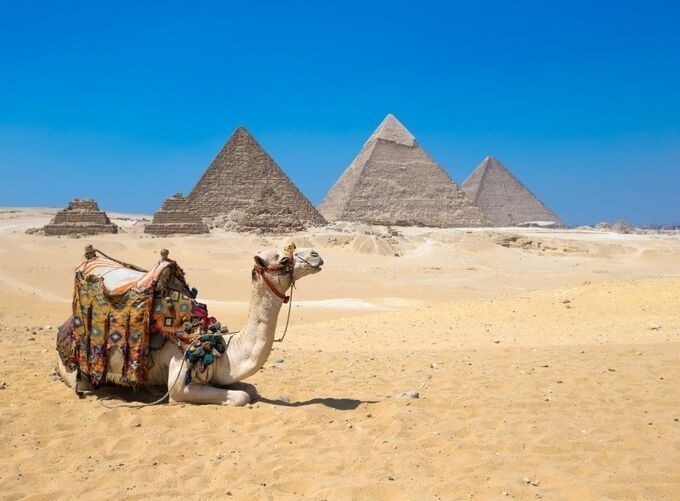
July does not necessarily require removing the Pyramids, Saqqara or Cairo's historic neighborhoods from an itinerary. It requires protecting the experiences that brought you to Egypt from the unnecessary exposure surrounding them.
Give the Best Hours to the Reason You Came
If the Pyramids are the experience you have imagined for years, they should not receive whatever energy remains after several secondary stops.
July reverses that logic.
Identify the day's non-negotiable experience and give it priority. Everything else should be arranged around it.
For many first-time visitors, that means Giza. For archaeology enthusiasts, Saqqara may deserve equal or greater attention. Someone primarily interested in Islamic architecture may instead protect the hours allocated to the Citadel and historic Cairo.
There is no universal attraction hierarchy.
There should, however, be an energy hierarchy.
Travelers beginning an Egypt pharaohs and Nile journey have another reason to think this way. Cairo may be the opening stage of a much longer historical itinerary, and exhausting yourself while collecting secondary attractions can reduce your enjoyment of the major sites still ahead.
July Has High-Value and Low-Value Heat
Not all time spent outside contributes equally to the trip.
Walking around the Giza Plateau is exposure with a purpose. Waiting unnecessarily beside a vehicle is not. Exploring an archaeological site is valuable; adding a distant minor stop simply because there are thirty unused minutes on the itinerary may not be.
This gives July planning a useful filter.
Is the Exposure Worth It?
| Situation | Travel Value | July Approach |
|---|---|---|
| Exploring Giza | Very high | Protect the experience |
| Detailed Saqqara visit | Very high | Give it dedicated energy |
| Walking between historic monuments | High | Use shade and interiors naturally |
| Unnecessary outdoor waiting | None | Eliminate where possible |
| Long exposed photo stop | Personal | Decide whether the view matters |
| Adding a minor site late in the day | Variable | Ask whether it improves the trip |
This is not an argument for seeing less of Cairo. It is an argument for spending less energy on parts of the day that contribute little.
The Vehicle Becomes Part of July Logistics
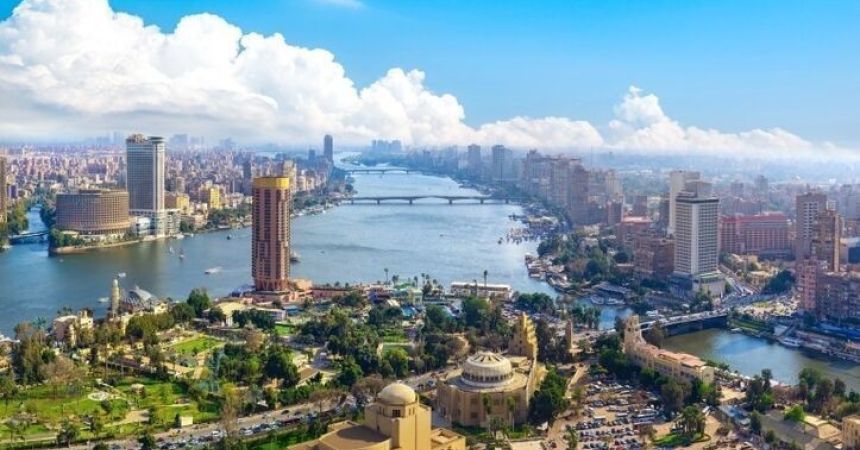
Transportation matters throughout Cairo because the city is enormous. In July, the quality and coordination of that transportation become even more relevant.
An air-conditioned vehicle does more than move you between attractions. It provides a controlled interval between periods outdoors.
That does not mean repeatedly retreating to the vehicle whenever the temperature rises. It means avoiding badly coordinated transitions that leave travelers waiting unnecessarily in exposed parking areas or walking farther than needed before the actual sightseeing begins.
Small operational details become disproportionately valuable.
Knowing where the driver will meet you, keeping departures coordinated and avoiding unnecessary delays can preserve more energy than removing an attraction from the itinerary.
Good summer planning is often invisible.
You notice it because the day flows well.
Archaeology Should Not Become a Race
One response to July heat is to accelerate everything.
Walk faster. Take the photograph. Listen to a shortened explanation. Return to the vehicle.
That may reduce exposure, but it can also remove the reason for visiting.
A better solution is to reduce low-priority components around the important site rather than rushing the site itself.
If you have allocated meaningful time to Giza, use it meaningfully. If Saqqara fascinates you, allow the visit to breathe. The adjustment can happen later by shortening a less important stop or keeping the afternoon deliberately lighter.
This is particularly relevant on a Cairo pyramids and temples tour, where archaeological depth should not be sacrificed simply to maintain an unrealistic attraction count.
Indoor Sightseeing Is Not a “Backup Plan” in July
Museums are sometimes described as alternatives for bad weather. That framing makes little sense in Cairo's summer.
A museum can be an integral part of a July itinerary rather than somewhere you retreat when outdoor conditions become difficult.
The Grand Egyptian Museum, for example, deserves attention because of its collection and interpretation of Egyptian history, not because it happens to provide a controlled environment. The weather advantage is secondary but useful.
This distinction matters.
If you treat indoor attractions merely as cooling stops, you risk rushing through collections that deserve genuine time. Instead, build them into the intellectual structure of the day: archaeology outdoors, objects and interpretation indoors.
July makes that pairing particularly effective.
The Middle of the Day Needs a Purpose
April introduced the value of organizing outdoor hours. May focused on recovery spaces. June dealt with the temptation created by long daylight.
July requires a stronger distinction.
When the middle of the day arrives, ask what you are doing and why.
If you are inside a museum you genuinely wanted to visit, excellent. If you are having lunch, the timing is useful. If you are traveling between regions of Cairo in an air-conditioned vehicle, the transfer is serving a purpose.
But if you are crossing an exposed area merely because the itinerary was assembled without considering the season, that time has become unnecessarily expensive in physical terms.
July planning is not about declaring several hours “forbidden.”
It is about making those hours earn their place.
A Summer Day Can Have Two Centres
Instead of building one continuous sightseeing chain, July can work well with two meaningful anchors.
The first is the primary historical experience, usually earlier in the touring day. The second is an indoor, shaded or otherwise less exposed attraction that deserves attention independently.
Everything between them—transport, lunch and a genuine pause—connects rather than competes with those two experiences.
This creates a much cleaner itinerary than trying to fit six attractions of equal apparent importance into the same day.
Travelers following an Ancient Egypt discovery itinerary can use this approach beyond a single Cairo day: choose what deserves the strongest attention at each stage of the journey and stop treating every available attraction as mandatory.
Don't Let July Become the Entire Story of Cairo
There is another danger in summer weather advice: the temperature begins dominating every paragraph until the destination itself disappears.
Cairo is still Cairo in July.
The Great Pyramid is still the last surviving wonder of the ancient world. Saqqara still preserves an extraordinary record of Egyptian architectural development. Historic Cairo still contains centuries of religious, architectural and urban history. Museums still hold objects that cannot be understood properly from photographs online.
Weather changes how you organize access to those experiences.
It should not replace them.
That is the boundary of this July article. The objective is not to persuade travelers to fear Cairo's summer, nor to pretend the heat is irrelevant. It is to make the physical demands of July proportionate to the historical value of what you are seeing.
July's Rule: Don't Waste the Difficult Hours
The simplest way to evaluate a July itinerary is to look for wasted exposure.
Not meaningful archaeological exploration. Not a historic walk you genuinely want to make.
Waste.
Long waits. Poorly coordinated pickups. Minor stops added only to increase the attraction count. Outdoor periods that could occur naturally at another point in the day. A rushed lunch followed immediately by another exposed visit when nothing requires that sequence.
Remove those, and the major sights have more room.
That is July's exclusive place within the Cairo weather cluster:
When summer heat reaches a serious level, the goal is not simply to reduce outdoor time. It is to make the outdoor time you keep worth the energy it costs.

A travel professional specializing in tailor-made travel planning, guest experience management, and multi-destination tourism operations.
With over 23 years of experience in the travel industry, he designs and manages private and cultural tours for international travelers across Türkiye, Greece, Egypt, Jordan, Morocco, and other destinations.
He has strong expertise in both online and face-to-face guest communication, sales processes, and end-to-end travel operations.
Working closely with hotels, travel agencies, and local partners, he ensures smooth coordination and high-quality travel experiences at every stage of the journey.
His focus is on delivering personalized, reliable, and seamless travel experiences for international guests worldwide.