Egypt Has More Than One Kind of Beach Holiday
Updated: August 2026
Choosing a beach destination in Egypt should be easy.
There is the Red Sea, plenty of sunshine, resort hotels, diving, snorkeling and a long coastline. Pick somewhere attractive, reserve a hotel and add a few slower days to the trip.
Except that Egypt's coastal destinations do not behave in quite the same way.
A traveler who would be perfectly happy in El Gouna may find Marsa Alam unnecessarily remote. Someone attracted to Dahab's independent atmosphere may feel constrained inside a large resort environment, while a family looking for uncomplicated facilities could have exactly the opposite reaction. Sharm El Sheikh can be an excellent choice in one route and an awkward detour in another, even when the hotel and beach are superb.
Then there is Alexandria and Egypt's Mediterranean coast, which complicate the question further because being beside the sea does not necessarily mean having the kind of beach holiday associated with the Red Sea.
So the useful question is not:
Where are Egypt's best beaches?
It is:
What do I actually want the coast to do for my trip?
Once that is clear, choosing between Egypt's coastal regions becomes considerably easier.
Before Looking at Destinations, Define Your Version of “Beach Holiday”
Two people can say they want three days at the beach and imagine entirely different holidays.
One pictures waking up in a resort, walking directly to the water, having everything conveniently available and making almost no decisions until dinner.
Another wants to snorkel or dive and considers the quality of the marine environment more important than resort facilities.
A third wants a coastal town where they can walk outside the hotel, find cafés and restaurants and feel that they are staying somewhere rather than primarily staying at a resort.
None is more authentic than another.
The problem begins when travelers choose the destination before recognizing which experience they want.
Egypt offers enough coastal variety that the name of the town should come after the travel style, not before it.
The Red Sea and Mediterranean Should Not Be Compared as Though They Offer the Same Holiday
Egypt has both Red Sea and Mediterranean coastlines, but placing them together under “Egypt beaches” can be misleading.
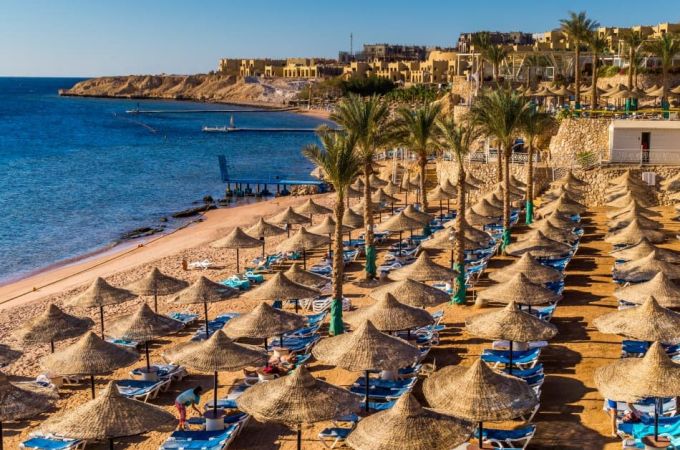
The Red Sea is strongly associated with resort travel, clear water, reefs, snorkeling and diving. Several destinations have developed specifically around international coastal tourism, so staying beside the sea can become the principal purpose of that section of the trip.
Alexandria has an entirely different identity.
It is first and foremost a major Mediterranean city with history, urban life and a powerful relationship with the sea. Travelers can certainly enjoy the coastline, but choosing Alexandria because you want “the Egyptian version of a Red Sea resort” misunderstands what the city offers.
The Mediterranean North Coast creates yet another context, with a stronger seasonal holiday culture.
Before comparing individual places, therefore, make the larger decision:
Do you want to experience coastal Egypt, or do you specifically want a Red Sea holiday?
Those are not always the same thing.
Hurghada Is the Choice That Often Requires the Least Explaining
Hurghada's strength is not that every traveler will consider it Egypt's most beautiful or interesting coastal destination.
Its strength is usability.
There is extensive resort infrastructure, a broad range of accommodation and established tourism services. For travelers combining the coast with Upper Egypt, its location can also make it operationally relevant in ways that are easy to overlook when comparing destinations solely through photographs.
That matters.
A beach section at the end of a culturally intensive trip does not always need another layer of logistical adventure. Sometimes its job is to become easy.
This makes Hurghada particularly useful for travelers who value straightforward resort time, families who want established facilities, and people for whom snorkeling or boat activities are attractive without being the sole reason for visiting the Red Sea.
The dedicated Hurghada content can explain the destination itself. At the selection stage, the important point is simpler: Hurghada often wins through convenience and range rather than exclusivity.
El Gouna Makes Sense When the Environment Around the Hotel Matters
Travelers sometimes compare El Gouna and Hurghada as though they were simply neighboring versions of the same resort experience.
That misses an important distinction.
El Gouna's planned environment creates a different sense of place. The appeal is not merely access to water or a particular hotel; the broader resort-town setting matters.
That can suit couples and travelers who want coastal downtime while still valuing restaurants, walkability in selected areas, marinas and a more deliberately organized environment outside the property.
The same characteristics may be less important to someone whose ideal coastal stay revolves almost entirely around the resort and sea.
This illustrates why beach selection based only on the quality of sand or water is incomplete.
Sometimes what happens after you leave the beach is the variable that separates two otherwise plausible destinations.
Dahab Appeals to Travelers Who Want the Red Sea Without Making the Resort the Main Character
Dahab changes the tone.
Its appeal is often less about polished resort infrastructure and more about a comparatively relaxed, independent coastal atmosphere. Diving and snorkeling are important parts of its identity, but the character of the town itself also influences why travelers choose it.
That distinction matters if your idea of coastal time includes being able to move through a smaller destination rather than spending most of the stay inside one property.
It can also make Dahab attractive to travelers who prefer a less formal rhythm.
Yet “relaxed” should not automatically be translated as “better.”
A family prioritizing extensive resort facilities may prefer another destination. A traveler finishing an already complicated Egypt route may decide that reaching Dahab adds a transition they do not need.
The right coast is not determined by personality alone. Personality and route have to agree.
Sharm El Sheikh Is Easy to Love but Needs to Make Geographical Sense
Sharm El Sheikh has a strong tourism identity, extensive resort infrastructure and access to the marine environment that draws travelers to the Red Sea.
For someone planning a resort-centered holiday or combining coastal time with the Sinai Peninsula, it can be an obvious candidate.
For a traveler whose principal Egypt journey runs through Cairo, Luxor and Aswan, however, the decision requires another question:
Does Sharm fit the route well enough to justify choosing it over a mainland Red Sea alternative?
This is where destination comparisons often become unrealistic.
A hotel may look better. A particular reef may sound more appealing. The resort selection may seem ideal.
Yet every improvement needs to be weighed against the transition required to obtain it.
The best coastal destination on paper can become the weaker choice once the entire journey is considered door to door.
Marsa Alam Changes the Equation When the Marine Experience Comes First
Marsa Alam becomes more compelling when access to the Red Sea's marine environment is not simply an attractive extra but one of the reasons for taking the trip.
This changes how inconvenience is evaluated.
A traveler primarily looking for three effortless resort days may question whether additional transfer time is worthwhile. Someone choosing the coast specifically for diving, snorkeling or a more marine-focused stay may consider exactly the same journey completely reasonable.
This difference is important because “remote” is not automatically negative.
Distance becomes a problem when it does not buy you anything you personally value.
For the right traveler, moving farther from the most convenient tourism centers can be an intentional trade rather than a logistical weakness.
That is why Marsa Alam should not be presented as either “better than Hurghada” or “harder to reach.”
It is a different proposition.
Choose What You Are Willing to Trade, Not Which Destination Wins
A useful coastal comparison should expose trade-offs rather than manufacture a winner.
| Your Priority | What You May Gain | What You May Need to Accept |
|---|---|---|
| Maximum resort convenience | Easier, established holiday structure | Less emphasis on independence |
| Strong marine focus | Greater attention to reefs and underwater experiences | Potentially more transfer effort |
| Independent coastal atmosphere | More life beyond the resort | Fewer large-resort conveniences |
| Planned upscale environment | Organized surroundings and broader lifestyle appeal | A more curated resort-town feel |
| Sinai resort stay | Strong resort and marine combination | Geography may complicate a mainland route |
| Mediterranean experience | Urban/coastal culture and a different Egypt | Not a substitute for a classic Red Sea stay |
This is a more useful comparison than assigning beaches scores out of ten.
Every coastal choice gives something and asks for something in return.
The goal is to choose the trade you barely notice because what you gain matters more.
The Most Beautiful Coast Can Still Be the Wrong Addition to Your Route
Travel time has a strange habit of disappearing from itinerary planning.
A traveler sees three hotel nights and imagines three days beside the sea.
But a hotel night is not a usable day.
Leaving Luxor, reaching the coast, checking in and settling down consumes time. So does departing the coast for Cairo or an international flight. The exact impact varies according to destination and transport arrangement, but the principle is universal.
For this reason, a slightly less preferred coastal destination can produce a better holiday if it preserves significantly more usable time.
This is particularly important for travelers looking at Red Sea Trips as one component of a broader Egypt journey rather than as a standalone beach vacation.
Do not compare only what happens after arrival.
Compare what it costs to arrive.
Divers and Non-Divers Should Almost Be Making Different Decisions
The phrase “Red Sea holiday” conceals one of the biggest differences between travelers.
For a diver, underwater access may dominate destination selection. Reef quality, diving conditions and the character of available dive experiences can outweigh nightlife, shopping or even hotel style.
For a non-diver, those priorities may be almost irrelevant.
A beautiful reef still adds value for snorkeling, but the wider resort environment, beach access, swimming, food and ease of spending unscheduled time can become more important.
This is why recommendations such as “Marsa Alam is better” or “Sharm is best” are usually incomplete.
Better for what?
Until that question has been answered, the recommendation has little planning value.
Families Should Compare Friction, Not Just Family Facilities
Family-friendly resort facilities matter, but they are only half of the decision.
The other half is what the family has to do to reach them.
Imagine two hotels. One has marginally better facilities but requires a more complicated transition after several active sightseeing days. The other is easier to reach and still provides everything the family genuinely needs.
The first property may win the hotel comparison.
The second may win the holiday.
Parents should therefore consider transfer length, arrival time, meal convenience, swimming access and how much movement is required once checked in.
A coastal section is often added to a family Egypt trip specifically to reduce intensity. Choosing it in a way that creates another exhausting travel day can defeat part of the purpose.
Couples Need to Decide Whether They Want Privacy or Somewhere to Go
“Romantic Red Sea stay” can mean two opposite things.
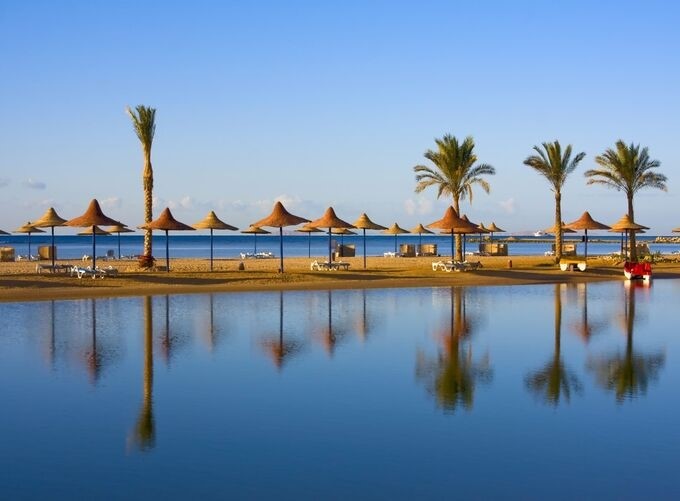
Some couples want a high-quality property where the appeal lies in privacy, the sea and spending very little time elsewhere.
Others become restless after one full resort day and want a marina, restaurants, cafés or some independent evening life.
That difference should influence destination choice before hotel choice.
El Gouna may appeal strongly to the second type because the wider environment contributes to the stay. A carefully selected resort elsewhere may suit the first type much better.
Neither couple needs the universally “best” beach.
They need a destination whose evenings make as much sense as its mornings.
If You Only Want to Recover, Do Not Overbuy the Destination
After Cairo, Luxor, archaeological visits, early departures and perhaps a Nile cruise, some travelers genuinely want very little from the coast.
They want comfortable accommodation, water, good meals and permission to stop planning.
In that situation, selecting a more distant destination because it has a superior reputation for diving or a more distinctive atmosphere may add benefits the traveler will barely use.
This is one of the most common planning mismatches.
People optimize the destination according to everything it can offer rather than what they intend to do there.
If the purpose is recovery, convenience deserves a higher score.
The coastal section does not need to prove itself by being busy.
Alexandria Belongs in the Conversation for a Completely Different Reason
Alexandria should not be positioned as the Mediterranean answer to Hurghada.
Its coastal identity is intertwined with its urban and historical character. The sea shapes the atmosphere, views and experience of the city, but most international travelers choosing Alexandria are not making the same decision as someone booking several Red Sea resort nights.
This distinction protects both experiences.
A traveler wanting history, urban exploration and Mediterranean character may find Alexandria extremely rewarding.
A traveler wanting several days of swimming, snorkeling and resort relaxation should not assume that “coastal destination” makes the experiences interchangeable.
Egypt's coastline is diverse precisely because not every coastal destination is a beach resort.
Sometimes the Correct Number of Coastal Destinations Is One
Once travelers begin researching the Red Sea, another temptation appears.
Why choose between Hurghada and Sharm? Why not include Dahab as well? Perhaps El Gouna is close enough to add.
This can turn a relaxing section into another multi-stop itinerary.
Unless the coast itself is the principal purpose of the journey, there is rarely a compelling reason to collect several beach destinations simply because they offer somewhat different experiences.
Changing hotels and moving between coastal bases costs the same kind of energy it costs elsewhere.
For many broader Egypt Discovery Tours, choosing one coastal base that matches the traveler's priorities creates more value than sampling several.
Variety is useful until it starts dismantling relaxation.
The Hotel Should Be Chosen After the Coastal Personality
This reverses the way many people shop for beach holidays.
A spectacular resort appears online, the traveler falls in love with it, and the entire route is subsequently redesigned around reaching that property.
Sometimes the hotel is special enough to justify this.
Usually, however, the more reliable order is:
travel purpose → coastal region → destination → hotel.
That sequence prevents a property from solving the wrong problem beautifully.
If you want independent evenings, choose a destination that supports them before comparing rooms. If marine activities dominate, establish the right coastal area first. If the objective is uncomplicated rest after Upper Egypt, route efficiency deserves early consideration.
Hotels are easier to compare once you know what job they need to perform.
The Right Egyptian Coast Is the One That Changes Your Trip in the Right Way
Egypt does not have one beach destination that should automatically be attached to every cultural journey.
Nor does it have a meaningful league table in which Hurghada, El Gouna, Dahab, Sharm El Sheikh and Marsa Alam can be ranked from best to worst.
They solve different travel problems.
Hurghada can make the Red Sea operationally straightforward. El Gouna can appeal when the wider environment matters as much as the resort. Dahab offers a different, more independent rhythm. Sharm El Sheikh combines major resort infrastructure with Sinai geography. Marsa Alam becomes more compelling as marine priorities increase. Alexandria belongs to an entirely different Mediterranean conversation.
For travelers considering Egypt Coast Tours, the strongest decision therefore happens before comparing hotels or beaches.
Decide what you want the coast to change.
Do you need genuine rest after intensive sightseeing? Are you traveling for the underwater environment? Do you want somewhere to walk out in the evening? Does your family need easy infrastructure? Are you willing to spend additional travel time for a more specialized coastal experience?
Once those answers are clear, the list becomes shorter very quickly.
And that is the point.
The best Egyptian beach destination is not the one everybody agrees is best.
It is the one whose compromises matter least to you.
Frequently Asked Questions About Choosing Egypt's Coast
1. Is the Red Sea automatically better than Egypt's Mediterranean coast for a beach holiday?
Not automatically, but they satisfy different expectations. Travelers seeking resort infrastructure, snorkeling, diving and clear-water marine experiences generally look toward the Red Sea, while Mediterranean destinations can make more sense when urban character or seasonal coastal culture is part of the appeal.
2. Should a non-diver choose Hurghada instead of Marsa Alam?
Often, but not necessarily. Hurghada's broad tourism infrastructure can be convenient for travelers without specialized marine priorities, whereas Marsa Alam may still appeal to non-divers who value snorkeling, quieter surroundings or a more marine-centered environment enough to accept additional logistics.
3. Does Dahab work for travelers who normally prefer resorts?
It can, particularly when they are interested in a more independent coastal atmosphere, but travelers who value extensive resort facilities above everything else may prefer another Red Sea base. The decision depends on how much the environment outside the hotel matters.
4. Why would I choose El Gouna when Hurghada is nearby?
Because proximity does not make the experiences identical. El Gouna's planned resort-town environment, marinas, restaurants and overall atmosphere can matter to travelers who want the destination around their hotel to contribute meaningfully to their coastal stay.
5. Is Sharm El Sheikh worth adding to a Cairo and Upper Egypt trip?
It can be, especially when Sharm itself strongly matches your resort or marine priorities. However, its Sinai location should be considered within the complete transportation route rather than assuming that every Red Sea destination integrates equally easily with mainland Egypt.
6. Should snorkeling quality determine my coastal destination?
Only when snorkeling is important enough to influence the holiday. Travelers primarily seeking relaxation, family facilities or resort convenience may reasonably prioritize other factors, while strong marine access can become decisive for someone who expects to spend substantial time in the water.
7. Can Alexandria replace a Red Sea stay?
Usually not when the objective is a conventional Red Sea resort experience. Alexandria offers a Mediterranean urban environment where history and city life are central to the visit, making it a different kind of coastal experience rather than a direct substitute.
8. Is it worth combining two Red Sea destinations on one Egypt trip?
Sometimes, particularly for travelers whose main interest is the coast or diving. On a broader cultural journey, however, changing coastal bases can introduce unnecessary movement, and one carefully chosen destination will often provide a more satisfying period of genuine downtime.
9. Which matters more for families: the destination or the resort?
Both matter, but families should also consider the journey between them. Excellent children's facilities lose some advantage if reaching the property creates an unnecessarily demanding travel day, so transfer practicality should be evaluated alongside pools, beaches, meals and room arrangements.
10. Does a quieter Red Sea destination necessarily provide a better beach experience?
No. Quietness can be attractive, but it may come with fewer services or additional transportation. Some travelers value that trade-off enormously, while others prefer established resort infrastructure. The better choice depends on what you expect to do once the sightseeing stops.
11. Should I choose the coastal destination before booking my Egypt flights?
Ideally, sketch the wider route first and test how each coastal option connects with it before finalizing flights. International and domestic flight structure can materially change which destination is convenient, particularly when the coast sits near the end of the journey.
12. What is the simplest way to choose between Egypt's coastal destinations?
Identify the one feature you would be most disappointed to lose: effortless resort convenience, marine life, independent atmosphere, evening options, family infrastructure or route efficiency. Use that priority to eliminate destinations rather than trying to find one place that wins every comparison.

A travel professional specializing in tailor-made travel planning, guest experience management, and multi-destination tourism operations.
With over 23 years of experience in the travel industry, he designs and manages private and cultural tours for international travelers across Türkiye, Greece, Egypt, Jordan, Morocco, and other destinations.
He has strong expertise in both online and face-to-face guest communication, sales processes, and end-to-end travel operations.
Working closely with hotels, travel agencies, and local partners, he ensures smooth coordination and high-quality travel experiences at every stage of the journey.
His focus is on delivering personalized, reliable, and seamless travel experiences for international guests worldwide.