Egypt Weather in November: Ideal for Nile & Desert Trips
Last Updated: August 8, 2026
November is when Egypt begins rewarding patience.
Not patience with the weather. Quite the opposite.
After months in which heat influenced how long you might want to remain outdoors, November generally gives cultural travellers more freedom. Cairo becomes increasingly inviting for full sightseeing days, Luxor can hold your attention for longer without every archaeological visit needing to be engineered around summer conditions, and the Nile becomes a journey worth watching as carefully as the monuments at either end.
That creates an interesting planning problem.
When conditions become more comfortable, the instinct is to add more.
Another temple. Another city. Another excursion. Perhaps Alexandria can fit between Cairo and the domestic flight. Maybe Abu Simbel should be added because you're already going south.
November offers enough flexibility to make those ideas seem reasonable.
Its real opportunity, however, lies in the opposite direction.
See less. Understand more.
November Is Made for the Places That Need Time
Some attractions work perfectly well as short visits.
Egypt's greatest archaeological landscapes generally do not.
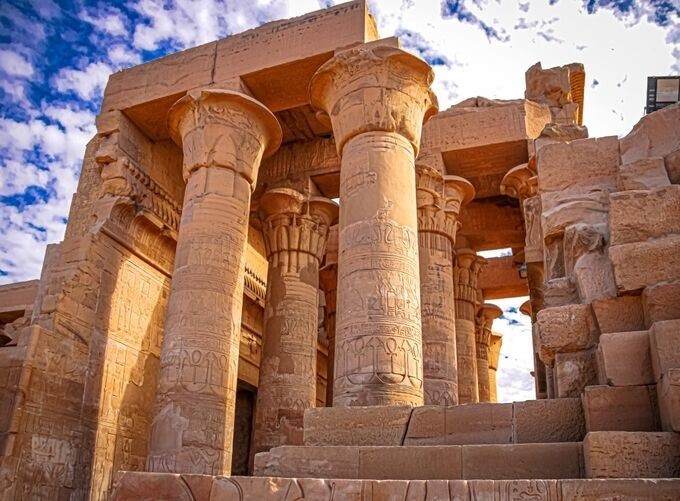
Karnak is enormous. The West Bank of Luxor contains far more than a single famous valley. Historic Cairo makes considerably more sense when you have time to notice how its mosques, streets, markets and later layers connect rather than moving directly from one entrance to another.
November gives these places something summer cannot always offer as generously:
usable outdoor time.
| Destination | Better November Approach |
|---|---|
| Giza | Explore beyond the essential photograph |
| Historic Cairo | Allow time for walking and context |
| Luxor West Bank | Separate major sites rather than rushing |
| Karnak | Stay long enough to understand its scale |
| Aswan | Combine heritage with slower Nile time |
| Nile cruise | Treat sailing as part of the experience |
| Red Sea | Use as contrast, not compulsory recovery |
That last distinction is important.
November does not need the Red Sea to rescue the itinerary from the heat. If you include the coast, it can be because you genuinely want the coast.
Cairo Deserves More Than Two Nights
Many first-time itineraries treat Cairo like an entrance hall.
Arrive.
See the pyramids.
Visit a museum.
Fly south.
It works, but it leaves a great deal of Cairo untouched.
November is a good month to reconsider that pattern because walking and longer outdoor visits generally become easier. Giza still deserves its own attention, but the capital's story does not end with the pharaohs.
Islamic Cairo, Coptic heritage, historic streets, mosques and the modern city create completely different layers. Spend enough time here and Cairo stops feeling like a staging point for ancient Egypt.
It becomes one of the reasons for the journey.
Travellers wanting a more substantial introduction can explore Cairo cultural tours, allowing the capital to occupy several days rather than whatever remains before the flight to Luxor.
Luxor Is Where November Earns Its Reputation
If your primary reason for travelling to Egypt is archaeology, November makes a persuasive case for spending longer in Luxor.
Not busier.
Longer.
There is a difference.
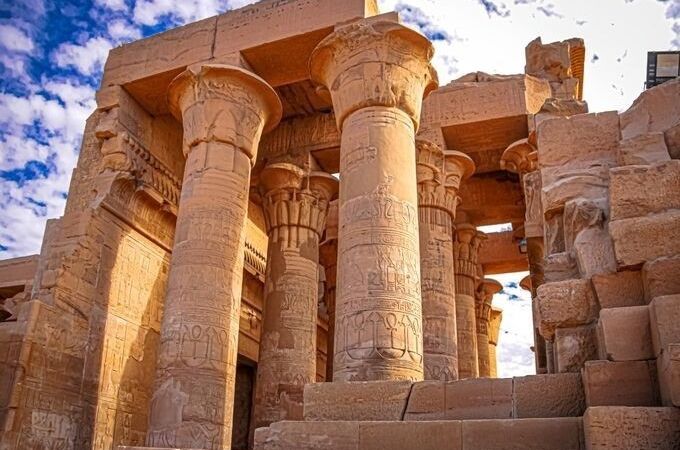
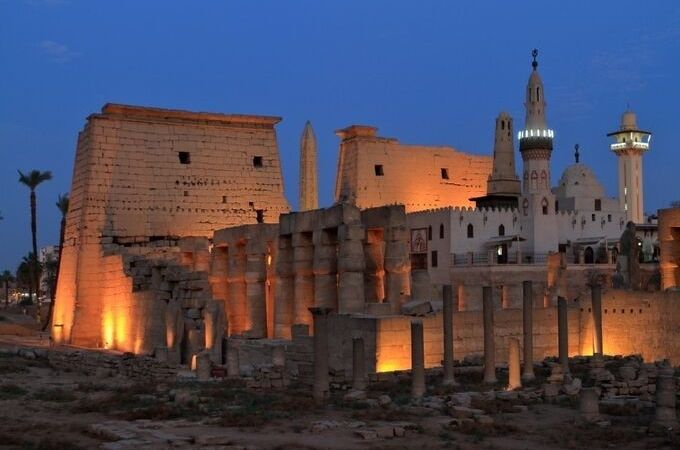
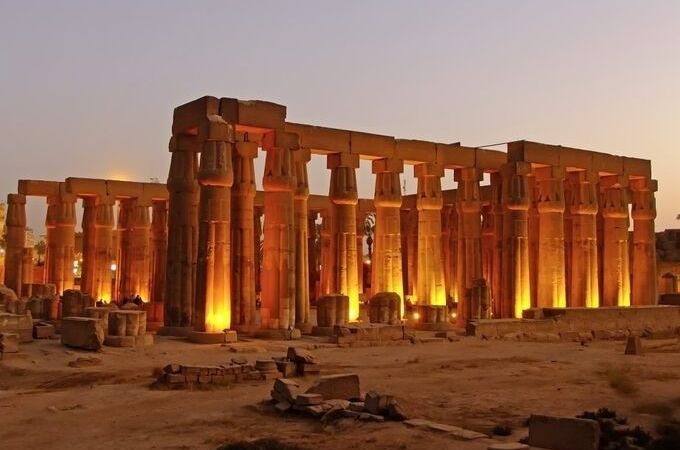
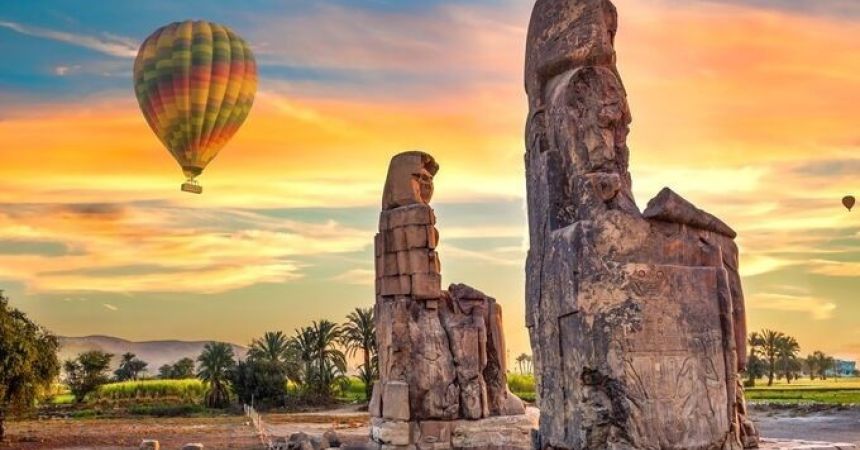
Instead of trying to complete the East and West Banks as efficiently as possible, separate them. Give the Valley of the Kings a proper morning. Let Hatshepsut's temple occupy its own visual space rather than becoming another stop between tombs. Visit Karnak when you still have enough attention left to appreciate its scale.
Then stop.
Have lunch.
Watch the Nile.
The ability to continue sightseeing does not create an obligation to do so.
The Guide Matters More When You Slow Down
Fast itineraries reward facts.
Slower ones reward explanation.
Once you stop racing between monuments, a good guide has room to connect what you're seeing: why a temple was expanded repeatedly, how religious ideas changed, why royal burial practices evolved and how geography influenced settlement along the Nile.
Without context, ancient Egypt can become a spectacular collection of stones.
With it, patterns begin appearing.
This is where November can create a richer trip than simply using the pleasant conditions to increase your daily attraction count.
More time creates more questions.
Good questions usually lead to better travel memories than another twenty photographs.
The Nile Is Not an Intermission
A cruise between Luxor and Aswan is often described according to the sites visited along the way.
That makes sense when comparing itineraries, but it misses half the experience.
November can make the hours between excursions especially rewarding. The riverbanks are narrow strips of cultivation, palms and villages, with desert often appearing surprisingly close behind them. Fishing boats move past. Agricultural scenes unfold slowly enough to watch rather than simply glimpse from a road.
Nothing dramatic may happen for an hour.
That is part of the appeal.
The Nile is not empty space between temples.
It is the geographical reason the temples are there.
November Encourages Historical Continuity
Egypt tourism understandably begins with ancient Egypt because the monuments are extraordinary.
But a country with thousands of years of recorded history did not stop developing after the pharaohs.
November's more comfortable touring conditions make it easier to broaden the historical lens. Cairo can connect pharaonic collections with Coptic and Islamic heritage. Alexandria can introduce Mediterranean history. Even the contrast between modern cities and archaeological landscapes becomes more interesting when the itinerary leaves enough time to notice it.
This creates a journey with continuity rather than a sequence of disconnected eras.
Ancient Egypt remains the headline.
It simply isn't the entire newspaper.
Comfortable Weather Can Still Produce Travel Fatigue
This is worth remembering.
You can be completely comfortable with the temperature and still become tired of sightseeing.
Museum fatigue exists.
Temple fatigue definitely exists.
After several days, another carved wall may receive considerably less enthusiasm than it objectively deserves.
November's advantage is not that you can tour from breakfast until dinner.
It is that you don't need to organise the entire day around avoiding difficult conditions.
Use that freedom intelligently.
A three-hour visit followed by a long lunch may be more rewarding than six hours of continuous touring. A quiet afternoon on the Nile may preserve your curiosity for tomorrow's temple.
Comfortable weather gives you capacity.
You still decide how to spend it.
November's Best Itineraries Have More Depth, Not More Pins
Open a map of Egypt and it is easy to start collecting destinations.
November makes the temptation stronger because so many of them become attractive at the same time.
Resist it.
If you have ten days, you do not need seven hotel keys.
If ancient history is your priority, let Luxor have the nights it deserves. If Cairo fascinates you, don't leave after the pyramids. If the Nile is central to your idea of Egypt, allow the cruise to be more than transport.
November's great gift is not the ability to hurry more comfortably.
It is the opportunity to stop hurrying.
Divide Your Time by Depth, Not Distance
Egypt looks deceptively manageable on an itinerary.
Cairo here. Luxor farther south. Aswan below that. A domestic flight connects the larger gaps, a cruise links part of the Nile Valley, and suddenly it appears perfectly reasonable to cover several thousand years of history in a week.
Transport can move you quickly.
Understanding cannot.
November is one of the better months to recognise the difference because comfortable touring conditions remove some of the pressure to organise every day around the weather. Instead, you can decide how deeply you want to explore each period and place.
Give Cairo Time to Change Centuries
Cairo becomes much more interesting when the itinerary stops describing it only as “Pyramids and Museum.”
Start with ancient Egypt at Giza, certainly. Then allow the historical timeline to move forward.
Coptic Cairo introduces another layer. Islamic architecture changes the visual language completely, while the streets surrounding major monuments remind you that this is not an archaeological park but a living city.
That contrast needs time.
Three well-designed Cairo days can therefore feel substantially richer than two frantic ones containing nearly the same number of headline attractions.
The difference is not what you saw.
It is whether the city had time to connect.
Let Luxor Become More Than a Two-Day Archaeology Sprint
Luxor presents the opposite problem.
There is so much ancient history concentrated around the city that visitors often try to maximise efficiency.
West Bank one morning. Karnak later. Luxor Temple somewhere around sunset. Another excursion tomorrow.
Done.
Except Luxor isn't really a place you “finish.”
November gives you the conditions to separate its major archaeological landscapes and allow them to breathe. One morning might focus on royal burial sites; another can belong to temples. A later afternoon beside the Nile provides a completely different visual rhythm before you return to archaeology the following day.
Travellers who want this slower approach can consider Luxor history journeys, giving the region enough time for individual sites to stop merging into one enormous memory of sandstone.
Aswan Should Change the Pace
By the time many travellers reach Aswan, they have already accumulated a considerable amount of information.
That is exactly why Aswan should not become Luxor with a different hotel.
The landscape changes. The Nile widens and breaks around islands and granite. Nubian heritage adds another cultural dimension, while the atmosphere often encourages a slower pace.
Use it.
A boat journey can be as worthwhile as another formal visit. A quiet afternoon overlooking the river is not a scheduling failure after several intensive archaeological days.
November makes that kind of time particularly valuable because you can enjoy being outside without needing every outdoor hour to contain an attraction.
Abu Simbel Should Be a Decision, Not a Reflex
Abu Simbel is extraordinary, but it also requires additional travel.
For many first-time visitors, the temples absolutely justify that effort. Their scale, remote location and modern relocation story make them one of Egypt's most remarkable experiences.
For others, adding the excursion to an already dense itinerary may reduce the time available elsewhere.
Ask a simple question:
Would you rather see Abu Simbel, or have another unhurried day in a place already on the route?
There is no universally correct answer.
November simply gives you the freedom to make that decision according to interest rather than weather.
A Deeper Journey Needs Empty Space
Historical depth does not mean filling every hour with more history.
Quite the opposite.
You need intervals.
Without them, temples begin blending together, museum galleries become increasingly difficult to absorb, and even spectacular places can start feeling strangely routine.
A November itinerary might therefore contain fewer scheduled attractions than expected.
That is not wasted potential.
The empty spaces allow the important places to remain distinct.
Egypt has waited thousands of years for you to arrive.
You do not need to understand all of it by Thursday.

A travel professional specializing in tailor-made travel planning, guest experience management, and multi-destination tourism operations.
With over 23 years of experience in the travel industry, he designs and manages private and cultural tours for international travelers across Türkiye, Greece, Egypt, Jordan, Morocco, and other destinations.
He has strong expertise in both online and face-to-face guest communication, sales processes, and end-to-end travel operations.
Working closely with hotels, travel agencies, and local partners, he ensures smooth coordination and high-quality travel experiences at every stage of the journey.
His focus is on delivering personalized, reliable, and seamless travel experiences for international guests worldwide.