
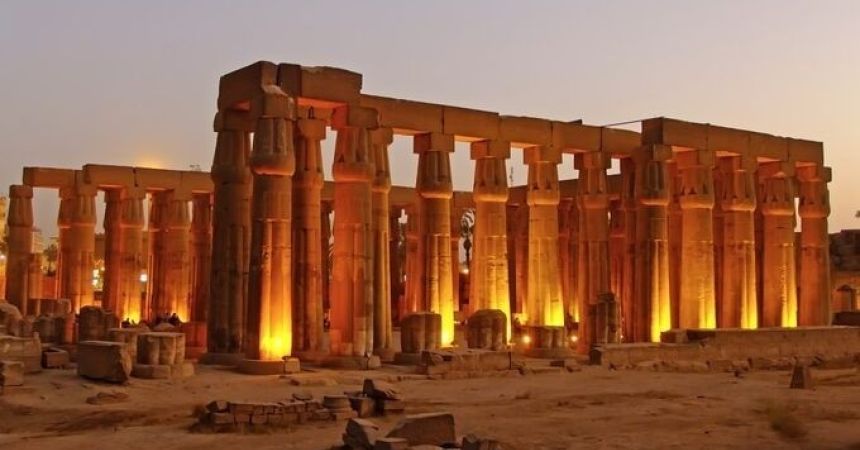
Exploring the Greatest Wonders of Ancient Egypt in 2026 & 2027
Author: Kenan Ungur
Article Date: 02.08.2024
Reading Time: 13 min

Exploring the Greatest Wonders of Ancient Egypt in 2026 & 2027

There are places in the world that impress you the moment you see them, and then there is Egypt. Ancient Egypt does something slightly different. It does not simply show you old stones or museum pieces. It makes you pause, look closer, and wonder how a civilization thousands of years old could still feel so present.

A walk around the Pyramids of Giza, for example, is never just a photo stop. The scale is bigger than expected, the desert light changes every few minutes, and the city of Cairo sits surprisingly close behind you. That contrast between ancient and modern Egypt is part of what makes the country so unforgettable.

The wonders of Ancient Egypt are not limited to one monument. They stretch from Cairo to Luxor, from the banks of the Nile to the desert temples of Abu Simbel. Some are famous across the world, while others reveal their magic slowly, especially when a good guide explains the stories carved into the walls.

This guide explores the most remarkable wonders of Ancient Egypt, how they compare, and why they continue to inspire travelers, historians, artists, and curious minds today.

Why Ancient Egypt Still Captures the Imagination

Ancient Egypt remains fascinating because it feels both mysterious and remarkably organized. The temples, tombs, statues, and pyramids were not built randomly. They were part of a deeply connected world shaped by religion, power, astronomy, art, and the Nile River.

What surprises many visitors is how much detail still survives. You might expect ruins, but in places like Karnak, Luxor Temple, or the Valley of the Kings, you can still see colors, symbols, royal names, and scenes from daily life.

The ancient Egyptians built for eternity. That idea can sound poetic, but when you stand inside a tomb decorated more than 3,000 years ago, it suddenly feels very real.

The Pyramids of Giza: Egypt’s Most Famous Wonder

No monument represents Ancient Egypt more powerfully than the Pyramids of Giza. They are iconic for a reason, but seeing them in person is different from seeing them in photographs.

The Great Pyramid of Khufu is the largest and most famous. Nearby, the pyramids of Khafre and Menkaure complete the unforgettable skyline. Together, they create one of the most recognizable archaeological landscapes on earth.

What makes the pyramids extraordinary is not only their size. It is the precision, planning, and labor behind them. Built during the Old Kingdom, these structures were royal tombs designed to connect the pharaohs with the afterlife.

Many travelers expect the pyramids to be far out in the desert. In reality, Cairo has grown close to the Giza Plateau. This makes the first view even more dramatic: modern traffic behind you, ancient stone giants in front of you.

The Great Sphinx: Guardian of the Plateau

Just below the pyramids stands another symbol of Ancient Egypt: the Great Sphinx. With the body of a lion and the head of a human, it has watched over the Giza Plateau for thousands of years.

The Sphinx feels different from the pyramids. It is lower, quieter, and more mysterious. Its missing nose and weathered face have become part of its identity, but the statue still holds an impressive sense of authority.

A useful way to understand the Sphinx is to see it as a bridge between human intelligence and animal strength. Ancient Egyptian art often carried layered meanings, and the Sphinx remains one of the best examples of that symbolic world.

For many first-time visitors, combining Giza with Saqqara and Memphis offers a deeper understanding of how pyramid building developed. This kind of route is often included in well-designed Cairo ancient history tours, especially for travelers who want more than a quick photo stop.

Saqqara and the Step Pyramid: Where the Story Began

Before the smooth-sided pyramids of Giza, there was Saqqara. This vast necropolis is home to the Step Pyramid of Djoser, often considered one of the earliest major stone monuments in history.

The Step Pyramid looks different from the pyramids at Giza, and that difference is exactly what makes it so important. Its layered design shows an earlier stage in pyramid architecture, when builders were still developing the ideas that would later become famous worldwide.

Saqqara also feels less crowded than Giza. There is more space, more silence, and more room to imagine the landscape as it once was. Walking here gives travelers a clearer sense of how Ancient Egypt evolved over time rather than appearing fully formed overnight.

Giza vs Saqqara: Which Should You Visit?

Travelers with limited time sometimes wonder whether Giza alone is enough. Giza is essential, but Saqqara adds context.

If your schedule allows, visiting all three in one day creates a much stronger story. Giza shows the peak of pyramid building, while Saqqara shows the beginning.

Luxor: The World’s Greatest Open-Air Museum

If Cairo introduces you to Ancient Egypt, Luxor pulls you deeper into it.

Built on the site of ancient Thebes, Luxor is often called the world’s greatest open-air museum. The phrase may sound like a tourism slogan, but after a day here, it feels accurate. Temples, tombs, statues, and sacred landscapes are spread across both sides of the Nile.

The East Bank is home to Karnak Temple and Luxor Temple. The West Bank holds the Valley of the Kings, the Temple of Hatshepsut, and several lesser-known but remarkable tombs and ruins.

What makes Luxor special is the concentration of ancient sites. You do not just visit one monument and leave. You move through an entire ancient capital, where each place connects to another.

Karnak Temple: A Monument Built Over Centuries

Karnak is not a single temple in the simple sense. It is a vast religious complex expanded by many pharaohs over hundreds of years.

The most unforgettable part is the Great Hypostyle Hall. Standing among its enormous columns feels almost unreal. The columns rise above you like a stone forest, and many still carry carved scenes and hieroglyphs.

Unlike the pyramids, Karnak was not built as a tomb. It was a living religious center dedicated mainly to the god Amun. This difference matters because the atmosphere is completely different. Giza feels monumental and silent; Karnak feels ceremonial, layered, and alive with carved stories.

A good guide can transform Karnak from an impressive ruin into a readable ancient book. Without explanation, the walls are beautiful. With explanation, they begin to speak.

Luxor Temple: Where Ancient and Modern Egypt Meet

Luxor Temple has one of the most memorable settings in Egypt. It stands close to the modern city, especially beautiful in the late afternoon and evening when the stone takes on a warm golden color.

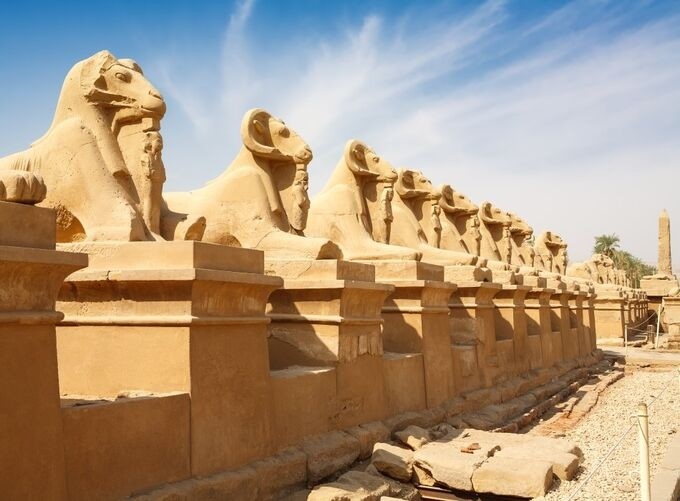
Unlike Karnak, which feels enormous and complex, Luxor Temple feels more graceful and intimate. The avenue of sphinxes, the massive statues, and the open courtyards create a natural flow as you walk through the site.

One of the most fascinating details is how different periods of history overlap here. Ancient Egyptian, Roman, Christian, and Islamic layers all appear within or around the temple. That makes Luxor Temple a powerful reminder that Egypt’s story did not stop with the pharaohs.
Golden sunlight glowing over Luxor Temple and surrounding palm groves

The Valley of the Kings: Where Pharaohs Prepared for Eternity

For many travelers, the Valley of the Kings becomes the highlight of the entire trip. Unlike the pyramids, which dominate the landscape from a distance, these royal tombs remain hidden beneath the desert hills. At first glance, the valley almost looks empty, and that's exactly what the ancient builders intended.

Instead of constructing massive monuments above ground, New Kingdom pharaohs chose to protect their tombs by carving them deep into the limestone cliffs. They hoped this would keep grave robbers away and preserve everything needed for the afterlife.

Stepping inside one of these tombs feels surprisingly personal. Narrow corridors gradually lead into decorated chambers where vibrant paintings still tell stories after more than three thousand years. It's often the colors—not the size—that leave visitors speechless. Many expect faded walls but discover scenes that remain remarkably vivid.

The most famous tomb belongs to Tutankhamun. Although smaller than many others, its discovery in 1922 transformed modern archaeology and reignited worldwide fascination with Ancient Egypt.

If your itinerary includes Luxor, it's worth allowing plenty of time here. Every tomb tells a different story, and no two visits feel exactly the same.

The Temple of Hatshepsut: A Queen Who Changed History

Not every ruler of Ancient Egypt was a king. One of its most remarkable leaders was Hatshepsut, a woman who ruled as pharaoh during one of Egypt's most prosperous periods.

Her mortuary temple at Deir el-Bahari stands dramatically against towering limestone cliffs. Unlike the towering pylons of Karnak or the massive pyramids of Giza, Hatshepsut's temple impresses through balance and symmetry.

Wide terraces connected by elegant ramps create a design that still feels modern today. Many architects have commented on how timeless its proportions appear.

Beyond its beauty, the temple tells an important story. Relief carvings celebrate successful trade expeditions, peaceful diplomacy, and ambitious building projects. Rather than focusing only on military victories, Hatshepsut chose to present herself as a ruler who brought prosperity to Egypt.

Visitors often say this temple feels calmer than many other ancient sites. Perhaps it's the dramatic mountain backdrop, or perhaps it's simply because the architecture blends so naturally with the surrounding landscape.

Abu Simbel: A Temple That Refused to Disappear

Few places demonstrate human determination better than Abu Simbel.

Originally carved into a sandstone mountain during the reign of Ramesses II, the temple later faced an entirely different challenge. When the Aswan High Dam was built in the 1960s, rising waters threatened to submerge the monument forever.

Rather than accepting its loss, an international rescue operation carefully dismantled the entire temple and rebuilt it on higher ground, piece by piece.

Today, visitors often forget they're looking at a monument that has effectively been moved.

The four enormous seated statues of Ramesses II dominate the entrance, but the engineering achievement behind preserving Abu Simbel is almost as impressive as the temple itself.

Reaching Abu Simbel requires more planning than many other attractions, but travelers rarely regret making the journey. It feels remote, peaceful, and unlike anywhere else in Egypt.

Many longer Egypt cultural heritage tours include Abu Simbel because it completes the story of Ancient Egypt beyond Cairo and Luxor.

Philae Temple: Saved from the Water

Abu Simbel isn't the only monument rescued from rising waters.

Near Aswan, Philae Temple also faced destruction after the construction of the High Dam. Like Abu Simbel, it was carefully relocated to nearby Agilkia Island, where visitors continue to admire it today.

Getting there is part of the experience. Instead of arriving by bus, travelers board a small boat that glides across the Nile before the temple slowly comes into view.

Dedicated primarily to the goddess Isis, Philae feels different from Egypt's larger temple complexes. It is more intimate, beautifully preserved, and surrounded by water, creating one of the country's most peaceful archaeological settings.

Many visitors describe arriving by boat as one of the most memorable moments of their journey through Egypt.

Comparing Egypt's Greatest Ancient Wonders

Every monument offers a different experience. Choosing a favorite is almost impossible because each reveals another chapter of Ancient Egyptian civilization.

Ancient Wonder Best Known For Time Needed Experience
Pyramids of Giza Monumental engineering 3-4 hours Iconic first visit
Great Sphinx Ancient symbolism 30-60 minutes Historic landmark
Saqqara Early pyramid development 2-3 hours Archaeological insight
Karnak Temple Massive religious complex 3 hours Architectural masterpiece
Valley of the Kings Royal tombs Half day Incredible wall paintings
Hatshepsut Temple Unique architecture 1-2 hours Elegant and peaceful
Abu Simbel Monumental statues Half day Remote and unforgettable
Philae Temple Island temple 2 hours Scenic and relaxing

Rather than asking which site is "the best," it's better to see how they complement one another. Together, they reveal a civilization that continued to evolve over thousands of years.

Ancient Egypt Beyond the Famous Landmarks

Some of Egypt's most rewarding experiences happen away from the headline attractions.

Small museums, lesser-known tombs, local villages along the Nile, and quieter temple complexes often leave equally lasting impressions. Walking through the Tombs of the Nobles in Luxor or visiting Edfu Temple between Luxor and Aswan allows travelers to appreciate Ancient Egypt without large crowds.

This slower pace also creates more opportunities to notice the details. A carved falcon, faded blue paint on a ceiling, or an unfinished hieroglyph suddenly becomes just as fascinating as an entire pyramid.

That's often how Egypt works. The famous landmarks attract you, but the smaller discoveries are what stay in your memory.

Experience Ancient Egypt Through Carefully Planned Journeys

Reading about Ancient Egypt is fascinating, but standing inside these remarkable monuments is something entirely different. Distances between sites, domestic flights, Nile cruises, entrance tickets, and local transportation all require careful planning, especially if you want to make the most of your time.

At Magnificent Travel, we create itineraries that connect Egypt's greatest historical treasures in a relaxed and practical way. Some travelers prefer classic routes featuring Cairo, Luxor, and Aswan, while others combine ancient sites with a few days beside the Red Sea or a luxury Nile cruise. Whether you're interested in private Egypt archaeology tours, immersive cultural journeys, or carefully designed Egypt historical vacation packages, our local expertise helps you experience the country's remarkable heritage without worrying about the logistics. The result is more time exploring and less time planning.

Frequently Asked Questions

What is the most famous wonder of Ancient Egypt?

The Pyramids of Giza remain Ancient Egypt's most famous monuments. Their incredible size, precise construction, and historical importance have made them one of the world's most recognizable archaeological landmarks for more than four thousand years.

Why is the Valley of the Kings so important?

The Valley of the Kings contains the royal tombs of New Kingdom pharaohs, including Tutankhamun. Its beautifully preserved wall paintings provide extraordinary insight into ancient beliefs about death, the afterlife, and royal traditions.

Which temple is considered the most impressive in Egypt?

Many historians consider Karnak Temple the country's greatest religious complex because of its immense size, magnificent Hypostyle Hall, and centuries of continuous expansion under successive pharaohs, making every visit rich in historical detail.

Is Abu Simbel older than the Pyramids?

No. Abu Simbel was built during the reign of Ramesses II around the 13th century BC, while the Great Pyramid of Giza was completed roughly 1,300 years earlier during Egypt's Old Kingdom.

How many days are recommended to explore Ancient Egypt?

Most travelers need at least seven to ten days to comfortably experience Cairo, Luxor, Aswan, and a Nile cruise without rushing. Longer itineraries also allow time for Abu Simbel and Red Sea destinations.

Are Ancient Egypt sites suitable for first-time visitors?

Yes. Egypt's main archaeological attractions are well prepared for international tourism. Guided tours, visitor facilities, and organized transportation make exploring these remarkable historical sites accessible even for travelers visiting Egypt for the first time.

Kenan Ungur
Author

A travel professional specializing in tailor-made travel planning, guest experience management, and multi-destination tourism operations.

With over 23 years of experience in the travel industry, he designs and manages private and cultural tours for international travelers across Türkiye, Greece, Egypt, Jordan, Morocco, and other destinations.

He has strong expertise in both online and face-to-face guest communication, sales processes, and end-to-end travel operations.

Working closely with hotels, travel agencies, and local partners, he ensures smooth coordination and high-quality travel experiences at every stage of the journey.

His focus is on delivering personalized, reliable, and seamless travel experiences for international guests worldwide.

Join The Newsletter

To receive our best monthly deals

Magnificent Travel - Newsletter #1 Magnificent Travel - Newsletter #2
Magnificent Travel Logo

Magnificent Travel
Usually responds the same day

Magnificent Travel
Welcome to the Magnificent Travel

How may i help you?
Today
+905324935198
X