Athens in June: How Summer Changes the Sightseeing Day
Last Updated: August 2026
June changes Athens gradually enough that travelers sometimes fail to change with it.
The morning still invites the same ambitious walking plans that worked beautifully in May, daylight lasts so long that the afternoon appears almost unlimited, and the first hours after breakfast can be comfortable enough to make heat management seem unnecessary. Then midday arrives, shade begins determining which side of the street you choose, and the exposed archaeological site you casually scheduled for two o'clock feels very different from the one you imagined while planning the trip at home.
This is the month when summer becomes structural.
Not necessarily extreme, and certainly not unbearable every day, but important enough that the most successful itineraries begin acknowledging temperature before deciding what happens when.
June also provides something valuable in return: time.
The days are among the longest of the year, evenings are reliably suited to outdoor life and Athens continues functioning long after the strongest sunshine has weakened. There is therefore little reason to fight the warmest hours simply because you want to “make the most” of the day.
The smarter approach is to redefine what making the most of it means.
A June day does not need to operate at the same intensity from breakfast until dinner. It can have a productive morning, a slower middle and an active evening, with each part serving a different purpose.
May introduces the idea that timing matters.
June turns timing into part of the itinerary.
The Temperature Doesn't Tell You Where You'll Feel Hot
Typical June daytime highs often reach approximately 29–33°C, while nighttime temperatures commonly remain around 20–23°C. Hotter spells are possible, especially later in the month, and rainfall generally becomes much less prominent as Athens moves into its dry Mediterranean summer.
Those numbers are only the beginning.
Thirty degrees in a shaded café does not feel like thirty degrees while walking across exposed stone. A breeze on a rooftop changes comfort again, while narrow streets may provide considerably more protection from direct sunshine than open archaeological terrain.
For June, exposure matters almost as much as temperature.
One Forecast, Four Different Experiences
| Setting | What Makes It Feel Different | June Consequence |
|---|---|---|
| Acropolis plateau | Stone + limited shade + direct sun | Feels more demanding |
| Plaka lanes | Building shade | Easier during warm periods |
| Museum interior | Climate-controlled environment | Useful midday reset |
| Rooftop after sunset | No direct sun + possible breeze | Often highly comfortable |
This is why weather apps alone cannot organize a June sightseeing day.
You need to understand the geography of heat.
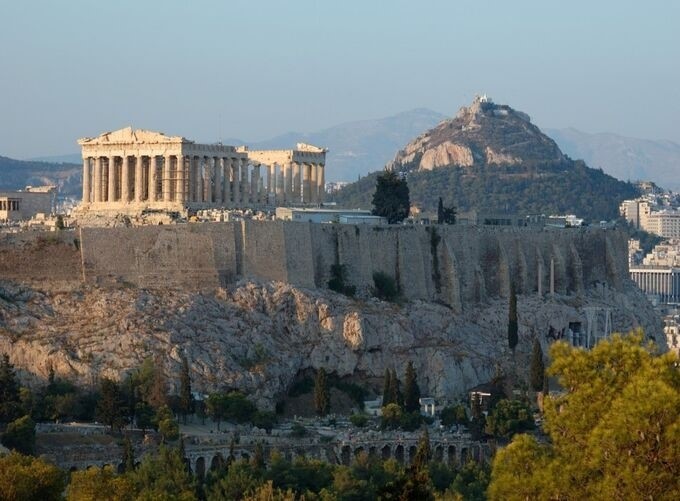
The Acropolis Is Becoming a Morning Decision
June visitors gain very little by proving that they can tolerate an exposed archaeological site at the hottest point of the afternoon.
The monuments look no more historically significant at 2:30 p.m.
An earlier visit generally provides more comfortable conditions and leaves the warmer middle of the day available for less exposed activities.
A June Athens archaeology tour therefore makes the most sense when its major outdoor component begins before the heat has accumulated.
This becomes increasingly important during hotter weather periods, but it should not turn into obsessive scheduling.
There is a difference between respecting summer and fearing it.
Check the forecast, consider your own heat tolerance and adjust accordingly. A mild early-June day may provide considerably more flexibility than a hot spell during the final week.
June establishes the principle.
July will make the consequences of ignoring it much greater.
Long Daylight Creates a Trap
It is easy to look at June daylight and conclude that you have enormous sightseeing capacity.
Technically, you do.
Physically, the calculation is different.
Adding several hours of daylight does not automatically add several hours of comfortable high-intensity walking. If anything, the long day encourages travelers to overestimate how much they should attempt.
Instead of asking how many attractions fit between sunrise and sunset, divide the day according to energy demand.
The June Energy Budget
| Energy Cost | Good June Candidates | Better Window |
| High | Hills, exposed ruins, long uphill walks | Morning |
| Medium | Neighborhood exploration, shopping streets | Morning / later afternoon |
| Low | Museum, long lunch, café, shaded stops | Warmest hours |
| Recovery | Hotel break, slow meal | Mid-afternoon if needed |
| Social | Rooftops, dinner, evening walks | Sunset onward |
This table is not about what is open.
It is about where your physical energy produces the most value.
A long June day becomes useful when you stop trying to use every hour identically.
There Is Nothing Wrong With Going Back to the Hotel
Some travelers resist midday breaks because returning to the hotel feels like wasting expensive vacation time.
In June, that assumption deserves reconsideration.
If you started early, spent several hours walking and have evening plans, an hour or two indoors during the warmest period can improve the entire day.
You shower.
Change clothes.
Rest your feet.
Then leave again when the city becomes more comfortable.
This is particularly useful for families, older travelers and anyone unaccustomed to Mediterranean summer heat, although even strong walkers can benefit during hotter periods.
The break is not mandatory.
The freedom to take one is part of good planning.
Shade Becomes Part of Route Design
June walking is not simply about reducing distance.
Sometimes the better solution is changing the route.
A ten-minute walk through shaded streets may be more comfortable than a shorter route across an exposed square. A neighborhood with narrow lanes can remain enjoyable when a broad open archaeological area feels demanding.
This is why central Athens retains considerable summer walkability despite rising temperatures.
Buildings create shade.
Cafés provide natural breaks.
Museums offer indoor intervals.
Metro stations allow you to skip an exposed section when necessary.
The city gives you tools for managing summer without abandoning it.
Use them.
Water Stops Should Be Boring
There is no need to romanticize hydration as travel advice.
Carry water and drink it regularly.
Long archaeological visits, hills and extended city walking increase exposure, while travelers distracted by sightseeing can easily go longer than intended without drinking.
This is particularly relevant for people arriving from cooler climates who may underestimate how much direct Mediterranean sunshine changes physical comfort.
A refillable bottle is useful, although travelers should follow current local guidance regarding potable water and available refill points.
Do not wait until you feel exhausted to decide that the day was hotter than expected.
The best heat management is usually uneventful.
June Sun Requires More Respect Than June Air Temperature
Sunscreen becomes essential for prolonged outdoor sightseeing, particularly around exposed archaeological areas.
A hat can make a substantial difference.
Sunglasses are obvious.
Lightweight, breathable clothing helps reduce discomfort during extended walks, while footwear should remain chosen for distance and uneven surfaces rather than appearance alone.
What Moves to the Top of the June Packing List?
Rather than another standard packing table, think in terms of what problem each item solves:
| Problem | What Helps | When You'll Notice the Difference |
| Direct sun | Hat + sunscreen | Archaeological sites |
| Bright reflected light | Sunglasses | Pale stone/open squares |
| Heat buildup | Breathable clothing | Long walks |
| Dehydration | Water bottle | Entire day |
| Tired feet | Proper walking shoes | Late afternoon |
| Strong indoor A/C | Very light layer | Museums/restaurants |
| Coastal afternoon | Swimwear if planned | Riviera |
By June, the suitcase has stopped preparing for unpredictable spring.
It is preparing for exposure.
Athens Doesn't Shut Down in the Afternoon
Visitors sometimes apply a generalized idea of Mediterranean siesta to Athens and assume the city effectively closes during the hottest hours.
That is too simplistic.
Athens is a large modern capital, and commercial life continues through the day, although individual businesses naturally maintain their own schedules.
The more useful question is not whether Athens stops.
It is whether you should slow down.
There is a major difference.
Museums, lunch, cafés, shopping or shaded neighborhoods can occupy the warmer hours without requiring the entire city to accommodate your personal heat tolerance.
June planning works better when travelers adapt to Athens rather than imagining Athens changes its operating system for summer.
Evening Is No Longer the Bonus Round
May introduces evenings as one of the month's great pleasures.
June makes them indispensable.
Once direct sunshine weakens, central Athens can regain a remarkable amount of energy. Restaurant terraces fill, rooftop venues become more attractive and walking through neighborhoods feels easier after the heat of the afternoon.
A summer evening in Athens experience can therefore carry as much value as a conventional daytime attraction.
This is particularly important for travelers who initially worry that slowing down during the afternoon will reduce what they see.
The day is not ending at six.
You have simply moved part of it.
The Acropolis Looks Different When It Becomes Your Evening Skyline
There is a psychological shift after spending the morning among ancient monuments.
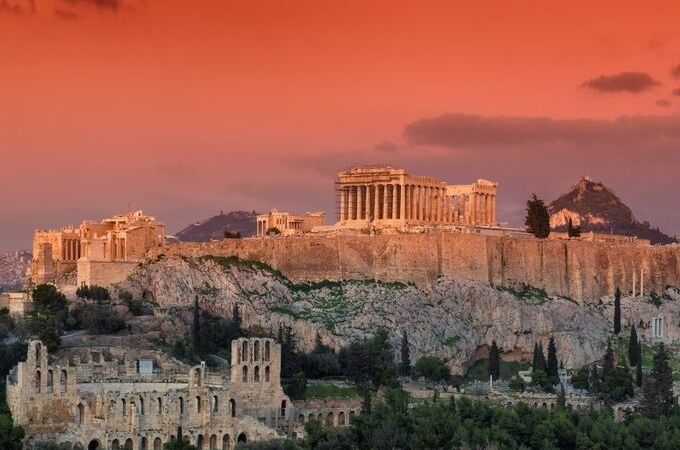
Later, you see the illuminated Acropolis from a street, terrace or rooftop and it stops functioning as an attraction on the itinerary.
It becomes part of Athens.
June evenings are particularly good for this transition because outdoor conditions allow you to spend hours within the modern city after formal sightseeing has ended.
This is one reason not to overfill the daytime schedule.
Athens after sunset is not merely dinner between sightseeing days.
It belongs to the trip itself.
The Riviera Now Competes With Museums for the Warmest Hours
In May, the Athens Riviera becomes a meaningful warm-weather option.
June strengthens its argument considerably.
The coast can provide a different afternoon environment, and swimming becomes more attractive as sea temperatures rise. Travelers staying several days may find that moving toward the Saronic Gulf after a historical morning creates a natural summer rhythm.
A June Athens coastal retreat can work particularly well when the forecast suggests a warm afternoon and you have already covered the central attractions most important to you.
However, the Riviera should not automatically replace Athens simply because it is hot.
First-time visitors with limited time may gain more from a museum and a slower central afternoon than spending hours in transit for a short coastal visit.
The coast is an option.
Not an obligation.
Early June and Late June Are Different Heat Decisions
The seasonal direction within June deserves more attention than a single monthly average suggests.
Early June can still produce days that feel like an extension of late May, with considerable walking flexibility and relatively comfortable afternoons.
Late June moves closer to July.
Hotter periods become more relevant, nights remain warmer and the value of earlier archaeological sightseeing increases.
Instead of another early-month/late-month comparison table, consider the change as a planning threshold:
Early June: Begin with a spring-style itinerary, then adjust if the forecast is hot.
Mid-June: Assume midday sunshine will influence comfort and place exposed sightseeing thoughtfully.
Late June: Begin with a summer-style itinerary and take advantage of cooler conditions if they occur.
That subtle reversal is the month changing underneath you.
Heat-Sensitive Travelers Should Not Treat June as One Block
If you dislike hot weather, early June may still work extremely well.
Late June deserves more caution.
This does not mean automatically avoiding the month, because personal heat tolerance differs dramatically and weather varies year to year. It does mean that somebody choosing between June 3 and June 28 should not assume the experience will necessarily be identical.
Travel dates within a month matter.
The hotter the forecast, the more valuable mornings, museums, shaded routes, coastal time and evening exploration become.
This is precisely why June deserves its own semantic territory rather than being folded into a generic “Athens summer weather” article.
June Doesn't Ask You to Do Less
It asks you to distribute the day differently.
That is an important distinction.
You can still spend many hours exploring Athens. You can still walk extensively, visit archaeological sites, climb viewpoints, eat outside and experience neighborhoods on foot.
The difference is that the most physically demanding activities no longer belong anywhere on the clock.
Give exposed history the morning.
Allow midday to become flexible.
Keep something interesting for the evening.
The longest days of the year provide enough room for all three.
July will make heat a more serious operational constraint and require a stricter strategy during extreme conditions.
June sits before that threshold.
It is the month when Athens first teaches you the logic of summer, while still giving you considerable freedom to decide how closely you need to follow it.
What Should Move When the Forecast Gets Hotter?
A June itinerary should not be rebuilt every time the forecast changes by three degrees.
It should stretch.
Imagine that you planned an archaeological morning, lunch, a neighborhood walk, museum visit and rooftop evening. If the forecast moves from 28°C to 32°C, most of those experiences can remain exactly where they are. Perhaps the neighborhood walk shifts later and lunch becomes longer.
If considerably hotter conditions develop, the same itinerary can stretch further. Archaeology moves earlier, the museum occupies more of the afternoon and the neighborhood walk waits until evening.
Nothing important has necessarily disappeared.
The clock has changed around it.
That ability to redistribute rather than cancel is one of Athens' greatest advantages during June.
At 28°C, Don't Overmanage the Day
For many visitors, a dry day around 28°C remains very manageable, particularly when sightseeing begins in the morning.
There is little reason to create an elaborate heat-avoidance schedule simply because the forecast contains a number that looks summery.
Use sunscreen, carry water and consider sun exposure when choosing long walking routes. If the afternoon feels warmer than expected, slow down.
Otherwise, experience the city.
Overplanning for heat can become almost as restrictive as ignoring it.
The purpose of summer strategy is to increase comfort, not make travelers anxious about leaving an air-conditioned building.
Around 32°C, Timing Starts Earning Its Place
Once daytime temperatures move into the low thirties, direct sunshine becomes more consequential.
This is when an exposed archaeological visit at noon begins making much less sense than the same visit earlier in the morning.
The itinerary does not need to become empty during the afternoon. It needs to become less physically expensive.
When the Forecast Moves, Move This First
| Forecast Change | First Thing to Reconsider | What Can Stay Put | Where the Displaced Activity Goes |
|---|---|---|---|
| Mild → warm | Long exposed walk | Museum, lunch | Later afternoon |
| Warm → hot | Archaeological timing | Indoor visits | Earlier morning |
| Hot + strong sun | Hill climb | Shaded neighborhoods | Near sunset |
| Hot afternoon | Cross-city walking | Restaurant plans | Metro/taxi replaces some walking |
| Warm evening | Nothing urgent | Dinner, rooftops | Extend evening |
| Cooler-than-expected day | Remove restrictions | Almost everything | Add spontaneous walking |
The objective is not deleting experiences from the trip.
It is moving the activities that suffer most from direct heat.
A Hot Spell Is a Different Category
Occasionally, June produces conditions significantly hotter than its ordinary seasonal pattern.
At that point, generic monthly advice becomes less important than current official weather information.
During unusually high temperatures, travelers should reduce strenuous outdoor activity during the hottest hours, prioritize shade and hydration, and pay particular attention to children, older adults and anyone more vulnerable to heat.
Opening conditions at archaeological sites can also be affected during severe heat events, so current official information should always override an itinerary written months earlier.
This distinction matters.
“June is hot” and “Athens is experiencing an exceptional heat event” are not interchangeable statements.
The first requires intelligent scheduling.
The second may require changing plans substantially.
Your Hotel Location Becomes More Valuable in Summer
In cooler months, staying slightly farther from the historical center may simply add a metro journey.
June changes the calculation.
A centrally located hotel can make an afternoon break effortless. You return after lunch, rest during the warmest period and leave again without turning the break into a complicated transportation exercise.
This is especially useful for travelers who enjoy early starts and late evenings.
Hotel amenities can matter differently as well.
Reliable air conditioning becomes more important than the fireplace or indoor lounge that might have influenced a winter choice.
A swimming pool is pleasant when available, although it should not determine accommodation at the expense of location unless hotel relaxation is a major part of the trip.
June turns the hotel from somewhere you sleep into a potential midday reset point.
The Metro Can Save Energy, Not Just Time
Walking is one of the best ways to experience central Athens, but summer creates moments when walking adds little value.
If you have already spent hours outside and need to cross a less interesting stretch of the city in strong afternoon sun, public transport may preserve energy for the neighborhood you actually want to explore.
This is not laziness.
Travel energy is finite.
Spending it on an exposed transfer can mean having less enthusiasm for an evening walk when Athens becomes comfortable again.
The better summer traveler does not necessarily walk fewer kilometers.
They become more selective about which kilometers deserve to be walked.
June Afternoons Have Three Escape Routes
When the temperature begins influencing comfort, travelers often think the only alternatives are a museum or the hotel.
Athens provides a broader set of options.
You can move indoors culturally, slow down socially or change geography entirely.
Three Ways to Reallocate a Warm Afternoon
| Keep Exploring | Slow the Tempo | Change the Setting |
| Museum or gallery | Long shaded lunch | Athens Riviera |
| Covered market/shopping | Café break | Hotel pool if available |
| Short shaded neighborhood walk | Extended coffee stop | Coastal restaurant |
| Metro between districts | Hotel reset | Seafront walk later |
| Indoor historical collection | Early dinner planning | Swimming where suitable |
These are different responses to the same weather.
A museum-focused traveler does not need to copy a beach-oriented traveler simply because both found 3:00 p.m. hot.
The Riviera Can Become Part of the Heat Strategy
By June, coastal time is no longer merely an aesthetic addition.
A warm afternoon beside the Saronic Gulf can provide a useful contrast with central Athens, particularly for travelers staying long enough that major historical priorities have already been covered.
Swimming becomes increasingly realistic, although sea conditions, beach choice and individual preferences still matter.
What the Riviera should not become is an automatic recommendation whenever Athens feels hot.
Travel time still exists.
If you have one full day in the capital, spending a substantial portion of it traveling toward the coast may solve the heat problem while creating a sightseeing problem.
With four or five days, the equation changes considerably.
The right question remains: what are you giving up to go there?
June Evenings Repay the Midday Compromise
Travelers sometimes feel disappointed when advised to reduce activity during the hottest hours because they interpret a slower afternoon as lost holiday time.
June evenings are the answer.
After sunset, Athens can remain comfortably active for hours. Dinner often begins later than many international visitors are accustomed to, terraces stay busy and central neighborhoods retain considerable energy.
A rooftop drink, long dinner and post-meal walk can easily extend the day without feeling like formal sightseeing.
This is not compensation for missing Athens.
It is another version of Athens.
The city experienced at 10:00 p.m. belongs just as legitimately to the trip as the Acropolis visited at 9:00 a.m.
Don't Schedule Every Sunset
The long evenings create another temptation: planning a sunset location every night.
One evening at Lycabettus.
Another at Philopappos.
Then a rooftop.
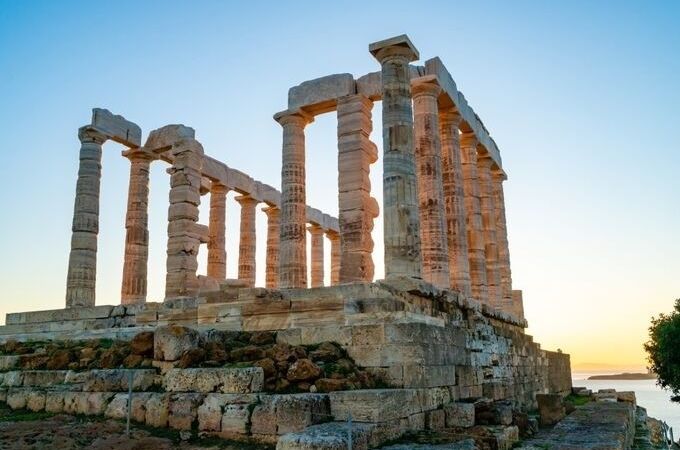
Then perhaps Cape Sounion.
Eventually, sunset becomes an appointment.
Leave room for an ordinary evening.
Walk without trying to reach a viewpoint at precisely the correct minute. Find a restaurant because it looks inviting. Let the Acropolis appear between buildings rather than positioning yourself deliberately for another photograph of it.
June weather makes spontaneity after dark unusually easy.
Use some of that freedom.
May, June and July Require Different Questions
The cleanest way to prevent these three pages from cannibalizing one another is not comparing which month is “best.”
Each solves a different planning question.
May asks: When does warm weather begin changing the social rhythm of Athens?
Its answer is found in outdoor dinners, rooftops, warmer afternoons and the first meaningful adjustment toward earlier sightseeing.
June asks: How should the sightseeing day be redistributed once summer heat becomes a normal planning factor?
Its answer lies in mornings, flexible afternoons, long daylight and active evenings.
July asks: What happens when heat is no longer a secondary factor but potentially the dominant physical constraint?
That article belongs to peak-summer heat strategy, not simply another warmer temperature table.
The months sit next to one another.
Their search intents should not.
June Works Best When You Stop Expecting Equal Hours
Morning, afternoon and evening no longer have the same value for every activity.
That is the central planning shift.
The morning may be worth twice as much for archaeology as the afternoon. Midday may be worth more for a museum or meal than another hill. Evening may be worth more for walking than an extra hour spent pushing through direct sunshine earlier.
Once you accept that imbalance, June becomes easier.
You are not losing half the day to heat.
You are matching each part of Athens to the part of the day that suits it.
Twelve FAQs About Athens Weather in June
1. Is June a good time to visit Athens?
June can be an excellent month for Athens if you are comfortable with summer warmth and willing to organize exposed sightseeing thoughtfully. Long daylight and reliable evenings provide considerable flexibility, while archaeological visits increasingly benefit from morning timing as daytime temperatures rise.
2. How hot is Athens in June?
Typical daytime highs often reach approximately 29–33°C, with warmer periods possible, particularly later in the month. Nights commonly remain around 20–23°C. Direct sunshine and exposed archaeological surfaces can make conditions feel hotter than the forecasted air temperature suggests.
3. Is early June cooler than late June in Athens?
Early June can retain some of late May's milder characteristics, while hotter conditions generally become more likely toward the end of the month. Individual weather patterns vary, but heat-sensitive travelers choosing within June may find earlier dates provide greater daytime sightseeing flexibility.
4. Is June too hot for visiting the Acropolis?
Not generally, but timing becomes important. Morning visits are usually more comfortable than prolonged exposure around the hottest part of the day. During unusually severe heat, travelers should follow current official guidance because operating conditions and safe sightseeing recommendations may change.
5. What should I wear in Athens in June?
Choose lightweight, breathable clothing, comfortable walking shoes, sunglasses and a sun hat. Sunscreen and water should accompany long outdoor days. A very light layer can occasionally be useful in heavily air-conditioned interiors, but substantial warm clothing is generally unnecessary.
6. Does it rain in Athens in June?
Rain becomes considerably less prominent as Athens enters its dry Mediterranean summer, although occasional rainfall or unsettled weather remains possible. Most June itineraries can be designed around predominantly outdoor conditions, with heat and sun exposure generally requiring more planning attention than precipitation.
7. Should I take a midday break in Athens in June?
A break is optional during ordinary warm conditions but increasingly useful on hotter days, particularly after an early archaeological start. Lunch, a museum or time at the hotel can occupy the warmest hours, allowing travelers to return outside with more energy later.
8. Can I swim in Athens in June?
June is increasingly suitable for swimming along the Athens Riviera as both air and sea conditions become more summery. Exact comfort depends on the individual traveler and daily conditions, but coastal time now works as a genuine summer activity rather than merely a scenic excursion.
9. Are Athens evenings hot in June?
Evenings are generally warm and well suited to outdoor dining, rooftop venues and walking after sunset. Conditions can remain quite warm during hotter periods, but the absence of direct midday sunshine usually makes outdoor activity considerably more comfortable than during the afternoon.
10. How many days should I spend in Athens in June?
Three days can cover major first-time priorities, while four or five provide greater flexibility to slow down during warm afternoons, enjoy longer evenings and possibly include the Riviera. Additional time reduces the temptation to compress exposed sightseeing into uncomfortable parts of the day.
11. Is May or June better for Athens?
May provides greater freedom for all-day walking and generally milder daytime conditions, while June offers stronger summer weather, longer evenings and better coastal opportunities. Travelers sensitive to heat may prefer May; those wanting a more established summer atmosphere may favor June.
12. Is June or July better for Athens?
June generally offers a better balance for travelers who want summer conditions without moving as deeply into the peak-heat period. July provides a stronger high-summer experience but requires more deliberate heat management, particularly for archaeological sightseeing and extensive daytime walking.

A travel professional specializing in tailor-made travel planning, guest experience management, and multi-destination tourism operations.
With over 23 years of experience in the travel industry, he designs and manages private and cultural tours for international travelers across Türkiye, Greece, Egypt, Jordan, Morocco, and other destinations.
He has strong expertise in both online and face-to-face guest communication, sales processes, and end-to-end travel operations.
Working closely with hotels, travel agencies, and local partners, he ensures smooth coordination and high-quality travel experiences at every stage of the journey.
His focus is on delivering personalized, reliable, and seamless travel experiences for international guests worldwide.