Greece in April: Wildflowers, Green Landscapes and Mild Days
Author: Kenan Ungur
Article Date: 22.08.2024
Reading Time: 16 min

Greece in April: Wildflowers, Green Landscapes and Mild Days

Last Updated: August 7, 2026

Some countries are easiest to understand when everything is open, busy, and filled with visitors.

Greece often reveals itself differently.

April isn't the month of crowded beaches or bustling island ports. Instead, it's a season of quiet discoveries. Hillsides brighten with wildflowers, village cafés begin placing tables back outside, and archaeological sites invite visitors to linger rather than simply move on to the next stop.

It's a month that rewards curiosity.

Travellers who slow their pace often notice things that disappear later in the year—a shepherd leading sheep across a mountain road, orange blossom scent drifting through a small town, or a family bakery preparing Easter bread using recipes passed down for generations.

These aren't attractions marked on a map.

They're moments that make a journey feel personal.

That is what April offers.

Rather than presenting Greece at its busiest, it reveals the country as it gradually wakes into another Mediterranean spring.

This guide isn't designed to convince everyone that April is the perfect month to visit.

No single month can make that promise.

Instead, it explores why so many experienced travellers deliberately choose April, what the season genuinely feels like across different regions, and why spring often creates a deeper connection with Greece than many people expect.

Spring Is No Longer Arriving—It's Everywhere

By April, the uncertainty of early spring has disappeared.

Across much of Greece, landscapes are alive with colour.

Olive groves shimmer beneath fresh green leaves, hillsides are dotted with wildflowers, and vineyards begin another growing season.

Even the air feels different.

Windows remain open longer.

Outdoor markets become livelier.

Village squares slowly return to their familiar rhythm after the quieter winter months.

Unlike the intense pace of summer, April encourages observation rather than urgency.

Travellers find themselves stopping more often—not because they have to, but because the surroundings invite them to.

That slower rhythm becomes one of the month's greatest rewards.

Greece Feels Larger in April

One of the surprising things about travelling in April is how much farther your days seem to stretch.

Not because there are more hours, but because moving between places feels unhurried.

You might spend the morning walking through the Acropolis, enjoy a leisurely lunch in a neighbourhood taverna, continue towards Cape Sounion, and still arrive in time to watch the evening light settle over the Temple of Poseidon.

On another day, you could drive through the Peloponnese, stop at a roadside bakery, explore the streets of Nafplio, and finish with dinner in a village where locals still outnumber visitors.

Nothing feels rushed.

The season quietly gives time back to the traveller.

Guests exploring our expertly crafted cultural journeys across Greece often discover that April naturally supports this style of travel, where the route between destinations becomes just as memorable as the landmarks themselves.

History Feels Easier to Appreciate

Greece has never lacked extraordinary historical sites.

What changes in April is the way visitors experience them.

Standing among the columns of Delphi, walking through the ancient theatre at Epidaurus, or climbing the paths leading to Meteora's monasteries becomes a slower, more reflective experience when comfortable spring temperatures replace the intensity of midsummer.

Instead of looking for shade every few minutes, people tend to look up.

They notice carvings.

Mountain views.

Birdsong echoing through ancient ruins.

The landscape becomes part of the story rather than simply the setting.

For travellers interested in archaeology, architecture, and history, April offers something that no weather forecast can measure.

The freedom to spend more time truly looking.

Every Region Welcomes Spring in Its Own Way

April is one of the few months when travelling across Greece feels like watching the country gradually change from one landscape to another.

Spring doesn't arrive everywhere at exactly the same pace.

The southern coastline enjoys warmer afternoons.

Mountain villages still carry traces of cooler mornings.

Northern Greece feels fresh and green, while the islands begin preparing for another travel season.

That variety becomes one of April's greatest strengths.

Instead of offering one predictable holiday, Greece offers a collection of different spring experiences connected by the same feeling of renewal.

Choosing where to travel in April isn't about finding the warmest destination.

It's about deciding which version of spring you would like to experience.

Athens Becomes a City for Walking

Athens changes noticeably in April.

The city seems to invite visitors outdoors.

Historic neighbourhoods such as Plaka, Anafiotika, and Thissio are comfortable to explore without constantly searching for shade, while rooftop cafés begin filling with both residents and travellers enjoying longer afternoons.

Walking between major landmarks feels surprisingly natural.

The Acropolis, the Ancient Agora, Monastiraki, and the National Garden can all be explored at an unhurried pace, leaving plenty of time to discover quieter streets that rarely appear in guidebooks.

Many visitors arrive expecting Athens to be simply a gateway to the islands.

April often changes that perception.

The city becomes a destination worth slowing down for.

Travellers following our privately guided Greece heritage itineraries frequently discover that spring offers the ideal conditions for appreciating Athens beyond its most famous monuments.

The Peloponnese Feels Made for Road Trips

If one region truly shines during April, it may be the Peloponnese.

The roads pass through vineyards, citrus groves, olive orchards, and rolling countryside that still carries the freshness of spring.

Historic sites such as Ancient Olympia, Mycenae, and Epidaurus feel naturally connected to the landscapes surrounding them rather than isolated tourist attractions.

Small coastal towns begin preparing for summer, while inland villages continue their everyday routines almost untouched by seasonal tourism.

Driving here isn't simply a way of reaching the next destination.

It's an important part of the journey itself.

Meteora Offers One of Greece's Most Peaceful Spring Experiences

There are places that become more impressive with fewer people around.

Meteora is one of them.

During April, the valleys beneath the famous rock pillars are covered in fresh greenery, creating a dramatic contrast with the towering cliffs above.

Morning mist occasionally lingers before giving way to bright spring sunshine, producing constantly changing views throughout the day.

The monastery paths are comfortable to climb, and the quieter atmosphere allows visitors to appreciate the spiritual character of the landscape rather than focusing only on its dramatic scenery.

For many photographers and walkers, April represents one of the finest times to experience Meteora.

Delphi Feels Connected to Nature Again

Delphi has always been remarkable because of its setting.

The sanctuary wasn't built in isolation.

It was designed to exist within the mountains.

April reminds visitors why.

Wildflowers appear between ancient stones.

The surrounding slopes become rich with colour.

The fresh mountain air makes exploring the archaeological site and museum particularly enjoyable.

Standing above the Valley of Phocis, it's easy to understand why ancient Greeks believed this place held such significance.

The landscape itself becomes part of the historical experience.

Visitors interested in archaeology often include Delphi within our classical Greece cultural tours, where spring conditions make exploring multiple UNESCO and ancient sites especially rewarding.

Crete Welcomes an Earlier Spring

Crete rarely follows the same seasonal calendar as the rest of the country.

Spring often arrives a little earlier, bringing comfortable temperatures and colourful landscapes across much of the island.

Walking through Chania's Venetian harbour, exploring traditional villages in the White Mountains, or visiting the Palace of Knossos becomes particularly enjoyable before the stronger summer sunshine arrives.

April also highlights another side of Crete.

Rather than focusing only on beaches, visitors begin discovering local food, mountain communities, and centuries-old traditions that continue throughout the island.

Northern Greece Feels Fresh and Authentic

April remains one of the best months for discovering northern Greece.

Thessaloniki enjoys pleasant walking weather, while nearby wine regions, lakes, monasteries, and mountain villages begin welcoming visitors after winter.

The countryside feels especially vibrant.

Rivers flow strongly after seasonal rainfall.

Forests take on fresh shades of green.

Local cafés and village squares gradually return to their familiar outdoor rhythm.

For travellers who enjoy quieter destinations, northern Greece offers an authentic perspective that's often overlooked during the busiest summer months.

Longer Days Bring New Possibilities

One subtle advantage of April is the way daylight quietly changes your itinerary.

Longer afternoons create flexibility.

You don't feel pressured to leave a museum early or skip a scenic stop because sunset is approaching.

Instead, the day unfolds naturally.

Perhaps you stop at a roadside bakery you hadn't planned to visit.

Perhaps you stay longer at a viewpoint because the light is beautiful.

Perhaps you choose a slower route simply because there's no reason to hurry.

Those unplanned decisions often become the most memorable part of travelling in April.

Guests exploring our tailor-made mainland Greece travel experiences often say the freedom to travel without rushing is one of the season's greatest luxuries.

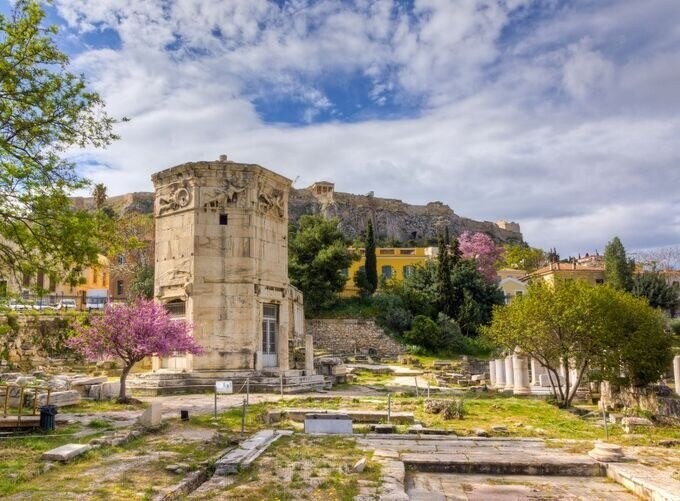
Athens offers both ancient ruins and modern Mediterranean charm in abundance

April Is the Month That Encourages You to Wander

There are months when travel naturally follows a checklist.

Visit the landmark.

Take the photograph.

Move to the next destination.

April gently changes that habit.

Because the weather is usually so comfortable, there is less pressure to organise every hour of the day. A quiet street suddenly becomes worth exploring. A small village café invites you to stay longer than planned. A scenic viewpoint turns into an unexpected stop simply because the afternoon light looks beautiful.

The best days in April often begin with a plan but rarely finish exactly as expected.

That flexibility is one of spring's greatest gifts.

Packing for Possibility Rather Than Predictability

April isn't a difficult month to pack for, but it does reward thoughtful preparation.

You'll probably experience warm afternoons, fresh mornings, cooler evenings, and perhaps the occasional spring shower during the same journey.

Instead of packing for one season, you're packing for several comfortable variations of it.

Lightweight layers, comfortable walking shoes, and a light waterproof jacket usually prove far more useful than heavy clothing.

Most importantly, leave space in your suitcase for movement.

April is a month when you'll naturally spend more time outdoors than you originally imagined.

Spring Is Also a Season of Flavour

Travel isn't only experienced through landscapes.

It is remembered through taste.

April marks the arrival of fresh seasonal produce across Greece.

Village markets begin filling with colourful vegetables, fragrant herbs, locally produced cheeses, citrus fruits, and freshly baked pastries prepared using family recipes that have been passed down for generations.

In many regions, lunch becomes less about the restaurant and more about the ingredients themselves.

Simple dishes prepared with olive oil, fresh herbs, and seasonal vegetables often say more about Greece than an elaborate tasting menu ever could.

Visitors travelling on our authentic food and culture journeys through Greece frequently discover that spring is one of the most rewarding seasons for experiencing regional cuisine in its most natural form.

The Countryside Becomes the Destination

Many first-time visitors arrive with famous landmarks already marked on their itinerary.

The Acropolis.

Meteora.

Delphi.

Olympia.

Those places deserve their reputation.

But April quietly reminds travellers that the roads between them are often just as memorable.

Wildflowers line country lanes.

Stone villages overlook green valleys.

Olive groves stretch towards distant mountains.

Roadside tavernas welcome local families enjoying long weekend lunches.

Instead of rushing from one attraction to another, spring encourages visitors to appreciate the journey itself.

Sometimes the landscape between two destinations becomes the highlight of the day.

A Different Kind of Photography

Photography in April isn't driven by dramatic sunsets alone.

It's about texture.

Fresh leaves reflecting morning light.

Ancient marble softened by spring skies.

Mountain villages surrounded by blossoming trees.

Narrow streets where colourful flowers spill from balconies onto old stone pathways.

The season also rewards patience.

Clouds move across the landscape more often than during summer, creating changing light that adds depth to both natural scenery and historic architecture.

Rather than photographing only famous viewpoints, April invites travellers to notice quieter details that many visitors overlook.

Villages Tell Their Own Stories

Away from the country's most visited destinations, April offers something increasingly difficult to find in modern travel.

Ordinary life.

Farmers working in nearby fields.

Neighbours greeting each other in village squares.

Small bakeries opening before sunrise.

Children walking home from school beneath flowering trees.

These aren't organised experiences.

They're simply everyday moments.

Yet they often leave a stronger impression than carefully planned sightseeing.

Travellers following our off-the-beaten-path Greece travel collection frequently say these authentic encounters become the memories they speak about most after returning home.

April Rewards Curious Travellers

Some travellers are happiest ticking famous attractions off a list.

Others enjoy asking one more question.

Taking one more side road.

Walking one more street.

April naturally belongs to the second group.

The comfortable weather encourages exploration rather than efficiency.

Instead of asking, "What's next?" visitors often begin asking, "I wonder what's over there?"

That curiosity transforms the journey.

It turns a holiday into a series of discoveries rather than a schedule of appointments.

Spring Is About More Than the Weather

When people think about April, they often focus on temperatures.

But after spending time in Greece, that's rarely what they remember.

They remember the smell of orange blossoms drifting through a village street.

The sound of church bells echoing across a hillside.

Lunch beneath the shade of an old olive tree.

An unexpected conversation with a local shopkeeper.

The silence of an archaeological site before the day's larger groups arrive.

Those experiences don't happen because April is warmer than March or cooler than May.

They happen because spring creates the time and atmosphere to notice them.

April Is When Greece Rewards Curiosity

Not every memorable journey is built around perfect beach weather.

Some are built around unexpected conversations, quiet archaeological sites, scenic country roads, and afternoons that unfold without a strict plan.

That's where April quietly stands apart.

It isn't trying to compete with the excitement of midsummer or the energy of the islands during peak season.

Instead, it offers something increasingly rare in modern travel—space to slow down, notice more, and experience Greece before the pace of summer takes over.

For many visitors, that slower rhythm becomes the most valuable part of the holiday.

Greece Weather in April at a Glance

Category What to Expect
Overall Climate Mild spring weather with comfortable days, cool evenings, and increasingly sunny conditions.
Daylight Longer days provide plenty of time for sightseeing, scenic drives, and outdoor cafés.
Landscape Wildflowers, green hillsides, blossoming trees, and vibrant countryside across much of Greece.
Sea Conditions Beautiful coastal scenery, although the sea is generally still cool for extended swimming.
Crowds Low to moderate, making cultural sites and historic towns more relaxed to explore.
Outdoor Activities Walking, road trips, photography, archaeology, village exploration, and nature.
Ferry Services Many routes begin expanding for the new season, with more frequent connections to popular islands.
Best For Culture lovers, photographers, couples, history enthusiasts, and travellers seeking authentic experiences.

What to Pack for Greece in April

April is one of the easiest months to pack for because flexibility matters more than heavy clothing.

A well-prepared suitcase should include:

  • Lightweight layers for changing temperatures
  • Comfortable walking shoes
  • Light waterproof jacket
  • Sunglasses
  • Compact umbrella
  • Breathable trousers and shirts
  • Daypack for sightseeing
  • Reusable water bottle
  • Camera with extra storage or batteries
  • Light sweater for evenings

Packing this way allows you to comfortably move between cities, archaeological sites, countryside villages, and coastal destinations throughout your journey.

Frequently Asked Questions

1. Is April a good month to visit Greece?

Yes. April is one of Greece's most rewarding travel months for visitors interested in history, culture, nature, and slower-paced exploration. Comfortable temperatures and vibrant spring landscapes make sightseeing especially enjoyable across both the mainland and many islands.

2. Can you swim in Greece during April?

Some visitors do, particularly in southern regions and Crete, but the sea generally remains cool for extended swimming. Most travellers spend more time enjoying coastal walks, harbour towns, scenic boat views, and seaside restaurants than relaxing on the beach.

3. Is April crowded in Greece?

No. Visitor numbers remain considerably lower than during the summer months, allowing travellers to explore archaeological sites, museums, and traditional villages with a more relaxed atmosphere and fewer queues.

4. Which regions are best to visit in April?

Athens, the Peloponnese, Meteora, Delphi, Crete, Nafplio, and northern Greece are all excellent choices. Each region offers its own version of spring, from blossoming countryside and mountain scenery to historic cities and coastal landscapes.

5. What should I wear in Greece during April?

Layered clothing is the most practical option. Comfortable walking shoes, lightweight jackets, and breathable clothing work well throughout the day, while a sweater or light coat is useful during cooler mornings and evenings.

6. Is April suitable for hiking?

Absolutely. April provides some of the year's most comfortable conditions for walking trails, countryside routes, monastery paths, and archaeological parks. The cooler temperatures and green scenery make outdoor exploration particularly enjoyable.

7. Are the Greek islands worth visiting in April?

Yes, especially for travellers seeking peaceful villages, scenic walks, and authentic local life rather than peak beach holidays. Many islands begin preparing for summer, creating a pleasant balance between local rhythm and tourism.

8. Does it rain much in April?

Occasional spring showers are possible, but they are usually brief and are often followed by clear skies. Rainfall also contributes to the colourful landscapes that make April one of Greece's most photogenic seasons.

9. Is April a good month for photography?

Without question. Fresh greenery, flowering trees, changing spring light, and quieter landmarks provide excellent opportunities for landscape, architecture, and street photography throughout the country.

10. Is April suitable for first-time visitors?

Yes. First-time travellers often find April especially rewarding because comfortable weather makes it easier to explore Greece's major historical sites, traditional villages, and scenic regions without the intensity of summer crowds.

11. Can I combine different regions in April?

Definitely. One of April's strengths is its flexibility. Travellers can comfortably combine cities, archaeological sites, mountain landscapes, countryside villages, and coastal destinations within a single itinerary without feeling limited by extreme weather.

12. Why do experienced travellers recommend April?

Many returning visitors appreciate April because it reveals a more relaxed and authentic side of Greece. The combination of comfortable weather, blooming landscapes, cultural experiences, and slower travel creates memories that are often very different from a traditional summer holiday.

Kenan Ungur
Author

A travel professional specializing in tailor-made travel planning, guest experience management, and multi-destination tourism operations.

With over 23 years of experience in the travel industry, he designs and manages private and cultural tours for international travelers across Türkiye, Greece, Egypt, Jordan, Morocco, and other destinations.

He has strong expertise in both online and face-to-face guest communication, sales processes, and end-to-end travel operations.

Working closely with hotels, travel agencies, and local partners, he ensures smooth coordination and high-quality travel experiences at every stage of the journey.

His focus is on delivering personalized, reliable, and seamless travel experiences for international guests worldwide.

Join The Newsletter

To receive our best monthly deals

Magnificent Travel Logo

Magnificent Travel
Usually responds the same day

Magnificent Travel
Welcome to the Magnificent Travel

How may i help you?
Today
+905324935198
X