Paros Greece: How to Find the Island’s Best Rhythm
Updated: August 2026
Paros is easy to underestimate because it does not need one overwhelming attraction to justify the journey.
There is no caldera dominating almost every photograph, no medieval city determining the character of an entire region and no single archaeological monument around which every first-time itinerary revolves. Instead, Paros gradually wins travelers over through the way its different parts fit together: mornings in a whitewashed village, afternoons beside the Aegean, dinner in Naoussa, ferry activity around Parikia, inland roads climbing toward quieter communities, and the possibility of crossing to Antiparos without turning the day into a major travel operation.
That balance is precisely what gives Paros its identity.
The island works particularly well for travelers who want the Cyclades to feel beautiful without feeling relentlessly performative, sociable without requiring nightlife every evening, and varied enough for several days without demanding a tightly organized sightseeing schedule.
The most important planning decision is therefore not what to see first.
It is where you want Paros to sit on the spectrum between lively, polished, local and slow.
Paros Is an Island for Travelers Who Do Not Want to Choose One Mood
Some Greek islands become easy to describe in a sentence.
Paros resists that.
Naoussa can feel polished and social, especially in the evening. Parikia feels more practical and lived-in, partly because the port gives it a continuous sense of movement. Lefkes turns attention inland, away from boats and beaches. Coastal areas create a completely different rhythm again.
That variety means two travelers can visit Paros during the same week and come home describing different holidays.
One may remember restaurant evenings and cocktails around Naoussa. Another may talk about renting a car, driving into the hills and discovering villages away from the coast. A family may remember manageable beach days, while a couple may feel they found a quieter alternative to the intensity of Greece’s most famous islands.
This flexibility is Paros’s strongest competitive advantage.
It should also determine how you plan it.
Naoussa and Parikia Are Not Two Versions of the Same Base
Accommodation searches can make Parikia and Naoussa appear like interchangeable answers to the question “Where should I stay in Paros?”
They are not.
Parikia is the island’s main port town and one of its practical centers. Ferries, transport connections, shops, restaurants and everyday island movement give it a useful sense of functionality. It also has historical character and enough evening life to prevent practicality from becoming dullness.
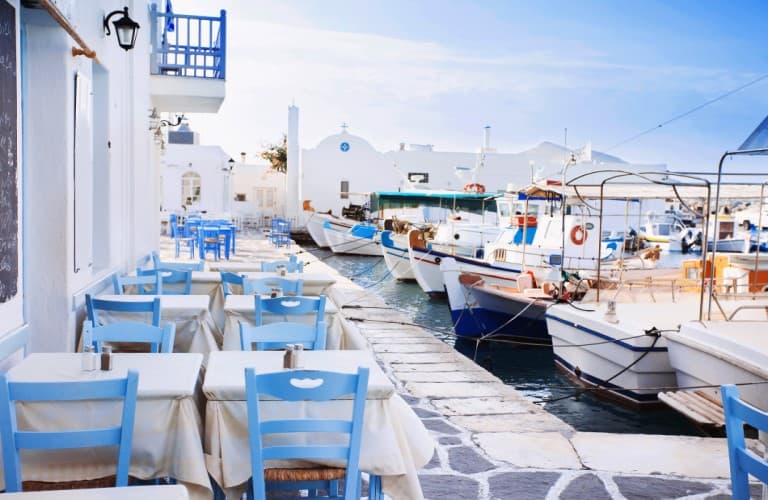
Naoussa, farther north, offers a more visually polished harbor setting and a stronger association with stylish dining, bars and evening atmosphere.
The right choice depends on what you want within walking distance after returning from a beach or excursion.
| If You Care Most About... | Parikia | Naoussa |
|---|---|---|
| Ferry-day convenience | Stronger | Requires port transfer |
| Evening atmosphere | Lively but practical | More polished and social |
| Restaurant choice | Strong | Particularly attractive |
| Island transport practicality | Very useful | Good, but less central to ferry arrival |
| Romantic harbor feel | Attractive | Stronger |
| Feeling connected to everyday island movement | Stronger | More tourism-oriented |
| Short stay without car | Very practical | Excellent if northern coast is priority |
Choosing between them should be a lifestyle decision, not a hotel-rating decision.
Parikia Works Better Than Its “Port Town” Label Suggests
Travelers sometimes treat Parikia as somewhere to arrive, collect luggage and leave.
That undersells it.
The town has enough history, lanes, churches, restaurants and waterfront life to support several evenings, while the ferry port keeps the atmosphere connected to the wider Cyclades. People arrive, leave, meet family, unload supplies and continue with ordinary island life around the tourism infrastructure.
That mix can be refreshing.
For travelers with only a few nights, staying in Parikia can also reduce unnecessary movement because the beginning and end of the visit become simpler. There is no need to cross the island immediately after stepping off a ferry simply because another town appears more frequently in lifestyle photography.
Convenience has value on an island holiday.
Particularly when convenience gives you an extra hour beside the sea rather than an extra hour moving luggage.
Naoussa Is at Its Best After the Beach Bags Have Been Put Away
Naoussa has become one of Paros’s most recognizable places, and its appeal becomes particularly clear in the evening.
The harbor, narrow streets, restaurants and bars produce a social atmosphere that feels refined without requiring the scale or intensity associated with Mykonos.
For couples and friends who enjoy choosing somewhere different for dinner each night, this is a genuine advantage.
The useful question is whether you want that atmosphere every evening.
If yes, staying nearby prevents repeated transportation after dinner and allows the town to become part of your daily routine rather than an excursion.
If your preferred island evening is quieter, earlier and more residential, paying a premium to stay near Naoussa’s social center may be unnecessary.
Good accommodation planning is not about finding the most desirable address in abstract terms.
It is about choosing the location whose advantages you will actually use.
The Interior Is What Stops Paros From Becoming a Coastline Tour
Paros makes more sense once you spend some time away from the water.
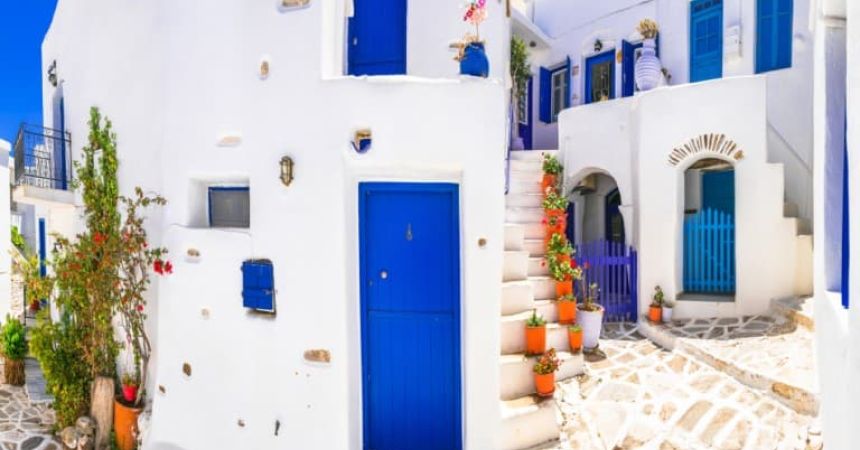
Lefkes, positioned inland, gives the island a different scale and character. Whitewashed architecture remains, but the setting shifts from harbors and beaches toward hills, village streets and a more enclosed landscape.
This matters because travelers can become overly coastal in the Cyclades.
A morning beach, lunch beside the water, afternoon beach and evening harbor dinner can be wonderful, but repeating the pattern for a week gradually flattens the experience.
One inland day changes that.
You begin to understand that Paros is not simply a ring of attractive beaches connected by roads. The island has an interior life and geography that deserves space in the itinerary.
That distinction gives Paros more substance without requiring another ferry.
Lefkes Should Be Experienced at Village Speed
Lefkes is not the kind of place that improves because you have given yourself exactly forty-five minutes.
The appeal lies partly in wandering, noticing small architectural details, taking a slower lunch or simply allowing the village to interrupt the more predictable beach rhythm.
This is where travelers sometimes misunderstand “things to do.”
Not every worthwhile place needs several ticketed attractions.
A village can be valuable because it changes how the day feels.
Paros is particularly good at this type of travel, where a morning can be enjoyable without producing a large sightseeing checklist by lunchtime.
For travelers looking for Cycladic village and coast journeys, that combination of lived-in settlement and beach time can be more satisfying than pursuing famous viewpoints throughout the day.
The Best Beach Is Usually the One That Fits the Rest of the Day
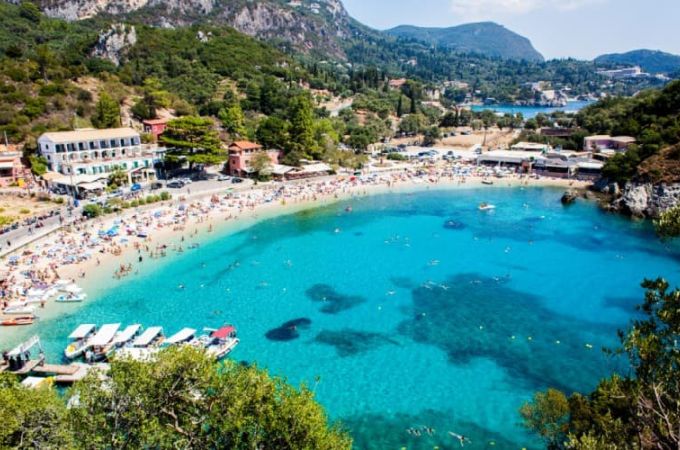
Paros has enough beaches that ranking them becomes less useful than understanding access and context.
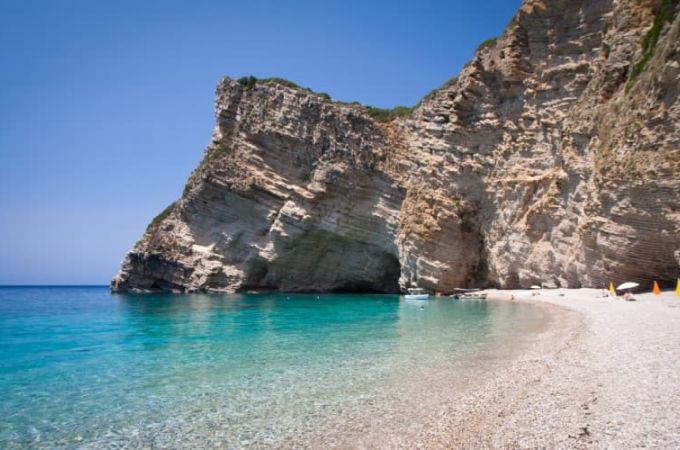
Kolymbithres receives attention for its distinctive granite formations and sheltered setting, but it should not automatically become the answer to every beach question. Other parts of the island offer different combinations of organized facilities, quieter stretches, wind exposure and proximity to accommodation.
Rather than driving across Paros because an online list placed one beach above another, choose according to the day.
If you are already exploring around Naoussa, use the northern coast intelligently. If your accommodation provides easy access to a good beach, consider the value of enjoying it rather than treating every swim as a sightseeing objective.
Island travel becomes more relaxing when beaches stop behaving like monuments that need to be collected.
Antiparos Works Because It Feels Like a Change Without Becoming a Complicated Journey
Antiparos deserves attention because its relationship with Paros is unusually useful.
It is close enough to become a genuine extension of the Paros experience without requiring the same logistical commitment as moving to another major Cycladic island and checking into another hotel.
That makes it attractive to travelers who want variety without additional accommodation changes.
The island has its own settlement, beaches and atmosphere, and the simple act of crossing creates a psychological change in the day. You leave one island and arrive on another, yet you can still return to the same hotel later.
The operational value is important.
Some travelers crave island hopping because they want the sensation of movement rather than because they genuinely need four different hotels.
Antiparos can deliver part of that variety without the packing.
A Day Trip to Antiparos Is Not Automatically Better Than Staying Overnight
Most travelers naturally approach Antiparos as an excursion from Paros, and that works very well.
However, couples or slower travelers particularly drawn to its quieter atmosphere may eventually ask whether it deserves an overnight stay.
The correct answer depends on the wider trip.
If Paros itself has only three or four nights, splitting accommodation usually creates more movement than value. With a longer Cyclades journey, Antiparos can become a deliberate slower chapter.
The decision should therefore reflect pace rather than completeness.
You do not need to sleep on every island you visit.
Nor do you need to treat every nearby island as a quick excursion.
The experience you want determines the accommodation structure.
You Do Not Need a Car Every Day
Paros can be explored without committing to a rental vehicle for the entire stay, particularly when accommodation is well located and travelers are comfortable using local transportation, taxis or arranged excursions.
A car becomes more valuable when the itinerary shifts toward inland villages, several beaches in different directions or spontaneous exploration.
This makes a mixed strategy sensible.
Stay on foot around your accommodation area. Use public or arranged transportation when the journey is straightforward. Rent a vehicle for the portion of the stay where freedom genuinely changes what you can do.
There is little reason to pay for a parked car while spending an entire afternoon in Naoussa.
At the same time, there is little joy in building a rural exploration day entirely around transport waiting times if you actually enjoy independent driving.
Use mobility as a tool rather than as part of your island identity.
Wind Is Part of Paros, Not an Error in Your Weather App
Paros sits in the Cyclades, where wind can influence how particular coastal days feel.
That does not mean the island should be avoided whenever conditions become breezy. It means beach choice, water activities and the exact coastline can matter more than travelers accustomed to protected resort beaches initially expect.
This is especially relevant to visitors interested in windsurfing and other water sports, for whom conditions that disappoint one beachgoer may be precisely the attraction.
The practical lesson is to remain flexible.
Do not attach emotional importance to visiting one specific beach on one specific afternoon if local conditions make somewhere else more comfortable.
Island travel improves considerably once the itinerary begins responding to the sea rather than insisting that the sea follow the itinerary.
Paros Makes an Excellent Middle Island
When Paros forms part of a broader Cyclades journey, its geography and character can make it particularly effective between more distinctive extremes.
Imagine arriving after Mykonos, where social energy and famous beach culture may dominate the stay. Paros can immediately feel calmer without becoming quiet enough to feel sleepy.
Continue later toward Santorini and the trip changes again as the volcanic caldera becomes the central visual experience.
Paros works well in the middle because it does not need to compete with either island.
Its role can be to normalize the pace.
This is valuable in longer Aegean island-hopping vacations, where every stop should contribute a different rhythm rather than repeating the previous island with slightly altered architecture.
Paros or Naxos Is the Wrong Question Until You Know How You Travel
Paros and Naxos are naturally compared because they are neighboring Cycladic islands with beaches, villages and substantial tourism infrastructure.
Yet choosing between them should not come down to which one has “better beaches.”
Paros generally appeals strongly to travelers who value a compact balance of attractive towns, social evenings, beaches and manageable inland exploration.
Naxos offers another kind of scale, with a stronger sense of a large agricultural interior and extensive landscape beyond the principal coastal base.
The distinction is not absolute, but it is useful.
If your priority is a socially polished island that still allows quieter days, Paros has a compelling case.
If deeper inland exploration is central, Naxos deserves serious consideration.
This blog does not need to decide Naxos for you.
It needs to make Paros legible.
Four Nights in Paros Usually Feel Better Than Two Perfectly Organized Ones
Paros is not difficult to sample quickly.
You could arrive, see Parikia, spend an evening in Naoussa, visit Lefkes, swim and continue to the next island.
You would have technically experienced several highlights.
What you would miss is the quality that makes Paros work.
The island benefits from repetition.
Returning to the same café. Discovering that one beach suits you enough to visit twice. Having a second evening in Naoussa when you no longer need Google Maps. Leaving an afternoon free because Antiparos took longer than expected and nobody cares.
This is why Paros generally rewards three to five nights better than an ultra-short stop, especially when it sits inside a larger island-hopping journey.
Time here does not need to produce more attractions.
It produces familiarity.
Families and Couples Use Paros Differently, and Both Can Be Right
Families often appreciate Paros because beach days can be combined with towns and short excursions without making every day feel like a major undertaking.
Accommodation location matters greatly, especially when younger children make repeated late-night transportation undesirable.
Couples may use the same island completely differently.
They can prioritize Naoussa evenings, a quieter hotel, a boat day, Antiparos and several slow lunches rather than an attraction-heavy schedule.
Neither group needs a different Paros.
They need a different daily rhythm.
This flexibility is one reason Paros works so well as part of bespoke Cyclades holidays for couples and families, where hotel location and transport style can be matched to the travelers rather than forcing everyone into the same island routine.
Paros Is Not Trying to Be Santorini or Mykonos
This is perhaps the most useful way to finish thinking about the island.
Paros does not offer Santorini’s overwhelming geological drama, and its nightlife does not need to compete with Mykonos.
That is an advantage.
Travelers can have beautiful village evenings without every street functioning as a major international attraction. They can enjoy beaches without feeling obligated to find the most fashionable beach club. They can explore traditional settlements without turning every hour into a photography exercise.
Paros allows a Greece holiday to become less performative.
That does not mean the island is undiscovered or untouched by tourism. Naoussa can be very busy, particularly during the main summer period, and desirable hotels need planning.
The difference is that tourism has not reduced the island to one defining experience.
There is room to move sideways.
How Magnificent Travel Would Position Paros Within a Greece Trip
Since 1997, Magnificent Travel has arranged Greece itineraries that range from first-time Athens and island combinations to longer customized journeys through several regions.
With Paros, we first ask what role the island needs to play.
If the journey already includes Mykonos, Paros may provide a calmer middle section. If Santorini follows, Paros can prevent the trip from feeling like one famous destination immediately competing with another. If Paros is the only island after Athens, we can give it enough nights to reveal the interior, coastline and Antiparos rather than treating it as a substitute for island hopping.
The transport sequence still matters, particularly because ferry schedules are seasonal and should be confirmed for actual dates before surrounding plans become inflexible.
The objective is not merely to fit Paros into the route.
It is to make sure the route gives Paros enough time to become itself.
Frequently Asked Questions About Paros
1. Is Parikia worth staying in if Naoussa looks more attractive?
Yes. Parikia offers genuine town atmosphere, convenient ferry access, restaurants and historical character while simplifying arrival and departure days. Travelers who prioritize seamless logistics or shorter stays may find that its practicality creates more usable island time than moving immediately after disembarking.
2. Does Naoussa become too busy in the evening?
It can become lively during peak travel periods, particularly around the harbor and popular dining areas. Travelers seeking atmosphere usually enjoy that energy, while those prioritizing quiet should choose accommodation carefully rather than assuming every property near Naoussa offers the same evening environment.
3. Is Antiparos worth visiting if I only have three nights in Paros?
It can be, but the decision should depend on what you would remove. Travelers with only three nights may gain more from experiencing Paros slowly rather than adding another island automatically, particularly when Naoussa, Parikia, villages and beach time already fill the stay.
4. Can I enjoy Paros without visiting every famous beach?
Absolutely. Paros works particularly well when travelers choose beaches according to accommodation, wind conditions and the rest of the day's plans. Repeatedly crossing the island to collect highly ranked beaches can create more driving while producing very little additional enjoyment.
5. Is Lefkes still worthwhile if I am mainly coming for the coast?
Yes, because the inland setting creates a useful contrast with Paros's beach and harbor environments. Even a few hours away from the coastline can make the island feel considerably more complete, particularly for travelers spending four nights or longer.
6. Would Paros suit travelers who do not enjoy nightlife?
Yes. Naoussa has a strong evening scene, but nightlife does not define the entire island. Travelers can base themselves elsewhere, focus on villages, beaches and slower dining, or simply enjoy Naoussa earlier in the evening before its social atmosphere becomes more energetic.
7. Is Paros practical for travelers who prefer not to drive in Greece?
Yes. A well-positioned base, local transport, taxis and arranged excursions can cover many common journeys. Renting a vehicle becomes more useful when travelers want repeated access to inland villages, dispersed beaches and spontaneous exploration rather than following established routes.
8. Why do some couples choose Paros instead of Mykonos?
Paros can provide stylish dining and attractive harbor evenings while generally offering a broader balance between social life, villages, beaches and quieter exploration. Couples who want energy without making nightlife the defining feature of the island may find that combination particularly appealing.
9. Is Paros a good island for a longer beach-focused stay?
Yes, especially when travelers enjoy changing coastal environments rather than staying at one resort. However, Paros becomes more rewarding when several beach days are mixed with village exploration, Parikia, Naoussa or Antiparos rather than treating the whole stay as a shoreline itinerary.
10. Should I stay near the ferry port on my final night?
Usually there is no need to change hotels solely for the last night if your existing base has reliable transfer arrangements. An unnecessary hotel move can create more inconvenience than an early transfer, although very early departures should be considered when choosing the original accommodation.
11. Does Paros work better as part of island hopping or as the only island?
Both approaches can work. In island hopping, Paros offers a useful change of pace between stronger destination personalities. As the only island, a longer stay allows travelers to explore villages, coastlines and Antiparos without repeatedly packing for another ferry.
12. What is the planning mistake that most changes a Paros holiday?
Choosing accommodation before deciding how evenings and sightseeing days should work can create unnecessary transportation. Paros is much more enjoyable when the base reflects whether you prioritize ferry convenience, Naoussa nightlife, beach access or independent exploration around the island.

A travel professional specializing in tailor-made travel planning, guest experience management, and multi-destination tourism operations.
With over 23 years of experience in the travel industry, he designs and manages private and cultural tours for international travelers across Türkiye, Greece, Egypt, Jordan, Morocco, and other destinations.
He has strong expertise in both online and face-to-face guest communication, sales processes, and end-to-end travel operations.
Working closely with hotels, travel agencies, and local partners, he ensures smooth coordination and high-quality travel experiences at every stage of the journey.
His focus is on delivering personalized, reliable, and seamless travel experiences for international guests worldwide.