Peloponnese Greece: Decide What to Leave Out Before You Go
Updated: August 2026
The Peloponnese encourages bad itinerary behavior.
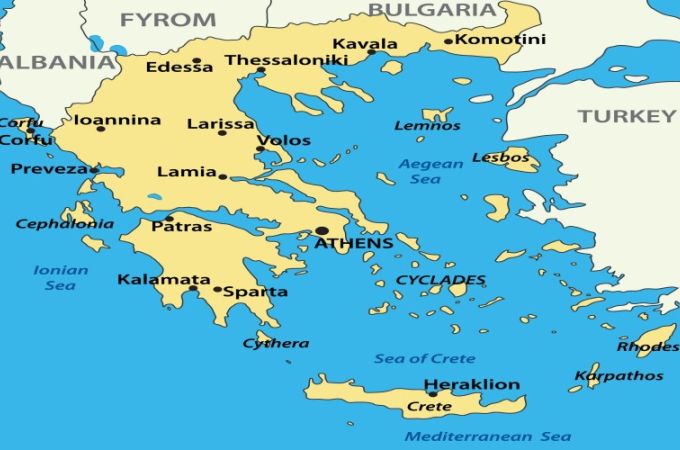
Look at the map for the first time and almost everything appears tempting. Ancient Corinth is close to Athens. Nafplio seems impossible to exclude. Mycenae and Epidaurus belong to the foundations of ancient Greek history. Farther south, Monemvasia appears to rise directly from another century, while Mani offers a harsher landscape of stone villages, mountains and coastline. Olympia waits in the west, and Mystras near Sparta introduces an entirely different Byzantine layer.
The natural response is to connect all of them.
That is usually where the trouble starts.
The Peloponnese is not one destination that happens to contain many attractions. It is a large peninsula made up of regions that can support very different journeys, and the roads between them matter almost as much as the places themselves.
A satisfying first trip therefore requires an unusual discipline: deciding what not to see.
Once you stop treating every famous name as compulsory, the Peloponnese becomes one of the most rewarding areas of Greece to plan.
Forget the Circle on the Map
The Peloponnese looks conveniently self-contained because water surrounds most of it and the Corinth Canal creates a visually obvious gateway from mainland Greece.
That geographical neatness can be misleading.
Travelers often assume they should make a complete circuit simply because a circuit appears logical on a map. Yet a loop only works when the number of nights justifies the distance. Otherwise, it creates a trip where every morning begins with luggage and every afternoon ends with another hotel.
Instead of beginning with a circular route, divide the peninsula mentally into travel territories.
The northeast contains the easiest concentration of major classical sites and Nafplio. The southeast pulls toward Monemvasia and the Laconian landscape. The central-southern area introduces Sparta, Mystras and routes toward Mani. The southwest brings Messinia and Kalamata, while Olympia sits much farther west.
You do not need all of them.
A route becomes stronger when neighboring experiences reinforce one another rather than when famous names are connected simply because the road exists.
Four Nights and Eight Nights Should Produce Different Maps
Duration does more than determine the number of attractions.
It determines how large your Peloponnese should be.
With three or four nights, the northeastern section can already provide a remarkably complete journey: archaeological sites, Nafplio, countryside and coastal atmosphere without turning every day into a transfer.
With five or six nights, travelers can begin pushing farther south or west, but the choice should still be selective.
Seven to ten nights changes the possibilities substantially. A second regional identity can enter the journey without destroying its rhythm, and a carefully designed loop becomes much more defensible.
The planning error occurs when a four-night itinerary is simply a compressed eight-night itinerary.
It should not be.
Shorter trips need a smaller geographical footprint, not faster sightseeing.
Nafplio Can Be a Base Without Becoming the Subject of the Entire Trip
Nafplio is one of the most useful places in the Peloponnese because it solves several itinerary problems simultaneously.
It is attractive enough to reward staying after sightseeing ends, has restaurants and evening life, and sits conveniently for several important northeastern archaeological sites. This allows travelers to unpack for multiple nights rather than changing hotels every time the historical period changes.
That does not mean this page should become a Nafplio guide.
Its role in Peloponnese planning is strategic.
If Mycenae and Epidaurus are priorities, Nafplio can support them while providing a completely different atmosphere in the evening. Instead of sleeping beside each archaeological site, travelers return to a living town where dinner and walking require no additional cultural agenda.
That combination of daytime significance and evening ease is one reason the northeast works particularly well for a shorter first Peloponnese visit.
Mycenae and Epidaurus Belong Together Geographically, Not Historically
Travel itineraries frequently pair Mycenae and Epidaurus, which can give the impression that they represent one historical chapter.
They do not.
Mycenae reaches into the Bronze Age world associated with Mycenaean civilization, monumental fortifications and royal power. Epidaurus is strongly associated with the sanctuary of Asklepios and its celebrated ancient theater.
Their historical meanings are distinct.
Their planning relationship is practical: both can fit naturally into northeastern Peloponnese exploration without requiring a major relocation.
That distinction matters for cluster separation. Detailed explanations of the Lion Gate, royal graves, Asklepios or theater acoustics belong to dedicated archaeological content.
The Peloponnese page needs to answer a different question:
Can these sites be combined without making the day feel like an archaeological marathon?
Usually, yes—provided the traveler genuinely enjoys archaeology and does not attempt to attach several additional major stops simply because they appear nearby.
Archaeological Fatigue Is a Real Itinerary Cost
A route can be historically magnificent and emotionally flat.
This happens when travelers move from ancient site to ancient site without giving themselves enough contrast to process what they have seen.
Mycenae in the morning, Epidaurus after lunch, another museum later and another archaeological site the following morning may look impressive on paper. By the third set of foundations, even historically interested travelers can begin losing concentration.
The Peloponnese offers an easy solution because its strongest experiences belong to different categories.
A serious archaeological morning can be followed by an afternoon in Nafplio. A Byzantine site can precede a coastal evening. A mountain drive can interrupt several days dominated by classical history.
This is not wasted time between important attractions.
Contrast is part of how travelers remember them.
Monemvasia Is Not “On the Way” Unless Your Route Says It Is
Monemvasia creates one of the strongest visual temptations in southern Greece: a fortified settlement attached to the mainland by a narrow causeway, with stone lanes and historic architecture compressed beneath a vast rock.
It is easy to look at photographs and immediately add it.
The harder question is what adding Monemvasia does to everything before and after it.
For a route deliberately moving into southeastern Laconia, it can become a defining stop. For a short itinerary centered on Nafplio and classical archaeology, including it may introduce substantial driving simply to collect another famous destination.
This is where Peloponnese planning needs to become ruthless.
A place can be exceptional and still not belong in your trip.
Monemvasia deserves enough time that arrival itself is not followed immediately by anxiety about the next day's departure.
Mani Is Not a Detour for People Who Really Wanted Olympia
The Mani Peninsula changes the tone of the journey.
Its stone-built settlements, rugged terrain, mountains and coastline produce an environment quite different from the softer image many travelers associate with a Greek holiday.
It also rewards road travel that allows stops rather than treating the region as a corridor.
This makes Mani a commitment.
Trying to include it briefly while simultaneously pursuing Olympia, Nafplio, Monemvasia and several archaeological sites creates a journey whose geographical ambition overwhelms its emotional depth.
Travelers drawn strongly to landscape, traditional settlements and less urban environments may reasonably give Mani priority over western archaeological coverage.
Someone visiting Greece primarily for classical history may make the opposite decision.
Neither traveler is missing the “real Peloponnese.”
They are choosing different Peloponneses.
Olympia Can Be Essential and Still Be Wrong for Your Route
Few names carry greater historical recognition than Olympia, birthplace of the ancient Olympic Games and one of Greece's most significant archaeological destinations.
Its importance, however, does not move it closer to the eastern Peloponnese.
That sounds obvious, yet itinerary design often treats significance as though it eliminates distance.
If Olympia is a major personal priority, the route should acknowledge that from the beginning. Build western Peloponnese into the journey rather than squeezing Olympia between destinations that naturally belong to another geographical corridor.
This is particularly important on shorter trips.
Driving several additional hours for a famous archaeological site may reduce the time available at every destination surrounding it.
The correct question is not whether Olympia is worth visiting.
It unquestionably can be.
The question is whether your available nights allow Olympia to be visited well.
Mystras Changes the Historical Century Without Changing Countries
Travelers who associate the Peloponnese primarily with ancient Greece can be surprised by Mystras.
Near modern Sparta, the fortified Byzantine site climbs a hillside beneath the Taygetos mountains and introduces a medieval world of churches, fortifications and ruined structures.
Its value within a longer Peloponnese journey is partly historical contrast.
After Mycenae, Epidaurus and other classical or pre-classical environments, Mystras changes the visual and intellectual language of the trip.
Again, this article should not absorb a detailed Mystras guide. The operational insight is that historical diversity can be used deliberately to prevent archaeological repetition.
A well-built Peloponnese itinerary does not merely move through geography.
It changes periods.
Build the Route by Sacrifice, Not Accumulation
For a first trip, this decision framework is more useful than another “top ten places” table.
| If You Refuse to Miss... | Protect This Territory | Most Likely Sacrifice on a Short Trip |
|---|---|---|
| Mycenae + Epidaurus | Northeast | Deep southern exploration |
| Nafplio + relaxed evenings | Northeast | Fast peninsula-wide loop |
| Monemvasia | Southeast | Western detour |
| Mani landscapes | Deep south | High archaeological site count |
| Mystras | Laconia / south-central | Some coastal time |
| Olympia | West | Southeastern reach |
| Kalamata + Messinia | Southwest | Northeast-heavy sightseeing |
The important column is the last one.
Every serious itinerary choice has a cost.
Once travelers accept that, route planning becomes considerably more intelligent.
Hotel Changes Need to Earn Their Place
There is a tendency in private touring to assume that sleeping in more locations creates a deeper journey.
Sometimes it does.
Often it creates luggage management.
One-night stays are particularly expensive in invisible time. You arrive, check in, unpack enough to function, organize dinner, sleep, repack and leave. Repeat that four times and a meaningful part of the journey has been spent managing accommodation.
The Peloponnese is better suited to regional bases whenever geography allows.
Two or three nights in Nafplio can support northeastern exploration. A longer journey can then move south for another meaningful base rather than stopping overnight in every town encountered along the way.
For travelers considering privately designed Peloponnese journeys, this is where professional routing adds more value than simply providing a driver: the objective should be reducing unnecessary hotel transitions without creating exhausting day trips.
Scenic Roads Are Valuable Until Nobody Is Looking at the Scenery
Driving through the Peloponnese can be one of the pleasures of the trip.
Mountain landscapes, olive groves, coastal roads and small settlements create transitions that make the peninsula feel much larger and more varied than an attraction list suggests.
But there is a limit.
Three scenic hours can be enjoyable. Several consecutive days containing three or four hours of driving begin to feel different, particularly for the person behind the wheel.
Google Maps cannot measure travel fatigue.
Nor does it know whether you stopped for lunch, encountered summer traffic, spent longer at a site than expected or simply wanted coffee in a village that looked interesting.
A good route therefore contains margin.
If every day works only when every stop lasts exactly as scheduled, the itinerary is already too tight.
Self-Drive and Private Touring Produce Different Kinds of Freedom
The Peloponnese is well suited to independent driving for travelers comfortable with Greek roads, navigation and parking. A car allows spontaneous stops and makes smaller settlements much easier to incorporate.
Private transportation creates another kind of freedom.
Nobody in the traveling party has to concentrate on the road, parking becomes someone else's problem, and longer sightseeing days do not end with a tired traveler driving to the next hotel.
The decision should not be framed simply as cost versus luxury.
Consider the route itself.
A couple spending three nights around Nafplio may enjoy renting a car. A group undertaking a complex multi-region journey may value a professional driver considerably more.
Transportation should match route difficulty, not traveler status.
Summer Changes the Order of the Day
The Peloponnese can be intensely rewarding in summer, but archaeological sites and exposed landscapes require sensible timing.
A plan that places a major archaeological site in the strongest afternoon heat and reserves the cooler morning for driving has solved the day backwards.
Earlier sightseeing can make walking more comfortable, while lunch and road movement can occupy hotter periods where practical. Coastal time then provides another way to rebalance the day.
Spring and autumn often make extensive cultural touring easier because walking conditions can be more forgiving, but seasonality deserves dedicated content rather than turning this regional page into another weather guide.
The operational principle remains simple:
temperature should influence sequence, not merely packing.
Children Often Prefer the Peloponnese Once Adults Stop Teaching It
The region can work extremely well for families because castles, theaters, fortified towns, beaches and landscapes can interrupt archaeological sightseeing naturally.
Problems begin when every ruin becomes a lesson.
Children do not need to understand the full chronology of Mycenaean civilization to be impressed by massive stone fortifications. An ancient theater can become interesting through its physical scale before anyone explains its historical importance.
The Peloponnese offers enough variety to alternate intellectual attention with movement and ordinary holiday time.
Families should exploit that advantage rather than constructing a junior version of an adult archaeological tour.
One substantial site in a day may be enough.
The Peloponnese Can Replace an Island — It Does Not Have to Compete With One
One of the more useful itinerary decisions is recognizing that coastal Greece does not begin only after boarding a ferry.
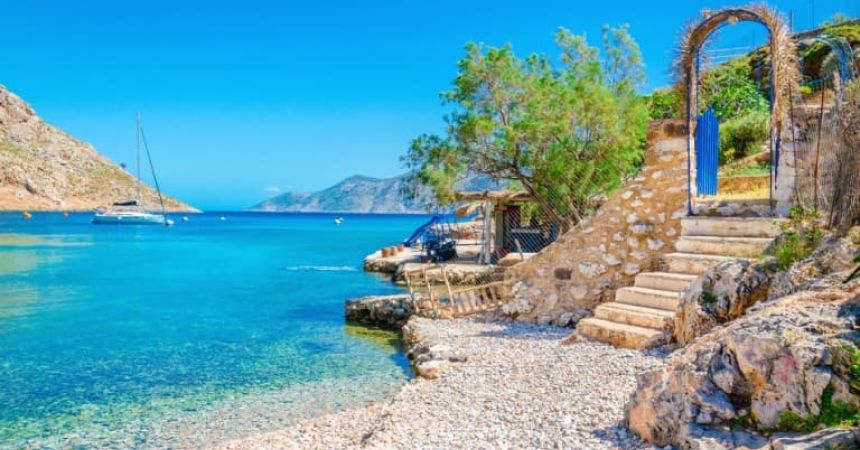
A Peloponnese journey can combine historical sites, waterfront towns, swimming and landscapes without introducing another flight or ferry transition.
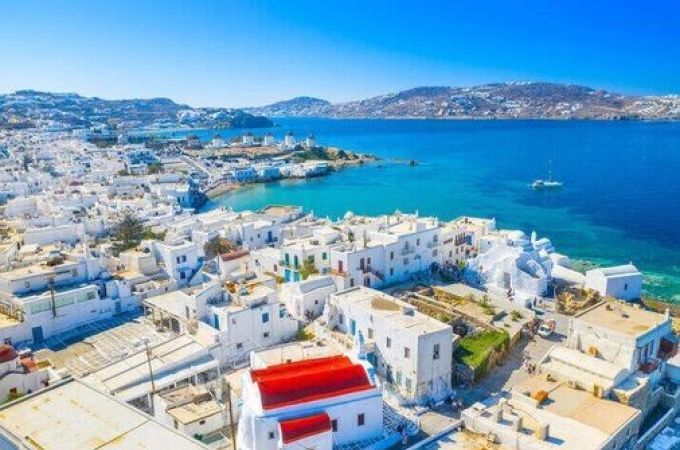
That does not make the peninsula an island substitute in every case. Travelers dreaming specifically of Cycladic architecture or an island-hopping experience should follow that interest.
However, someone adding an island simply because “a Greece trip needs one” may discover that Athens and southern Greece touring already provides the combination of culture and coast they wanted.
Removing a ferry can also create additional nights for the Peloponnese itself.
Sometimes the best island-hopping decision is not to hop.
The Best Route Is the One That Survives a Long Lunch
There is a useful final test for any Peloponnese itinerary.
Imagine lunch takes ninety minutes longer than expected because the food is excellent and nobody wants to leave.
Does the day collapse?
If the answer is yes, there is too much in it.
The peninsula rewards travelers who can stop at a village, remain at an archaeological site because the guide has made it unexpectedly fascinating, or reach the coast and decide that the next scheduled stop no longer matters.
For Greece journeys through the Peloponnese and mainland, operational quality comes from preserving that freedom while keeping the geography coherent.
You do not need to complete the peninsula.
You need enough time in the parts you chose that you stop wondering about the places you left out.
That is when the route begins to feel like a journey rather than an inventory.
Frequently Asked Questions About Planning the Peloponnese
1. Should I enter and leave the Peloponnese through the same route?
Not necessarily. An out-and-back structure can work for northeastern visits, while longer journeys may benefit from continuing through another region. The right shape depends on your next destination, available nights and whether creating a loop genuinely reduces driving rather than merely looking elegant.
2. Can I base myself entirely in Nafplio for a Peloponnese trip?
For a short northeastern Peloponnese visit, Nafplio can work extremely well as a single base. It becomes less practical when Monemvasia, Mani, Olympia or the southwest become priorities, because repeated long-distance returns would consume too much of each day.
3. Is Corinth worth stopping at immediately after leaving Athens?
It can be when Corinthian history or archaeology genuinely interests you and the stop fits the day's route. It should not automatically be added simply because travelers cross into the Peloponnese nearby; arrival day can become overloaded surprisingly quickly.
4. Can I combine Mycenae and Epidaurus without hiring a guide?
Yes, but transportation and opening times need to be coordinated, particularly if you are driving independently. Historical interpretation adds considerable value because the two sites belong to different contexts, despite frequently being combined geographically in the same sightseeing day.
5. Should I sleep in Monemvasia itself or visit and continue driving?
Staying nearby or within the historic environment can allow Monemvasia to be experienced after daytime visitor patterns change. Continuing immediately may suit tighter routes, but travelers should consider whether a long onward drive undermines the reason they traveled so far southeast.
6. What is the best way to prevent archaeological-site fatigue?
Limit the number of major sites visited consecutively and alternate archaeology with towns, landscapes, meals or coastal time. The Peloponnese contains enough variety that travelers rarely need to schedule several demanding historical visits back-to-back merely for geographical efficiency.
7. Is Olympia worth adding to a four-night Peloponnese itinerary?
Only when Olympia ranks among your highest priorities. Its western location can distort a short northeastern or southern itinerary, so adding it simply because of its international importance may create considerably more driving than the available nights comfortably support.
8. How much luggage should I take on a multi-stop Peloponnese route?
Travelers changing hotels frequently benefit from packing more lightly because luggage handling becomes a repeated part of the journey. If the trip is embedded within a longer Greece holiday, consider organizing bags so that one-night stops do not require completely unpacking larger suitcases.
9. Do I need an international driving permit for a Peloponnese rental car?
Requirements can depend on the driver's license, nationality and rental company's current policies. Confirm documentation directly for your circumstances before arrival rather than relying on older online reports, particularly when the rental vehicle is essential to the entire itinerary.
10. Should I pre-book every archaeological entrance before traveling?
Not necessarily every entrance, but major-site arrangements should be reviewed for the actual travel period, especially during busy seasons. Advance planning should protect important visits without turning every hour of a road journey into an inflexible appointment.
11. What should I remove first when my Peloponnese itinerary becomes too busy?
Remove the destination creating the greatest geographical detour relative to its personal importance. Do not automatically eliminate the least famous place; a quiet coastal stay may contribute more to the overall journey than another internationally recognized site several hours away.
12. How do I know whether my Peloponnese route has too many hotel changes?
If you are repeatedly staying one night merely to move closer to the following day's attraction, reconsider the structure. Hotel changes should unlock a genuinely different region or substantially reduce driving, rather than shifting accommodation by small distances every evening.

A travel professional specializing in tailor-made travel planning, guest experience management, and multi-destination tourism operations.
With over 23 years of experience in the travel industry, he designs and manages private and cultural tours for international travelers across Türkiye, Greece, Egypt, Jordan, Morocco, and other destinations.
He has strong expertise in both online and face-to-face guest communication, sales processes, and end-to-end travel operations.
Working closely with hotels, travel agencies, and local partners, he ensures smooth coordination and high-quality travel experiences at every stage of the journey.
His focus is on delivering personalized, reliable, and seamless travel experiences for international guests worldwide.