Planning a Greek Mythology Journey Through Greece
Updated: August 2026
A mythology-focused trip through Greece can go wrong in an unexpectedly modern way: too many pins on a map.
Athena draws you toward Athens, Apollo toward Delphi, Poseidon toward Cape Sounion, Zeus toward several competing traditions, the Minotaur toward Crete, and Agamemnon toward Mycenae. Continue reading mythology and the potential itinerary grows faster than the available vacation.
The solution is not to visit every place connected with a famous story. It is to choose places where mythology, surviving landscape and archaeological evidence create something worth experiencing together, then arrange those places as a journey that works geographically.
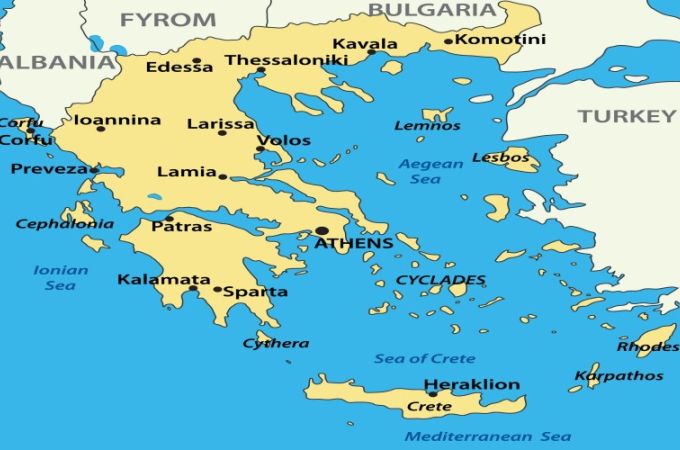
For a first mythology-led trip, Athens, Delphi and the Peloponnese form an especially coherent mainland foundation, while Crete becomes a strong addition when Minoan civilization and the stories surrounding Minos, the Labyrinth and the Minotaur are central to your interest. Cape Sounion can add Poseidon without requiring another hotel base, whereas distant additions should earn their place by contributing something genuinely different.
That distinction matters because mythology in Greece is not preserved as a neat trail of locations where legendary events can be proved to have happened. Myth, religion, political identity, literature and archaeology overlap in much more interesting ways.
A rewarding journey leaves room for that ambiguity.
First Decide What You Mean by a “Mythology Trip”
Not everyone interested in Greek mythology wants the same holiday.
Some travelers have read Homer and want landscapes associated with heroic traditions. Others know mythology through school, novels, films or modern retellings and mainly want to stand somewhere that makes those stories tangible. Families may be looking for a cultural framework that gives children a reason to care about ruins they might otherwise find abstract.
Those motivations produce different routes.
A mythology trip can be built primarily around gods and sanctuaries, around heroes and legendary kingdoms, or around the point where myth and archaeology begin to overlap. Trying to give equal attention to all three usually produces a journey that is broad but surprisingly shallow.
Before choosing destinations, ask which names brought you here in the first place.
If the answer is Athena, Apollo and Poseidon, mainland Greece may already provide most of what you want. If Minos, Ariadne and the Minotaur dominate your imagination, leaving Crete out simply because it complicates transportation would defeat the purpose of the journey.
Theme should determine geography, not the other way around.
Athens Works Best as the Vocabulary Lesson
Athens is the natural starting point for many mythology journeys, although not because it contains every important Greek myth.
Its strength is concentration.
The Acropolis immediately introduces Athena, the city's patron goddess, while the wider ancient landscape gives travelers a physical setting in which religion, civic identity and mythology were not separate categories in the modern sense.
The contest between Athena and Poseidon for patronage of Athens provides an accessible narrative, but the real value lies in understanding why such stories mattered to communities. Myths were not simply entertaining tales about temperamental gods. They helped explain origins, relationships with places and religious practices.
This is where a knowledgeable guide can prevent the experience from becoming a succession of entertaining legends disconnected from what survives.
The Acropolis also deserves its own detailed treatment, so this article should not become another monument-by-monument guide. Within the mythology route, Athens has a different job:
it teaches you how to read myth in relation to an actual ancient city.
Once you understand that relationship, Delphi becomes considerably more interesting.
Delphi Changes the Question From “What Happened?” to “What Did People Believe?”
Delphi occupies a remarkable position in Greek mythology and ancient religion through its association with Apollo and the oracle.
For a mythology traveler, however, its greatest value may be that it forces a change in perspective.
At a legendary location, the instinctive modern question is often, “Did this really happen?” Delphi encourages a better one: what did ancient people do because they believed this place mattered?
The sanctuary attracted visitors seeking consultation, cities dedicated monuments there, and its importance extended far beyond a single local community. The surviving archaeological landscape therefore allows mythology, religion and documented ancient behavior to meet in ways that a purely literary story cannot.
Its mountain setting matters as well. Reading about a sacred landscape and physically moving through one produce very different impressions.
That makes Delphi more than another archaeological stop added after Athens. Within a mythology-focused journey, it shifts the traveler from stories about gods toward understanding how divine authority could influence human decisions.
Cape Sounion Adds Poseidon Without Breaking the Route
The Temple of Poseidon at Cape Sounion is useful for mythology-focused planning because it can deepen the theme without creating another complicated stage of the trip.
Its coastal position makes the connection with Poseidon immediately legible, even for visitors with limited knowledge of ancient religion. Sea, temple and landscape work together so naturally that the setting itself does much of the interpretive work.
There are also literary and mythological associations connected with the cape, including the story of King Aegeus, whose name became associated with the Aegean Sea in later tradition.
From a route-design perspective, however, Sounion's greatest strength is proportionality.
You do not need to move hotels simply to introduce another major deity into the journey. It can sit around an Athens stay without turning the mythology theme into destination collecting.
That makes it particularly valuable for travelers who want breadth but have limited time.
Mycenae Is Where Myth and Archaeology Become Productively Uncomfortable
Mycenae creates one of the most interesting experiences on a mythology journey because visitors arrive carrying stories about Agamemnon, Clytemnestra, the Trojan War and the House of Atreus, then encounter the remains of an actual Bronze Age center.
The two worlds should not be collapsed into one.
Archaeological evidence demonstrates the existence and importance of Mycenaean civilization, but that does not mean every later literary story associated with Mycenae becomes historical fact.
That distinction is not disappointing; it is precisely what makes the site intellectually rewarding.
Travelers can stand before the Lion Gate or encounter monumental tomb architecture while considering how memories of Bronze Age places may have survived, changed and entered later Greek storytelling.
A good mythology trip should create several moments like this, where the answer is more interesting than “the myth is true” or “the myth is fictional.”
For travelers interested in Greece journeys inspired by mythology and ancient history, Mycenae can become one of the strongest bridges between those two ways of understanding the past.
The Peloponnese Should Not Become a Mythological Scavenger Hunt
Once Mycenae enters the itinerary, the Peloponnese presents a dangerous amount of possibility.
Corinth, Argos, Epidaurus, Sparta, Olympia and numerous smaller places carry historical, religious or mythological associations. A determined traveler can build an enormous list and spend the next several days driving between names recognized from ancient stories.
That does not necessarily produce a better trip.
The Peloponnese works best when a few sites are chosen because they deepen the particular mythology thread you are following. Mycenae is especially strong for heroic tradition and the Bronze Age imagination, while other locations may be included because of genuine personal interest rather than an obligation to complete a mythical checklist.
Nafplio can also provide a useful base or change of rhythm in some mainland journeys, allowing the trip to contain ordinary evenings and contemporary Greek life between archaeological experiences.
Thematic travel still needs breathing room.
Crete Deserves Several Nights or It Probably Does Not Deserve the Detour
Crete changes the journey more substantially than Sounion or Mycenae because reaching the island introduces another major transportation sector and usually another hotel base.
For travelers fascinated by the Minotaur, King Minos, Ariadne, Theseus or the broader relationship between later Greek mythology and Minoan Crete, that effort can be entirely justified.
Knossos naturally becomes central.
The important interpretive caution is that the archaeological remains belong to the Minoan civilization, while the familiar Labyrinth and Minotaur stories come through later Greek tradition. Visitors should resist turning every corridor at Knossos into literal evidence of the myth.
The relationship is more nuanced and more interesting.
Crete therefore works best when treated as a substantial chapter of the journey rather than a quick mythological side trip. Give the island enough time for its archaeological and cultural identity to exist beyond one story.
If you only have a day or two to spare, strengthening the mainland route may provide greater value than forcing Crete into the itinerary.
Choose Destinations by What They Add to the Story
A mythology route becomes easier to edit when each destination is given a distinct interpretive role.
| Place | What It Adds to the Journey | Why It Is Different |
|---|---|---|
| Athens | Athena, civic identity and mythology within an ancient city | Shows how myth and community could intersect |
| Delphi | Apollo, prophecy and sacred authority | Connects belief with an important sanctuary |
| Cape Sounion | Poseidon and the maritime landscape | Makes geography part of the mythological experience |
| Mycenae | Heroic tradition and Bronze Age archaeology | Creates tension between legend and historical evidence |
| Wider Peloponnese | Multiple heroic and religious traditions | Allows selective thematic expansion |
| Crete | Minos, Ariadne, Theseus and the Minotaur tradition | Introduces a different civilization beneath later mythology |
This table is intentionally not a ranking.
The best mythology destination is the one that contributes a chapter missing from the journey you are already building.
Mythology and Archaeology Need to Be Kept in Conversation, Not Blended Together
Travel writing sometimes presents Greek myths as though archaeology has confirmed every legendary character, while other explanations become so cautious that they drain the stories of all cultural significance.
Neither approach is particularly helpful.
Mythology can preserve ideas about places, communities, gods, ancestors and the distant past without functioning as a modern historical record. Archaeology investigates material evidence through an entirely different method.
Travelers benefit from hearing both voices.
At Mycenae, ask what archaeology tells us about the Bronze Age center and separately why later Greeks associated that landscape with Agamemnon. At Knossos, understand the Minoan palace complex while also exploring how the Labyrinth tradition became attached to Crete.
The gap between those explanations is not a problem that needs to be repaired.
It is part of what makes Greece fascinating.
Children Often Understand Archaeological Sites Better Through Myth
Families can gain particular value from mythology because stories provide children with characters and conflicts before they encounter ruined architecture.
A child who already knows Athena and Poseidon may approach the Acropolis with a different level of curiosity. The Minotaur gives Knossos an imaginative framework, while Apollo can make Delphi feel like more than another collection of foundations.
The challenge is proportion.
A good family guide can use mythology to open the door and then gradually introduce archaeology, ancient religion and the difference between story and evidence. Turning every ruin into a dramatic legend may entertain children temporarily but teaches them surprisingly little about the actual place.
For family-focused Greek mythology travel experiences, storytelling works best as the beginning of curiosity rather than the end of explanation.
Teenagers Can Handle the Ambiguity Adults Often Remove
Older children and teenagers may actually respond well to the uncertainty surrounding mythology and archaeology.
Instead of presenting a simplified version in which “this is where X happened,” ask what evidence survives, when the story was written down, why different versions exist and why a community might have associated itself with a particular hero or deity.
Those questions turn mythology into investigation.
They also provide an excellent antidote to archaeological fatigue because each site presents a problem rather than another lecture.
This approach can be especially effective at Mycenae and Knossos, where popular imagination and archaeological interpretation frequently collide.
A mythology trip does not have to simplify Greece for younger travelers.
Handled well, it can make the country more intellectually complicated in exactly the right way.
A Guide Is Most Valuable Where the Stones Stop Explaining Themselves
Some mythological connections are visually immediate. Poseidon's temple above the sea at Sounion hardly requires an elaborate introduction before the relationship between deity and landscape becomes apparent.
Other sites are much less self-explanatory.
Ruined foundations rarely tell visitors which structures mattered most, how sacred movement worked or which popular modern assumptions are historically questionable. This is where licensed guides and specialist interpretation can add substantial value.
The goal should not be to hear the maximum number of myths per hour.
Good interpretation distinguishes between mythology, ancient religious practice, literary tradition, archaeological evidence and later storytelling without making the experience feel like a university seminar.
That distinction is a form of EEAT particularly appropriate to this topic.
Do Not Force Troy Into a Greece Itinerary Because You Read Homer
One of the most useful mythology-planning decisions is knowing when not to add a place.
Troy is central to the world of Homeric tradition, but the archaeological site lies in modern Turkey. If you are already combining Turkey and Greece, that can create a fascinating thematic connection. If you are planning a Greece-only journey, adding another country simply to make the mythology list more complete changes the trip substantially.
The same principle applies inside Greece.
A place should not enter the itinerary merely because its name appears in a myth you recognize.
Every addition has a logistical cost.
The strongest thematic routes are curated rather than comprehensive.
Four Mythology Stops Can Be Better Than Ten
The danger of thematic travel is assuming that more examples strengthen the theme.
Often the opposite happens.
Athens followed by Delphi, Mycenae and Crete gives the traveler four substantially different relationships with mythology: civic identity, divine authority, heroic tradition and later stories attached to a Bronze Age civilization.
Adding six more places may increase the number of myths encountered without adding six new ways of understanding them.
This is where privately designed Greece tours built around legendary places can benefit from restraint. A route should be judged by whether each stop changes the conversation, not whether every famous god and hero receives geographical representation.
Mythology is too large to complete.
A vacation should not try.
Let Modern Greece Remain Visible
A mythology-focused journey can become so absorbed in antiquity that contemporary Greece disappears.
That would be a mistake.
The country is not an archaeological theme park, and the ancient stories survive within landscapes where people commute, farm, swim, eat, worship and raise families today.
Leave space for an evening in Nafplio without a mythological objective. Walk through modern Athens after leaving the archaeological zone. If you travel to Crete, experience the island beyond Knossos.
These periods do not weaken the theme.
They create contrast and prevent the journey from becoming mentally exhausting.
They also remind travelers that ancient heritage is one layer of Greece rather than its entire identity.
Build a Mythology Journey Around Questions, Not Checklists
The most memorable mythology trips usually leave travelers with better questions than the ones they brought.
Why did Athena become so closely connected with Athens? Why did Delphi acquire authority across the Greek world? What happens when a place known through later literature is excavated by archaeologists? Why do different versions of the same myth survive? Why did particular landscapes become sacred?
Those questions connect Athens, Delphi, Mycenae and Crete without pretending that they belong to one tidy historical narrative.
That is ultimately the best reason to plan Greece around mythology.
You arrive knowing famous names and stories, but the physical places complicate them. Temples introduce religion, museums reveal objects behind the literature, landscapes explain why certain locations could acquire extraordinary meaning, and archaeology constantly reminds you that evidence and storytelling operate differently.
A mythology journey succeeds when Zeus, Athena, Apollo, Minos or Agamemnon stop being isolated characters from a book and become entry points into understanding how ancient Greeks imagined their world.
That experience is far more valuable than simply saying you visited twelve places where something legendary supposedly happened.
Frequently Asked Questions About Planning a Greek Mythology Trip
1. Which place should a first Greek mythology trip begin with?
Athens is particularly effective because the Acropolis introduces mythology alongside religion, civic identity and surviving ancient architecture. Beginning there gives travelers useful context before encountering places such as Delphi or Mycenae, where the relationship between story and archaeological landscape changes considerably.
2. Is Delphi mainly important because of Apollo?
Apollo and the oracle are central to Delphi's identity, but the site becomes more meaningful when travelers understand its wider religious significance and the people and communities who interacted with the sanctuary. It demonstrates how belief could influence real ancient behavior.
3. Can I see places connected with Poseidon without adding another overnight destination?
Cape Sounion provides one of the strongest possibilities because it can often be incorporated around an Athens stay. Its coastal Temple of Poseidon creates an unusually direct relationship between deity, architecture and landscape without necessarily requiring another hotel base.
4. Is the Labyrinth at Knossos historically proven?
Visitors should distinguish the archaeological palace complex at Knossos from later Greek traditions surrounding Minos, the Labyrinth and Minotaur. The mythology is culturally important, but it should not be presented as straightforward archaeological proof that the legendary Labyrinth literally existed as described.
5. Was Agamemnon a real king of Mycenae?
Mycenae was a major Bronze Age center, but connecting a specific archaeological ruler directly with the Agamemnon of later epic tradition goes beyond what the evidence can securely establish. That uncertainty is one reason Mycenae is so compelling for mythology-focused travelers.
6. Is Greek mythology travel suitable for children?
Very much so when stories are used to create curiosity rather than replace historical explanation. Familiar characters can make ruins more accessible, while a thoughtful guide can gradually distinguish mythology, archaeology and ancient religion according to the child's age and existing interests.
7. Should a mythology itinerary include every major archaeological site?
No. Archaeological importance and mythological relevance are not identical, while excessive site collecting can create fatigue. Choose destinations that add distinct perspectives to the theme, then allow enough time to understand why each location mattered rather than simply recording another famous name.
8. Is Crete essential for a Greek mythology vacation?
Not for every route. Crete becomes especially valuable for travelers interested in Minos, Ariadne, Theseus and the Minotaur tradition, but reaching the island requires meaningful time. A shorter mainland journey can remain exceptionally strong without including Crete.
9. Do I need a specialist guide for mythology sites?
Independent visits can work well with preparation, but skilled interpretation becomes particularly useful where popular mythology, ancient religious practice and archaeological evidence are easily confused. A good guide explains those differences while keeping the stories connected to the physical site.
10. Can I combine a mythology trip with normal beach time?
Yes, and the contrast can improve the journey. Greece's cultural sites require concentration, particularly during hot weather, so periods without structured sightseeing help prevent archaeological fatigue. Crete and several mainland coastal routes can naturally combine cultural interpretation with slower days.
11. How many mythology-focused destinations are enough for one trip?
There is no fixed number, but four carefully chosen locations can create more thematic depth than ten rushed stops. Each destination should introduce a genuinely different relationship between mythology, landscape, religion or archaeology rather than merely adding another god or hero.
12. What is the biggest mistake when planning a Greek mythology journey?
Treating mythology as a checklist of places where legendary events supposedly happened removes much of its complexity. A stronger journey distinguishes stories from archaeological evidence and chooses destinations because they deepen understanding, not simply because a familiar mythological name can be attached to them.

A travel professional specializing in tailor-made travel planning, guest experience management, and multi-destination tourism operations.
With over 23 years of experience in the travel industry, he designs and manages private and cultural tours for international travelers across Türkiye, Greece, Egypt, Jordan, Morocco, and other destinations.
He has strong expertise in both online and face-to-face guest communication, sales processes, and end-to-end travel operations.
Working closely with hotels, travel agencies, and local partners, he ensures smooth coordination and high-quality travel experiences at every stage of the journey.
His focus is on delivering personalized, reliable, and seamless travel experiences for international guests worldwide.