

Israel Egypt Jordan Trip Duration: The Complete 2026–2027 Travel Guide & Planner
Updated for 2026–2027
| Trip Planning Overview | Details |
|---|---|
| Recommended Minimum Duration | 14 Days |
| Most Balanced Trip Length | 18 Days |
| Ideal Complete Journey | 21 Days |
| Main Countries | Israel, Jordan and Egypt |
| Best For | History, Culture, Archaeology and Religious Travel |
| Recommended Travel Style | Organized Private or Small-Group Tour |
| Best General Seasons | March–May and October–November |
| Last Reviewed | July 2026 |
Traveling through Israel, Jordan and Egypt on one journey is one of the most rewarding ways to experience the eastern Mediterranean and the Middle East. Within a relatively compact region, travelers can walk through Jerusalem’s ancient streets, stand before Petra’s rose-colored monuments, float in the Dead Sea, explore the temples of Luxor and finish beside the pyramids of Giza.
The experience is extraordinary, but planning it well requires more than connecting three capital cities.
Each country has its own entry procedures, transportation systems, weekend schedules and border formalities. Land crossings may take longer than expected, flights do not always operate at convenient times, and major religious holidays can affect opening hours. A route that looks simple on a map can become exhausting if the destinations are arranged in the wrong order.
The most important planning decision is therefore not simply which places to visit. It is how much time to allow and how to connect the three countries without turning the journey into a sequence of airports, border terminals and long drives.
For most first-time visitors, 18 days provides the best balance. Fourteen days is possible with careful planning, while 21 days allows a deeper and more relaxed journey.
Why Combine Israel, Egypt and Jordan?
Although the three countries are geographically close, each offers a completely different travel experience.
Israel brings together ancient religious landmarks, Mediterranean cities, desert landscapes and archaeological sites. Jordan offers Petra, Wadi Rum, Roman ruins and some of the region’s most memorable desert scenery. Egypt adds monumental temples, pharaonic history, Nile journeys and the pyramids.
Together, they create a remarkably complete cultural route.
Three Civilizations in One Journey
A combined itinerary connects several major chapters of world history:
-
Ancient Egyptian civilization
-
Nabataean trade routes
-
Roman and Byzantine heritage
-
Jewish history
-
Early Christianity
-
Islamic architecture
-
Modern Middle Eastern culture
Instead of viewing each destination in isolation, travelers begin to understand how religion, trade, empire and migration shaped the entire region.
Jerusalem, Petra, Mount Nebo, Cairo, Luxor and the Sinai Peninsula are not separate historical stories. They are connected by geography, belief and centuries of movement between Africa and Asia.
A Stronger Experience Than Three Separate Trips
Visiting the countries together can also be more efficient than arranging three individual vacations.
A well-designed journey may reduce:
-
Repeated long-haul flights
-
Separate airport transfers
-
Additional travel insurance policies
-
Duplicate planning time
-
Multiple international arrival and departure days
It also creates a more natural narrative. The journey moves from sacred cities and biblical landscapes to desert kingdoms and ancient Egyptian monuments.
For travelers with limited annual vacation time, a carefully planned Israel, Jordan and Egypt tour itinerary can provide far more variety than visiting only one country.
How Many Days Do You Need?
The right trip length depends on how many major destinations you want to include and how comfortable you are with early departures and full sightseeing days.
Trip Duration Comparison
| Duration | Recommended Pace | Main Destinations |
|---|---|---|
| 14 Days | Fast but achievable | Jerusalem, Dead Sea, Petra, Cairo and Luxor |
| 18 Days | Balanced | Jerusalem, Tel Aviv, Petra, Wadi Rum, Cairo, Nile region |
| 21 Days | Relaxed and complete | Israel highlights, Jordan circuit, Cairo, Nile cruise and optional Red Sea |
| 24+ Days | In-depth | Additional Galilee, Alexandria, Abu Simbel or Aqaba |
A trip shorter than 14 days usually requires difficult compromises. Travelers may need to remove Tel Aviv, Wadi Rum, Luxor or the Nile cruise, leaving the itinerary feeling rushed and incomplete.
What Is the Best Order?
For many international travelers, the most practical order is:
Israel → Jordan → Egypt
This arrangement creates a natural geographical progression and allows the journey to begin with Jerusalem before continuing overland into Jordan. Egypt can then be reached by flight from Amman or, depending on the itinerary and operational conditions, through a southern route.
Another effective sequence is:
Egypt → Jordan → Israel
This route works particularly well for travelers who want to begin with the pyramids and finish with Jerusalem or Tel Aviv.
There is no single correct order for every nationality or travel date. The best sequence depends on:
-
International flight availability
-
Border operating conditions
-
Visa eligibility
-
Religious holidays
-
Preferred arrival and departure airports
-
Whether a Nile cruise is included
-
Whether the traveler prefers land crossings or regional flights
The cheapest airfare should not be the only consideration. A slightly more expensive open-jaw ticket can save an entire travel day by allowing arrival in one country and departure from another.
14-Day Israel, Jordan and Egypt Triple Combo
Fourteen days is the minimum realistic duration for covering the three countries.
The itinerary must remain focused, and every destination should earn its place. This is not the right length for travelers who prefer slow mornings, several free days or long beach stays.
Suggested 14-Day Route
| Day | Destination | Main Experience |
|---|---|---|
| 1 | Jerusalem | Arrival and hotel transfer |
| 2 | Jerusalem | Old City and religious landmarks |
| 3 | Jerusalem | Mount of Olives and modern Jerusalem |
| 4 | Dead Sea and Masada | Desert sightseeing |
| 5 | Jerusalem to Amman | Border transfer |
| 6 | Jerash and Amman | Roman and modern Jordan |
| 7 | Petra | Full-day archaeological visit |
| 8 | Wadi Rum | Desert excursion and overnight |
| 9 | Amman or Aqaba | Transfer and onward travel |
| 10 | Cairo | Arrival and city orientation |
| 11 | Giza and Saqqara | Pyramids and ancient necropolis |
| 12 | Luxor | Flight and East Bank sightseeing |
| 13 | Luxor | Valley of the Kings and West Bank |
| 14 | Cairo or Luxor | Departure |
This route captures the essential highlights, but there is little room for unexpected delays or extended free time.
To make 14 days work, internal flights are usually necessary. Traveling entirely by road would consume too much of the itinerary.
Who Should Choose the 14-Day Route?
The two-week combination is best suited to:
-
Active travelers
-
First-time regional visitors
-
Couples
-
History-focused travelers
-
Travelers comfortable with early departures
-
Visitors who prefer highlights over depth
It is less suitable for families with very young children, travelers with limited mobility or anyone who prefers a relaxed pace.
Average Daily Pace: Expect approximately six to eight hours of touring or transportation on several days.
18-Day Israel, Jordan and Egypt Triple Combo
An 18-day itinerary provides a much more comfortable balance.
It allows travelers to spend additional time in Jerusalem, include Tel Aviv, enjoy both Petra and Wadi Rum without rushing, and explore Cairo and Upper Egypt more thoroughly.
Suggested 18-Day Route
| Day | Destination | Main Experience |
|---|---|---|
| 1 | Tel Aviv | Arrival |
| 2 | Tel Aviv and Jaffa | Mediterranean city tour |
| 3 | Jerusalem | Transfer and Old City |
| 4 | Jerusalem | Religious and historical sites |
| 5 | Bethlehem or free day | Optional excursion |
| 6 | Masada and Dead Sea | Full-day experience |
| 7 | Amman | Border crossing |
| 8 | Jerash and Amman | Roman ruins and city tour |
| 9 | Petra | First Petra visit |
| 10 | Petra | Second visit or Little Petra |
| 11 | Wadi Rum | Jeep tour and desert camp |
| 12 | Cairo | Regional flight |
| 13 | Giza and Saqqara | Pyramids |
| 14 | Cairo | Museum and historic districts |
| 15 | Luxor | Flight and East Bank |
| 16 | Luxor | West Bank |
| 17 | Cairo or Nile region | Return or optional extension |
| 18 | Departure | Airport transfer |
Two nights around Petra make a meaningful difference. Instead of arriving late, touring quickly and leaving the next morning, travelers can experience the site at a calmer pace.
The additional time in Cairo also allows more than a quick pyramid visit. Historic Cairo, local markets, major museums and religious architecture can be included without making the schedule overwhelming.
Why 18 Days Is the Best Overall Choice
Eighteen days works particularly well because it provides:
-
Three to four nights in Israel’s main cultural centers
-
A complete Jordan route
-
Time for Petra and Wadi Rum
-
At least two major Egyptian regions
-
Better recovery time after border crossings
-
Fewer consecutive early departures
For most travelers, this is the most balanced three-country Middle East itinerary.
Why It Works: Eighteen days provides enough variety to feel ambitious while still allowing occasional slower evenings and flexible touring.
21-Day Israel, Jordan and Egypt Grand Journey
A 21-day itinerary is ideal for travelers who want the full experience without constantly watching the clock.
The extra days can be used for Galilee, an extended Nile cruise, Abu Simbel, Alexandria, Aqaba or a Red Sea stay.
Suggested 21-Day Route
| Days | Country | Recommended Destinations |
|---|---|---|
| 1–7 | Israel | Tel Aviv, Jerusalem, Bethlehem, Masada and Dead Sea |
| 8–13 | Jordan | Amman, Jerash, Madaba, Mount Nebo, Petra and Wadi Rum |
| 14–21 | Egypt | Cairo, Luxor, Nile cruise and optional Aswan |
A typical 21-day route may include:
-
Two nights in Tel Aviv
-
Four nights in Jerusalem
-
One night near the Dead Sea
-
Two nights in Amman
-
Two nights in Petra
-
One night in Wadi Rum
-
Three nights in Cairo
-
Three or four nights on the Nile
-
One final departure night
Adding a Nile Cruise
The 21-day version is the strongest choice for travelers who want to include a Nile cruise.
A three- or four-night cruise between Luxor and Aswan adds:
-
Karnak Temple
-
Luxor Temple
-
Valley of the Kings
-
Edfu Temple
-
Kom Ombo
-
Philae Temple
-
Nile scenery and village landscapes
Attempting to add a Nile cruise to a 14-day itinerary usually forces significant reductions elsewhere.
Who Should Choose 21 Days?
This itinerary is ideal for:
-
Cultural travelers
-
Retired travelers
-
Families with older children
-
Photography enthusiasts
-
Religious groups
-
Travelers flying long distances
-
Visitors who may not return to the region soon
The longer schedule also provides more flexibility if transportation is delayed or if border formalities take longer than expected.
Comparing the Three Combination Routes
| Feature | 14 Days | 18 Days | 21 Days |
|---|---|---|---|
| Overall Pace | Fast | Balanced | Relaxed |
| Israel Time | 4–5 Days | 6 Days | 7 Days |
| Jordan Time | 3–4 Days | 5 Days | 6 Days |
| Egypt Time | 4–5 Days | 6 Days | 8 Days |
| Petra | 1 Day | 1–2 Days | 2 Days |
| Wadi Rum | Brief or Overnight | Overnight | Overnight |
| Nile Cruise | Usually Excluded | Short Option | Recommended |
| Free Time | Very Limited | Moderate | Comfortable |
| Best For | Highlights | Most Travelers | Complete Experience |
Best Time for the Triple-Country Journey
Spring and autumn generally provide the most comfortable conditions across all three countries.
March to May
Spring offers:
-
Pleasant walking weather in Jerusalem
-
Comfortable conditions in Petra
-
Manageable temperatures in Cairo and Luxor
-
Green landscapes in parts of Israel and Jordan
-
Longer daylight hours
Late April and May can already become hot in southern Egypt, but early starts make sightseeing manageable.
October to November
Autumn is another excellent period.
Temperatures are usually comfortable in Israel and Jordan, while Egypt becomes less intense than during midsummer. This is also a popular period for Nile cruises and desert travel.
Summer Travel
June through August can be very hot, particularly in:
-
Luxor
-
Aswan
-
Wadi Rum
-
Petra during midday
-
The Dead Sea region
Summer trips remain possible, but sightseeing should begin early and include shaded breaks.
Winter Travel
December through February offers cooler temperatures and lower heat exposure in Egypt. However, Jerusalem, Amman and Petra can feel cold, especially in the evenings. Rain and occasional winter weather may affect outdoor plans.
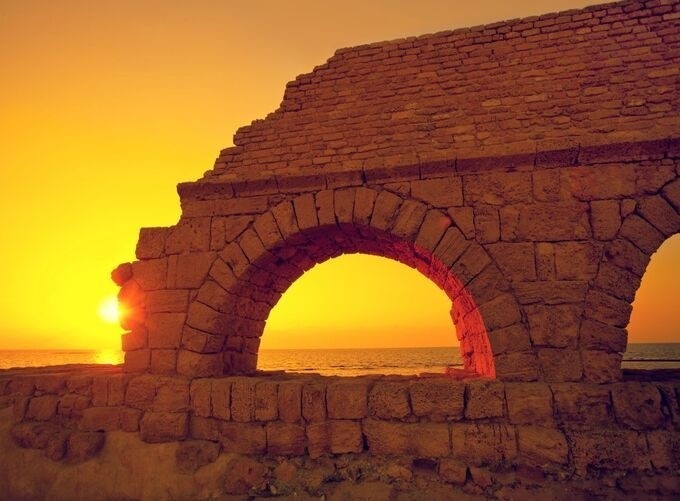
Border Crossings Between Israel, Jordan and Egypt
One of the biggest planning questions for a three-country journey is how to move between Israel, Jordan, and Egypt.
Unlike many parts of Europe where crossing borders is relatively straightforward, travel in the Middle East requires more preparation. Entry procedures, visa policies, terminal operating hours, and transportation options vary depending on the crossing you choose.
Fortunately, most travelers experience smooth border crossings when they prepare the required documents in advance and allow sufficient travel time.
For most itineraries, combining one land crossing with one regional flight offers the best balance between convenience, sightseeing opportunities, and overall travel time.
Israel–Jordan Border Crossings
There are three primary international crossings between Israel and Jordan.
Each serves a different region and travel itinerary.
King Hussein / Allenby Bridge
Best for
-
Jerusalem
-
Bethlehem
-
Amman
This crossing is geographically the closest to Jerusalem.
However, procedures are generally more complex than at the northern and southern crossings, and transportation arrangements differ on each side of the border.
It is commonly used by travelers moving between Jerusalem and Amman.
Jordan River / Sheikh Hussein Crossing
Best for
-
Galilee
-
Nazareth
-
Northern Jordan
-
Jerash
Travelers exploring northern Israel often prefer this crossing because it connects efficiently with northern Jordan.
It is less suitable for itineraries focused only on Jerusalem and Petra.
Wadi Araba (Yitzhak Rabin) Crossing
Best for
-
Petra
-
Wadi Rum
-
Aqaba
-
Eilat
This is the most convenient crossing for southern itineraries.
Many travelers visit Petra before continuing toward Egypt via regional flight or other onward transportation.
Israel–Egypt Connections
Unlike Jordan, relatively few travelers move directly between Israel and Egypt by land.
The most commonly used crossing is:
Taba Border Crossing
Located between:
-
Eilat (Israel)
-
Taba (Egypt)
This crossing is useful for travelers visiting:
-
Sinai Peninsula
-
Dahab
-
Sharm El Sheikh
Travelers heading directly to Cairo or Luxor usually find regional flights significantly faster than long overland journeys through Sinai.
Flights vs Land Crossings
Choosing between flights and land transportation depends on both itinerary length and travel style.
Regional Flights
Advantages:
-
Save valuable sightseeing time
-
Reduce long road journeys
-
Better for shorter itineraries
-
Comfortable during summer
Disadvantages:
-
Airport procedures
-
Checked baggage rules
-
Less scenic than overland routes
Land Border Crossings
Advantages:
-
Scenic desert landscapes
-
Opportunity to experience multiple regions
-
Flexible routing
-
Memorable overland journey
Disadvantages:
-
Longer travel days
-
Immigration procedures
-
Variable waiting times
-
Transfer coordination required
Most 18- and 21-day itineraries benefit from combining both methods.
Border Crossing Comparison
| Crossing | Recommended For | Typical Route |
|---|---|---|
| King Hussein / Allenby | Jerusalem ↔ Amman | Israel → Jordan |
| Jordan River | Northern Israel ↔ Jerash | Israel → Jordan |
| Wadi Araba | Petra ↔ Eilat | Jordan → Israel |
| Taba | Sinai ↔ Israel | Egypt ↔ Israel |
Choosing the correct crossing often saves several hours of unnecessary driving.
Which Direction Is Best?
Although both directions are possible, most organized itineraries follow one of these routes:
Option 1
Israel
↓
Jordan
↓
Egypt
Advantages:
-
Natural geographic flow
-
Petra follows Jerusalem
-
Egypt becomes the grand finale
Option 2
Egypt
↓
Jordan
↓
Israel
Advantages:
-
Ends with Mediterranean relaxation
-
Convenient open-jaw international flights
-
Excellent for travelers departing from Tel Aviv
Both routes work well.
The best option depends on:
-
Flight prices
-
Airline schedules
-
Border logistics
-
Seasonal conditions
-
Personal interests
2026–2027 Visa Arrangements
Visa policies depend entirely on your nationality.
Always confirm official government requirements shortly before departure.
For many travelers during 2026–2027, planning should include:
Israel
Many eligible visitors require an ETA-IL (Electronic Travel Authorization) before arrival, while some nationalities continue to enjoy visa exemptions under current regulations.
Applications should be completed well before departure where applicable.
Jordan
Many travelers can obtain entry authorization according to current regulations or through organized travel arrangements.
Visitors including Petra frequently purchase the Jordan Pass, which combines entry to major attractions with potential visa-related benefits for eligible travelers.
Egypt
Many nationalities remain eligible for an electronic visa before arrival.
Travelers entering Egypt after visiting Jordan should ensure they hold the appropriate authorization before reaching the border or airport.
Visa Planning Checklist
Before departure, verify:
✓ Passport validity
✓ Required visas or electronic authorizations
✓ Travel insurance
✓ Return or onward ticket
✓ Hotel confirmations
✓ Emergency contact details
✓ Printed travel documents
Keeping both digital and printed copies of important documents is recommended throughout the journey.
Combined Budget (2026–2027)
Budget varies considerably depending on hotel category, travel season, and transportation choices.
Below are realistic estimates excluding international airfare.
14-Day Journey
| Style | Estimated Cost Per Person |
|---|---|
| Budget | US$2,800–3,500 |
| Mid-Range | US$4,300–5,700 |
| Luxury | US$7,500–11,000+ |
18-Day Journey
| Style | Estimated Cost Per Person |
|---|---|
| Budget | US$3,700–4,700 |
| Mid-Range | US$5,700–7,500 |
| Luxury | US$9,500–14,000+ |
21-Day Journey
| Style | Estimated Cost Per Person |
|---|---|
| Budget | US$4,500–5,700 |
| Mid-Range | US$6,800–9,000 |
| Luxury | US$11,500–17,000+ |
These estimates generally include:
-
Hotels
-
Daily breakfast
-
Domestic transportation
-
Regional flights
-
Guided sightseeing
-
Entrance fees
-
Airport transfers
International flights, personal shopping, optional activities, and gratuities are not included.
Typical Budget Breakdown
| Category | Share of Total Budget |
|---|---|
| Accommodation | 35% |
| Transportation | 20% |
| Guided Tours & Attractions | 20% |
| Food & Drinks | 15% |
| Miscellaneous | 10% |
Booking hotels and regional flights together often results in better overall pricing than purchasing each component separately.
Planning Tips for Border Days
Border crossing days are very different from ordinary sightseeing days.
Avoid scheduling major attractions immediately after international transfers.
Instead:
-
Start early.
-
Carry snacks and drinking water.
-
Keep passports easily accessible.
-
Have printed hotel confirmations.
-
Allow extra time for immigration.
-
Exchange small amounts of local currency beforehand if necessary.
Planning a lighter sightseeing schedule after crossing into a new country usually leads to a more enjoyable experience.
Common Planning Mistakes
Many travelers underestimate how much time international transfers require.
Avoid these common mistakes:
-
Trying to visit all three countries in less than two weeks.
-
Choosing border crossings based solely on maps.
-
Booking non-refundable flights before confirming visa eligibility.
-
Ignoring seasonal temperatures in southern Jordan and Egypt.
-
Scheduling evening flights immediately after long border crossings.
-
Forgetting travel insurance covering multiple countries.
-
Carrying insufficient local currency for border expenses where applicable.
Small adjustments during the planning stage often save entire days during the trip.
Cultural Highlights Across Three Countries
One of the greatest advantages of combining Israel, Jordan, and Egypt is the remarkable variety of cultures, landscapes, and historical periods you'll experience in a single journey.
Although the three countries share geographic proximity, each offers a completely different perspective on the Middle East.
Israel
Israel blends ancient history with modern urban life.
Highlights include:
-
Jerusalem's Old City
-
Western Wall
-
Church of the Holy Sepulchre
-
Mount of Olives
-
Tel Aviv's Mediterranean coastline
-
Jaffa's historic harbor
-
Dead Sea
-
Masada National Park
-
Galilee region
Travelers interested in biblical history, archaeology, and contemporary culture often find Israel to be one of the most diverse destinations in the region.
Jordan
Jordan offers some of the Middle East's most spectacular landscapes.
Don't miss:
-
Petra
-
Little Petra
-
Wadi Rum
-
Jerash
-
Madaba
-
Mount Nebo
-
Aqaba
-
Desert castles
Jordan combines archaeological treasures with extraordinary desert scenery, making it especially attractive for photographers and adventure travelers.
Egypt
Egypt delivers one of the world's richest collections of ancient monuments.
Highlights include:
-
Giza Pyramids
-
Great Sphinx
-
Egyptian Museum
-
Grand Egyptian Museum
-
Luxor Temple
-
Karnak Temple
-
Valley of the Kings
-
Abu Simbel
-
Nile River
The contrast between bustling Cairo and the peaceful Nile Valley creates an unforgettable finale to the journey.
Which Trip Length Is Right for You?
Choosing the right itinerary depends on your interests, travel pace, and available vacation time.
Choose 14 Days If You:
-
Are visiting the region for the first time.
-
Have limited vacation time.
-
Want to see the major highlights.
-
Don't mind several early departures.
-
Prefer a fast-paced itinerary.
Choose 18 Days If You:
-
Want the best overall balance.
-
Prefer less rushed sightseeing.
-
Wish to spend more time in Petra and Jerusalem.
-
Enjoy cultural experiences alongside major attractions.
-
Appreciate a few flexible afternoons.
For most travelers, 18 days is the ideal combination of efficiency and depth.
Choose 21 Days If You:
-
Want to experience each country more completely.
-
Plan to include a Nile cruise.
-
Enjoy slower travel.
-
Love history and archaeology.
-
Are traveling a long distance and may not return soon.
The additional three days often transform the trip from an excellent vacation into a once-in-a-lifetime journey.
Is This Triple Combination Suitable for Families?
Absolutely.
Families with older children and teenagers often find this itinerary particularly rewarding because it combines history, nature, wildlife, and adventure.
Popular family experiences include:
-
Floating in the Dead Sea
-
Camel rides in Wadi Rum
-
Jeep safaris in the desert
-
Exploring Petra
-
Visiting the pyramids
-
Nile boat cruises
-
Mediterranean beaches in Tel Aviv
Families traveling with younger children may wish to slow the pace by choosing the 18- or 21-day itinerary instead of the 14-day version.
Adding an extra night in Jerusalem, Petra, or Cairo often makes the overall journey much more comfortable.
Sample Triple-Country Route Overview
| Country | Recommended Stay | Signature Experiences |
|---|---|---|
| Israel | 5–7 Days | Jerusalem, Dead Sea, Tel Aviv, Masada |
| Jordan | 4–6 Days | Petra, Wadi Rum, Jerash, Madaba |
| Egypt | 5–8 Days | Cairo, Giza, Luxor, Nile Cruise |
This balance minimizes unnecessary travel while allowing enough time to appreciate each destination.
Why Travel with Magnificent Travel?
Planning a journey across three countries is far more complex than organizing a single-destination vacation. International flights, border crossings, visa requirements, transportation schedules, and sightseeing logistics all need to work together seamlessly.
Magnificent Travel specializes in designing carefully coordinated Israel, Jordan, and Egypt itineraries that maximize sightseeing while minimizing travel fatigue. Our regional expertise allows travelers to enjoy smooth border transitions, well-planned transportation, experienced local guides, and thoughtfully selected accommodations across all three destinations.
Whether you're looking for a cultural discovery tour, a biblical pilgrimage, a luxury private journey, or a family adventure, our itineraries are designed to make the most of every travel day.
Explore our Israel and Jordan tour packages, Egypt and Jordan cultural tours, or our most popular Israel, Egypt and Jordan combined tours to experience the region with confidence, expert planning, and local support.
Frequently Asked Questions
What is the best Israel, Egypt, and Jordan combination?
An 18-day itinerary offers the best overall balance. It provides enough time to explore Jerusalem, Petra, Wadi Rum, Cairo, and Luxor without rushing while allowing comfortable border crossings and regional flights.
Is 14 days enough for Israel, Jordan, and Egypt?
Yes, but only if the itinerary focuses on the highlights. Fourteen days allows visits to Jerusalem, Petra, Cairo, and Luxor, though travelers should expect a fast-paced schedule with limited free time.
What is the easiest border crossing between Israel and Jordan?
The best crossing depends on your route. King Hussein/Allenby is convenient for Jerusalem and Amman, while Wadi Araba is ideal for travelers visiting Petra, Aqaba, and southern Israel.
How do visa arrangements work in 2026–2027?
Requirements vary by nationality. Many travelers may need an ETA-IL for Israel, an eVisa for Egypt, and either visa-free entry, visa on arrival, or a Jordan Pass–related arrangement for Jordan. Always verify official government requirements before departure.
What is the best travel order?
Most travelers prefer Israel → Jordan → Egypt because it follows a logical geographic route. However, Egypt → Jordan → Israel is equally practical depending on flight availability and international departure plans.
What is the average combined budget?
For most travelers, expect approximately US$5,500–8,500 per person for an 18-day mid-range itinerary excluding international airfare. Budget and luxury options can vary significantly depending on hotel category and season.
Is this itinerary suitable for families?
Yes. Families with older children usually enjoy Petra, the Dead Sea, Wadi Rum, pyramids, and Nile cruises. Choosing an 18- or 21-day itinerary provides a more relaxed pace than attempting all three countries in just two weeks.
Which country has the strongest cultural experience?
Each offers something unique. Israel is ideal for religious history, Jordan excels in archaeology and desert landscapes, while Egypt provides the world's most extensive collection of ancient monuments. Together they create one of the richest cultural journeys available anywhere.

A travel professional specializing in tailor-made travel planning, guest experience management, and multi-destination tourism operations.
With over 23 years of experience in the travel industry, he designs and manages private and cultural tours for international travelers across Türkiye, Greece, Egypt, Jordan, Morocco, and other destinations.
He has strong expertise in both online and face-to-face guest communication, sales processes, and end-to-end travel operations.
Working closely with hotels, travel agencies, and local partners, he ensures smooth coordination and high-quality travel experiences at every stage of the journey.
His focus is on delivering personalized, reliable, and seamless travel experiences for international guests worldwide.
