Israel in 2 Weeks: A More Rewarding 14-Day Journey
Updated: August 2026
Two Weeks Changes the Way You Can Travel, Not Just How Much You Can See
Fourteen days in Israel gives travelers something more valuable than a longer destination list: enough time for places to stop feeling like individual attractions and begin forming a connected journey.
Jerusalem can be explored beyond its most famous sacred sites. Northern Israel can become a region rather than a long day trip. The Dead Sea and desert no longer need to share every available hour, while Tel Aviv can reveal itself through ordinary evenings, neighborhoods and food rather than functioning simply as a convenient final hotel.
This is where many two-week itineraries go wrong. Instead of using additional time to deepen the journey, they take a seven-day highlights route and continue adding destinations until fourteen days become just as busy as seven.
The result looks impressive on paper but wastes the main privilege a longer trip provides.
With two weeks, you can occasionally wake in the same hotel without needing to check out. You can spend a morning somewhere without worrying about the next city. You can let a guide take longer with a subject that interests you and shorten something that does not.
That freedom is what should distinguish a fourteen-day journey.
Think in Regions Before You Think in Individual Attractions
A longer itinerary becomes easier to understand when Israel is divided into travel environments rather than a list of famous places.
Jerusalem forms one substantial chapter because many of the country’s major religious and historical themes intersect there.
Tel Aviv and Jaffa create another, centered much more strongly on contemporary urban culture, Mediterranean life and a different historical perspective.
Northern Israel brings Nazareth, the Sea of Galilee and other landscapes into a regional context, while the Dead Sea and Judean Desert change both scenery and daily rhythm. Travelers with sufficient interest can then continue farther into the Negev or toward Eilat rather than treating the south as a token excursion.
Planning regionally also reduces unnecessary movement.
Instead of repeatedly leaving one distant base and returning after long touring days, travelers can position themselves where the next several experiences naturally belong.
Two weeks gives enough time for geography to work with the itinerary instead of against it.
Jerusalem Deserves Time Beyond the Old City Checklist
A two-week itinerary creates the opportunity to experience Jerusalem without forcing its significance into one or two intense sightseeing days.
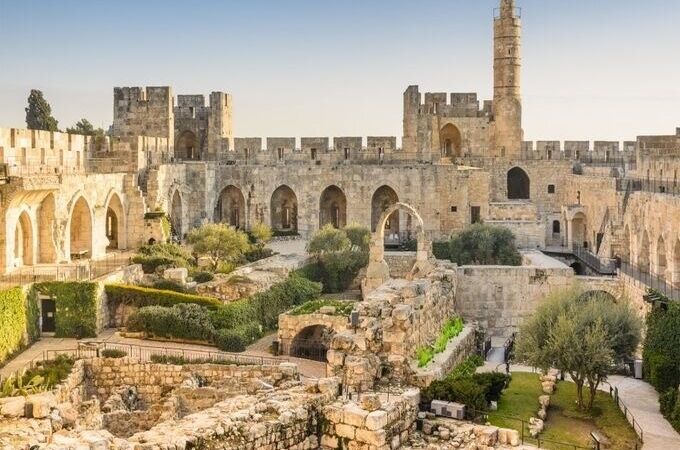
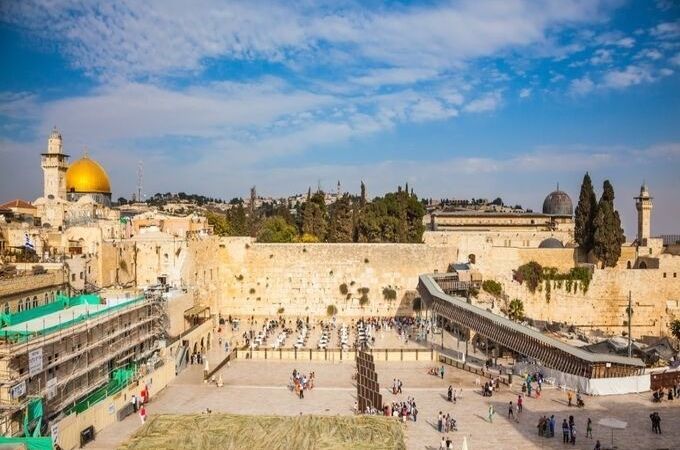
The Old City will naturally remain central for most first-time visitors. The Western Wall, Church of the Holy Sepulchre, Via Dolorosa and the city’s Muslim, Christian, Jewish and Armenian quarters contain enough history and religious complexity that moving quickly through them can become mentally exhausting.
Additional time changes the experience because Jerusalem exists beyond those headline sites.
Museums, markets, neighborhoods, viewpoints and contemporary daily life provide context that a rapid highlights itinerary cannot. Even returning to the Old City independently after a guided day can be valuable because travelers begin recognizing places rather than constantly encountering them for the first time.
For many visitors, three nights should be regarded as a starting point rather than an upper limit, while four nights can work particularly well when religious history is a major interest.
A longer stay does not necessarily mean four consecutive full-day tours. In fact, it should probably mean the opposite.
A Free Jerusalem Afternoon Can Add More Than Another Excursion
There is a temptation to interpret unscheduled time as something that needs fixing.
After several substantial guided days, however, an open afternoon allows travelers to revisit somewhere they liked, spend longer in a market, enter a museum that was not part of the original plan or simply sit over lunch without checking the next appointment.
This becomes especially valuable in Jerusalem because the city delivers an enormous amount of information.
Religious traditions overlap. Historical periods accumulate. Archaeology and contemporary politics sit physically close to one another, and travelers can reach a point where another two-hour explanation adds less than time spent absorbing what they have already heard.
Well-designed Private Israel Discovery Tours should therefore vary intensity instead of filling every available hour merely because the traveler has paid for fourteen days.
Depth requires time to process as well as time to visit.
Northern Israel Should Become a Stay, Not a Marathon Day
One of the clearest benefits of a two-week journey is the ability to give northern Israel proper regional time.
For Christian travelers, Nazareth and the Sea of Galilee may already be among the most important destinations in the country. Capernaum, Tabgha and the Mount of Beatitudes gain meaning when they are understood within the landscape rather than experienced as a sequence of stops before a long return drive.
Even for travelers without a pilgrimage focus, northern Israel provides a change of geography and pace that broadens the journey.
Staying in the region means the day no longer begins and ends with the same long transfer. Morning and evening become part of the northern experience, while sightseeing can be distributed more naturally.
Two or three nights can therefore create far more value than squeezing the same number of attractions into one heroic day.
Christian Travelers Can Finally Give the Biblical Landscape Enough Space
Shorter itineraries tend to turn Christian heritage into a competition between Jerusalem and Galilee.
Fourteen days largely removes that problem.
Jerusalem can retain substantial time for sites connected with the final period of Jesus’ life, while Nazareth and the Galilee can develop their own narrative around his upbringing and ministry.
This matters because pilgrimage is not merely about entering churches.
Geography contributes to understanding. The relationship between towns, the lake, surrounding hills and biblical locations becomes clearer when travelers are not constantly being hurried toward the next distant region.
Israel Biblical Heritage Journeys can therefore use two weeks to create chronological or thematic continuity rather than simply increasing the number of religious sites visited.
For pilgrims, this is one of the strongest arguments for choosing a longer itinerary.
The Mediterranean Coast Can Become More Than Tel Aviv
A fourteen-day journey also makes room for coastal experiences that shorter itineraries often remove.
Caesarea can provide substantial archaeological interest and a different perspective on Roman and later history. Haifa introduces another urban landscape, while the Mediterranean coast itself creates geographical continuity between destinations.
The key is resisting the temptation to visit every possible coastal stop simply because there is now more time.
Additional days should increase selectivity, not eliminate it.
A traveler particularly interested in archaeology may prioritize Caesarea, while someone more interested in gardens, city landscapes or contemporary life may allocate time differently.
Two weeks gives travelers permission to choose according to interest without worrying that every omitted destination represents a missed opportunity.
Tel Aviv Benefits From Evenings More Than Extra Sightseeing Lists
Tel Aviv is a good example of why counting attractions can misrepresent a destination.
The city does not require the same guided intensity as Jerusalem to justify several nights.
Its value often appears through Jaffa, architecture, neighborhoods, markets, restaurants, Mediterranean public spaces and evenings when travelers can move independently without needing a formal program.
A two-week itinerary can therefore give Tel Aviv two or three nights without requiring every hour to be converted into sightseeing.
This makes it particularly effective near the beginning or end of the journey, depending on flight arrangements and route direction.
After historically dense touring elsewhere, contemporary city time can also provide an important shift in tone.
The contrast is part of the itinerary, not a break from it.
The Dead Sea Should No Longer Be Forced Into a Few Afternoon Hours
Short trips often treat the Dead Sea as an experience to be completed: arrive, float, photograph the landscape, shower and leave.
With two weeks available, travelers can decide whether they actually want more.
An overnight may allow resort time, a slower afternoon and a different relationship with the desert surroundings. Masada can then receive its own appropriate timing instead of competing directly with relaxation.
Not everyone needs this.
Travelers who regard the Dead Sea primarily as a memorable natural experience may still prefer a day visit and use the night elsewhere.
The difference is that a fourteen-day itinerary allows the decision to be based on preference rather than scarcity.
The Negev Becomes Worth Considering as a Real Chapter
The Negev often suffers in shorter itineraries because travelers want to “include the desert” without allocating enough time to understand what that means.
With two weeks, the south can become a genuine travel chapter built around landscapes, geological features, hiking, desert communities or night-sky experiences according to personal interest.
This creates a very different journey from simply adding another archaeological site.
Desert travel also benefits from a slower daily rhythm because outdoor activities may be influenced by heat, daylight and seasonal conditions.
Travelers interested in photography or stargazing gain additional reasons not to rush, since the most rewarding hours may fall outside conventional sightseeing schedules.
The Negev earns its place when desert experience itself matters, rather than when the itinerary merely needs another region.
Eilat Should Be Added Only When You Want the Red Sea
Fourteen days makes Eilat more realistic, but it does not automatically make it necessary.
The southern location still requires travel time, so the destination works best when Red Sea relaxation, snorkeling, diving or a warmer leisure component has genuine value to the traveler.
If those experiences matter, allocating several nights can create a satisfying final contrast after Jerusalem, Galilee and desert touring.
If they do not, the same days may produce greater value elsewhere.
A longer itinerary should not become an excuse to collect distant destinations.
Eilat needs enough time to justify reaching it.
A Fourteen-Day Route Needs Changes of Pace, Not Just Changes of Hotel
Rather than counting how many cities fit into two weeks, I would examine how the energy of the journey changes.
| Journey phase | Useful travel rhythm | Why it earns time |
|---|---|---|
| Jerusalem | Interpretive and historically dense | Establishes religious and historical context |
| Galilee / North | Regional and landscape-based | Connects sites through geography |
| Mediterranean coast | Selective cultural touring | Adds archaeology or coastal context |
| Tel Aviv | Independent and contemporary | Provides contrast and evening life |
| Dead Sea | Slower physical experience | Breaks intensive cultural sightseeing |
| Negev | Landscape-led | Rewards daylight-sensitive exploration |
| Eilat, if chosen | Leisure-focused | Creates a genuine Red Sea conclusion |
The purpose of this table is not deciding how many nights each destination deserves. It shows why a good two-week itinerary should change mental and physical tempo as it moves through the country.
Changing Hotels Every Night Wastes the Advantage You Paid For
A fourteen-day trip should not contain thirteen attempts to become familiar with a new hotel.
Repeated one-night stays create packing, check-out, luggage handling, check-in and orientation at exactly the frequency a longer journey is supposed to reduce.
There will be situations where one night is operationally logical, particularly when moving through a region rather than returning to the same base.
The problem is repetition.
Two- and three-night stays allow travelers to unpack properly, recognize the neighborhood and enjoy evenings without thinking about luggage the following morning.
The psychological difference becomes significant by the second week.
A longer trip should increasingly feel settled rather than progressively more tiring.
Guiding Should Become More Selective During the Second Week
Fourteen consecutive guided days would be too much for many travelers, even when every guide is excellent.
Interpretation has diminishing returns when there is no space between information-heavy experiences.
Jerusalem and major archaeological or religious regions often justify extensive guiding because context transforms what travelers understand. Tel Aviv, leisure time, selected neighborhoods or resort periods may benefit from much more independence.
This balance also allows travelers to discover something spontaneously rather than experiencing the entire country through a predetermined sequence.
A Customized Two-Week Israel Tour should therefore customize not only destinations but also the amount of structure.
Freedom is part of itinerary design.
A Longer Trip Needs a Midpoint That Does Not Feel Like Day Seven of a Tour
Somewhere around the middle of the journey, the itinerary should change texture.
That might mean a lighter afternoon, a slower Dead Sea stay, an independent Tel Aviv day or simply two nights where the second morning does not begin with luggage outside the hotel room.
This midpoint matters because travel fatigue is cumulative.
A fourteen-day itinerary that operates at maximum sightseeing intensity for the first week and then continues identically does not become more rewarding simply because it is longer.
The second half should benefit from what the traveler has already learned about the country and about their own energy.
Long trips improve when they evolve.
Two Weeks Is Particularly Valuable for Travelers With Strong Specialist Interests
Archaeology enthusiasts can spend longer at sites that would receive an hour on a highlights tour.
Christian travelers can give Jerusalem and Galilee independent depth.
Food-focused visitors can preserve evenings for restaurants and markets instead of treating dinner as recovery from another twelve-hour day.
Photographers can revisit locations under different light rather than accepting whatever conditions exist during one scheduled stop.
Families can build slower periods around children’s energy, while older travelers can reduce consecutive intensive days without sacrificing important destinations.
The additional week is most valuable when it serves an interest rather than merely expanding mileage.
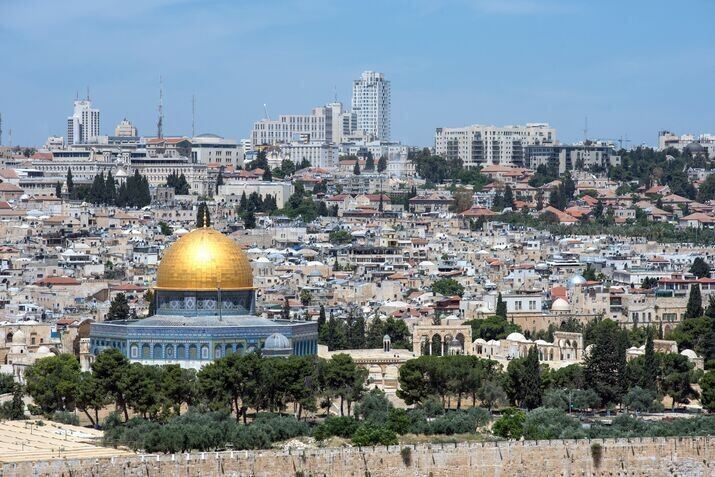
The Final Days Should Feel Like a Conclusion, Not Leftovers
Itinerary endings are often surprisingly weak because planners allocate the famous destinations first and place whatever remains into the final two days.
A better fourteen-day journey has an intentional ending.
For some travelers, Tel Aviv works beautifully because contemporary city life provides a lighter final contrast before departure. Others may prefer ending with Dead Sea relaxation or, when the route supports it, several Red Sea days.
The ending should reflect what you want the final emotional tone of the journey to be.
After two weeks, that matters.
The last memory should not be an arbitrary hotel selected because it happened to be near the airport.
Fourteen Days Should Feel Broader and Slower at the Same Time
That is the real test.
A strong two-week itinerary should expose travelers to more of Israel than a seven-day journey while simultaneously feeling less hurried.
If it covers more ground but creates more packing, earlier mornings and longer daily drives, the additional week has been spent badly.
Fourteen days gives enough time for Jerusalem to develop beyond its headline sites, northern Israel to become a coherent region, Tel Aviv to be experienced outside formal sightseeing hours and desert or Dead Sea landscapes to receive appropriate attention.
Eilat can join the route when Red Sea time genuinely matters, while specialist interests can finally influence the itinerary rather than being squeezed between standard highlights.
The luxury of two weeks is not seeing everything.
It is no longer needing to behave as though you must.
Questions That Become Relevant on a Longer Israel Journey
Is four nights in Jerusalem too much during a two-week trip?
Not for travelers with strong historical, religious or museum interests. Four nights can support substantial guided sightseeing while leaving room for independent exploration, which produces a very different Jerusalem experience from simply extending the number of organized tours.
Should I unpack completely if I am staying only two nights?
That is personal, but organizing belongings rather than living entirely from closed luggage can make repeated multi-night stays feel considerably more settled. Two-week journeys benefit from reducing the sense that every hotel is merely temporary.
Is northern Israel worth three nights if I am not a Christian pilgrim?
It can be, depending on your interest in landscapes, archaeology, local communities and regional travel. Pilgrimage creates one strong reason to stay longer, but it is certainly not the only reason the north deserves meaningful time.
Can I include both the Negev and Eilat without making fourteen days rushed?
Yes, provided the south is a genuine priority and other regions are not already overloaded. Eilat works best with enough nights to enjoy the Red Sea rather than functioning as a distant one-night addition.
Where should I place the easiest day of the itinerary?
Around the middle is often useful because fatigue begins accumulating after several active sightseeing days. A slower afternoon or independent day can restore energy without requiring travelers to sacrifice an entire destination.
Do I need a guide for the Sea of Galilee if I already understand biblical history?
Not necessarily for every moment, although a knowledgeable guide can connect geography, archaeological context and traditions in ways that independent reading may not. Specialist travelers should decide where interpretation genuinely adds value.
Is it worth returning to Jerusalem later in the same trip?
Sometimes. A split stay can work when route geography supports it or when travelers want to revisit the city after seeing other regions. However, unnecessary backtracking should not be created solely to produce a second Jerusalem stay.
How much unscheduled time should two weeks contain?
There is no fixed amount, although several free evenings and at least one lighter half-day can make a significant difference. Unscheduled time is especially valuable after information-heavy historical or religious touring.
Should I add more destinations if my itinerary has two free afternoons?
Not automatically. Those afternoons may be exactly what allows the rest of the journey to remain enjoyable. Additional destinations should solve a genuine interest rather than simply eliminate blank space from the itinerary.
Can a two-week Israel trip work well for families with children?
Yes, particularly because the longer duration allows historical sightseeing to alternate with more physical, outdoor or relaxing experiences. The advantage disappears if parents use the additional days only to add more adult-focused sightseeing.
What makes a fourteen-day itinerary feel repetitive?
Repeated days with identical structure can create repetition even when the destinations change. Mixing guided heritage days with landscapes, independent city time, food experiences and slower periods gives the journey a more natural rhythm.
How should the second week feel different from the first?
Ideally, travelers should have more confidence, fewer orientation problems and greater freedom to pursue personal interests. The itinerary can support this by becoming selectively less structured rather than maintaining the same touring intensity until departure.

A travel professional specializing in tailor-made travel planning, guest experience management, and multi-destination tourism operations.
With over 23 years of experience in the travel industry, he designs and manages private and cultural tours for international travelers across Türkiye, Greece, Egypt, Jordan, Morocco, and other destinations.
He has strong expertise in both online and face-to-face guest communication, sales processes, and end-to-end travel operations.
Working closely with hotels, travel agencies, and local partners, he ensures smooth coordination and high-quality travel experiences at every stage of the journey.
His focus is on delivering personalized, reliable, and seamless travel experiences for international guests worldwide.