Israel Weather in December: Winter Sun, Rain & Regional Differences
Last Updated: August 9, 2026
December in Israel can produce a peculiar travel moment.
You leave Jerusalem in a jacket.
The road begins descending.
An hour or so later, you step out near the Dead Sea and immediately wonder whether you have dressed for the wrong trip.
You haven't.
You have simply travelled vertically through winter.
That is the easiest way to understand December. The country may look compact on a map, but elevation, Mediterranean influence and desert geography create remarkably different seasonal experiences within relatively short travelling distances.
Jerusalem can feel genuinely wintry. Tel Aviv may be mild enough for a long coastal walk. The Dead Sea can provide a noticeably warmer afternoon, while desert nights remind you that warm daytime sunshine does not guarantee warm conditions after dark.
December is therefore not one winter.
It is several versions of winter stacked on top of one another.
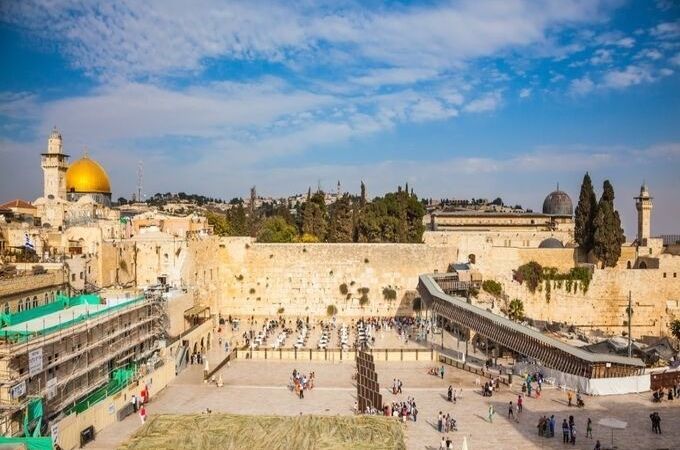
Start at the Top: Jerusalem Feels the Season
Jerusalem should be treated as a winter destination in December rather than a slightly cooler version of autumn.
That does not mean continuous cold, rain or unpleasant sightseeing. Clear days can be excellent for walking, particularly when compared with the physical demands of summer touring.
The important difference is variability.
A sunny afternoon may encourage travellers to stay outside for hours, while another day can bring colder conditions, rain or enough wind to make layers considerably more important.
Evenings reinforce the seasonal feeling.
Once the sun disappears, travellers who dressed according to the afternoon rather than the forecast may quickly discover why December packing needs flexibility.
Descend Towards the Mediterranean
Tel Aviv changes the equation.
The coast generally produces a milder winter experience than Jerusalem, although December is no longer a dependable beach month in the summer sense. Wind, rain and changing Mediterranean weather can all affect how the day feels.
Yet the waterfront does not disappear from the itinerary.
On a clear, mild afternoon, walking beside the Mediterranean can be one of December's pleasures precisely because nobody needs the beach to behave like August.
The coast becomes atmospheric rather than functional.
You may walk.
Stop for coffee.
Explore Jaffa.
Return to the waterfront later.
Swimming becomes optional rather than the reason to be there.
The December Elevator
The seasonal contrast becomes easier to understand when destinations are arranged by travel experience rather than simple geography.
| Setting | December Character | Traveller's Main Adjustment |
|---|---|---|
| Jerusalem / higher elevation | Coolest, more winter-like | Layers + rain readiness |
| Tel Aviv / Mediterranean | Milder, changeable | Wind/rain flexibility |
| Dead Sea / very low elevation | Often considerably warmer | Keep lighter clothing available |
| Negev | Pleasant days can occur, cooler nights | Large day-night contrast |
| Southern resort areas | Winter-sun potential | Do not assume summer conditions |
The table is not a promise of exact weather.
It shows why packing according to the first city on the itinerary is a poor December strategy.
Jerusalem Is Better When You Stop Chasing Sunshine
Winter travellers sometimes make a strange mistake.
They treat every cloudy period as a reason to delay sightseeing.
Jerusalem does not require blue skies to work.
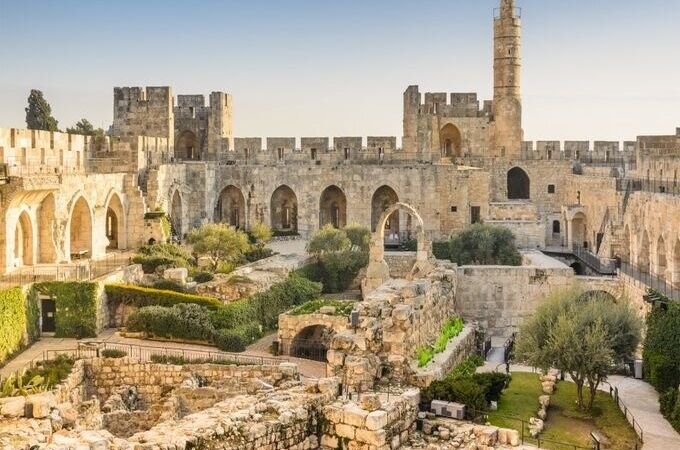
In fact, December can give historical areas an entirely different atmosphere from the bright, dry months. Cooler weather can support substantial walking when conditions remain dry, while museums, markets, religious interiors and archaeological attractions provide natural alternatives during unsettled periods.
Travellers interested in a culturally focused winter programme can explore Israel biblical journeys, where December's shorter days encourage greater depth rather than simply squeezing the maximum number of sites into daylight.
The season changes the mood.
It does not reduce the importance of the destination.
Now Take the Road Down
The journey from Jerusalem towards the Dead Sea is one of the clearest demonstrations of Israel's winter geography.
Elevation falls dramatically.
The landscape changes.
And frequently, so does the temperature.
A morning that required a jacket in Jerusalem can lead into a much milder afternoon near the Dead Sea. This contrast gives December travellers something that conventional winter destinations often cannot offer: the possibility of changing seasonal environments without taking another flight.
It also creates a packing challenge.
The jacket you needed at breakfast may spend the afternoon in the vehicle.
That is normal.
The Dead Sea Becomes December's Climate Counterpoint
During summer, the Dead Sea requires serious heat management.
December changes its role.
Instead of being the hottest part of an already hot journey, it can become the warmer counterpoint to Jerusalem's winter conditions.
Masada also becomes attractive for archaeological sightseeing without midsummer's extreme heat, although actual rain, wind and local conditions still need attention.
Travellers seeking this contrast can consider Israel winter escapes, particularly when the itinerary intentionally combines higher-elevation cultural touring with lower, warmer landscapes.
The difference between the regions is not an inconvenience to solve.
It is part of the experience.
Desert Winter Has Two Personalities
A pleasant December afternoon in the desert can encourage dangerous assumptions about the evening.
Once direct sunshine disappears, temperatures can fall noticeably, making layers useful even after a relatively mild day.
This creates one of December's most important packing lessons:
Never pack for the desert afternoon alone.
Travellers staying into the evening or beginning early should prepare for the full daily temperature range rather than the most attractive part of the forecast.
The desert is also where winter rainfall deserves more serious attention. Flash-flood risks can affect routes and low-lying areas, so outdoor plans should follow current official information and reliable local guidance.
December Makes Private Flexibility More Valuable
A rigid summer itinerary can often succeed because weather is highly predictable.
December rewards programmes that can change order.
If the morning is wet, an indoor historical visit can move forward. If the afternoon clears, the outdoor section can return. If conditions differ significantly between regions, departure times can sometimes be adjusted to make better use of them.
Travellers wanting greater control over this rhythm can consider Israel private touring, particularly when December weather makes day-to-day adaptability more valuable than following an inflexible sequence.
Flexibility does not mean improvising the entire holiday.
It means preserving the ability to make one good decision when conditions change.
Shorter Daylight Changes the Mathematics
December also removes something travellers barely think about during summer: hours of daylight.
This makes inefficient routing more expensive.
A late departure, unnecessarily long lunch or poorly positioned transfer can consume a larger proportion of the useful sightseeing day than it would in June.
The solution is not rushing.
It is prioritising.
Major outdoor experiences deserve the best daylight. Indoor cultural attractions can absorb periods when weather or fading light makes outdoor touring less valuable.
December encourages travellers to decide what matters most rather than simply asking how much can fit.
Pack Vertically, Not Seasonally
A December suitcase should be capable of travelling downhill.
Layers solve this better than one heavy winter outfit.
A useful rainproof outer layer, warmer clothing for Jerusalem and evenings, comfortable walking shoes and lighter pieces for the Dead Sea or milder southern periods create a wardrobe that can change during the day.
The principle is simple:
wear more at the top, carry less as you descend, then put it back on when evening arrives.
That may sound obvious.
It is also one of the most practical ways to experience December comfortably.
December's Weather Is Part of the Route
Many weather guides try to answer one question:
“What should I expect when I visit Israel in December?”
There is a better question.
Where will you be standing?
Jerusalem can give you a genuine winter morning.
Tel Aviv may answer with a mild Mediterranean afternoon.
The Dead Sea can feel warmer again.
The desert may provide pleasant sunshine before cooling rapidly after sunset.
Instead of searching for one December climate, build the itinerary around those contrasts.
December is not the month when Israel becomes uniformly cold.
It is the month when geography becomes impossible to ignore.
And for travellers willing to move through it, that creates one of the year's most distinctive journeys.
The December Daylight Economy
December gives every traveller the same limited currency.
Daylight.
You cannot buy more of it, and unlike summer, losing ninety minutes to an inefficient morning can noticeably change what remains possible outdoors.
That does not mean waking before sunrise and racing between attractions.
It means spending daylight where daylight adds value.
Expensive Hours: Outdoor History
Imagine two experiences competing for late morning.
One is an archaeological site where landscape, views and outdoor exploration are central to the visit.
The other is a museum.
December makes the decision relatively simple.
Give the better daylight to archaeology.
The museum will still be a museum later.
This principle becomes particularly valuable on days combining indoor and outdoor sightseeing. Instead of following an arbitrary attraction order, consider which experience loses the most when daylight or weather deteriorates.
Protect that one first.
Cheap Hours: Transfers That Have to Happen Anyway
Transportation consumes time regardless of season.
December makes its position more important.
A ninety-minute road transfer placed in the middle of excellent sightseeing conditions may cost a significant proportion of the useful outdoor day. When practical, moving necessary travel towards earlier, later or less weather-friendly periods can protect better hours for experiences that depend on visibility and outdoor access.
This is not always possible.
Flight schedules, hotel arrangements and opening hours still control parts of the itinerary.
But when there is a choice, December makes that choice worth considering.
Lunch Has a Daylight Price
Nobody should rush lunch merely because winter days are shorter.
However, an unplanned two-hour lunch can consume prime sightseeing time if the afternoon contains an important outdoor attraction.
The better solution is matching lunch length to the programme.
On a museum-heavy day, linger.
On a day built around outdoor Jerusalem or Masada, consider whether a shorter midday stop allows the most important experience to happen under better conditions.
December is not asking travellers to eat faster.
It is asking them to know what they are trading.
The December Value Table
| Activity | Daylight Value | Planning Priority |
|---|---|---|
| Outdoor archaeology | Very high | Protect best hours |
| Jerusalem viewpoints | High | Use clear daylight |
| Neighbourhood walking | High | Schedule before dark when possible |
| Museum visits | Low | Useful around poorer weather |
| Markets/interiors | Low–Medium | Flexible placement |
| Road transfers | Low | Move away from prime hours if practical |
| Long lunch | Variable | Match to day's priorities |
| Evening dining | None required | Keep after sightseeing |
The important point is not to maximise every hour.
It is to stop treating every hour as equally valuable.
Cloudy Day? The Currency Changes
December daylight is not only about sunset.
Weather changes its value.
A clear morning may deserve promotion even when the itinerary originally planned indoor sightseeing. A wet afternoon may be the perfect time for a museum that had been scheduled earlier.
This is where flexible itineraries outperform perfectly ordered ones.
If the day's best weather arrives at 10:00 AM, use it.
You do not receive extra credit for following the printed schedule.
Jerusalem Needs More Daylight Than Tel Aviv After Dark
Not every destination loses value equally when daylight ends.
Jerusalem's archaeological areas, viewpoints and historical walking routes often benefit strongly from daytime visibility. Tel Aviv, meanwhile, can transition naturally into restaurants, neighbourhood life and an active evening.
This creates a useful route principle.
When combining the cities, allow daylight-dependent cultural experiences to consume more of the daytime schedule while leaving activities that function well after dark for later.
The itinerary becomes longer without requiring more daylight.
Masada Makes Daylight Valuable for Another Reason
At Masada, daylight and weather interact.
December can offer much more comfortable conditions than summer, but exposed archaeological sightseeing still benefits from good visibility and suitable weather. Travellers should also remember that winter conditions can vary and should check current information before the visit.
The objective is not merely arriving before sunset.
It is giving the experience enough quality time that it does not feel compressed between transportation and darkness.
Don't Confuse Shorter Days With Shorter Holidays
This is where December planning often becomes unnecessarily pessimistic.
The sun setting earlier does not mean meaningful travel stops at sunset.
It means daylight-dependent travel stops earlier.
Restaurants remain.
Markets may remain active depending on opening hours and day.
Urban evenings continue.
Cultural and social experiences can extend the journey after outdoor sightseeing has finished.
The best December itinerary therefore contains two clocks.
One follows daylight.
The other follows the destination.
When travellers stop asking daylight to perform every function, December begins to feel much less restricted.
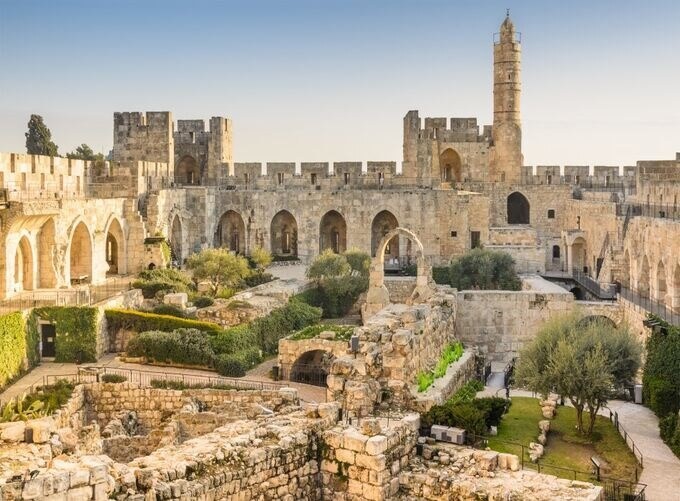
The December Suitcase Relay
A December suitcase has an unusual job.
It may need to handle a cool Jerusalem morning, a milder Mediterranean afternoon, a considerably warmer period near the Dead Sea and then another sharp change once a desert evening arrives.
Packing four wardrobes would solve the problem.
It would also be ridiculous.
The better strategy is to make a small number of useful pieces change jobs as the journey moves.
First Stop: Jerusalem Gets the Full Team
This is where most of the suitcase earns its place.
Comfortable walking shoes matter because cooler weather can encourage substantial days on foot. Layers allow travellers to adjust between outdoor streets, heated interiors and changing afternoon conditions, while practical rain protection deserves space because December belongs firmly within the wetter part of the year.
A useful outer layer should handle weather rather than merely provide warmth.
The objective is not preparing for permanent cold.
It is preparing for variation.
Second Stop: Tel Aviv Sends One Layer Back to the Hotel
Arrive at the Mediterranean on a mild day and the Jerusalem outfit may suddenly feel excessive.
This is where layering proves its value.
Rather than changing wardrobes completely, remove what the coast does not require and keep it available for later. Wind can still change how the waterfront feels, particularly towards evening, so the jacket that seemed unnecessary at lunch may return before dinner.
December packing works because nothing has only one purpose.
Third Stop: The Dead Sea Changes the Uniform
The contrast can become even greater after descending towards the Dead Sea.
On a pleasant day, lighter clothing may become far more useful than travellers expected while packing at home. Swimwear can also justify its place if hotel facilities and actual conditions make it appropriate.
This is why filling a December suitcase exclusively with sweaters creates problems.
Winter exists.
It just does not exist equally everywhere.
Fourth Stop: The Desert Gives Everything Back at Sunset
A comfortable desert afternoon can be deceptive.
Once the sun disappears, temperatures can fall enough to make the layer abandoned earlier in the day useful again.
Travellers staying outdoors into the evening should therefore carry what they may need rather than judging the entire day from conditions at 2:00 PM.
The desert does not require a separate wardrobe.
It requires remembering that afternoon and evening are different seasons.
The Relay Team
| Item | Jerusalem | Tel Aviv | Dead Sea | Desert Evening |
|---|---|---|---|---|
| Light base layers | Essential | Essential | Excellent | Essential |
| Warm mid-layer | Useful | Sometimes | Often packed away | Useful again |
| Rain-resistant outer layer | Important | Useful | Weather dependent | Useful |
| Walking shoes | Essential | Essential | Useful | Useful |
| Swimwear | Rarely needed | Optional | Worth packing | Destination dependent |
| Sun protection | Still useful | Useful | Important | Daytime only |
December packing is therefore less about bringing more and more about choosing items capable of surviving several environments.
The Item Travellers Forget: Sun Protection
Winter creates a psychological trap.
Travellers associate sunscreen, sunglasses and hats with hot weather, then remove them from the suitcase as soon as they see “December.”
Temperature and solar exposure are not the same thing.
A clear day around the Dead Sea or during substantial outdoor sightseeing can still justify sensible sun protection, particularly when travellers spend several consecutive hours outside.
Winter clothing does not replace it.
Religious Sites Add Another Layer of Planning
Weather is not the only reason clothing needs flexibility.
Visitors entering religious sites should carry clothing appropriate for local requirements, regardless of whether the day feels warm or cool.
This is another reason versatile pieces outperform a wardrobe built entirely around the forecast.
A lightweight layer can provide modest coverage, help with cooler interiors and return later when evening temperatures fall.
One item solves several problems.
Pack for the Coldest Moment, Dress for the Current One
That is the simplest December rule.
Your suitcase should be capable of handling the coolest realistic part of the itinerary, but you do not need to wear that clothing throughout the trip.
Carry layers.
Remove them when geography changes.
Put them back when the sun disappears.
A traveller who understands this can move from Jerusalem to the Dead Sea without feeling underprepared in the morning or overdressed by afternoon.
The suitcase stays the same.
Israel changes around it.
12 Questions Travellers Ask About Israel Weather in December
1. Is December a good time to visit Israel?
December can be particularly rewarding for travellers whose priorities are history, archaeology and cultural sightseeing rather than a conventional beach holiday. Cooler conditions often make substantial walking easier, while the contrast between Jerusalem, the Mediterranean coast and the Dead Sea creates considerable variety within a relatively compact itinerary.
2. Is Jerusalem cold in December?
Jerusalem can feel genuinely wintry in December, especially during evenings, windy periods and unsettled weather. However, conditions vary rather than remaining continuously cold. Layered clothing is therefore more practical than dressing for severe winter every day, particularly when the itinerary also includes warmer lower-elevation regions.
3. Does it rain a lot in Israel in December?
December belongs to Israel's wetter season, so rain should be considered a normal possibility rather than an unusual interruption. That does not mean continuous rainfall throughout a trip. Travellers should expect variability and use short-range forecasts to organise outdoor sightseeing around potentially unsettled periods.
4. Can you swim in Tel Aviv in December?
Some travellers may swim during suitable December conditions, but Mediterranean swimming should not be treated as a dependable component of a winter itinerary. Water temperature, wind, waves and personal tolerance all matter. Tel Aviv remains worthwhile regardless, with Jaffa, neighbourhoods, restaurants and coastal walks providing strong alternatives.
5. Is the Dead Sea warm in December?
The Dead Sea frequently feels considerably milder than Jerusalem because of its extremely low elevation and desert environment. Pleasant daytime conditions can make it an attractive winter addition, although travellers should still check the actual forecast and pack layers because temperatures and conditions can vary.
6. Is December a good time to visit Masada?
December can provide excellent opportunities for exploring Masada without the intense heat associated with summer. Cooler temperatures may allow more comfortable archaeological sightseeing, but rain, wind and regional weather still matter. Visitors should check current conditions and any relevant official guidance shortly before travelling.
7. Can I hike in the Negev during December?
December can offer suitable hiking conditions on some days, but winter introduces considerations beyond temperature. Rainfall can create dangerous flash-flood conditions in desert channels, sometimes because of precipitation elsewhere in a drainage area. Route-specific conditions and authoritative local guidance should therefore determine whether a hike proceeds.
8. What should I wear in Israel in December?
Layers provide the most practical solution. Bring comfortable walking clothing, a warmer mid-layer, useful rain protection and suitable footwear, while retaining lighter pieces for the Dead Sea and mild days. Travellers should also consider religious-site dress requirements rather than packing exclusively according to temperature.
9. How does shorter daylight affect December sightseeing?
Shorter daylight makes itinerary order more important because outdoor archaeology, viewpoints and landscape experiences benefit most from the limited daytime window. Museums, markets and indoor heritage attractions can occupy poorer-weather or later periods, while dining and urban evening activities can continue after daylight-dependent sightseeing has finished.
10. Is December suitable for families and older travellers?
Yes, particularly for travellers who find summer heat difficult. Cooler conditions can make historical sightseeing more comfortable, although rainy periods and regional temperature changes require flexible clothing and itinerary planning. Avoiding unnecessarily rushed schedules remains important because shorter daylight can tempt travellers to compress too much into each day.
11. Does the Christmas period affect travel in December?
It can. Christmas is especially significant for Christian pilgrimage destinations and may influence visitor numbers, accommodation demand, religious services and access arrangements around relevant locations. Travellers visiting during the holiday period should check current schedules and reservation requirements rather than assuming ordinary December operating patterns.
12. Is December better than November or January for visiting Israel?
There is no universally better choice. November generally retains more autumn character, December provides a stronger winter atmosphere and significant regional contrasts, while January moves deeper into the winter season. Travellers should choose according to cultural priorities, weather tolerance and the balance of destinations in their itinerary.
December Makes Geography Part of the Holiday
The most useful conclusion about December is not that Israel is cold.
Sometimes it is.
Sometimes it isn't.
The better description is that winter becomes strongly dependent on where you are standing.
Jerusalem can deliver a cool morning that genuinely requires layers. Tel Aviv may answer with a mild Mediterranean afternoon. Descend towards the Dead Sea and the temperature can change noticeably again, while a pleasant desert day may become surprisingly cool once direct sunshine disappears.
Those contrasts make December more interesting than a national temperature average suggests.
They also explain why rigid weather expectations perform badly.
A traveller who packs only for Jerusalem may feel overdressed beside the Dead Sea. Someone who looks only at a mild southern forecast may be unprepared for an evening at higher elevation. A visitor who assumes winter rain merely means carrying an umbrella may overlook the greater significance rainfall can have for desert activities and flash-flood risk.
December therefore rewards a particular style of travel.
Use layers instead of one-season clothing.
Protect daylight for outdoor experiences that genuinely need it.
Move museums and interiors towards poorer-weather periods when possible.
Check local forecasts rather than applying Jerusalem's conditions to the entire country.
And for desert activities, allow current conditions and reliable local guidance to overrule the printed itinerary.
This is not a month that needs to be controlled.
It needs to be read.
The reward is a journey in which the season itself changes as you move through the country. Cultural cities, Mediterranean coastline, the Dead Sea and desert landscapes no longer feel as though they belong to one uniform climate.
That makes December's place within the Israel weather cluster particularly clear.
November is the month when forecast flexibility becomes important. December goes one step further: the weather becomes part of the geography of the journey itself.
For travellers who understand that distinction, winter is not something to work around.
It becomes another way to experience the country.

A travel professional specializing in tailor-made travel planning, guest experience management, and multi-destination tourism operations.
With over 23 years of experience in the travel industry, he designs and manages private and cultural tours for international travelers across Türkiye, Greece, Egypt, Jordan, Morocco, and other destinations.
He has strong expertise in both online and face-to-face guest communication, sales processes, and end-to-end travel operations.
Working closely with hotels, travel agencies, and local partners, he ensures smooth coordination and high-quality travel experiences at every stage of the journey.
His focus is on delivering personalized, reliable, and seamless travel experiences for international guests worldwide.