Israel Weather in July: Peak Summer Heat & Coastal Conditions
Last Updated: August 9, 2026
Ask four travellers what July in Israel was like and you may receive four answers that barely sound as though they visited the same country.
One remembers swimming in the Mediterranean before dinner and staying outside until late in Tel Aviv. Another talks about Jerusalem mornings, shaded courtyards and evenings that made long cultural days surprisingly manageable. A third remembers setting an alarm earlier than expected because Masada was never going to be an afternoon activity. The fourth decides, halfway through the trip, that serious desert hiking belonged on a different holiday altogether.
All four experienced July accurately.
This is why describing the month simply as “hot and dry” does not tell a traveller enough. By July, summer is firmly established, rain is generally absent from everyday planning and strong sunshine is expected, yet the season does not reward every travel style equally.
July is better understood through the traveller than through the thermometer.
So meet four of them.
Traveller One: Maya Wants History, Not a Beach Holiday
Maya has ten days and a list dominated by Jerusalem, archaeology and cultural sites. She worries that booking July was a mistake because almost every weather guide begins with the word hot.
Her trip can still work very well.
What she cannot do is treat summer as irrelevant.
Jerusalem remains the strongest part of her itinerary because elevation moderates the experience compared with lower desert regions, while long daylight provides enough time to spread sightseeing across the day rather than compressing everything into one continuous block.
She begins major walking earlier, lets lunch occupy a meaningful part of the warmer afternoon and returns to neighbourhoods or outdoor areas later.
What she does not do is abandon cultural travel until October.
| Maya's July Priorities | Keep | Change |
|---|---|---|
| Old City walking | Yes | Start earlier |
| Archaeological sites | Yes | Avoid worst exposure |
| Museums | Yes | Use warmer afternoon hours |
| Viewpoints | Yes | Morning or later day |
| Outdoor dining | Definitely | Make evenings part of the trip |
| Packed 9–5 schedule | No | Break the day into different rhythms |
Her July holiday succeeds because she separates “hot weather” from “bad sightseeing weather.”
They are not automatically the same thing.
Travellers who share Maya's priorities can consider Israel heritage tours, provided the itinerary is built around summer conditions rather than copying a spring sightseeing schedule.
Traveller Two: Daniel Wants Tel Aviv to Feel Like Summer
Daniel would be disappointed if July behaved like April.
He wants the Mediterranean to be warm enough to matter, evenings that remain active long after dinner and a city where beach time does not require checking whether today's weather is good enough.
For him, July is not a compromise.
It is the point.
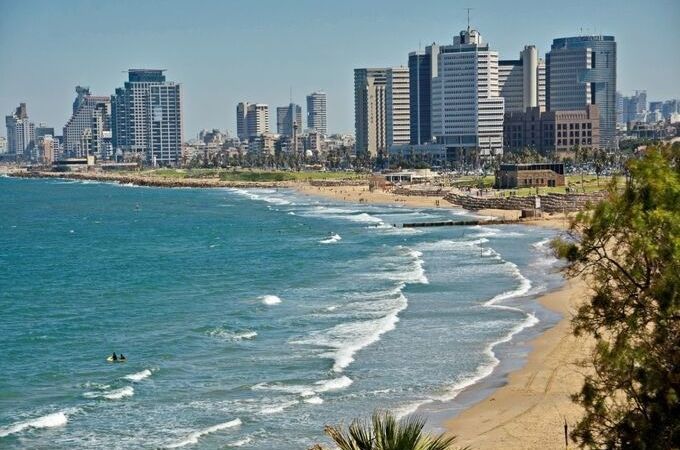
Tel Aviv's summer character becomes fully established, although humidity can make the coastal heat feel different from Jerusalem's drier highland conditions. The solution is not escaping the coast during the warmest hours but allowing the sea to become part of the daily rhythm.
Daniel might explore Jaffa earlier, move towards lunch and the beach during the afternoon, then return to city life later.
He never feels that the beach interrupted sightseeing because he did not divide the trip into “real travel” and “relaxation.”
Both belong to Tel Aviv in July.
Traveller Three: Priya Wants to See Everything Once
Priya is the first-time visitor most likely to make July unnecessarily difficult.
Her itinerary contains Jerusalem, Tel Aviv, the Dead Sea, Masada, the Negev and perhaps Eilat. Every destination is worthwhile, but she initially assumes the same daily routine can follow her around the country.
It cannot.
Jerusalem allows one type of summer day.
Tel Aviv allows another.
Masada and the Dead Sea require more respect for heat, while the Negev makes route choice and activity level increasingly important.
The problem is not the number of climates.
It is expecting them to share a timetable.
Priya's itinerary improves immediately when she stops asking, “How many places can we visit today?” and starts asking, “Which experience deserves the coolest hours?”
Masada wins that argument over almost everything else.
A museum does not need 8:00 AM.
An exposed desert archaeological site does.
Traveller Four: Marcus Wants an Active Holiday
Marcus is interested in hiking, landscapes and physical activity rather than spending most of the trip inside historical sites.
July requires the greatest compromise from him.
Walking around Jerusalem and selected outdoor experiences can remain perfectly reasonable with suitable timing, but serious exposed desert hiking becomes a different proposition. Decisions should depend on the specific route, current forecast and authoritative local guidance rather than a general statement that hiking is “possible in July.”
This is where responsible summer planning becomes important.
A destination remaining open does not mean every activity within that destination remains equally sensible.
Marcus therefore changes the definition of an active holiday.
He chooses appropriate early activities, swimming, urban walking at better hours and selected experiences rather than trying to reproduce a cool-season hiking itinerary in midsummer.
Travellers interested in active elements can explore Israel adventure holidays, but July programmes should be designed around actual seasonal conditions rather than treating heat as an inconvenience to push through.
Which Traveller Are You?
Before choosing July, this question is more useful than asking whether the month is “too hot.”
| Traveller | July Match | Main Reason |
| Culture-first | ★★★★☆ | Strong with sensible daily pacing |
| City + beach | ★★★★★ | July fits the Mediterranean rhythm |
| First-time highlights | ★★★★☆ | Works if regional schedules change |
| Serious desert hiker | ★★☆☆☆ | Better seasons exist |
| Food + nightlife | ★★★★★ | Warm evenings add substantial value |
| Heat-sensitive walker | ★★☆☆☆ | Long exposed days may be tiring |
| Swimming-focused | ★★★★★ | Established summer conditions |
| Photography + archaeology | ★★★☆☆ | Timing becomes critical |
There is no single July verdict because the same weather can create an advantage for one traveller and a limitation for another.
July Is When Tel Aviv Stops Being the Supporting Character
On many spring itineraries, Jerusalem carries most of the cultural weight while Tel Aviv provides a lighter urban contrast.
July changes that balance.
The Mediterranean gives Tel Aviv a seasonal function that Jerusalem cannot replicate. Beach time can absorb the afternoon, waterfront areas become part of everyday life and late evenings allow the city to remain active after the hottest part of the day has passed.
For travellers wanting this combination of urban travel and Mediterranean summer, Israel coastal journeys can give the coast enough time rather than reducing Tel Aviv to one hurried sightseeing day.
That does not make July “better” in Tel Aviv than Jerusalem.
It makes the cities complementary.
One gives the journey historical intensity.
The other teaches you how summer wants to be lived.
What July Takes Away, It Often Gives Back After Sunset
The most important adjustment for all four travellers happens in the evening.
An afternoon that feels too warm for another substantial walking tour does not mean the useful day is finished. Restaurants, neighbourhoods, waterfront promenades and city streets regain energy as conditions ease.
This can fundamentally change the emotional rhythm of the holiday.
Travellers from cooler climates often expect sightseeing to occupy the day and dinner to conclude it. July encourages a different structure in which the middle becomes slower and evening returns some of the hours that heat appeared to remove.
The trip does not necessarily contain less.
It contains experiences at different times.
The Wrong July Traveller
There is one traveller July struggles to satisfy.
They want cool weather, long exposed walks beginning after breakfast, strenuous desert activity in the middle of the day and no need to modify plans according to heat.
That traveller should probably choose another month.
This is not a criticism of July.
Seasonal planning becomes much easier once we stop requiring every month to suit every holiday.
July has a clear identity.
It belongs to travellers comfortable with summer, willing to begin demanding sightseeing earlier, happy to let the Mediterranean become part of the itinerary and interested in using warm evenings rather than forcing every experience into conventional daytime hours.
For those travellers, the heat is not something to defeat.
It is simply the environment in which the journey takes place.
The July Geography of Comfort
Two places can show similar numbers on a weather app and feel remarkably different once you begin walking.
That gap between recorded temperature and lived experience becomes particularly important in July because geography determines whether the heat comes with humidity, whether shade provides meaningful relief, whether evenings cool sufficiently for long walks and whether the landscape leaves you exposed to direct sun for hours.
For travellers, this creates a second map of Israel.
It is not a map of destinations.
It is a map of where summer feels easier or harder to work with.
Elevation: Jerusalem's Quiet Summer Advantage
Jerusalem's elevation changes the July experience more than many first-time visitors expect.
Days remain warm and strong sunshine matters, particularly during long walking tours, but conditions are not directly comparable with the much lower Dead Sea region. Evenings can also become more comfortable, which helps return outdoor time to the itinerary after a warmer afternoon.
This makes Jerusalem particularly adaptable.
A traveller can begin historical sightseeing earlier, use museums, markets or lunch to soften the middle of the day and then continue outside later without feeling that the entire afternoon must be abandoned.
Elevation does not remove summer.
It makes summer easier to negotiate.
Mediterranean Influence: Tel Aviv Trades Temperature for Humidity
Tel Aviv introduces the opposite effect.
The sea gives the city beaches, swimming and a coastal rhythm that becomes one of July's major attractions, but humidity can make warm conditions feel heavier than the temperature alone suggests.
This is why comparing Jerusalem and Tel Aviv using only daily highs can be misleading.
The more useful question is what each environment allows you to do.
| Summer Factor | Jerusalem | Tel Aviv | Dead Sea | Negev |
|---|---|---|---|---|
| Elevation relief | Strong | Low | Very low | Varies |
| Mediterranean influence | Low | Very strong | None | None |
| Humidity effect | Generally lower | Significant | Different desert conditions | Generally dry |
| Water-based relief | Limited | Excellent | Available, but heat remains important | Limited |
| Exposed terrain | Moderate | Lower in urban areas | High | Often very high |
| Evening outdoor value | Excellent | Excellent | Depends on conditions | Improves after sunset |
This is a more useful July comparison than declaring one city simply “hotter.”
Comfort depends on what surrounds the temperature.
Shade: The Most Underrated July Attraction
Shade rarely appears in travel brochures.
In July, it should influence itinerary design.
An hour walking through exposed archaeological terrain has a different physical cost from an hour moving through streets where cafés, covered areas and indoor stops repeatedly interrupt direct sun.
This is why urban sightseeing can remain manageable even on warm days while an archaeological site showing a similar temperature may feel considerably harder.
The lesson is practical: count exposure, not merely hours.
Three hours outside with regular shade and breaks are not equivalent to three hours on open desert terrain.
Water Changes the Purpose of an Afternoon
The Mediterranean gives Tel Aviv a summer advantage that cannot be reproduced by simply adding air conditioning to a hotel.
Water changes what the afternoon is for.
Instead of treating the warmest part of the day as dead time between morning sightseeing and dinner, travellers can allow swimming, beach time or a slower waterfront period to occupy it naturally.
The Dead Sea provides a different water experience and should not be treated as equivalent to a Mediterranean beach day. Strong heat and sun exposure remain important considerations, while the unique environment calls for its own sensible pacing.
In both cases, water adds value.
It does not cancel the weather.
Exposed Terrain: Where July Stops Negotiating
The desert is where geography becomes least forgiving.
Shade may be limited, surfaces absorb heat and strenuous activity can become inappropriate depending on route and current conditions. This is why generic statements such as “the Negev is dry, so the heat is easier” are poor travel advice.
Dry heat is still heat.
A demanding desert route does not become suitable simply because humidity is lower than in Tel Aviv.
Current conditions, activity level and local guidance should determine what belongs in the programme.
After Sunset, the Comfort Map Changes Again
One of July's most useful characteristics is that the hierarchy of places changes as the day progresses.
Jerusalem's evenings can become especially attractive for walking, dining and neighbourhood exploration. Tel Aviv's waterfront remains active well into the night, while desert environments lose direct solar exposure even though temperatures may remain warm.
This creates an itinerary opportunity that winter travellers rarely need to consider.
The “best” place at 2:00 PM may not be the best place at 8:00 PM.
July rewards travellers who allow that map to change.
Comfort Is Not a Number
Weather apps are excellent for checking actual conditions close to travel.
They are less successful at explaining why a shaded Jerusalem street, humid Tel Aviv promenade and exposed desert archaeological site can produce completely different experiences on days that appear broadly similar numerically.
July planning improves when travellers add geography back into the forecast.
Ask whether you will have shade.
Ask whether elevation helps.
Ask whether the sea is part of the activity.
Ask how exposed the terrain will be.
Then ask what happens after sunset.
Those questions explain July far better than a single national temperature ever could.
The July Itinerary Swap Desk
July does not necessarily require removing experiences from an Israel itinerary.
More often, it requires moving them.
A museum scheduled for 9:00 AM and an exposed archaeological site booked for 2:00 PM may both be excellent choices individually, yet their order wastes the most useful part of the day on the activity that needs it least.
The simplest July improvement is therefore not cancellation.
It is a swap.
Swap: Morning Museum → Morning Archaeology
Museums are among the most flexible items on a summer itinerary because their quality barely depends on the temperature outside.
Exposed archaeology is the opposite.
When reservations allow, give the earlier hours to the experience most affected by direct sun and move indoor cultural time towards the warmer part of the day.
Nothing disappears from the itinerary.
Both experiences improve.
Swap: Midday City Marathon → Long Lunch + Two Walks
Suppose the plan contains four or five continuous hours of Jerusalem sightseeing around midday.
Rather than shortening the city visit, divide it.
Use the morning for substantial walking, allow lunch and an indoor or shaded experience to break the afternoon, then return outside later.
This changes the physical character of the day without reducing cultural depth.
July does not always require fewer walking hours.
It often requires non-consecutive walking hours.
Swap: Tel Aviv Checklist → Neighbourhood + Mediterranean
A summer day in Tel Aviv does not need to reproduce a spring city tour.
Instead of pushing through neighbourhoods, markets, Jaffa and the waterfront in one uninterrupted sequence, let the Mediterranean divide the programme naturally.
Explore earlier, slow down around the coast during the warmer part of the day and allow city life to return later.
That is not a diluted sightseeing programme.
It is a July version of Tel Aviv.
What Should Move First?
| Original Plan | July Swap | Why It Works |
|---|---|---|
| Museum at 9 AM | Move later | Indoor sites do not need cool hours |
| Exposed site at 2 PM | Move earlier | Reduces direct heat exposure |
| Long midday city walk | Split into two periods | Creates recovery time |
| Early indoor lunch | Move later if practical | Protects useful morning hours |
| Tel Aviv afternoon tour | Add coastal interval | Uses the city's summer character |
| Desert activity after lunch | Reassess timing/activity | Heat may fundamentally change suitability |
| Dinner as final activity | Add evening exploration | July returns outdoor time later |
The objective is not creating one universal summer timetable.
It is identifying which activities lose the most value when placed at the wrong hour.
Don't Swap Safety for Convenience
There is an important limit to itinerary optimisation.
Some activities, particularly strenuous desert experiences, cannot simply be shifted by an hour and assumed to become appropriate. Route, duration, current conditions and official or local guidance matter.
If conditions make an activity unsuitable, replacing it is better than forcing it into the programme because it was included in the original booking.
Flexibility should improve judgement, not provide an excuse to ignore heat.
Protect the Experience You Travelled Farthest to See
When several activities compete for the best hours, decide which one would disappoint you most if heat caused you to rush it.
For a first-time visitor, that may be a major archaeological site.
For another traveller, it could be a long Jerusalem walk or a particular outdoor landscape.
Give that experience priority.
A common itinerary mistake is treating every listed attraction as equally important and therefore giving each whatever time happens to remain.
July makes hierarchy useful.
Not everything deserves 8:00 AM.
The Best Swap May Be Doing Nothing
Sometimes the smartest change is leaving a space empty.
A hotel break, long lunch or unstructured beach period can make the second half of the day considerably better, particularly when evening activities continue after sunset.
Travellers often resist this because blank itinerary space looks wasteful before the holiday begins.
On the ground, it can feel completely different.
July is not a month that rewards squeezing every available minute.
It rewards knowing which minutes are worth protecting.
The July Booking Interview
Before choosing July, forget the average temperature for a moment.
Imagine someone on the other side of the desk asking questions about the holiday you actually want.
Your answers will reveal considerably more than another climate chart.
“What time do you normally like starting sightseeing?”
If the answer is around 8:00 or 9:00 AM, July can work extremely well for a broad cultural itinerary.
If the answer is never before 11:00 AM, Jerusalem and Tel Aviv remain manageable with intelligent planning, but Masada and hotter desert experiences require much greater consideration.
July rewards travellers who are willing to give valuable morning hours to experiences that genuinely need them.
“How important is swimming?”
If swimming is central to the holiday, July makes a strong case for itself.
Mediterranean summer conditions are firmly established, allowing Tel Aviv to function simultaneously as a city and coastal destination. The Dead Sea offers a completely different experience, while Eilat adds another warm-weather option for travellers heading farther south.
If you have no interest in swimming, July can still work, but you lose one of the month's most natural ways of balancing sightseeing with summer heat.
“Do you enjoy being outside after dinner?”
Travellers who answer yes gain several hours that conventional itineraries often ignore.
Warm evenings make neighbourhoods, restaurants and waterfront areas part of the active travel day. Jerusalem can become especially enjoyable once afternoon heat eases, while Tel Aviv's Mediterranean rhythm naturally continues late.
Someone expecting every meaningful experience to happen between 9:00 AM and 5:00 PM is using only part of July.
“Are you coming primarily to hike?”
This answer changes the recommendation substantially.
Urban walking, suitable early activities and selected nature experiences can remain part of the journey, but strenuous exposed desert hiking deserves far greater caution. Specific routes should be evaluated using current conditions and appropriate local guidance rather than a monthly blog.
Travellers whose main objective is serious desert trekking will generally find more forgiving seasons.
“Do you dislike humidity?”
Tel Aviv deserves special consideration.
The Mediterranean gives the city beaches and a compelling summer atmosphere, but coastal humidity can make the heat feel heavier than visitors expect from the temperature alone.
Jerusalem generally produces a different summer sensation because of elevation and lower coastal influence.
The two cities should not be judged using the same comfort assumptions.
“Will you travel with children or older relatives?”
July is not automatically unsuitable, but itinerary intensity matters.
Long exposed sightseeing blocks, insufficient water and consecutive outdoor attractions can turn a manageable day into an exhausting one. Earlier starts, meaningful breaks and shorter outdoor sections allow families and multi-generational groups to experience the same destinations with considerably less strain.
The question is not merely who is travelling.
It is how aggressively the itinerary has been built.
Your July Answer Sheet
| Your Answer | What It Suggests |
|---|---|
| I like early sightseeing | July becomes easier |
| I want city + beach | Strong July match |
| I enjoy warm evenings | Strong July match |
| I dislike all heat | Consider a cooler season |
| I want serious desert hiking | Prefer another period |
| I want Jerusalem + Tel Aviv | Very workable combination |
| I need guaranteed rain-free planning | July's dry pattern is attractive |
| I hate adjusting schedules | Summer may feel restrictive |
What Do I Actually Wear?
July clothing should solve heat rather than seasonal uncertainty.
Lightweight, breathable clothes generally make sense for everyday touring, accompanied by comfortable walking shoes, sun protection and practical water capacity. Visitors entering religious sites should also plan clothing that respects local requirements rather than assuming summer temperatures remove dress considerations.
A light additional layer can still be useful for heavily air-conditioned interiors.
A winter wardrobe cannot.
What About the Dead Sea?
The Dead Sea remains a major July experience, but visitors should respect the region's heat rather than treating time in the water as protection from it.
Masada should generally receive earlier hours, while the wider day's intensity can decrease as temperatures rise. Sun exposure and hydration remain important even when the itinerary contains swimming or hotel time.
July does not make the region irrelevant.
It makes sequencing more important.
Is July a Bad Month for a First Visit?
Not if the traveller understands what summer changes.
A first journey can still combine Jerusalem, Tel Aviv, the Dead Sea and other major highlights. Long daylight and dependable dry conditions actually simplify several parts of planning, while the Mediterranean provides a natural relaxation element that cooler months cannot offer in quite the same way.
The compromise is heat-aware scheduling.
For many travellers, that is manageable.
The Final Question: Are You Trying to Make July Behave Like Spring?
If the answer is yes, choose another month.
If you want to walk outdoors continuously through the middle of the day, undertake demanding desert activities whenever convenient and treat the Mediterranean as an optional background feature, July will constantly ask you to compromise.
But if you are willing to travel according to the season, the month becomes much more coherent.
Start important outdoor sightseeing earlier.
Let water and shade earn their place in the itinerary.
Allow the afternoon to slow down when necessary.
Return outside later.
Stay for the evening.
July does not offer the broad climatic flexibility of spring, and pretending otherwise produces poor travel advice. What it offers instead is a fully established summer rhythm, long dependable days, Mediterranean life and cultural sightseeing that remains highly rewarding when the itinerary respects geography.
The traveller who enjoys July is therefore not necessarily someone who loves extreme heat.
It is someone who understands that a summer day does not need to look like a spring day to be a very good travel day.

A travel professional specializing in tailor-made travel planning, guest experience management, and multi-destination tourism operations.
With over 23 years of experience in the travel industry, he designs and manages private and cultural tours for international travelers across Türkiye, Greece, Egypt, Jordan, Morocco, and other destinations.
He has strong expertise in both online and face-to-face guest communication, sales processes, and end-to-end travel operations.
Working closely with hotels, travel agencies, and local partners, he ensures smooth coordination and high-quality travel experiences at every stage of the journey.
His focus is on delivering personalized, reliable, and seamless travel experiences for international guests worldwide.