
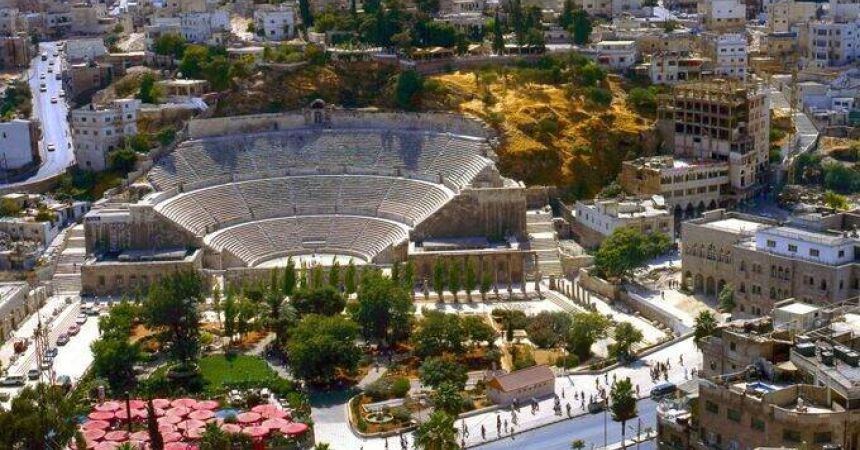
December in Amman Begins a Second Life After Daylight Fades
Updated: August 12, 2026
At four in the afternoon, December can make you feel as though the sightseeing day is already preparing to finish.
That impression is misleading.
Daylight is limited compared with the rest of the year, temperatures commonly reach only the low-to-mid teens Celsius during daytime, and nights can become genuinely cold. Rain is possible, while occasional stronger winter systems may bring substantially colder conditions.
Yet December does not simply reduce the number of hours available for experiencing Amman.
It changes what those hours are for.
The historical and architectural side of the capital naturally benefits from daylight. Once darkness arrives, however, restaurants fill, cafés become more inviting, illuminated streets replace viewpoints as visual experiences, and the city begins feeling less like somewhere being toured and more like somewhere being lived.
The key to December is therefore not trying to extend daytime artificially.
It is learning to enjoy two different Ammans within the same day.
Don't Measure December Against a Summer Clock
A summer itinerary can remain outdoors for hours after an afternoon attraction. In December, applying the same structure creates the impression that something has been lost.
Nothing has.
The useful sightseeing window has simply moved earlier, while evening has acquired more importance.
This means a December Amman winter escape works better when you stop measuring success by the number of daylight hours and begin considering what can happen after them.
Outdoor historical sightseeing deserves the brighter portion of the day. Dinner, cafés, shopping and urban social life do not need that resource.
Instead of competing for daylight, those experiences can inherit the evening.
The City Changes Rather Than Closes
There is a psychological mistake travelers sometimes make in winter destinations: darkness feels like closure.
In Amman, it is better understood as transition.
The formal sightseeing itinerary may become less active, but restaurants and cafés remain part of the city's living rhythm. Streets take on a different appearance under artificial light, indoor spaces feel more appealing, and a meal can occupy an entire evening without seeming like time taken away from travel.
This distinction is especially valuable on a short city break.
You are not trying to fit a full summer-style sightseeing schedule into fewer hours.
You are allowing December to create a different schedule altogether.
Think of the Day in Two Acts
Instead of dividing December into morning, afternoon and evening, a simpler structure can work surprisingly well.
Act One: Amman in Daylight
This is where outdoor historical places, city views and walking sections deserve priority. The objective is not to rush through them, but to avoid accidentally spending the limited daylight on activities that would work equally well later.
Act Two: Amman After Dark
The itinerary changes character rather than continuing at the same intensity. Food, coffee, shopping, conversation and shorter urban walks can take over.
| December Experience | Daylight Amman | After-Dark Amman |
|---|---|---|
| Historical sightseeing | Strong priority | Limited value |
| City viewpoints | Best visual context | Different experience after dark |
| Neighborhood walking | Longer exploration | Shorter atmospheric walks |
| Shopping | Flexible | Easily continues into evening |
| Cafés | Optional pause | Major part of winter rhythm |
| Dining | Fits anywhere | Can anchor the entire evening |
This is not November's daylight-allocation table repeated under another name.
November balanced indoor and outdoor experiences throughout the day. December creates a stronger daylight versus after-dark identity.
Dinner Can Be the Main Event
During a packed sightseeing season, dinner can become surprisingly functional: find somewhere good, eat and return to the hotel.
December gives it permission to expand.
Choose somewhere you genuinely want to spend time. Allow the meal to last. Continue somewhere for coffee afterward rather than treating every evening as a recovery period before tomorrow's attractions.
Food becomes especially valuable because it provides cultural experience without asking the weather to cooperate.
For travelers taking an Amman December city journey, one memorable dinner may contribute more to the trip than attempting to squeeze another marginal attraction into the final daylight hour.
Cold Feels Different When You Are Waiting
December comfort is often less about how long you spend outside than what you are doing while outside.
A fifteen-minute walk can feel perfectly manageable because movement generates warmth. Fifteen minutes standing still waiting for transportation can feel considerably colder.
This makes small logistical decisions more important.
If a vehicle is collecting you, avoid going outside excessively early. If you are deciding where to meet someone, a nearby indoor location may be more comfortable than an exposed street corner.
These are minor adjustments, but winter city comfort is often built from precisely these details.
Dress for the Evening You Actually Planned
Travelers naturally check daytime temperatures when deciding what to wear.
December requires you to look further ahead.
If you leave the hotel in the morning and will not return before dinner, your clothing needs to support the coldest part of the itinerary rather than only the mildest. A proper winter outer layer, practical footwear and adaptable layers become useful, particularly when evening plans involve walking between venues.
Rain protection should depend on the actual forecast rather than being carried automatically every day.
The important distinction from October is that December is no longer primarily a layering puzzle caused by a large daily temperature swing.
You are dressing for winter that remains winter after sunset.
Rain Can Make the Evening More Atmospheric—and Less Convenient
A wet December evening can transform Amman's stone streets visually, reflecting lights and giving familiar urban areas a different character.
It can also make transportation slower and walking less appealing.
Both things can be true.
There is no need to romanticize inconvenient weather, but neither should every rainy evening be treated as something that ruins the experience. If conditions are reasonable, shortening the outdoor sections and spending longer inside can preserve the night without forcing you back to the hotel.
A winter evening in Amman can be memorable precisely because the contrast between cold streets and warm interiors becomes so pronounced.
December Is Not January Arriving Early
This cluster boundary matters.
January's article owns the physical experience of winter across Amman's highland geography: hills, exposure, movement, stopping and the way cold changes across different urban situations.
December is not going there.
Its story is temporal rather than geographical.
The daylight disappears earlier. The conventional sightseeing day contracts. Evening expands into the space left behind and develops its own value through food, cafés, illuminated streets and the social life of the capital.
That gives December a distinct purpose even though both months clearly belong to winter.
Darkness Doesn't Shorten Amman—It Changes the Genre
December makes little sense if judged against April or June.
There will be fewer daylight hours. Conditions can be colder, wetter and less predictable, and some travelers will naturally spend more time indoors.
But the city does not become a reduced version of itself.
It becomes more concentrated.
Use daylight for the experiences that genuinely need it. When darkness arrives, stop trying to preserve the sightseeing day and allow another version of Amman to take over.
That is December's exclusive semantic territory:
a winter city experienced in two acts—history and streets while the light lasts, followed by an after-dark Amman built around warmth, food, conversation and the atmosphere of a capital settling into a cold winter evening.

A travel professional specializing in tailor-made travel planning, guest experience management, and multi-destination tourism operations.
With over 23 years of experience in the travel industry, he designs and manages private and cultural tours for international travelers across Türkiye, Greece, Egypt, Jordan, Morocco, and other destinations.
He has strong expertise in both online and face-to-face guest communication, sales processes, and end-to-end travel operations.
Working closely with hotels, travel agencies, and local partners, he ensures smooth coordination and high-quality travel experiences at every stage of the journey.
His focus is on delivering personalized, reliable, and seamless travel experiences for international guests worldwide.
