
3 Days in Jordan: What to See and What to Skip
Updated: August 2026
Three days in Jordan creates an uncomfortable planning problem because the country looks considerably easier to cover on a map than it feels once sightseeing, walking and road time enter the equation.
Amman, Jerash, the Dead Sea, Madaba, Petra and Wadi Rum can all appear temptingly close. Aqaba is not far beyond them, while Kerak and the King's Highway seem to sit conveniently between north and south. It is therefore easy to begin with a reasonable three-day trip and gradually turn it into a list of six destinations connected by increasingly hurried transfers.
The solution is not finding a cleverer route.
It is accepting that three days in Jordan requires choosing what the trip is about.
For most first-time international visitors, Petra deserves protection because it is difficult to substitute with anything else in the country. Wadi Rum is the strongest companion when travelers want Jordan's desert landscape as well as its archaeological heritage. Amman may function primarily as the arrival or departure point rather than demanding a full sightseeing day, while destinations such as Jerash, the Dead Sea, Aqaba and Dana become decisions rather than automatic inclusions.
That may sound restrictive, although the alternative is often worse: seeing more of Jordan while experiencing surprisingly little of it.
Three Days Changes the Meaning of “Nearby”
Jordan is relatively compact, which is genuinely helpful for travelers. Unfortunately, compact geography can encourage unrealistic scheduling.
Two destinations being separated by a manageable drive does not mean the journey between them costs only the number of hours shown by a route planner. Hotel departures, luggage, meals, sightseeing stops, entrances, traffic, photography and the simple fact that travelers occasionally need a break all occupy the same limited day.
Petra demonstrates the problem particularly well.
You could theoretically arrive, walk through the Siq, photograph the Treasury and leave relatively quickly. The itinerary could then claim Petra was included, although the experience would bear little resemblance to properly exploring the ancient city.
With only three days available, the objective should therefore be maximizing usable experience rather than destination count.
That principle will require saying no several times.
Those decisions are where a good three-day itinerary is actually created.
First Decide Whether Petra Is Non-Negotiable
For most first-time visitors, it will be.
If Petra is one of the principal reasons you are traveling to Jordan, build the three days around it immediately rather than constructing a country-wide route and attempting to insert Petra wherever space remains.
The archaeological city deserves a meaningful portion of a day because reaching the Treasury is only the beginning of the experience. The Siq, tombs, archaeological areas beyond Al-Khazneh and optional walks or climbs can consume substantially more time than first-time visitors expect.
Your physical pace also matters.
Someone who wants to explore the main route comfortably and listen to historical interpretation will use Petra differently from a traveler primarily interested in reaching several photographic landmarks.
Three days does not change that reality.
It simply makes protecting Petra from competing destinations more important.
For travelers who prefer having transport, accommodation and guiding coordinated rather than assembling a compressed trip independently, our Short Jordan Tours can provide the commercial next step without turning this planning guide into a tour-package page.
Then Ask What You Want Jordan to Feel Like
This question is more useful than asking which attraction has the next-highest ranking.
If Petra provides the archaeological core, what should contrast with it?
Wadi Rum creates the most dramatic change because the journey moves from a rock-cut ancient city into a desert landscape where the experience depends less on monuments and more on scale, scenery and time outdoors.
The Dead Sea creates a different contrast, replacing another intensive sightseeing experience with something geographically unusual and comparatively easy to understand within a shorter visit.
Jerash gives you additional archaeological depth, but that means using part of a very short journey for another major ancient site.
Aqaba introduces the Red Sea, although coastal relaxation becomes difficult to justify when only three days exist unless swimming, diving or resort time is one of the main purposes of the trip.
None of those choices is universally correct.
What matters is recognizing that the second major experience determines the character of your short Jordan journey.
The Strongest Three-Day Combination for Many First Visits
If arrival and departure logistics cooperate, Petra + Wadi Rum usually creates the clearest short-trip identity.
Petra contributes Nabataean history, architecture and a substantial walking experience, while Wadi Rum changes both the scenery and the pace. Rather than spending three days collecting historical sites, the traveler experiences two very different sides of southern Jordan.
This does not mean that every three-day trip should mechanically follow the same schedule.
Flight times can completely alter what is realistic. A traveler landing in Amman at 10:00 in the morning possesses a very different first day from somebody clearing immigration late in the evening.
The same problem occurs at departure.
A flight leaving late on the final night can release useful travel time, whereas a morning departure may effectively turn a nominal three-day itinerary into something closer to two usable days.
Before choosing destinations, calculate three days from actual arrival to actual departure, not from the number of dates printed on the hotel confirmation.
Amman Is Where Short Itineraries Often Become Emotionally Difficult
Arriving in a country's capital and not giving it a full sightseeing day can feel wrong.
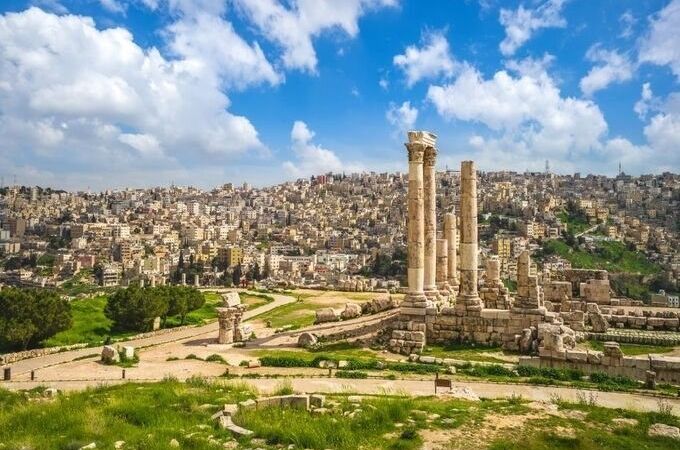
In a longer Jordan trip, Amman deserves greater attention. The Citadel, Roman Theatre, neighborhoods, restaurants and contemporary life can provide important context before or after the country's archaeological and natural highlights.
Three days forces a harder calculation.
If a full Amman day means substantially reducing Petra or eliminating the desert experience you came to Jordan hoping to have, the capital may need to function primarily as a logistical gateway on this particular trip.
That does not mean Amman lacks value.
It means this itinerary lacks time.
Travelers with a late arrival can sleep in Amman and travel south the following morning, while those arriving early may be able to experience a limited portion of the city without allowing it to consume the day.
The dedicated Amman destination page can answer what to do once you decide to spend meaningful time there. This article only needs to determine whether that time exists.
Jerash Is Excellent, Which Is Exactly Why It Should Not Be Squeezed In
Jerash is one of the easiest destinations to add badly.
Its proximity to Amman makes it appear suitable for a quick northern excursion before turning south. The difficulty is that Jerash deserves enough time for its Roman urban landscape to make sense, particularly if you enjoy archaeology and historical interpretation.
A rushed Jerash visit followed by a long southbound transfer may increase the number of major names in the itinerary while reducing the quality of both the morning and the journey that follows.
There is an exception.
If Roman archaeology interests you more strongly than desert scenery, a three-day trip could legitimately prioritize Jerash + Petra and leave Wadi Rum for another visit.
That would be a very different Jordan trip, but it would also be an intellectually coherent one.
Short itineraries become stronger when personal interest outranks conventional checklists.
The Dead Sea Is the Most Tempting “Quick Addition”
The Dead Sea presents a different problem because its basic experience can fit into a shorter window more easily than a major archaeological site.
That makes it tempting.
Whether it belongs depends heavily on routing and what you are willing to remove. A brief Dead Sea experience can work when transport logistics make it efficient, but adding it should not force Petra into a rushed half-day or reduce Wadi Rum to a photograph beside the road.
The dedicated Dead Sea article owns the question of whether to stay overnight or visit briefly.
For a three-day itinerary, the issue is simpler: does the Dead Sea fit naturally, or are you manufacturing space for it because it feels compulsory?
If the route requires constant clock-watching to preserve it, the answer has probably already been given.
Madaba Can Be Valuable Without Becoming Another Full Destination
Madaba's location means it sometimes works more naturally within arrival, departure or transfer logistics than destinations requiring substantial detours.
However, even convenient stops consume real time.
The temptation is to combine Madaba with Mount Nebo, the Dead Sea and perhaps another site because they appear geographically compatible. Suddenly the “transfer day” contains a complete sightseeing program before the traveler has even begun moving toward Petra.
For longer journeys, that can form an excellent day.
During a three-day trip, it risks spending too much of the available time in transit between partial experiences.
If Madaba holds specific personal, religious or historical interest, prioritize it consciously.
If it is being added because a standard Jordan itinerary usually contains it, three days is an excellent opportunity to question the standard itinerary.
Do Not Take the King’s Highway Just Because It Is More Scenic
The King's Highway can turn the journey south into part of the travel experience, but its value comes with a time cost.
On a longer itinerary, that exchange can be worthwhile because the road itself, viewpoints and historical stops can become part of the day's purpose.
Three days changes the equation.
If choosing the slower route significantly reduces the time available at Petra or Wadi Rum, a faster connection may serve the overall journey better.
This does not contradict the recommendation on our King's Highway destination page because the two pages answer different questions. That page helps travelers decide whether the route itself deserves a day.
This page asks whether a traveler with only three days can afford to give it one.
Those are not the same decision.
Aqaba Needs a Strong Personal Reason to Survive This Itinerary
Aqaba becomes increasingly valuable as a Jordan itinerary becomes longer because the Red Sea introduces relaxation after several days of active sightseeing.
Three days provides almost no time for that function to develop.
Arriving at a resort in the evening and checking out the following morning may technically add Aqaba to the itinerary, but it does not provide the coastal pause that makes the destination worthwhile for many non-divers.
The calculation changes for travelers coming specifically for scuba diving, marine activity or a Red Sea stay. In that case, Aqaba is not an optional addition; it is one of the reasons for traveling.
For a conventional first-time cultural journey, however, Aqaba is usually one of the easiest places to postpone.
This is not because it ranks below the other destinations.
It is because relaxation needs time before it begins behaving like relaxation.
Dana Is a Poor Candidate for a Token Appearance
Dana is another place where the destination's real value resists compression.
Travelers attracted by hiking, nature and slower engagement with Jordan's landscapes may reasonably build a trip around it, but inserting Dana briefly into a three-day classical route does not achieve much beyond increasing geographical coverage.
A meaningful Dana experience competes for the same limited resource as Petra and Wadi Rum: usable daylight and physical energy.
If hiking is one of your principal motivations, the itinerary should be redesigned around that priority rather than treating Dana as an extra stop.
Otherwise, save it for a longer return.
Jordan does not become incomplete because one journey fails to include every type of landscape.
Wadi Rum Should Either Receive Time or Leave the Itinerary
The weakest version of Wadi Rum is the one added because the desert is close to Petra and therefore seems impossible to omit.
Travelers arrive, spend a short period inside the landscape and leave immediately for another destination.
The photographs may still be impressive, although much of what differentiates Wadi Rum from an ordinary scenic stop comes from allowing the environment to alter the pace of the journey.
An overnight can provide sunset, evening and morning dimensions that a short visit cannot reproduce, but whether that overnight belongs in a three-day trip depends on arrival and departure logistics.
If Wadi Rum is important, make room for it rather than merely making an appearance there.
Our Petra and Wadi Rum Tours can serve travelers whose priorities already center on these two southern Jordan experiences, while this blog remains focused on helping readers decide whether that combination suits their limited time.
The Three-Day Trip That Looks Most Impressive Online May Be the Worst One to Take
Consider an itinerary containing Amman, Jerash, the Dead Sea, Petra and Wadi Rum.
Five recognizable Jordan experiences in three days sounds efficient.
Now examine what that efficiency requires.
Early departures become normal, road time occupies substantial parts of the trip, lunch must cooperate with the schedule, every site needs a controlled exit time, unexpected delays become threatening, and the traveler reaches each destination knowing another one is waiting.
Nothing necessarily goes wrong.
The problem is that nothing has permission to go long.
If Petra captures your attention, you cannot stay. If lunch takes longer, something later must shrink. If the desert sunset deserves another hour, tomorrow's schedule inherits the consequences.
This is the hidden cost of itinerary density.
The schedule becomes the most powerful participant in the trip.
A Better Three-Day Plan Begins With Two Anchors
For most first-time visitors prioritizing southern Jordan, I would begin with only two protected experiences:
Petra receives the substantial archaeological day.
Wadi Rum receives the contrasting desert experience.
Everything else must justify itself around flight timing and transportation rather than being automatically included.
This produces several possible versions.
An early arrival may create limited time in Amman or another logically positioned stop before traveling south. A late arrival may require the first night in Amman with an early departure the following morning. A late final flight could create additional flexibility after returning north.
The route should therefore be constructed from the traveler's actual flights rather than copied from a generic three-day program.
This is also where Customized Jordan Trips become commercially relevant: customization has unusually high value when there is too little time for inefficient sequencing.
What I Would Not Do With Three Days
I would not attempt to give Amman, Jerash, Petra and Wadi Rum equal importance.
I would not add Aqaba merely to say the Red Sea was included.
I would not choose a slower road because somebody described it as essential without first calculating what it removes from Petra.
I would not turn the Dead Sea into a compulsory box when the routing works poorly.
Most importantly, I would not use a seven-day Jordan itinerary as the starting point and delete four hotel nights while trying to preserve every destination.
A three-day trip needs its own logic.
It is not a damaged longer itinerary.
Three Days Can Still Feel Like Jordan
There is a fear behind many overloaded short itineraries: if enough places are removed, perhaps the traveler will not really have experienced the country.
Jordan challenges that assumption.
A carefully paced walk through Petra can occupy the imagination more powerfully than three hurried archaeological stops. Moving from Petra's carved sandstone environment into Wadi Rum creates a geographical and emotional shift that makes the journey feel larger than the number of days suggests.
There may also be conversations with a guide, an unexpectedly long lunch, the changing landscape during a road journey or an evening when the schedule finally stops.
These experiences do not appear prominently in itinerary tables.
They are often what travelers remember.
Three days will never provide a comprehensive understanding of Jordan, and pretending otherwise does readers no favors. What it can provide is a coherent introduction strong enough that the places you missed feel like reasons to return rather than evidence that the trip was badly planned.
That is a much better use of limited time.
12 Questions That Only Matter When Jordan Has to Fit Into Three Days
1. I land in Amman in the afternoon. Does that count as one of my three days?
For itinerary planning, count usable hours rather than calendar dates. Immigration, baggage collection, transportation and hotel check-in can consume a meaningful part of an arrival day, so an afternoon landing should not automatically be treated as equivalent to a full sightseeing day.
2. Should I sleep in Amman after landing or drive toward Petra immediately?
That depends on arrival time, fatigue and the transportation arrangement. After a long international journey, forcing a substantial road transfer simply to wake closer to Petra may produce a poorer first day than sleeping properly and beginning early with more energy.
3. If I must choose between Jerash and Wadi Rum, which gives a more varied three-day trip?
With Petra already included, Wadi Rum creates greater contrast because it introduces a desert landscape rather than another major archaeological experience. Travelers particularly passionate about Roman history may reasonably choose Jerash instead, making the decision dependent on interests rather than an absolute ranking.
4. Can I combine Petra and Wadi Rum on the same day?
The destinations can be connected within the same broader travel sequence, but attempting a meaningful Petra exploration and substantial Wadi Rum experience within one compressed day can weaken both. If both are priorities, allocate the available hours according to what you actually want to experience in each.
5. Is Petra worth visiting if I can only give it half a day?
A half-day can provide a memorable introduction, particularly when circumstances genuinely limit the trip, but it restricts how deeply you can explore beyond the best-known areas. If another optional destination is causing the restriction, I would usually reconsider that addition before reducing Petra.
6. Would renting a car help me see more in three days?
A rental car can provide flexibility for confident independent travelers, although navigation, parking, collection and return procedures also consume time. Private transportation may be more efficient when the objective is minimizing logistical decisions, while self-driving can suit travelers who value independence more than maximum sightseeing efficiency.
7. Is three days enough if I am traveling with young children?
It can be, provided the itinerary becomes less ambitious rather than more compressed. Children may need additional breaks, flexible meal timing and shorter sightseeing periods, so attempting an adult-paced three-day highlights circuit can make a short family trip unnecessarily tiring.
8. Should I include an overnight in Wadi Rum when every night is valuable?
If the desert experience is one of your two principal priorities, the overnight can justify the time because it changes Wadi Rum from a short scenic visit into a more complete experience. If Petra or another destination matters substantially more, a different allocation may be appropriate.
9. Can I see the Dead Sea on the way back to Amman airport?
Sometimes routing and flight timing can make this practical, but it should be calculated from the actual departure time with a generous airport margin rather than assumed from the map. International flight logistics should never depend on a sightseeing schedule operating perfectly.
10. What happens if bad weather disrupts one of my three days?
A very short itinerary has less recovery space, which makes flexibility particularly important. Avoid constructing a schedule where every hour depends on the previous activity finishing exactly on time, and be prepared to prioritize the experiences that remain feasible rather than attempting to recover every lost stop.
11. Is it better to book three hotels for three nights or reduce hotel changes?
Reducing hotel changes can improve comfort, although geography may make some movement unavoidable if Petra and Wadi Rum are priorities. Evaluate accommodation according to the route rather than minimizing changes at any cost; unnecessary backtracking can waste more time than changing hotels once.
12. What should I save for a second Jordan trip?
Rather than creating a universal leftover list, save whichever destinations do not support the central purpose of this journey. For a Petra-and-desert first trip that may mean Jerash, Dana, Aqaba or a deeper Amman stay, giving a future visit its own identity instead of treating it as unfinished business.

A travel professional specializing in tailor-made travel planning, guest experience management, and multi-destination tourism operations.
With over 23 years of experience in the travel industry, he designs and manages private and cultural tours for international travelers across Türkiye, Greece, Egypt, Jordan, Morocco, and other destinations.
He has strong expertise in both online and face-to-face guest communication, sales processes, and end-to-end travel operations.
Working closely with hotels, travel agencies, and local partners, he ensures smooth coordination and high-quality travel experiences at every stage of the journey.
His focus is on delivering personalized, reliable, and seamless travel experiences for international guests worldwide.