Jordan in July: Rethinking the Classic Route for Summer
Last Updated: August 9, 2026
July does not make Jordan inaccessible.
It does make some versions of a Jordan itinerary considerably better than others.
A route designed for April can afford to be generous with midday walking, spontaneous archaeological stops and long afternoons outside. Copy that programme into July without changing anything and the destinations remain the same, but the experience can feel completely different.
This is where summer planning becomes more interesting than simply checking temperatures.
The question is no longer whether Petra, Wadi Rum or Amman can be visited in July. They can. The useful question is what each destination should contribute to a summer journey and whether every stop on the classic route still deserves equal time.
July rewards travellers who redesign the itinerary rather than merely shifting everything one hour earlier.
Which Parts of Jordan Work Differently in July?
Jordan's elevation and geography prevent summer from feeling identical everywhere.
Amman sits at elevation and usually offers a different experience from the Dead Sea, which lies far below sea level. Petra combines elevation with extensive exposed walking, while Wadi Rum adds desert conditions and Aqaba brings the Red Sea into the equation.
Rather than comparing temperatures alone, compare how you are likely to spend the day.
| Destination | Main July Experience | Physical Demand | Best Role |
|---|---|---|---|
| Amman | Culture, food, archaeology | Moderate | Flexible opening |
| Jerash | Outdoor archaeology | Moderate–High | Early excursion |
| Petra | Large archaeological landscape | High | Priority sightseeing |
| Wadi Rum | Desert scenery and camp | Variable | Split-day experience |
| Dead Sea | Floating and resort time | Low | Recovery |
| Aqaba | Red Sea and marine activities | Low–Moderate | Leisure extension |
This table reveals something important.
July does not necessarily require fewer destinations because they are “too hot.”
It requires destinations with different purposes.
Make Petra the Day You Protect
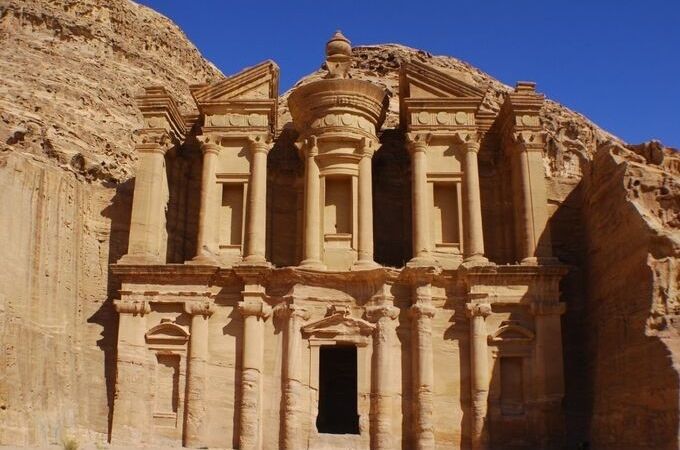
If your first Jordan trip has one experience that should influence the rest of the itinerary, it is usually Petra.
That does not mean spending every available hour there.
It means protecting your energy for it.
Avoid placing an exhausting outdoor day immediately beforehand. Arrive in Petra with enough time to sleep properly, begin the archaeological visit early and decide what matters beyond the Treasury before you start adding trails.
A July visit becomes far more satisfying when the objective is depth rather than completion.
Travellers who want Petra to remain the centre of the journey can explore Jordan archaeology tours, building the route around the country's historical strengths without turning every archaeological stop into another long exposed afternoon.
Petra deserves your best energy.
Give it that instead of whatever remains.
July Makes Amman More Valuable, Not Less
The capital becomes useful in a peak-summer itinerary precisely because it offers variety.
You can explore an outdoor site earlier, move into a museum or lunch during another part of the day, then return to city life later. Unlike destinations where most of the experience depends on continuous exposure, Amman allows the itinerary to change texture without changing location.
That makes two nights in the capital easier to justify than travellers sometimes expect.
There is also more to Amman than its ancient remains. Food, neighbourhoods, cafés and contemporary city life provide a side of Jordan that can disappear when the route races directly from airport to archaeological site.
For travellers interested in that broader context, Amman local culture can provide a useful counterweight to the monument-heavy days ahead.
Jerash: Worth It, but Not Automatically
This is where July should encourage honest itinerary editing.
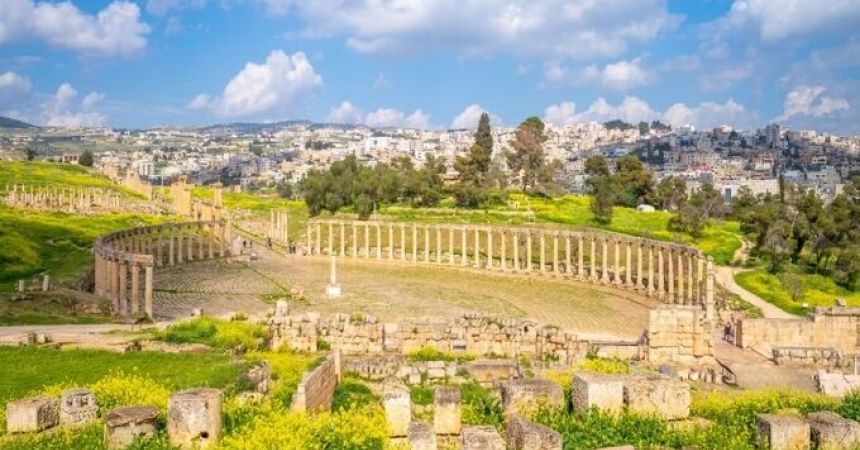
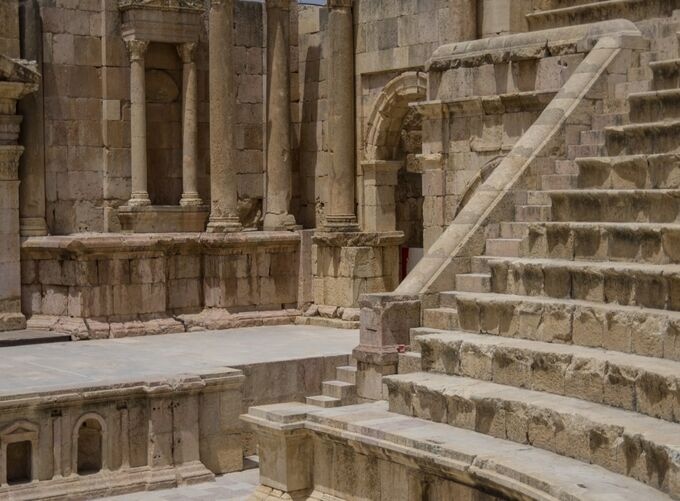
Jerash is one of the Middle East's great Roman archaeological sites and deserves considerably more attention than a quick photograph. It is also largely outdoors.
If Roman history is important to you, keep it and organise the day accordingly.
If your trip is very short and Petra is the overwhelming priority, ask whether another substantial archaeological excursion improves the overall journey or simply consumes energy before the destination you care about most.
July makes these trade-offs clearer.
| If You Have... | Consider... |
| 5–6 days | Amman, Petra, Wadi Rum + one slower stop |
| 7–8 days | Add Jerash or more Petra time |
| 9–10 days | Include Dead Sea and/or Aqaba more comfortably |
| 11+ days | Broader archaeology, nature or Red Sea time |
These are not fixed itineraries.
They are reminders that trip length matters more than the urge to collect destinations.
Wadi Rum Works Best as Two Different Experiences
A July afternoon and a July evening in Wadi Rum barely feel like the same trip.
During stronger daytime heat, a vehicle-based desert experience with sensible stops can cover the landscape without demanding continuous exertion. As the afternoon advances, the environment changes. Shadows return, the light becomes warmer and being outside becomes more appealing.
Then comes sunset and camp.
That second half of the experience is one of the reasons an overnight stay matters in summer.
Rather than asking Wadi Rum to deliver eight uninterrupted hours of activity, let the desert divide the day naturally.
Travellers interested in staying longer can consider Wadi Rum overnights, particularly when the camp experience, sunset and evening atmosphere matter as much as the daytime excursion.
Dead Sea or Aqaba? July Makes the Choice More Important
Both destinations involve water.
They serve different trips.
The Dead Sea fits naturally into a cultural circuit and works well for travellers wanting a low-effort pause after Petra or before returning to Amman. Aqaba deserves more time and makes greater sense when diving, snorkelling or a proper Red Sea stay is part of the holiday.
For a short July itinerary, including both can create unnecessary movement.
| Choose the Dead Sea if... | Choose Aqaba if... |
| You want 1–2 slower nights | You want several coastal nights |
| Floating is the priority | Diving or snorkelling matters |
| Your route returns north | You are already travelling south |
| Culture dominates the trip | You want a culture + sea holiday |
Travellers wanting the first option can explore Dead Sea breaks, while those looking for a longer coastal finish may prefer Aqaba beach stays.
The important word is choose.
July improves when every destination has a reason to be there.
Stop Treating Midday as a Scheduling Problem
Many summer itineraries are built around a strange assumption: if midday is not ideal for a long outdoor activity, something else must immediately replace it.
Not necessarily.
Lunch is allowed to take time.
A hotel pool is allowed to be used.
A road transfer can happen without three archaeological detours attached to it.
You can even sit somewhere for an hour without creating a cultural explanation for why.
This is not lost holiday time.
It is what makes the morning and evening experiences better.
July has long daylight hours, so there is no need to compress every activity into one continuous sightseeing block. A morning visit and a later experience can produce a fuller day than seven consecutive hours outdoors.
A July Itinerary Should Have Different Gears
This is what separates July from June within the cluster.
June introduces early summer and encourages greater selectivity.
July asks you to redesign the architecture of the journey.
One day can be archaeological and demanding. The next might rely on vehicle-based Wadi Rum exploration. Another can deliberately slow at the Dead Sea, while Aqaba can transform the trip into something partly about water rather than land.
The result should not feel like a compromised version of a spring itinerary.
It should feel intentionally different.
Jordan in July still gives you Petra, Roman cities, desert landscapes and the Red Sea.
What it does not give you is a good reason to experience all of them at exactly the same pace.
One Summer Clock, Four Very Different Days
“Start early” is probably the most repeated advice in summer travel writing.
It is also incomplete.
An early start has a different purpose in Petra than it does in Amman, and Wadi Rum should not follow the same timetable as Aqaba simply because all four places appear on the same July itinerary. The activities are different, the landscapes are different and the amount of physical effort required is certainly different.
A better July strategy is to ask what each part of the day is actually good for.
| Time of Day | Amman | Petra | Wadi Rum | Aqaba |
|---|---|---|---|---|
| Early Morning | Outdoor heritage | Major walking | Desert activity | Marine activities |
| Late Morning | City exploration | Main archaeological route | 4x4 exploration | Water/resort time |
| Midday | Lunch/indoors | Longer break | Shade/camp | Pool or indoor break |
| Late Afternoon | City life/viewpoints | Lighter exploration | Desert resumes | Water/coast |
| Evening | Dining and neighbourhoods | Relaxed evening | Sunset and camp | Waterfront/dinner |
The table is deliberately broad.
Weather changes, individual tolerance differs and nobody needs to follow a holiday timetable with military precision. What matters is recognising that July does not have one universal daily schedule.
7:00 AM: Petra Has More to Gain
If you are going to make one early alarm count, Petra is a strong candidate.
The advantage is not simply cooler air. Beginning earlier gives you control over the shape of the entire visit because you reach the archaeological landscape with plenty of time remaining.
You can walk through the Siq without rushing, spend time at the Treasury and continue deeper into Petra before deciding how ambitious the rest of the day should become.
Amman at the same hour has less urgency. An earlier outdoor start can still be useful, but the city offers enough flexibility that missing the first hour of daylight does not fundamentally change the day.
Wadi Rum is different again. Early morning can be beautiful for active desert experiences, particularly if walking forms part of the programme.
Aqaba has perhaps the simplest summer logic of all: if diving, snorkelling or another marine activity is planned, morning often deserves serious consideration according to local operating conditions.
Same hour.
Four completely different reasons to use it.
11:00 AM: The Day Starts Separating
By late morning, Petra visitors may already have completed several hours of walking.
This is where pacing becomes important.
The temptation is to continue simply because everything feels manageable. Yet Petra has a habit of getting physically harder after you have already invested significant energy, particularly if a substantial climb remains ahead.
In Amman, late morning can still support city exploration because moving between different types of experiences is relatively easy. You might leave an archaeological site and transition towards a neighbourhood, museum or lunch without feeling that the sightseeing day has ended.
Wadi Rum can continue functioning well through vehicle-based exploration, provided the programme includes sensible stops and is adapted to conditions.
Aqaba increasingly shifts towards water or resort life.
This is why a summer itinerary should not contain identical phrases such as “full-day sightseeing” for every destination.
A full day can mean completely different things.
1:00 PM: Stop Trying to Win Lunch
There is a peculiar travel habit of treating lunch as an obstacle.
Eat quickly.
Get moving.
There is another attraction at 2:00.
July is an excellent month to abandon that approach.
In Amman, lunch can become part of experiencing the city rather than a refuelling stop between monuments. Jordanian cuisine deserves more attention than whatever can be eaten fastest.
At Petra, a proper break can divide a demanding archaeological day into two manageable sections.
In Wadi Rum, midday may naturally become slower, particularly when the programme has already included several hours outside.
Aqaba needs even less justification. If your itinerary includes a resort, this is precisely when having one begins to make sense.
An hour spent doing very little can improve the next five.
4:30 PM: Jordan Opens Again
Late afternoon is one of July's most underused travel periods.
Many traditional itineraries begin winding down after a continuous day of sightseeing. A summer itinerary can do the opposite.
If you have protected your energy during midday, late afternoon becomes useful again.
In Amman, city life continues and outdoor viewpoints can become more attractive as the light changes.
At Petra, visitors still inside the site may use the later portion for less demanding exploration rather than beginning the day's hardest climb.
Wadi Rum arguably benefits most. The desert begins recovering shadow, sandstone gains depth and the visual character changes as sunset approaches.
Aqaba returns naturally towards the coast and water.
The day has not restarted.
It simply never needed to be continuous.
Sunset: Wadi Rum Takes Over
Every destination has an hour when it seems to understand exactly what it is supposed to be.
In Wadi Rum, that moment often comes towards sunset.
The stronger daytime light softens, the rock formations change colour and the vastness of the landscape becomes easier to appreciate when you are no longer thinking primarily about the sun.
This is also where overnight visitors gain something day-trippers cannot fully reproduce.
There is no immediate need to leave.
The desert moves from sunset into dinner and night, and the experience changes from sightseeing to staying somewhere.
That difference is subtle on an itinerary.
In reality, it can be enormous.
9:00 PM: Summer Gives the Evening Back
One advantage of July is that evenings can become an active part of travel rather than merely the period after sightseeing.
Amman is particularly good at this.
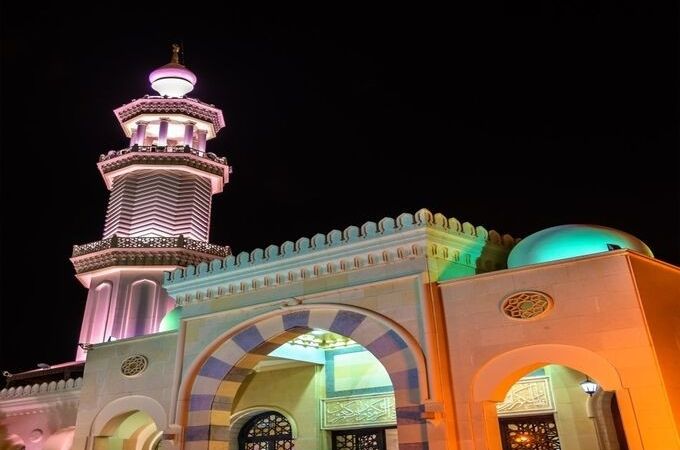
Dinner, cafés and neighbourhood life allow travellers to experience the capital after the archaeological programme has ended. Aqaba has its own evening rhythm around hotels, restaurants and the waterfront, while Wadi Rum offers almost the opposite experience: less city energy, more desert quiet.
Petra evenings can be deliberately uneventful.
After a substantial archaeological day, dinner and an early night may be exactly what the itinerary needs.
Not every evening requires entertainment.
Sometimes tomorrow's energy is the better attraction.
July Works When the Clock Stops Dictating the Experience
The purpose of dividing the day is not to create a stricter schedule.
It is to create a looser one.
Once you understand that Petra deserves the strongest walking hours, Wadi Rum benefits from the edges of the day, Amman can move between indoor and outdoor experiences, and Aqaba increasingly revolves around water, you stop forcing every destination into the same sightseeing template.
That is when a July itinerary begins feeling intentional.
You are no longer taking a spring tour and moving breakfast earlier.
You are travelling through Jordan according to summer.
Three Ways to Build a July Journey
Two travellers can visit Jordan in July, stay for exactly eight nights and return home describing completely different holidays.
One may remember Roman cities, Petra and long conversations over dinner in Amman. Another may talk almost entirely about Wadi Rum, desert sunsets and sleeping beneath an enormous night sky. A third may spend the first half of the trip exploring Jordan's history before disappearing to the Red Sea for several days.
None of them chose the wrong July.
They simply gave the month a different job.
That distinction matters because summer itineraries become easier when you decide what kind of trip you want before deciding how many destinations you can fit into it.
Option One: Culture Comes First
For a first visit, the cultural route remains the obvious starting point.
Amman provides the introduction, Jerash can add substantial Roman archaeology, Petra becomes the centrepiece and Wadi Rum creates a completely different final landscape. The Dead Sea can then provide a slower night before departure.
The advantage of this route is depth.
The disadvantage is physical effort.
Petra and Jerash both involve substantial outdoor exposure, so July travellers should resist adding every possible archaeological site simply because it appears nearby.
A culture-led itinerary might look something like this:
| Day | Main Experience | Summer Logic |
|---|---|---|
| 1 | Arrive Amman | Easy introduction |
| 2 | Amman | Mixed indoor/outdoor day |
| 3 | Jerash | Earlier archaeological visit |
| 4 | Travel to Petra | Lower physical demand |
| 5 | Petra | Main walking day |
| 6 | Wadi Rum | Vehicle-led desert exploration |
| 7 | Dead Sea | Recovery |
| 8 | Departure | — |
The sequence works because the physical intensity rises towards Petra and then decreases.
For travellers primarily interested in history, July can still be rewarding when archaeology is treated selectively rather than competitively.
Option Two: Give the Desert More Space
Some travellers arrive in Jordan believing Petra will be the highlight and discover that Wadi Rum stays with them longer.
That is not unusual.
The desert offers something archaeological sites cannot: space without a long list of things you are supposed to identify.
A July itinerary can lean into that difference.
Petra remains essential for most first-time visitors, but instead of adding several secondary archaeological stops, you might give Wadi Rum two nights. The extra time allows the desert experience to expand beyond a single 4x4 excursion and sunset.
A slower morning, selected walks during appropriate hours, longer camp time and a second evening can completely change the relationship with the landscape.
This version suits travellers who become tired of itineraries built around constant interpretation.
Not every rock needs a historical explanation.
Sometimes its job is simply to be enormous.
Option Three: Let the Red Sea Change the Holiday
The third approach is particularly well suited to travellers who want Jordan without spending the entire trip sightseeing.
Begin culturally.
Finish recreationally.
Amman, Petra and Wadi Rum can form the first half of the journey, after which Aqaba changes the purpose of the holiday. Instead of waking each morning with another monument or transfer ahead, the final days can revolve around the Red Sea.
Diving and snorkelling may be priorities for some travellers, while others simply want a resort, swimming and slower meals.
The important point is allowing enough time for the transition to matter.
One hurried Aqaba night between Wadi Rum and the airport does not create a beach holiday.
Three nights begin to.
| Travel Style | Best For | Main Trade-Off |
| Culture First | History and first visits | More outdoor walking |
| Desert Focus | Landscape and slower travel | Fewer archaeological sites |
| Culture + Red Sea | Mixed-interest holidays | Requires more nights |
| Everything Route | Long trips only | Easy to overpack |
The final row is worth noticing.
Trying to combine every style during a short trip usually produces the weakest version of all three.
Couples May Want a Different July From Families
Travel style also depends on who is travelling.
A couple comfortable with early starts and substantial walking may happily build the journey around Petra and archaeology. A family with younger children may prefer shorter cultural visits combined with Wadi Rum and several resort nights.
Multi-generational groups need another calculation.
If one traveller wants a long Petra route while another is uncomfortable with extensive summer walking, the itinerary should not force everyone into the same physical programme. Different route lengths or strategically placed rest periods can preserve the experience for the entire group.
This is one reason July benefits from private or customised planning.
Not because summer is inherently difficult, but because individual comfort matters more when conditions are less forgiving.
Your First Trip and Your Second Trip Should Look Different
First-time visitors naturally want the icons.
Petra.
Wadi Rum.
The Dead Sea.
Perhaps Jerash.
That makes sense.
A returning visitor has more freedom.
Instead of repeating every headline attraction, a second Jordan journey might spend longer in Amman, explore the desert more deeply, focus on diving in Aqaba or develop a more specialised historical interest.
July can actually benefit repeat travellers because they are less likely to feel pressure to complete the standard checklist.
They already know the Treasury exists.
They can spend the afternoon somewhere else.
The Best July Route Is the One With a Clear Identity
A summer itinerary becomes much easier once you can describe it in one sentence.
“We are going mainly for Jordan's archaeology.”
“We want Petra and then several days around the Red Sea.”
“We care most about Wadi Rum and landscapes.”
Those statements immediately clarify what can be removed.
If archaeology leads, Aqaba may disappear.
If the Red Sea matters, another secondary archaeological excursion may not.
If desert experiences are central, Wadi Rum deserves more than an afternoon.
July does not reduce the number of things Jordan offers.
It makes choosing among them more valuable.
The strongest itinerary is therefore not the one that proves you managed to see everything despite summer.
It is the one where you never felt you needed to.
July vs June vs August: Which Summer Month Fits You?
Jordan's three core summer months should not be treated as interchangeable pages with slightly different temperature figures.
June is the entry into established summer and generally provides the gentlest transition for travellers arriving from spring conditions. July sits firmly inside the summer season, making itinerary design and destination priorities particularly important. August continues the hot-season pattern but has its own late-summer travel character.
| June | July | August | |
|---|---|---|---|
| Seasonal Position | Early summer | Established summer | Late peak summer |
| Petra Strategy | Increasing selectivity | Protect priority routes | Strong pacing focus |
| Wadi Rum | Summer rhythm begins | Split-day experience | Late-summer desert travel |
| Dead Sea | Very warm | Resort-led stop | Hot lowland conditions |
| Aqaba | Red Sea extension | Strong culture + sea option | Summer coast focus |
| Best For | Summer beginners | Well-designed mixed trips | Heat-comfortable travellers |
For travellers sensitive to heat and primarily interested in long archaeological walks, June may have an advantage.
For those comfortable redesigning the trip around summer and combining culture with desert or Red Sea time, July can work extremely well.
August deserves its own discussion rather than being treated as “July again.”
Frequently Asked Questions About Jordan in July
1. Is July a good time to visit Jordan?
Yes, if the itinerary is designed specifically for summer. July works particularly well when demanding archaeological sightseeing receives the better parts of the day and destinations such as Wadi Rum, the Dead Sea or Aqaba introduce different levels of physical activity.
2. How hot is Jordan in July?
Temperatures vary considerably according to elevation and location, so a single national average can be misleading. Amman, Petra, the Dead Sea, Wadi Rum and Aqaba do not experience summer identically. Check destination-specific forecasts shortly before travelling and plan outdoor activity accordingly.
3. Is Petra worth visiting in July?
Absolutely, provided you approach it realistically. Petra remains one of Jordan's defining experiences in every season, but July rewards an earlier start, sensible route selection and substantial breaks. Focus on the sections that matter most rather than attempting to complete every available trail.
4. Can I visit the Petra Monastery in July?
Yes, but the route involves significant walking and many steps. Travellers should consider fitness, current conditions, hydration and the rest of their Petra programme before committing to it. If the Monastery is a priority, preserve enough energy rather than adding several demanding climbs beforehand.
5. Is Wadi Rum too hot in July?
Wadi Rum can still be highly rewarding when the desert day is structured intelligently. Vehicle-based exploration, selected walks, slower midday periods and late-afternoon experiences work well together. An overnight stay also allows travellers to experience sunset and the desert after daytime sightseeing ends.
6. Can I stay in a Wadi Rum camp in July?
Yes, but accommodation standards and cooling arrangements vary considerably between camps. If sleeping comfort in summer is important, check exactly what the selected accommodation provides before booking rather than assuming every tent or dome has identical facilities.
7. Is the Dead Sea worth visiting in July?
Yes, particularly as a slower resort-focused stop after active cultural sightseeing. July's lowland heat makes extensive outdoor touring less attractive, so the Dead Sea works best when the itinerary emphasises floating, pools, shade, wellness facilities and downtime.
8. Is Aqaba good in July?
Aqaba can work particularly well for travellers who deliberately want a Red Sea component. Swimming, diving, snorkelling and resort time create a different type of day from Petra or Amman. Several nights are generally more meaningful than adding Aqaba as a rushed overnight stop.
9. What should I wear in Jordan in July?
Choose lightweight, breathable clothing suitable for warm conditions while respecting local cultural settings. Comfortable walking shoes, a hat and sun protection are important for outdoor sightseeing. A light layer can still be useful inside strongly air-conditioned vehicles, restaurants and hotels.
10. Is Jordan in July suitable for children?
It can be, but family itineraries should reflect children's ages, walking ability and tolerance for summer conditions. Shorter Petra routes, comfortable transportation, meaningful midday breaks and several lower-effort experiences can create a more enjoyable trip than consecutive full archaeological days.
11. Are Jordan tours cheaper in July?
Prices vary according to hotels, flights, tour format, demand and booking date, so July should not automatically be chosen on the assumption that everything will be cheaper. Compare the complete trip rather than selecting a month solely because one hotel or airfare appears attractive.
12. Should I choose June, July or August for Jordan?
Choose according to heat tolerance and travel style rather than assuming the three months are identical. June offers an earlier-summer experience, July rewards deliberately structured mixed itineraries, and August continues the established hot-season pattern with its own late-summer considerations.

A travel professional specializing in tailor-made travel planning, guest experience management, and multi-destination tourism operations.
With over 23 years of experience in the travel industry, he designs and manages private and cultural tours for international travelers across Türkiye, Greece, Egypt, Jordan, Morocco, and other destinations.
He has strong expertise in both online and face-to-face guest communication, sales processes, and end-to-end travel operations.
Working closely with hotels, travel agencies, and local partners, he ensures smooth coordination and high-quality travel experiences at every stage of the journey.
His focus is on delivering personalized, reliable, and seamless travel experiences for international guests worldwide.