Jordan in September: A Month That Changes as You Travel
Last Updated: August 9, 2026
September is one of those months that looks simpler on a calendar than it feels on the ground.
Technically, summer is beginning to move towards autumn. In practical travel terms, however, Jordan does not wake up on September 1 and suddenly exchange summer for cool walking weather.
Early September can retain a distinctly summery character, particularly around the Dead Sea and Aqaba. Later in the month, the difference may become more noticeable in elevated areas, where mornings and evenings can begin feeling increasingly comfortable and longer periods outdoors become easier to enjoy.
This creates an unusual planning advantage.
Unlike August, when a summer structure should be accepted from the beginning, September gradually gives travellers more freedom. The important word is gradually.
Treating the entire month as either summer or autumn misses what makes it interesting.
September Has Two Personalities
Monthly averages flatten the month into one set of figures.
Travellers do not experience averages.
Someone arriving during the first week of September may encounter conditions that still feel strongly connected to August, while a visitor near the end of the month may experience a noticeably different daily rhythm, particularly in Jordan's highlands.
That does not mean there is a guaranteed temperature transformation halfway through the month. Weather varies from year to year, and individual destinations respond differently.
It does mean your travel date matters more than the word “September.”
| Travel Period | General Character | Planning Approach |
|---|---|---|
| Early September | Summer still prominent | Retain summer pacing |
| Mid-September | Gradual transition | Expand outdoor time selectively |
| Late September | Increasingly comfortable in some regions | More flexible sightseeing |
| Lowland areas | Warmer for longer | Keep warm-weather expectations |
| Highlands | Seasonal change appears sooner | Broader outdoor possibilities |
This is the first question worth asking when planning the trip.
Not simply “What is Jordan like in September?”
When in September?
Amman Notices the Change Before Aqaba Does
Jordan's elevation differences become particularly useful for understanding September.
Amman can begin showing signs of seasonal change while Aqaba remains firmly connected to its warm-weather identity. The Dead Sea, because of its exceptionally low elevation, also tends to retain much warmer conditions than travellers may expect when they hear that autumn is approaching.
This means you can move through more than one version of September during the same trip.
Begin in Amman and the capital may support comfortable cultural exploration across increasingly broad parts of the day. Travel towards lower elevations and summer seems to return.
Travellers interested in beginning with a broader cultural introduction can explore Jordan heritage journeys, allowing Amman and northern Jordan to provide context before the route turns south.
The country changes faster than the calendar.
Petra Begins Giving Time Back
One of September's most useful changes occurs in Petra.
During the heart of summer, route selection and timing carry enormous importance because a long archaeological day can accumulate substantial physical effort. September does not remove that consideration, particularly early in the month, but the window for comfortable exploration can gradually broaden.
That matters because Petra rewards unhurried time.
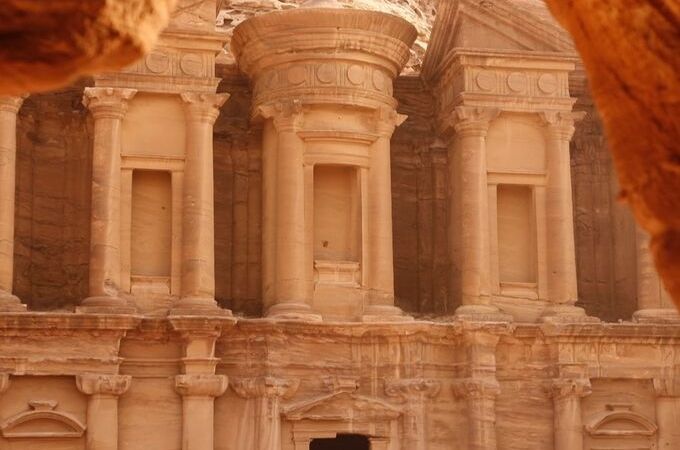
The Treasury may be the photograph everyone recognises, yet the archaeological city becomes far more interesting once you move beyond it and understand the scale of the landscape.
Travellers wanting a more substantial visit can consider Petra walking experiences, choosing routes according to current conditions and personal fitness rather than assuming every September day behaves identically.
The difference from summer is subtle but valuable.
You begin making decisions because you are curious again, not simply because you are calculating the warmest hour.
Wadi Rum Starts Expanding Beyond Sunset
Summer gives Wadi Rum a distinctive schedule.
Early activity, slower midday periods and late-afternoon desert time naturally dominate.
September can begin loosening that structure.
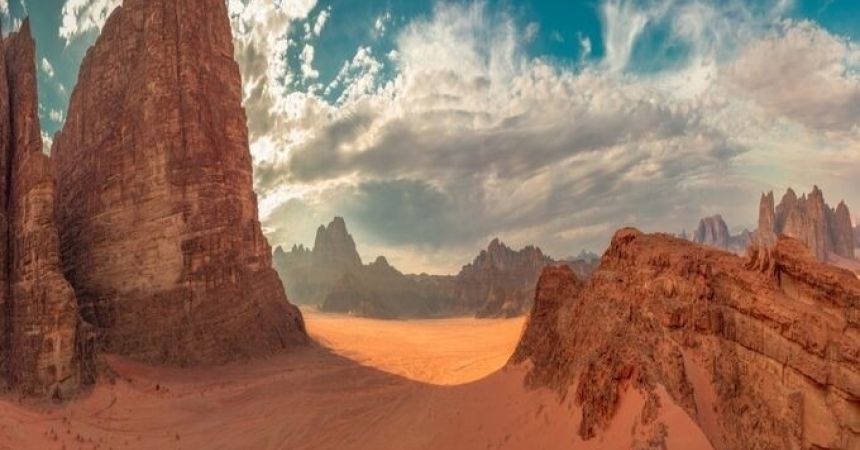
As conditions become more comfortable, particularly later in the month, travellers may find a broader portion of the day suitable for exploration. That can make longer desert programmes, selected walks and more time outside the vehicle increasingly attractive.
The 4x4 remains valuable because Wadi Rum is enormous, not merely because summer conditions make vehicle travel practical.
That distinction matters.
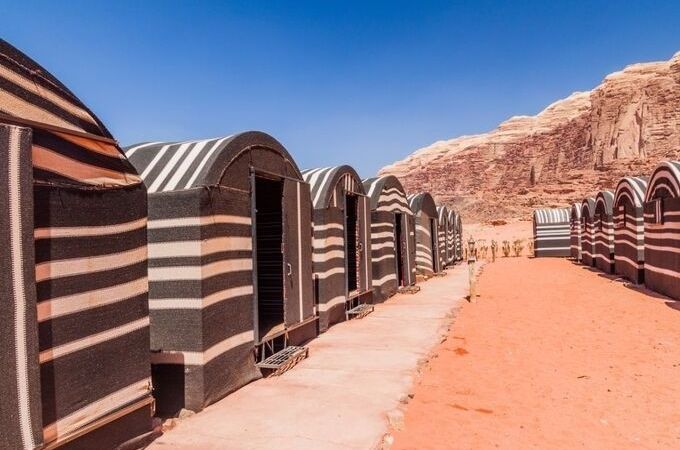
Travellers looking for deeper desert time can consider Wadi Rum explorations, combining driving, selected walking and camp time without treating the experience as a race between landmarks.
September begins returning time to the desert.
Use it slowly.
The Dead Sea Refuses to Follow the Highlands
This is where travellers can misread September.
A comfortable morning in Amman does not tell you what the afternoon at the Dead Sea will feel like.
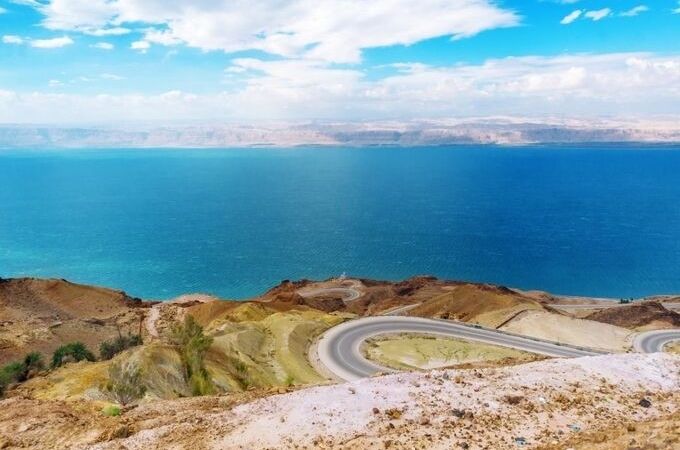
Descending to one of the lowest places on Earth changes the environment dramatically, and warm conditions can remain a defining part of the experience.
Fortunately, the Dead Sea does not require an ambitious walking programme to be worthwhile.
Floating, resort facilities and a slower afternoon fit naturally into a broader cultural itinerary. Those wanting a deliberate pause can include Dead Sea wellness stays, particularly after Petra or several consecutive sightseeing days.
Do not pack away the summer mindset simply because the highlands felt easier.
Jordan's geography has not read the seasonal memo.
Aqaba Can Extend Summer on Purpose
For some travellers, that is exactly the attraction.
September can provide a fascinating combination: cultural touring that begins feeling increasingly comfortable in elevated areas, followed by several days where the Red Sea still delivers a much warmer atmosphere.
Aqaba therefore works particularly well when the coast is intended to be a genuine second chapter of the trip.
Visit Amman.
Explore Petra.
Stay in Wadi Rum.
Then stop travelling.
Several nights in Aqaba can shift the holiday from archaeological exploration towards swimming, diving, snorkelling or resort time.
Travellers who want that contrast can consider Red Sea extensions, but the same rule from previous months remains important: Aqaba deserves inclusion because you want the coast, not because a map says Jordan touches the sea.
September Gives Long Trips an Advantage
Short Jordan itineraries usually prioritise the icons, and understandably so.
September becomes especially interesting when you have enough time to notice regional change.
A longer route may begin in northern Jordan, continue through Petra and Wadi Rum, then descend towards the Dead Sea or Aqaba. Instead of experiencing one uniform weather pattern, you encounter a sequence.
| Route Stage | Travel Character |
| Amman / North | Seasonal transition becomes noticeable |
| Petra | Expanding walking possibilities |
| Wadi Rum | Desert activity window broadens |
| Dead Sea | Warm lowland conditions persist |
| Aqaba | Red Sea summer continues |
This makes September more than a compromise between summer and autumn.
It becomes a month in which geography and season interact visibly.
Don't Plan September From One Forecast
Checking the weather before departure is sensible.
Checking only Amman is not.
A Jordan itinerary can move between significant elevation differences and completely different landscapes within relatively short distances. The forecast for the capital cannot represent Petra, Wadi Rum, the Dead Sea and Aqaba simultaneously.
Check the destinations that matter.
Then check again closer to the relevant day.
This becomes particularly useful in a transitional month because conditions may evolve during a ten-day trip.
The clothes that felt right on arrival may not be the ones you want in the desert several days later.
September Is About Regaining Flexibility
August teaches travellers to build deliberate contrast into a summer itinerary.
October will belong to a more established autumn travel pattern.
September sits between them and does something different.
It gives flexibility back gradually.
Petra can begin supporting longer exploration without every decision revolving around the strongest summer conditions. Wadi Rum's usable outdoor day can expand, while Amman starts revealing seasonal change earlier than Jordan's lowlands.
Yet the Dead Sea and Aqaba remind you not to declare summer finished too quickly.
That tension is exactly what makes September distinctive.
Do not plan it as autumn.
Do not assume it is simply August with a different page on the calendar.
Treat it as a transition you can actually travel through.
The Same Eight Days Can Become Two Different Trips
Imagine two travellers booking exactly the same route.
Both spend eight days in Jordan. Both visit Amman, Petra, Wadi Rum and the Dead Sea. One arrives during the first week of September; the other travels near the end of the month.
On paper, their itineraries could be identical.
They probably should not be.
Early September still deserves considerable respect for summer conditions, while later dates may allow greater flexibility for walking and longer periods outdoors, particularly at elevation. The difference is not dramatic enough to require completely different destinations.
It is enough to change how those destinations are used.
Early September: Keep the Summer Framework
The beginning of September is not the moment to assume autumn has arrived simply because August is over.
A sensible early-month itinerary should retain much of summer's logic.
Protect the morning for substantial archaeological exploration, avoid stacking physically demanding outdoor days and let the Dead Sea function as genuine downtime rather than another sightseeing base.
An eight-day route might flow like this:
| Day | Destination | Early September Approach |
|---|---|---|
| 1 | Amman | Arrival and easy evening |
| 2 | Amman / Jerash | Outdoor touring earlier |
| 3 | Travel south | Moderate sightseeing |
| 4 | Petra | Priority walking day |
| 5 | Petra / Wadi Rum | Lighter morning, transfer south |
| 6 | Wadi Rum | Desert rhythm and camp |
| 7 | Dead Sea | Deliberately slow |
| 8 | Departure | — |
Notice that the itinerary does not attempt to prove September is cooler.
It allows the month to reveal that itself.
Late September: The Middle of the Day Can Return
By later September, some travellers may find the comfortable sightseeing window broadening, particularly around Amman and other elevated destinations.
This does not mean midday suddenly becomes the ideal time for the hardest Petra climb.
It means the itinerary may no longer need to retreat from the middle of every day automatically.
Lunch can remain leisurely without becoming a strategic escape from the weather. A road transfer can happen when it makes logistical sense rather than because it occupies the warmest hours. Longer archaeological visits may feel easier to sustain.
The same eight-day route can therefore loosen.
| Day | Destination | Late September Approach |
| 1 | Amman | Arrival and neighbourhood evening |
| 2 | Amman / Jerash | Broader cultural day |
| 3 | King's Highway / Petra | More outdoor stops possible |
| 4 | Petra | Longer flexible exploration |
| 5 | Petra / Wadi Rum | Optional additional Petra time |
| 6 | Wadi Rum | Wider activity window |
| 7 | Dead Sea | Warm-weather relaxation |
| 8 | Departure | — |
The destinations remain almost identical.
The spaces between them become more usable.
The King's Highway Gains Value
September's changing conditions can also influence route choice.
Travelling between Amman and Petra is not simply a matter of reaching the south as quickly as possible. Depending on your itinerary, the historic King's Highway can turn the transfer into part of the experience through landscapes and cultural stops.
During stronger summer conditions, adding too many exposed stops can make a travel day unnecessarily long.
As September progresses, that calculation may change.
If conditions are comfortable and the route genuinely interests you, a slower journey south can provide context that a direct transfer cannot.
The road becomes part of Jordan rather than the space between two parts of Jordan.
Petra's Second Morning Becomes More Tempting
A common first-time itinerary gives Petra one full day and leaves the following morning.
That can work perfectly well.
September, particularly later in the month, may make another approach attractive: leave the second morning partly open.
If the first day felt complete, have breakfast and continue towards Wadi Rum without regret.
If you left Petra still curious, return for a shorter visit before travelling south.
This flexibility is more valuable than deciding in advance that every visitor requires exactly one or exactly two Petra days.
The site is large enough to reward more time.
Your interests determine whether it deserves it.
Wadi Rum Can Become Less About Waiting for Sunset
In deep summer, sunset carries enormous importance because it marks both a visual transformation and a more comfortable part of the desert day.
September begins changing that relationship.
Sunset remains beautiful, obviously, but the hours leading towards it can become increasingly useful for longer exploration. Travellers may be more interested in selected walks or spending additional time outside the vehicle rather than structuring almost everything around the edges of the day.
This gives Wadi Rum a broader identity.
The desert is no longer simply morning activity, midday pause and sunset.
There is more room between those points.
The Dead Sea Stays the Outlier
This is where the early-versus-late September distinction becomes less useful.
The Dead Sea's low elevation keeps it considerably warmer than Jordan's highlands, so travellers arriving later in the month should not assume that conditions there will mirror a comfortable afternoon in Amman.
That is not a disadvantage.
It gives the final section of the itinerary a different purpose.
After expanding outdoor activity elsewhere, arriving somewhere designed around floating, water and a slower pace can create a natural finish.
The seasonal contrast becomes part of the route.
Don't Move Everything Later Just Because You Can
As conditions become more comfortable, there is a temptation to abandon early starts completely.
There is no need.
An earlier Petra visit still gives you more time. Morning light still has its own atmosphere, and beginning a substantial archaeological day before the busiest portion can remain useful regardless of temperature.
September's advantage is choice.
You can start early because you want to, not because the entire itinerary depends on avoiding the middle of the day.
That difference makes travel feel much less controlled by the season.
The Real September Upgrade Is Freedom
Travellers sometimes search for the precise week when Jordan becomes “comfortable again.”
There is no reliable date when that switch happens.
Weather does not work with tourism calendars.
What September offers instead is a gradual increase in options.
Early in the month, retain a summer-aware structure and allow conditions to guide you. Later in September, broaden the itinerary when the weather permits rather than assuming every day must still follow August's rules.
That is a much more useful way to plan a transitional month.
The destinations do not need to change.
Your freedom inside them does.
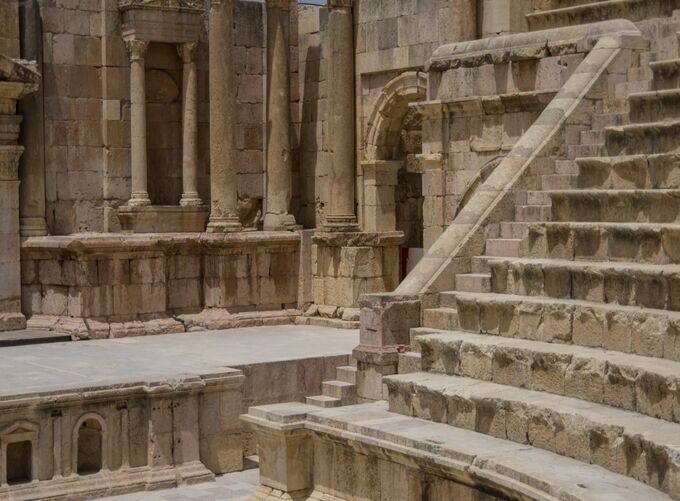
September Makes the Space Between Places Matter
Jordan is often planned as a sequence of names.
Amman.
Petra.
Wadi Rum.
Dead Sea.
The itinerary looks wonderfully efficient because the country's major destinations appear relatively close together compared with those in many larger countries.
What disappears from that planning method is the road itself.
September begins making those spaces more interesting. As conditions gradually become friendlier for outdoor stops, particularly later in the month, a transfer does not always need to mean getting from one hotel to another as quickly as possible.
Sometimes the journey south deserves most of the day.
Fast Road or Scenic Road?
The choice between a direct transfer and a slower route should depend on what you want from the trip, not on the assumption that scenic is automatically better.
A direct journey protects time.
A slower journey creates experiences.
Both have value.
| Choose a Faster Route When... | Choose a Scenic Route When... |
|---|---|
| Your trip is short | You have 8–10+ days |
| Petra is the overwhelming priority | The journey itself interests you |
| You dislike frequent stops | You enjoy landscapes and smaller sites |
| You need more recovery time | Conditions favour outdoor stops |
| You already have a busy itinerary | The route has breathing room |
The worst option is often the compromise in the middle: taking the slower road but filling it with so many stops that every place receives twenty minutes.
That is not slow travel.
It is a long transfer with more doors opening.
Madaba Can Change the Beginning of the Journey
Madaba is close enough to Amman to be treated as a convenient excursion, yet it can also function as part of the route south.
That makes it useful for travellers who prefer an itinerary that moves progressively rather than repeatedly returning to the same base.
The town is known particularly for its mosaic heritage, but its greater value within a September route may be structural. It creates a cultural transition between the capital and the landscapes farther south without demanding an enormous detour.
Spend enough time to understand why you stopped.
Then continue.
A road journey becomes richer when every stop has a reason beyond breaking up the drive.
The King's Highway Is Not About Arriving Quickly
There are roads designed for efficiency.
The King's Highway is interesting for almost the opposite reason.
Choosing a slower historic route towards Petra can introduce landscapes and settlements that disappear when the itinerary focuses entirely on destination-to-destination speed.
September makes that possibility increasingly attractive because roadside viewpoints and cultural stops may become easier to enjoy as the season progresses.
But the route needs time.
If you leave late, stop constantly and still expect to reach Petra early enough for substantial sightseeing, the day becomes unnecessarily stressful.
Let the road have its own purpose.
Petra will still be there tomorrow.
Arrival Time Changes the First Petra Experience
There is a strong temptation to arrive in Petra and immediately enter the archaeological site because you have finally reached it.
Sometimes that is exactly what you want.
Sometimes checking into the hotel, having dinner and beginning properly the following morning creates a much better experience.
A scenic road day makes the second option particularly sensible.
You have already travelled, stopped, walked and absorbed several different places. Adding Petra simply because daylight remains can turn one of Jordan's greatest experiences into the final item on a long checklist.
September gives you increasing flexibility.
Use some of it to arrive without immediately performing tourism.
Petra to Wadi Rum Should Feel Like a Landscape Change
The journey from Petra towards Wadi Rum is shorter than the cultural transition it creates.
You leave a mountainous archaeological environment and move towards a desert where the scale becomes horizontal.
This deserves attention.
Travellers often spend transfer days looking at phones because they assume nothing important happens until the next destination. On this route, the changing landscape is part of understanding southern Jordan.
Then Wadi Rum appears.
The contrast works precisely because Petra came first.
One destination is dense with carved history.
The other initially seems almost empty.
Not Every Road Needs a Stop
This is where scenic-route enthusiasm can become counterproductive.
A viewpoint.
A village.
A castle.
A café someone recommended.
Another viewpoint.
Eventually, nobody remembers why the vehicle stopped.
A good September road day should contain fewer, better pauses.
Choose places that add something genuinely different to the route and allow enough time to experience them without watching the clock.
The landscape itself can fill the gaps.
You do not need an attraction every forty minutes.
September Can Turn a Transfer Into a Chapter
This is one of the month's less obvious advantages.
As the strongest summer structure gradually loosens, the road begins competing for attention with the famous destinations at either end.
A journey from Amman towards Petra can become more than logistics. Madaba can provide cultural context, the King's Highway can slow the pace, and the changing terrain can explain why Jordan feels far larger than its map suggests.
Then the following transfer into Wadi Rum changes the landscape again.
None of this requires adding another destination to the holiday.
It requires noticing what already lies between the ones you chose.
That is a very September kind of luxury.
More usable time does not always mean seeing more places.
Sometimes it means finally seeing the road.
Who Should Choose September for Jordan?
September is particularly attractive for travellers who want more outdoor flexibility than deep summer usually provides but still enjoy reliably warm-weather elements within the same journey.
Its greatest strength is variety.
Depending on your dates and route, the trip can begin with increasingly comfortable cultural touring around the highlands, move through Petra and Wadi Rum as their outdoor possibilities expand, then return almost to summer when you descend towards the Dead Sea or continue to Aqaba.
That combination will not suit everyone equally.
| Traveller Priority | September Fit | Why |
|---|---|---|
| Petra and archaeology | Very Good | Walking flexibility gradually improves |
| Road-trip style touring | Excellent | Scenic stops become easier to include |
| Wadi Rum exploration | Very Good | Broader outdoor possibilities |
| Dead Sea relaxation | Excellent | Warm lowland conditions continue |
| Red Sea holiday | Excellent | Aqaba retains summer character |
| Cool-weather hiking | Depends | September can still be warm |
| Avoiding all heat | Poorer Fit | Summer conditions may persist |
Travellers particularly sensitive to heat should not choose September simply because it appears under “autumn” on a seasonal calendar. Later dates may suit them better, but actual conditions should always guide expectations.
Frequently Asked Questions About Jordan in September
1. Is September a good time to visit Jordan?
Yes. September can be particularly rewarding because outdoor flexibility gradually increases while destinations such as the Dead Sea and Aqaba retain a strong warm-weather character. Conditions can differ considerably between early and late September, so exact travel dates matter when planning the itinerary.
2. Is Jordan still hot in September?
It can be, especially during early September and in lower or southern areas. Amman and other elevated destinations may begin showing seasonal change sooner than the Dead Sea or Aqaba. Check individual destination forecasts rather than relying on one temperature figure for the entire country.
3. Is early or late September better for Jordan?
Neither is universally better. Early September suits travellers comfortable with a summer-style rhythm, while later September may provide broader outdoor flexibility in some regions. Those prioritising long archaeological walks may prefer later dates, while warm-weather travellers may be perfectly comfortable earlier.
4. What is Petra like in September?
Petra remains warm, particularly earlier in the month, but conditions can gradually become more favourable for extended exploration. Starting with priority areas remains sensible, while later-September visitors may find they have greater flexibility for longer routes depending on current weather and personal fitness.
5. Can I hike in Jordan during September?
Yes, but route choice should reflect exact dates, elevation, current conditions and personal ability. September is transitional rather than uniformly cool, so demanding exposed trails should not automatically be treated like autumn hikes simply because the calendar has moved beyond August.
6. Is Wadi Rum good in September?
Yes. Wadi Rum can be excellent in September as the outdoor activity window gradually expands. Vehicle-based exploration remains useful because of the desert's enormous scale, while selected walks, sunset experiences and overnight camping can become increasingly comfortable as the month progresses.
7. Can I swim in the Dead Sea in September?
Yes, and the Dead Sea generally retains a distinctly warm character during September. Its low elevation means conditions can be considerably hotter than in Amman or Petra, making floating, resort facilities and relaxation a natural contrast with the more active sections of the journey.
8. Is Aqaba worth visiting in September?
Aqaba is particularly attractive if you want the Jordan itinerary to finish with a genuine Red Sea experience. Warm coastal conditions can continue while other parts of the country begin transitioning, allowing travellers to combine archaeological sightseeing with swimming, diving, snorkelling or resort time.
9. What should I pack for Jordan in September?
Pack lightweight clothing for warm conditions, comfortable walking shoes and effective sun protection. A light additional layer can become useful during some evenings or in elevated regions, particularly later in the month. Respectful clothing remains appropriate at religious and culturally sensitive sites.
10. Is September good for driving around Jordan?
It can be an excellent month for road-based itineraries, particularly as conditions become more suitable for scenic and cultural stops. Travellers with enough time can consider slower routes between Amman and Petra rather than treating every transfer purely as transportation.
11. How many days do I need for Jordan in September?
Around eight to ten days gives many first-time visitors enough time for Amman, Petra, Wadi Rum and the Dead Sea without excessive rushing. Adding Aqaba, longer Petra exploration or a slower King's Highway journey can justify extending the trip further.
12. Is September or October better for Jordan?
September offers a transitional experience in which summer conditions gradually ease while the Dead Sea and Aqaba remain notably warm. October moves further into Jordan's established autumn travel season. The better choice depends on heat tolerance, planned activities and whether warm coastal time is important.

A travel professional specializing in tailor-made travel planning, guest experience management, and multi-destination tourism operations.
With over 23 years of experience in the travel industry, he designs and manages private and cultural tours for international travelers across Türkiye, Greece, Egypt, Jordan, Morocco, and other destinations.
He has strong expertise in both online and face-to-face guest communication, sales processes, and end-to-end travel operations.
Working closely with hotels, travel agencies, and local partners, he ensures smooth coordination and high-quality travel experiences at every stage of the journey.
His focus is on delivering personalized, reliable, and seamless travel experiences for international guests worldwide.