Petra in June Gives You More Time Than You Should Try to Fill
Author: Kenan Ungur
Article Date: 16.09.2024
Reading Time: 14 min

Petra in June Gives You More Time Than You Should Try to Fill

Updated: August 2026

June can make Petra look unusually generous.

The morning begins with a long day ahead, rain is generally far less prominent than during the cooler seasons, and sunset sits comfortably in the distance. When you look at a map, additional monuments and routes start appearing achievable simply because the clock seems to permit them.

That is exactly where June can mislead you.

Petra is enormous on foot, and additional daylight does not reduce the distance between archaeological areas. It does not shorten stairways, eliminate the return journey or restore the energy already spent walking through the site.

What June really provides is time flexibility.

Using that flexibility well is different from converting every available hour into another kilometre.

A Long Daylight Window Creates a False Sense of Capacity

Visitors often plan more aggressively when they know darkness will not arrive early.

The reasoning sounds perfectly sensible: if there are many usable daylight hours, why not see another section?

Because daylight and physical capacity are not interchangeable.

You may have three hours remaining and only one hour's worth of comfortable walking left in your legs. That difference becomes particularly important inside Petra, where continuing toward another objective also increases the distance you eventually need to cover on the way out.

For travelers on a June Petra discovery, the useful question is therefore not how many hours remain.

Ask how much comfortable distance remains.

Petra's Map Does Not Show the Cost of Connecting Places

Maps are excellent at showing where monuments are located and surprisingly poor at communicating what it feels like to connect them after several hours on foot.

Two locations may appear close when viewed on a screen, yet the actual journey can include uneven ground, steps, elevation changes and stretches where the distance feels much larger than expected.

June encourages visitors to underestimate this because time itself seems abundant.

Before adding another objective, consider the complete movement it creates:

Where am I now → where am I going → what does that add to my eventual return?

That final part is the one most easily forgotten.

Stop Counting Attractions and Start Budgeting Distance

A more useful June plan divides the site according to walking commitment rather than fame.

Route Decision Hidden Distance Cost June Question
Continue along the main corridor Gradual accumulation Am I still exploring comfortably?
Add a side area Out-and-back movement Does it justify the detour?
Take a major extension Significant extra distance What remains afterward?
Add a climb Distance plus elevation Am I budgeting effort as well as time?
Change plans repeatedly Possible backtracking Can the route be simplified?
Begin the return Often underestimated Have I preserved enough energy?

This is not May's sun-exposure table in another form. June is concerned with the geography of effort.

Backtracking Is June's Quiet Energy Thief

One of the easiest ways to make Petra unnecessarily exhausting is moving inefficiently.

You walk past an area intending to return later, change your mind about an extension, retrace part of the route to meet someone, then discover that another place you wanted to see was closer to where you were an hour earlier.

No single mistake seems important.

Together, they can add a surprising amount of walking.

A long-day Petra journey benefits from having a broad geographical sequence before you begin. It does not need to become rigid, but understanding which experiences naturally connect helps prevent the site from turning into a series of avoidable return trips.

Flexibility is valuable.

Random movement is expensive.

More Daylight Is Better Used as Breathing Room

There is another way to interpret June's longer days.

Instead of saying, “We have enough daylight to add two more places,” you can say, “We have enough daylight not to rush.”

That changes the experience immediately.

You can remain longer where something interests you, take a proper rest without feeling that the itinerary is slipping away, and move through archaeological areas at a pace that allows them to register as places rather than checkpoints.

Extra daylight becomes margin.

For many visitors, that is considerably more valuable than another ambitious route.

The Farthest Point Should Not Be the Moment You Become Tired

There is a simple mistake that appears repeatedly in large archaeological sites: travelers continue until fatigue tells them to turn around.

By then, they still need to return.

A better June strategy is to begin the return while you retain enough energy to enjoy it. This becomes especially important when the first half of the day included additional climbs or side routes that made the total distance less obvious.

You should not reach your farthest point because your body has finally said, “That's enough.”

Reach it because you deliberately decided this is enough.

June Water Planning Should Follow Distance

Hotter, drier conditions make hydration increasingly important, but June's specific angle is not generic summer heat management.

Think about water in relation to where you intend to go.

A visitor remaining primarily along the central archaeological route has different logistical needs from someone committing to a substantial extension. The farther your route becomes, the less useful it is to think about supplies only in terms of how long you have been inside the site.

Distance creates its own logistics.

Carry water sensibly, know where legitimate services are available along your intended route, and do not assume that having many daylight hours removes the need to plan ahead.

One Extra Route Can Change the Entire Day

An extension is rarely just the hour you imagine spending there.

It includes the approach, the experience itself, stops along the way and whatever additional return distance it creates.

This is why a June Petra walking route should contain priorities rather than an equal list of objectives.

If one extension matters greatly, build the day around it. Allow less important possibilities to remain optional rather than trying to combine every route simply because the calendar provides enough daylight.

Petra rewards commitment to the right experience more than accumulation of destinations.

The Return Can Be Part of the Archaeology

Distance budgeting sounds practical, perhaps even slightly unromantic.

Its purpose is actually the opposite.

When enough energy remains for the journey back, you continue looking at Petra rather than merely moving through it. Familiar monuments appear from another direction, the wider landscape begins making more spatial sense, and sections passed with anticipation earlier can receive more attention on the return.

The final kilometres remain travel rather than transportation.

That is what intelligent distance management buys you.

June Owns the Long-Day Illusion

May taught visitors to notice how sunlight accumulates across several hours outdoors.

June introduces a different temptation: because daylight is plentiful, the archaeological site begins to look more achievable than it really is.

July will move toward the physical consequences of exposed summer climbs, while August will focus much more strongly on how an early start changes the order of the day.

June stays with distance.

Its lesson is not that you should walk less.

It is that the longest daylight of the Petra cluster should give you more freedom inside the day, not pressure to fill every available hour with additional ground.

The best use of June's generous clock may therefore be surprisingly simple: walk where the archaeology genuinely draws you, reduce unnecessary backtracking, preserve enough energy for the return and allow the hours you saved to become time spent looking rather than kilometres spent collecting.

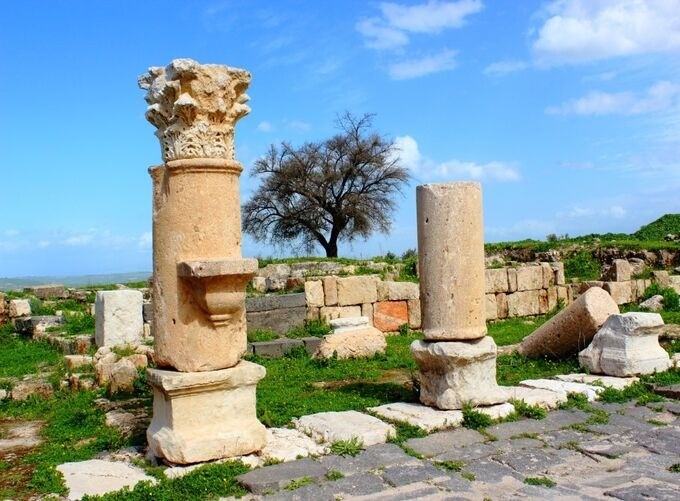
Views from Umm Qais overlooking the Sea of Galilee region

June Works Better When the Route Has a Shape

A Petra day becomes much easier when you understand its broad geographical logic before you start walking.

That does not mean scheduling every monument or deciding exactly how many minutes you will spend at each stop. It means knowing which places naturally belong together, where a substantial detour begins and which optional sections could create unnecessary backtracking if added impulsively later.

This matters more in June because generous daylight can make inefficient decisions seem inexpensive. An extra forty minutes does not feel significant when the afternoon stretches ahead, yet several such diversions can quietly turn into kilometres of additional walking.

A loose route with a clear direction preserves spontaneity without wasting the physical advantage that a long day appears to provide.

Distance Should Earn Its Place in the Itinerary

Not every additional kilometre has equal value.

Walking farther to reach something you genuinely care about may be an excellent use of energy, while covering the same distance simply because another location appears on a recommended list can leave the day feeling strangely mechanical.

Before committing to an extension, consider what it contributes that the rest of your route does not.

Does it reveal another dimension of Nabataean architecture? Does it offer a landscape perspective you particularly want to experience? Is it one of the reasons Petra was included in your Jordan journey in the first place?

When the answer is meaningful, the distance has a purpose. When the answer is merely “we have enough time,” June's long daylight may be making the decision for you.

A Rest Does Not Reduce the Amount of Petra You See

Long daylight also changes the economics of stopping.

When hours feel scarce, a twenty-minute break can seem like twenty minutes removed from sightseeing. June provides enough daylight that the same pause can instead improve everything that follows it, particularly when you have already accumulated substantial walking distance.

Rest before exhaustion rather than after it.

Sitting for a while, drinking water and allowing your legs to recover may preserve enough energy to appreciate another archaeological section properly. Continuing without interruption simply to maximize route coverage can produce the opposite result: you technically reach more places but become progressively less interested in them.

Use the Midpoint to Recalculate the Day

A June plan should be revised after you have experienced Petra rather than followed simply because it looked reasonable before arrival.

Around the middle of the visit, consider what has actually happened.

Midday Reality Better June Decision
Less distance covered than expected, but enjoying it Keep the slower pace
Ahead of schedule and energetic Consider one meaningful extension
Unexpected backtracking already occurred Simplify the remaining route
Legs noticeably tiring Protect the return journey
One area deserves more time Spend it there rather than chasing the original list
Plenty of daylight remains Treat it as flexibility, not an obligation

This is June's central decision point: recalculate according to distance already traveled, not hours remaining on the clock.

The Return Should Influence the Outbound Route From the Beginning

Petra makes forward movement psychologically easy because each new section promises something else to discover. The return is less visible while you are planning, even though it represents a substantial part of the day's total walking.

Think about it before fatigue appears.

If you are considering another extension, mentally add its return cost rather than calculating only the distance required to reach it. If the route includes climbing, include that physical effort as well.

This does not need to make the day cautious or conservative. It simply prevents the common situation in which visitors successfully reach every planned objective and then discover that they have designed an unpleasant final two hours for themselves.

Long Daylight Can Improve Photography Without Adding Distance

June's extended daylight does not need to send you farther into Petra.

It can give you more patience with places you have already chosen.

Instead of photographing a monument quickly because another stop is waiting, you can observe how the scene changes while you remain there. You may notice details that disappeared during the first impression or find that stepping away from the busiest viewing position produces a more interesting understanding of the surrounding landscape.

The benefit is subtle but important: more available time increases the depth of the visit rather than its geographical size.

That is often a better trade.

Know When the Day Has Already Been Successful

There is no finish line inside Petra.

This becomes important in June because the combination of long daylight and a large archaeological map can create the feeling that stopping while time remains is somehow wasteful.

It is not.

If you have experienced the areas that mattered most, explored them without rushing and still have enough energy to appreciate the journey back, the day has already worked. Another distant objective does not automatically improve it.

Leaving something unseen is sometimes evidence of good judgment rather than incomplete travel.

12 Questions About Petra in June

1. What is the weather like in Petra in June?

June generally brings warm, dry and sunny conditions, with long daylight supporting extended time outdoors. Temperatures vary by individual day, however, so travelers should check the current forecast and plan walking distance according to actual conditions rather than monthly averages alone.

2. Is Petra very hot in June?

June can be hot, particularly during exposed parts of the day, although this article deliberately does not treat it as the peak-heat experience reserved for later summer. For June visitors, the more distinctive challenge is balancing Petra's considerable walking distances against apparently abundant daylight.

3. Does it rain in Petra in June?

Rain is generally uncommon during the dry summer period, although unusual weather is always possible. Checking the short-range forecast remains sensible, particularly because current conditions and official site information should always take precedence over assumptions based on typical seasonal patterns.

4. What should I wear in Petra in June?

Choose lightweight, breathable clothing suitable for extensive outdoor walking, together with comfortable supportive footwear. Sun protection, sunglasses, suitable head coverage and sufficient water are important because even an efficiently planned route can involve many hours across an exposed archaeological landscape.

5. How long can I spend in Petra during June?

Long daylight can support an extended visit, but available hours should not determine the maximum route. Your walking ability, accumulated distance, weather, chosen extensions and return journey provide much more useful limits than the amount of daylight remaining.

6. Should I try to cover more of Petra because June days are long?

Not automatically. Extra daylight is often more valuable as breathing room, allowing longer archaeological stops, proper rests and a comfortable return. Add distance when another route genuinely matters to you rather than simply because there appears to be enough time.

7. How can I avoid unnecessary walking in Petra?

Understand the broad route before starting, group nearby priorities together and avoid repeatedly retracing sections because of spontaneous itinerary changes. Petra will still require substantial walking, but a coherent geographical sequence can prevent avoidable kilometres from accumulating throughout the day.

8. Should I take breaks even when I still feel energetic?

Yes. Resting before substantial fatigue develops can help preserve comfort and concentration for the later parts of the visit. June's longer daylight gives you enough flexibility to stop without treating every break as time stolen from archaeological sightseeing.

9. How should I decide whether to add another Petra route?

Consider the archaeological value of the extension, the complete distance it adds, your current energy and the return still ahead. “There is enough daylight” should not be the only reason for turning a satisfying visit into a substantially longer one.

10. How important is the return walk in June?

Very important, because the long daylight can encourage visitors to travel farther before considering how much ground must eventually be covered again. Preserve enough physical energy for the return so that Petra remains interesting rather than becoming an endurance exercise.

11. Can I explore Petra slowly in June?

Yes, and this can be one of the most intelligent uses of June's extended daylight. Instead of translating additional hours into more kilometres, use some of them for archaeological observation, photography, proper rest and a route that does not feel governed by the clock.

12. What makes June different from May in Petra?

May focuses on accumulated sun exposure, particularly how several hours across open archaeological areas can affect comfort before peak summer conditions arrive. June owns the long-day illusion: abundant daylight can encourage excessive distance, so route efficiency, reduced backtracking and preserving energy for the return become the defining strategy.

Kenan Ungur
Author

A travel professional specializing in tailor-made travel planning, guest experience management, and multi-destination tourism operations.

With over 23 years of experience in the travel industry, he designs and manages private and cultural tours for international travelers across Türkiye, Greece, Egypt, Jordan, Morocco, and other destinations.

He has strong expertise in both online and face-to-face guest communication, sales processes, and end-to-end travel operations.

Working closely with hotels, travel agencies, and local partners, he ensures smooth coordination and high-quality travel experiences at every stage of the journey.

His focus is on delivering personalized, reliable, and seamless travel experiences for international guests worldwide.

Join The Newsletter

To receive our best monthly deals

Magnificent Travel Logo

Magnificent Travel
Usually responds the same day

Magnificent Travel
Welcome to the Magnificent Travel

How may i help you?
Today
+905324935198
X