
Ten Days in Jordan: Build the Trip Around Change, Not Mileage
Updated: August 2026
Ten days is one of the most forgiving durations for a first journey through Jordan because it allows the country to change several times without requiring the traveler to change hotels every time the scenery does.
You can begin in contemporary Amman, move north into the Roman landscape of Jerash, travel south through places connected with mosaics, religious history and medieval Jordan, give Petra enough attention to justify the journey, experience Wadi Rum after the archaeological intensity has faded, and still decide whether the final portion of the trip should slow down beside the Dead Sea or extend toward Aqaba.
The advantage of ten days is not simply that more fits.
What improves is the relationship between the places.
Jerash no longer needs to be hurried because Petra is waiting two days later. The road south can contain meaningful stops without becoming a twelve-hour endurance exercise. Petra can sit between sensible hotel nights, while Wadi Rum can receive an evening and morning rather than being squeezed into a desert excursion. Even the return toward Amman has room to become part of the trip instead of a logistical emergency before an international flight.
For a broadly interested first-time traveler, this is where Jordan starts feeling complete without becoming exhaustive.
The important word is complete.
Not finished.
Jordan still has more to offer after ten days, which is exactly how a good first trip should end.
The First Three Days Should Establish Jordan Before You Start Chasing Its Icons
A ten-day itinerary benefits from beginning with context rather than urgency.
Many travelers arrive already thinking about Petra, which makes everything before it feel like preliminary material. That mindset can reduce Amman and Jerash to obligations rather than experiences with their own value.
The first three days should correct that.
Day 1: Arrive in Amman and resist the urge to overperform
If your flight arrives early enough, use part of the day for a gentle introduction to the capital, perhaps combining one historical component with time in the city itself rather than constructing a dense sightseeing program immediately after international travel.
Amman's hills, contemporary neighborhoods, downtown activity and food culture help establish something that becomes increasingly important as the trip progresses: Jordan is not an archaeological park linked together by roads.
A late arrival changes the plan completely. In that case, dinner and sleep are useful itinerary components rather than evidence that Day 1 was wasted.
Ten days gives you permission to begin like a human being.
Day 2: Give Amman enough time to become a city
This is the day to connect the Citadel and Roman Theatre with the contemporary capital around them.
Historical sightseeing matters, although I would deliberately leave part of the day less structured. Amman benefits from walking, food, cafés and the ordinary unpredictability of city life in a way Petra or Wadi Rum does not.
Travelers who enjoy museums can use the additional time differently, while families or anyone recovering from a long flight may prefer a lighter afternoon.
The objective is not completing Amman.
It is making sure that when you leave, the capital has become more than the location of your first hotel.
Day 3: Go north for Jerash, with Ajloun only if it genuinely interests you
Jerash deserves several hours because its value comes from understanding an ancient city rather than photographing several disconnected Roman structures.
The Oval Plaza, Cardo, theatres and elevated temple areas become considerably more meaningful when the visit is allowed to unfold naturally.
Ajloun can follow for travelers interested in medieval history and northern landscapes, but ten days should not create the false assumption that every possible combination must now be used.
If Jerash attracts you deeply, remain longer.
If medieval fortifications add useful contrast, include Ajloun.
The itinerary has enough time for either decision, which is one of its strengths.
Days Four and Five Should Make the Southbound Journey Earn Its Place
The journey toward Petra is often where first-time Jordan itineraries lose discipline.
Madaba is worthwhile. Mount Nebo can be meaningful. The Dead Sea is tempting. Kerak Castle has a legitimate historical argument, while the King's Highway promises a more interesting journey than simply driving south.
The mistake is assuming that ten days means all of them belong on the same road day.
They do not.
Day 4: Shift the historical language through Madaba and the central region
Madaba works particularly well here because Byzantine mosaic heritage introduces a period and visual tradition different from the Roman material encountered farther north.
Mount Nebo may also deserve inclusion when religious history and biblical geography are important to you.
What I would avoid is turning the day into a competition between nearby attractions.
Choose two or three meaningful elements and let the route remain comfortable enough that lunch still behaves like lunch.
Depending on hotel strategy, this can also be a sensible place for a Dead Sea overnight rather than using the Dead Sea only as a rushed stop later in the trip.
Day 5: Travel toward Petra with one real reason to take the slower road
If Kerak interests you, allow enough time to enter the fortress and understand why it belonged where it did rather than preserving it as a photography stop.
If scenery and the journey itself are the priority, give the King's Highway enough margin that the road can be appreciated rather than merely endured.
If neither matters strongly, use the more efficient transfer and arrive around Petra earlier.
This is where itinerary quality depends on editing.
A ten-day route should contain better decisions, not merely more stops.
Arriving in Wadi Musa with enough time to settle in, eat comfortably and sleep before Petra will almost always provide more value than reaching the hotel late because another marginal stop was preserved at all costs.
Petra Should Occupy the Center of the Journey, Not Just Day Six
Petra is one of the few destinations where the day before and the day after can affect the quality of the actual visit almost as much as the hours spent inside the site.
That makes its position in the itinerary important.
Day 6: Give Petra an uninterrupted archaeological day
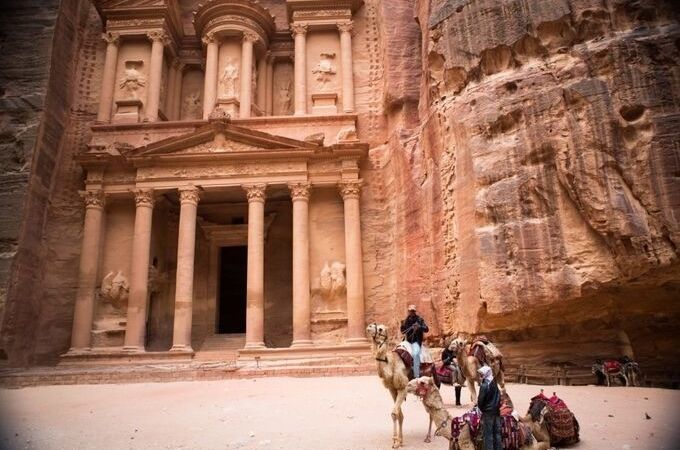
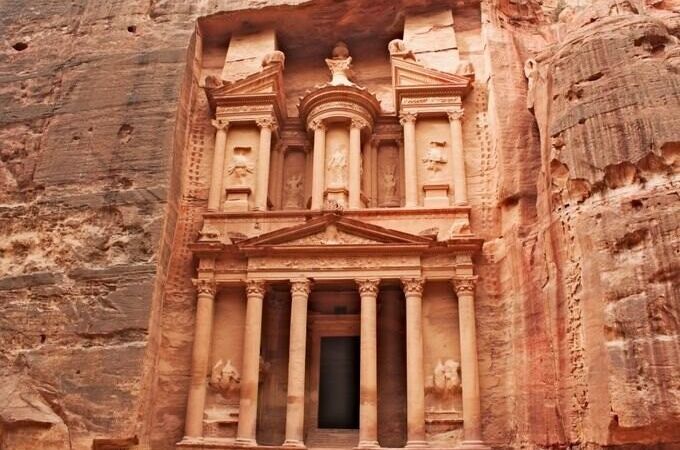
Enter with enough time that the Siq does not feel like transportation toward the Treasury.
The first appearance of Al-Khazneh deserves attention, although the day becomes far richer once the archaeological city beyond it begins to unfold. Tombs, public spaces, temples, routes and the surrounding landscape gradually reveal how incomplete the single-image version of Petra really is.
Whether the Monastery belongs in your day should depend on physical comfort, weather, available time and personal interest rather than a feeling that everybody must complete the same Petra route.
A guide can add substantial value through historical continuity, particularly early in the day, but the strongest guiding should also allow space for observation and photography.
For travelers who prefer having this complete first-time route professionally coordinated, Jordan Signature Tours can be a natural commercial continuation without changing the informational role of this article.
The important planning principle is simpler: nothing unrelated should be waiting impatiently after Petra that evening.
Day Seven Should Respond to What Petra Did to You
A standard itinerary might immediately send every traveler toward Wadi Rum after breakfast.
The geography makes sense, but ten days allows one useful question before leaving:
Do you want more Petra?
For many visitors, one complete day is enough. They leave satisfied and ready for a completely different environment.
Others discover during the first visit that they would happily return for another morning, whether for photography, another permitted route, slower exploration or simply to revisit an area that deserved more attention.
This does not need to become an entire second Petra day.
A morning can be enough to change the experience before continuing toward Wadi Rum later.
The advantage of placing this flexibility on Day 7 is that the decision can be made after you have actually seen Petra rather than months earlier while looking at a map.
That is a far more human way to plan.
Wadi Rum Should Make the Itinerary Feel Larger Without Adding Another Country
The transition from Petra to Wadi Rum is one of Jordan's strongest sequencing advantages.
The archaeological city gives way to desert scale, and the traveler's attention moves away from chronology and architecture toward landscape.
Day 7 afternoon and evening: enter the desert without turning sunset into a deadline
A suitable 4x4 excursion can introduce different parts of Wadi Rum while allowing enough stops that the experience does not become one long vehicle journey.
If sunset matters, protect the timing earlier rather than attempting to recover it by shortening every stop once you arrive late.
The overnight deserves to remain part of the destination.
Dinner, darkness and the quieter hours afterward change Wadi Rum in ways another hour of daytime sightseeing cannot.
Day 8 morning: do not assume every desert night requires a 5:00 AM alarm
Photographers and travelers who naturally enjoy early mornings may want sunrise.
Others may find that a slower breakfast creates a better transition after several active days.
Ten days is long enough for this choice to become genuine rather than theoretical.
From Wadi Rum, the route can now divide according to travel style, and this is where a ten-day itinerary becomes much more personal than a shorter highlights tour.
Days Eight and Nine Should Decide Whether Your Jordan Ends With Water or With Depth
There are two particularly strong ways to use this section of the journey.
Neither should be treated as universally superior.
Version A: Wadi Rum → Aqaba
For travelers who enjoy the coast, snorkeling, diving, resort time or simply the idea of ending the active southern portion more gently, Aqaba becomes highly viable at ten days.
The key is giving it enough time.
Arriving from Wadi Rum and staying two nights creates one complete Red Sea day between check-in and check-out. That is materially different from spending one night in Aqaba merely because it happens to be nearby.
The middle day can contain marine activity or almost nothing scheduled, and both choices are legitimate.
This version suits families particularly well and can also provide an excellent conclusion for couples who want archaeology and desert travel without maintaining the same sightseeing intensity until departure.
Version B: Wadi Rum → slower northbound return
Travelers who are not interested in Aqaba can use the same time to create more depth elsewhere.
Perhaps Petra received a second morning.
Maybe the Dead Sea becomes a genuine overnight rather than a road stop. Additional Amman time can be restored toward the end, or another historically meaningful component can fit without compressing previous days.
This version is often stronger for archaeology-focused travelers.
The important thing is that Aqaba should not be included merely because Day Eight happens to place you geographically nearby.
The Red Sea deserves travelers who actually want the Red Sea.
If You Include Aqaba, Do Not Turn the Dead Sea Into Another Beach Stay
This distinction becomes particularly important in ten-day planning.
Aqaba and the Dead Sea can both be included comfortably, but they should perform different roles.
Aqaba is the place for conventional coastal activities, resort relaxation, snorkeling or diving.
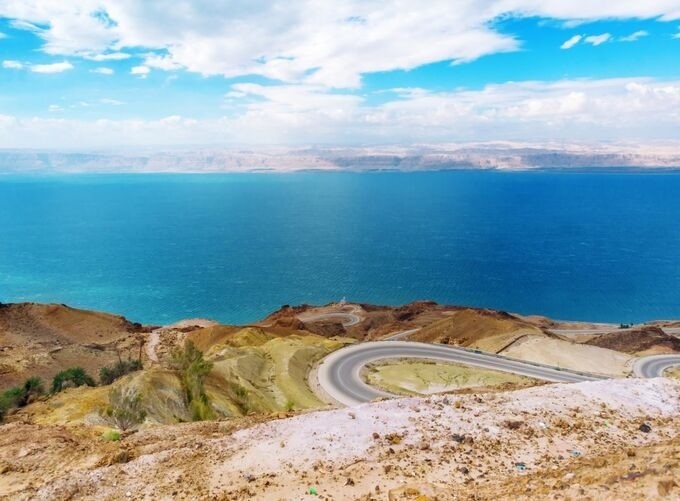
The Dead Sea offers an entirely different water experience and often works especially well as a shorter stop or one-night transition during the return toward Amman.
Making both destinations long resort stays may be appropriate for travelers deliberately designing a relaxation-heavy holiday, but most first-time cultural journeys will gain more from allowing one to carry the leisure component while the other remains more focused.
This protects both the itinerary and the content cluster from collapsing two completely different destinations into a generic “Jordan water experiences” category.
Day Ten Should Be Designed in Reverse
The final day belongs first to the flight.
Everything else comes afterward.
If your departure is late evening, a final Amman morning, lunch or another light activity may fit comfortably. Travelers who spent limited time in the capital at the beginning can use these hours particularly well.
An afternoon flight requires a much more conservative schedule.
A morning departure probably means positioning yourself appropriately the night before and accepting that Day 10 is a transportation day rather than inventing fictional sightseeing hours.
This sounds obvious until you look at how many itineraries schedule a full attraction on the final morning and then attach “transfer to airport” as though airports exist beside hotel reception.
Ten days should finish with margin.
The final memory of Jordan should not be checking traffic from the back seat while calculating international check-in time.
The Best Ten-Day Route Has Four Changes of Pace
Instead of judging the itinerary by attraction count, I would test whether it contains four distinct travel modes.
| Phase | What the Journey Should Feel Like |
|---|---|
| Amman & North | Urban life, Roman history and contemporary Jordan |
| Central Journey | Mosaics, religious history, castles or changing road landscapes |
| Petra | Deep archaeological concentration and substantial walking |
| Wadi Rum + Final Days | Landscape, desert atmosphere and either coastal or restorative travel |
This is why ten days works so well.
The route contains enough time for those phases to feel different without requiring multiple spare days between them.
If the itinerary still feels like one continuous sequence of early departures and historical stops, the problem is not duration.
It is design.
A Ten-Day Trip Does Not Need to Include Dana to Be Complete
Dana deserves inclusion when hiking and nature immersion are important enough to justify giving the reserve meaningful time.
It should not be added simply because ten days now makes the mathematics possible.
Travelers choosing Dana need to decide what it replaces or reduces. A substantial hike before Petra changes the physical rhythm of the southern route, while an overnight adds another accommodation transition unless the itinerary is structured carefully around it.
For active travelers, Dana can become one of the trip's best additions.
For visitors primarily interested in Jordan's major cultural and desert experiences, leaving it out can produce the stronger first journey.
A complete itinerary is not one containing every category of attraction.
It is one where the chosen categories receive enough attention.
Ten Days Is Long Enough to Stop Treating Luggage as an Invisible Passenger
Repeated one-night hotels become increasingly noticeable as a journey grows.
The inconvenience is rarely dramatic, but the routine accumulates: repack, check out, load the vehicle, arrive, unload, check in and reorganize everything before repeating the process the following morning.
A ten-day itinerary should therefore contain several two-night stays where they improve the route.
Amman benefits from continuity.
Petra almost always benefits from having accommodation positioned intelligently around the sightseeing day.
Aqaba, if included, deserves two nights far more than a token one-night appearance.
Wadi Rum remains a special case because the accommodation itself forms part of the desert experience.
This kind of sequencing is one reason Private Jordan Tours can be valuable for travelers who care as much about operational smoothness as destination coverage.
A good private itinerary should make the trip feel easier, not simply more exclusive.
The Extra Time Should Also Change the Way You Eat
Short itineraries often treat meals as logistical necessities.
Ten days allows food to become part of travel without turning the entire journey into a culinary tour.
Amman is particularly good for unstructured dinners and contemporary restaurant experiences. Road days can include lunch without watching the clock constantly, while desert and resort stays create completely different dining environments.
Travelers with dietary requirements should communicate them clearly before the trip, particularly where meals are prearranged or included. Jordanian cuisine offers many dishes that can suit varied preferences, but allergies and strict restrictions should never be left to assumption.
The broader point is about rhythm.
If every lunch takes place because the guide announced a thirty-minute meal window, ten days has not been used particularly well.
Ten Days Is Also Where Different Travelers Can Stop Pretending They Want the Same Holiday
Couples, families and friends frequently have overlapping rather than identical interests.
A second Petra morning may delight one traveler and bore another.
Aqaba can solve this beautifully when one person dives while another remains at the resort. Amman can support independent time, while a private vehicle can make differing walking ambitions easier to manage in some parts of the trip.
Ten days provides enough flexibility for these differences to appear without threatening the entire itinerary.
This is where genuinely Jordan Custom Tours should do more than change the hotel category.
Customization should influence pace, route, free time and the amount of historical interpretation different travelers want.
If every traveler receives exactly the same ten-day schedule regardless of interests, the itinerary has been personalized administratively rather than experientially.
What I Would Still Remove From an Overloaded Ten-Day Route
Ten days can accommodate a great deal, which makes editing harder rather than easier.
If the itinerary contains Amman, Jerash, Ajloun, Madaba, Mount Nebo, the Dead Sea, Kerak, Dana, Petra, Wadi Rum and Aqaba with substantial sightseeing in every location, I would begin cutting.
Not because the destinations lack value.
Because each transition has a cost.
Dana requires meaningful nature time. Aqaba deserves enough coastal time. Kerak should be entered rather than photographed through a vehicle window. Ajloun makes more sense when Jerash remains unhurried.
A ten-day itinerary becomes excellent when it admits that several worthwhile places belong to another journey.
There should still be something left on the map when you fly home.
A Complete First Trip Should Leave You With a Clear Memory of Each Region
This is the real standard I would use.
When you think about the first part of the trip, Amman and northern Jordan should not merge into a generic historical blur.
The road south should contain its own memories rather than functioning solely as transportation.
Petra should feel substantial enough that the Treasury is only one part of what you remember.
Wadi Rum should have an atmosphere distinct from every archaeological destination before it.
If Aqaba is included, the Red Sea should feel like a real change in the holiday rather than another overnight.
The Dead Sea should remain unmistakably its own experience.
When those distinctions survive, ten days has done its job.
You have not merely traveled farther.
You have given Jordan enough time to keep changing.
12 Questions That Become Important on a Full Ten-Day Jordan Trip
1. Is ten days enough to visit Jordan without taking domestic flights?
Yes. Jordan's principal first-time route can be organized overland, and the journey between regions can itself contribute to the experience. The key is sequencing destinations geographically rather than repeatedly returning to Amman simply because it is the country's main international gateway.
2. Should I pre-book every dinner during a ten-day private trip?
Usually not unless particular restaurants matter strongly to you or travel occurs during a very busy period. Leaving several evenings flexible allows dining choices to respond to energy, hotel location and what travelers actually feel like eating after the day's sightseeing.
3. Is ten days long enough to justify doing laundry during the trip?
For travelers packing relatively lightly, yes. Hotel or local laundry arrangements can reduce the amount of clothing you need to carry, although turnaround times and services vary. Check where the itinerary provides two-night stays rather than depending on laundry during a one-night hotel.
4. Can I combine a second Petra morning with Wadi Rum on the same day?
Often the geography can support this when the Petra visit remains appropriately limited and the Wadi Rum arrival is planned around the desired desert experience. If sunset matters, work backward from that timing instead of allowing the Petra morning to expand without a departure limit.
5. Should the Dead Sea be near the beginning or end of a ten-day itinerary?
Either can work. Early placement can create a gentle transition after international arrival, while later placement can provide recovery after Petra and Wadi Rum. The better position depends on route efficiency, hotel preferences and whether Aqaba already provides the main relaxation section.
6. Is ten days a good duration for travelers who want some shopping time?
Yes, because Amman and other urban stops can contain independent periods without sacrificing major sightseeing. Shopping works better when it is treated as personal free time rather than inserted into culturally intensive days where travelers would prefer to remain at archaeological sites longer.
7. Should I spend more on hotels in every destination during a ten-day trip?
Not necessarily. Accommodation value changes by location. A higher-quality resort may matter considerably at the Dead Sea or Aqaba because travelers use the property extensively, while location and practical access can be more important than extensive facilities during archaeology-focused stays.
8. How many evenings should be left free?
There is no fixed number, but several unscheduled evenings generally improve a ten-day journey. Amman, Petra-area stays and coastal destinations can all benefit from independent time, while Wadi Rum naturally provides an evening experience through the camp environment itself.
9. Does ten days justify hiring the same guide throughout Jordan?
Some travelers value continuity because one guide becomes familiar with their interests and can connect historical periods across destinations. Others prefer specialist local guiding combined with private transportation. The better model depends on the tour arrangement, language requirements and how much continuous accompaniment you enjoy.
10. Is it worth changing the itinerary to avoid too many one-night hotels?
Often yes, particularly when a one-night stay creates little experiential value. Two-night bases around Amman, Petra or Aqaba can make the journey noticeably easier, while certain experiences such as Wadi Rum remain worthwhile precisely because the overnight itself is distinctive.
11. Could ten days work well without Aqaba or the Dead Sea?
Certainly. Travelers strongly focused on archaeology, hiking or inland Jordan can redistribute those nights toward Petra, Dana, northern Jordan or Amman. A complete first-time itinerary does not require every landscape category if the omitted experience has little personal value.
12. What tells me that my ten-day itinerary is still too rushed?
Look for repeated days combining hotel checkout, several hours of driving, two or more major sightseeing stops and a late arrival. If that pattern occurs throughout the itinerary, ten days has been used to increase destination count rather than create the smoother, deeper journey the duration should allow.

A travel professional specializing in tailor-made travel planning, guest experience management, and multi-destination tourism operations.
With over 23 years of experience in the travel industry, he designs and manages private and cultural tours for international travelers across Türkiye, Greece, Egypt, Jordan, Morocco, and other destinations.
He has strong expertise in both online and face-to-face guest communication, sales processes, and end-to-end travel operations.
Working closely with hotels, travel agencies, and local partners, he ensures smooth coordination and high-quality travel experiences at every stage of the journey.
His focus is on delivering personalized, reliable, and seamless travel experiences for international guests worldwide.