Travel to Petra and Discover the City Beyond the Treasury
The Royal Tombs Show How Much the Treasury Can Distort Your Expectations
After seeing the Treasury, it is easy to judge every subsequent monument against it. Petra becomes more interesting once you stop doing that.
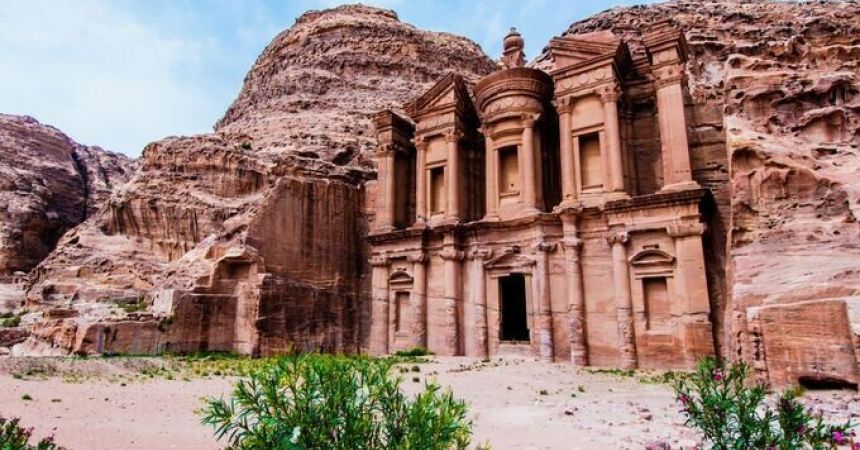
The Royal Tombs occupy an imposing section of the eastern cliffs and include several monumental façades, each with a different architectural character. Their scale reinforces something that photographs of Al-Khazna can obscure: carving architecture directly into sandstone was not an isolated achievement but an important part of Nabataean Petra's monumental language.
This area is worth approaching as a group rather than rushing from one named façade to another. Step back occasionally and look at how the tombs relate to the cliff itself, because Petra's architecture makes more sense when natural geology and human intervention are read together.
Look for the City Between the Monuments
The famous structures naturally attract attention, yet some of Petra's most revealing evidence is much less dramatic.
Water channels, cisterns, retaining structures, fragments of paving and the positioning of buildings within the valley help explain how an urban community could function in this landscape. The Nabataeans developed sophisticated water-management systems that captured, transported and stored scarce water, supporting both the population and the city's wider importance.
These details deserve attention because they shift the story away from a romanticized “lost city” and toward something more impressive: a deliberately engineered urban environment.
Once you begin noticing infrastructure, Petra stops looking like a collection of spectacular façades scattered across the desert.
You begin seeing connections.
Don't Turn Every Viewpoint Into a Mission
Petra contains elevated routes and viewpoints that appear repeatedly on social media, particularly locations offering dramatic perspectives toward famous monuments.
They can be appealing, but a first visit should not become a search for reproducing photographs taken by somebody else.
Routes vary in difficulty, and access or official guidance can change. Before taking a less straightforward trail, confirm current conditions and approved access locally rather than relying on an old blog post, social-media map or someone's previous trip.
More importantly, ask whether the additional climb supports what you want from Petra.
If archaeology interests you more than photography, another hour among the central monuments may offer greater value. If landscape photography is central to your trip, an elevated perspective may deserve more of your time.
There is no universally correct Petra day.
Your Petra Day Should Have a Hierarchy
First-time visitors often arrive with a list that gives every attraction equal importance. Petra's scale quickly exposes the weakness in that approach.
A better strategy is deciding what you would genuinely regret missing and what you would simply like to see if time and energy allow.
| Priority | How to Think About It | Examples |
|---|---|---|
| Core experience | Defines a first encounter with Petra | Siq, Treasury, main archaeological corridor |
| Deeper understanding | Reveals Petra as a functioning city | Tombs, temples, urban remains, water engineering |
| Major extension | Adds distance and physical effort | Monastery or longer routes |
| Personal interest | Depends on what fascinates you | Photography, architecture, archaeology |
| Optional extra | Valuable only if the day still feels good | Additional viewpoints or route extensions |
This avoids turning the site into a competition between your itinerary and your legs.
Respect the Place Behind the World Wonder
Petra is a UNESCO World Heritage property, but it is also part of a living cultural landscape rather than an archaeological theme park. UNESCO describes Petra as both a major Nabataean archaeological site and a landscape containing evidence from different historical periods.
Visitors can contribute to its preservation through ordinary decisions: stay on permitted routes, avoid touching or climbing fragile archaeological features where prohibited, dispose of waste responsibly and follow current site instructions.
Respect should also extend to people.
Local Bedouin communities have longstanding connections with Petra and its surrounding landscape. Treating residents merely as part of the scenery strips the destination of precisely the human dimension that makes its story more complex.
Give Yourself Permission Not to Finish Petra
Petra encourages ambition because each section suggests another possibility farther ahead.
That can become the wrong objective.
If you have spent hours exploring carefully, stopped to understand what you were seeing and reached the point where another substantial extension would transform curiosity into exhaustion, turning back can be an excellent decision.
The distance out still counts.
This is particularly important for first-time visitors because the return journey offers another chance to notice details missed earlier. The Siq itself can feel surprisingly different in the opposite direction, once the anticipation of reaching the Treasury has disappeared and you are paying more attention to the gorge.
Petra does not need to be “completed” to be experienced properly.
12 Questions First-Time Visitors Ask About Petra
1. Is Petra only the Treasury?
No. The Treasury is Petra's most recognizable monument, but the archaeological city extends far beyond it, incorporating tombs, temples, streets, religious structures, water-management features and additional monumental architecture. Treating Al-Khazna as the destination means seeing only a fraction of Petra's story.
2. How much time should I allow for Petra?
The answer depends on your walking ability, archaeological interests and intended routes. The official Main Trail alone extends approximately 3.9 kilometres one way to Qasr al-Bint, so even a first visit focused on the central archaeological corridor requires meaningful time and walking.
3. What should I see on my first Petra visit?
The Siq, Treasury and main archaeological corridor provide the strongest foundation because together they reveal far more than one famous façade. From there, choose additional tombs, monuments or route extensions according to your available time, physical comfort and interests.
4. Is the Siq just the entrance to Petra?
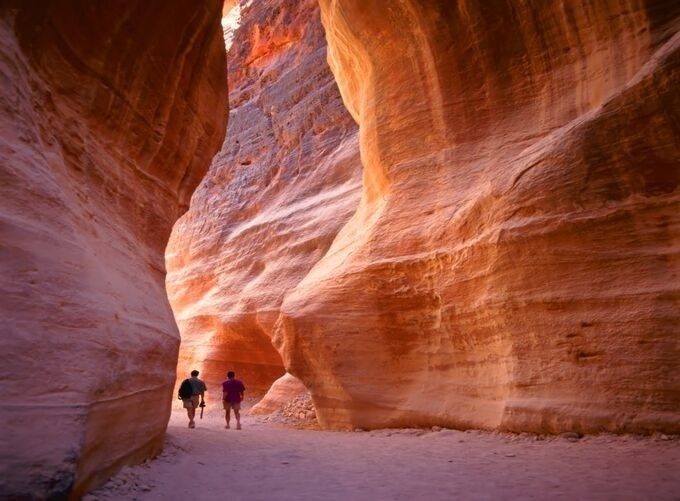
No. The Siq is an important archaeological feature in its own right, containing evidence of Nabataean engineering, religious features and water channels. Walking slowly enough to observe these details makes the eventual Treasury reveal more meaningful rather than merely delaying it.
5. Why is Petra called the Rose-Red City?
The description comes from the colors of the sandstone from which much of Petra's monumental architecture was carved. The rock can display a remarkable range of pink, red, ochre and other tones, with its appearance changing according to the surface and light.
6. Who built Petra?
Petra is most strongly associated with the Nabataeans, who developed it into their capital and an important center connected with regional trade. The site later experienced Roman, Byzantine and other historical phases, meaning its surviving archaeology represents a longer story than one civilization alone.
7. Was the Treasury actually a treasury?
Despite its modern English name, Al-Khazna is generally interpreted as a monumental funerary structure rather than a treasury containing stored wealth. Understanding this helps separate Petra's archaeology from the legends that became attached to its most famous façade.
8. Is Petra difficult to walk around?
Petra involves substantial walking over uneven ground, with additional routes potentially including numerous steps and significant climbs. Visitors should choose their ambitions according to mobility and fitness rather than assuming every major monument must be included in one day.
9. Do I have to visit the Monastery?
No. The Monastery is one of Petra's outstanding monuments, but reaching it adds significant walking and climbing beyond the central route. Whether it belongs in your visit should depend on time, mobility, energy and personal priorities rather than a universal checklist.
10. Can I explore Petra without a guide?
Independent exploration is possible, but a knowledgeable licensed guide can provide historical and archaeological context that is easy to miss when looking only at façades. The value is particularly noticeable when interpreting Petra as an urban civilization rather than a collection of photogenic monuments.
11. When is the best time to visit Petra?
That question deserves its own comparative guide because choosing a travel period involves weather, daylight, visitor preferences and wider Jordan itinerary considerations. This article intentionally focuses on understanding Petra as a first-time visitor, rather than competing with a dedicated best-time-to-visit page.
12. What should I remember most about my first Petra visit?
Remember that the Treasury is an introduction rather than a conclusion. Petra becomes far more compelling when you recognize the scale of the Nabataean city, notice its infrastructure and lesser-known remains, and allow enough time to understand the landscape connecting its celebrated monuments.

A travel professional specializing in tailor-made travel planning, guest experience management, and multi-destination tourism operations.
With over 23 years of experience in the travel industry, he designs and manages private and cultural tours for international travelers across Türkiye, Greece, Egypt, Jordan, Morocco, and other destinations.
He has strong expertise in both online and face-to-face guest communication, sales processes, and end-to-end travel operations.
Working closely with hotels, travel agencies, and local partners, he ensures smooth coordination and high-quality travel experiences at every stage of the journey.
His focus is on delivering personalized, reliable, and seamless travel experiences for international guests worldwide.