Casablanca in February Can Look Warmer Than It Feels
Updated: August 2026
At 10:30 in the morning, Casablanca may appear to have skipped ahead several weeks.
The clouds separate, sunlight spreads across the white façades, café tables begin looking attractive and the Atlantic turns brighter beyond the city. If you have arrived from somewhere experiencing a harder winter, it is easy to read the scene as evidence that spring has effectively started.
By early afternoon, you may be looking at a different sky.
That does not make February unreliable in the sense that travel becomes difficult. It makes the month changeable, and there is an important difference between those two ideas.
Casablanca in February rewards travelers who stop asking whether the whole day will be “good” and start noticing the smaller windows within it. A bright morning may deserve immediate use. A passing shower may be a reason for lunch rather than cancellation. Another clear period later can return you to the streets.
The most useful February skill is therefore not predicting Casablanca perfectly.
It is keeping enough freedom to take advantage of whatever the day offers.
A Blue Sky Is an Opportunity, Not a Promise
Sunshine has enormous psychological power in winter.
You open the curtains, see blue overhead and instinctively begin removing layers or extending outdoor plans. In Casablanca, February sunshine can certainly create pleasant periods, but visual brightness and sustained warmth are not the same thing.
Atlantic air remains part of the equation, cloud cover can change, and exposed locations may feel different from protected streets even when the sun is shining.
Instead of interpreting a clear morning as a guarantee for the next eight hours, treat it as an invitation to use the conditions currently available.
That small change in thinking suits a Casablanca February break particularly well because it prevents the itinerary from depending on a weather pattern that may not last all day.
February Is Better Planned in Chapters Than Hours
A rigid itinerary might look like this:
09:00 monument.
11:00 city walk.
13:00 lunch.
15:00 Corniche.
17:00 café.
February benefits from a different structure.
Think in chapters.
Outdoor priority. Indoor flexibility. Another outdoor opportunity. Evening.
You still know what you want to see, but you do not decide weeks in advance which exact weather conditions each activity must receive.
If the morning begins bright, use it for something where the sky matters. If conditions become unsettled around lunchtime, move naturally toward an interior or meal. Should the afternoon improve, return outside without feeling that you are breaking the itinerary.
This is not disorganization.
It is planning with movable pieces.
Give the Best Sky to the Place That Deserves It
Not every Casablanca experience benefits equally from attractive weather.
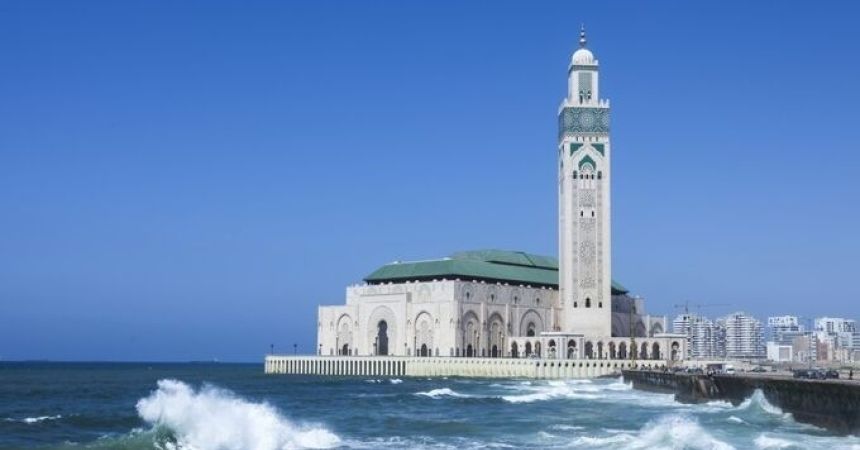
A museum interior does not become dramatically better because the clouds have disappeared. Hassan II Mosque's Atlantic setting, a city panorama or a waterfront walk can.
That means a bright period has value.
Rather than automatically following the original order of attractions, consider giving favorable conditions to the experience where they will make the greatest difference.
February's Weather-Window Priorities
| If Conditions Improve | Give the Window To | Why |
|---|---|---|
| Clear morning | Hassan II Mosque exterior | Architecture and Atlantic setting gain visual impact |
| Bright midday | Outdoor lunch or city walk | Sunshine can make an ordinary pause more enjoyable |
| Calm afternoon | Corniche | Waterfront time benefits from better conditions |
| Brief dry interval | Short neighborhood exploration | Easy to begin and end flexibly |
| Unsettled period | Museum, café or lunch | Valuable outdoor weather is not being wasted |
The table deliberately ranks weather opportunity value, rather than repeating January's exposure categories.
Don't Save Every Outdoor Experience for the Afternoon
A common city-break habit is to place major attractions in the morning and leave relaxed walking or waterfront time for later.
February sometimes rewards reversing that logic.
If the morning is bright and calm while the afternoon forecast looks more uncertain, use the good conditions rather than saving them because the original itinerary says the Corniche belongs at 4 p.m.
The landmark will still be there later.
The weather window may not.
This approach can make a Morocco coastal discovery feel considerably more natural because you are responding to the Atlantic city rather than forcing it into an itinerary created before you arrived.
Passing Rain Is Different From a Rainy Day
Language matters here.
Seeing rain symbols on a forecast can cause travelers to mentally write off an entire date, particularly when they have only one or two days in Casablanca.
Yet a day containing showers is not necessarily a day of continuous rain.
Timing, duration and intensity matter enormously. The useful question is not simply “Will it rain?” but “What does the forecast suggest about when and for how long?”
If precipitation is intermittent, Casablanca's mixture of cafés, restaurants, markets and indoor cultural experiences makes it possible to continue the day without turning weather avoidance into the main activity.
Sunshine Changes the City Visually Before It Changes It Thermally
February sunlight can transform Casablanca quickly.
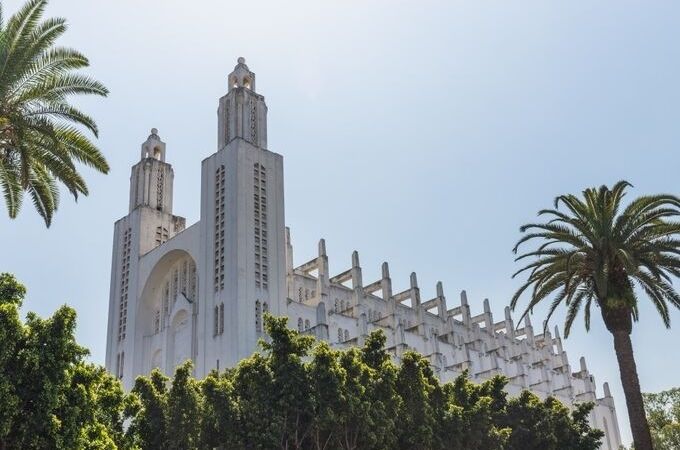
White façades sharpen, Art Deco details become more pronounced, wet streets can reflect changing light after a shower, and the Atlantic gains a different color when clouds separate.
These visual changes may happen before you would describe the air as genuinely warm.
That distinction is useful because it explains why February photographs can look surprisingly springlike while the person taking them is still wearing a jacket.
Casablanca can look ahead of the season.
Your clothing should not necessarily do the same.
A Café Becomes a Waiting Room Without Feeling Like One
Few travelers enjoy feeling that they are “waiting for the weather.”
Casablanca makes that easier.
If conditions become temporarily unsettled, a café stop does not have to feel like lost sightseeing time. It belongs naturally to the city experience, particularly when you choose somewhere you would have wanted to visit anyway.
The difference is psychological.
You are not sheltering until travel resumes. You are still experiencing Casablanca, while leaving enough flexibility for the next outdoor chapter to begin if the sky improves.
This is one reason February should not be written as a conventional rainy-season survival guide.
Its character is more fluid than that.
The Forecast Should Be Checked Twice
In many destinations, travelers check the weather before breakfast and forget about it.
February Casablanca can justify another quick look around lunch.
Forecasts evolve, and knowing whether the afternoon now appears calmer, wetter or brighter can help you decide between the Corniche, additional city walking or something more protected.
This does not mean spending the holiday monitoring weather apps.
Thirty seconds can be enough.
A Casablanca city journey becomes more flexible when you make one informed adjustment rather than blindly following a schedule built around conditions that no longer exist.
February's Best Days Are Not Necessarily the Sunniest Ones
A perfectly clear day is easy to enjoy, but changeable weather can create its own rhythm.
Bright periods encourage you outside, a shower gives you permission to slow down over lunch, clearing skies pull you back toward the city, and changing Atlantic light gives familiar streets different personalities within several hours.
The experience can feel more varied than a completely uniform day.
This is February's exclusive territory.
January explained why Atlantic exposure changes how winter conditions feel. February moves away from exposure as the central subject and asks how travelers should use shorter opportunities created by changing skies.
March will move elsewhere again rather than simply becoming “February with less rain.”
February belongs to the traveler who looks outside, sees the sky opening and understands one simple thing:
You do not need to know how long the good weather will last to make good use of it.

A travel professional specializing in tailor-made travel planning, guest experience management, and multi-destination tourism operations.
With over 23 years of experience in the travel industry, he designs and manages private and cultural tours for international travelers across Türkiye, Greece, Egypt, Jordan, Morocco, and other destinations.
He has strong expertise in both online and face-to-face guest communication, sales processes, and end-to-end travel operations.
Working closely with hotels, travel agencies, and local partners, he ensures smooth coordination and high-quality travel experiences at every stage of the journey.
His focus is on delivering personalized, reliable, and seamless travel experiences for international guests worldwide.