
Morocco Weather in February: Mild Days, Cool Nights & Early Spring
Last Updated: August 9, 2026
February is one of those months when Morocco refuses to fit neatly into a season.
Winter has not disappeared, particularly in the Atlas Mountains and the cooler north, yet elsewhere there are small signs that the country is beginning to move forward. Afternoon light lasts a little longer, some southern landscapes begin showing early seasonal change, and the rhythm of a city such as Marrakech can feel quite different from the deeper winter atmosphere visitors might encounter at elevation.
It would be tempting to call February the beginning of spring.
That would be too simple.
The more useful way to understand the month is as a period when winter gradually loses its grip at different speeds depending on where you travel, which makes route choice more important than any national average temperature.
February Changes From South to North
A traveller moving through several Moroccan regions during February may encounter conditions that appear to belong to different months.
Marrakech can offer pleasantly mild afternoons when walking through the medina feels easy, while Fes may retain a cooler and less predictable winter character. Higher parts of the Atlas remain firmly influenced by winter, whereas the desert-facing southeast can provide comfortable daytime conditions followed by cold nights.
Along the Atlantic, maritime influence creates another variation.
| Region | February Character | Main Travel Consideration |
|---|---|---|
| Marrakech | Late-winter mildness | Cool mornings and evenings |
| Fes | Cooler northern conditions | Rain and layering |
| Atlas Mountains | Winter remains important | Snow, altitude and road conditions |
| Ouarzazate & valleys | Increasingly pleasant days | Large day-night variation |
| Sahara region | Strong desert-touring period | Cold after sunset |
| Atlantic coast | Mild but variable | Wind and ocean influence |
The table explains why a forecast for Marrakech should never become the packing guide for an entire Morocco circuit.
Marrakech Begins to Stretch Its Days
February suits Marrakech particularly well because the city becomes easier to experience as somewhere to wander rather than somewhere to manage.
A traveller can spend a substantial part of the day moving between the medina, palaces, gardens and neighbourhoods without the physical pressure associated with summer temperatures. When the sun is out, lunch on a terrace can feel almost springlike, although that impression may disappear quickly after sunset.
The important difference from January is subtle rather than dramatic.
There is often a growing sense that the day has more room in it.
This can make February particularly attractive for travellers who want Marrakech to function as more than the departure point for the Sahara. Three nights allow the city to develop beyond its headline sights, especially when one afternoon is deliberately left without an ambitious schedule.
Travellers wanting Marrakech to sit inside a broader itinerary can consider Morocco private journeys, combining the city with other regions without reducing every destination to a short stop.
Fes Does Not Follow Marrakech's Calendar
One of the easiest mistakes in February is assuming that good conditions in Marrakech describe the entire country.
Fes may tell a different story.
Its northern location and continental influence can produce cooler conditions, with rain remaining a realistic possibility. This does not make February a poor month for the city; in many ways, cooler weather suits a medina where walking is unavoidable and getting slightly lost is part of the experience.
The difference is mainly one of expectation.
If you arrive from Marrakech carrying only lightweight clothing because the previous afternoon felt warm, Fes can quickly remind you that Morocco's seasons move geographically as well as chronologically.
A light weather-resistant layer remains useful, and mornings should not be judged by how comfortable the previous destination felt.
February Is Not Spring in the Atlas
This distinction matters.
While lower regions may begin hinting at seasonal change, the mountains remain a winter environment at elevation. Snow can still shape landscapes and affect higher routes, while conditions on roads and trails require current information rather than assumptions based on what is happening in Marrakech.
Travellers interested in mountain scenery may find February particularly beautiful because winter landscapes can coexist with milder conditions lower down.
Those planning serious trekking need a different level of preparation.
The Atlas should not be approached as though February sunshine in the city has somehow cancelled mountain winter. Route selection, equipment and local expertise become increasingly important as elevation rises.
Morocco's early seasonal change begins from below.
The mountains follow later.
The South Starts Showing Another Side of February
Crossing the Atlas towards Ouarzazate and the valleys beyond it introduces one of the month's most rewarding transitions.
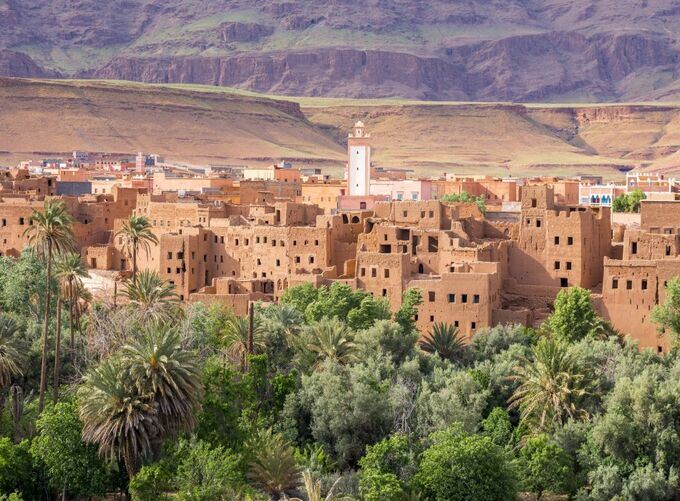
The landscape becomes drier, the quality of the light changes, and daytime conditions can feel increasingly comfortable for road-based exploration. Depending on location, elevation and the particular year, travellers may also begin encountering early signs of vegetation responding to the approaching spring.
This is not yet the broad green-season story that belongs to later months.
February's appeal is more delicate.
Winter still exists in the background, especially when mountains remain snow-covered, while lower valleys can begin looking as though another season is preparing to arrive.
That contrast can make southern road journeys especially photogenic.
February Can Bring the First Floral Surprise
Morocco's seasonal changes are not only about temperature.
In parts of the south, almond blossom can become one of February's unexpected visual pleasures, although timing varies with location and annual conditions and should never be treated as guaranteed for a specific travel date.
When it appears, the contrast is striking.
Pale blossoms sit against dry landscapes and mountain backdrops, creating an image of Morocco that is very different from the ochre cities and desert dunes most travellers expect.
This is a useful reminder that February belongs to a transition rather than a fixed weather category.
The landscape may begin changing before the traveller feels that winter has fully ended.
The Sahara Has One of Its Best Daytime Personalities
February can be an excellent time for travelling towards the desert because daytime exploration is often far more comfortable than during the intense heat of summer.
That does not mean the Sahara has become warm around the clock.
Cold evenings and nights remain an important part of planning, particularly for travellers staying in camps near the dunes. The shift after sunset can still be substantial enough that proper layers and appropriate bedding matter.
What improves is the amount of the day that can be used naturally.
Rather than designing the entire desert experience around avoiding heat, travellers can spend longer exploring surrounding landscapes, stop more comfortably during road journeys and allow the desert to become more than a sunrise-and-sunset destination.
Those wanting to make the southeast the centre of the journey can consider Morocco desert circuits, where the valleys, kasbah landscapes and desert settlements receive enough time to develop before the dunes become the final highlight.
Don't Race From Marrakech to the Dunes
February's comfortable daytime conditions can encourage an overly ambitious itinerary.
Because the road itself feels easier, travellers sometimes assume they should cover more of it.
The opposite approach is often better.
The journey towards the Sahara contains landscapes that deserve daylight, including mountain roads, valleys, fortified architecture and settlements where the changing geography becomes visible. Spending most of those hours rushing towards a desert camp wastes one of February's strongest advantages.
Allow the southeast to become part of the holiday.
The Sahara feels more impressive when the journey has gradually explained how you reached it.
Atlantic Morocco Is Following Its Own Season
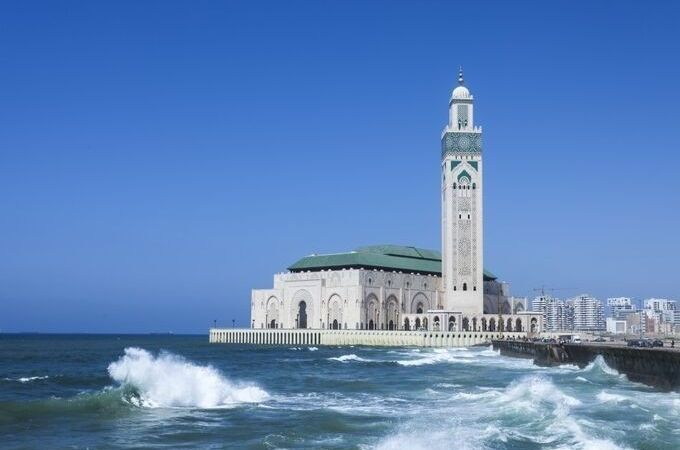
Essaouira, Casablanca and other Atlantic locations add yet another February pattern.
The coast is influenced by the ocean, which can moderate temperatures while also introducing wind and variable weather. Travellers expecting Marrakech conditions may therefore find the coast cooler than anticipated, particularly when wind strengthens.
This should not be interpreted through beach-holiday logic.
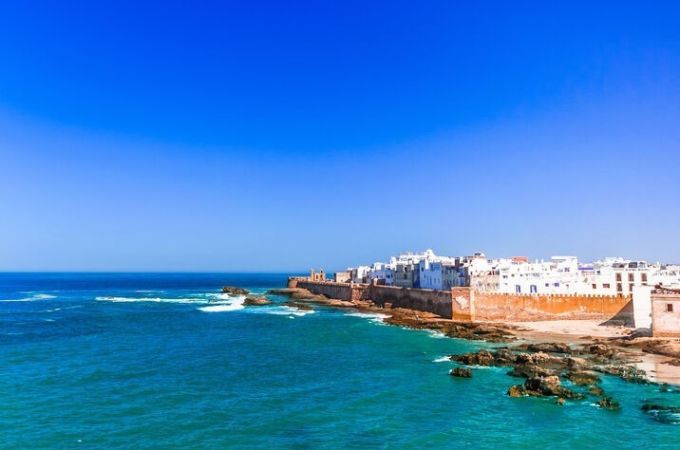
February Essaouira is appealing because the city works without requiring conventional beach weather. The medina, harbour, seafood and Atlantic atmosphere provide enough reason to stay, while the coast creates a useful change after an inland circuit.
Agadir presents a different coastal proposition, particularly for travellers who place greater emphasis on resort time and winter sunshine.
The two should not be treated as interchangeable simply because both sit beside the Atlantic.
Which February Morocco Suits You?
February becomes easier to choose when the trip is matched to the traveller rather than to one weather statistic.
| If You Want... | Consider... | Why February Works |
| Cities and culture | Marrakech + Fes | Comfortable walking periods |
| Desert landscapes | Marrakech + Southeast + Sahara | Strong daytime touring conditions |
| Winter mountains | Atlas region | Snow remains possible at elevation |
| Culture + coast | Marrakech + Essaouira | Contrasting inland/coastal experience |
| Slower winter escape | Marrakech + Agadir | Mild southern focus |
| Big Morocco circuit | Cities + Atlas + Sahara | Regional contrasts remain visible |
Travellers with ten days or more can combine several of these environments, but the goal should not be to collect every region simply because the weather makes movement possible.
February rewards routes that allow the seasonal change to unfold gradually.
The Month's Real Attraction Is Uncertainty of the Good Kind
February does not offer the settled identity of spring, and that is precisely what separates it from March and April within Morocco's weather calendar.
Winter remains visible in the mountains and can still be felt in northern cities, while Marrakech and the south begin suggesting that the season is moving on. Desert days become increasingly inviting, yet nights retain their winter edge, and early blossom can occasionally introduce colour into landscapes that still look unmistakably dry.
Travellers interested in combining several regions can explore Morocco small-group tours, although the most rewarding February itinerary is usually the one that leaves enough time to notice these changes rather than simply moving through them.
This is not yet Morocco in full spring.
Nor is it January repeated with slightly longer days.
February occupies the space between them, when winter begins loosening from the lower landscapes while holding its ground in the mountains.
For travellers who enjoy seeing a season change rather than arriving after the transition is complete, that ambiguity can be the best reason to go.
Where Should You Spend an Extra Day in February?
An extra day sounds equally valuable everywhere until you actually have to place it.
Should it go to Marrakech, where another afternoon allows the city to slow down? Is Fes more deserving because its medina becomes richer once the main monuments are no longer the only objective? Would an additional night in the southeast make the Sahara journey less hurried, or should the time be reserved for the Atlantic coast?
February makes this decision particularly interesting because comfortable daytime conditions increase what you can do in many regions, while winter still creates enough variation that every additional day does not deliver the same experience.
The best choice depends on what is currently missing from the itinerary.
| Extra Day In | Value in February | Best For |
|---|---|---|
| Marrakech | High | Food, architecture, slower city exploration |
| Fes | High | Medina depth and cultural immersion |
| Atlas Mountains | Weather dependent | Winter landscapes and mountain interests |
| Southeast / Sahara | Very High | Reducing long-road pressure |
| Essaouira | High | Coastal change of pace |
| Agadir | High for leisure trips | Resort and relaxation time |
The extra day should not automatically go to the most famous destination. It should go where another 24 hours changes the quality of the trip.
Marrakech: Add Time When the City Is Being Used as a Hotel
Many itineraries technically spend three nights in Marrakech while giving the city surprisingly little attention.
Arrival takes one evening. A day trip occupies the next day. A desert departure begins early the following morning, and suddenly Marrakech has been reduced to accommodation surrounding other experiences.
February is too comfortable a month for that approach.
An additional day allows the medina to become less transactional. Instead of moving directly between major sights, you can explore smaller streets, spend longer over lunch, visit a garden without immediately checking the time and return to somewhere that interested you rather than constantly moving forward.
This matters because Marrakech is better once the pressure to “see Marrakech” disappears.
The first day introduces the city.
The next one lets you enjoy it.
Fes: The Extra Day Buys Understanding
Fes benefits from time for a different reason.
Its medina is not immediately easy to read, and the density that makes the city fascinating can also make a rushed visit exhausting. Historic religious buildings, workshops, markets, traditional crafts and residential streets sit within a network that rarely behaves like the simple walking route travellers imagine before arrival.
One full guided day can provide an excellent introduction.
A second day changes your relationship with the place.
You recognise certain streets. You may return to a workshop because you are genuinely interested rather than because it appears on the day's route, while lunch no longer has to fit neatly between two major monuments.
February's cooler conditions often make this slower exploration appealing, even when the weather is not perfectly sunny.
Fes does not require warmth to be interesting.
It requires attention.
The Sahara: Add the Day Before You Add Another Stop
If your itinerary already reaches Morocco's southeast, this is often where an extra February day produces the greatest practical improvement.
The reason is distance.
A desert circuit contains substantial road travel, and shortening it too aggressively turns beautiful landscapes into scenery viewed through a window while someone repeatedly announces the remaining driving time.
An additional day does not necessarily need to be spent entirely beside the dunes.
It can be used somewhere along the journey.
Perhaps a valley receives more attention, the road across the Atlas becomes less hurried, or arrival near the desert happens early enough that sunset is experienced without immediately stepping out of the vehicle after a long drive.
That breathing room improves everything around it.
One Desert Night or Two?
Two nights near the Sahara can make sense when the desert itself is a major reason for travelling.
The first night often carries the excitement of arrival, sunset, camp and the novelty of being somewhere completely different from Marrakech or Fes.
A second night removes the need to leave immediately after sunrise and breakfast.
That allows time for surrounding landscapes, settlements or simply a slower desert day without treating every hour as part of the arrival-departure cycle.
However, two nights are not compulsory for every first-time visitor.
If your main interest lies in imperial cities and the desert is one element within a broader journey, the additional day may create more value elsewhere.
February gives you choices.
It does not require you to use all of them.
The Atlas: An Extra Day Needs a Clear Purpose
Adding a mountain day simply because the Atlas looks beautiful on the map is not enough in February.
Winter conditions remain relevant at elevation, so the value of additional time depends strongly on what you intend to do and where.
A lower-elevation cultural excursion is very different from serious trekking. A mountain lodge stay has different requirements from crossing the range en route to Ouarzazate, while snow conditions can create both spectacular scenery and practical limitations.
If the Atlas is one of your main interests, the additional day can be extremely worthwhile.
If you simply want to see mountains, the journey across them towards southern Morocco may already provide the contrast you are looking for.
More time only helps when you know what you want to do with it.
Essaouira: The Extra Day Changes the Rhythm
Essaouira makes a strong case for at least two nights because a single overnight visit can feel strangely rushed for a city whose appeal is largely about not rushing.
Arrive after lunch, explore briefly, have dinner, sleep and leave the next morning, and you have technically visited the Atlantic coast.
You have not really allowed it to change the trip.
A full additional day creates room for the harbour, medina, long meals, coastal walks and the inevitable period spent doing very little while watching the ocean.
February suits this rhythm because Essaouira does not need to behave like a summer beach destination.
Its Atlantic character is enough.
Agadir: Extra Time Only Works If Relaxation Is the Goal
Agadir requires a different calculation.
Unlike Fes, another day is not necessarily about uncovering deeper layers of a historic medina, and unlike the Sahara, it is not required to make a long road journey worthwhile.
Its value is leisure.
If the trip has already involved several cities, long transfers and a desert circuit, two or three slower days can provide exactly the ending you want.
If sitting beside the coast makes you wonder which historic site you could be visiting instead, the extra night will feel wasted.
This is not a judgement on Agadir.
It is a reminder that relaxation only works when you actually enjoy relaxing.
Where Does the Extra Day Create the Biggest Difference?
For a typical first-time February journey, the answer often depends on itinerary length.
A short Marrakech-focused trip usually benefits from keeping the extra day in or near the city rather than introducing another long transfer.
A medium-length cultural journey may gain more from Fes or Essaouira, particularly if either destination currently receives only a rushed overnight.
A longer circuit reaching the Sahara often benefits most from placing the day somewhere in the southeast, where it reduces road pressure rather than simply adding another attraction.
This is an important distinction.
Sometimes an extra day helps because it gives you more to do.
Sometimes it helps because it gives you less to do each day.
February particularly rewards the second approach.
The Best Extra Day Is the One You Notice
You may not remember that the itinerary originally contained seven hotel changes instead of six.
You will remember having enough time in Fes to stop navigating and start recognising the medina.
You may forget which roadside attraction was removed from the desert route, but you will probably remember reaching the dunes while there was still enough afternoon left to sit quietly and watch the landscape change.
That is where February's increasingly generous travel conditions become useful.
As winter begins loosening its hold on lower Morocco, the temptation is to expand the itinerary because more of the day feels available. A better response is often to protect that additional comfort and spend it inside the destinations already worth visiting.
The extra day does not have to make the route longer.
It can make the journey deeper.
Pack for Where February Is Going, Not Where It Has Been
February packing becomes confusing when travellers try to decide whether Morocco should be treated as a winter or spring destination.
Neither label works particularly well across an entire circuit, because Marrakech may provide a mild afternoon while Fes feels distinctly cooler, the Atlas remains wintry at elevation, and a comfortable Sahara day can lead into a surprisingly cold night.
Instead of packing for a season, pack for transitions.
A small number of compatible layers will usually be more useful than several bulky outfits designed for one particular temperature range.
What Changes From Region to Region?
The same jacket does not have to perform the same job throughout the trip.
In Marrakech it may remain in your bag until evening, while in Fes you could use it for much more of the day. Around the Sahara, the layer you ignored under afternoon sunshine may become essential after sunset, and mountain travel requires a more serious assessment of actual elevation and conditions.
| Region | Daytime Approach | After Sunset | Packing Priority |
|---|---|---|---|
| Marrakech | Light, comfortable layers | Noticeably cooler | Easy-to-remove outer layer |
| Fes | Prepare for cooler conditions | Cold periods possible | Weather-resistant layer |
| Atlas | Depends strongly on elevation | Winter conditions | Proper mountain clothing where required |
| Sahara | Comfortable walking layers | Can become cold | Warm evening clothing |
| Essaouira | Mild but wind affected | Cooler coastal feel | Wind-resistant outer layer |
| Agadir | Generally milder | Light layer useful | Flexible coastal clothing |
This regional approach also prevents overpacking, because one good outer layer can serve several purposes rather than requiring a different jacket for every destination.
Marrakech Needs Clothes That Can Change During the Day
February mornings can begin cool enough for a layer that becomes unnecessary after several hours of walking through the medina.
That makes lightweight, removable clothing particularly useful.
Rather than dressing heavily at breakfast, think in pieces that can be added or removed as the day changes. This is also practical when moving between outdoor streets, indoor monuments, restaurants and sunny terraces.
Comfortable footwear deserves equal attention.
The medina encourages far more walking than travellers sometimes anticipate, and shoes already tested at home are considerably more useful than something purchased specifically because it looks appropriate for Morocco.
Fes Needs More Weather Protection
The difference between Marrakech and Fes is one reason February packing should not be based on the warmest forecast in the itinerary.
Cooler periods and rain are more plausible in the north, making a light weather-resistant outer layer useful even when you never needed it farther south.
Fes also involves extended periods on foot, often through narrow medina streets where repeatedly returning to the hotel is impractical.
Carry what you are likely to need during the day rather than dressing for the first hour and assuming conditions will remain unchanged.
A small day bag becomes surprisingly valuable.
Atlas Packing Depends on What “Visiting” Means
There is no meaningful single packing recommendation for “the Atlas Mountains.”
Driving across the mountains, visiting a lower-elevation village and undertaking a serious winter trek are entirely different activities.
Travellers remaining on standard sightseeing routes may need warm clothing and appropriate footwear according to current conditions. Those planning higher-altitude hiking require specialist preparation, suitable equipment and reliable local advice.
February remains winter in the mountains even when lower Morocco begins showing early seasonal change.
Do not allow a sunny Marrakech morning to make decisions for a high-altitude afternoon.
The Sahara Requires Two Versions of the Same Outfit
Desert packing becomes much easier once you stop trying to find clothing that works unchanged from midday until midnight.
During sunny periods, breathable layers can make daytime exploration comfortable. Once the sun disappears and activity slows, warmer clothing becomes considerably more important.
The best solution is not necessarily a huge winter coat.
A sensible combination of base clothing, a warm mid-layer and an outer layer can adapt much more easily to changing conditions.
Keep the warmer pieces accessible when heading to camp rather than buried underneath everything else in your luggage.
You will probably want them before bedtime.
Atlantic Wind Changes the Number on the Forecast
Essaouira demonstrates why temperature alone is an incomplete measure of comfort.
A mild forecast can feel considerably cooler when Atlantic wind strengthens, particularly during long periods around the harbour or waterfront.
A wind-resistant outer layer can therefore be more useful than simply adding another thick sweater.
Agadir may feel milder and more resort-oriented, but evenings can still justify an additional layer during February.
Again, the answer is versatility rather than carrying separate wardrobes for every coastal stop.
What Can You Leave Behind?
Overpacking for February usually comes from trying to prepare for every theoretical possibility.
Unless your itinerary includes specialised winter trekking, several heavy coats are unlikely to earn their luggage space. Multiple bulky pairs of shoes are equally unnecessary for most cultural circuits, while clothing that cannot be combined easily tends to spend more time inside the suitcase than outside it.
Choose pieces that work together across regions.
February may move gradually towards spring in parts of Morocco, but your luggage does not need to predict exactly when that change will happen.
It only needs to adapt when it does.
February Packing Is Really About Geography
The smartest February suitcase acknowledges something that weather averages often hide: you are moving through the season as well as through the country.
Marrakech may hint at what is coming next, Fes can hold onto winter more firmly, the Atlas may remain entirely committed to it, and the Sahara can offer both a comfortable afternoon and a cold evening within a few hours.
There is no contradiction to solve.
That variety is normal.
Pack layers that can travel through it with you, and February becomes far easier than trying to decide whether Morocco belongs in the winter or spring section of your wardrobe.
January vs February vs March: Why February Stands Between Seasons
February makes the most sense when it is viewed between the months on either side rather than as a slightly warmer version of January. Winter remains important in the Atlas and northern Morocco, yet lower and southern regions can begin showing the first signs of seasonal change before March develops a clearer spring identity.
| January | February | March | |
|---|---|---|---|
| Seasonal Character | Strong winter contrasts | Late-winter transition | Emerging spring |
| Marrakech | Mild days, cold evenings | Days begin feeling more generous | Stronger spring character |
| Fes | Cool northern winter | Winter influence remains | Increasing seasonal change |
| Atlas Mountains | Winter conditions | Still winter at elevation | Highly elevation dependent |
| Sahara | Cold-night desert season | Excellent daytime touring | Warmer transition begins |
| Landscape | Winter appearance | Early changes possible | Spring becomes more visible |
| Best For | Winter contrasts | Travellers between seasons | Spring-oriented touring |
February therefore belongs to travellers who like seasonal variety rather than those searching for a single predictable climate throughout the country.
Frequently Asked Questions About Morocco in February
Is February a good month to visit Morocco?
Yes. February is particularly appealing for cultural sightseeing, road trips and Sahara journeys because daytime conditions can be comfortable in many regions. Winter remains important in the Atlas and northern areas, however, so a multi-region itinerary requires layers and some flexibility around changing weather.
Is Marrakech warm in February?
Marrakech can experience pleasantly mild afternoons, especially in sunshine, although mornings and evenings often remain cool. Travellers should not expect consistently hot weather, but the month can be very comfortable for medina walks, gardens, architectural sightseeing and longer periods outdoors.
Is Fes colder than Marrakech in February?
Fes can feel noticeably cooler and may experience more unsettled weather than Marrakech because the two cities occupy different geographical settings. Anyone combining them should pack for the cooler destination rather than assuming that conditions experienced during a sunny Marrakech afternoon will continue throughout the journey.
Can I visit the Sahara in February?
Yes. February can be an excellent period for Sahara travel because daytime conditions are generally far easier for exploration than during summer heat. Desert nights can still become cold, however, so warm evening layers and careful attention to camp facilities remain important.
Is there snow in the Atlas Mountains in February?
Snow can remain present at higher elevations, and February should still be considered a winter month in the mountains. Conditions depend on altitude and current weather patterns, so trekking plans and mountain-road journeys should be based on recent local information rather than conditions in nearby lower cities.
Can I hike in Morocco during February?
Yes, depending on the region and route. Lower-elevation walking may offer pleasant conditions, while high-altitude Atlas trekking can involve genuine winter terrain requiring appropriate equipment and experience. Travellers should choose routes according to current conditions and use qualified local guidance when necessary.
Does it rain in Morocco in February?
Rain is possible, particularly in northern and Atlantic regions, although conditions vary significantly by year and destination. A weather-resistant layer is useful for multi-region trips, while current forecasts should be checked before mountain journeys and outdoor activities that may be affected by heavier rainfall.
Is Essaouira good in February?
Yes, provided you want an atmospheric Atlantic destination rather than guaranteed beach weather. Wind can influence how temperatures feel, but the medina, harbour, seafood and coastal scenery remain rewarding, making Essaouira a useful slower counterpoint to Marrakech or a longer desert circuit.
What should I pack for Morocco in February?
Pack adaptable layers, comfortable closed walking shoes, a warm mid-layer and a weather-resistant outer layer. Desert evenings and mountain regions may require additional warmth, while milder afternoons in Marrakech or southern areas make clothing that can be removed and carried easily particularly practical.
Is February better than March for Morocco?
Neither month is universally better. February retains stronger winter contrasts, including colder desert nights and winter mountain conditions, while March moves farther towards spring. February suits travellers comfortable with regional variation; March may appeal more to those specifically seeking a developing spring atmosphere.
February Is the Month That Doesn't Rush the Change
There is an appealing uncertainty to Morocco in February because the country has begun moving away from the deepest part of winter without arriving fully in spring.
You notice the shift differently depending on where you travel.
Marrakech may provide an afternoon when sitting outside feels entirely natural, while Fes can remind you that winter has not finished. The Atlas Mountains remain capable of presenting genuine snow-covered landscapes, yet crossing towards southern valleys can reveal a softer side of the season and, in some areas and years, the first delicate signs of blossom.
The Sahara creates perhaps the clearest February contradiction, since comfortable daytime exploration can be followed by a cold evening that makes the warmer layers in your luggage suddenly essential. Instead of seeing that variation as inconvenient, it makes more sense to treat it as part of travelling through a country where elevation and geography change rapidly.
This is also why February rewards travellers who resist overfilling the itinerary. Comfortable days do not need to be converted immediately into more destinations; they can be used to spend longer inside the places already on the route, whether that means another afternoon in Marrakech, a second day understanding Fes or a slower journey through the southeast before reaching the desert.
By March, Morocco begins telling a more recognisable spring story.
February is more ambiguous, and that ambiguity is exactly what gives the month its own identity. Winter remains visible enough to shape the mountains and evenings, while lower landscapes begin offering small indications that another season is approaching.
For travellers who enjoy watching that change happen rather than arriving after it is complete, February can be one of Morocco's most quietly rewarding months.

A travel professional specializing in tailor-made travel planning, guest experience management, and multi-destination tourism operations.
With over 23 years of experience in the travel industry, he designs and manages private and cultural tours for international travelers across Türkiye, Greece, Egypt, Jordan, Morocco, and other destinations.
He has strong expertise in both online and face-to-face guest communication, sales processes, and end-to-end travel operations.
Working closely with hotels, travel agencies, and local partners, he ensures smooth coordination and high-quality travel experiences at every stage of the journey.
His focus is on delivering personalized, reliable, and seamless travel experiences for international guests worldwide.