
Casablanca in March Is Best Understood Between the Landmarks
Let the Route Expand Only When Casablanca Earns It
One advantage of March is that you do not need to decide the full walking distance before leaving the hotel.
Begin with a core route containing the places that genuinely matter, then treat additional sections as optional. If conditions remain comfortable, your shoes feel good and the streets continue holding your attention, extend the walk. If rain develops or energy drops, use transport for the next connection without treating that decision as a failure.
This creates a much more natural relationship with Casablanca. The city determines how long you remain on foot rather than an itinerary created days or weeks earlier insisting that you complete a predetermined distance.
Look Up More Often Than You Look at the Map
Navigation apps are useful in Casablanca, but staring continuously at the route can undermine the reason you chose to walk.
Central Casablanca rewards visual attention. Architectural details often sit above street level, while balconies, façades, corner buildings, signage and the changing width of streets help explain how the urban landscape developed.
Check the map when necessary, then put the phone away long enough to observe the surroundings.
A walking route becomes valuable when you remember more than the destination at either end.
Use Lunch to Divide Two Different Casablancas
Rather than planning one enormous walking circuit, lunch can separate two contrasting urban chapters.
The morning might concentrate on architecture and central streets, while the afternoon moves toward commercial areas, another neighborhood or a shorter sequence of everyday city life. This gives each half of the day its own character without returning to the weather-driven segmentation used elsewhere in the cluster.
The break also allows you to decide whether the second route should remain ambitious.
If March conditions have become less favorable, shorten it. If the afternoon looks promising and everyone still wants to explore, continue farther.
A March Route Should Have Exit Points
| Route Situation | Best Response |
|---|---|
| Conditions remain comfortable | Extend into the next district |
| Brief shower develops | Use a café or indoor stop already on the route |
| Walking fatigue appears | Finish the current section and use transport |
| Unexpected street interests you | Allow a detour rather than protecting the schedule |
| Lunch runs longer | Shorten the second section instead of rushing |
| Weather deteriorates | Preserve priority visits and abandon optional distance |
The important idea is that every extension remains optional. March encourages longer urban exploration without demanding it.
Ordinary Streets Are Part of the Information Gain
A Casablanca weather article does not need to turn into an architectural guide, but March's walking theme gives ordinary streets unusual importance.
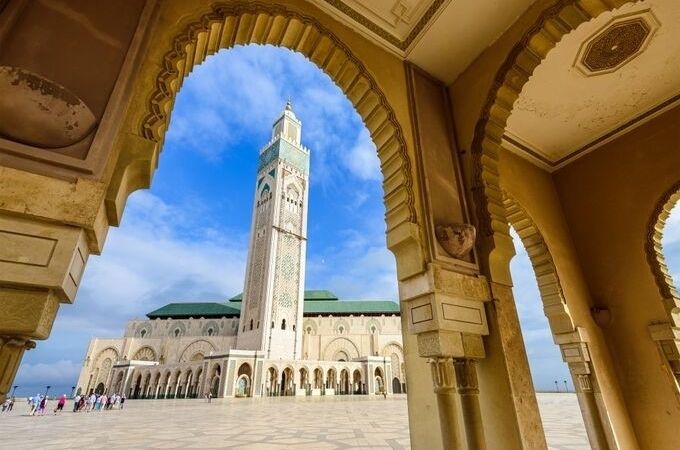
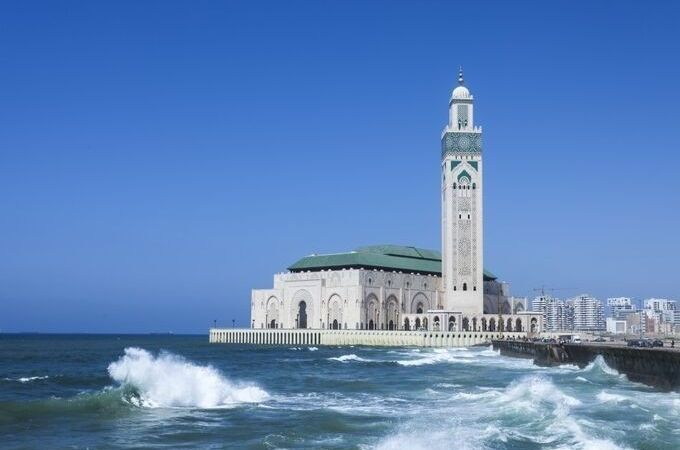
Between major landmarks you encounter pharmacies, bakeries, cafés, offices, apartment buildings, traffic and local shopping streets that rarely appear in conventional itineraries. These environments help correct an incomplete image of Casablanca built only from Hassan II Mosque and the Atlantic waterfront.
That matters because Casablanca is not primarily an open-air historical museum. It is a large contemporary Moroccan city whose character often becomes clearer when you spend time in the spaces where ordinary urban life happens.
Walking provides access to that version without requiring another formal attraction.
Know When the Walk Has Already Succeeded
Longer is not automatically better.
If you have connected several meaningful areas, noticed architectural transitions, stopped somewhere interesting and developed a clearer sense of Casablanca's scale, the walk has already done its job. Adding another three kilometres simply because the weather remains acceptable may not improve anything.
This is where March differs from a fitness-oriented walking guide.
Distance is never the objective.
The purpose is to replace a fragmented series of stops with enough continuous movement that Casablanca begins making geographical sense.
Keep March Separate From April
March's semantic boundary needs to remain strict as this cluster continues.
This article owns connected urban walking: using increasingly workable conditions to experience the streets between Casablanca's landmarks and understand how different districts relate spatially.
April will not repeat the same route under slightly warmer temperatures. Its architecture, examples, table logic and traveler problem will change completely.
That separation is what allows twelve Casablanca weather pages to answer twelve genuinely different questions rather than competing for the same search intent with the month names swapped.
12 Questions About Casablanca in March
1. What is the weather like in Casablanca in March?
March generally brings mild early-spring conditions, although sunshine, cloud, wind and rain can all occur. For travelers, the month can increasingly support longer periods of urban exploration, while current forecasts should still determine how ambitious an individual walking day becomes.
2. Is Casablanca warm in March?
Daytime conditions can feel mild or pleasantly warm during brighter periods, but March is transitional rather than reliably warm throughout every day. Wind, cloud and rainfall can alter comfort, making adaptable clothing more useful than assuming spring automatically means light clothing.
3. Does it rain in Casablanca in March?
Rain remains possible in March, so walking plans should retain some flexibility. Rather than abandoning a route whenever showers appear in the forecast, divide it into manageable sections with cafés, markets or indoor experiences that provide natural stopping points.
4. Is March good for walking around Casablanca?
It can be, particularly when the forecast supports longer outdoor periods. March's advantage is not simply comfortable temperature; walking allows visitors to connect architectural streets, commercial districts and major landmarks while developing a clearer understanding of Casablanca's urban geography.
5. What should I wear in Casablanca in March?
Adaptable layers and comfortable walking shoes are particularly useful because conditions may change during several hours outdoors. Check the short-range forecast for rain and wind before leaving, especially when your planned route contains relatively few indoor stops.
6. Can I explore central Casablanca on foot?
Yes, selected central areas can be explored on foot, although Casablanca is a large city and not every attraction should necessarily be connected by walking. Combine pedestrian exploration with transport when distances become inefficient or the route itself offers limited interest.
7. Is Casablanca's architecture worth exploring on foot?
Yes. Walking gives you more time to notice Casablanca's Art Deco, Neo-Moorish and later architectural layers within their urban context. The experience comes from observing how buildings and streets relate rather than visiting only a handful of individually famous façades.
8. Should I walk from every Casablanca attraction to the next?
No. March's walking strategy is about meaningful connections rather than avoiding transport. Walk when the route contributes to your understanding of the city, then use a taxi or other suitable transport when distance adds little value or conditions become unfavorable.
9. Is Marché Central worth including in a walking route?
It can work particularly well as a natural junction within central exploration, providing a change of pace and an opportunity to stop around the market area. Its value comes partly from how naturally it can connect different sections of a city walk.
10. How long should a Casablanca walking route be in March?
There is no ideal distance. Build a manageable core route and extend it according to weather, interest and energy. A shorter walk containing meaningful streets and stops can provide considerably more value than completing a long route simply to cover distance.
11. Is March the best time to visit Casablanca?
That comparison belongs to a dedicated Best Time to Visit Casablanca guide, where March can be assessed against other months and different travel priorities. This page focuses specifically on using March conditions for connected urban exploration on foot.
12. What makes March different from February in Casablanca?
February focuses on changeable weather windows, using bright or dry periods intelligently when conditions shift through the day. March moves away from short weather opportunities and concentrates on longer connected walking sequences, allowing the streets between landmarks to become part of the Casablanca experience.

A travel professional specializing in tailor-made travel planning, guest experience management, and multi-destination tourism operations.
With over 23 years of experience in the travel industry, he designs and manages private and cultural tours for international travelers across Türkiye, Greece, Egypt, Jordan, Morocco, and other destinations.
He has strong expertise in both online and face-to-face guest communication, sales processes, and end-to-end travel operations.
Working closely with hotels, travel agencies, and local partners, he ensures smooth coordination and high-quality travel experiences at every stage of the journey.
His focus is on delivering personalized, reliable, and seamless travel experiences for international guests worldwide.