
Bursa Turkey: How to Experience the First Ottoman Capital
Updated: August 2026
Bursa is frequently introduced as the first major capital of the Ottoman state, yet that description can make the city sound like somewhere you visit mainly to study what happened centuries ago.
The reality is more interesting.
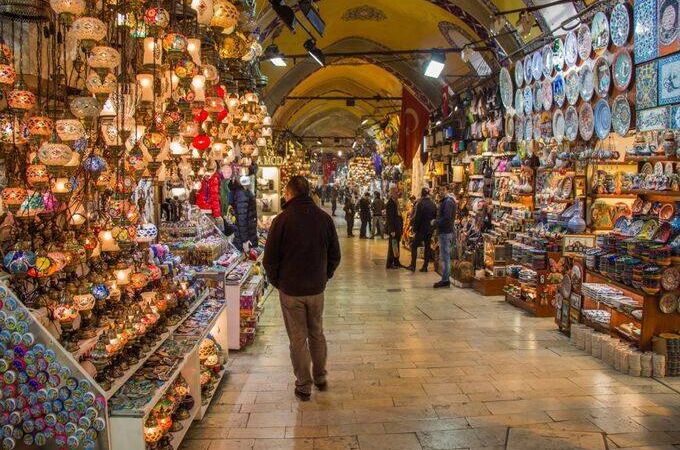
Early Ottoman mosques and tombs stand within a city that still trades, eats, prays, shops and moves around them. Koza Han is not compelling simply because silk once mattered to Bursa; its courtyards still belong to the daily commercial life of the center. Ulu Cami is historically important, but it also remains a functioning mosque. Markets extend around buildings that many visitors would regard as monuments, while the mountain rising behind the city ensures that Bursa never feels entirely detached from its natural setting.
This coexistence is what separates Bursa from a historical open-air museum.
You are not walking through the abandoned capital of an empire.
You are walking through a modern Turkish city whose Ottoman beginnings remain embedded in the geography of everyday life.
For travelers already familiar with Istanbul's grand imperial monuments, Bursa can therefore provide something surprisingly different: a chance to see the Ottoman story closer to its formative period, before Istanbul became the empire's political center.
Bursa Makes More Sense Before You Compare It With Istanbul
The instinctive comparison is understandable.
Both cities contain major Ottoman mosques, bazaars, tombs and religious architecture. Istanbul is vastly larger, internationally famous and filled with buildings created during the empire's mature and later periods.
That is precisely why Bursa should not try to compete with it.
Bursa tells an earlier chapter.
The city became central to the expanding Ottoman state long before the conquest of Constantinople. Its architecture, royal tombs and religious complexes help visitors understand how Ottoman political and cultural identity developed while northwestern Anatolia was still the heartland of the emerging power.
This gives a Bursa visit an unusual chronological value.
If Istanbul shows you what the Ottoman Empire became, Bursa helps explain where some of its visual and institutional language began.
The two destinations therefore complement each other far better than they compete.
Begin in the Commercial Heart, Not With a Monument Checklist
One of the best ways to understand Bursa is to begin around its historical commercial center rather than rushing directly between famous buildings.
This area brings several city identities together at once: mosques, markets, hans, food, local trade and streets that remain active well beyond sightseeing hours.
It also allows Bursa's monuments to appear in context.
You walk toward Ulu Cami through a functioning city rather than arriving from a tour bus directly at the entrance. Koza Han makes sense because the surrounding market district reminds you that commerce was part of Bursa's historical importance. Lunch becomes part of the city experience rather than an interruption between monuments.
A good Bursa day should therefore feel less like:
mosque → tomb → market → lunch → cable car
and more like moving naturally through one historical urban system.
Ulu Cami Is Where Bursa's Scale Becomes Clear
The Grand Mosque of Bursa, or Ulu Cami, is one of the city's defining buildings.
Rather than relying on the monumental central-dome composition many visitors associate with later Ottoman imperial mosques in Istanbul, Ulu Cami presents a broad multi-domed structure whose spatial character belongs to an earlier architectural phase.
That difference is valuable.
Travelers who have already visited the Blue Mosque or Süleymaniye should avoid asking whether Ulu Cami is “more beautiful.” The interesting question is how differently the building organizes religious space.
Inside, calligraphic decoration becomes particularly important, while the scale communicates the confidence of an early Ottoman center that was already developing a sophisticated religious and urban identity.
Because the mosque remains active, respectful visiting matters as much as architectural appreciation.
Its continued religious function is not something happening inside a historical monument.
It is part of why the monument still matters.
Koza Han Explains Bursa Better Than a Silk Museum Could
Bursa's historical connection with silk is one of those facts travel guides often mention once and then leave behind.
Koza Han makes that history tangible.
The caravanserai environment reminds visitors that Bursa's importance was not exclusively political or religious. Trade connected the city to wider commercial networks, and silk became deeply associated with its economy.
Yet the place works particularly well because it has not become a sterile exhibition about commerce.
People still shop, sit and drink tea within the courtyard environment.
That continuity gives Koza Han a different kind of authenticity from a reconstructed heritage attraction.
You can understand its historical role while also participating in its modern one.
This is a strong example of why Bursa rewards travelers who allow time for ordinary activity rather than photographing the courtyard and leaving immediately.
A Bursa Day Has Four Different Historical Moods
Instead of ranking Bursa's attractions, it is more useful to understand what each historical area contributes.
| Bursa experience | What it reveals | Best way to approach it |
|---|---|---|
| Ulu Cami | Early Ottoman religious architecture | Slow interior observation |
| Koza Han & bazaars | Trade, silk and living commerce | Wander rather than schedule tightly |
| Green Mosque & Green Tomb | Royal patronage and decorative identity | Examine architecture and tile work together |
| Muradiye Complex | Ottoman dynastic memory | Visit quietly and allow historical context |
| Tophane area | Origins and rulers | Connect tombs with city panorama |
| Uludağ relationship | Bursa as mountain city | Add only when it strengthens the trip |
This framework keeps the city from becoming an undifferentiated collection of Ottoman buildings.
The Green Mosque and Green Tomb Need to Be Seen as a Pair
The Yeşil Cami, or Green Mosque, and the nearby Yeşil Türbe, or Green Tomb, belong to one of Bursa's most recognizable historical areas.
Their decorative character gives visitors a different impression from Ulu Cami.
Tile work, architectural detail and royal patronage become more prominent, creating an opportunity to see how religious and dynastic identity could be expressed through a more visually elaborate environment.
The Green Tomb is associated with Sultan Mehmed I and forms part of the memory of the early Ottoman dynasty.
This is where reading the two buildings together becomes more useful than treating them as separate photo opportunities.
Mosque and mausoleum belong to a broader cultural landscape in which political legitimacy, religion and commemoration intersected.
Travelers interested in tracing those early Ottoman layers beyond Istanbul can use Bursa Ottoman heritage tours as a wider framework while keeping this destination guide focused on the city experience itself.
Muradiye Feels Different Because It Is About Memory
The Muradiye Complex creates one of Bursa's quieter historical experiences.
Royal and dynastic tombs shift the emotional tone away from active commercial streets and monumental public architecture.
This is not a place where the visit improves by rushing to identify the maximum number of important names.
It works better when you understand the complex as a space of dynastic memory.
Ottoman history often becomes simplified into a sequence of sultans, battles and conquests. Tomb complexes remind visitors that the dynasty was also a family whose members were commemorated through architecture, inscriptions and sacred space.
That human dimension changes the historical narrative.
It becomes less about abstract imperial expansion and more about how rulers wanted themselves and their families to be remembered.
Tophane Helps Explain Why Bursa Was Chosen in the First Place
The higher Tophane area offers another perspective on the city and contains tombs associated with early Ottoman rulers Osman Gazi and Orhan Gazi.
The view matters alongside the history.
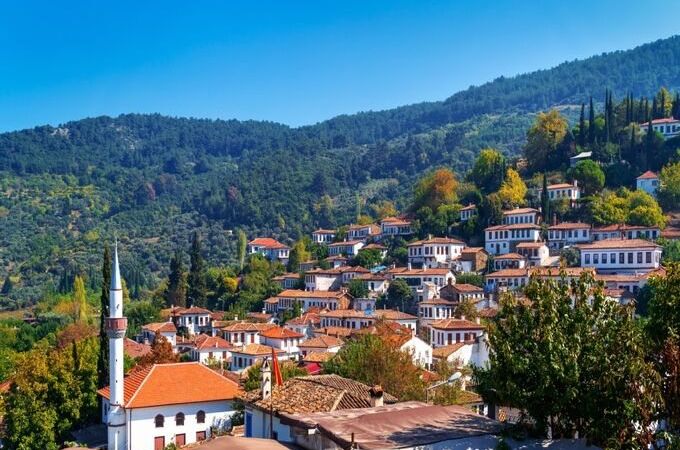
Bursa sits between plain and mountain, and seeing the city from an elevated point makes its geography easier to understand.
Rather than treating the tombs simply as endpoints on an Ottoman history route, consider what Bursa represented during the dynasty's formative era: a strategic urban center positioned within northwestern Anatolia, connected to trade routes and surrounded by productive landscapes.
This context helps prevent the early Ottoman story from becoming detached from geography.
Empires do not begin in empty space.
Cities matter because their locations matter.
Bursa's Food Is Part of the Historical Experience
Few cities benefit from being reduced to one famous dish, and Bursa is no exception.
Still, İskender kebab has become so closely associated with the city that eating it here carries more meaning than simply ordering a recognizable Turkish meal.
The dish combines thinly sliced döner-style meat with pide, tomato sauce, butter and yogurt, creating a meal richer than what many travelers imagine when they hear the word “kebab.”
The useful approach is not to spend an hour arguing online about which restaurant serves the definitive version.
Choose a reputable establishment, understand what you are eating and allow food to function as part of the city's regional identity.
Bursa also has broader culinary traditions, sweets and local products worth noticing, but the real information gain comes from eating regionally rather than generically.
If every city in Turkey produces the same restaurant order, an important part of traveling has been lost.
Thermal Bursa Is a Different City Again
Bursa's thermal-water tradition provides another identity that historical sightseeing lists frequently underuse.
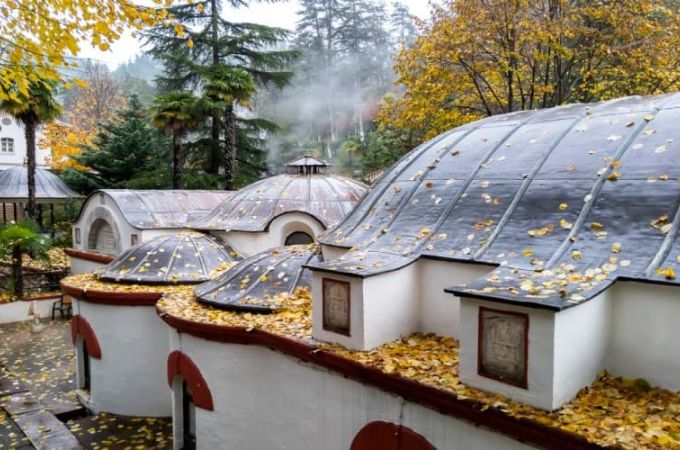
The Çekirge area in particular has long been associated with thermal baths and accommodation built around this resource.
For travelers spending more than one night, this can fundamentally change the rhythm.
A morning might involve mosques and markets, while the afternoon or evening becomes much slower.
That contrast works particularly well after long walking days or for travelers who want some relaxation without moving onward to a coastal resort.
Thermal experiences should still be chosen according to personal comfort and current facility standards rather than romantic assumptions about “traditional Turkish baths.”
What matters is that Bursa offers relaxation through a tradition connected to the city itself rather than an activity artificially added for tourists.
Uludağ Should Add a Mountain Chapter, Not Hijack the Bursa Guide
The presence of Uludağ behind Bursa is impossible to ignore.
In winter, it becomes one of Turkey's best-known ski areas. During other parts of the year, the mountain can provide a completely different environment from the city below.
However, the detailed question of whether Uludağ is the right ski destination belongs to our separate Skiing in Turkey owner.
For Bursa planning, the decision is simpler:
Does going up the mountain add something you genuinely want?
If you have one day in Bursa and early Ottoman history is the reason you came, spending much of that day traveling toward mountain recreation may dilute the visit.
If you have two or three nights, Uludağ can create excellent contrast.
Travelers considering both city and mountain can look at Bursa and Uludag journeys while allowing each destination to retain its own purpose.

The Cable Car Is Transportation With a View, Not the Reason to Visit Bursa
Bursa's cable-car connection toward Uludağ is frequently promoted as an attraction in itself.
The journey can certainly be memorable.
Yet it should not become the foundation of a Bursa itinerary unless mountain scenery is genuinely important to you.
This is a recurring problem with travel planning: easily marketable experiences begin dominating places with much deeper identities.
Bursa was historically important long before modern visitors could travel above it in a cable car.
Use the ride when it supports the mountain portion of the trip.
Do not feel you have “missed Bursa” if the city's Ottoman heritage, food and markets were your real priorities.
Bursa Deserves Better Than a Rushed Istanbul Day Trip
Bursa can be visited from Istanbul, and for travelers with limited time that may be preferable to not seeing it at all.
But the city benefits enormously from an overnight stay.
A day trip usually compresses transportation, several major monuments, lunch and perhaps a mountain element into one schedule. What disappears is exactly what gives Bursa character: evening market streets, an unhurried meal, repeated walks through the center and the ability to experience historical areas without constantly watching the departure time.
One night changes that.
Two nights allow Bursa to become a destination rather than an excursion.
If early Ottoman history genuinely interests you, this additional time is usually worth more than squeezing another minor stop into an already crowded Istanbul itinerary.
Bursa or Edirne? They Tell Different Ottoman Stories
Travelers interested in Ottoman architecture may eventually encounter both cities.
Bursa reflects the dynasty's early development and retains strong connections with its formative rulers.
Edirne represents another major phase of Ottoman urban and architectural development before Istanbul became the imperial center.
They should therefore not be ranked according to which mosque is more impressive.
The value lies in chronology.
Seeing Bursa, Edirne and Istanbul across different journeys can gradually reveal how Ottoman architecture and political geography evolved.
For travelers building history-led routes, early Ottoman Turkey itineraries can give Bursa the correct historical role rather than presenting it as another random city stop.
Bursa Is Particularly Good for Travelers Who Need a Second Turkey
Repeat visitors often reach a point where they want Turkey without repeating the classic Istanbul–Cappadocia–Ephesus circuit.
Bursa is excellent for this.
The city is historically significant enough to justify dedicated time, culturally distinct enough to feel different from Istanbul and ordinary enough that tourism has not completely reorganized its identity.
You can still get lost in a market street.
Still sit somewhere because you felt like stopping.
Still spend more time eating than sightseeing without feeling you failed to complete the destination.
That balance is increasingly valuable for experienced travelers.
How Long Should Bursa Receive?
One night is enough to transform the city from a hurried excursion into a much more meaningful stop.
Two nights allow early Ottoman heritage, markets, food and perhaps a thermal experience to coexist comfortably.
Three nights become worthwhile when Uludağ or a slower city rhythm is part of the reason for coming.
Longer stays should be motivated by genuine interest rather than the need to manufacture additional attractions.
Bursa does not need seven days to prove its importance.
It needs enough time for the city to stop feeling like a historical syllabus.
The Best Bursa Itinerary Has a Pause in the Middle
A successful day might begin with Ulu Cami and the commercial center, move gradually through Koza Han and the surrounding bazaar streets, then stop for a proper lunch.
That pause matters.
The afternoon can shift toward Yeşil or another historical district rather than becoming a race against closing hours.
Another day can incorporate Tophane, Muradiye or thermal time.
If Uludağ belongs in the trip, give it enough space rather than attaching it mechanically to an already overloaded city day.
This is Bursa's ideal rhythm:
history, commerce, food, pause, history again — and only then the mountain if you still want it.
Bursa Is Worth Visiting Because the Ottoman Story Feels Less Finished Here
Istanbul's imperial architecture can feel almost impossibly grand.
Bursa is different.
Its buildings often feel closer to the period when an expanding Anatolian principality was becoming something much larger. Tombs, mosques, markets and hans remain part of a city that never became a museum of its own past.
That continuity is Bursa's strongest argument.
Come for early Ottoman history, certainly.
But also notice the merchant drinking tea in Koza Han, people entering Ulu Cami for reasons unrelated to your sightseeing, families eating in restaurants that do not care whether you know the city's imperial chronology, and a mountain still shaping the horizon behind everything.
That is when Bursa becomes more than the “first Ottoman capital.”
It becomes a place where historical importance and ordinary Turkish city life still occupy the same streets.
Frequently Asked Questions About Bursa
1. Is Bursa worth visiting if I have already seen Istanbul?
Yes. Bursa provides a substantially different perspective on Ottoman history because its major monuments belong more closely to the dynasty's formative period. The city also combines markets, regional food, thermal traditions and Uludağ without recreating Istanbul's much larger imperial environment.
2. Is Bursa suitable as a day trip from Istanbul?
It is possible, but a day trip can become heavily compressed once transportation and sightseeing are combined. An overnight stay allows Bursa's bazaars, evening atmosphere, food and early Ottoman sites to be experienced at a more natural pace.
3. What is the most important historical building in Bursa?
Ulu Cami is one of the city's defining monuments and provides an excellent introduction to early Ottoman religious architecture. However, Bursa becomes more meaningful when the mosque is understood alongside Koza Han, Yeşil, Tophane and other parts of the historical center.
4. Why is Koza Han important to Bursa?
Koza Han reflects Bursa's historical role in silk commerce and wider trade networks. Its continuing commercial and social use makes it particularly valuable because visitors can understand the building's historical function while still experiencing it as part of modern Bursa.
5. Is the Green Mosque different from Ulu Cami?
Yes. The two represent different architectural and visual experiences within early Ottoman Bursa. Ulu Cami is especially notable for its broad multi-domed interior and calligraphy, while the Green Mosque and neighboring Green Tomb emphasize decorative refinement and dynastic patronage.
6. Should I visit Uludag while staying in Bursa?
Visit Uludağ when mountain scenery, outdoor activity or skiing forms a genuine part of your trip. Travelers with limited Bursa time and a primary interest in Ottoman history may gain more by concentrating on the city rather than automatically adding the mountain.
7. Is Bursa a good destination outside winter?
Absolutely. Uludağ's winter reputation can overshadow the fact that Bursa's historical center, mosques, markets, thermal traditions and food culture are year-round reasons to visit. The city's identity does not depend on skiing or snow conditions.
8. Where should I try Iskender kebab in Bursa?
Rather than choosing solely according to online fame, look for an established restaurant specializing in the dish and understand its traditional components. The value lies partly in eating a food closely associated with Bursa within the city where that culinary identity developed.
9. Are Bursa's thermal baths worth including?
They can add a useful relaxation component, particularly during a two- or three-night stay. Travelers should select facilities according to current standards, desired privacy and bathing style rather than assuming every thermal experience or hammam environment operates identically.
10. How many nights should I spend in Bursa?
One night is enough to improve substantially on a rushed day trip, while two nights provide a better balance of Ottoman heritage, markets and food. Three nights make more sense when Uludağ or thermal relaxation is an important part of the stay.
11. Is Bursa good for travelers mainly interested in Ottoman history?
Very much so. Bursa offers access to early Ottoman mosques, royal tombs, commercial structures and urban spaces associated with the dynasty's formative period, making it especially useful for travelers wanting historical context before or after seeing later imperial architecture in Istanbul.
12. What is the biggest mistake when planning Bursa?
The biggest mistake is trying to combine every major historical site, a large lunch, shopping and Uludağ into one rushed day. Bursa becomes considerably more rewarding when its monuments, bazaars and food are allowed to remain part of a living city rather than a checklist.

A travel professional specializing in tailor-made travel planning, guest experience management, and multi-destination tourism operations.
With over 23 years of experience in the travel industry, he designs and manages private and cultural tours for international travelers across Türkiye, Greece, Egypt, Jordan, Morocco, and other destinations.
He has strong expertise in both online and face-to-face guest communication, sales processes, and end-to-end travel operations.
Working closely with hotels, travel agencies, and local partners, he ensures smooth coordination and high-quality travel experiences at every stage of the journey.
His focus is on delivering personalized, reliable, and seamless travel experiences for international guests worldwide.