Basilica Cistern Istanbul: What Lies Beneath Sultanahmet
Updated: August 2026
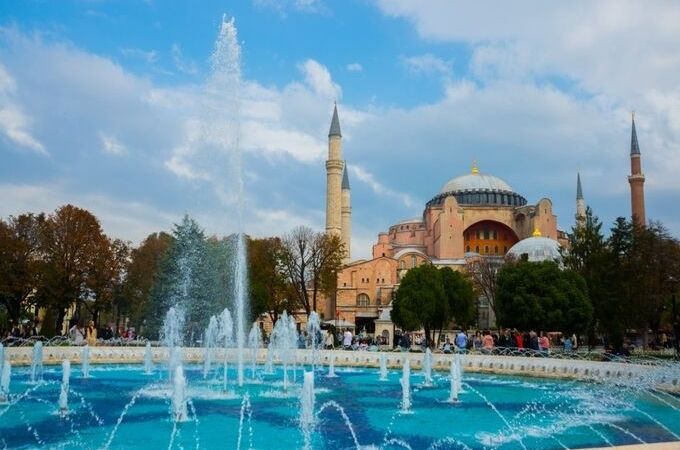
Walk through Sultanahmet and almost everything encourages you to look upward. Hagia Sophia dominates the skyline, minarets frame the historic peninsula, domes rise above surrounding streets, and centuries of Istanbul's history seem to announce themselves through monumental architecture.
The Basilica Cistern asks you to do the opposite.
You descend.
Within minutes, the noise and daylight of central Istanbul give way to columns, water, reflections and an atmosphere that feels surprisingly removed from the streets immediately overhead. This change of environment explains some of the cistern's popularity, but atmosphere alone is not what makes it important.
Known in Turkish as Yerebatan Sarnıcı, the Basilica Cistern belongs to the sophisticated water infrastructure of Byzantine Constantinople. Its hundreds of columns were never arranged primarily to impress visitors; they supported an underground reservoir created to store water for the imperial city.
Understanding that original function changes the visit completely. What initially appears to be an extraordinary underground hall becomes evidence of how Constantinople actually worked.
And that is the most rewarding way to see it.
Before Looking at Medusa, Understand Why the Cistern Exists
Modern visitors tend to move quickly toward the Basilica Cistern's most famous feature: the two Medusa heads.
They are fascinating, but beginning there reverses the story.
The cistern's significance starts with water.
Constantinople was a vast imperial capital whose population, palaces, baths, fountains and public institutions required a reliable supply. Water could be brought toward the city through aqueduct systems, but supply alone did not solve the problem. Water also needed to be stored.
Large cisterns became part of that infrastructure.
The Basilica Cistern was constructed during the reign of Byzantine Emperor Justinian I in the sixth century, in the same broad imperial period associated with Hagia Sophia. Its location near the heart of Constantinople placed it within an extraordinarily important urban zone.
What survives today is therefore not an underground palace, even though the atmosphere can suggest one.
It is infrastructure built on a monumental scale.
That difference matters because engineering, rather than theatrical beauty, is the real starting point.
The 336 Columns Were Working Architecture
One of the first things you notice after entering is repetition.
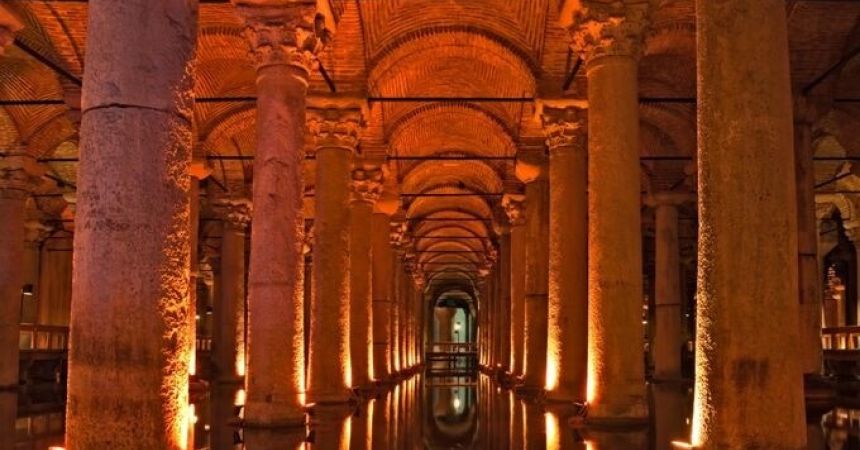
Rows of columns disappear into the distance, reflections extend their apparent height, and low lighting makes the structure feel considerably more mysterious than an ordinary water reservoir sounds on paper.
There are 336 columns, arranged in a highly ordered grid.
Yet they are not perfectly uniform.
Different stone types, capitals and architectural details can be observed, reflecting the practical reuse of materials associated with ancient building traditions. Byzantine builders frequently incorporated earlier architectural elements rather than demanding that every component be newly quarried and stylistically identical.
For a modern traveler accustomed to monuments being presented as aesthetically unified masterpieces, this is worth noticing.
The Basilica Cistern is beautiful partly because it was practical.
Materials were used to solve an engineering requirement. Centuries later, the irregularities that might once have been insignificant construction details have become some of the features visitors examine most closely.
A Better Way to Read the Cistern
Instead of treating the visit as a hunt for famous objects, divide what you see into different layers.
| What you notice | What it reveals |
|---|---|
| Repeated column grid | Scale of Byzantine water storage engineering |
| Different capitals and stonework | Reuse of architectural materials |
| Water and reflections | Original reservoir function interpreted through today's presentation |
| Brick vaulting above | Structural system supporting the space overhead |
| Medusa heads | Reused ancient stone and later cultural fascination |
| Modern walkways | Transformation from infrastructure into visitor space |
| Contemporary lighting/art | How today's Istanbul interprets an ancient structure |
This is a very different way of experiencing the site from simply counting columns and photographing Medusa.
It turns the cistern into a story of function, survival and reinterpretation.
The Medusa Heads Are Fascinating Precisely Because We Cannot Explain Everything
Near the far end of the visitor route, two ancient stone heads depicting Medusa support columns.
One is positioned sideways; the other is inverted.
They have generated countless explanations.
Visitors are sometimes told that the unusual positioning deliberately neutralized Medusa's mythical power, represented a Christian rejection of pagan symbolism, or encoded some specific Byzantine message.
Those stories are memorable.
Certainty is more difficult.
A more responsible interpretation is that the heads were reused architectural material and adapted to serve the structural requirements of the cistern. Their precise earlier context and the motivations behind their positioning are not known with enough certainty to justify presenting every popular theory as historical fact.
That uncertainty actually improves the experience.
Historical sites do not become less interesting because scholars cannot explain every detail. Sometimes acknowledging what we do not know is considerably more credible than filling the gap with an attractive legend.
Medusa Is Not the Most Important Thing Down There
This may sound strange because the heads dominate photographs and promotional material, but visitors who rush through the cistern to reach them miss the larger achievement.
The reservoir itself is the artifact.
Imagine the planning required to create an underground storage structure of this scale beneath one of the world's major historic capitals. Think about the columns as load-bearing components rather than scenery, then look upward at the vaulting and outward across the space they support.
The cistern becomes more impressive when you stop imagining it as a mysterious underground chamber and start imagining it full of water and doing its job.
That mental reconstruction is more valuable than any mythology attached to one corner.
Why the Basilica Cistern Feels So Different Today
The modern visitor experience is deliberately atmospheric.
Controlled lighting, reflections, walkways and artistic presentation encourage you to experience the architecture spatially rather than merely observe archaeological remains from a distance.
This raises an interesting question: are you seeing a Byzantine cistern or a modern interpretation of one?
The answer is both.
The underlying structure is historical. The way you move through and perceive it is contemporary.
That is not necessarily a weakness. Without modern access infrastructure, visitors could not experience the space in anything like its present form.
The important thing is to distinguish original function from present presentation.
The Byzantines did not construct a mood-lit attraction beneath Constantinople. They built water infrastructure. Modern Istanbul has made that infrastructure accessible through a visitor experience designed for an entirely different purpose.
Both layers are now part of the site's story.
Basilica Cistern and Hagia Sophia Tell Different Stories About the Same Imperial City
Because the Basilica Cistern sits so close to Hagia Sophia, visitors naturally see them on the same day.
Historically, that pairing is useful.
Architecturally, however, they should not be mentally merged into one generic “Byzantine attraction.”
Hagia Sophia represents imperial religious architecture on a monumental scale. The Basilica Cistern reveals something less ceremonial but equally revealing: the infrastructure necessary to sustain an imperial capital.
One expresses power visibly.
The other supported city life invisibly.
This contrast helps visitors understand why Byzantine Constantinople cannot be reduced to churches, mosaics, emperors and walls. Large cities also depended on engineering.
For travelers wanting interpretation across these historical layers, Istanbul Byzantine heritage tours can connect monuments without requiring this Basilica Cistern article to duplicate the separate historical ownership of Hagia Sophia.
Why the Location Beneath Sultanahmet Matters
Emerging from the cistern can be almost as interesting as entering it.
You return to one of Istanbul's busiest historical districts and suddenly realize that the visible city represents only one layer.
This is a useful way to understand Istanbul generally.
Roman and Byzantine infrastructure, Ottoman architecture, modern streets and contemporary tourism frequently occupy the same geography, sometimes separated vertically rather than horizontally.
The Basilica Cistern makes that layering unusually tangible because you physically descend into an earlier urban system and then climb back into modern Sultanahmet.
Few attractions explain the concept of a layered city so efficiently.
Do Not Allocate Time by Square Metres
The Basilica Cistern is not enormous in the way a palace complex or archaeological city can be.
That does not mean you should race through it.
The real variable is crowd flow.
A relatively compact visitor route can feel completely different depending on how busy the interior is. Photography, narrow movement patterns and people stopping around major features can slow progression considerably.
For most travelers, the best strategy is to give the cistern enough flexibility that you are not checking the time every few minutes because another timed commitment begins immediately afterward.
You do not need half a day.
You do need enough mental space to observe rather than merely circulate.
The Most Famous Photo Is Not Necessarily the Best Memory
Photography inside the cistern can be irresistible.
Reflections, columns and low lighting create dramatic compositions, but dark environments also encourage people to stop abruptly, concentrate on screens and experience the entire visit through a camera.
Try something different.
During the first section, take very few photographs.
Allow your eyes to adjust. Look along the column rows. Notice the ceiling. Listen to how the space sounds. Observe how water changes the perception of depth.
Photograph later.
This sequence often produces better images because by then you understand what interested you rather than photographing everything indiscriminately.
Accessibility and Surfaces Deserve Practical Attention
An underground historical structure inevitably creates different visitor conditions from an open square.
Modern walkways make the cistern accessible as a visitor attraction, but anyone with mobility concerns should check current access arrangements before visiting because operational routes and facilities can change.
Footwear also deserves more thought than fashion.
Historic Istanbul often involves substantial walking anyway, and the Basilica Cistern is best incorporated into a Sultanahmet day with comfortable shoes rather than treated as a standalone indoor stop requiring different clothing.
The interior atmosphere may also feel cooler and more humid than the street above.
These are minor practical details, but good destination writing should prepare you for the real visit, not merely describe what photographs look like.
Pair Nearby Sites by Historical Contrast, Not by Quantity
The density of Sultanahmet creates a dangerous temptation.
Because several major landmarks are geographically close, travelers assume they should see as many as possible in one continuous rush.
Distance is not the same thing as mental capacity.
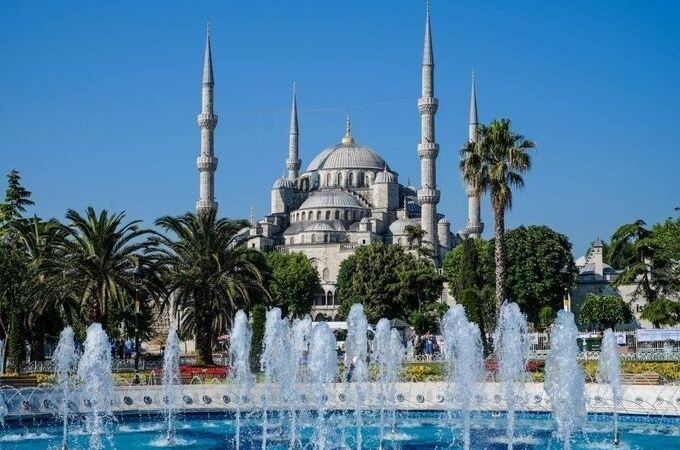
Hagia Sophia, the Blue Mosque, Topkapı Palace, the Basilica Cistern and the Hippodrome represent different historical functions and periods. Moving through them too quickly turns extraordinary sites into a sequence of entrances.
A better approach is to think in contrasts.
Religion and engineering.
Imperial ceremony and infrastructure.
Visible monuments and underground systems.
Byzantine Constantinople and Ottoman Istanbul.
Travelers structuring their first historic-peninsula day can use private Istanbul sightseeing tours to create that contextual progression rather than simply optimizing for the maximum number of attractions.
The Cistern Works Particularly Well After a Monumental Interior
There is an experiential reason to consider sequencing.
After spending time in a large, bright or heavily decorated monument, descending into the Basilica Cistern changes the sensory rhythm of the day.
The temperature shifts. Light disappears. Sound changes. Your field of vision narrows.
This contrast prevents Sultanahmet sightseeing from becoming visually repetitive.
Good itinerary design is not only about geographical efficiency. It is also about avoiding attraction fatigue.
Two neighboring sites can feel exhausting when they demand the same kind of attention, while contrasting environments can make both experiences stronger.
The Basilica Cistern is particularly useful in this respect because almost nothing else in central Sultanahmet feels like it.
Is a Guide Necessary?
You can certainly visit independently.
The visitor experience is visually strong enough that no one needs a guide simply to appreciate the atmosphere.
The question is what you want to understand.
If your interest is primarily photography and experiencing the underground space, independent visiting may be entirely sufficient.
If you want to understand Byzantine Constantinople, water systems, reused architectural material and the relationship between the cistern and surrounding imperial city, interpretation becomes more valuable.
A good guide should not simply repeat dates that you can read yourself.
The value lies in connecting what appears to be an isolated underground attraction with the city that required it.
Children Often Respond to the Space Differently From Adults
The Basilica Cistern can work surprisingly well for families because it does not initially feel like a conventional history lesson.
Descending underground, searching for Medusa and walking between illuminated columns creates immediate curiosity.
Parents can use that curiosity intelligently.
Instead of beginning with a long explanation of Justinian, ask a simpler question:
Why would a city need to hide so much water underground?
Suddenly the child is thinking about how ancient cities functioned.
The history can follow from there.
This is often a better educational sequence than presenting a list of dates before the place itself has generated interest.
What the Basilica Cistern Should Not Become in Your Itinerary
It should not become “another famous Istanbul thing” inserted between two unrelated stops.
It should not replace a broader understanding of Byzantine Constantinople.
It should not be stretched into a half-day destination simply because it is famous.
And it should not be reduced to the Medusa heads.
Its ideal role is more precise: a concentrated encounter with the engineering and hidden infrastructure of Constantinople, experienced through one of Istanbul's most atmospheric surviving spaces.
That narrower definition actually gives the site greater authority.
Why It Still Matters After You Return to Street Level
The Basilica Cistern changes the way attentive travelers see Sultanahmet.
Once you understand that a massive reservoir survives below the modern district, the historic city becomes less two-dimensional.
You start wondering what else sits beneath roads, hotels, shops and squares.
That curiosity is appropriate in Istanbul.
The city has been continuously reshaped rather than neatly replaced, meaning surviving structures often coexist with later urban layers in unexpected ways.
Travelers interested in following those connections beyond one underground site can explore historic Istanbul tour itineraries, where the cistern becomes part of a wider urban story without losing its own distinct entity ownership.
The Basilica Cistern is memorable because it is atmospheric.
It is important because it is infrastructure.
Understanding both is what turns a beautiful underground visit into a meaningful encounter with Constantinople.
Frequently Asked Questions About the Basilica Cistern
1. Why was the Basilica Cistern originally built?
The Basilica Cistern was created during the Byzantine period to store water for Constantinople's imperial center. Its columns and vaulted structure supported a vast underground reservoir, meaning the atmospheric space visitors admire today originally existed as practical urban infrastructure rather than ceremonial architecture.
2. Is the Basilica Cistern really underground?
Yes. Visitors descend below modern Sultanahmet into the historic reservoir, creating a striking contrast with the busy streets and monumental buildings above. This vertical transition also helps explain how different historical layers and infrastructure can survive within the same part of Istanbul.
3. Why are there so many columns inside the Basilica Cistern?
The 336 columns perform a structural role, supporting the brick vaulting above the reservoir. Their repetition creates today's famous visual effect, although their original importance was practical: they allowed a large underground water-storage space to exist beneath the Byzantine imperial city.
4. What are the Medusa heads in the Basilica Cistern?
Two carved Medusa heads are used as column bases within the cistern. They are examples of reused ancient stonework, although their precise earlier origins and the reason for their sideways and inverted positioning are not known with enough certainty to validate every popular legend.
5. Why is one Medusa head upside down?
There is no universally established explanation proving why the head was positioned upside down. Stories involving pagan symbolism and Medusa's power are popular, but practical reuse of available architectural material should be distinguished from later interpretations presented as historical certainty.
6. Is the Basilica Cistern suitable for children?
It can be particularly engaging for children because the underground setting, water, columns and Medusa heads create immediate visual curiosity. Explaining how Constantinople stored water can then turn an atmospheric visit into an accessible introduction to ancient engineering and city life.
7. Do I need a guide to visit the Basilica Cistern?
Not necessarily. Independent visitors can appreciate the architecture and atmosphere easily, while a knowledgeable guide becomes more valuable for travelers wanting deeper context about Byzantine water infrastructure, reused materials and the cistern's relationship with the surrounding imperial center of Constantinople.
8. Is the Basilica Cistern similar to an underground palace?
It may feel palace-like because of its columns, lighting and reflections, but that description can be misleading. The cistern was fundamentally a water-storage facility, and understanding its engineering purpose makes the scale and architecture considerably more impressive than treating it as decorative underground space.
9. Can I visit the Basilica Cistern and Hagia Sophia on the same day?
Yes. Their close locations make them easy to combine geographically, while their different historical functions create a useful contrast. Hagia Sophia represents monumental religious architecture, whereas the Basilica Cistern provides insight into the infrastructure supporting Byzantine Constantinople.
10. Is the Basilica Cistern worth visiting if I have limited time in Istanbul?
For travelers interested in Byzantine history, architecture or unusual urban spaces, it offers substantial value without requiring an entire day. Its strongest advantage is providing an experience completely different from the mosques, palaces and open-air historical areas surrounding Sultanahmet.
11. What should I pay attention to besides the Medusa heads?
Look along the column grid, compare capitals, observe the brick vaulting, notice reused stone elements and consider how the structure would have functioned as a reservoir. These details reveal considerably more about the cistern than focusing exclusively on its most photographed feature.
12. What is the biggest mistake when visiting the Basilica Cistern?
Rushing directly toward the Medusa heads is the most common missed opportunity. The real historical significance lies in the entire reservoir, so visitors gain much more by first understanding its columns, engineering, water-storage purpose and relationship with Byzantine Constantinople.

A travel professional specializing in tailor-made travel planning, guest experience management, and multi-destination tourism operations.
With over 23 years of experience in the travel industry, he designs and manages private and cultural tours for international travelers across Türkiye, Greece, Egypt, Jordan, Morocco, and other destinations.
He has strong expertise in both online and face-to-face guest communication, sales processes, and end-to-end travel operations.
Working closely with hotels, travel agencies, and local partners, he ensures smooth coordination and high-quality travel experiences at every stage of the journey.
His focus is on delivering personalized, reliable, and seamless travel experiences for international guests worldwide.